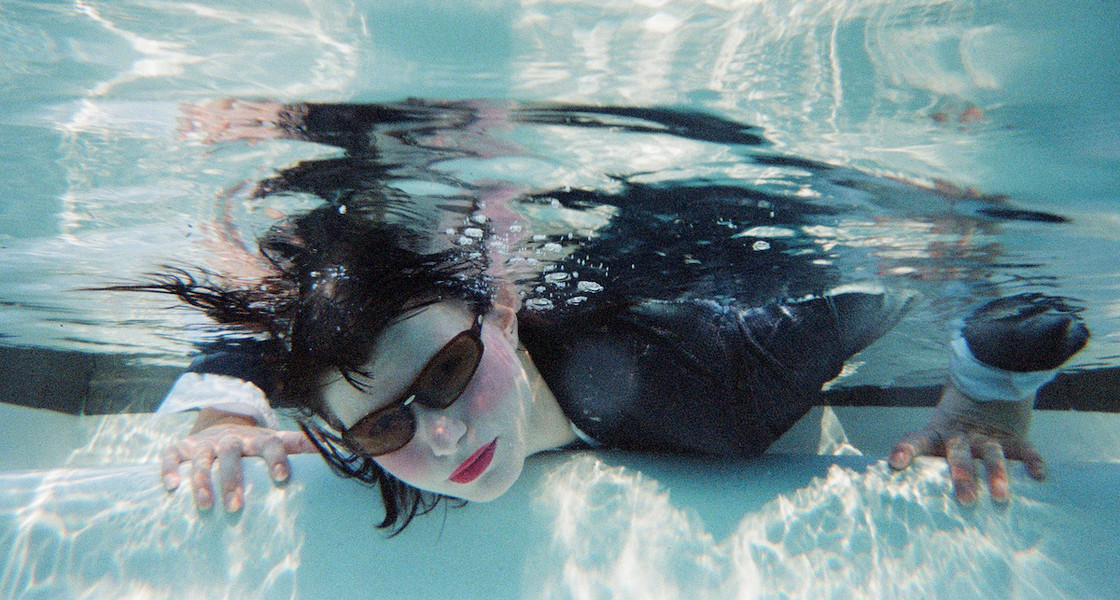
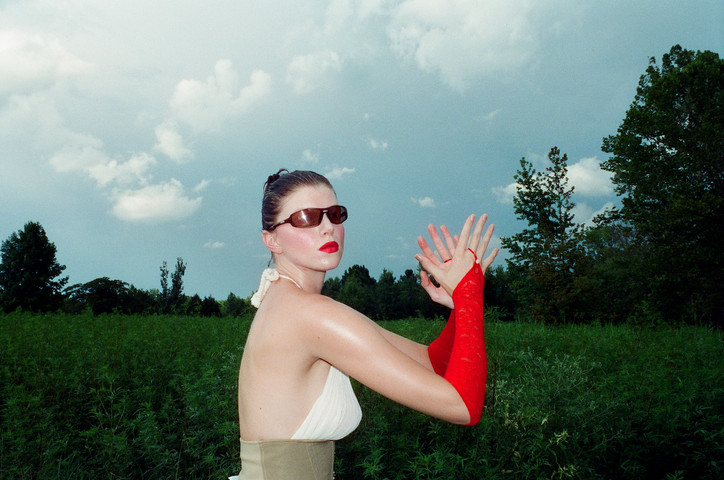
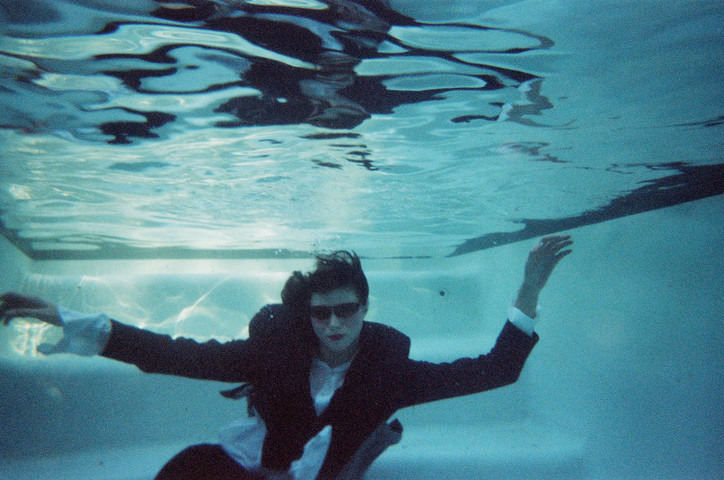
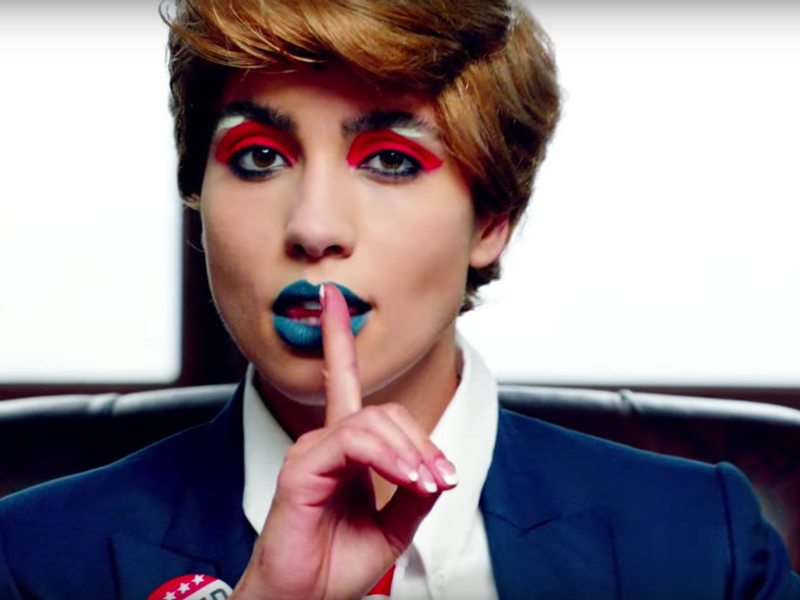
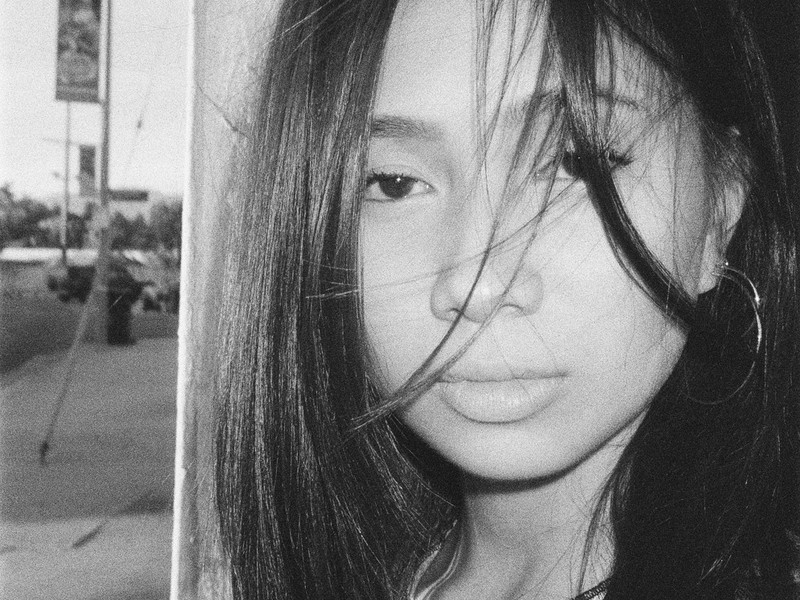
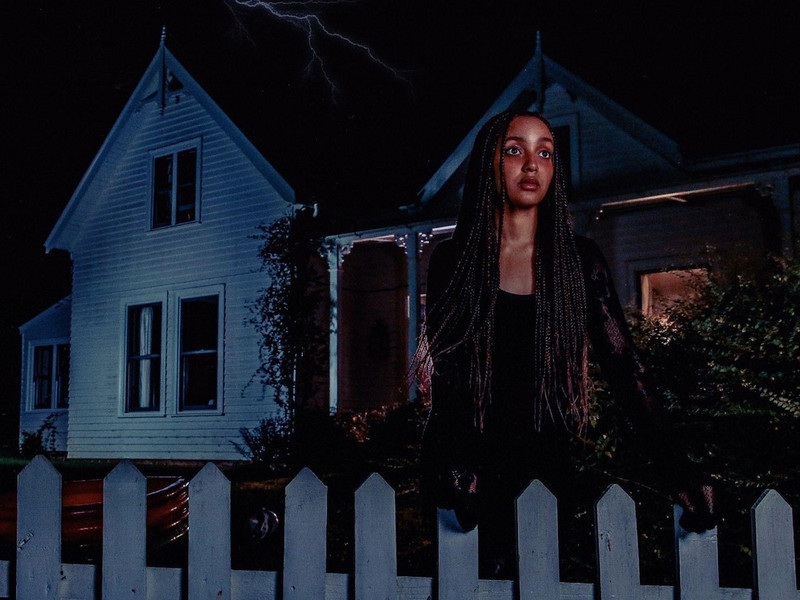
For her latest LP, Oasis Nocturno, Lee applied these principles in every way she could; it’s a highly meticulous project with many interconnected aesthetics and themes, and Lee made sure that she exercised her creative agency in everything from the mix to the show’s lighting set up. The result is a clear and focused album that exhibits all of Lee’s influences.
Lee’s sound is a nebulous mix of hip hop, EDM, and oddly enough, classical music; she’s very much a product of her music library. Born and raised in LA to an immigrant family, her life at home was contrasted with what she encountered while frequenting the hip hop clubs in Central: Classical piano lessons meet Westside Connection. She accepted and adopted everything that caught her attention without judgment.
After the release of her latest project, Lee hopped on the phone with office to talk about the time she spent as part of the Los Angeles “Beat Scene,” her narrative vision when it comes to her live performances, and the ways in which she’s staying connected with fans during quarantine.
What was your experience of the rave culture in the early 2000s? I know in the 90s, the scene exploded in LA—did you come on during the tail end of that wave?
By the time I had started going to raves, it had already entered a phase where it had massive festivals. It was different than the culture in the 90s, from what I've heard from my friends who were around earlier. But very different than what it is now, too. I think it was kind of on its way to being as massive as it is now, but maybe not as built into normal pop culture. Like now, what is a rave? Is it a club? Is it something you go on a Friday night? Is it really a "rave" rave like what you would've seen in the 90s in America, which is probably more akin to what a rave is in Europe.
I participated in it, but I feel like I'm more active in it now as a musician. I was mostly in the rap and hip hop scene in LA—a lot of electronic and experimental rap and hip hop.
Right. You were part of Project Blowed for a bit. What were some of your first performances there like?
Project Blowed has been around for a really long time; it's kind of the birthplace of freestyle rap, in that specific style. It was around many generations before I started going. When I went, I had a friend who brought me there; it was around Limerick Park, which is Central LA, and not a place where there are a lot of young asian girls trying to play beats, so I had to really earn the respect of the people who've been there for so long and who were such a part of this deep-rooted rap and hip hop culture in LA. I remember going, the first time, and I had a CD with some beats on it that I was going to play at a beat cypher. During a beat cypher you just go up and play beats and everyone is like, "Wow. That's a really fire beat." You just stand up there, bobbing your head, not really doing anything, because someone else is playing the CD with your beat. So, I go there, and obviously I'm a minority, but I start playing these beats and people start giving me these sneers like, "What's she going to do? This is going to be sad," or whatever their expectations were of me. But I played some beats, and everyone was pleasantly surprised. You could see that shift in their facial expressions, from doubt to a humble nod that this isn't completely bullshit and she's actually good at what she does.
From Project Blowed, I started going to Low End Theory. They were happening around the same time, but Low End Theory spoke to me more. That was a club night that happened every Wednesday that happened in Lincoln Heights, just north of Chinatown. That's really where my roots started. I got my chops at Low End Theory and really became part of a community of other artists. Unlike Project Blowed, Low End Theory wasn't rap-centric. Low End Theory was very much focused around producers and DJs. I think one of the most notable guys to come out of the scene was probably Flying Lotus. There was a group of us who made instrumental rap beats, and not typical ones. They tended to have a lot more electronic elements than traditional rap beats. That was what ended up being called the "Beat Scene" of the late 2010s. That was really the genesis of my career as a musician.
But you went into video-game design first, right?
Yes. So, right after graduating college, I was like, "What's a cool job that's respectable that my mom will be okay with?" So I went straight into this company that published video games. I liked the environment, the stuff there was cool, and I could tell my mom, "Yeah, I work in business," yet be around a lot of cool, chill, gamer-type people.
What was the moment that you decided to go back to music?
Music was a hobby this entire time, throughout college, and even when I got a job. There was just no part of me that it was practical by any means to actually pursue music. I think it was just the way I was raised; I was raised in a manner where it was very clear to me that my mom came to America and worked really hard to provide this life for me as an immigrant, so that I could go and build a better life for myself, a stable career that has longevity and security—I'm sure you've heard this, with lots of children of immigrants being a doctor, a lawyer, an engineer, something like that. So that was me being in an industry that was kind of cool, but also was business development, licensing, and all of that. Though I always had music as a hobby. I remember I would come into work falling asleep at my desk because I would be staying up so late going to these music nights, playing beats. But it was when I got laid off from my job that I decided to pursue music full time. I could've probably decided to pursue it sooner, but it just seemed so risky to me, and I didn't want to put that much pressure on a passion of mine. I've seen it with others; once their passion becomes their paycheck, they become jaded and lose that love for it. And you know, I just resisted it for so long. I make music in such a niche scene, there wasn't any "big" yet in my scene. Half the people in the world don't know this genre of music.
When I got laid off, I told my mom, "If you could just give me a year to see if this music thing works, if you could just give me your blessing, be cool and don't bitch at me for a year about doing this, then if it works, it works. If it doesn't, I'll go back to grad school." Nothing lights the fire under your ass more than moving back in with your parents. I was very motivated to make it work. And within that year, I was able to do it full-time. I went from getting laid off to being able to sustain myself that following year. Eventually, people started asking me if I wanted to go on tour. These small venues in Europe were saying, "Please let us know if you come to Europe. We'd love to have you play our venue." So I sent myself to Europe. I had never been there—I had never been to a foreign country before—but I went and played Greece, London, Amsterdam, all these places on my own accord. It's crazy to think about it now. I don't think I have the guts to do it now, but I did then and it worked out really well.