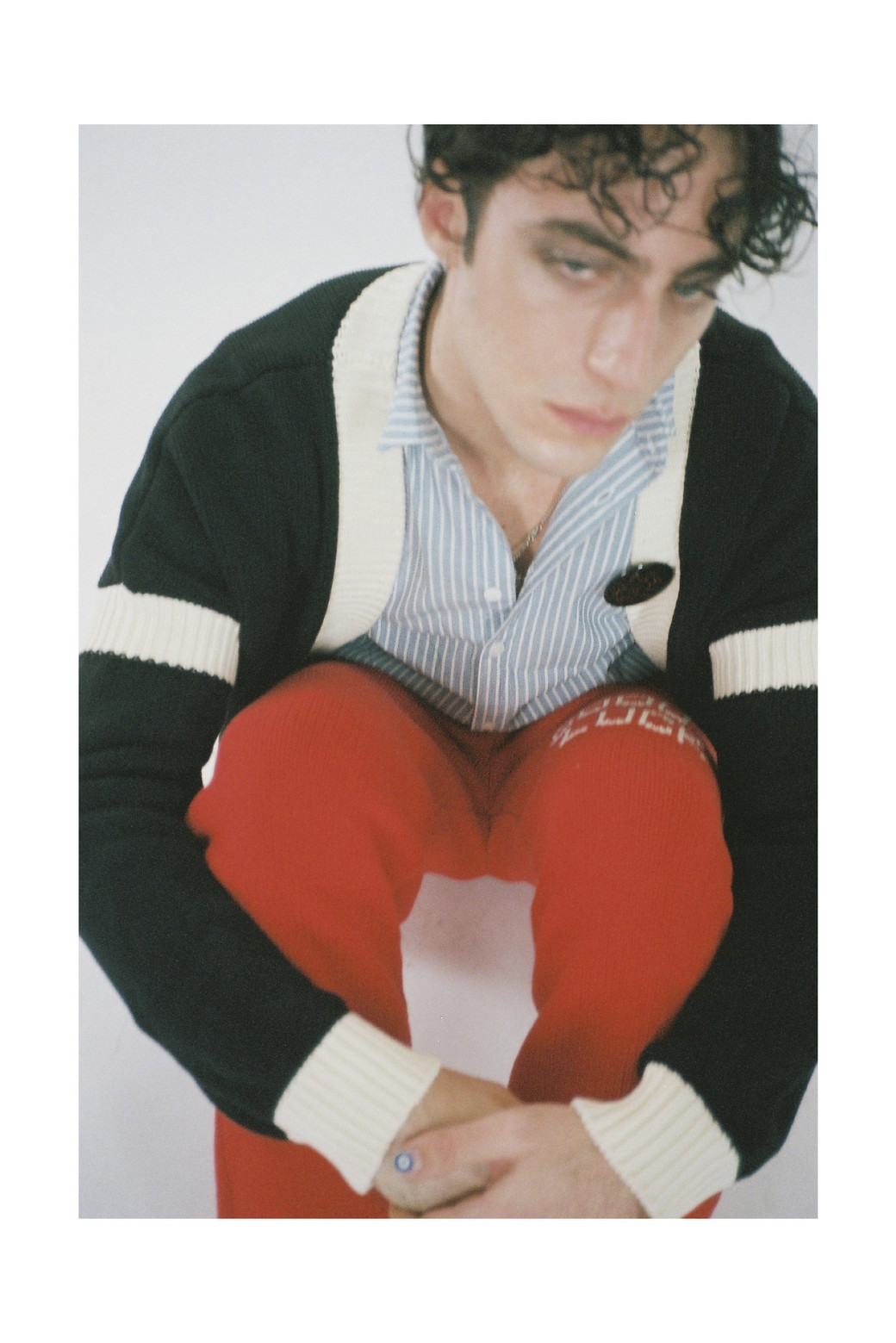
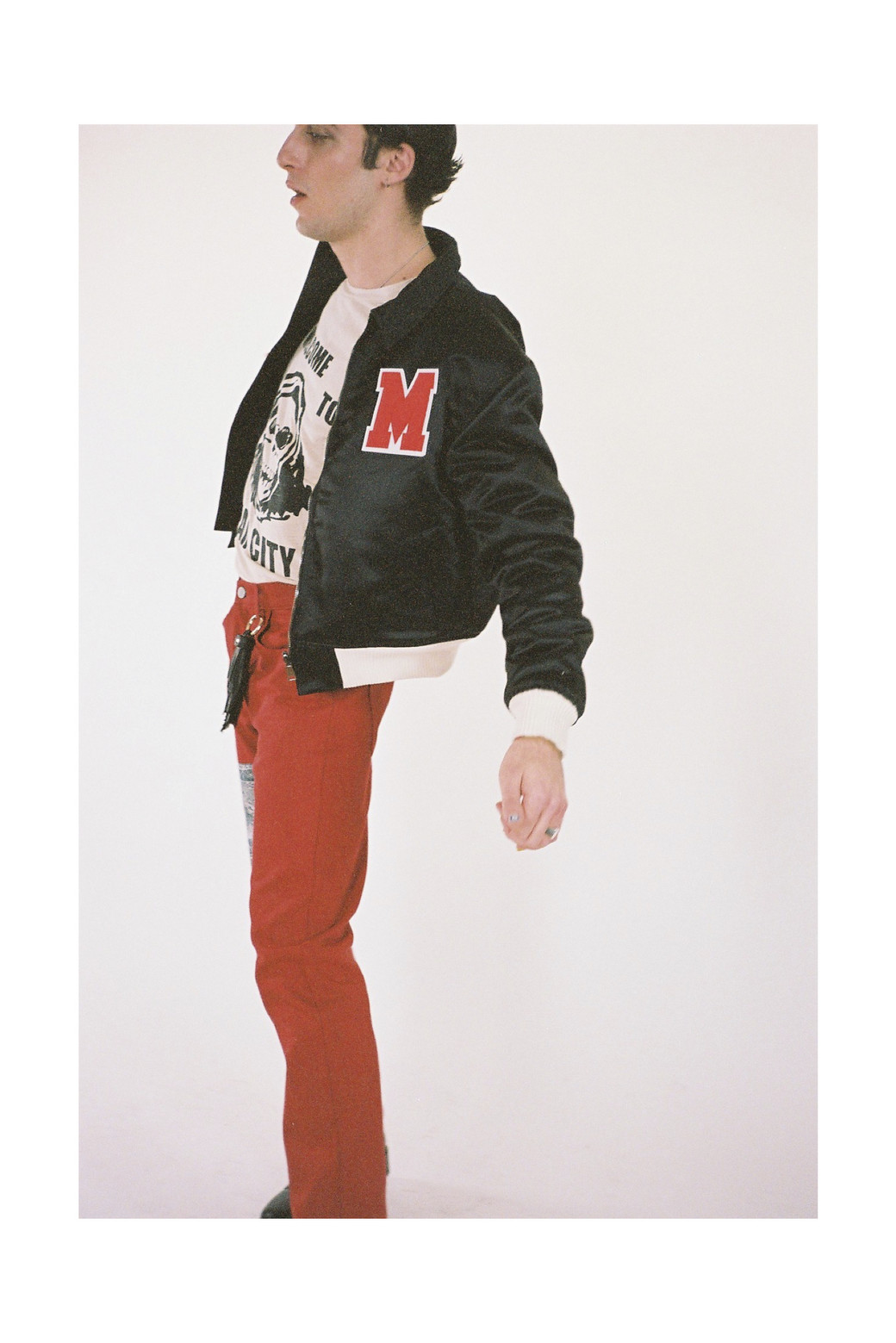
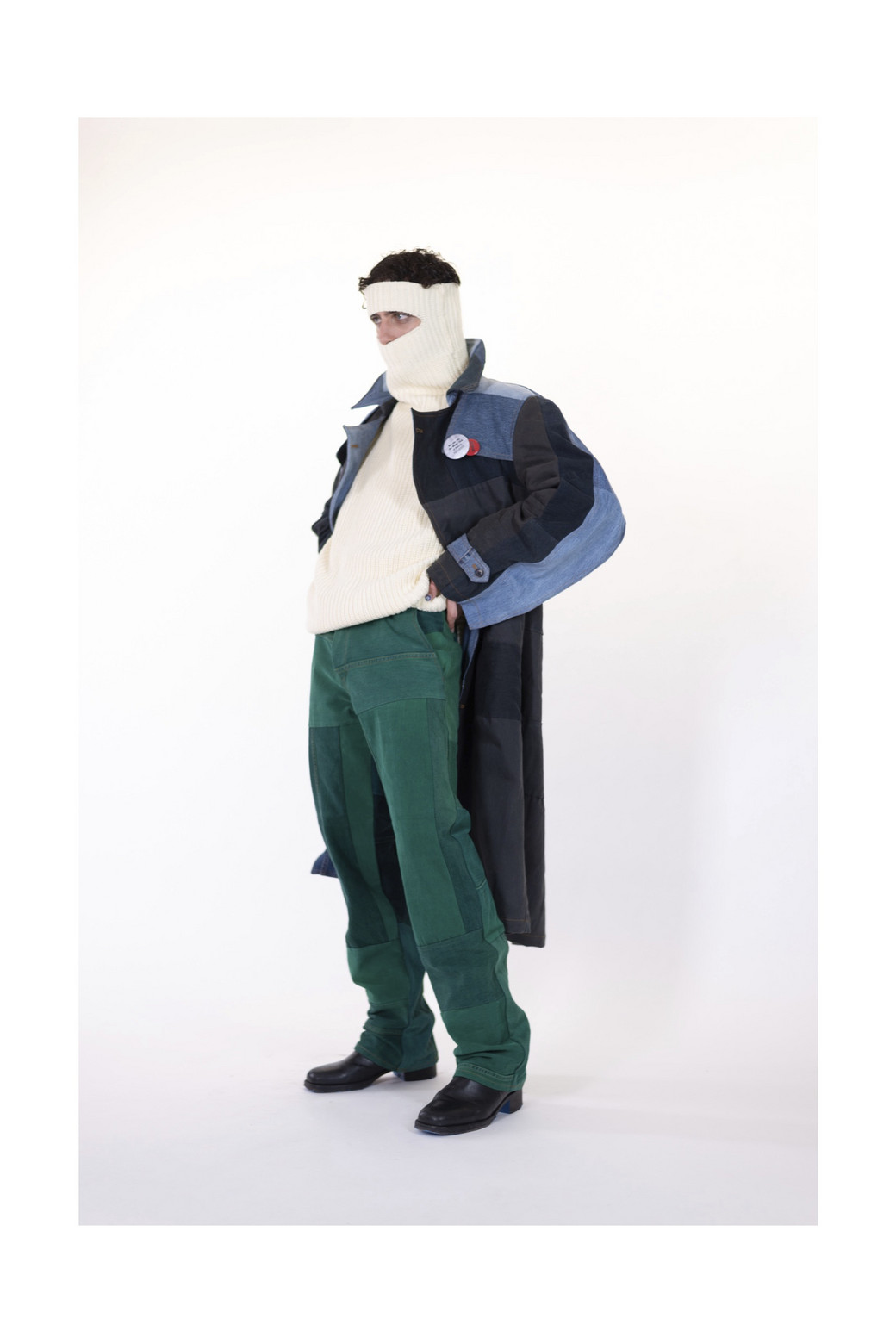
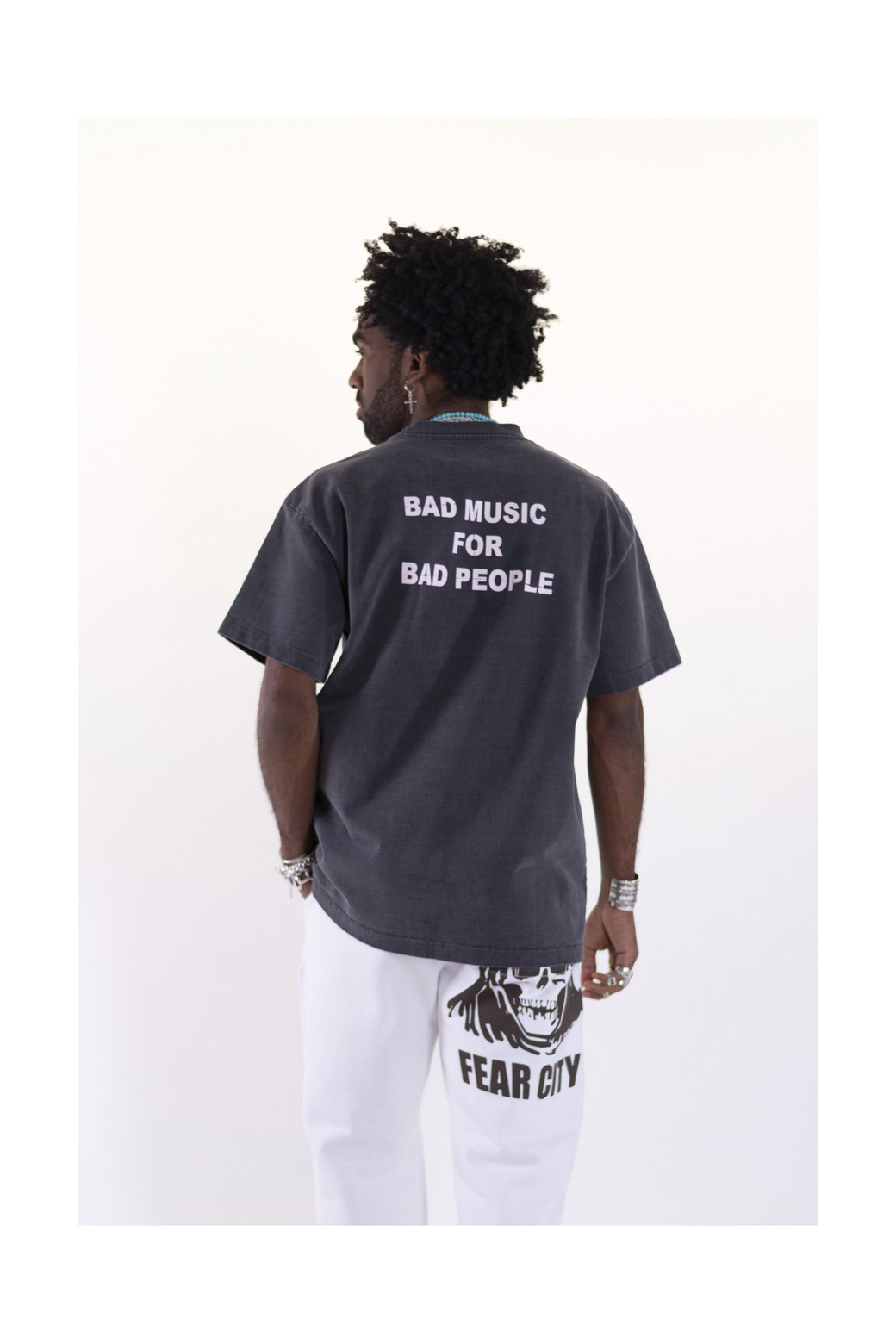
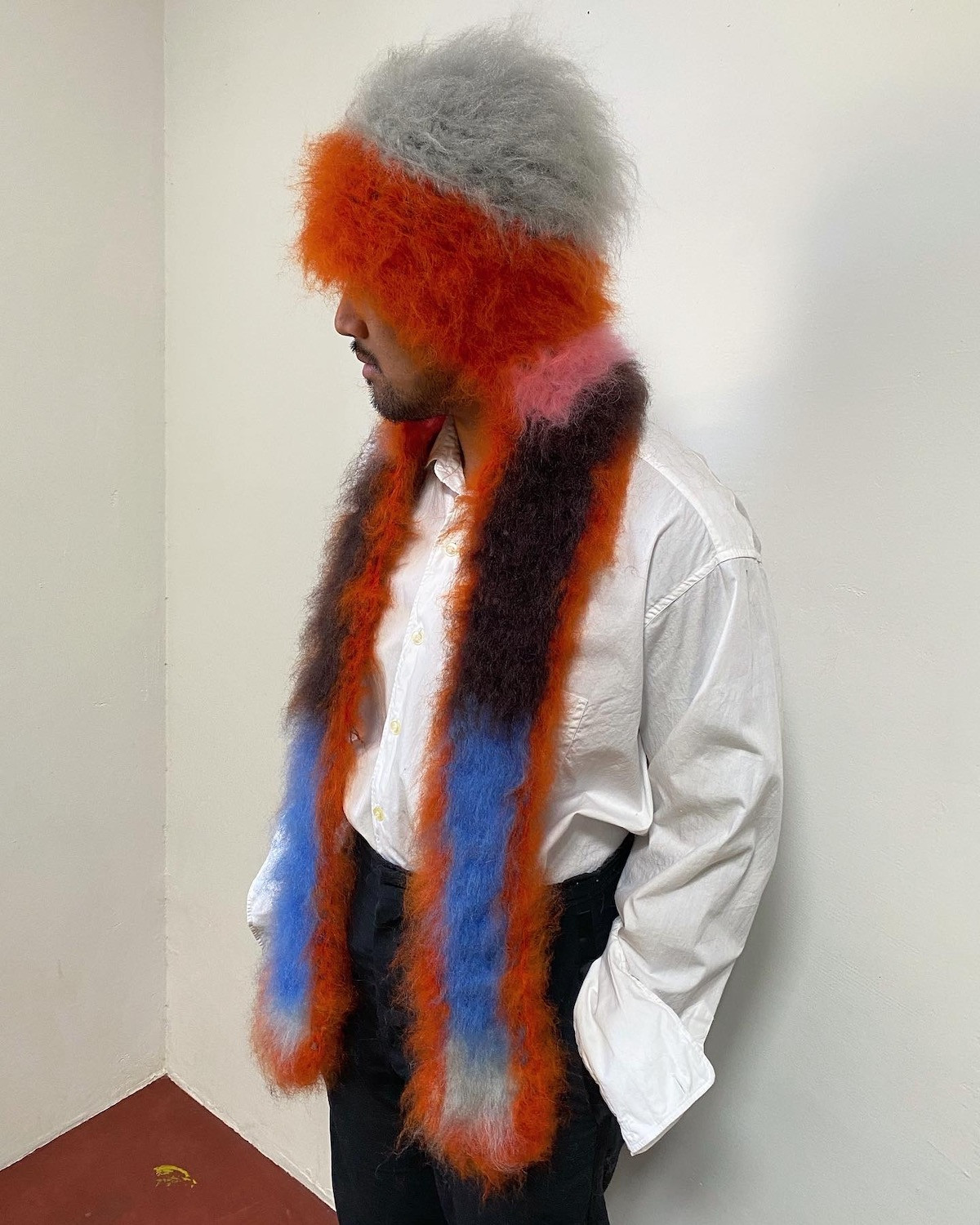
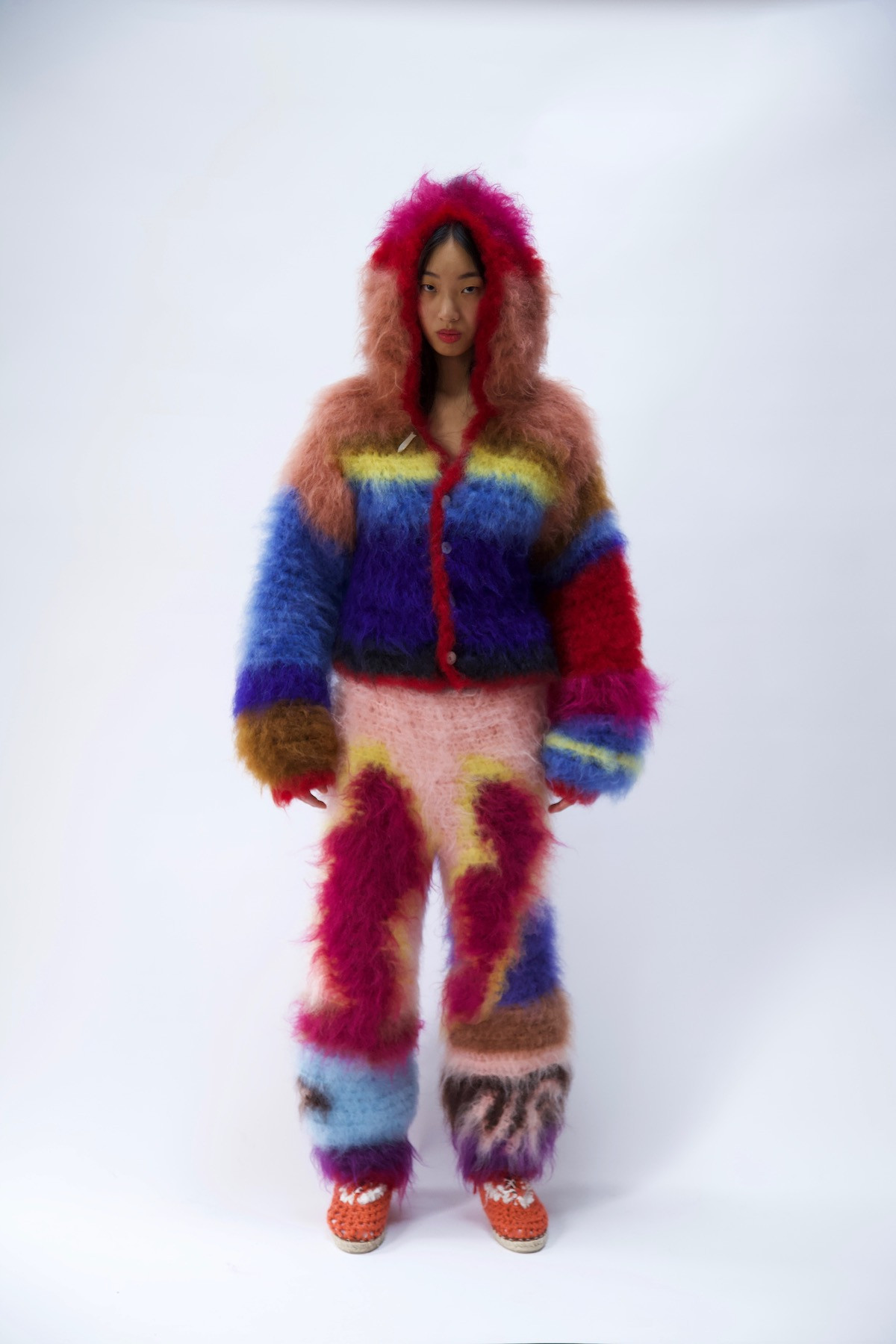
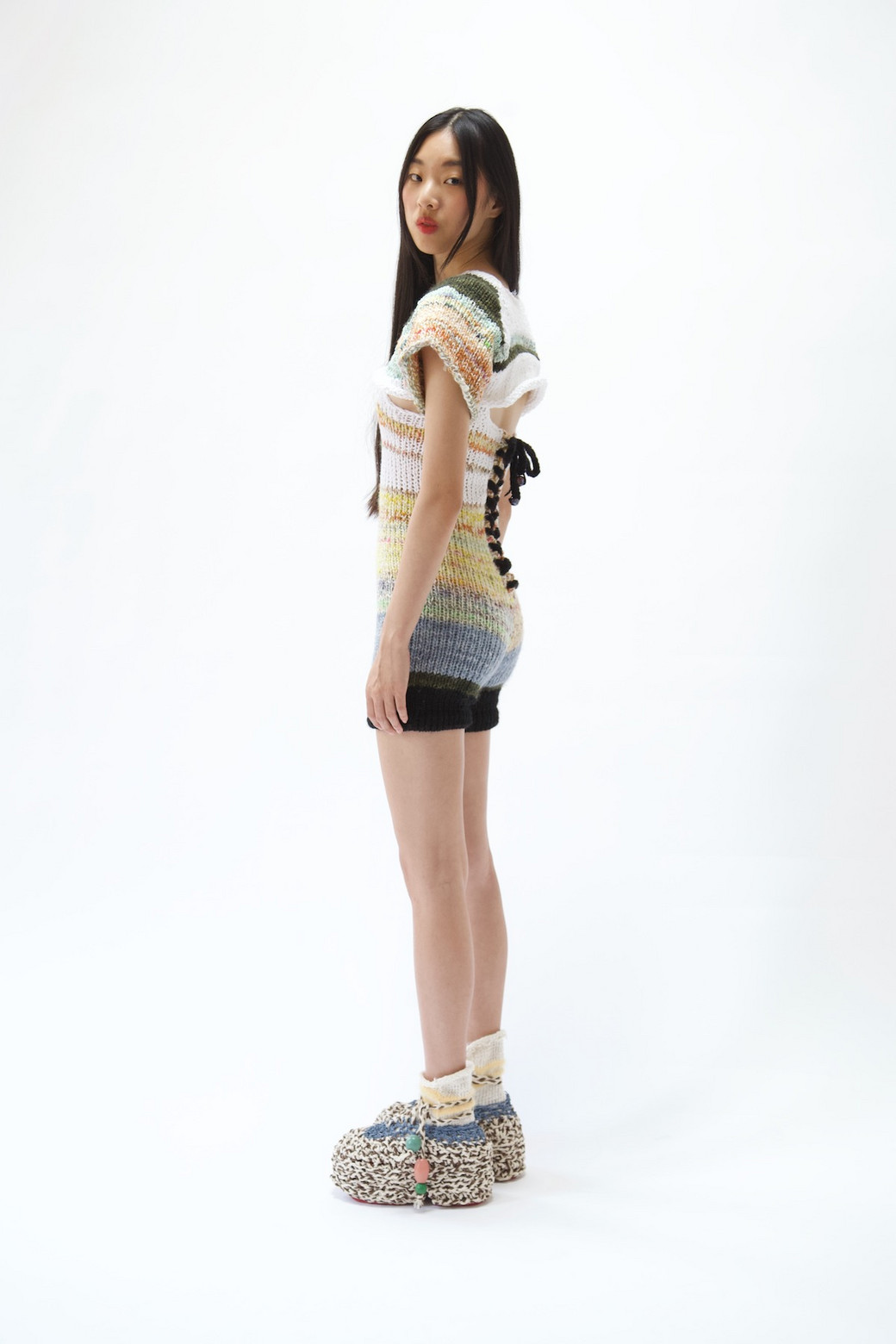
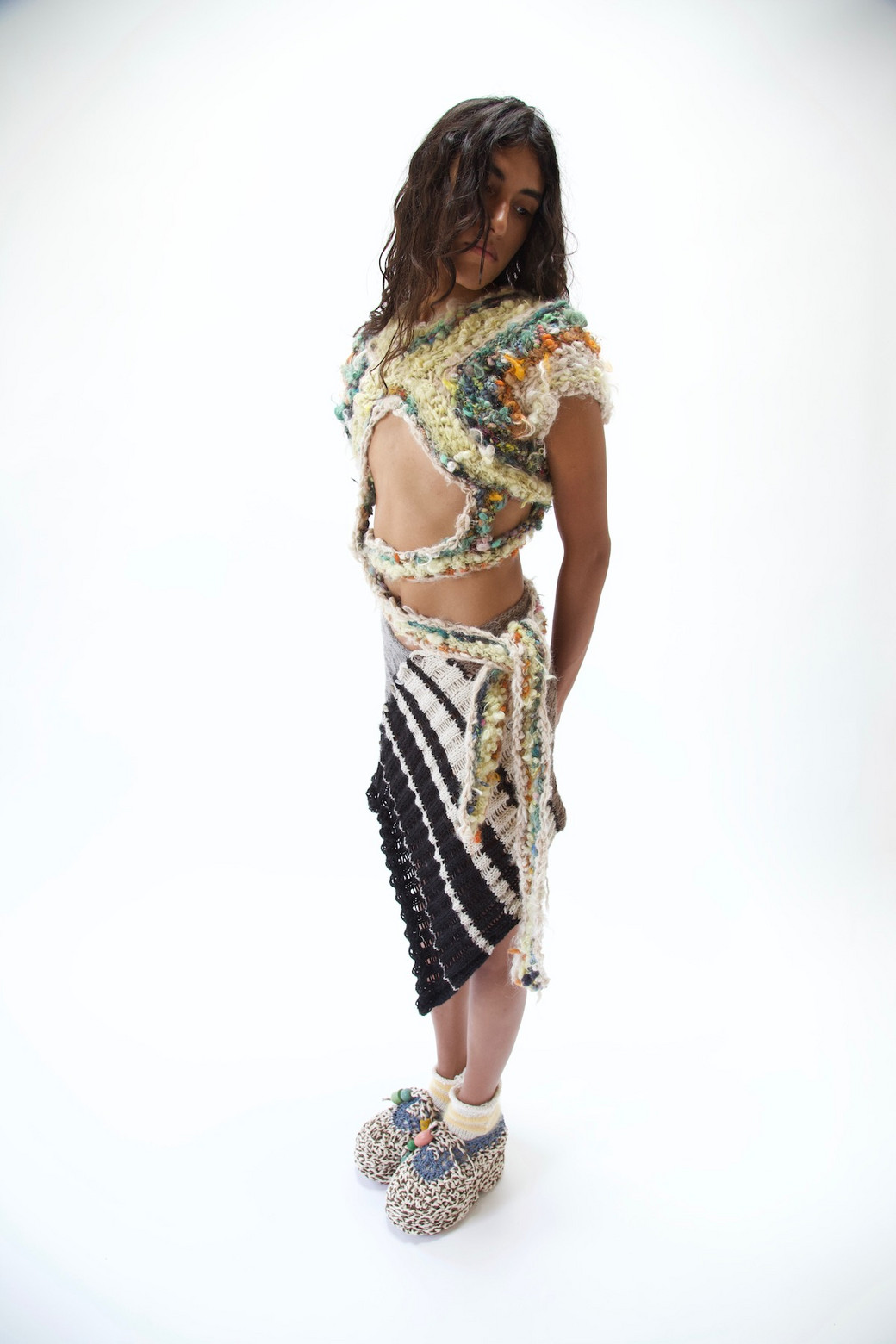
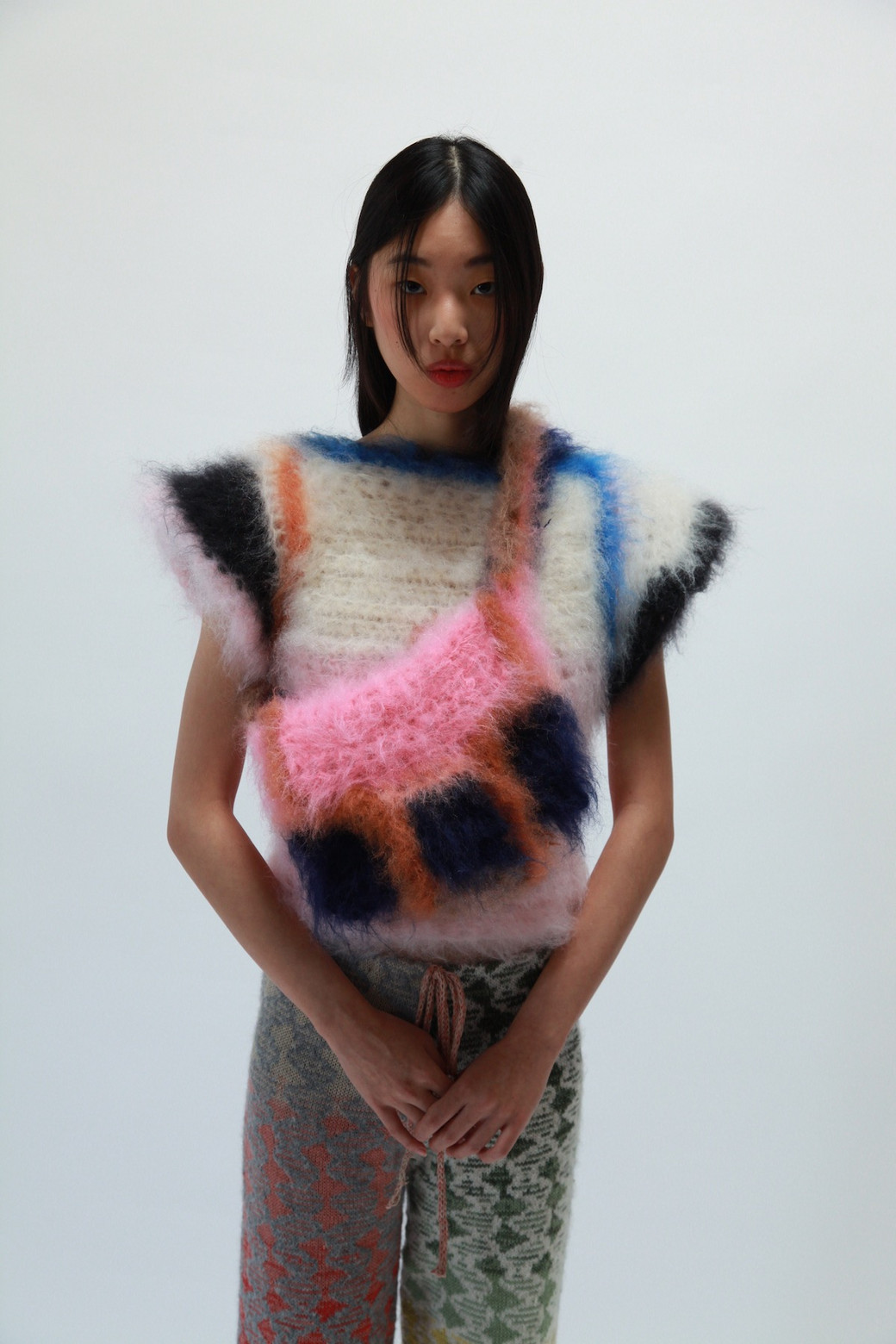
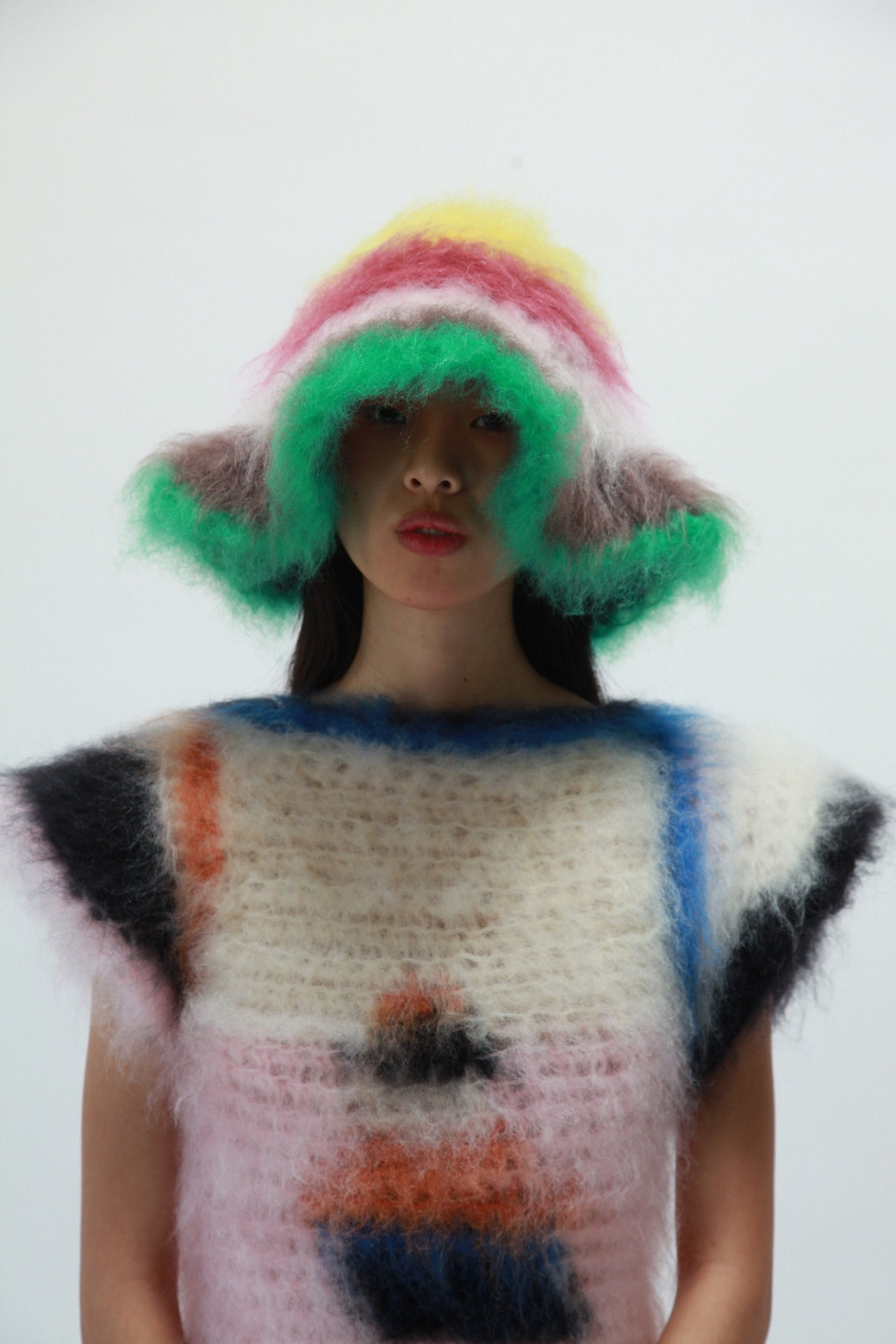
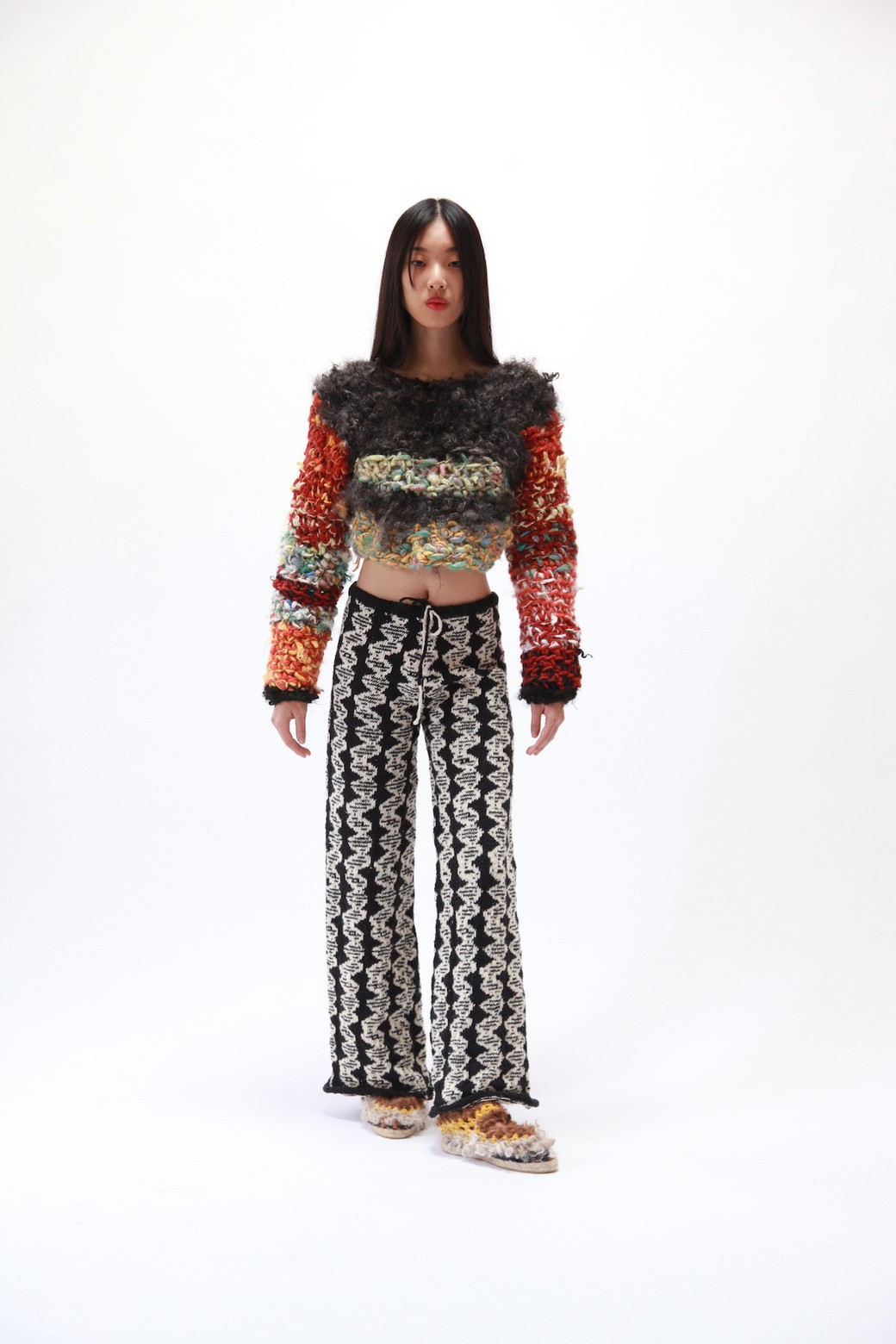
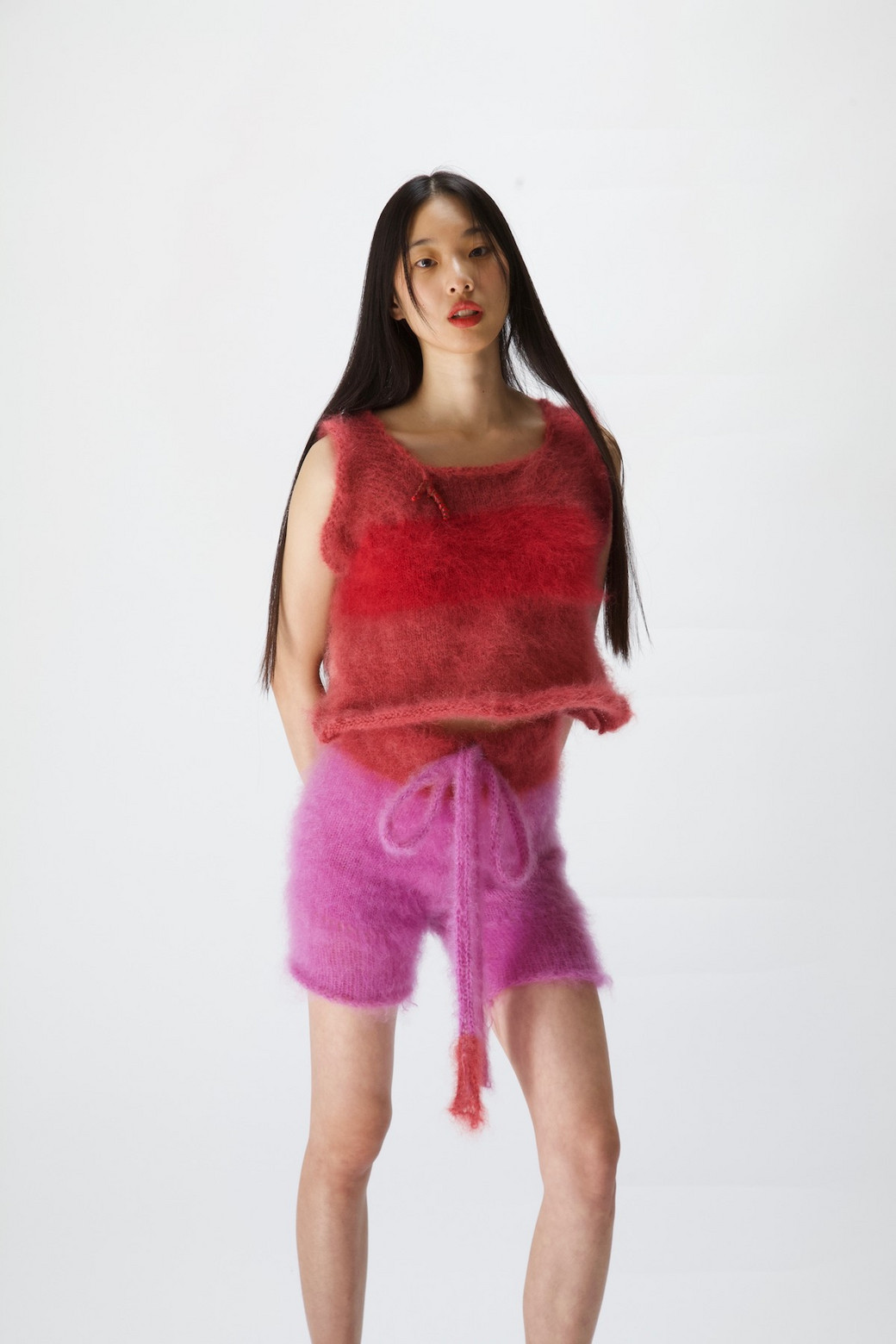
I love the concepts for each of your mohair yarn and fiber-art knitwear designs. Balaclavas, Mary Janes, bunny-sized sweaters, and hats— how do you come up with these ideas, and how long does each individual piece usually take to make?
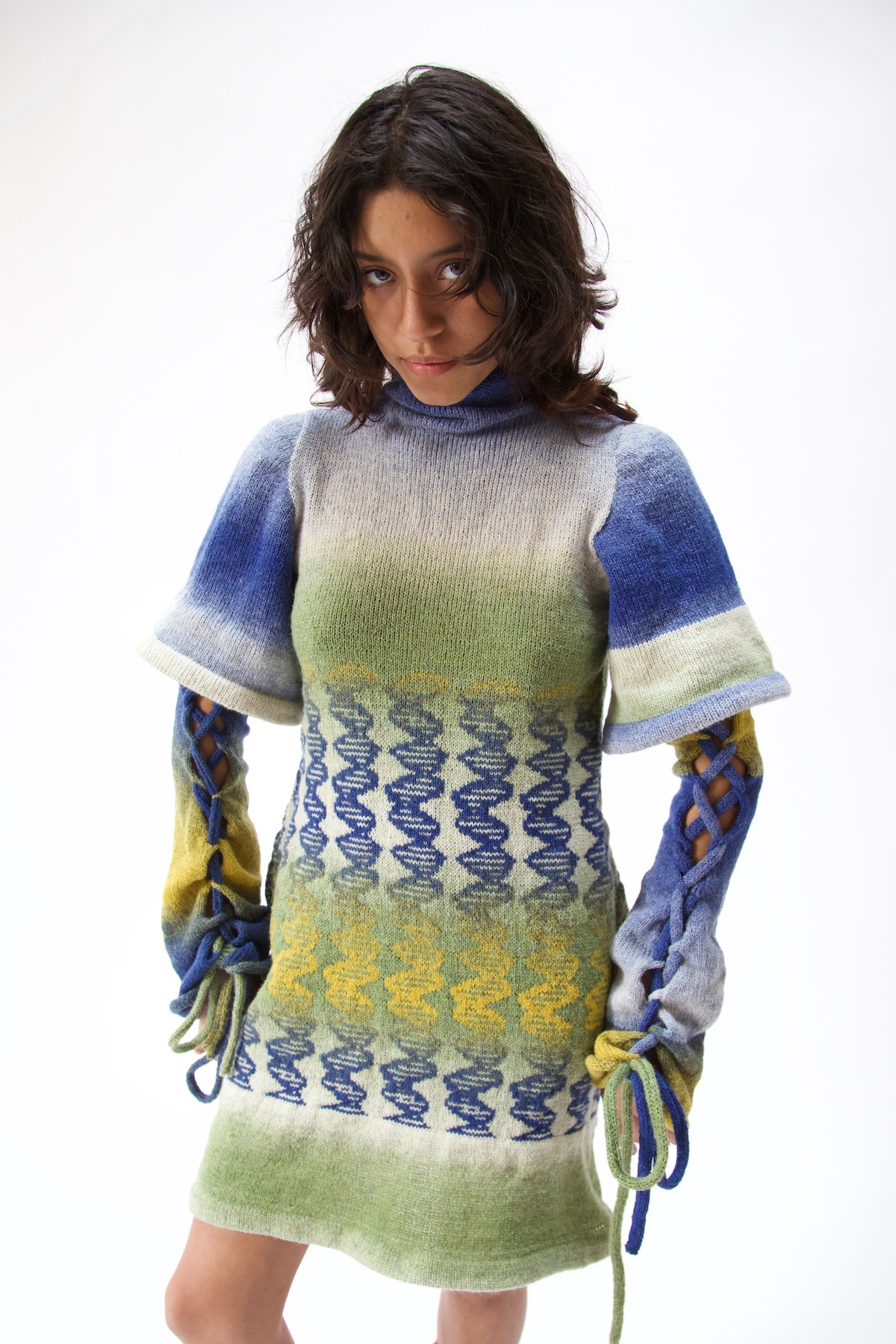
C — I think the base of everything is definitely in the materials, which probably comes from that interest in interacting with something and being inspired by it. Because I feel that the material itself, like really beautiful yarn, is already so exciting. Even if it’s in a ball. It’s so cool to think, ‘Okay, this material is great and beautiful. What could it become?’ And then the colors come in, you know, and then the shapes. I think the reason that [the pieces] vary so much is also that experimentation. I feel like my mind is sometimes an archive. I can't necessarily remember all the vintage pieces that we've had. I mean, I can look at the photos we have, because we've archived things photographically, so we can reference and look back like that. But a lot of it is just stuff that I internalized while we were processing the vintage pieces. And then suddenly, I'll be making something without a really strong plan, and then I'll be like, ‘Oh, I remember that sleeve on that sweater from two years ago that I really love. Maybe I could emulate something sort of similar to that shape with this color that I found.’ So it's kind of like remembering all of these little elements of things we've seen invented. Or, you know, now we're all so inundated with imagery, I feel like we have a lot of things that we don't even know where they come from.
Fashion is, of course, largely about appearance, but the feeling of certain clothing/fabrics/materials on your skin is a complex sensory experience. Many of your knitwear pieces often feature mixed fibers and textures. How does the tactile experience of your clothes fit into your artistic vision?
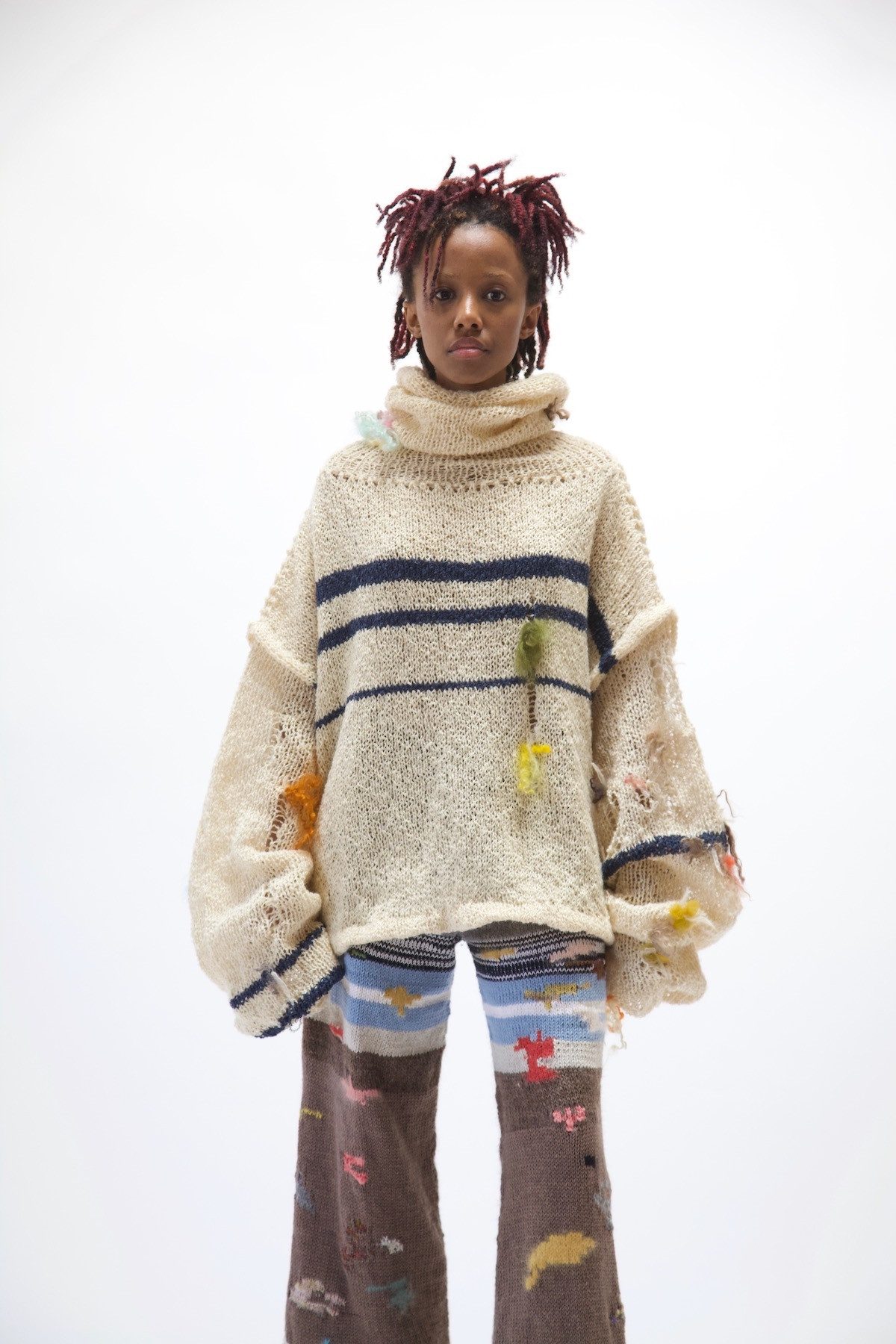
C — I love that question, I think that it's definitely a theme in the knitwear that we don't talk about that much. Because I think since we haven't had the ability to present it in an in-person scenario, or in a situation where people can actually try the stuff on, we haven't got to experience it. So I feel like, it's hard to have that conversation about the tactile experience. And I want to say that personally, in terms of the way technology is changing, and the way that so many of us spend so much time in front of a screen now, that that tactile experience feels kind of farther away than it was when I was like younger. So in a way, making these pieces has been a way to come back to that tactile, very sensory experience for myself. I would really hope that that stays in the pieces and is shared with the wearer because, for me, it's a really cathartic experience of touching and experiencing the materials. And a lot of that goes into the choosing of the materials for the piece.
We live in a world where it is imperative that we adopt a more sustainable mindset to reduce the waste of materials. How do you implement sustainable practices into your work and ensure a reduced carbon footprint?
C — I think at this point, just because everything we do is at such a small scale, we're just trying to set the foundation for if things grow, to be able to continue to do things the way that we do them now. Because, of course, when anything is smaller, it's much easier to control those elements and check on yourself on how you doing things. For us, there is also an accessibility standpoint to the vintage materials— sometimes not always— but sometimes they can be more affordable than new materials. It also just fits in with how we like to shop personally; as a family, as a business, we try to just use secondhand things because there's so much around. It’s to the point where I get anxious, buying new stuff. I know it's not like that for everybody, but I think we've just gone so headstrong into only reusing things because there's so much.
At some point, though, there were certain materials that I was really interested in working with, that are just not so accessible as vintage. So it was like, ‘Okay, how do I source these things in a conscious way.’ The happy thing that we found with sourcing non-secondhand materials is that a lot of the most beautiful textures, the most beautiful quality yarns are actually handspun in small batches. And that stuff is really expensive. But it is so nice, and it's so beautiful to the touch. Like my favorite material is this alpaca yarn that's handspun. It's so soft and has this really incredible drape, whereas mohair doesn't have a drape — it's more structured, which is really fun. But that alpaca yarn is my most favorite to use. And it's made by this older woman in the Pacific Northwest who collects alpaca shearings from local farms, and she just spins this incredible yarn. A lot of the one-of-the-kind handspun yarns we use are coming from people like that, that we've spent time sourcing from around the US.