
Lead image: ‘No_Code Shelter: Stories of Contemporary Life’ by Tod’s and Studio Andrea Caputo.
Stay informed on our latest news!

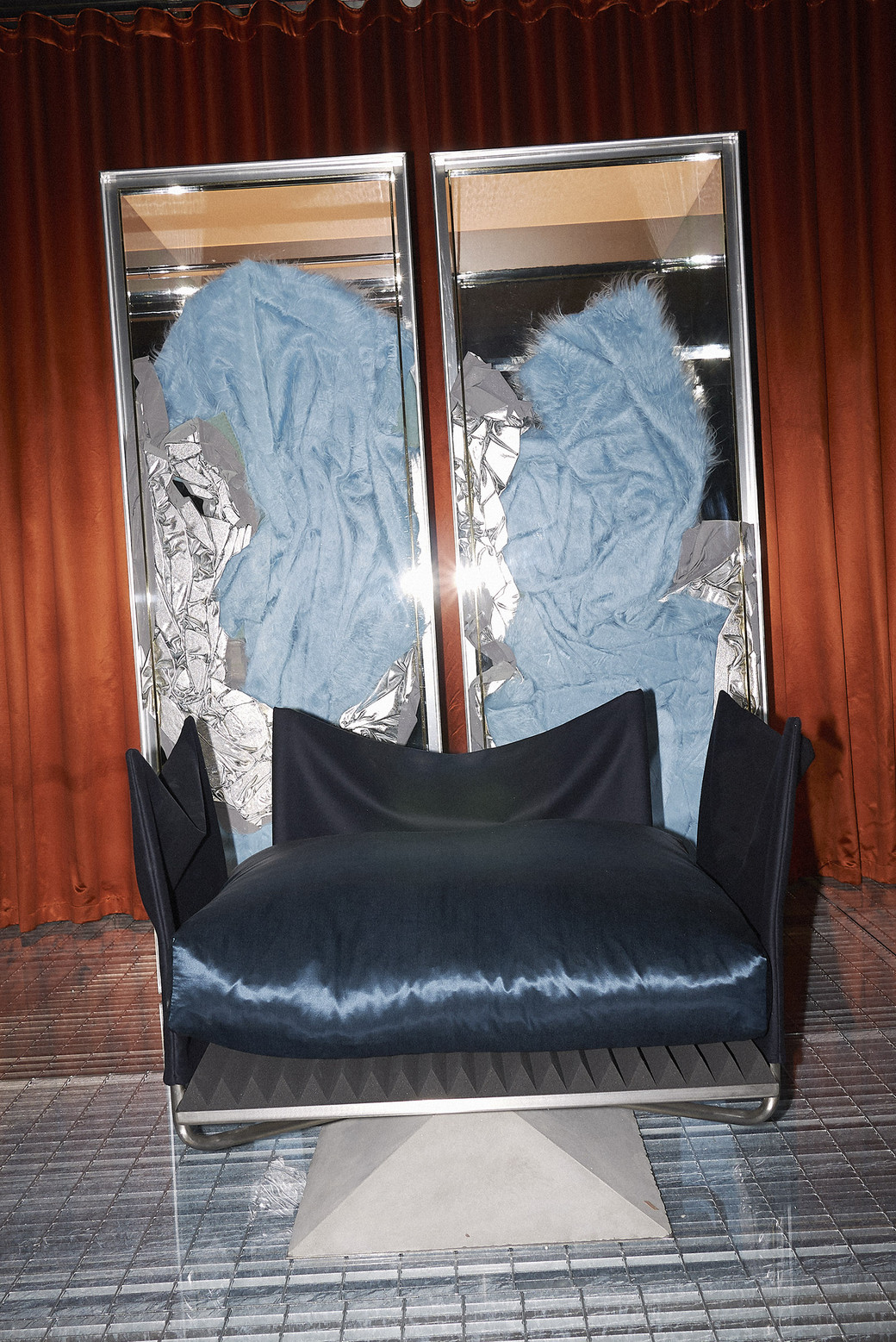
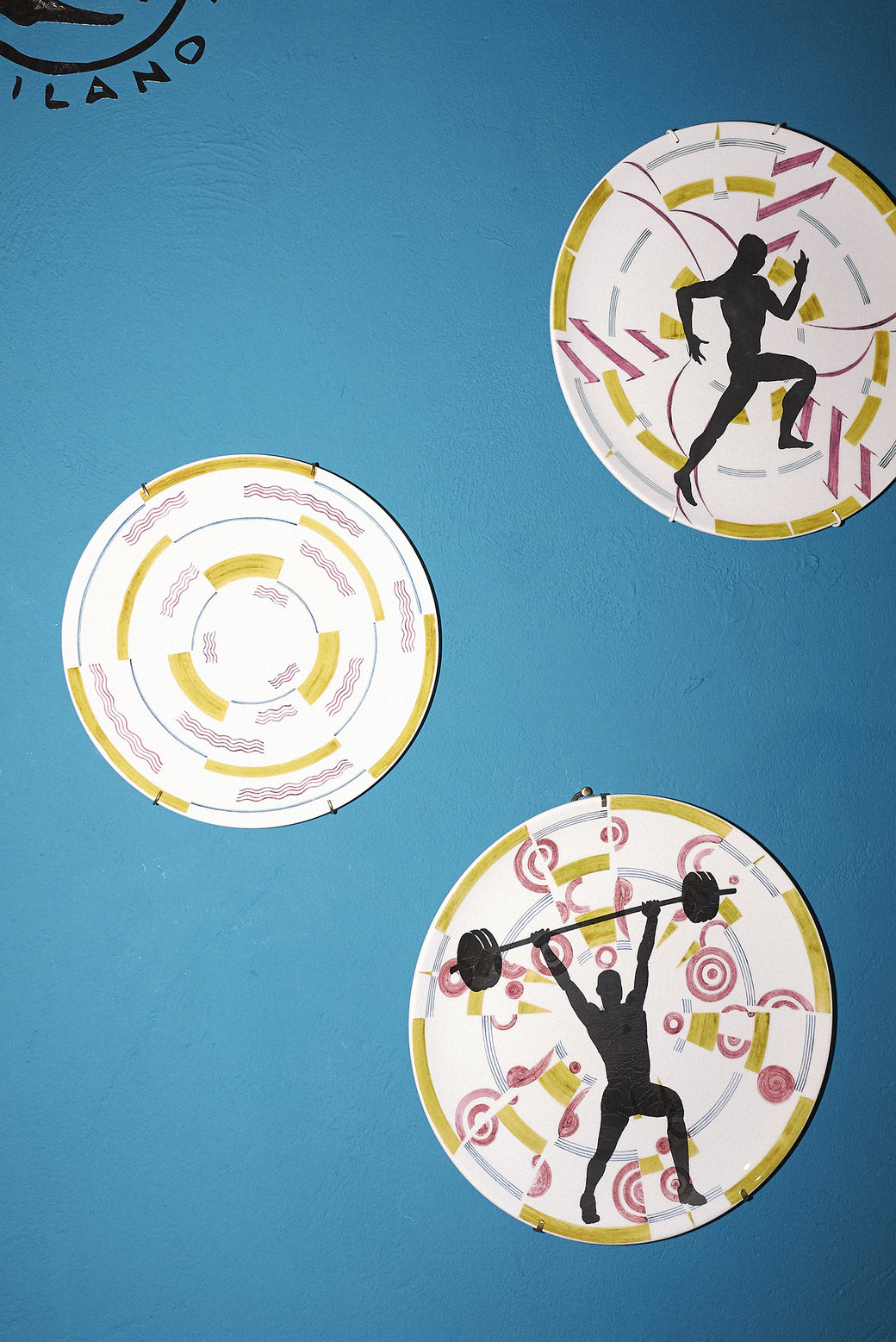
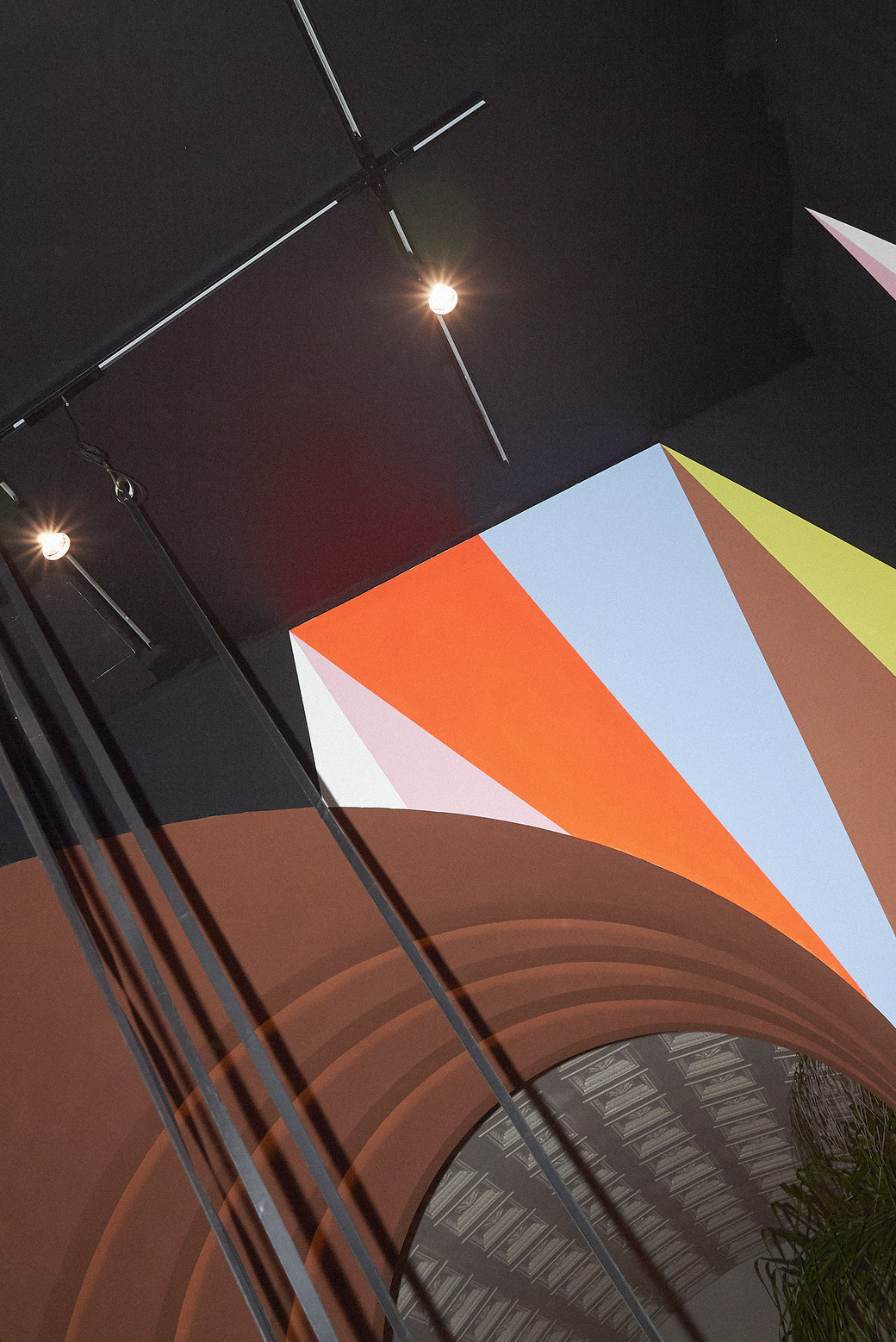
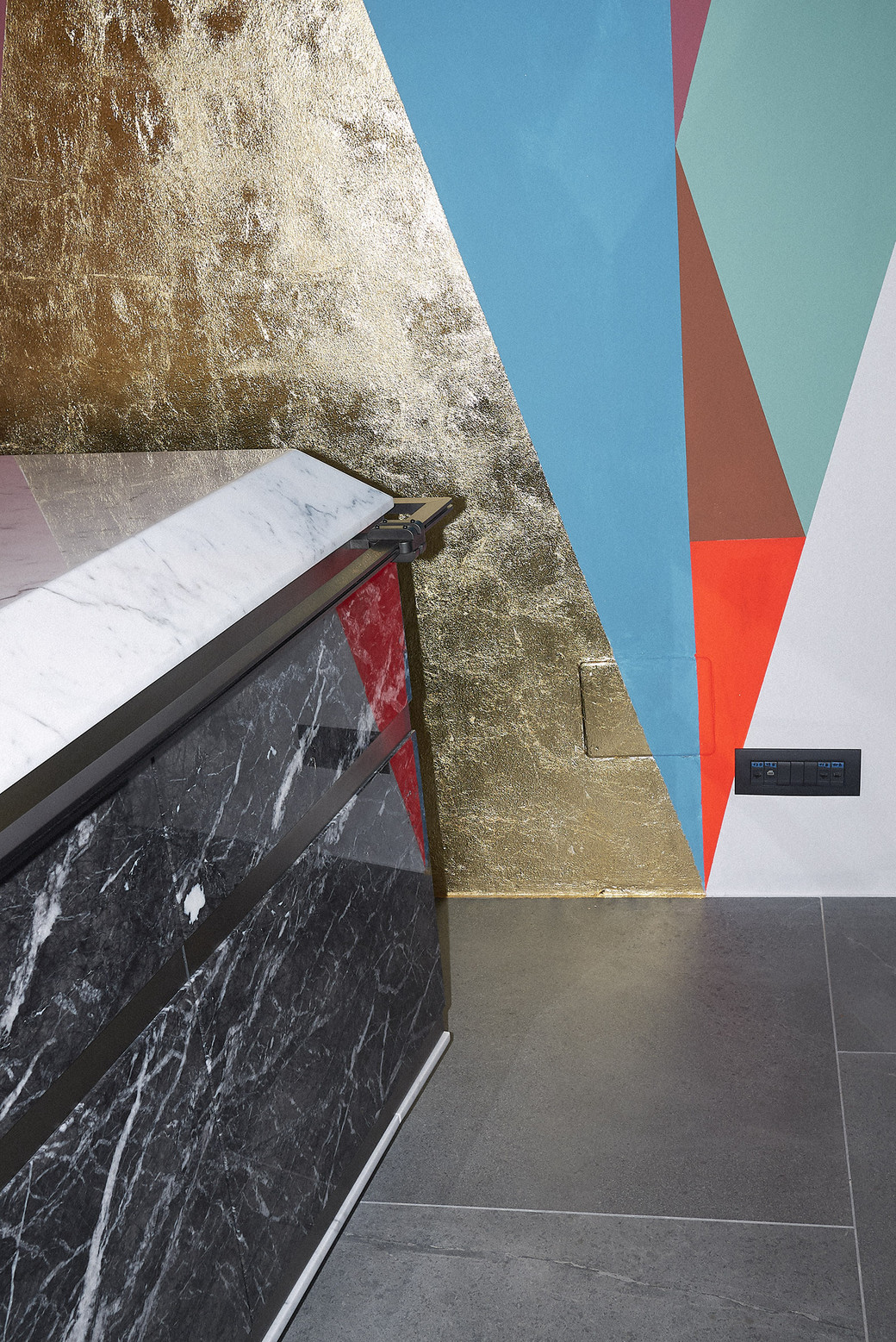
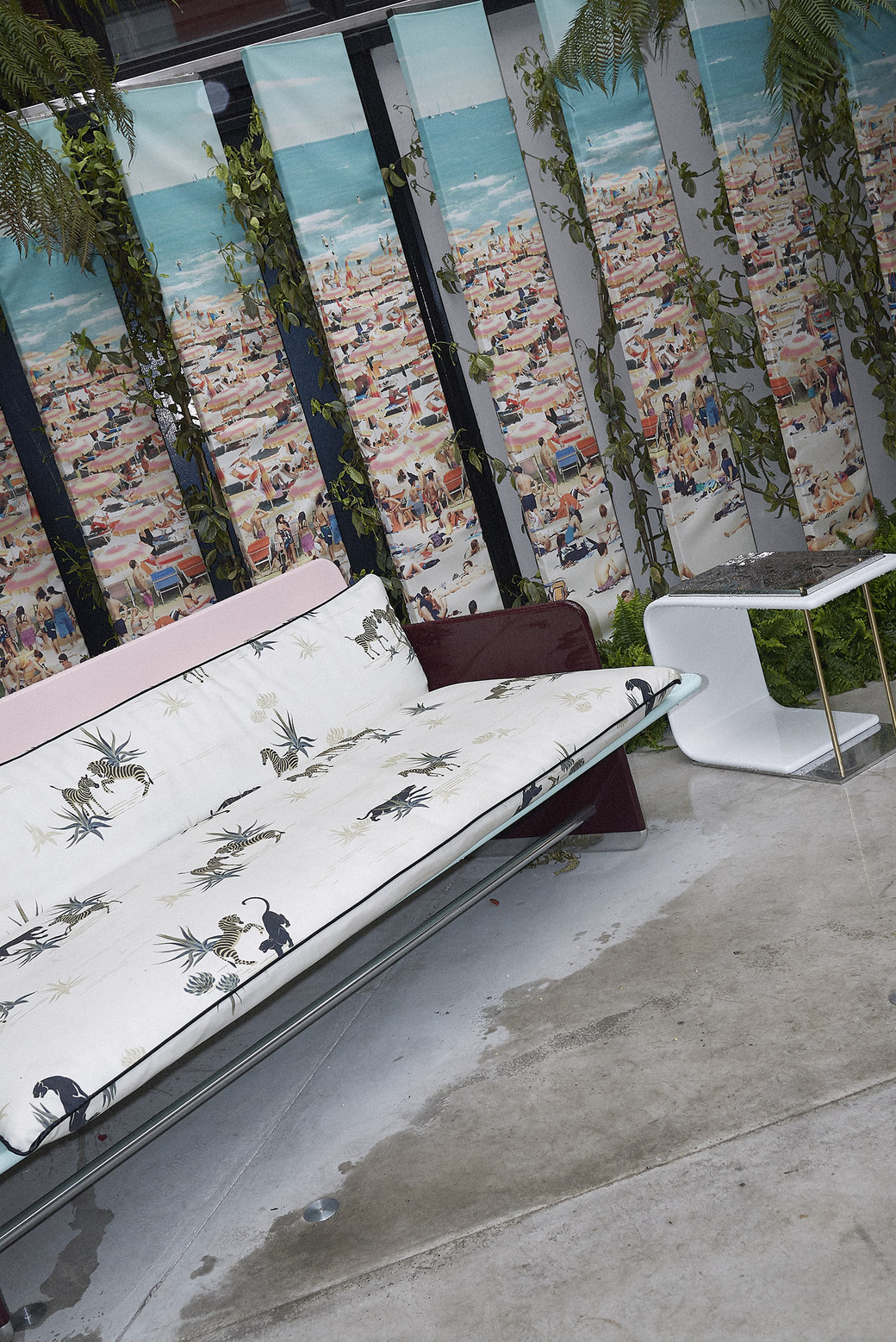
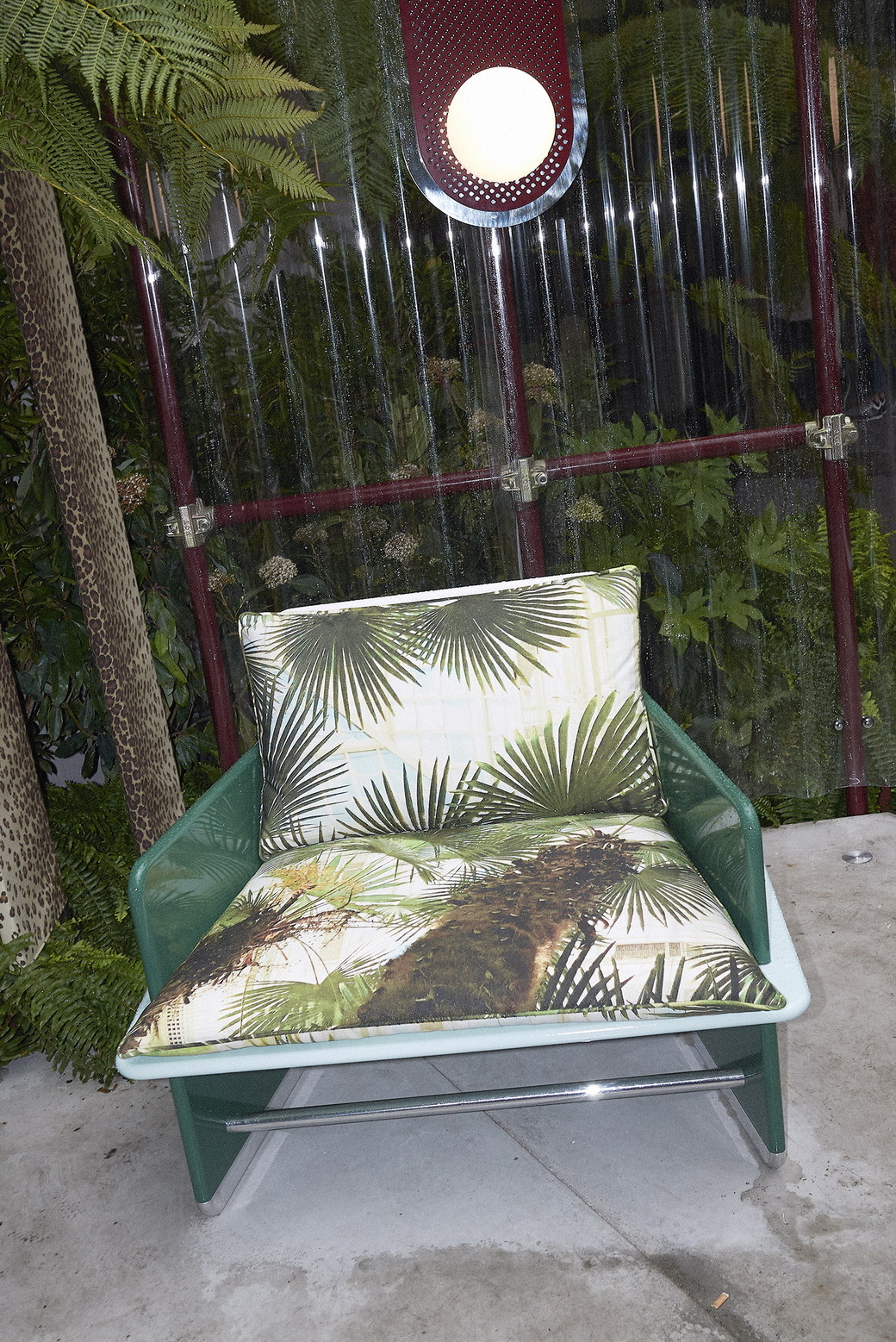
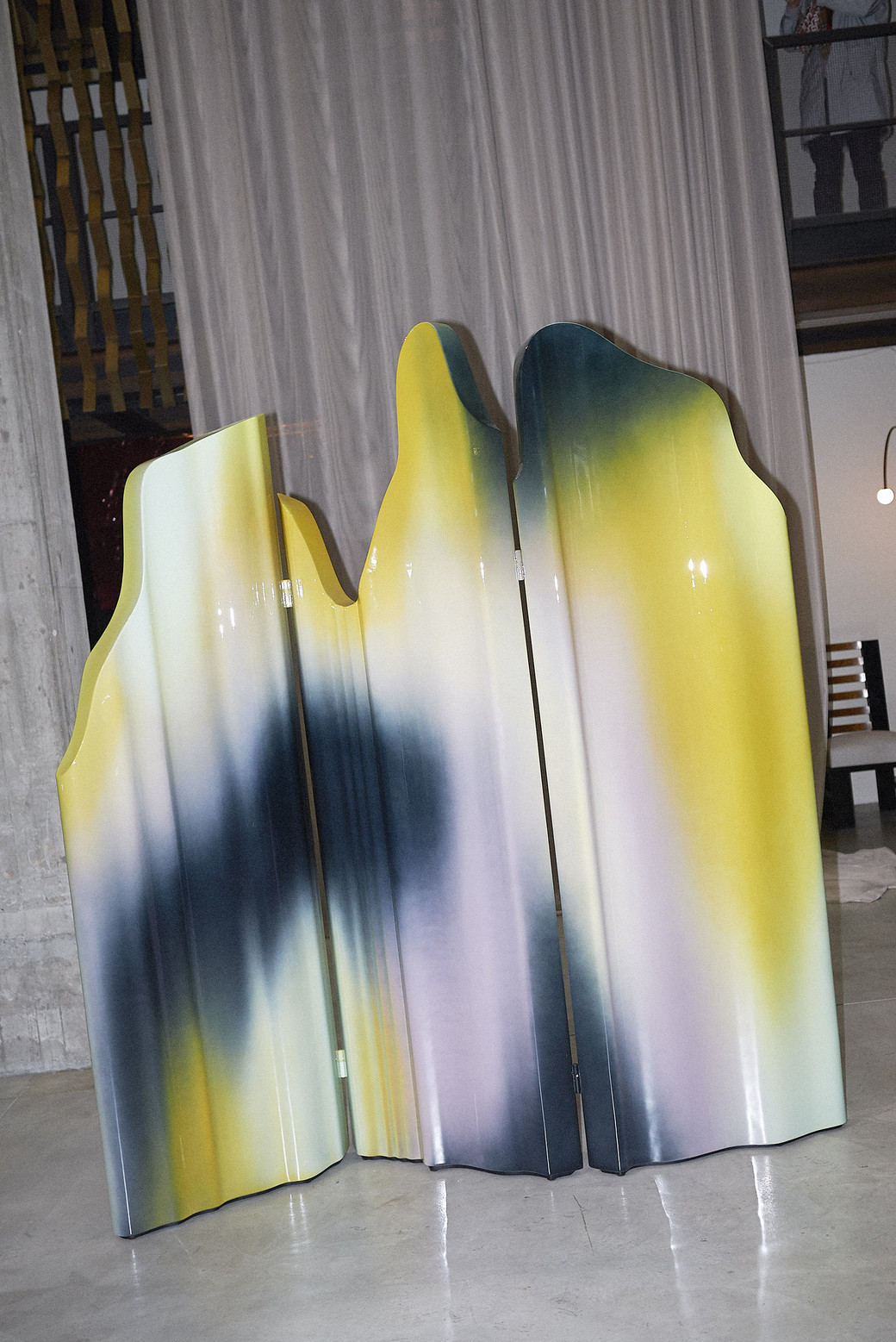

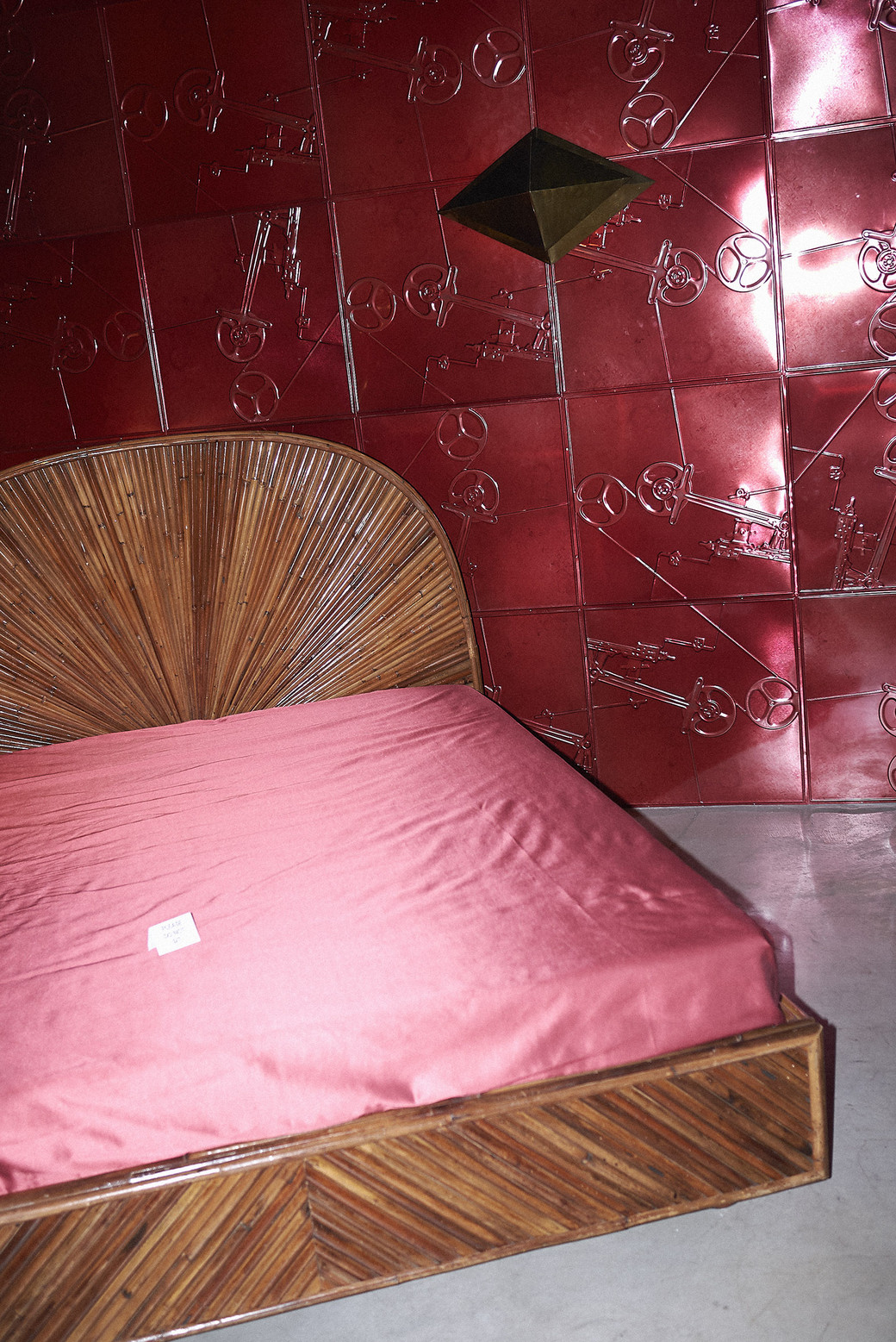
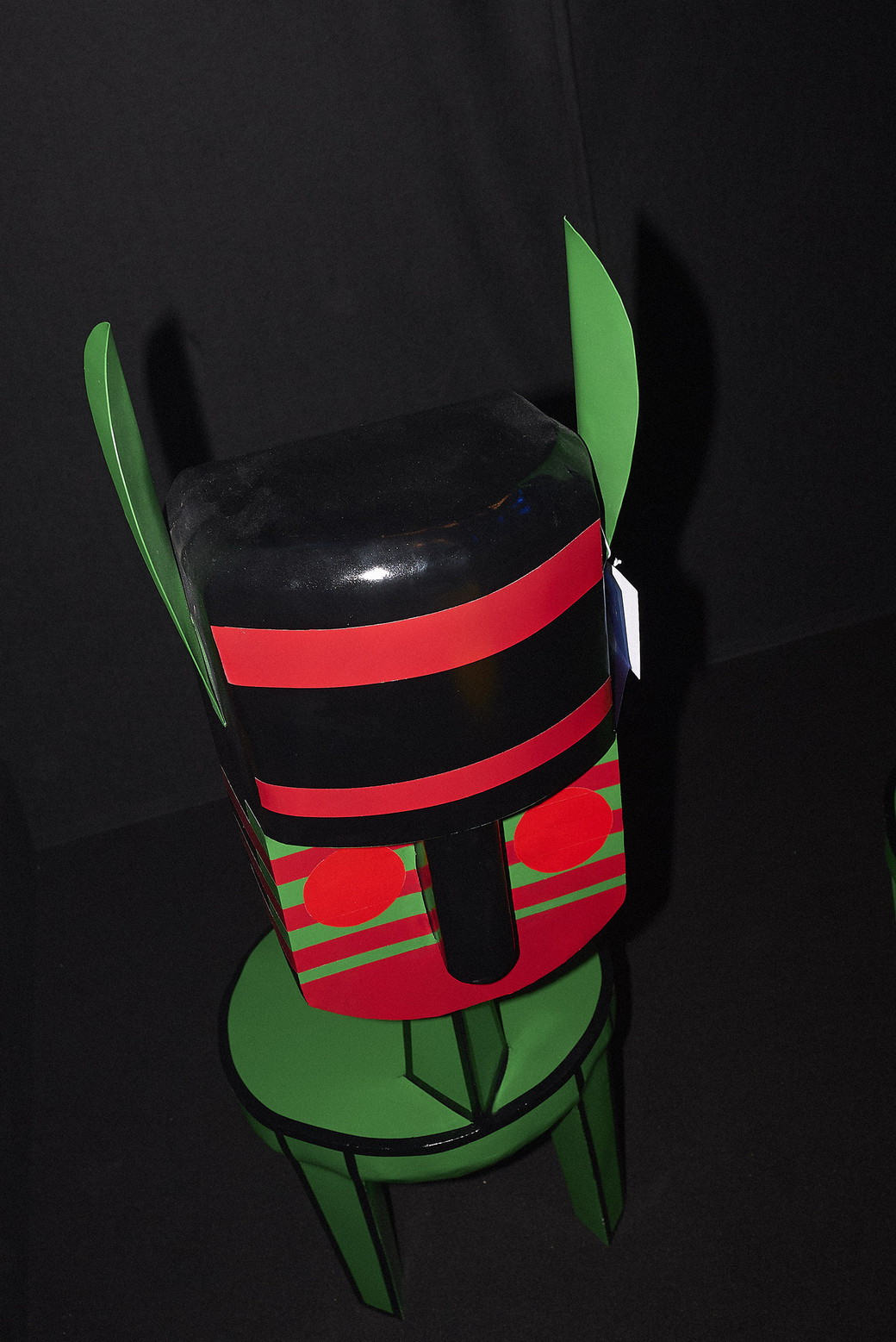
Lead image: ‘No_Code Shelter: Stories of Contemporary Life’ by Tod’s and Studio Andrea Caputo.

Ocean Space, presented by TBA21-Academy, in Venice, is seeking to mend and redefine our relationship with the ocean; it is like a collective therapist’s couch for humanity to testify, to come to terms with our treatment of the seas. Situated in an ancient Venetian church, the Church of San Lorenzo, which had been mostly abandoned for over one hundred years, it is a space where scientists and artists alike can come together and form a call to arms on behalf of the world’s oceans.
Just in time for the Venice Biennale, the inaugural exhibition by Joan Jonas, “Moving Off the Land II," is a mesmeric celebration of the world underwater, the second in a series with performative visual pieces that exist at the nexus of scientific and artistic inquiry. The artist traveled with oceanographers the world over, collecting video footage and research to inform her body of work, which is an intimately realized and boldly executed multimedia series that brings to light questions of biological intent, reminders of our own connection to the ocean a la Origin of Species.
From the ocean we came, and to it we shall return — the least we can do is treat it with respect.
office spoke with co-founder and director of TBA21-Academy Markus Reymann about the goals of the space and Jonas' exhibit.


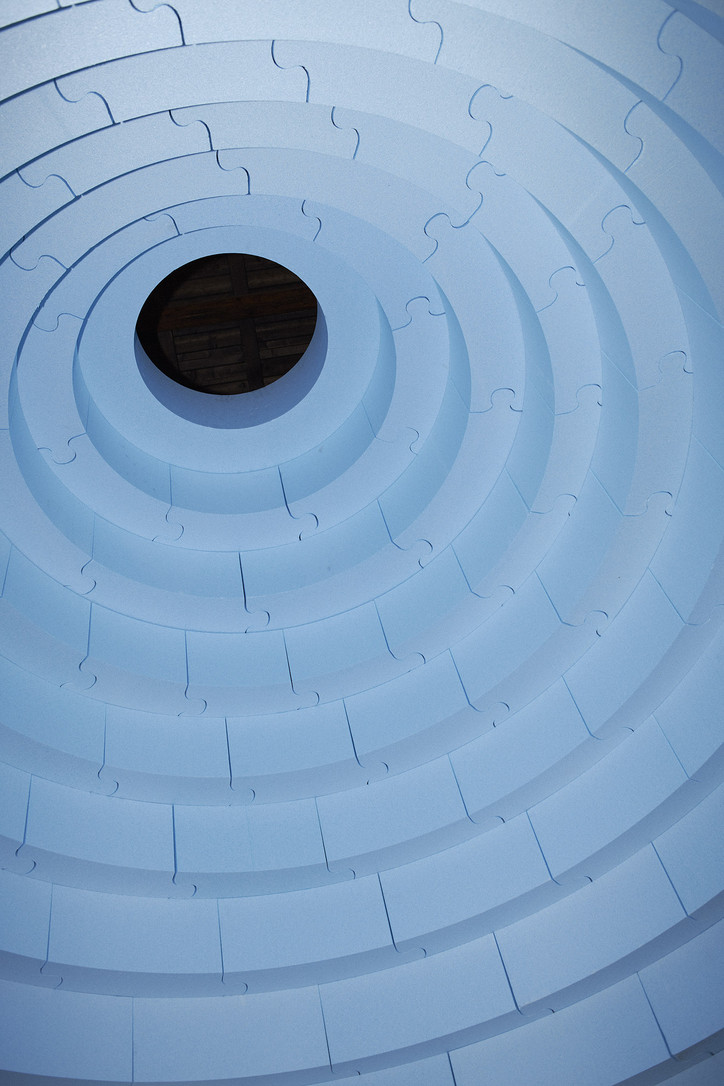
Above: 'Moving Off the Land' and 'Moving Off the Land II' at the Church of San Lorenzo, Venice.
How did you decide on Joan Jonas as the inaugural artist to exhibit in the space? What about her work speaks to this project?
The process of working with Joan Jonas is indicative of the way TBA21–Academy connects disciplines, people, geographies, and formats. The Academy’s journeys at sea and on land catalyze processes that involve traveling, wandering, researching, and allowing art to happen in an organic way. Jonas’s methodology is related: she visited numerous aquariums around the world, experienced and filmed in the ocean, joined the Academy on a residency in Jamaica, spent time with local communities, gave a workshop to art students, and engaged in conversations with the scientific community, specifically David Gruber, who has been a close collaborator on this journey.
Participating in the process with Joan, who recognizes what art can achieve, how art senses the world, and how art motivates different knowledge systems about the ocean, opened our program up to forms, narratives, questions, limits, and futures we never saw before. At Ocean Space in Venice, “Moving Off the Land II” is a reminder that the subject of the program is a living, sentient entity: the ocean.
Can you describe Jonas’ piece and how it ties in with Ocean Space?
Joan's work confronts the complex relationships that humans have with the natural world. Part poetic musing, part scientific inquiry, the installation brings together the various elements that are at the core of what this new transdisciplinary center is all about.
“Moving Off the Land II” evolved in an iterative process over the course of three years, following Joan’s performance of the work in 2016 in Kochi coinciding with the Biennale. The performance was part of TBA21–Academy’s fellowship program. The Current, which brings artists and scientists on expeditions of collaborative discovery at sea and disseminates the questions and findings arising from the expeditions in land-based Convenings around the world. Ute Meta Bauer was the first expedition leader of The Current and, having a long-standing relationship with Joan, brought her into the program during the Convening in Kochi. In the years since, Joan has continued to perform and develop the work, incorporating underwater footage from the marine biologist David Gruber and from her residency in Jamaica with our scientific partner Alligator Head Foundation. The result is a dynamic installation — of video, drawings, sculpture, and sound — that engages the public in a moving tribute to the ocean. The work inspires us to slow down and consider our relationship with the sea and its creatures, resonating deeply with Ocean Space’s core mission.
What is the goal of Ocean Space?
Ocean Space encourages us to radically reimagine how we see and treat the oceans. While initiated by TBA21–Academy, Ocean Space is conceived as a collaborative platform for exchange and discovery. Our hope is that it will become a self-generating resource, cultivating new mindsets that will dare the public to think differently and make a difference.


Above: The Church of San Lorenzo and 'Moving Off the Land'
I love that it’s in a renovated church—how/why was the space originally chosen?
The Church of San Lorenzo is a beautiful and enigmatic building that, unfortunately, has been largely closed to the public for more than 120 years, with few exceptions. We first visited the church during the 2012 Biennale when the Mexican pavilion was hosted there and were immediately struck by the breathtaking dimensions of the space. The opportunity to reanimate this incredible building and reintegrate it within the cultural fabric of the community was one we could not pass up. Venice’s strong connection to the sea and history as a center of exchange made it an ideal location for Ocean Space. Our hope is that Ocean Space will engage the local community and international visitors alike into a global vision for change.
How do you think humanity’s relationship with the ocean needs to change? How has it been defined thus far?
I strongly believe that we have to radically change the way we live and interact with the ocean. At this point, the ocean suffers the tragedy of the commons, the high seas belong to no one and everyone at the same time. Covering 72 percent of the surface of the planet, the ocean is too big to comprehend; it is a “hyperobject”— an entity of vast temporal and spatial dimensions that puts fundamental strains on our philosophical habits of thought and ways of reasoning, as per Timothy Morton.
Although every other breath each of us on this planet take comes from the ocean, we know more about the dark side of the moon and Mars than we know about the ocean. Most oceanographic studies cannot be done by people, due to cost and difficulty, and are done instead by remotely-operated vehicles and sensors. I strongly believe that we urgently need to reconnect to the ocean, its health is fundamental for the survival of our species on the planet.
I’ve always considered the ocean a kind of divine entity. Does working with the ocean start in an emotional place? How would you describe your personal relationship with the ocean?
Although I am personally involved in a variety of activities that physically connect me to the ocean — exploration, research, science, conservation, protection and restoration — the ocean, for me, has become an incredibly powerful metaphor. In a time that demands radical changes and a drastic rethinking of our life on and with the planet, thinking in a way that considers and comes from the ocean provides a solution. Can we allow ourselves to fully accept a constantly changing and intricately interconnected system and act upon our realizations? This informs the way we conduct research, we accept knowledge, we foster collaborations and we defend accessibility.


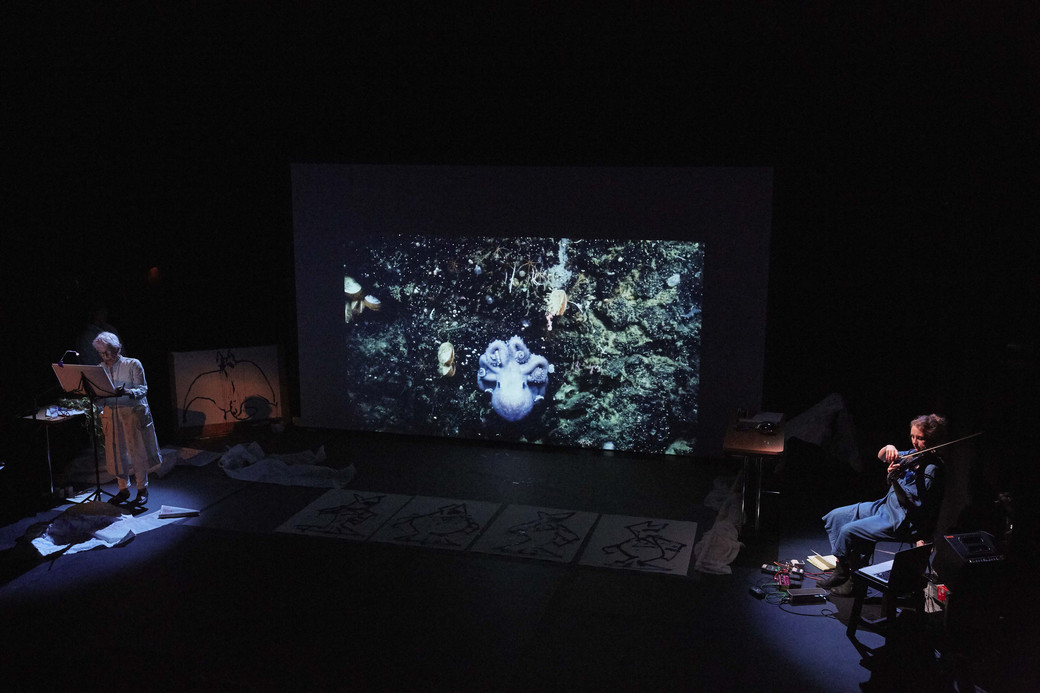


Ocean Space opened March 24th, 2019. "Moving Off The Land" will be on view through September 29th, 2019, with a live performance by Joan Jonas on May 7th. All perfomance images are courtesy of the artist and Gavin Brown’s Enterprise, New York/Rome, photos by Elísabet Davíðsdóttir. All install images courtesy of Ocean Space, photos by Enrico Fiorese.

Tell me about your work.
I can start with my background — I’m from Israel, from Tel Aviv, and I moved here four years ago for my MFA studies at Hunter College, which was an amazing experience. I just graduated last May and then I started this residency for nine months. I think it’s important to know about the biography of a person in order to understand their work.
Do you think your biography plays into your work?
Definitely, coming from Israel, the Israeli conflict, or Jewish identity questions, are definitely a part of the work. A lot of my work is about identity — I try to use architecture as a mediator, as a tool to talk about those issues. For example, in Israel we have a lot of Bauhaus architecture, and we see that as a part of Israeli identity, but it’s an international style, you can find it in many countries. In Israel we are very proud to have it because we have this need to generate identity. This is an example of how architecture and identity can be related, but confusing in a way.
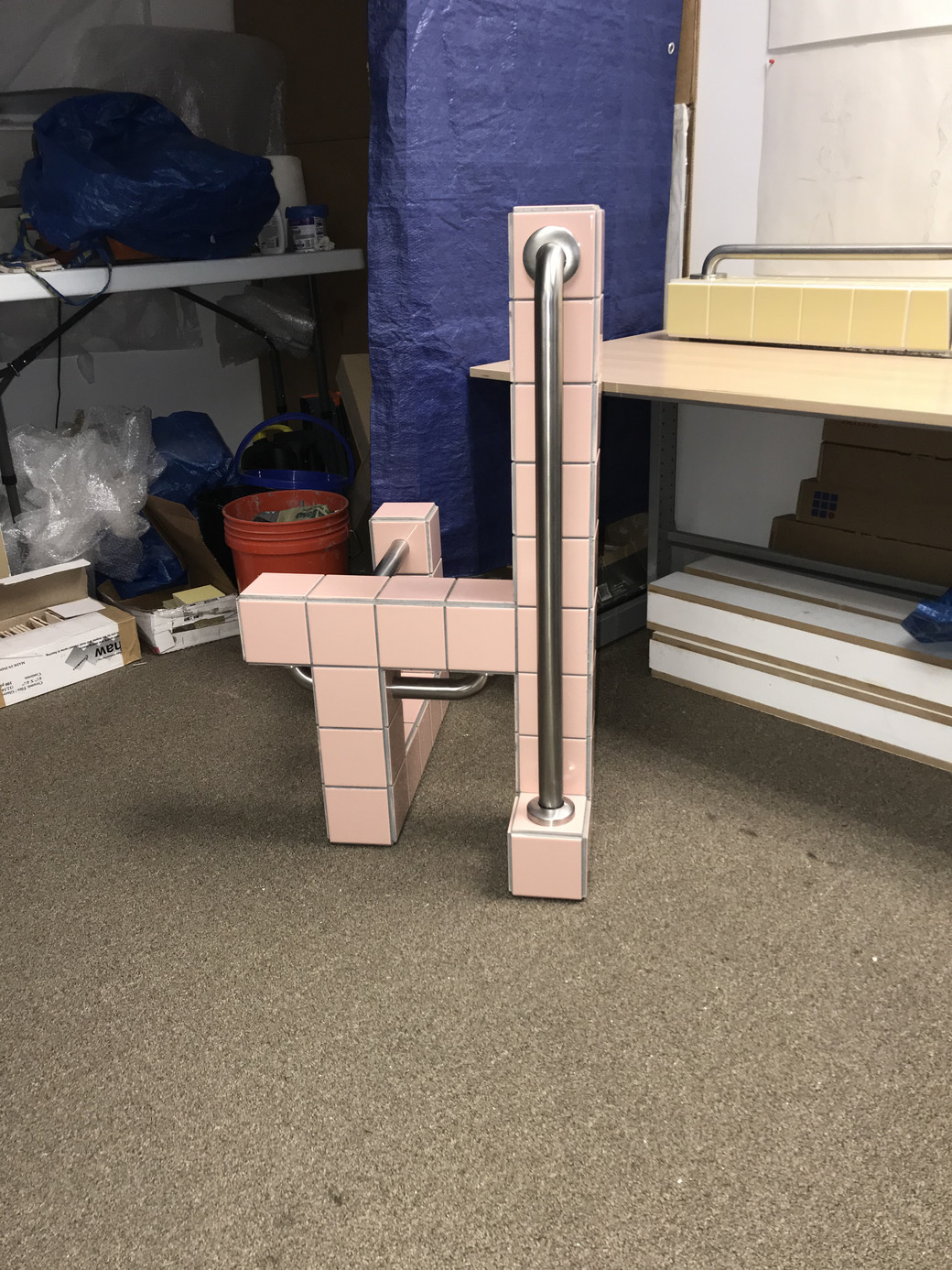
My current body of work, which you see here with the ceramic tiles, also kind of relates to that. It’s more inspired by my surroundings here in New York, like the subway, places that are in between destinations, in between identities in some way. I’m trying also to create my own architecture, my own structures, I’m trying to create something that is autonomous, that’s able to hold itself, but it’s not clear what it is, what’s the function, what’s the purpose of the object.
It does look as if it has a function, maybe just because we’re used to those bars having some kind of use.
We’re used to that language. It’s the same thing with the high security of getting into the building, we’ve gotten used to it — you have to identify yourself and be in the system to get in. Also, the grab bars are a language that we are trained or have a relation to.
Like safety.
Like over-safety, yeah.
They remind me of the bars in bathrooms and I’m always like, who actually uses these? I’ve always found them very strange.
Me too!
I guess they could be handy if you’re old or something. But it’s also always a really nice bathroom that has them, it’s like ‘wow, swanky,’ and they’ll have four or five of them, and it’s like, why do they have all these bars, it’s so unnecessary.
It almost becomes a design thing at one point. It’s not about aesthetics, it’s about safety regulation concerns, so maybe there it’s a distinction between regulations and aesthetics with safety that I find interesting.


Above: 'Program I' and 'Untitled'
I love the idea of safety.
Also, going back to Israel, I grew up with this concern over security, over safety.
Right, where you didn’t necessarily feel safe.
We always felt fear, we never felt safe. I can show you a piece I did in Israel, it was made out of 39 mattresses, the title is ‘Take Me Back,’ and I made it in Israel. It was supposed to reflect on my society. I collected all these used mattresses, they were dirty with stains, you name it, and then I combined them together and cut a tunnel through them. So I’ve created a space with another space inside it.
It reminds me of the Princess and the Pea.
The mattress is a symbol of comfort, of a safe zone, of intimacy.
And a used mattress on the street is like the last thing you would ever touch — I can’t believe you even collected those.
Back in Israel, we don’t have the concern of bedbugs, so there’s that. But usually when people put them in the street it would take two or three days for them to disappear, so I created this kind of network of people who would tell me about a mattress, and I had a car and would rush to get them before they disappeared.
Do you feel like you’re using found objects in your current work — like how do they relate? How did you get from ‘Take Me Back’ to your current project?
I like to use charged objects, materials that resonate with values or history, that bring something more with them — like a tile is more than just a plain colorfield, we’ve seen it so many places, like in a subway or in a restroom. So I’m interested in that, working with that as a tool, same with the mattresses. Also the repetition, I’m interested in the modular, the repeating of an object, and also to manipulate it into something else, the transformation that happens.
I’m also obsessed with repetition — what is it about repetition?
I don’t know, it’s a mystery. What is it with us that we keep running towards something? There is a mystery there, maybe it’s the unknown. For me, it’s also a kind of criticism towards that, towards the mechanical or industrial, even the repetition itself maybe, because I am making a one-of-a-kind sculpture.
It also seems like you’re interested in windows, openings…
Portals. It’s these things next to each other that I’m trying to work with.
I’m interested in how you said architecture is connected to identity, what do you think the identity of New York is, architecturally?
That’s a good question. What do you think?


Above: Poster of 'Take Me There' in the studio, and 'Fruitful Anxiety'
I was actually scrambling my brain as I was saying it, to me it’s very old and new — I personally like the old, I love running into a 16th-century cathedral in Hell’s Kitchen and being totally thrown off. In the rest of the US you just don’t have things that are that old. And then you have Hudson Yards which is so sparkling new — I think of it as the two clashing.
For me it raises questions of, when you look at architecture, who is it serving? If you have a new building with high technology and anything you can imagine, but I can’t access that building, then it’s kind of a problem for me. I think it should serve us. Whether I can go into a church and experience its architectural achievement is a question I’m interested in. Here, I’m lucky, I’m on the 15th floor — I would never get to experience this kind of place, only thanks to LMCC.
There’s a certain architecture to FiDi. I really like it down here because it’s so vertical, and I like the sound of it, there’s always this kind of ambient sound. Do you feel like having this space has informed your work?
Yeah, and also Hunter College is near here, it’s by Chinatown and Tribeca.
Wait, isn’t Hunter College on 68th street?
It’s on 68th, but the MFA is on Hudson and Canal. They keep the artists far away.
Artists belong downtown. So you feel like that’s informed you?
It’s definitely been a part of it, and there were always like double security checks and regulations, you always had to be double checked and there were magnetic doors to get into the school, and for me, for someone who just moved from Israel, it was shocking to see something like that — in Israel, art school is an open space, you do whatever you want. Sometimes my teacher would smoke in the corridor, I don’t think it’s a good example.
You’d be crucified in New York!
There was something about being in art school related to freedom of moving in a space, and here you always have to identify and move these heavy doors, and you always interact with the security guard and it’s kind of limiting. I feel it damages creativity, or maybe it does the opposite.
And looking at your work, some of them almost do look like cages, like they’re confining the space inside of them. It’s like MC Escher goes to prison in a subway.
Can I show you something — this was a proposal for a sculpture. It’s old, it’s from 2015. The title is ‘Gateway.’
Can you walk into it?
Yeah, it’s a proposal for a sculpture based on border architecture, where you have to cross from one state to another, it’s specifically from the one between Palestine and Israel, that’s the one I was inspired by.
Is there something like this?
Yes, it’s much shorter, but here I extended it. I see it as a crossing device, it’s a space that’s in between things, literally.
Where do you imagine this being erected? As a public art thing?
Yeah. Because it’s so large, I decided to do it in small steps, in a modular way, so I did already the first one, it’s smaller. I’m going to propose this to Creative Time, they have an open call for public art, I want to make it here also. But here is the shortest version, you can actually go through this, then I made the second one at Smack Mellon in DUMBO. Then I added one more section. It’s an ongoing project, so every time I show it, I’ll extend it. But it’s also another good example of architecture and identity. For example, in border crossing it’s very de-humanizing, it takes away your identity, it takes away your human value in a way, people always say they feel like animals.
It’s also like what you were saying about it being global — I don’t look at it and immediately think of Israel. There must be gates like that everywhere.
Especially talking about the Mexican-American border. It’s something to talk about and think about — how do you do a border? What’s the purpose? It’s not just to lock and forget. Then I have a solo show coming up at mhPROJECT in the East Village, it’s a small space.
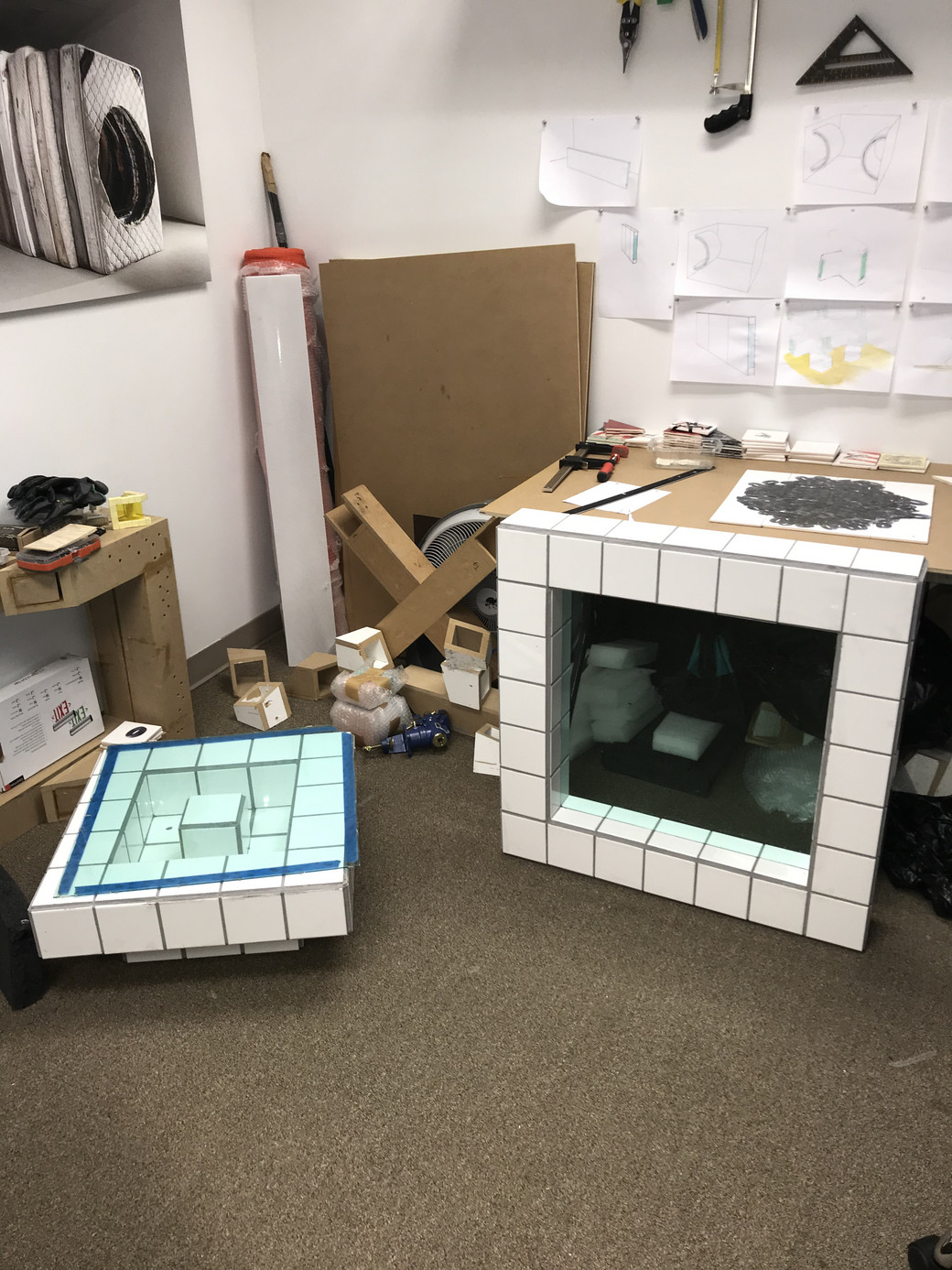
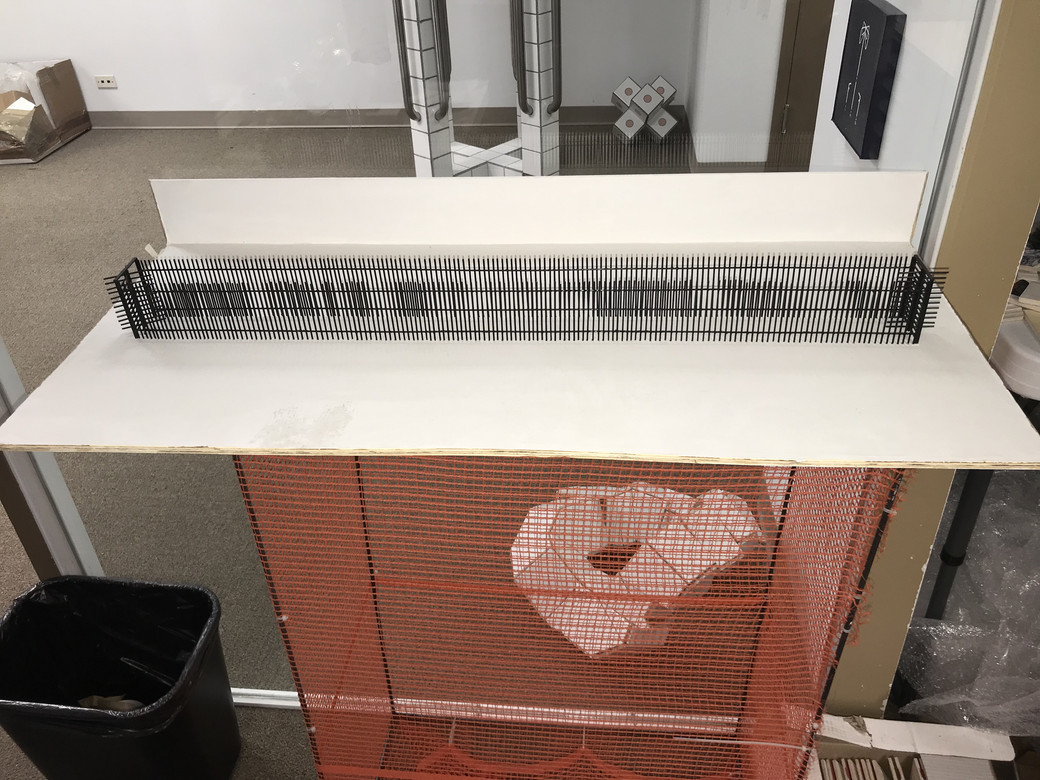
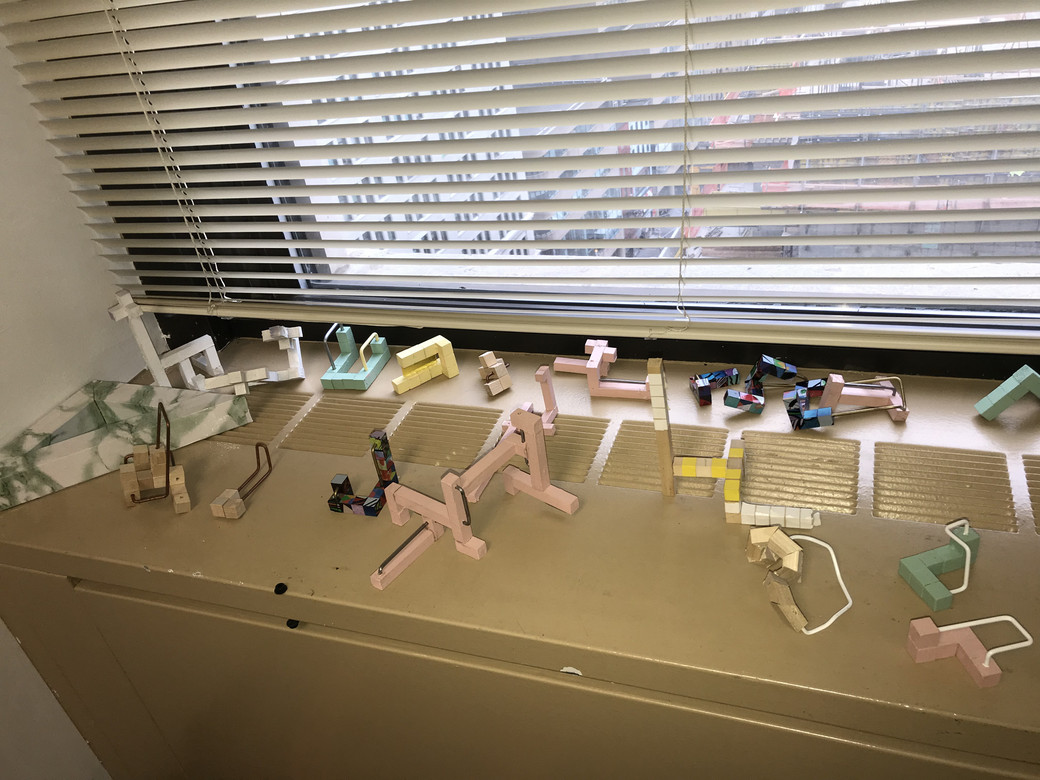
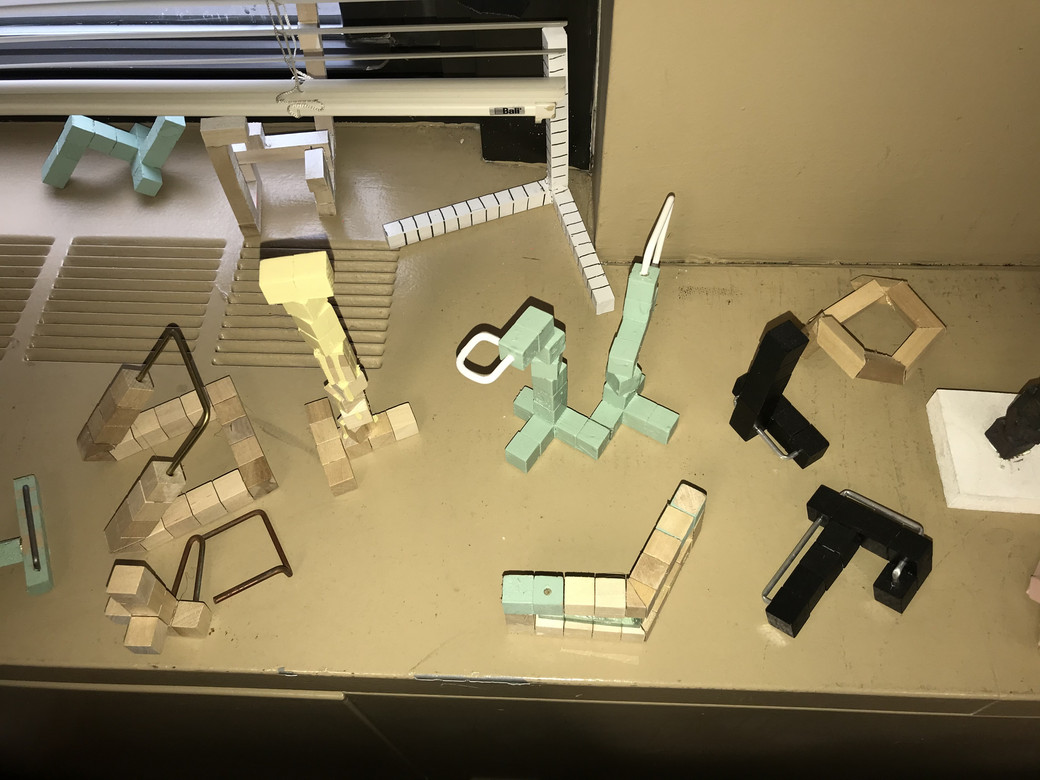
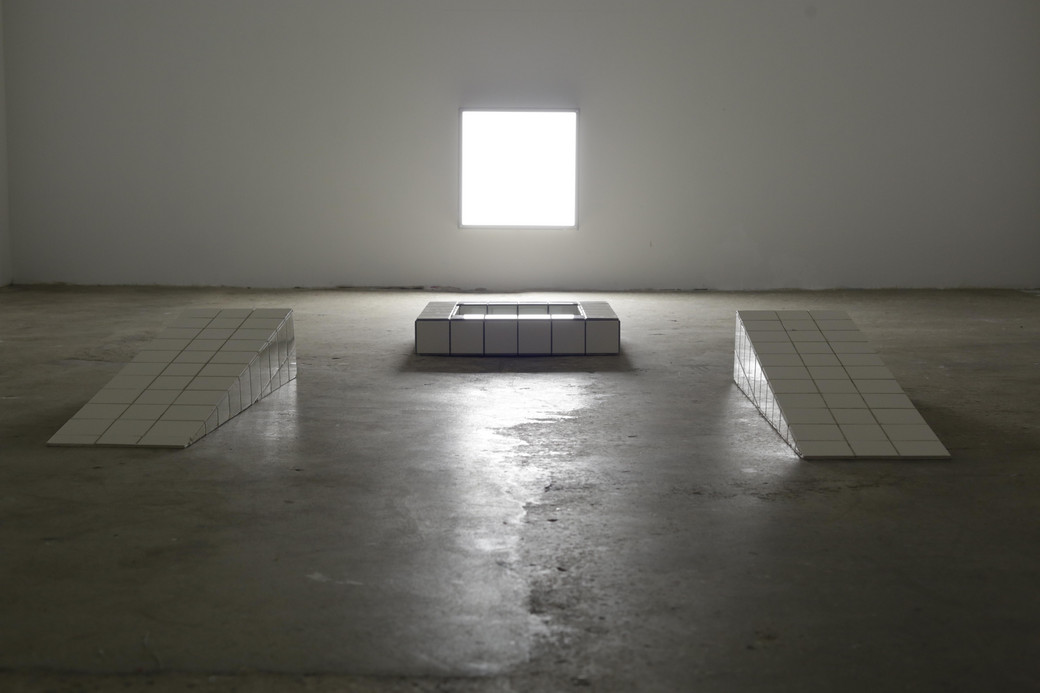
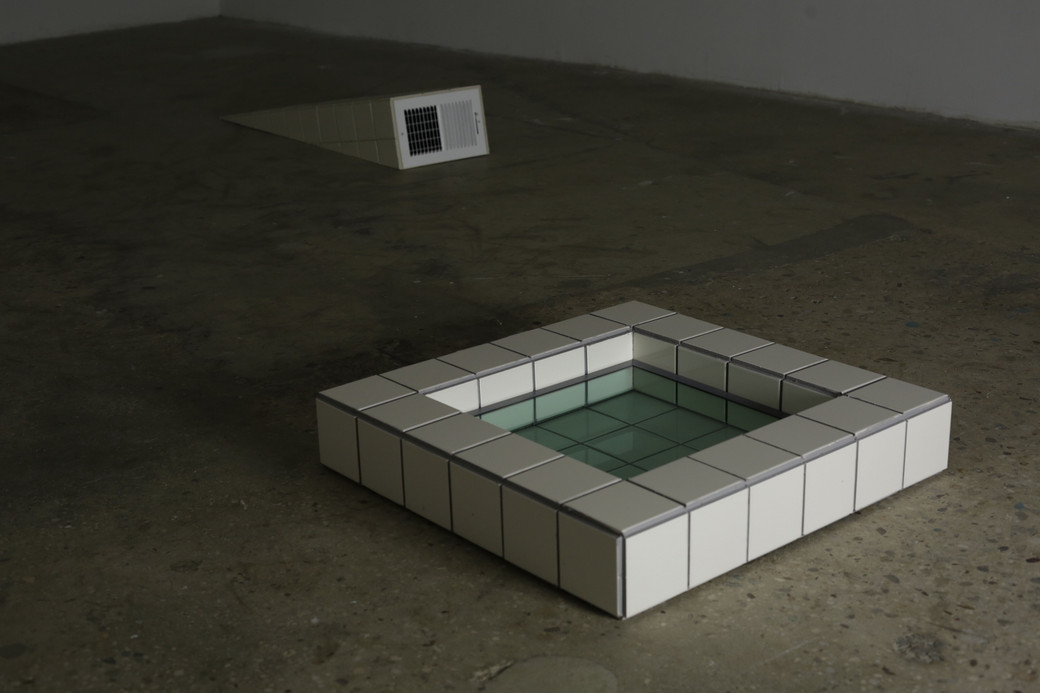
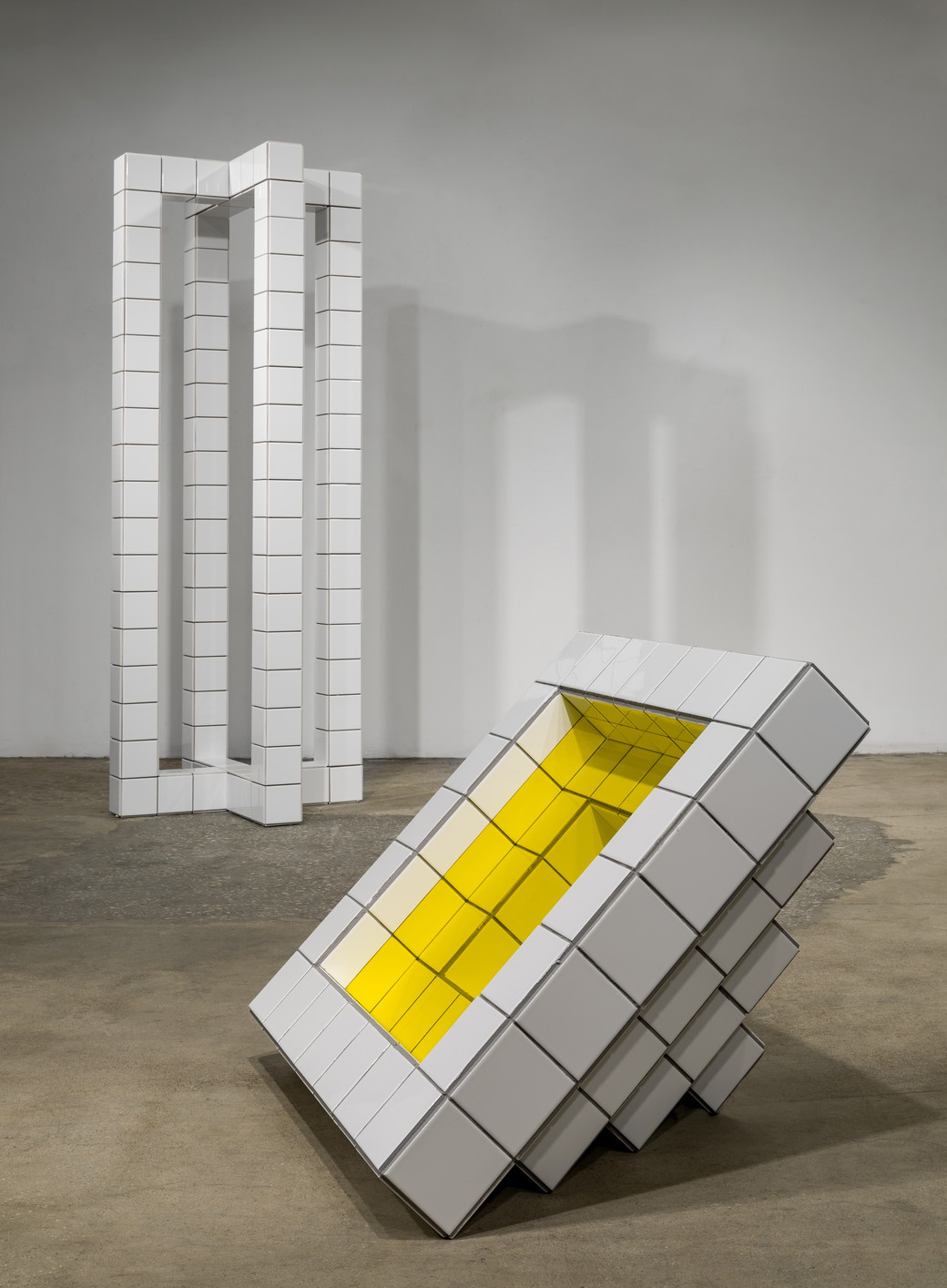

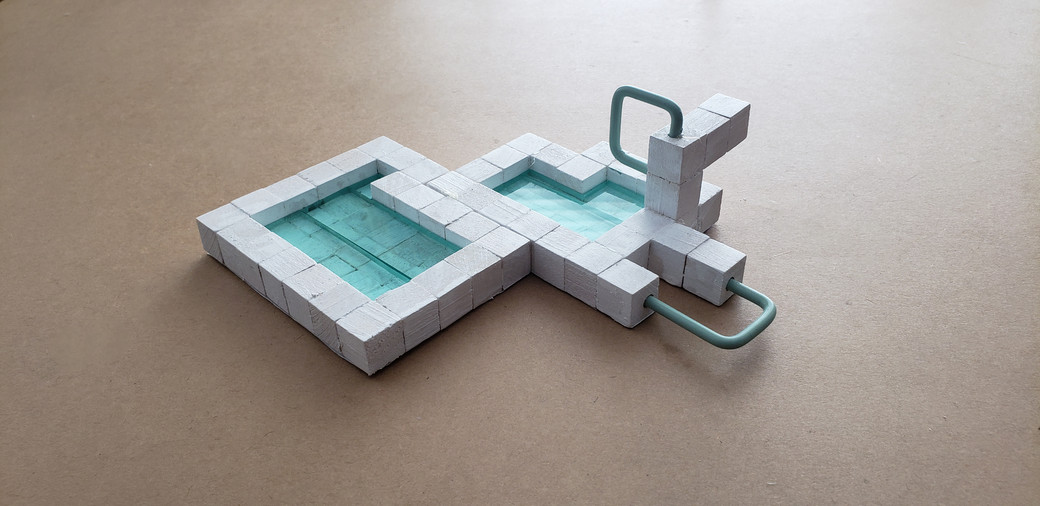
'Unborn' is on view at mhPROJECT April 26 - June 2. Installation views courtesy of the artist. Studio shots by John Martin Tilley.