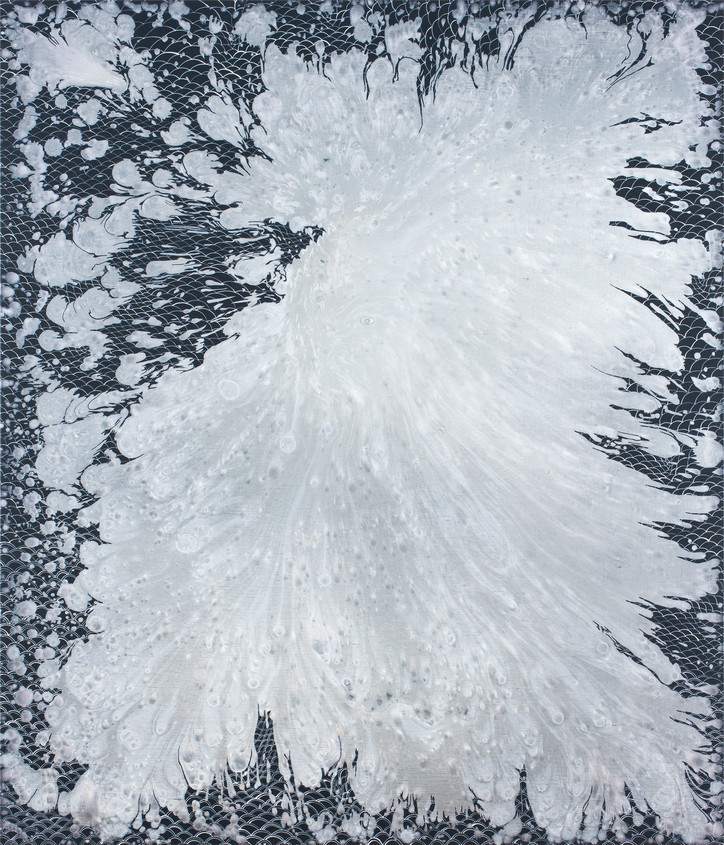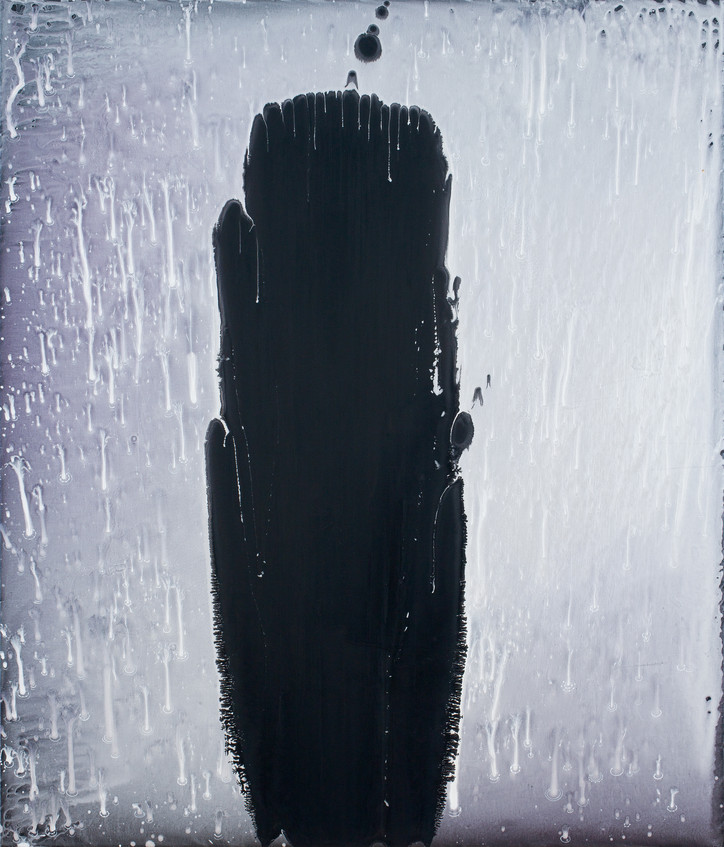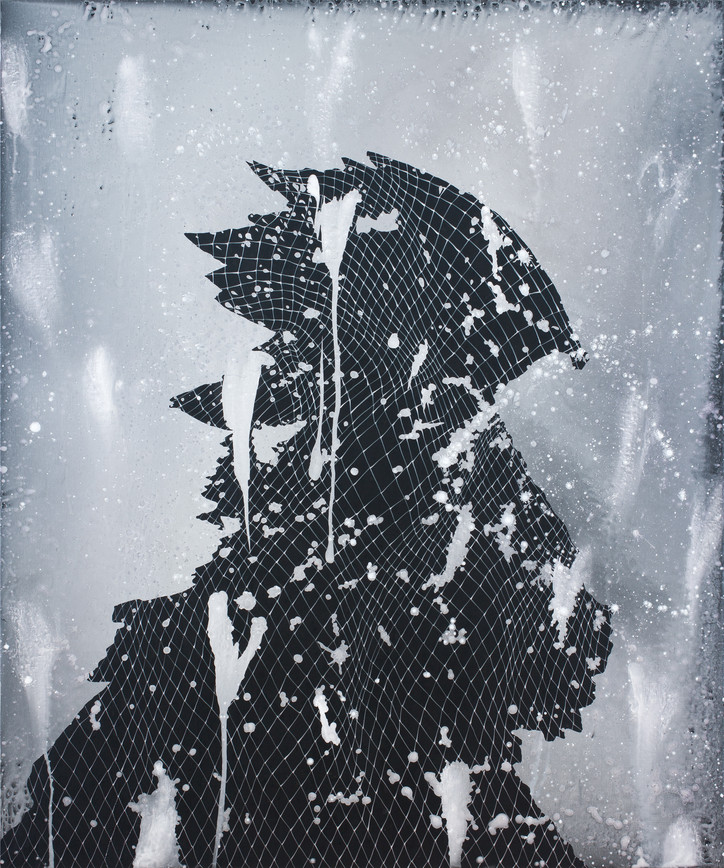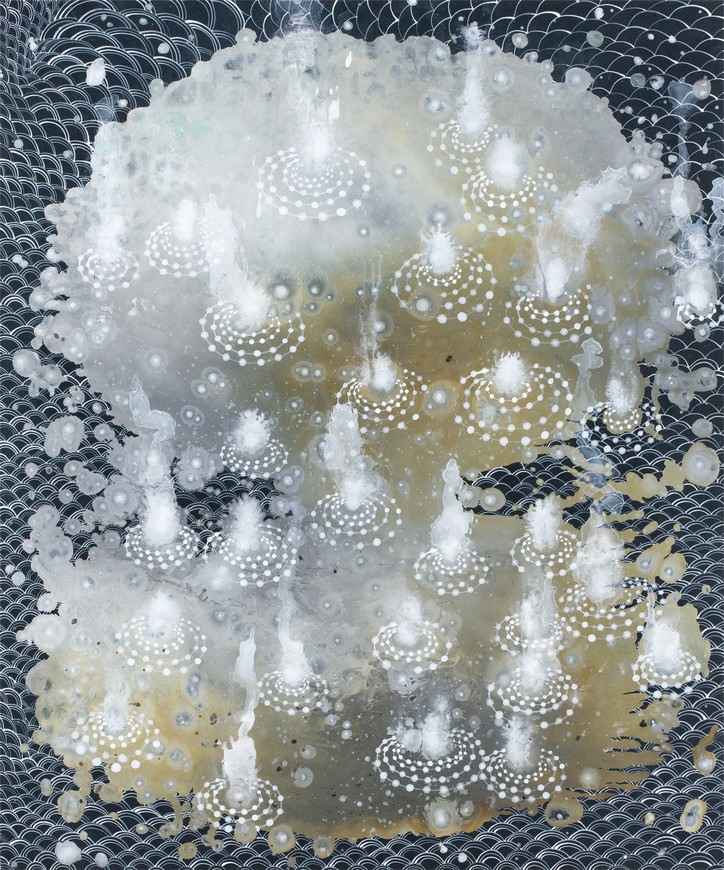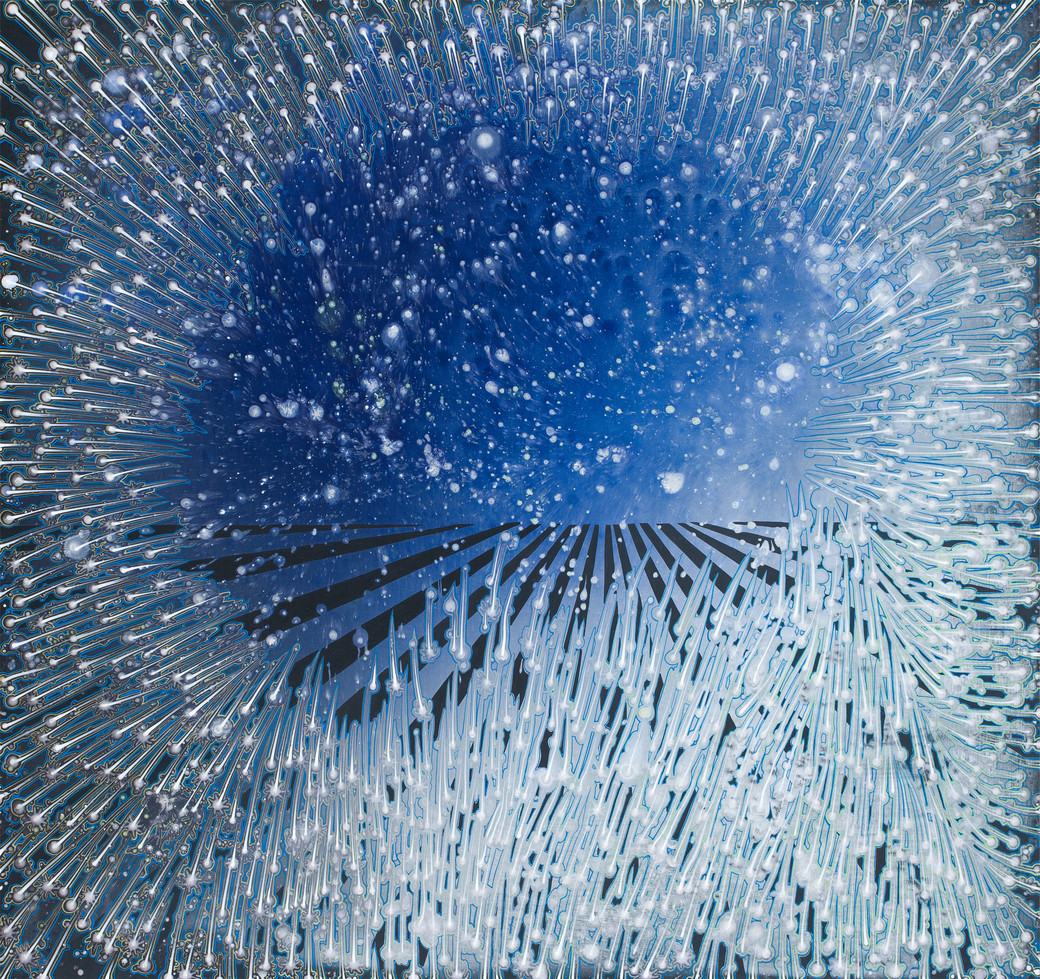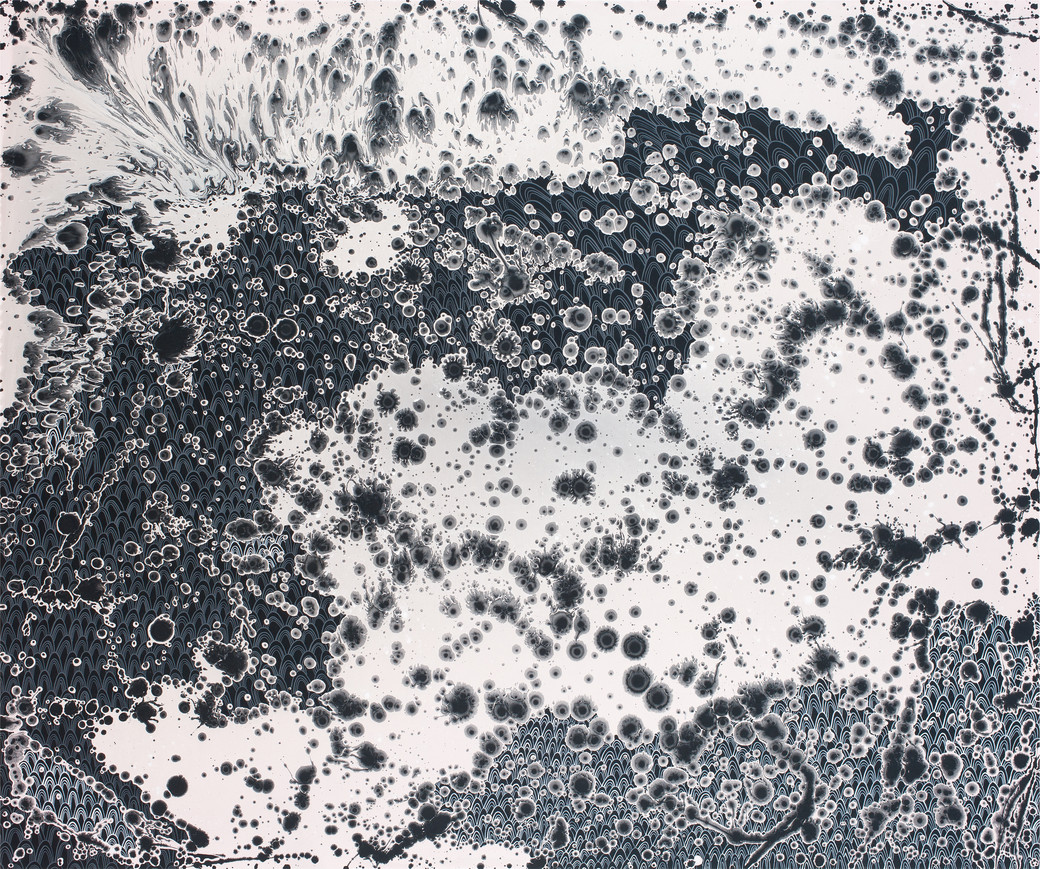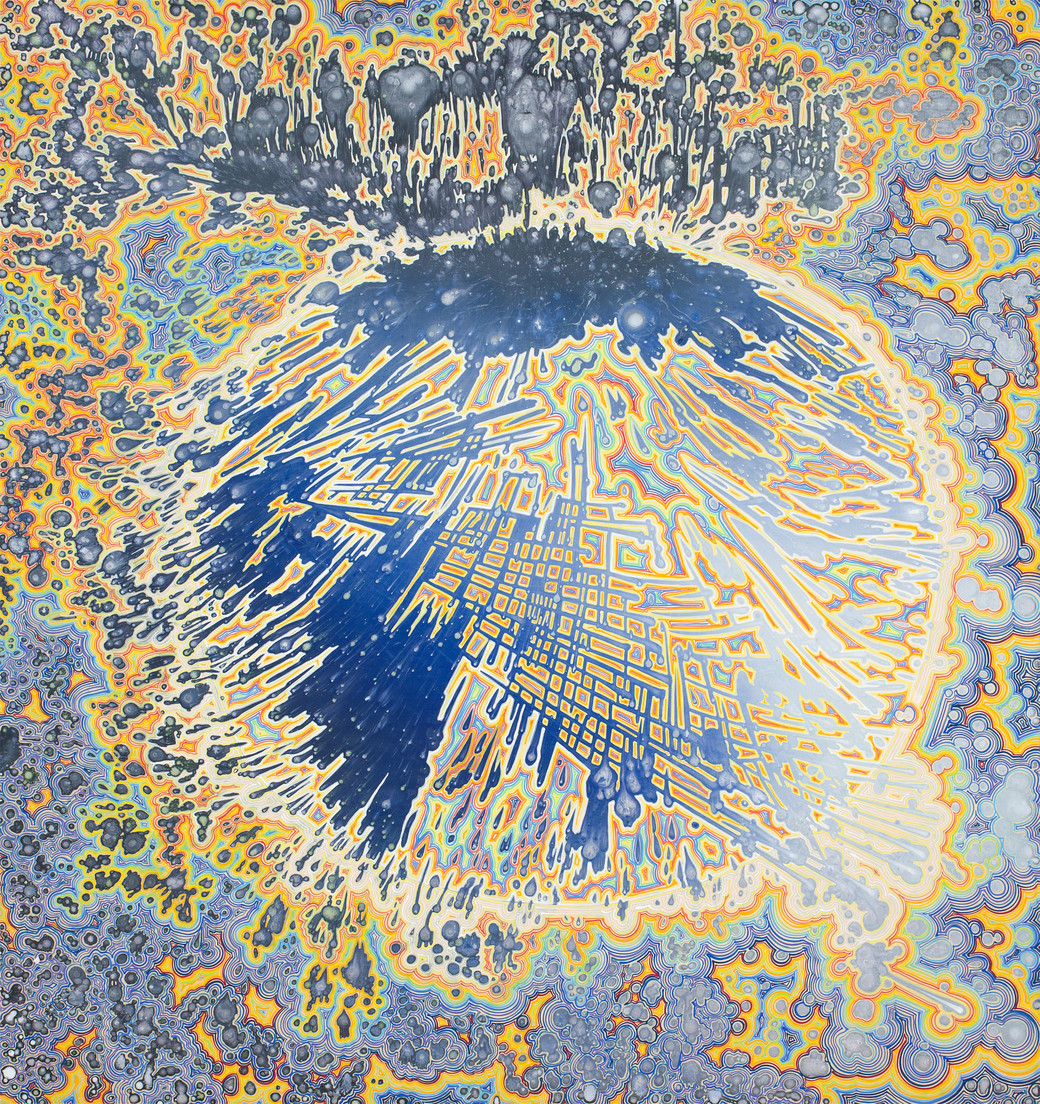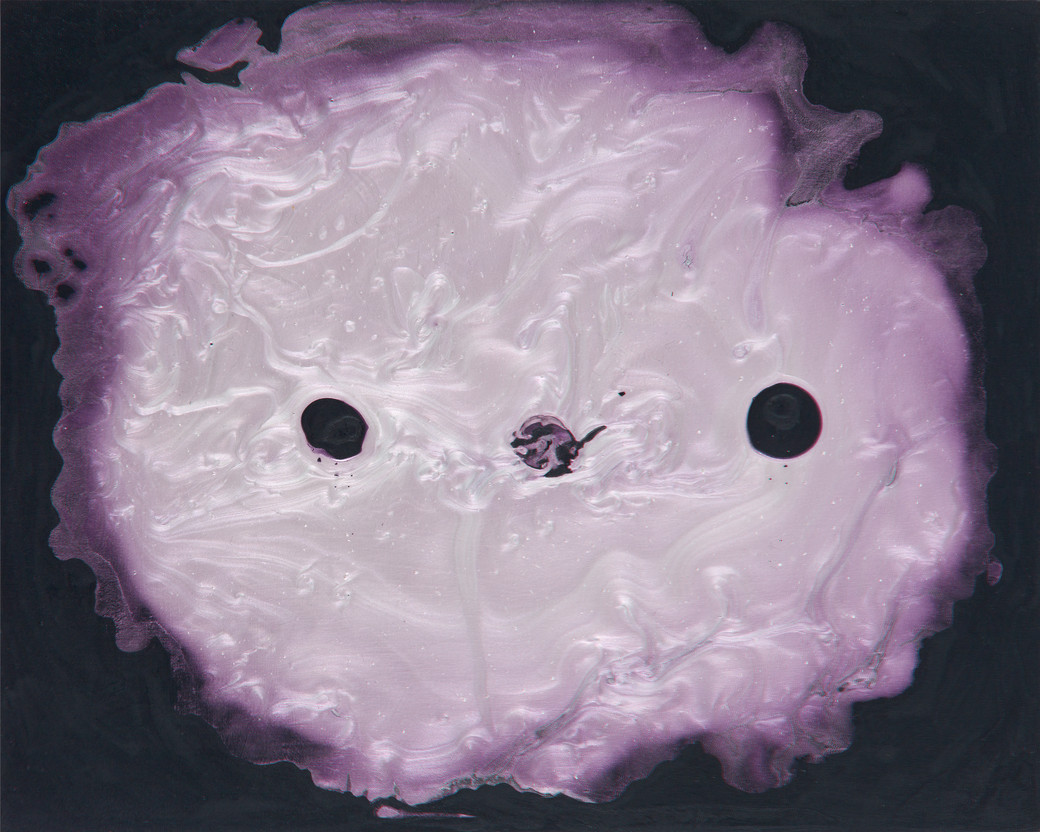

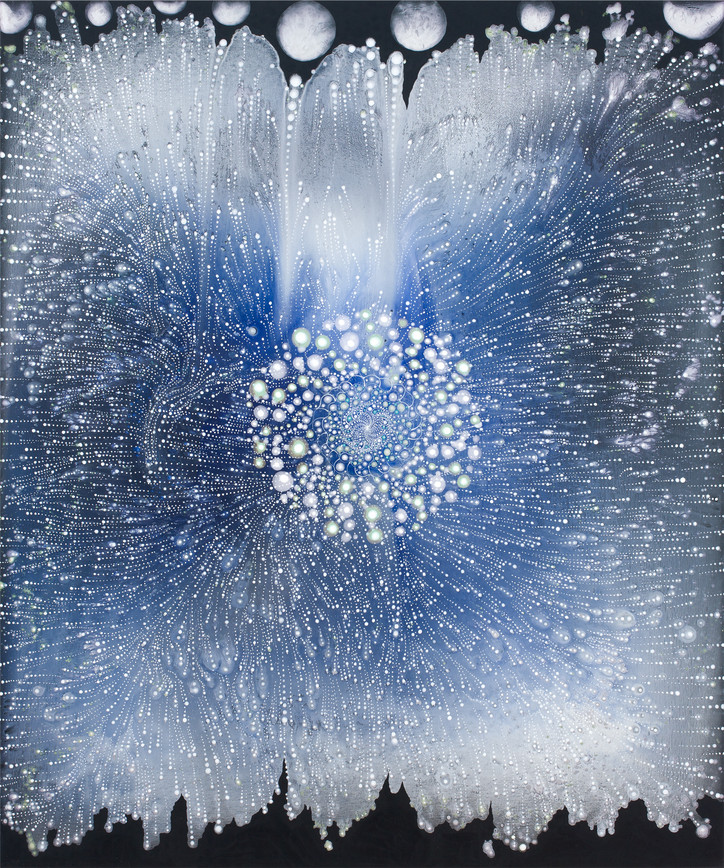
She told me that her work is often discussed in terms of mathematics, science, the microcosm and the macrocosm. Indeed, the paintings seem to exist in that odd space where the microscopic begins to resemble stars and planets. She seems startled at the comparison, since for her it’s all a matter of shapes, paint, and a balance of randomness with firm control — all to a bewitching result.
The artist has a friendly energy herself. We immediately connected over the fact that we're both from Nebraska. Her little dog barked from his kennel as I arrived, his dog toys forming a sculptural pile in the corner. Over a tray of cookies, we talked about the illusions in her canvases, potential energy and black holes.
Tell me about your work.
The idea for the show that was a little bit different from what I’ve been doing, is that I’ve been looking at a lot of Asian-influenced images. So, I got intrigued by the use of black silhouettes, and it might be elaborate hairstyles in these Japanese prints, or clothing, or robes—these wonderful images of warlords with great silhouetted, stiff kimono shapes; Indian paintings where there’s elephants in the water and you can only see the backs of them, and every now and then, you can see a trunk. So, even though they’re pictorial, they became these abstract shapes—things that looked like they were holes, negative space holes in the image, or they were positive shapes, the thing they were depicting. I love that flip between the positive and negative.
It’s like they’re both simultaneously positive and negative—like, you can never tell if they’re receding or advancing.
So, for instance, this one ['Cloud River'], which is based on a very stylized Japanese river shape, and it’s been cropped, so ordinarily the river would wind around, and normally this would be cloud shaped, and this would be land or water, but then it flips, and the black shape is the thing on this green background, which is what I’m really interested in—this ambiguity. For instance, I start out with these very random pours of paint, and the paint moves around and it dries into shapes and surfaces, and then I come in the next day and that’s the great surprise of it—I get to see what happened and I spend a lot of time looking at it. And then I try to overlay some kind of control or repeated, sort of labor-intensive thing over this randomness. So it’s those two things: the obsessive control element, and then a loose randomness.
Like a controlled chaos. Kind of like Dada, where they allow randomness.
I love Dada, and I think there’s some of that. Now, I’m not a fan of surrealism, but I also think it tips over into those surrealist parlor games, where they would do things like exquisite corpses, are you familiar with those? It’s a game they would play, where one person is assigned the head, one person is assigned the torso, and you fold it so you only got to see a quarter or half inch of the drawing and then they all connect.
Oh! We’ve played that at office, actually.
They had all kinds of crazy games. Like games to create these weird poems, in a similar way, where you’re adding words onto someone else’s words but they don’t hear yours. But all of those games had that kind of embrace of the random and unexpected. So, there is that surrealist influence, but then there’s a lot of control issues that I have, too.