Gabrielle K. Brown: Holy Desire
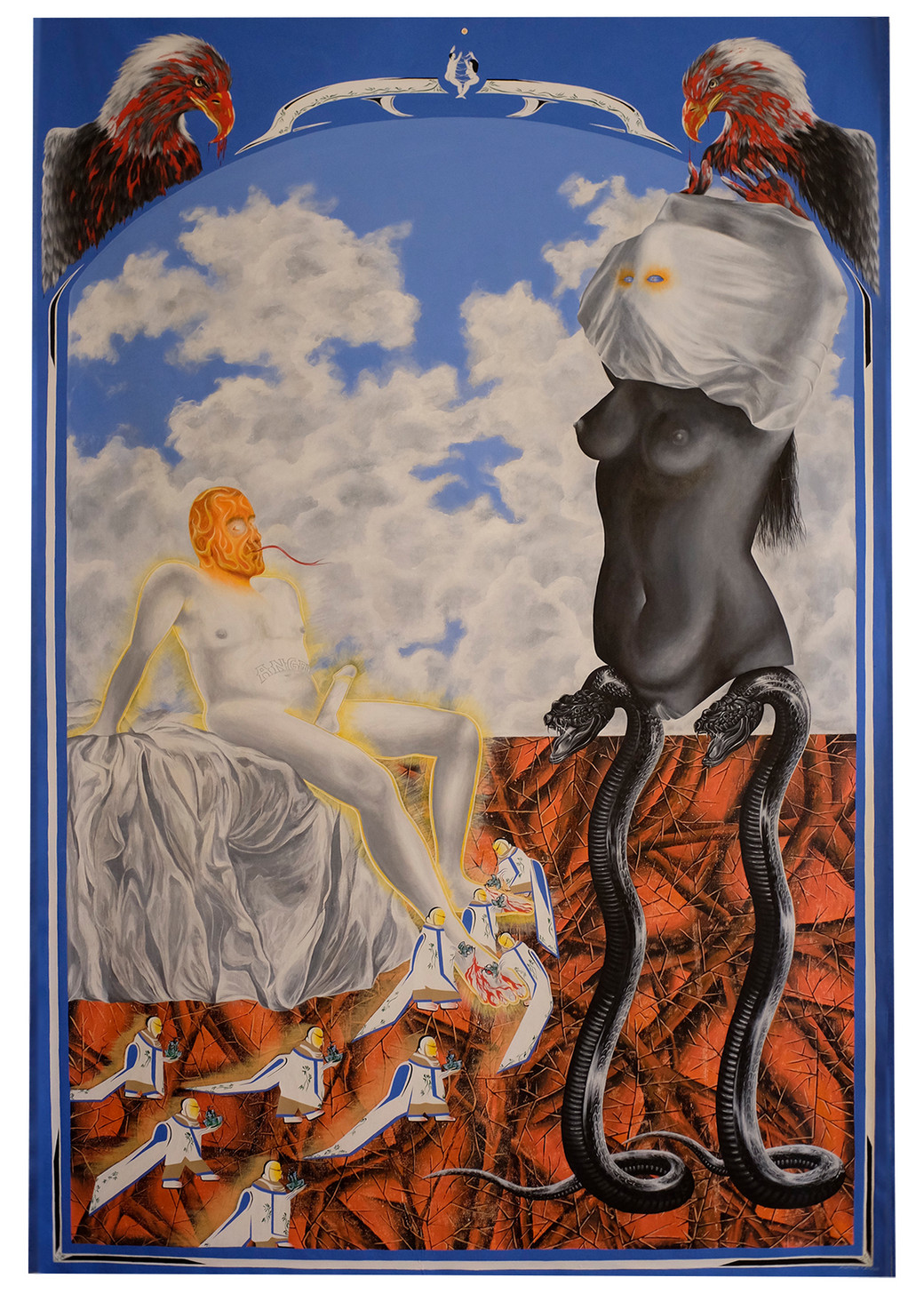
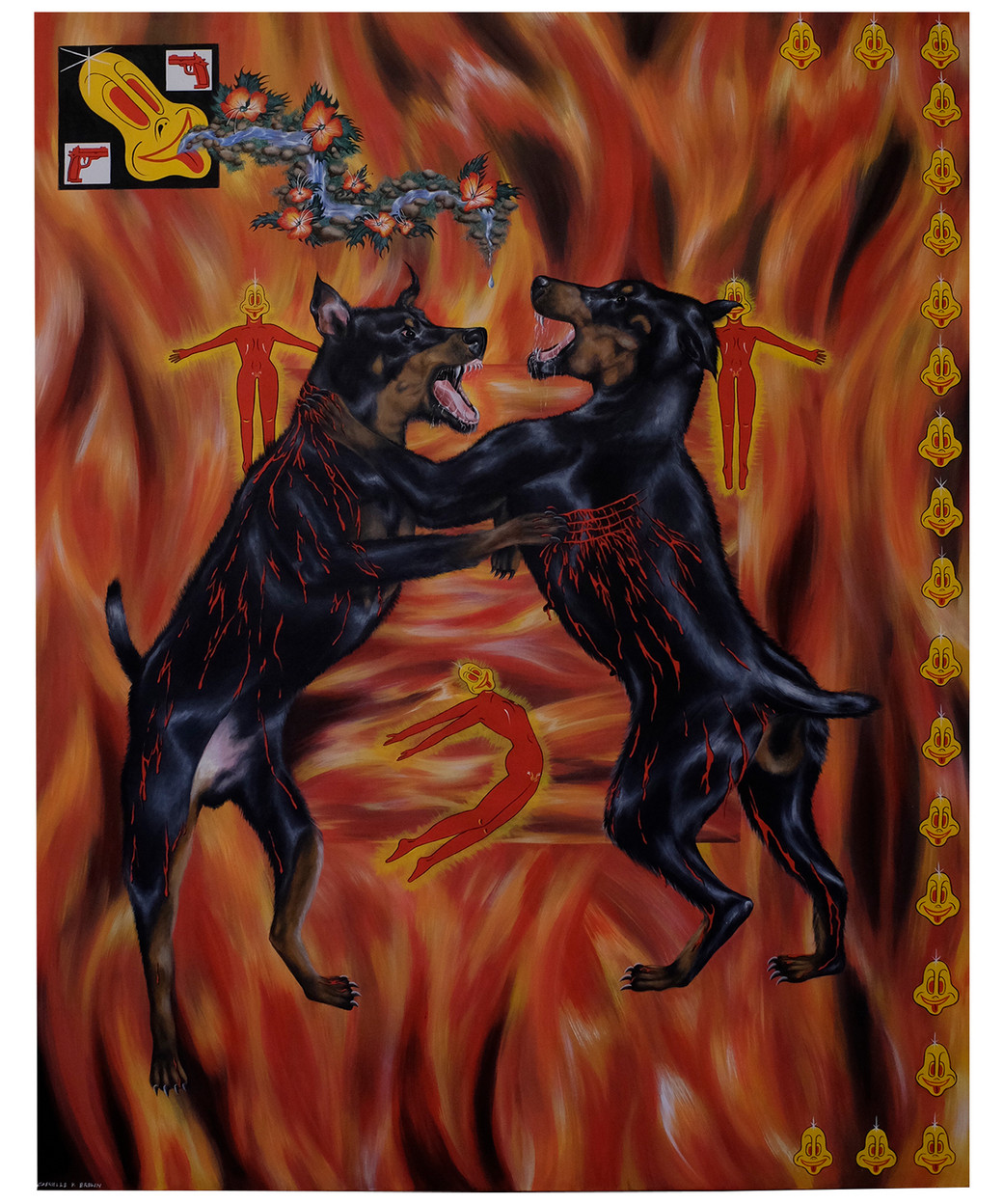
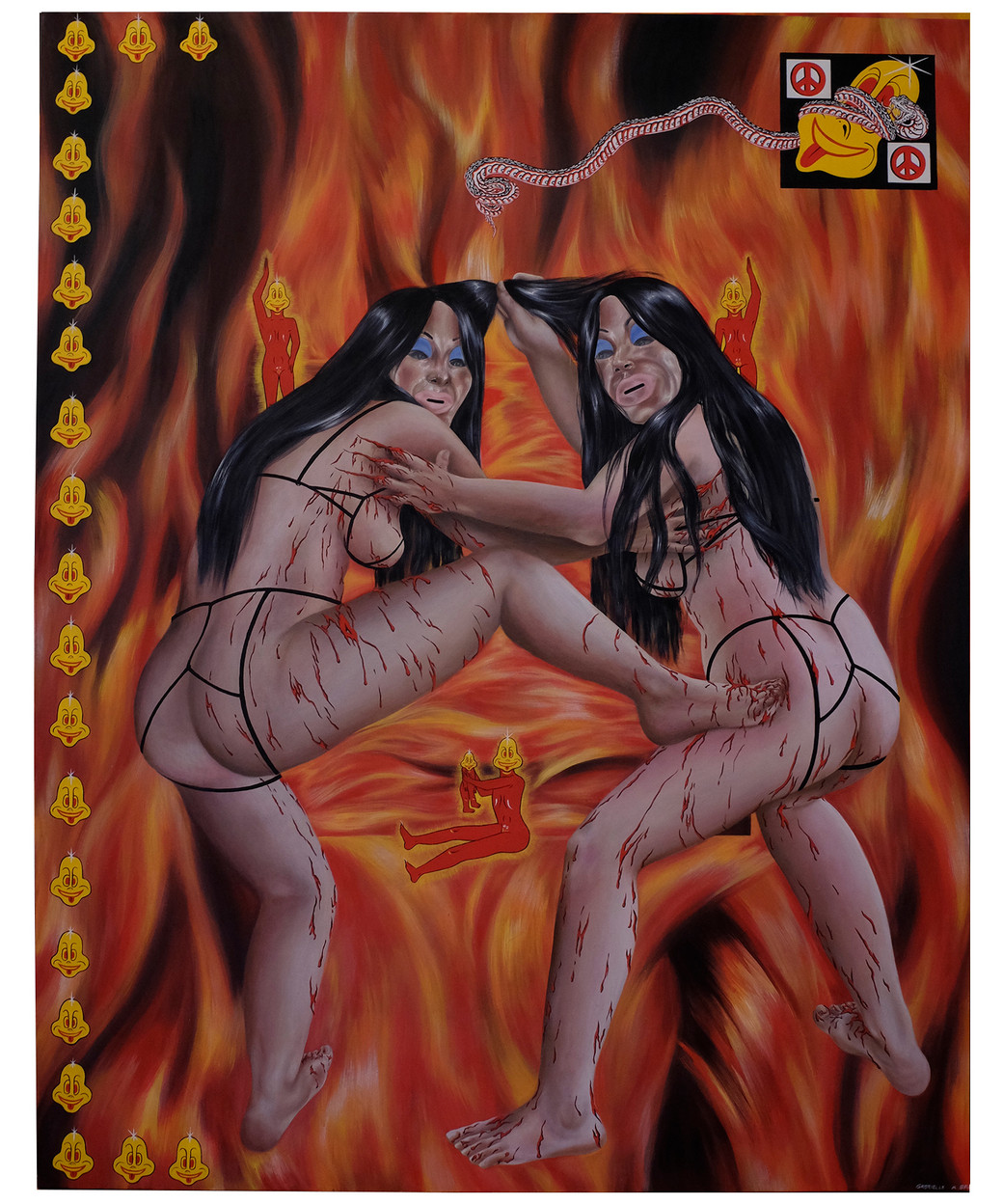
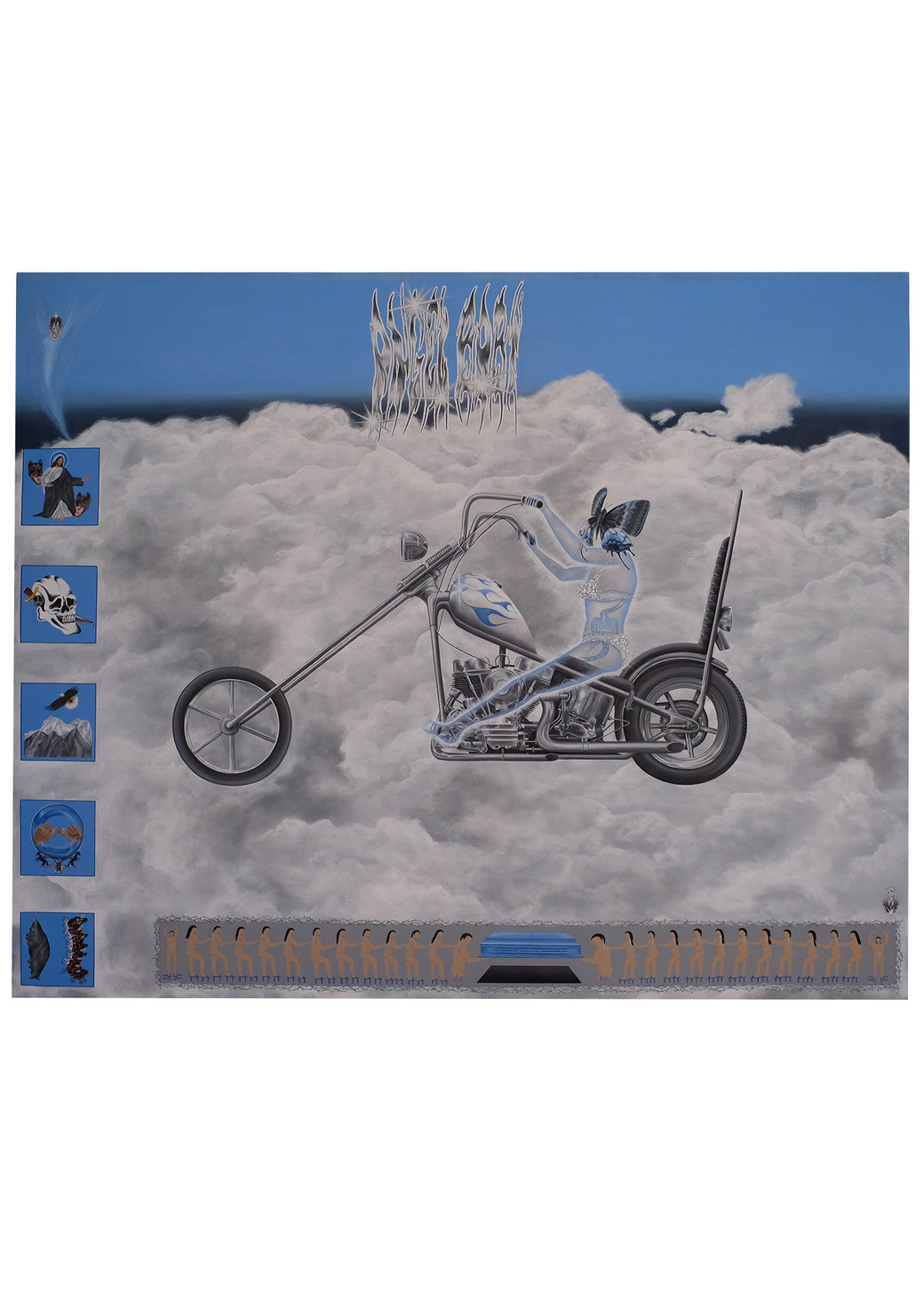
Onyewuenyi
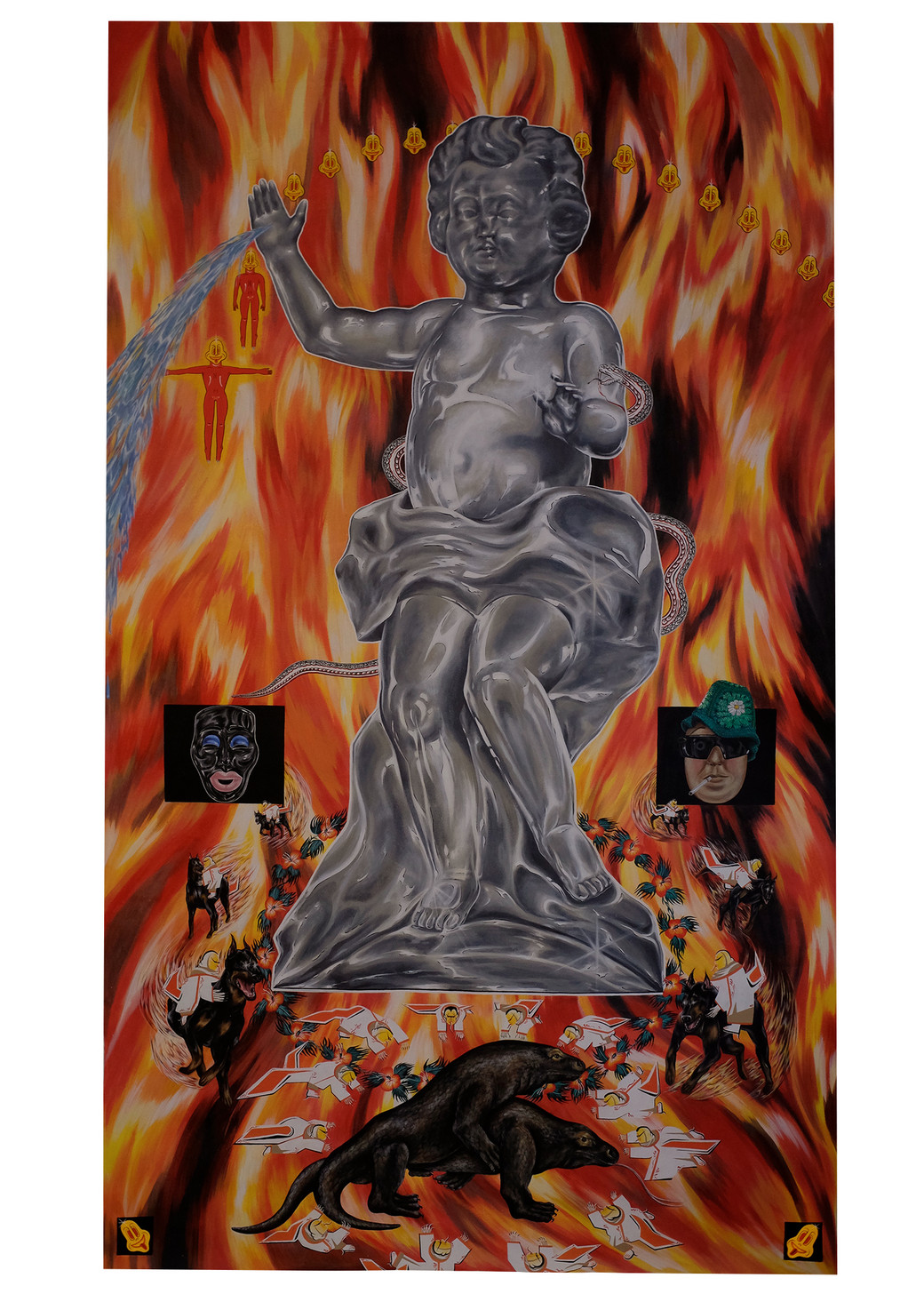
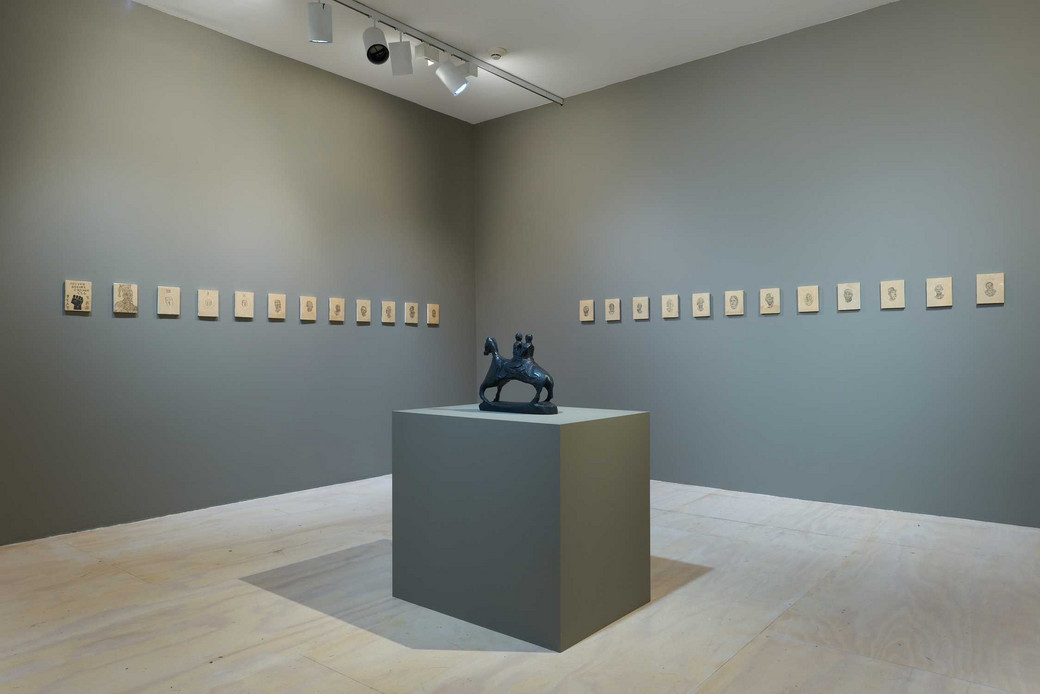
The exhibition title, YOU CAN HATE ME NOW, immediately made me think about Nas — and specifically the “Hate Me Now” video. My brother-in-law still lives near the deli where they shot some of it.
Gaitor-Lomack
Up on the deli?
Onyewuenyi
Yeah.
Gaitor-Lomack
That was an iconic moment for 1999.
Onyewuenyi
Iconic.
Gaitor-Lomack
You know, it’s funny. I almost created some kind of custom awning situation for this show, something I could climb up onto during the performance. I did something like that years ago — climbed onto this narrow stone ledge — but that was tied more to a St. Michael moment I was having.
Onyewuenyi
What was the St. Michael backstory?
Gaitor-Lomack
There was a period where St. Michael kept appearing to me in these strange metaphors and traces. Everywhere I turned, something was pointing back to him. I ended up at Popular Jewelry on Canal one afternoon and came across this vintage St. Michael pendant — 14k, Italian-made, just an incredibly crafted piece. One of the most beautiful objects I’ve ever owned. It hung on a gold rope I bought back in New Haven when I was putting in serious work. I felt like I was back in ’96 wearing that thing. I wore it for years.
Onyewuenyi
What was going on at the time?
Gaitor-Lomack
It was right after one of the best openings I’ve had — at PPOW. I was dressed in off-white; Michelle was with me, also in off-white. Then later that night, something shifted. It was Fashion Week on 9/11/2021. The streets had this thirsty energy. Tribeca was on the edge of a new rebirth — designers, artists, people chasing proximity, trying to squeeze into whatever they thought the moment was. Still happening. I made the decision later that spring to move back to L.A.
Onyewuenyi
You’ve talked about having these spiritual encounters — these visions. Some people might dismiss that. They might call them hallucinations. But I think when I look at your work, and how you move in the world, it’s very clear these encounters shape your practice.
Gaitor-Lomack
Right. And when you’re tapped into that kind of process, you’re not imagining things — you’re receiving them. There’s something extraordinary about making the unseen present, passionately and uniquely, through the work. These aren’t hallucinations. They’re visions. They pull you into different places and experiences that most people never step into.
I remember one time in Palermo, I got lost wandering through this old town. I ended up inside this beautiful church — glowing like I’d never seen before. I had this moment like, How did I even get here? Because back home? I’m not stepping into a church. I avoid those structures entirely.
Onyewuenyi
It’s funny because before your show here, you’ll probably pass through Queens, which puts you right back into the orbit of Nas and that whole lineage. YOU CAN HATE ME NOW.
Gaitor-Lomack
Exactly. YOU CAN HATE ME NOW.
Onyewuenyi
One of the major works you’ve been describing is the elevator sculpture — Only Way Up. What is it about that piece that holds such weight for you?
Gaitor-Lomack
It’s a turn-of-the-century birdcage elevator. I’d been imagining doing something with a lion’s cage at first — I kept thinking about Charlie Chaplin’s silent performance inside a lion’s cage. There’s this magical moment where metaphor meets sensory fear and fantasy. That’s the energy that originally drew me toward the elevator. And these elevators were hand-cranked — there was always someone stationed inside. A handler. A guide. Someone controlling your ascent.
Onyewuenyi
Almost like someone deciding what floor you deserve.
Gaitor-Lomack
Exactly. But in Only Way Up, there’s no one inside. It’s empty. There’s an authority missing — or maybe it’s being reclaimed.
Onyewuenyi
Can people enter it?
Gaitor-Lomack
Who knows?
Onyewuenyi
What I love is how you take objects we think we understand and you shift their meaning — make the unseen visible. Like the Black & Mild tips. There’s something alchemical in how you transform something discarded into something symbolic.
Gaitor-Lomack
Those Black & Mild tips — that’s a special moment in my practice. Where I’m from, cigarettes were around, but Blacks were the thing. Champing a Black: removing the cancer paper, putting the tobacco back, tapping it down. Ritual. And then when I went to New Haven — it felt like Jersey in the ’90s. Everything in slow motion, very familiar. Productive. Corner stores everywhere. Hustle everywhere. And on the ground? Black & Mild tips everywhere. I used to go out with a brown bag and a glove and just collect them.
The first piece I made was Where There’s Smoke, There’s Fire: a Christmas tree with every branch replaced with Black & Mild tips. Then I wrapped a fire extinguisher during a performance at a solo exhibition and placed it under the tree.
Onyewuenyi
It reminds me of something Fiona Duncan asked during an artist talk: “How does your work help Black liberation?” I’m curious how you respond to that.
Gaitor-Lomack
Liberation isn’t ordinary. Using your imagination is its own form of liberation — showing people that freedom is available in different forms. But you have to liberate yourself before you can liberate anyone else.
There are artists who get close to something powerful, and the moment they feel that proximity, they start talking too much — leaking things before they’re lived. When you leak information, you can destroy the operation. In my work, a lot of things are coded. The nuances of a Black & Mild tip — those are encoded forms of experience.
Onyewuenyi
Someone brought up Glissant — how he supposedly held a gun in Cuba during liberation movements. His friends later said it never happened. It became a myth he told himself. That myth-making is powerful.
Gaitor-Lomack
Myth is essential. And I’m moved constantly by things people don’t see. But we’re also dealing with what we do see — the aggressions, projections, rhythms of the street, the past, the future. Everything collides. It becomes an equation. I was never great at math, but when I slowed down, I realized: it’s all about how you see the problem. So now, in the work, I’ve simplified the equation. At one point I might’ve used many objects, but now sometimes it’s three moves. Two. One. That’s a life lesson.
Onyewuenyi
And there must be things you see that you choose not to turn into artwork.
Gaitor-Lomack
A lot. Because I move with sensitivity and discipline. Just because something is part of the Black experience doesn’t mean I get to exploit it — especially commercially. If it’s not mine to tell, I leave it alone. There’s so much bad tracing happening — bad work using Blackness as a shortcut or shield. Awards, representation, museum talks — none of that justifies poor taste. I don’t exploit my people. And it has to meet my taste at the moment. Everything is not for the world.
Onyewuenyi
I remember sending you a photo of a thrift-store piece thinking you’d like it, and you said no. And that felt like part of your code.
Gaitor-Lomack
It’s like walking down Canal Street. Everything’s labeled. Everything’s screaming for attention. I’m drawn to the things without the label — objects with a story. And that’s what I invest in: the unseen value, the unfamiliar.
Onyewuenyi
That connects to the Table of Patrons project — people supporting something they can’t see yet, trusting the unseen.
Gaitor-Lomack
Exactly. You trust the vision. You trust the person delivering it. Shiny objects aren’t always what they seem. Some of them have dark histories. Sometimes the loudest thing isn’t the best thing.
Onyewuenyi
You once said you get 16 bars with a person — just like in music — to make them see the vision.
Gaitor-Lomack
You do. And those 16 bars need to hit. People need to visualize themselves within what you’re building.
Onyewuenyi
Does every artwork feel like your 16 bars?
Gaitor-Lomack
Not anymore. I’ve simplified. Sometimes one clean line is worth more than a whole verse. One work can be enough. One show every three years can be enough. I don’t need four solos a year. My pace matters more than the industry’s hunger.
Onyewuenyi
Yet you’re always making.
Gaitor-Lomack
Always. That’s the life I chose.
Onyewuenyi
The chairs in this show stand out. They feel like warnings: don’t get comfortable.
Gaitor-Lomack
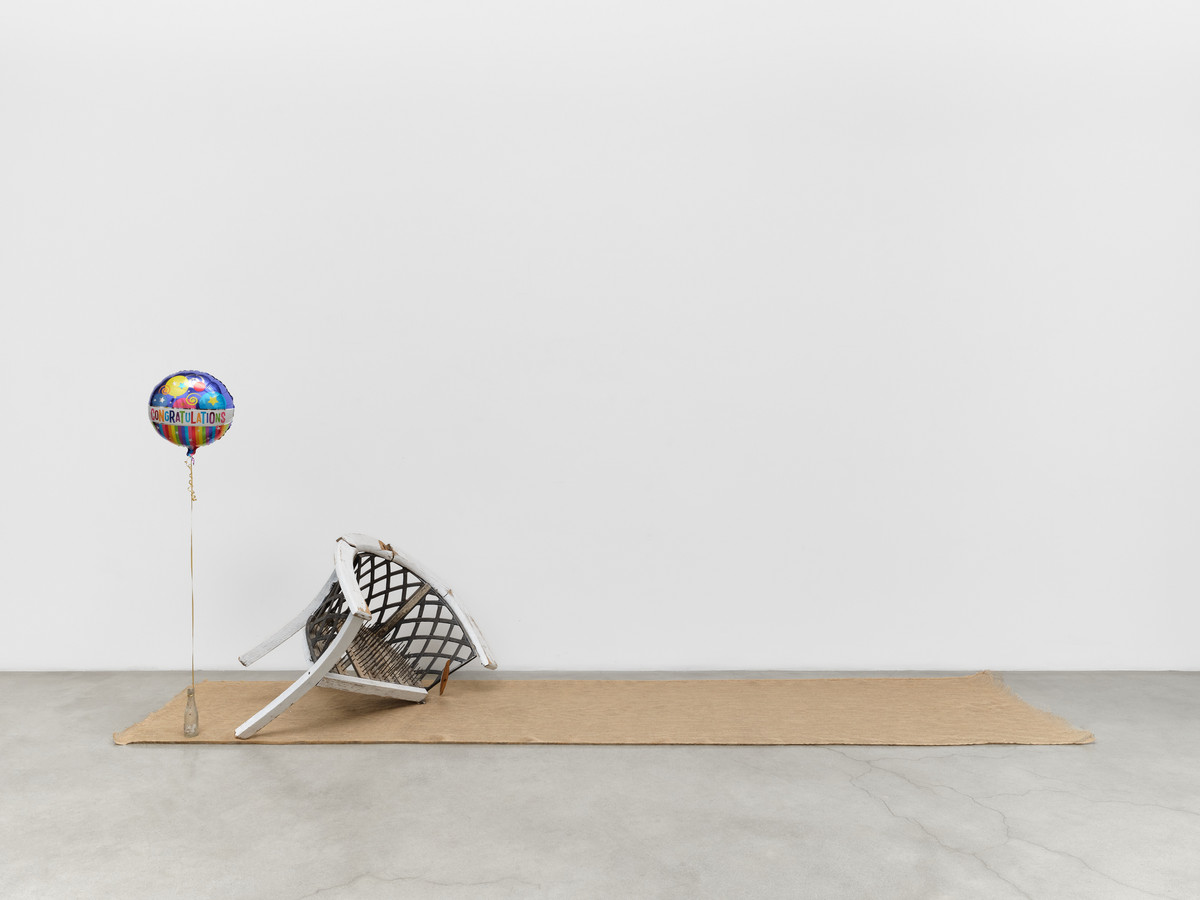
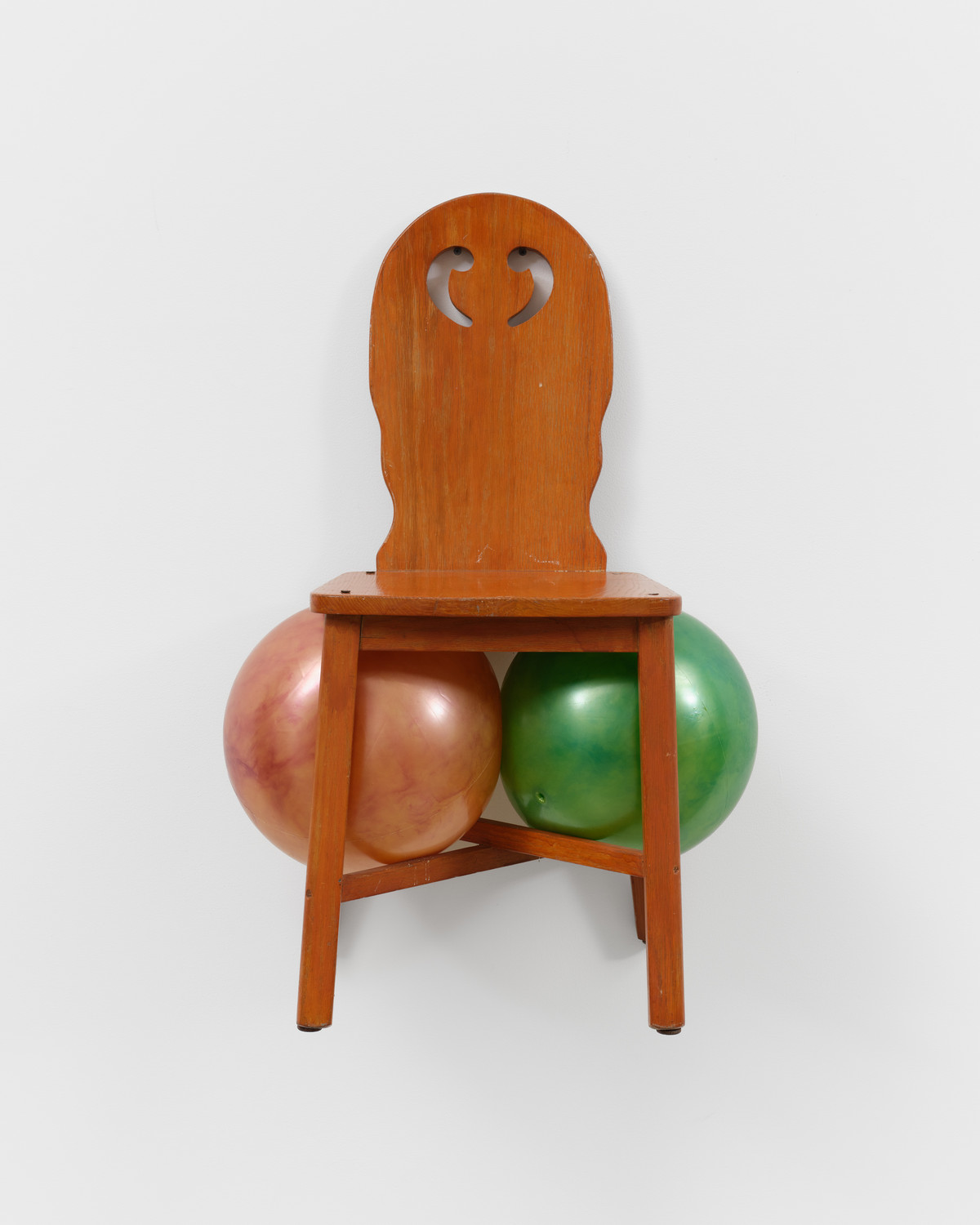
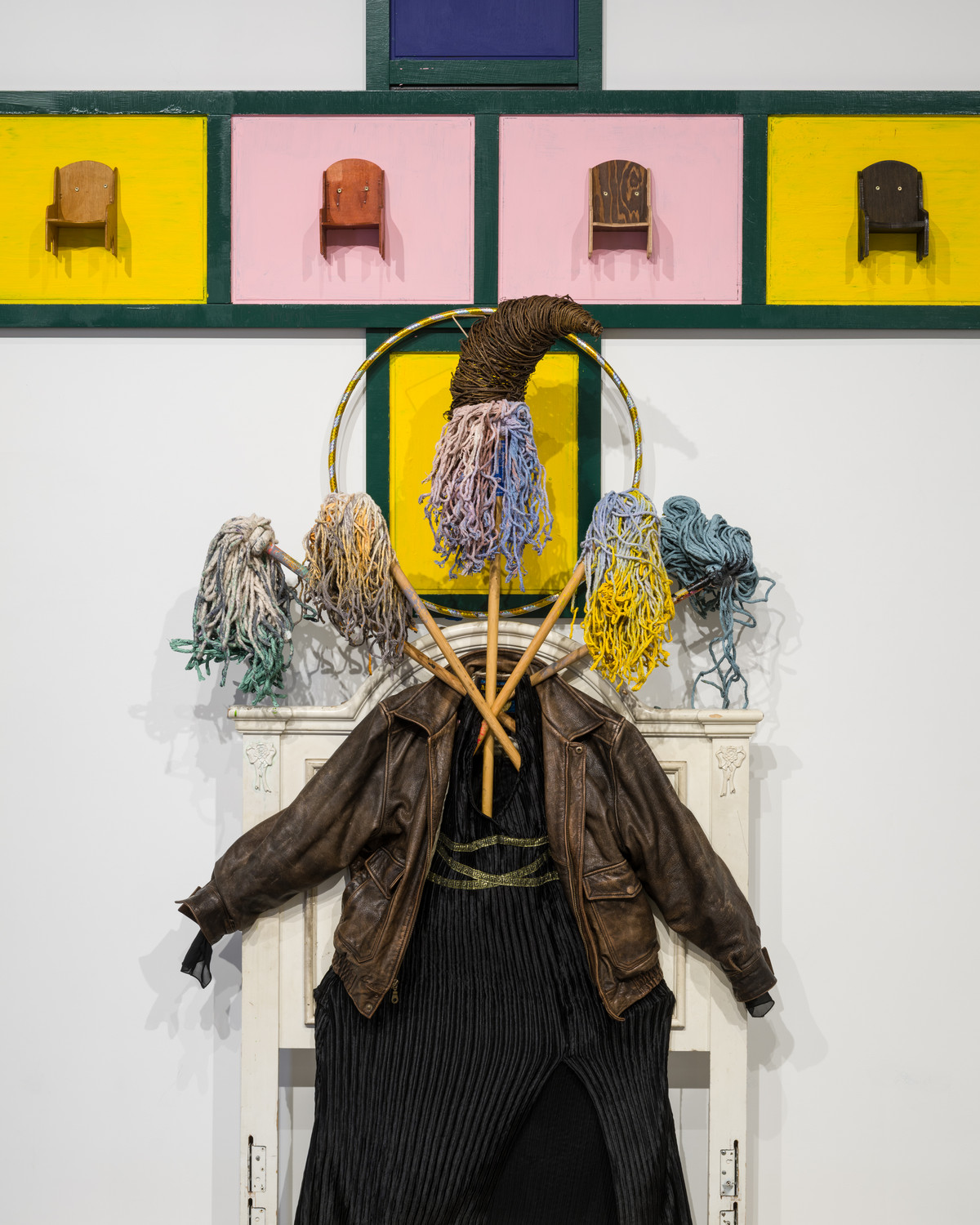
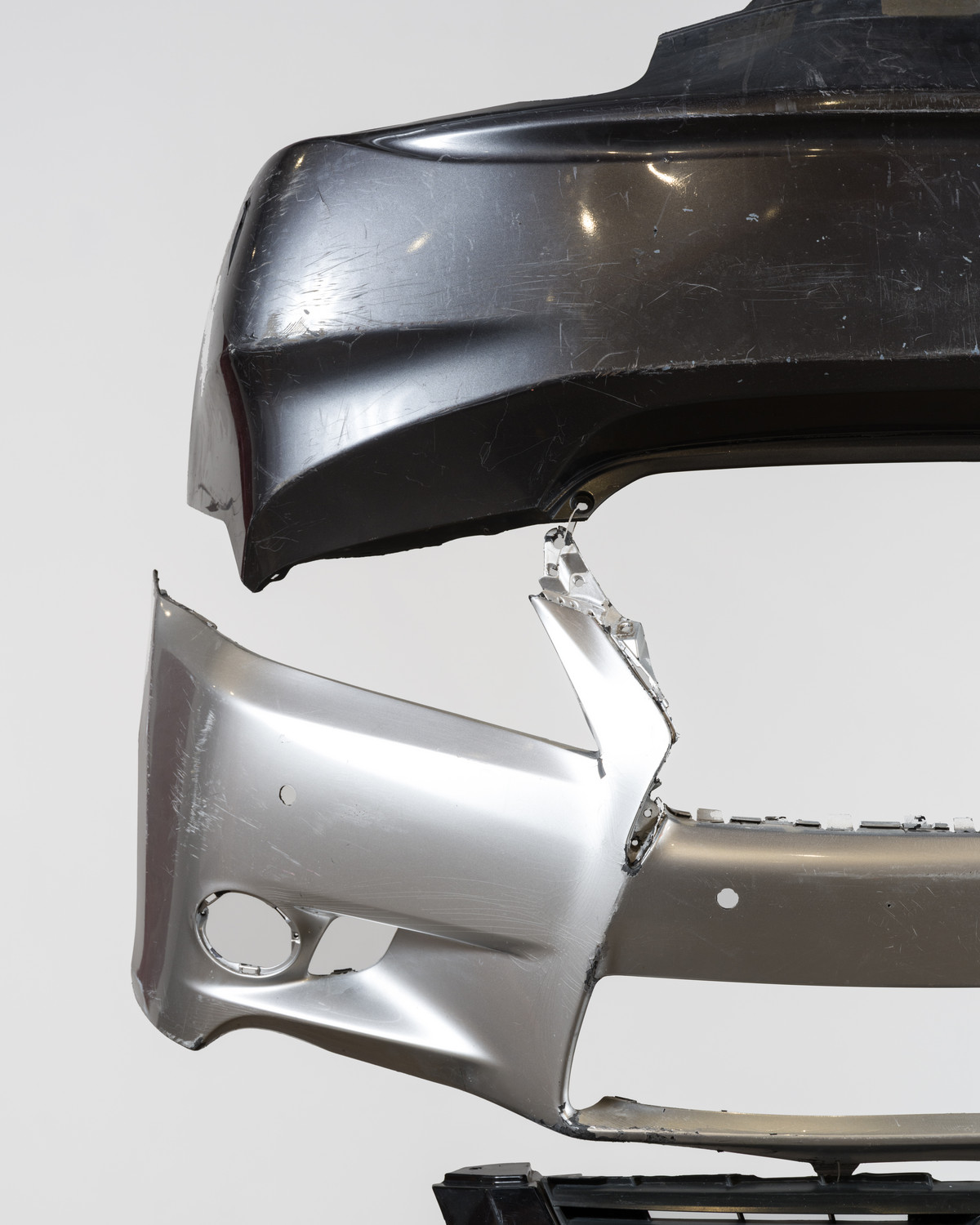
That’s exactly right. Get up. Move. A Chair for a Powerful Curator — the tilt, the missing leg, the balloon that says “congratulations” — it’s all coded. Nothing is meant to hold you for long.
Onyewuenyi
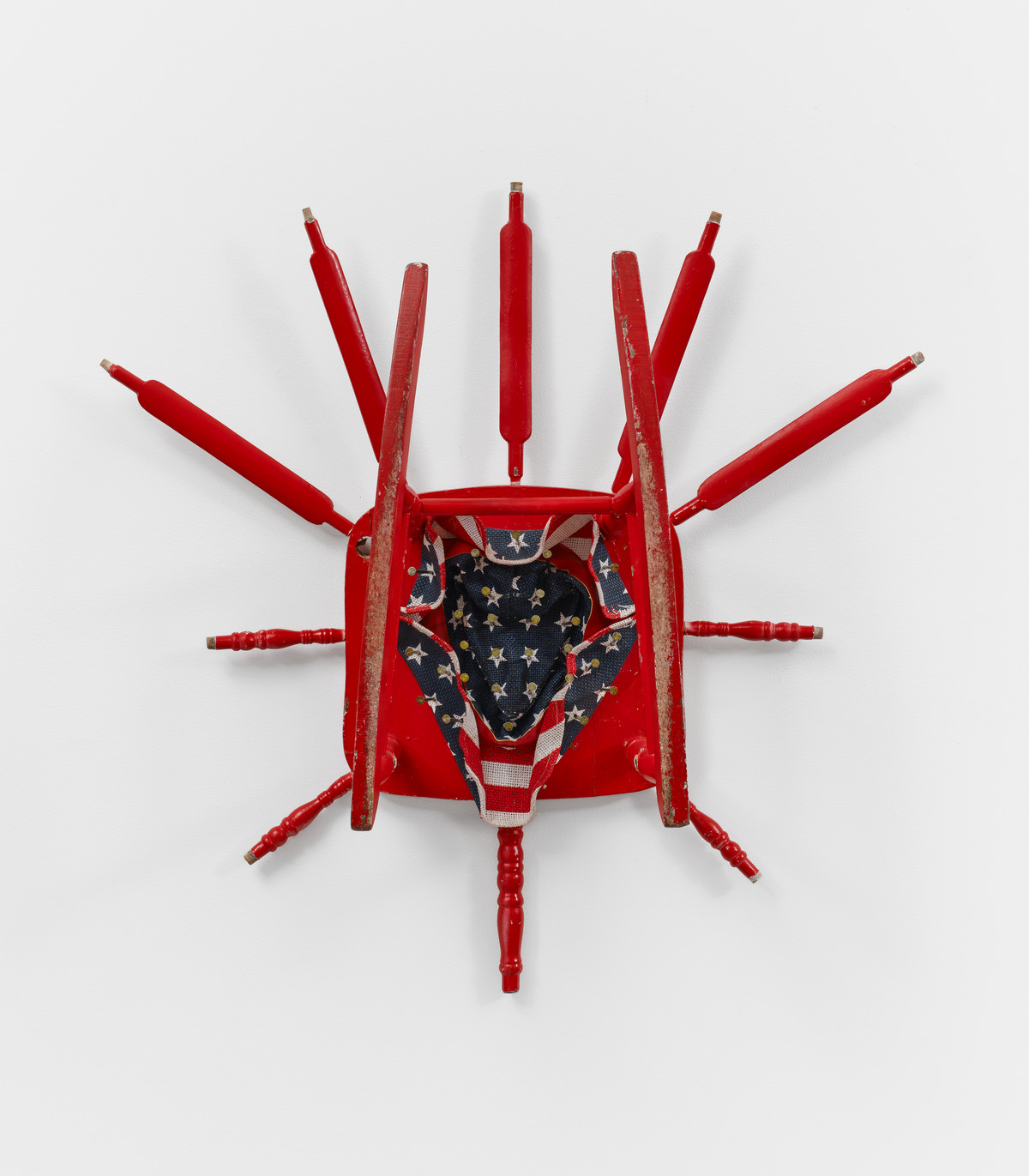
And then there are works like I’m Indigenous Too. People see an American flag being pierced, but it’s actually an Angels hat.
Gaitor-Lomack
Right. People assume. But I’d never disrespect the flag like that. It’s corny. This hat had stars and stripes, and I made it into a viper — nails in every star. Nails are historical: without them, nothing gets built. That’s part of the language.
Onyewuenyi
And Pope Dealer — the sculpture in MacArthur Park.
Gaitor-Lomack
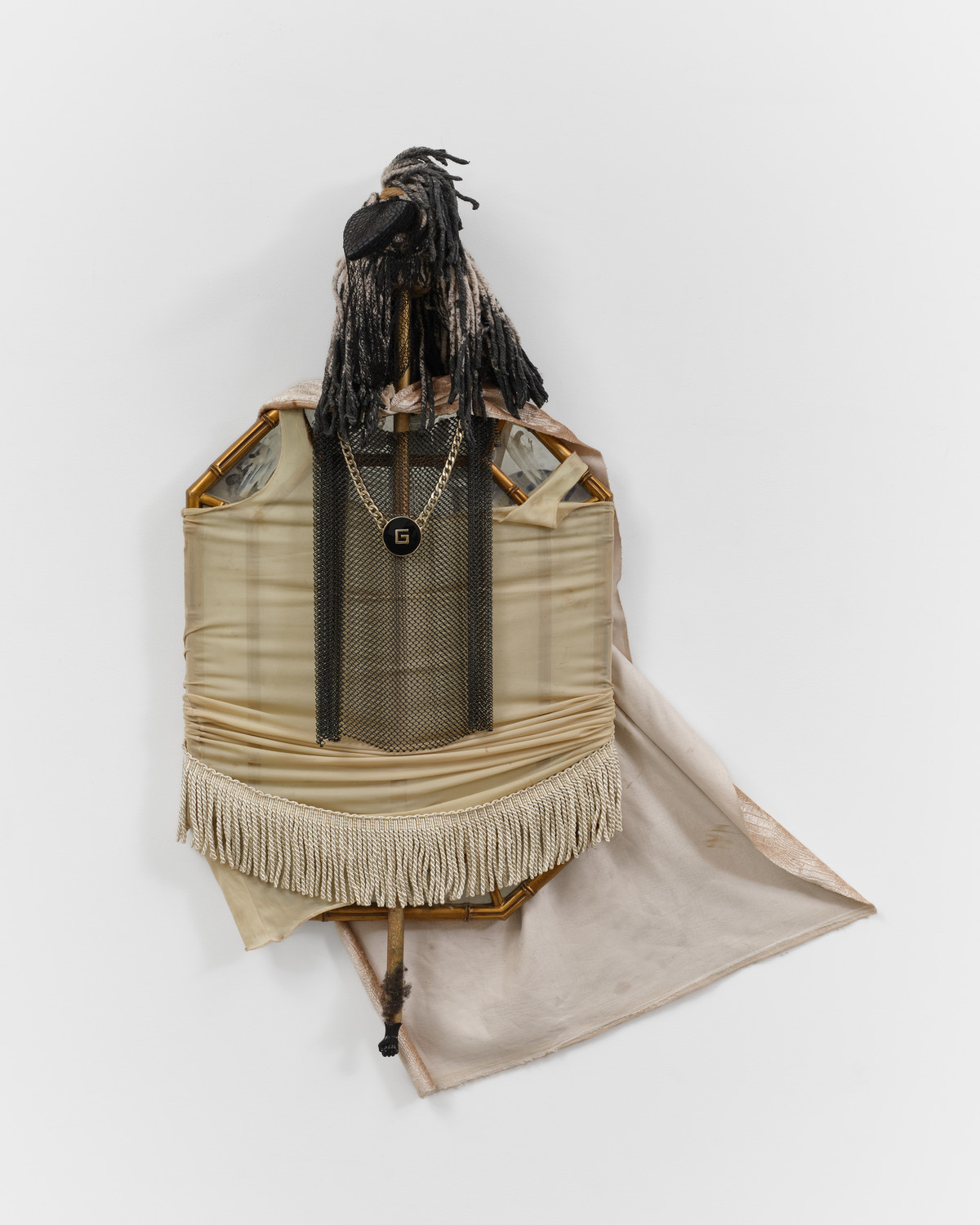
That’s Pope Romero. God bless his soul. Mink coat, gold rope. Another kind of altar.
Onyewuenyi
Religion is everywhere in your work — Catholicism, Islam, Judaism. Did you grow up religious?
Gaitor-Lomack
I grew up around all of it. New Jersey exposed me to everything — synagogues, Five Percenters, Nation of Islam. My mother cared for an elderly Jewish man, Ivan. He taught me things about his culture while we watched TV and talked cars. I’m an ally to it all.
Onyewuenyi
Your work feels like it embraces spiritual multiplicity — syncretism — without submission.
Gaitor-Lomack
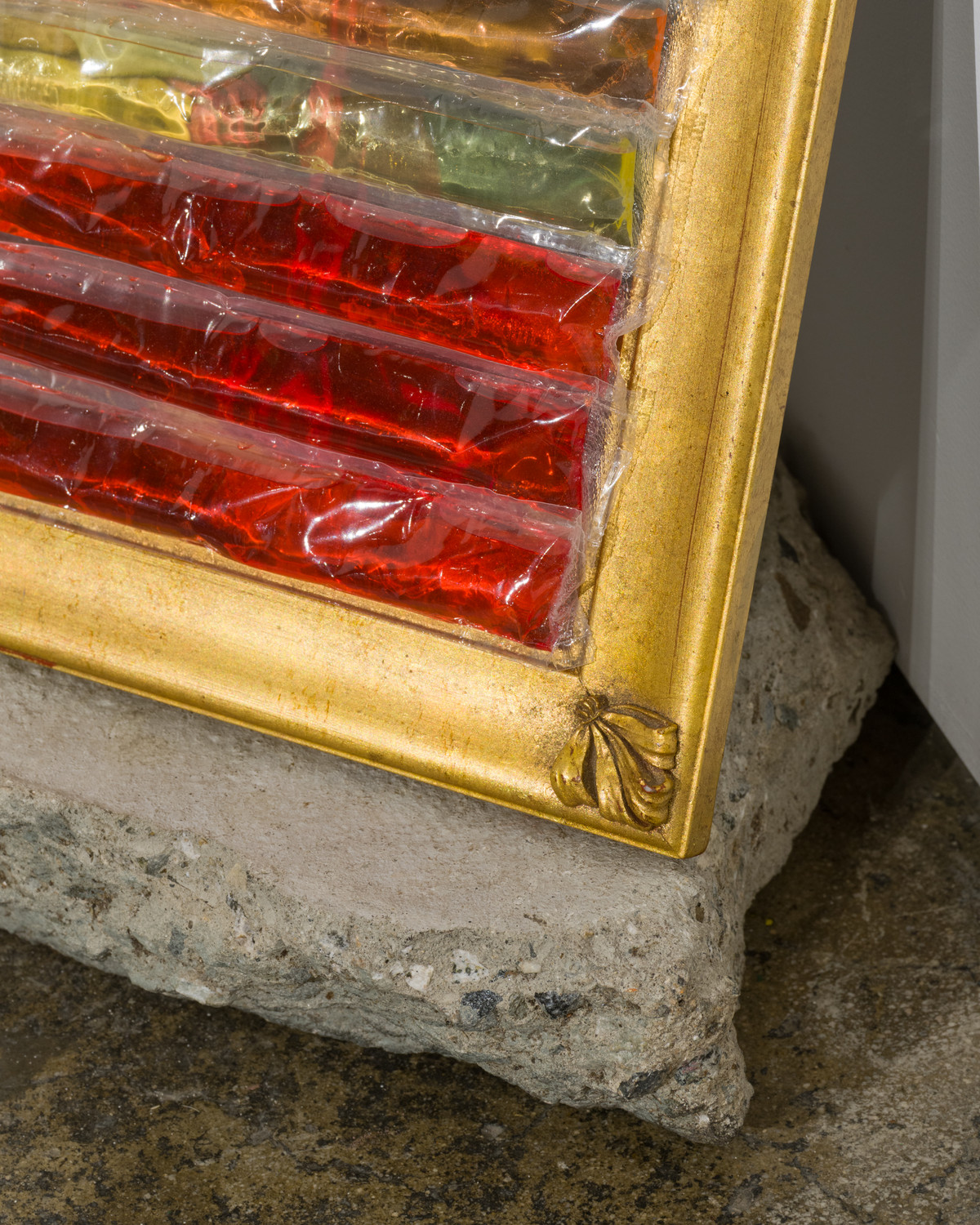
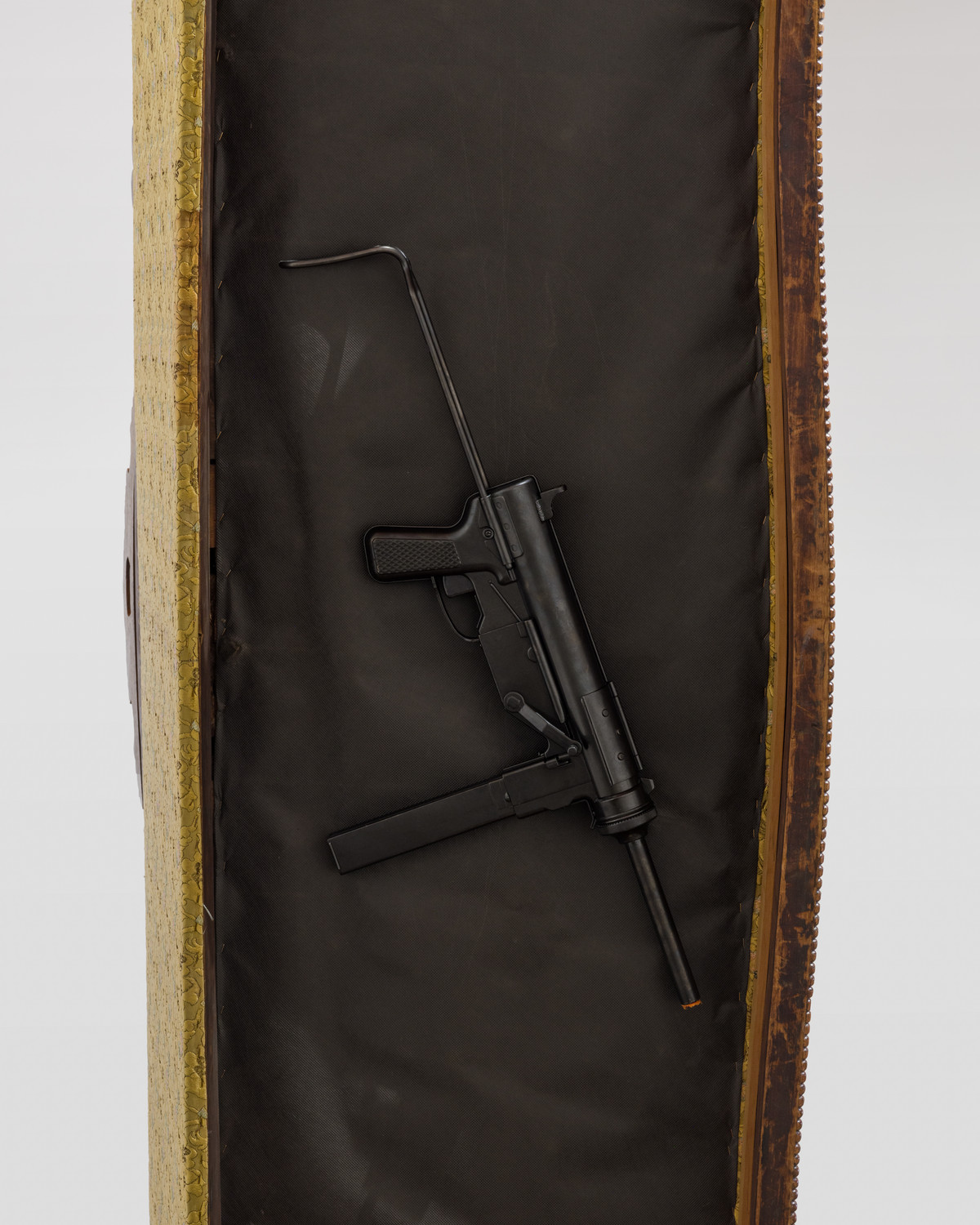
Exactly. There’s no submission in my work. That’s the difference between art and religion. These symbols are man-made. I can reorient them. Transform them. They move us daily whether or not we practice the religion tied to them. And I’m free in that. Total freedom.
Onyewuenyi
That ties back to the title — YOU CAN HATE ME NOW. There’s a directness to it.
Gaitor-Lomack
The title is a response — not an explanation. To the past, the present, and what’s coming. I’ve taken a code of silence around explaining it too much. The work is the response. Whether you walk in or walk out, whether you question my intention — I’ve already responded.
Onyewuenyi
You’ve mentioned the Carmina Burana — Lady Fortuna — as part of the architecture behind the show.
Gaitor-Lomack
Yeah. These last years have been about luck, fortune, cycles, the wheel turning. I sample that energy. It’s how I choose to spin everything now.
Onyewuenyi
You’ve said you don’t fit in, and you don’t want to.
Gaitor-Lomack
Never fit in. I’ve danced around people who do, but only because I can. That’s my gift. I know too much to fit in. I’m in a different place with it now — almost like an art of letting go. If success means becoming something I don’t respect, I don’t want it.
Onyewuenyi
And so much of the work becomes a forecast — a guide for others, even when you step back.
Gaitor-Lomack
Exactly. I’ve helped so many people see the next step in their race. Now it’s my turn to walk my own walk. What I’ve been forecasting is here now.
Onyewuenyi
Artists often talk about community, responsibility, representation. But with you, it feels like it all returns to vision.
Gaitor-Lomack
Vision, and the unseen. And trusting it.
Onyewuenyi
Well — thank you for walking us through this world. It’s powerful.
Gaitor-Lomack
Thank you. I love speaking about the work — and I love not speaking about it. But I always enjoy giving someone the experience.
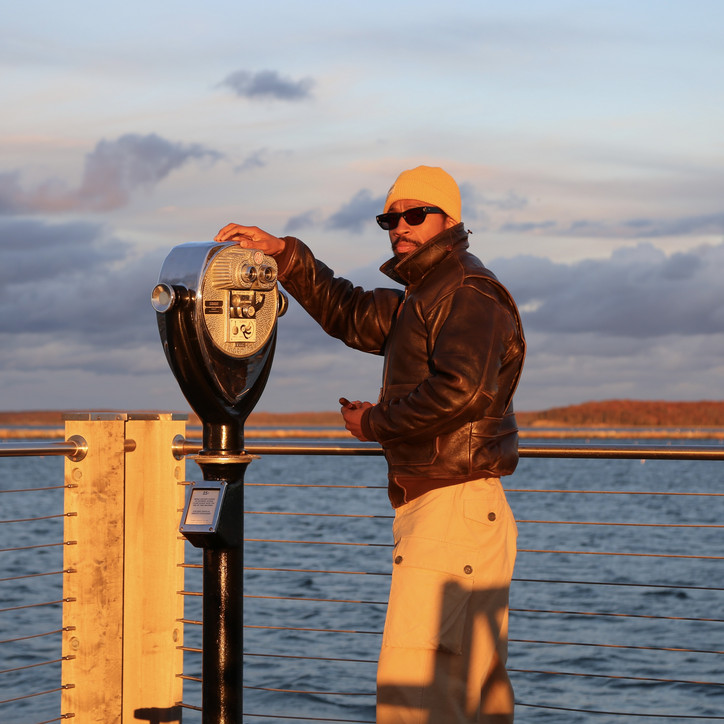
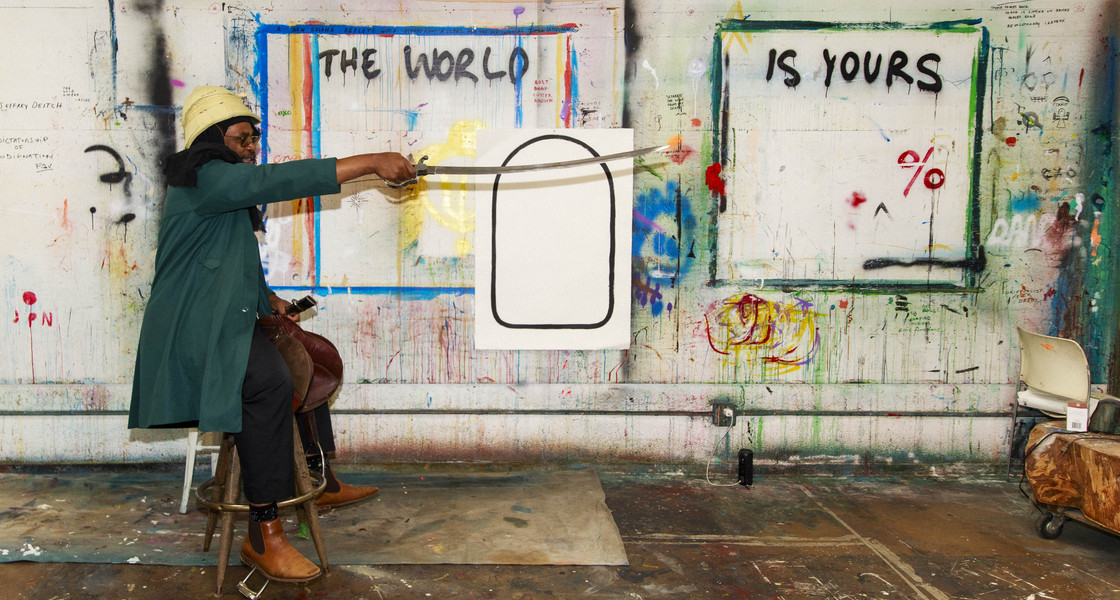
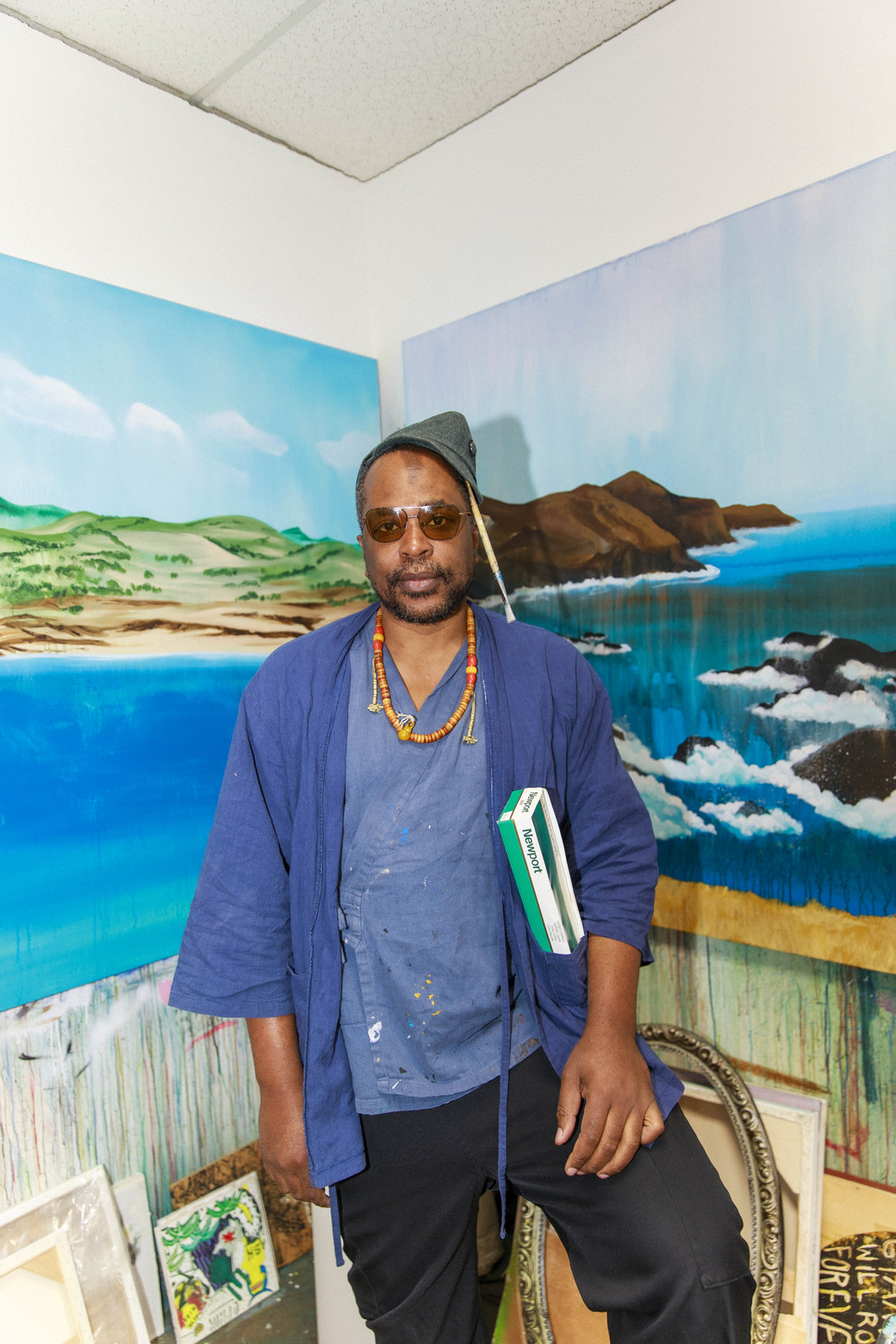
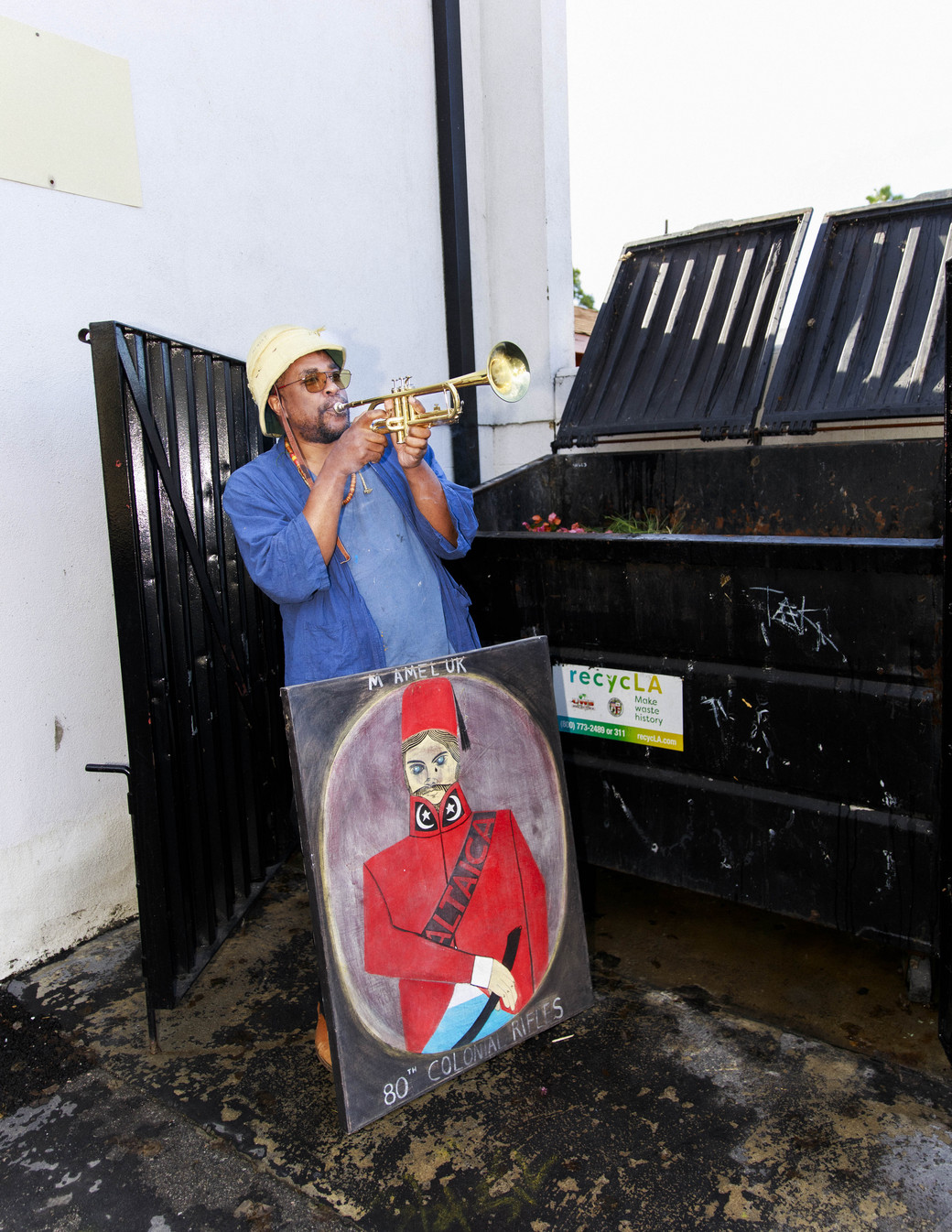
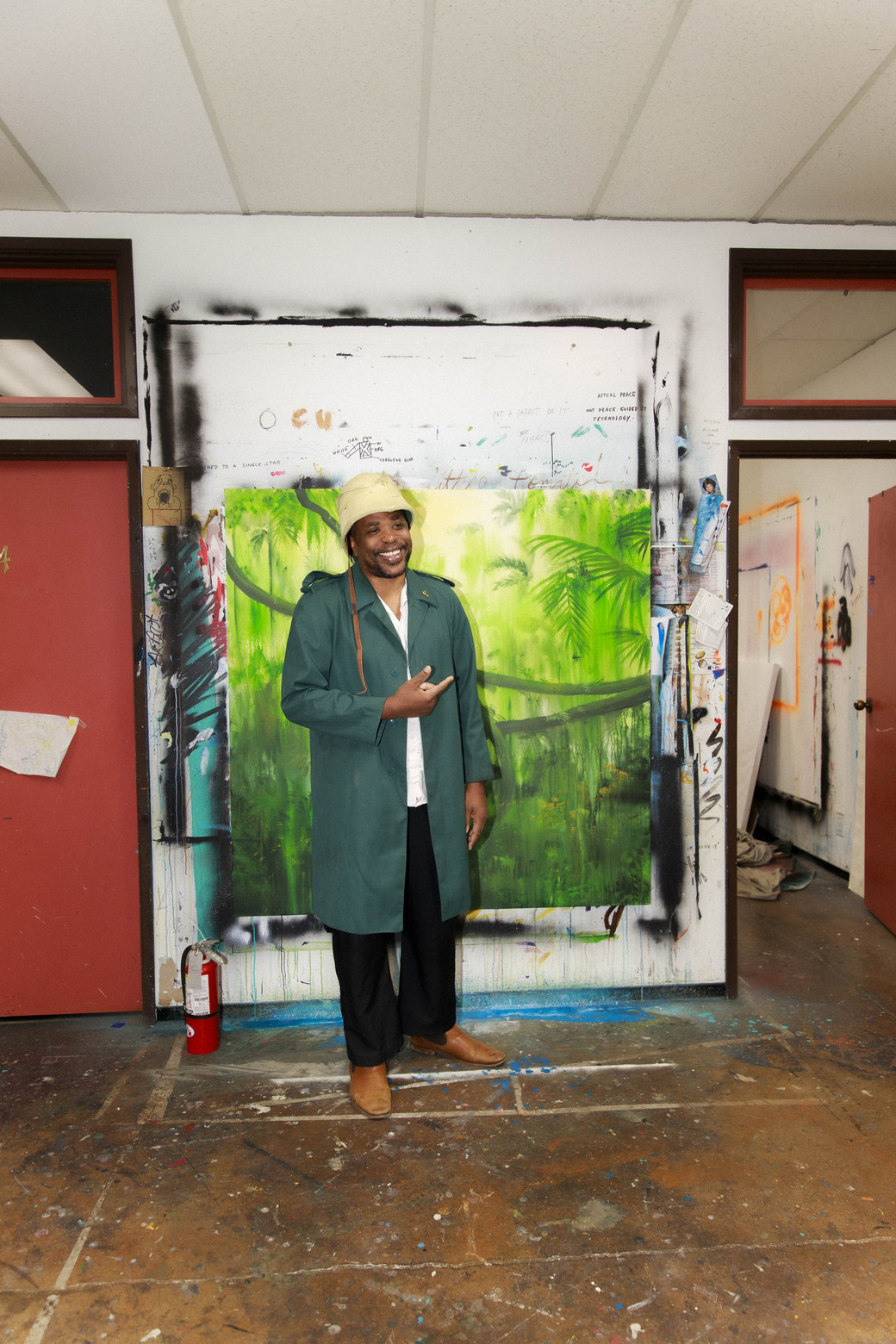
Self-Portrait by Daniel T Gaitor-Lomack
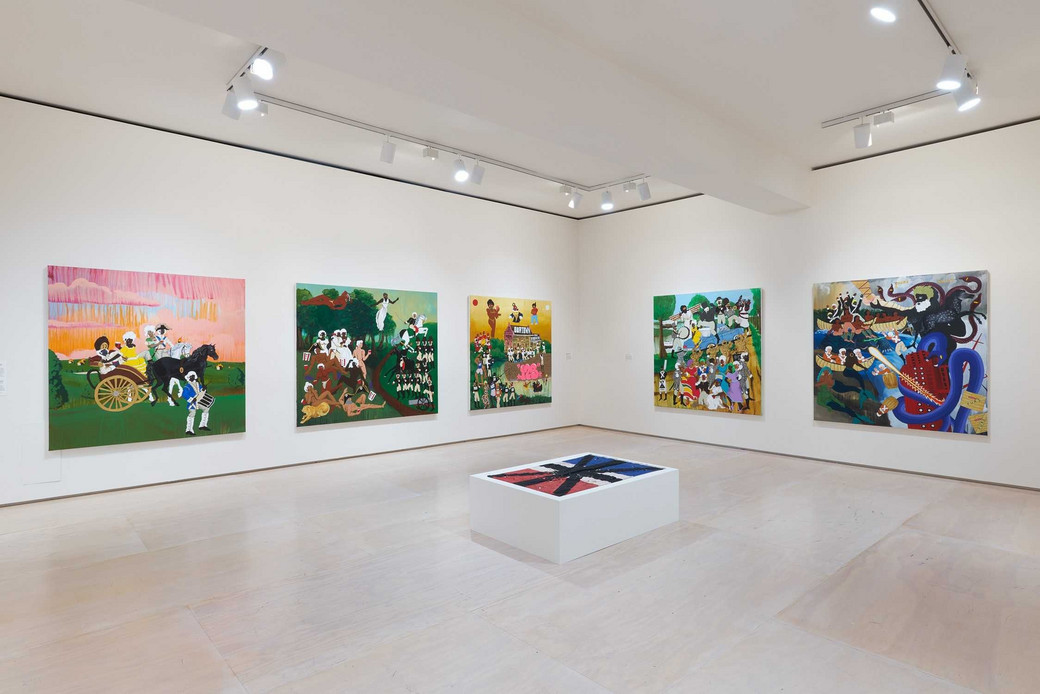
Places and Spaces was born from a conviction that space is never neutral. It is always charged, contested, alive, and shaped as much by memory, myth, and imagination as by architecture or geography. That idea emerged gradually as I began to realize how artists today are not just making objects, they are building worlds. They draw from layered histories, lived experience, and speculative possibility to shift how we understand the environments we inhabit. Bringing together the artists in this exhibition creates a field where distinct practices echo across mediums and contexts. Textiles speak to paint, myth speaks to memory, code speaks to clay, and emerging gestures sit beside established ones. Each artist adds a fragment to a larger atlas that maps the ways we construct place and how those constructions, in turn, shape us.
My recent three part conversation with Suchitra, Matsu, and Umar for Office extends the spirit of this show. Their practices span different mediums and moments in their careers, yet their voices resonate with one another in surprising ways. Together with the other artists in the exhibition, they contribute to a constellation that opens new spaces for dialogue, imagination, and possibility.
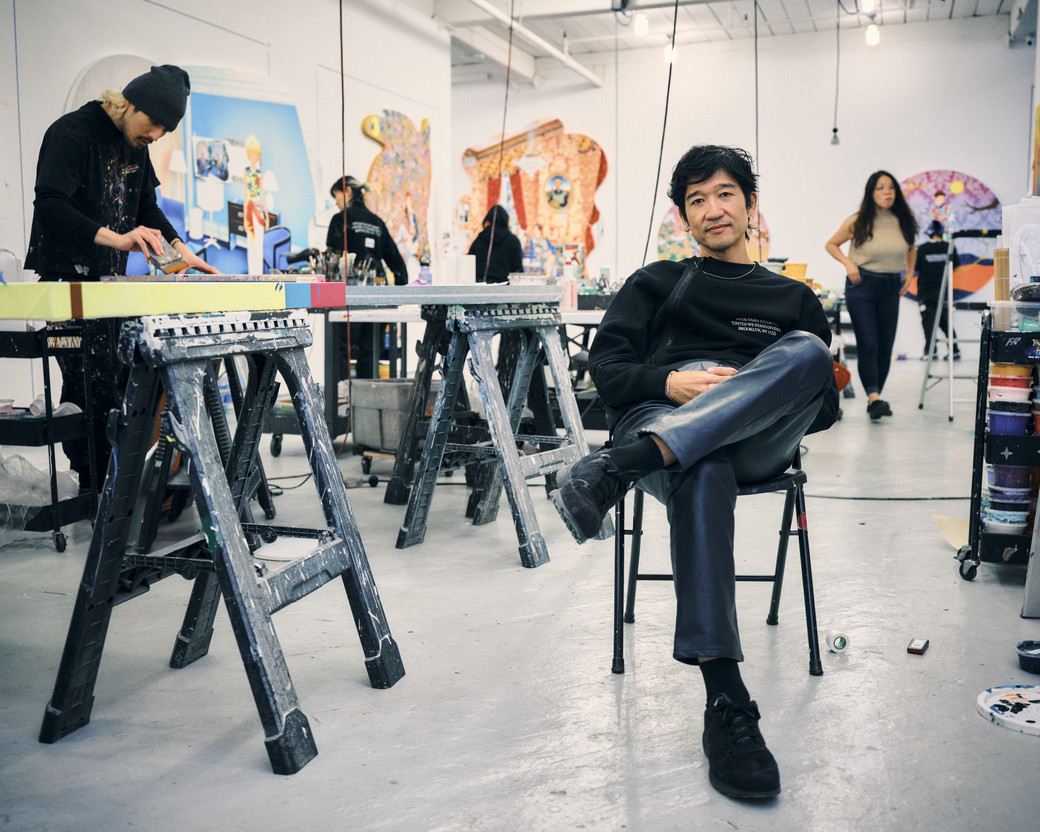
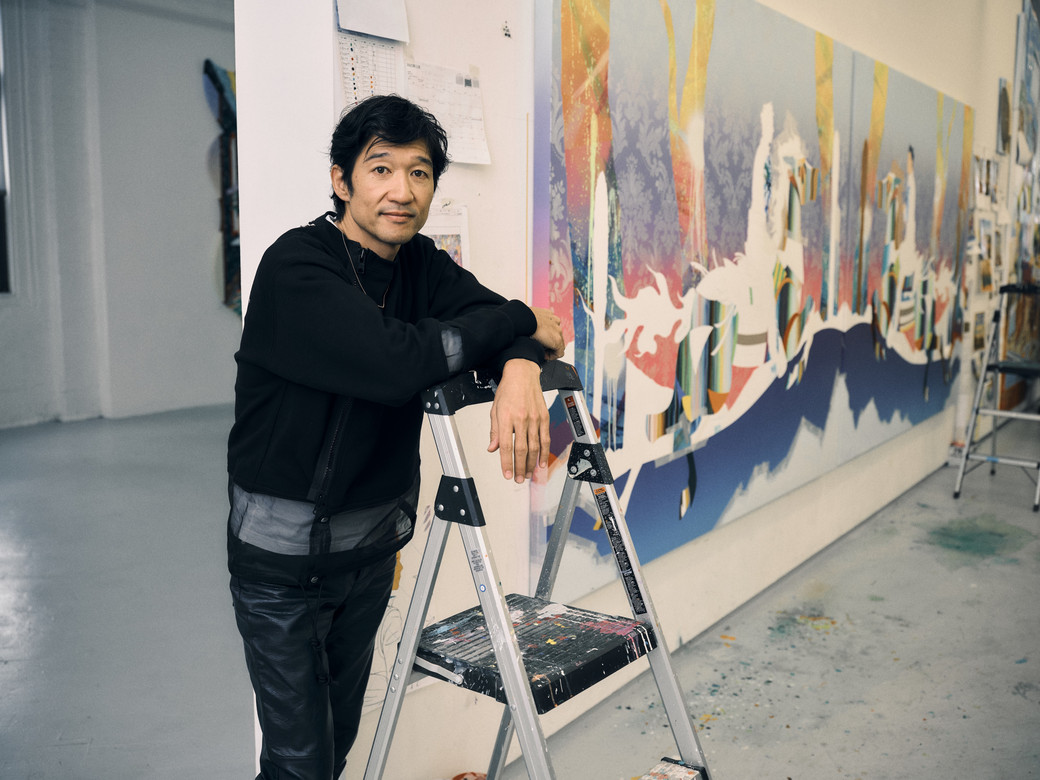
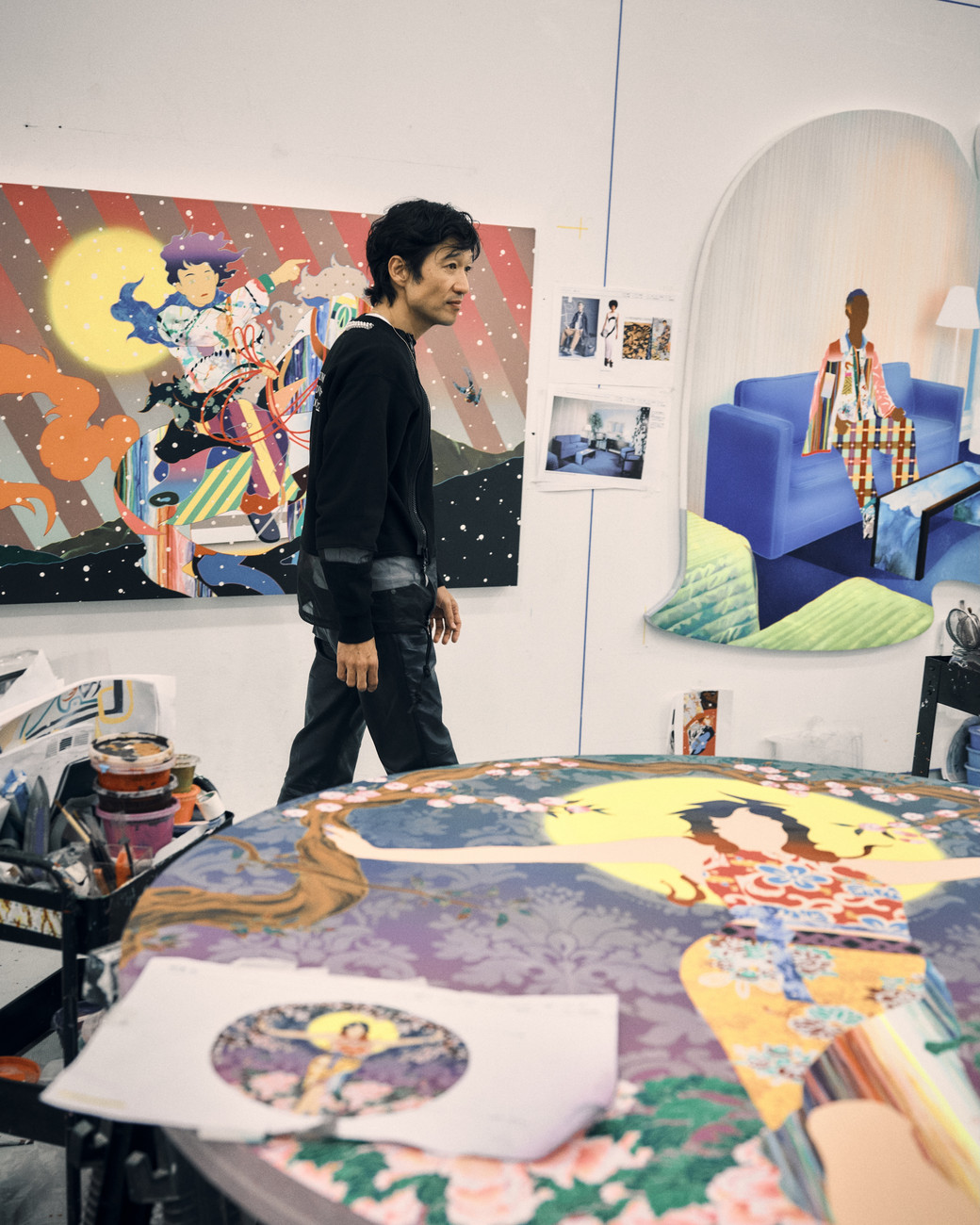
Tomokazu Matsuyama
EO: Your painting Color of the City No.48 is more compact in scale compared to some of your
monumental works, yet it still carries your signature layering of patterns, cultural fragments, and
symbols. What does working at this scale allow you to express about “space” that might differ from your larger canvases?
TM: Even in a smaller format, I try to hold onto the same density of references that runs through my bigger works. What really shifts is how viewers experience the space. A large canvas can surround you, almost like stepping into another environment, while a smaller piece feels more like a direct conversation. In Color of the City, the scale does not reduce the complexity, it accentuates it. The fragments of patterns, portraits, cultural symbols like “the East and West”, sit closer together so the tension between them becomes more immediate. For me, that compression mirrors how space is lived in cities like New York; crowded, layered, and full of unexpected proximities.
EO: Your recent solo exhibition at SCAD Museum of Art grappled directly with the idea of space; particularly the tension between interior and exterior, and the line between private and public environments. How do those investigations of space carry forward into your contribution to Places & Spaces?
TM: At SCAD, I was very conscious of how works lived simultaneously inside the museum and in the Jewel Boxes that face directly onto the street. That duality; contemplative interior space versus the unpredictability of public encounter, reflects the way I want my paintings to breathe. In Places & Spaces, that same investigation continues, but in a different context. My contribution engages with the exhibition’s idea that space is not just backdrop, but something charged, contested, and psychological. The layering in my work destabilizes boundaries. In them ornament meets politics, intimacy at times collides with spectacle. By doing this, I hope the paintings remind us that “space” isn’t neutral. It carries memory, exclusion, and possibility. Whether compact or monumental, public or private, the works are about inhabiting that unsettled in-between space.
EO: Both your practice and another artist in Places and Spaces, Dennis Osadebe, highlight the duality of tradition and modernity; history and contemporary culture exist in constant dialogue. How do you approach this balance in your own work, and what possibilities do you see in navigating that tension as part of your visual language? Also, why is it important to look forward as well as backward when envisioning new possibilities for the world we live in?
TM: I have always moved between cultures, Japan and the U.S., tradition and pop culture, being both insider and outsider in different contexts. I do not see history and modernity as opposites, I let them speak to each other. A kimono pattern might sit beside a Renaissance motif or an image from streetwear, showing how meaning shifts when they share space. Looking back matters because history holds unresolved questions of identity, justice, and belonging. But looking forward is just as important, since art must imagine futures not limited by what we inherit. For me, layering fragments creates a language of coexistence. It honors the past while opening space for something unexpected, reminding us the future is always built from what came before
Suchitra Mattai
EO: In Places & Spaces, your works Poesis and Strength in Numbers merge recycled saris, vintage sculpture, and historic prints into layered, tactile constellations. How do these materials function as both personal memory and cultural architecture, and in what ways do you see them resonating with the exhibition’s theme of “nested realities”?
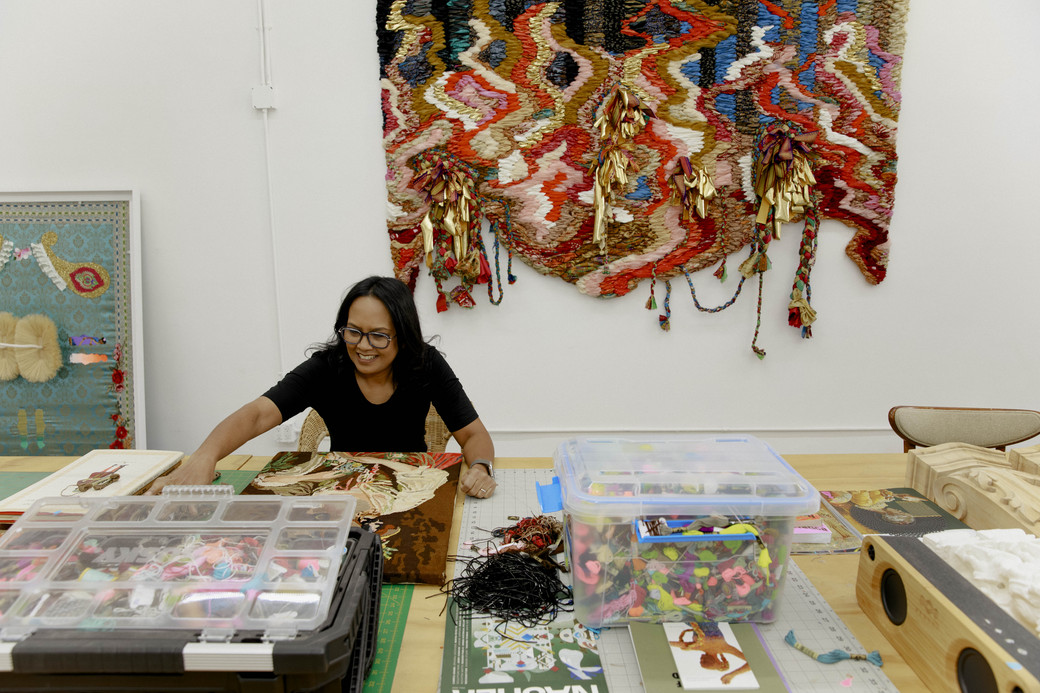
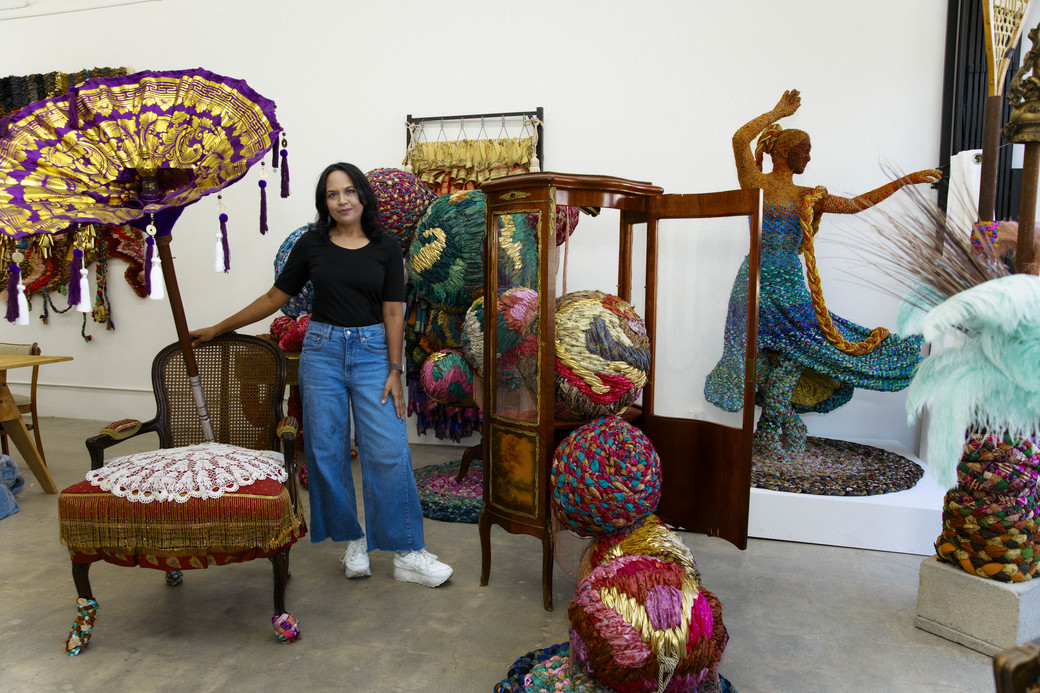
SM: "Poesis" combines a found bust seemingly from the western art historical canon and braids that are woven from worn saris, in essence, from deconstructed fabrics that still bear traces of the bodies they once adorned. Collectively, as the show's narrative suggests, the two materials occupy "spaces [that] fold onto themselves," positing a new goddess of a future sacred land. The juxtapositions not only collapse time, but also the spaces of art/craft, public/domestic, and East/West geographies and iconographies. Similarly, "Strength in numbers," a collage made of paint and historic materials, depicts figures from various times and places. Colonial men cut from antique book pages engage in "battle" while sari clad women intervene and a girl gallops away. Migration stories and ancestral histories begin, end and refresh. The work is meant to hold multiple perspectives on the past at once. Here, combined "nested realities" generate new stories filled with hope.
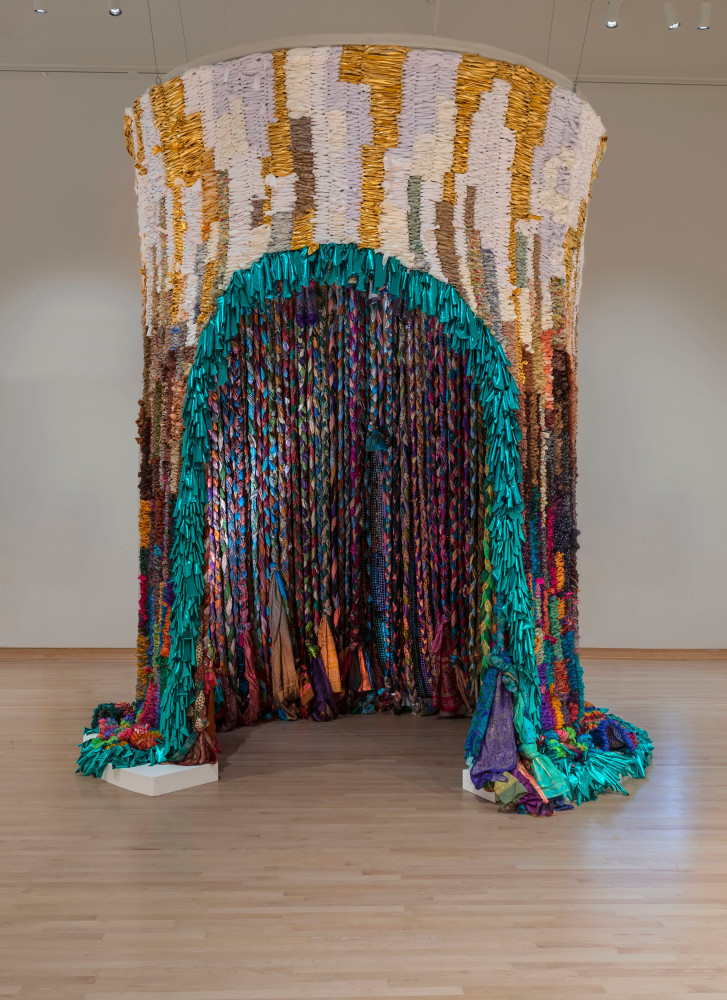
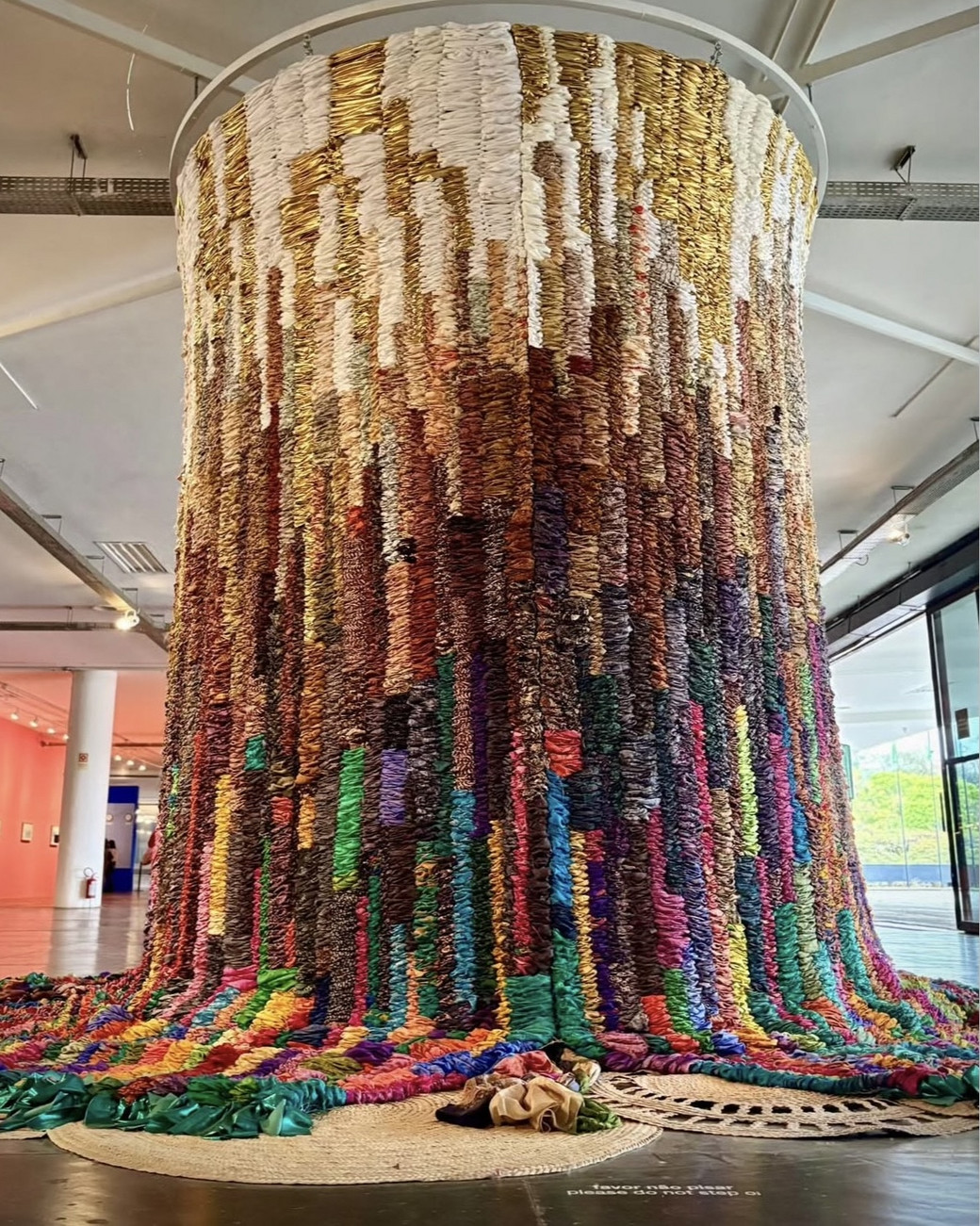
EO: At the São Paulo Biennial, you’ve created an expansive installation that transforms everyday textiles into a sweeping exploration of migration, memory, and belonging. How does that body of work connect to the more intimate yet equally layered pieces you’ve contributed to Places & Spaces? Also, what was it like showing and being in conversation with the works of Sir Frank Bowling; it felt like a very special moment for Guyanese artists and for the recognition of Guyanese art within a larger art historical context.
SM: "Siren Song" at the São Paulo Biennial is a portal within a portal in a way. The cylindrical form made of suspended tapestries creates a space for the viewer to enter. Once inside, a combination of ocean waves, a projection of the ocean on the ceiling and the warmth of hundreds of braided saris form a womb. The work offers us a space to rest, to reflect and to collectively heal. Though the scale shifts, spaces continue to meld, separate and disorient.
It was a truly auspicious moment to share space with the inimitable Sir Frank Bowling. His painting of a borderless South America really struck me, especially in this moment. I believe that this was his first time exhibiting in South America, (as it was mine), in this land of our respective births. It brought me to tears to have Guyana included in this way and is a testament to the curatorial team's intentions as evoked by the Biennial's title "Not All Travellers Walk Roads – Of Humanity as Practice." I continue to reflect on early discussions with Keyna Eleison, co-curator at large, about ideas as estuaries and the many literal and figurative rivers that flow through Guyana.
EO: Many artists in Places & Spaces, from Chelsea Odufu to Ivan Forde to Sarah Mecca Abdourahman, explore the role of materials in shaping meaning. Do you see your practice as part of this wider movement of reclaiming and reanimating material histories?
SM: Yes. Materials hold so much meaning. They tell stories of families and their histories, of our differences and connections. To use materials that were once part of our ancestors' lives is an act of celebration of those who were once rendered invisible. It is an act of defiance that brightens our path forward and allows us to manifest the future we desire.
Umar Rashid
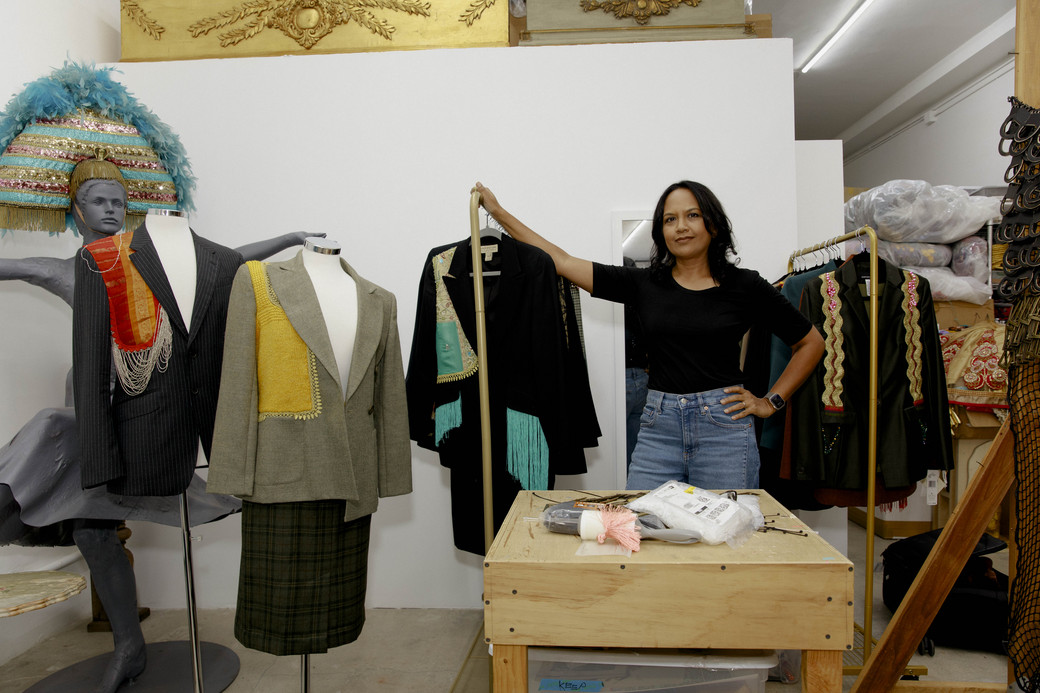
EO: Your works in Places & Spaces, Bust of a Company Cazador Soldier and Klaatu Barada Nikto (Stop Barbarism), extend your mytho-historical universe into three-dimensional form. I first noticed your sculptural work at your solo show at MoMA PS1 in 2023, and thought it would be exciting to highlight this lesser-known medium in your practice within the context of this show. What possibilities do you see sculpture opening up that your paintings alone cannot?
UR: Thank you! I can’t wait to make more sculptures and installations in the future! At the moment, I’m keeping things simple because I don’t want to outpace my paintings and drawings. I’m in no competition with anyone. I will allow my sculptures to evolve naturally within my personal ecosystem.
EO: The show’s title, Places & Spaces, is an obvious nod to Sun Ra’s Space Is the Place. Central to the exhibition is the idea of reserving space for mythology, fantasy, Afrofuturism, and speculative fiction; elements that course through your practice, but also resonate in works in the show by Delano Dunn and Kiyomi Quinn Taylor. Could you delve into the specific characters embodied in your two sculptures in the show, and explain their place within your broader mythology?
UR: As it has been stated before, my practice began in the colonial era but expanded to encompass past, present, and future. The Cuaulhocelotl (Aztec elite jaguar warrior) was incorporated from the pre-Cortez Mexican Empire and remade into an elite unit of infantry I call the Company Cazador. They often appear in my narratives about post colonial North America and there is nothing necessarily “cosmic “ about them but, they are present in the story to represent the mingling of the “old” and “new” ways and how warfare, at the time (colonial) was reconstructed to include elements from a forcibly, shared history. Klaatu Barada Nikto (the Sentinel) however, came from my early childhood experience with the science fiction film, The Day The Earth Stood Still. A film that I love dearly and is quite relevant today among these internecine wars of muddled political policy, actual war, and the destruction of the environment. The Sentinel is a reminder and a warning from a possible future that forces humanity to abandon our destructive policies and practices, lest we be destroyed.
EO: This exhibition also becomes a space to engage history. I’ve long felt that both your work and Suchitra Mattai’s embody a kind of “critical fabulation,” reconstructing historical narratives in ways that trouble the idea of fact. Do you see your work as actively reframing what is accepted in the historical canon, and if so, how do you think about that responsibility as part of your storytelling?
UR: In the cacophony of noise about “changing history to suit one’s needs and desires “ I fore saw this reaction and thus went a different route, into the realm of critical fabulation. While also unearthing untold stories that don’t fit the narrative of the conquerors and subsequently, the overlords of the present, I liberally sprinkled doses of fantasy within my narrative to avoid the unhelpful quibbling about how changing elements in a heavily redacted historical record would be inauthentic and thus dangerous. I wholeheartedly reject this notion. As I am not omniscient (nor is anyone else), my duty to myself and others is to explore all that I can within this brief lifetime, synthesize it, and make it into a story that constantly changes our perceptions of our shared experiences on this planet. Inspired greatly by many historical thinkers, warriors, poets, and everyday people, I set out on a lonely journey to influence the world I live in and the world I want.


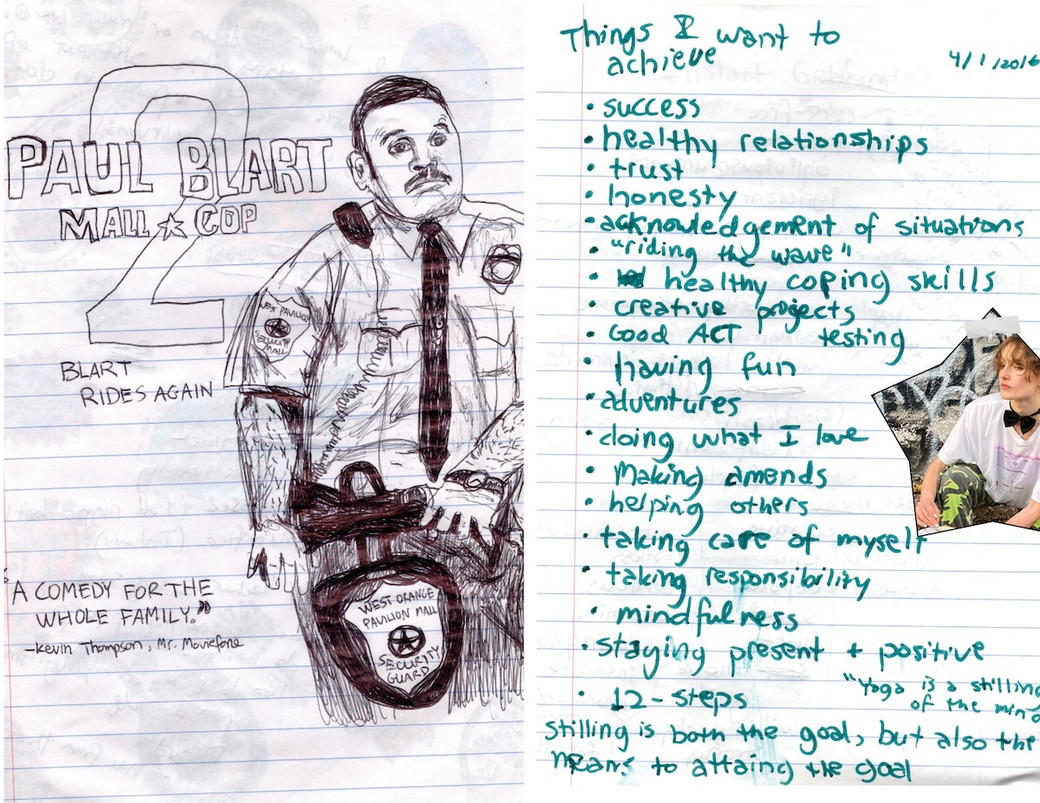
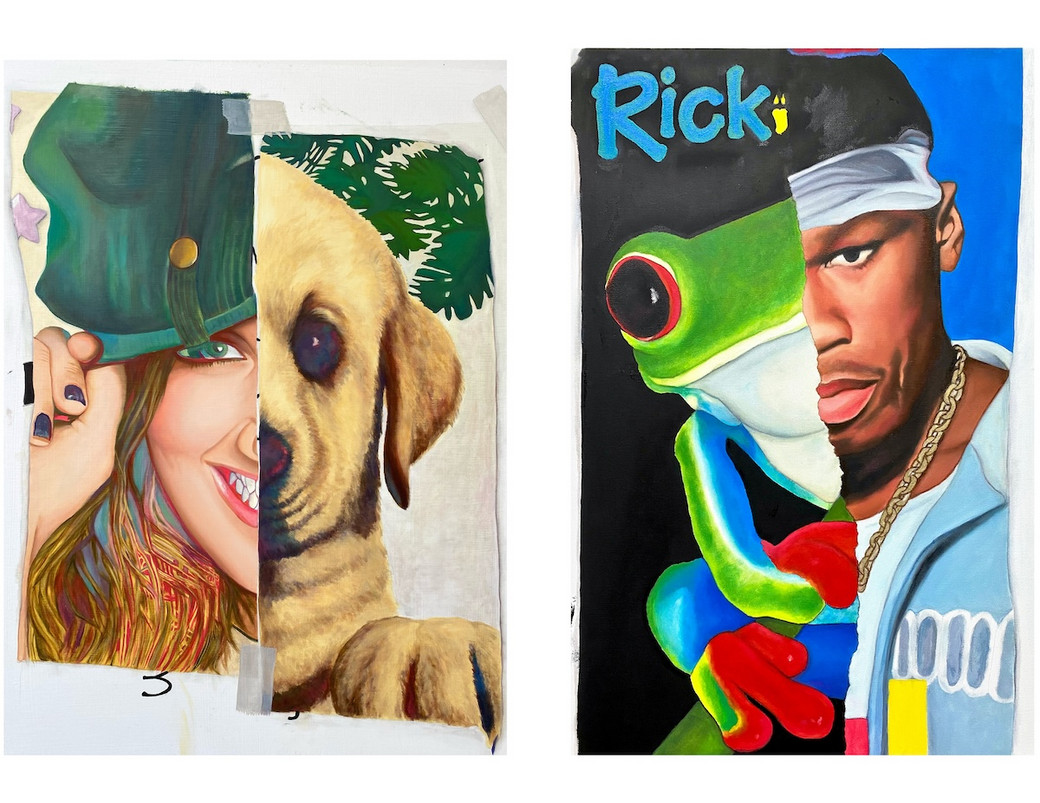
For the next nine months, we met regularly at her mother’s sunlit studio in Williamsburg. "Thunder Girl" grew out of those visits. It pulls from both old and new work: paintings, photos, memes, stray sketches, and scribbles from rehab. Together they form an honest, messy (in the best way) portrait of her life. The book has range. Some pages are serious and revealing, others are unhinged and fully fried. That push and pull became the heart of the project.
Our sessions were full of tangents. Marika’s archive is massive, and we’re both easily distracted. We ended up creating a kind of assembly line. She’d slide something across the table, and I would photograph or scan it. Every piece had a story, and we had fun figuring out how they spoke to one another. Once everything lived in InDesign, we spent weeks moving spreads around, searching for the right rhythm, the right order, the right chaos.
We hope you enjoy checking this project out. We’re having a release party on December 11th from 6-9 at Reena Spaulings Gallery, 165 E Broadway, NYC. Come hang out, chat with us, and flip through a copy. <3