
But Dan Colen has grown up a lot since he was the enfant terrible of Lower Manhattan. High Noon, for example, is a series of meticulously painted desert landscapes that individually took over four years to create.
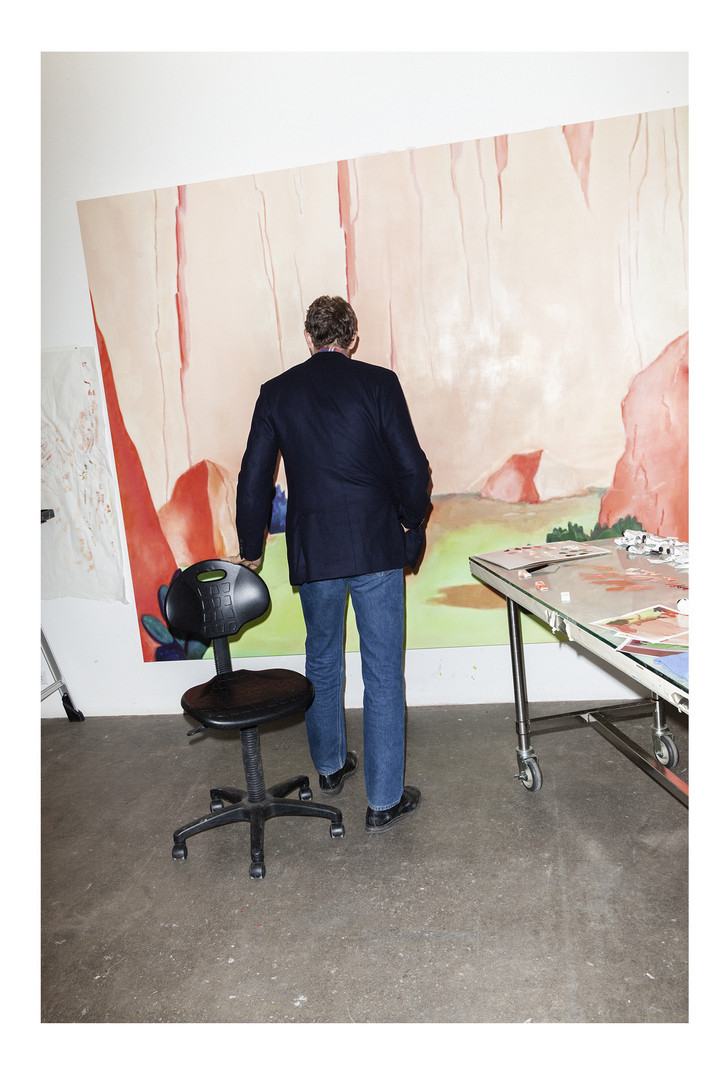
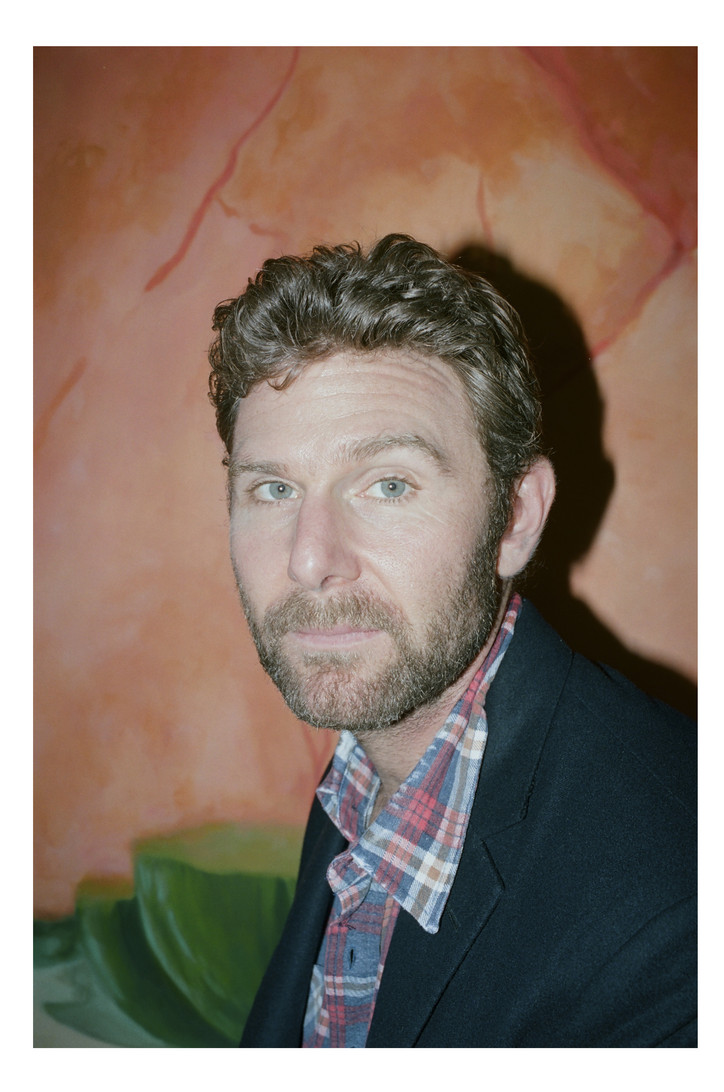
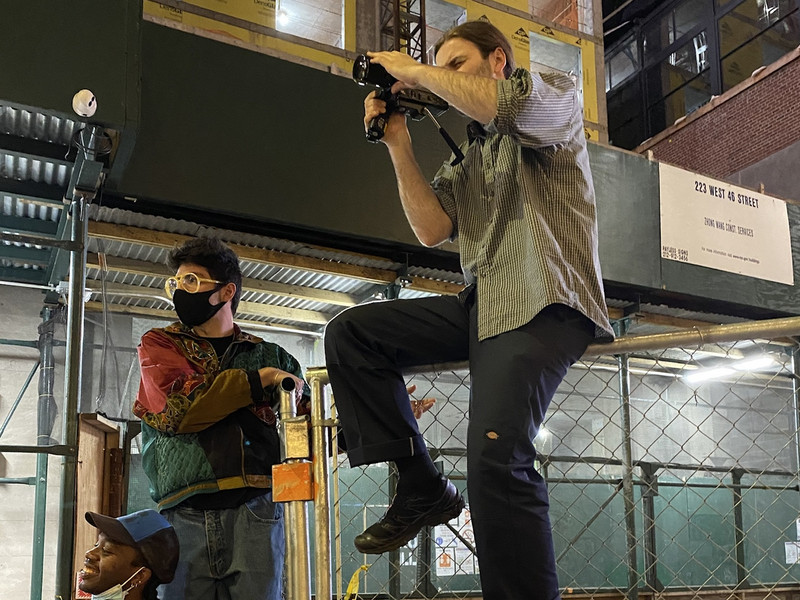
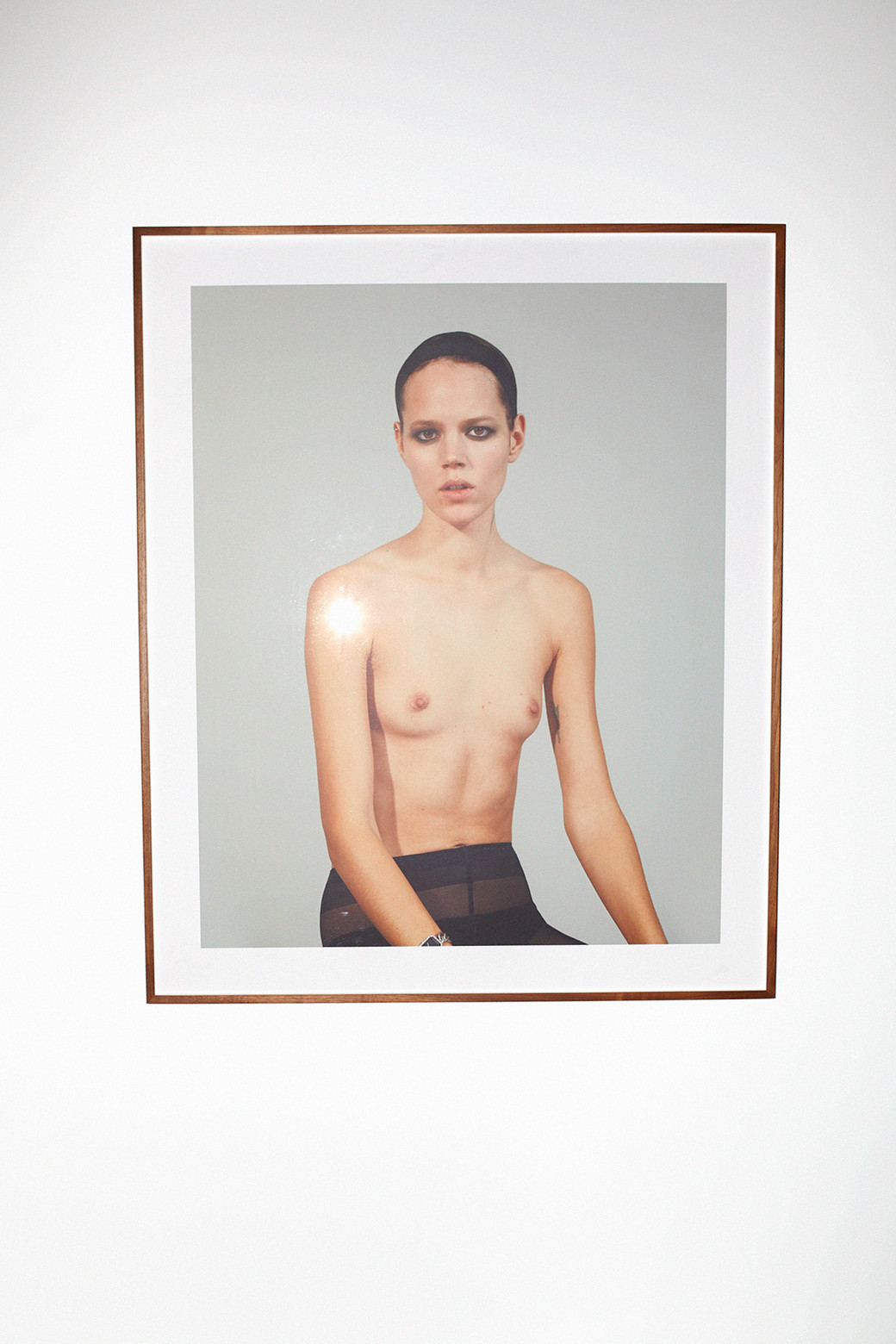
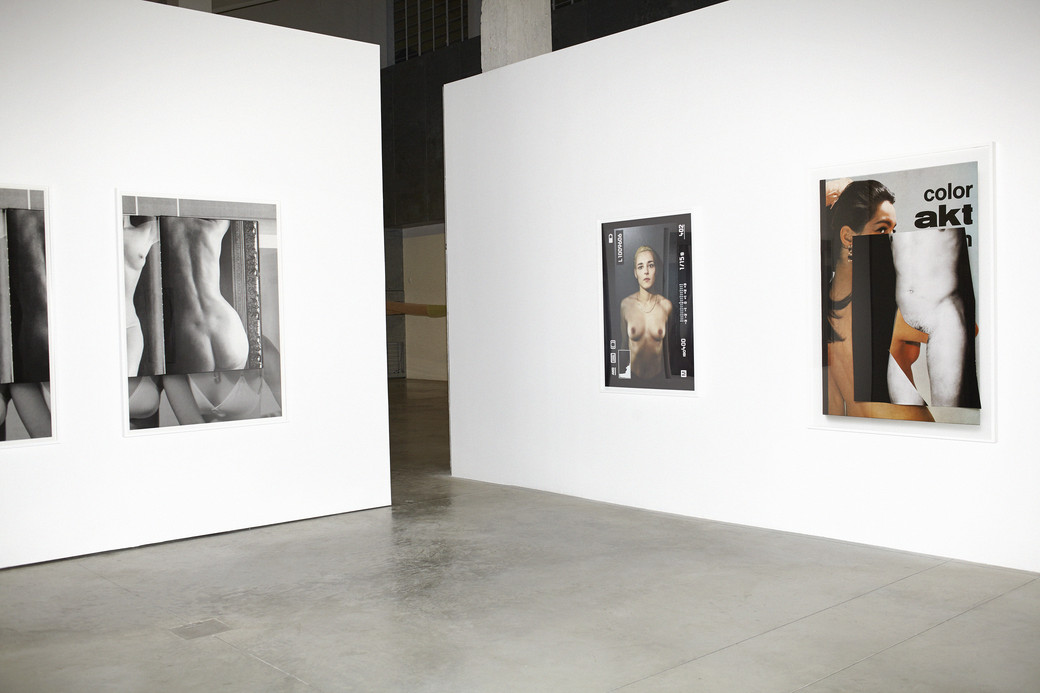
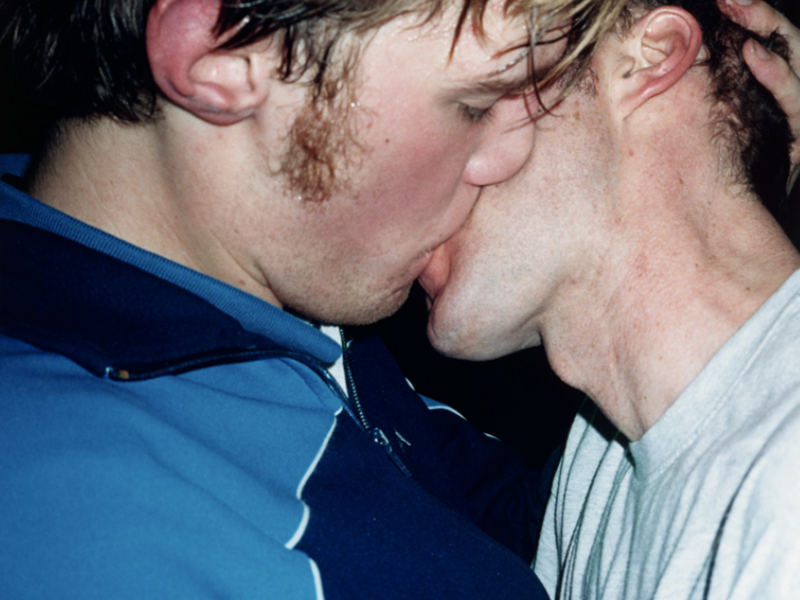
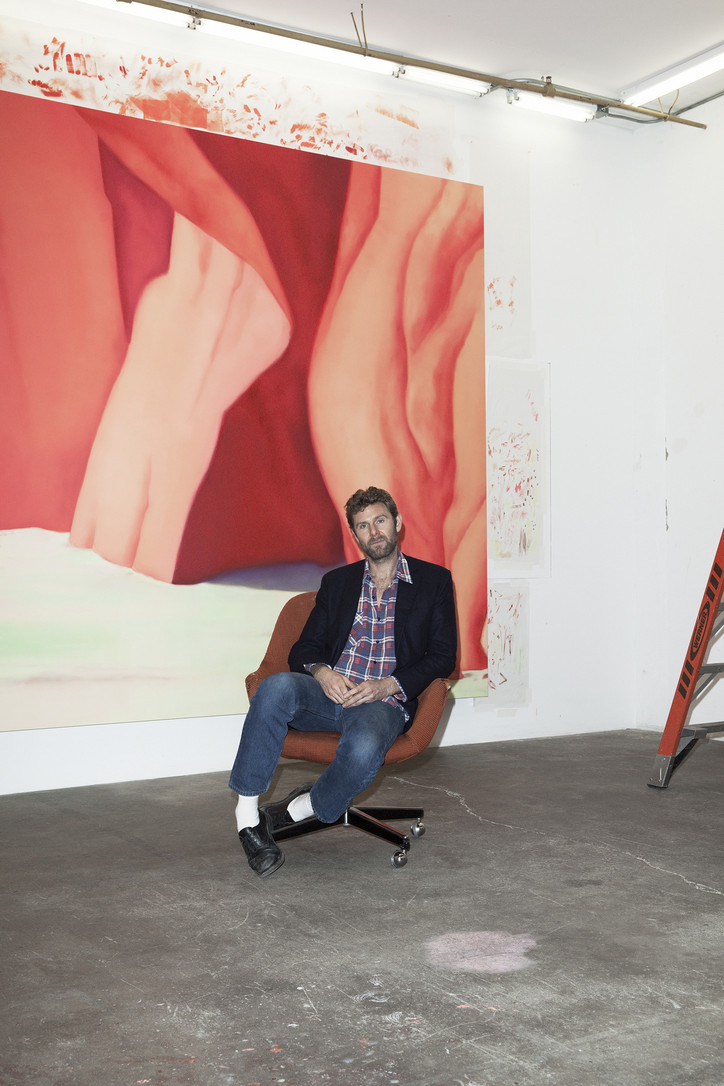
At his studio, the guy who almost everyone has, at one point or another, seen naked (if not IRL, at least in McGinley’s photos or the artist’s 2017 exhibition, Livin and Dyin), was dressed in a button-up, jeans and loafers, surrounded by the large-scale desertscapes. He wasn’t hungover; in fact, he was beyond alert, and we spent hours talking about his painstaking process, and the conceptual nature with which he now views his work. And though this Dan Colen might seem like a far cry from the one we’ve all read about in articles profiling the noughties New York art scene, that punk rock, no fucks, teenage essence is still there—even if it’s buried under four years of paint. After all, all the works in High Noon were inspired by Roadrunner and Wile E. Coyote. And much like the paintings protagonist, Colen will just keep going.
Tell me about your latest exhibition, High Noon.
I think these paintings are, in a lot of ways, some of the most specifically made paintings in the world. I’m trying to make paintings that one person themselves can’t paint and I think the best place for me to be, is not inside of them. I spend a lot of time talking to all of the people that I work with and working through all of the different phases of the project. The way I work is never from a position of mastery—it’s really from a position of wanting to learn, still. I look at my art-making as an educational experience and painting for me is really about exploration and discovery. So, to make the scope unique you need to be 100% focused on experimenting. I mean, the paintings that you’re seeing here take four years to make, so it’s complicated and certain things get lost in translation.
Four years? Why so long?
Something like this isn’t about rendering—it’s not about copying an image. Often in the past, I’ve rendered things, so it was me trying to replicate things with paint. But these paintings are really about materialism—materialism takes precedence over the image, and material really guides us. The image is almost like a scaffolding for the painting. Like, the image is there, the composition is there—it’s easy to turn a projector on and get that. That happens in a week. But then, for 12 to 20 months following that, we search the painting with material to try to get the material to do something else. It’s very subtle but that is how we started this series.
How did the material—in this case, oil paint—end up informing your process, then?
The images in a way are so simple and monochromatic, there’s very few shapes, there are very few differences and different things in the images—it’s just a wall, sand and a road. The figuration is blatant, and obvious, but I paint them in a much more abstract way than I have done anything in a long while. Even a word like render—I’m using it in a very specific way, but I don’t ever usually paint to help describe what sand looks like, or what a rock wall looks like. Looking at the gray area in the paintings—none of them were actually informed by a gravel or tar road. So, the paint is only there to represent itself. You interpret the quality of the image because of composition and some color—it has nothing to do with how I applied the layers, or how, if I tried to use paint to replicate the source or the subject. The paint is never meant to describe anything other than itself—it’s only in the composition that we are describing a thing.
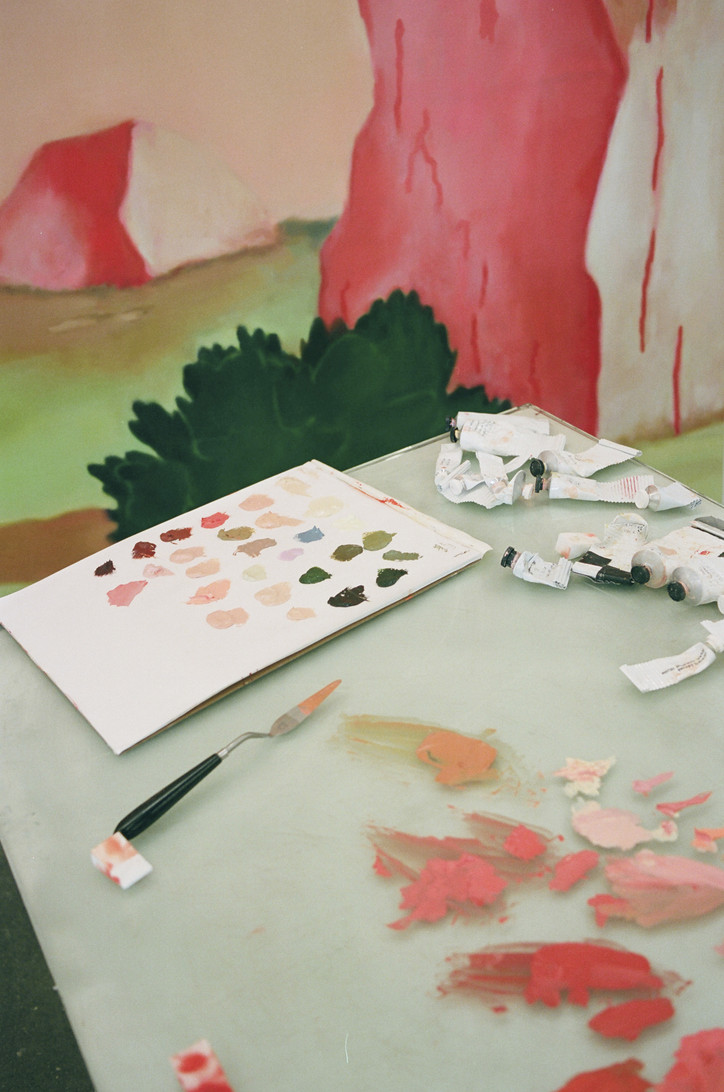
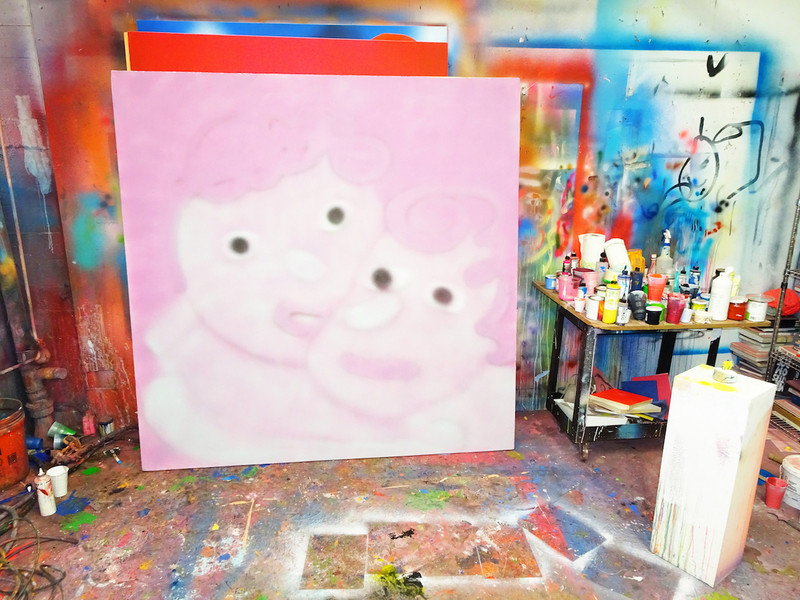
In that way, the act of making them was very abstract, because nothing figurative actually helps us know how to put the paint onto the surface. That said, there’s another body of work I started around the same time called Purgatory Paintings, that are a little more abstract—they’re essentially pictures of clouds, or pictures of the heavens, and that is kind of the flip side of the coin to the process here. They’re very different, but I like to think of them as opposite sides of the same coin. Clouds, which are essentially vapor, and I spray oil paint—so I’m basically painting pictures of vapor with vapor. But here, the reason the surfaces have this sort of waxy, map-like quality, is because we paint with the minimum possible amount of oil in the paint. So, the paint is very much like mud, like the actual subjects we are painting. That made me feel like I didn’t need to be concerned if I’m painting totally true to the rock surface, because it is rock—I’m painting with rocks and dirt. So, it’s already there—I’m far more interested in that than the final rendering of a mountain, or whatever.
Right. Did working with a team help you focus more on the process than the result?
When the goal becomes what the paint is supposed to accomplish, which is kind of very open-ended but also very ambitious—it’s in the faith that this mud can be put on there to represent this image of mud. There are so many ways to explore that idea of how to get at the essence of the material, that doing that with this team has been a very effective way for me to do that. It’s just more hands, more minds, and so much of it is about experimentation and the process—trying to keep it as open as possible.
I’m familiar with this series because I read about it before coming to your studio. But this does feel like a departure from a lot of your previous work. I know it’s cliché, but for many years, you were sort of looked at like a ‘bad boy’ of the art world, and now you’re presenting something that, in a lot of ways, is very serious, and also very conceptual.
I know. Yeah. I mean, for me, those are almost like two separate things. Regardless, I connect to it and I do know that people still have this kind of impression of me from a decade ago, which is fine, because it’s a part of me, so I have no real problem with it. All of our histories are so important to us—I’m interested in my history way beyond that, even before my birth. But also, I haven’t really painted in a focused way for many years. So, I’ve been working in a much more straightforwardly experimental way with much less traditional materials and in genres that I’m totally unfamiliar with. Here, I’m trying to create new experiences with this material, but the process is a more refined thing because of my relationship to painting. So, I am trying to apply a lot of that, the experiences I had in that discomfort, or the unknowing, to this project. But yeah, I think that there are these three bodies of oil paintings that I have been working on for the last four years and I do see them as this new level of mature work, or part of a new phase of my practice, for sure.
In what ways did you end up experimenting throughout the creation of the Desert landscapes?
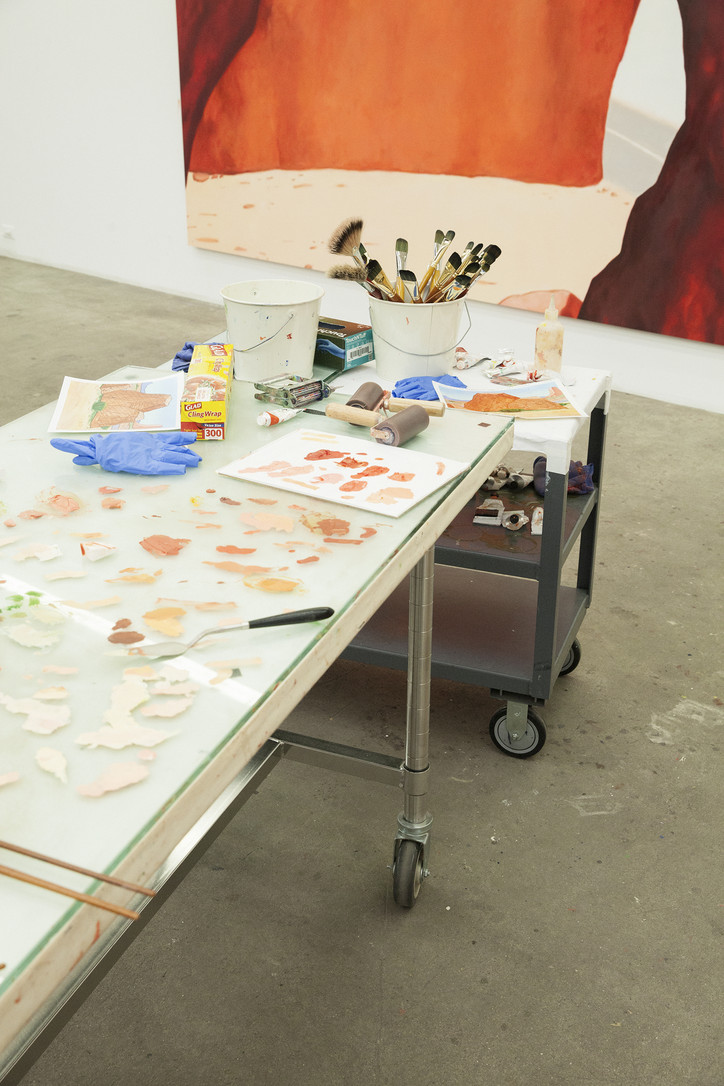
The paintings are really about the accumulation of ideas, and the accumulation of materials. I’ve never really made paintings with so many boundaries, or rules. The kind of basic premise of them is that impasto, or using a thick glob of paint, is misleading. When people see a thick glob of paint in a De Kooning, or in Bacon or something, they think, ‘Oh wow! That’s paint right there!’ But really, it could be cottage cheese, or it could be hair gel, because it’s a form, a three dimensional thing. In that, all of the subtlety of what actual paint and pigment is, is lost, because it really could be anything. So, what I’m trying to do with these, and why they took so long, is because we are trying to figure out how to get this very thick paint onto the canvas in a very, very thin and even way.