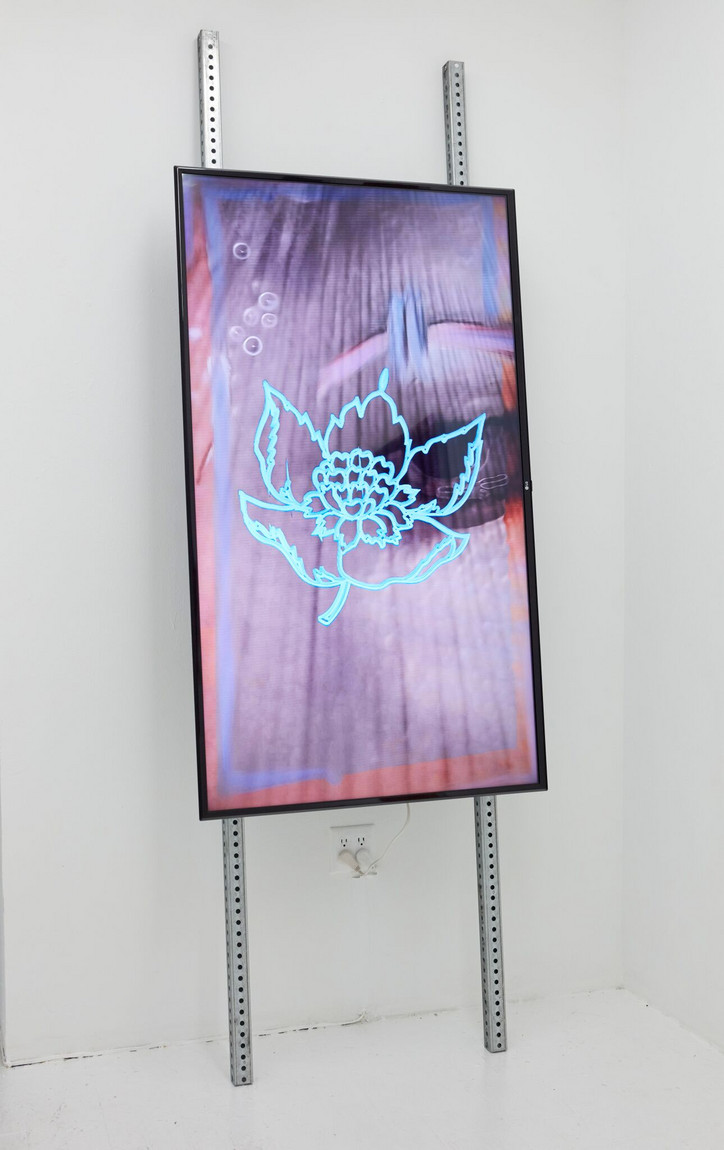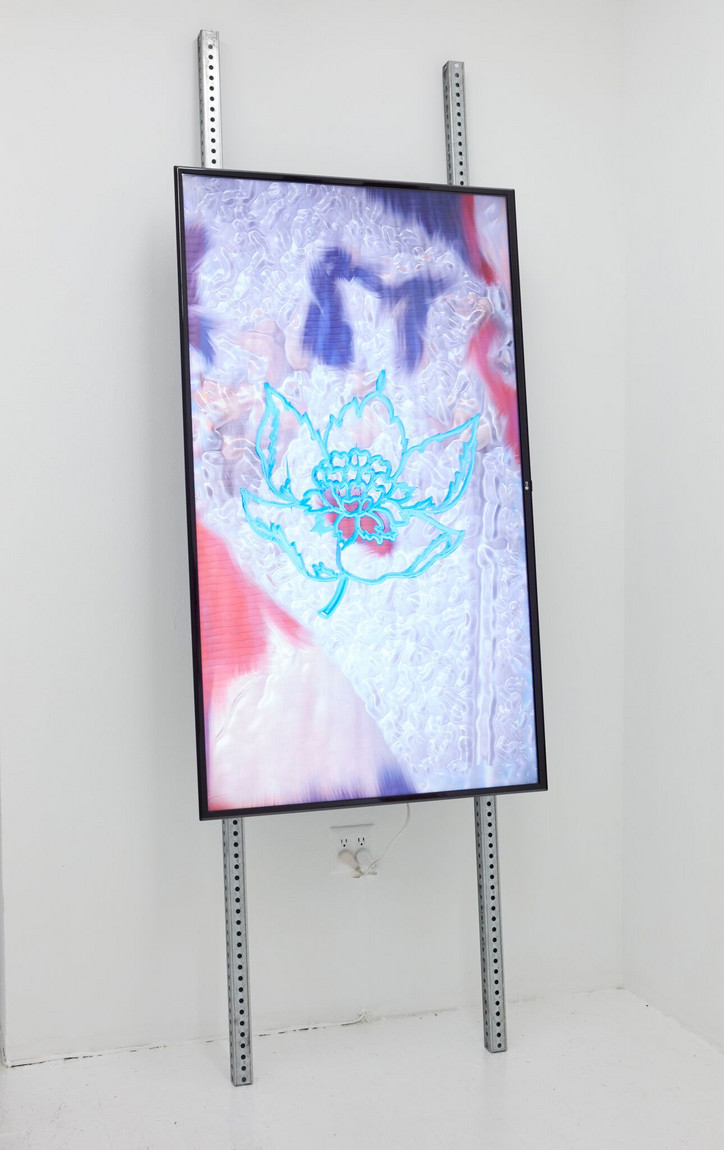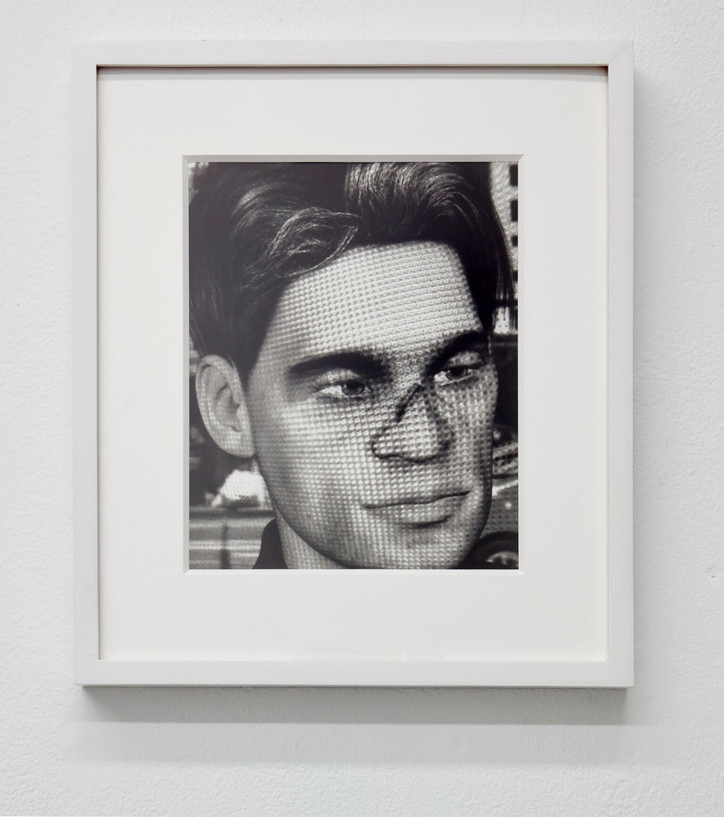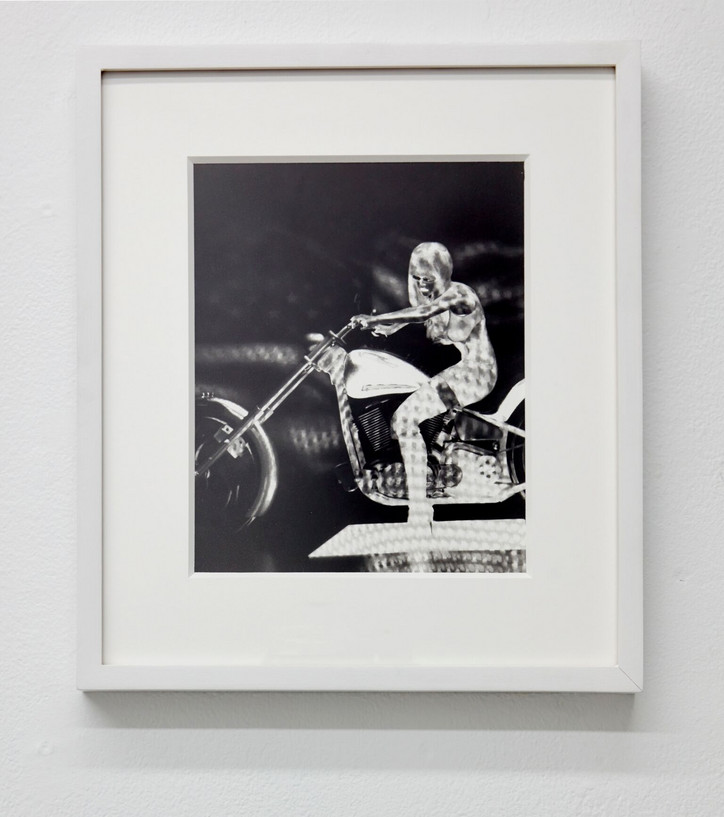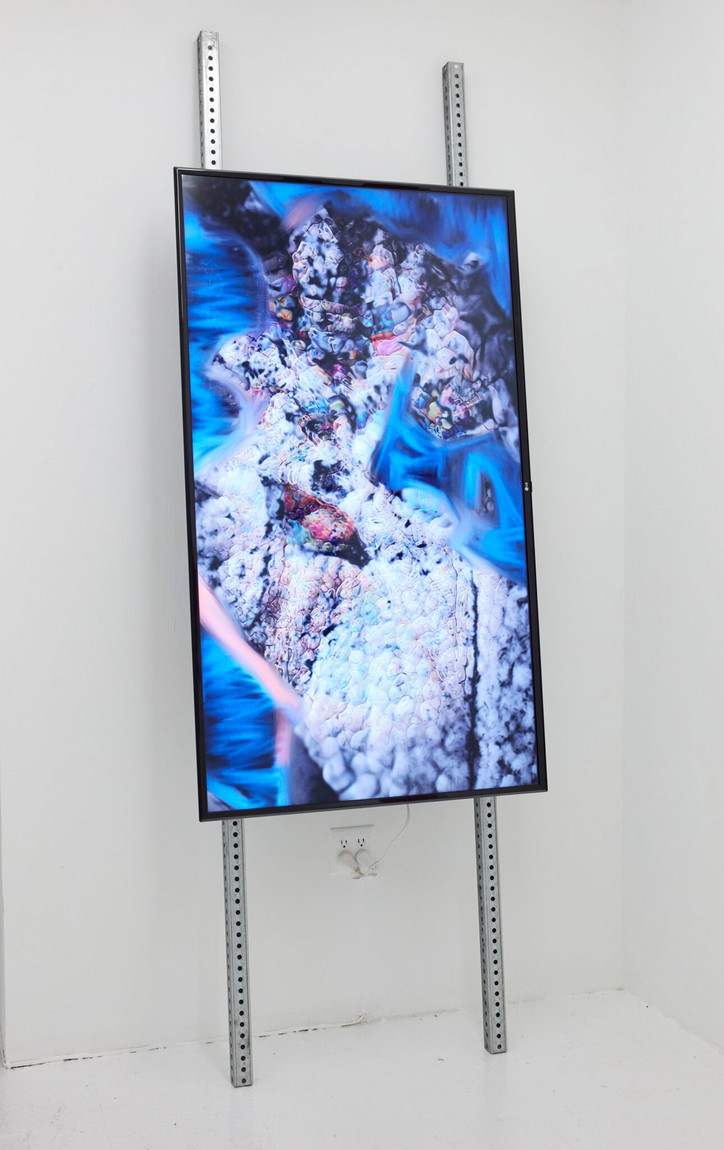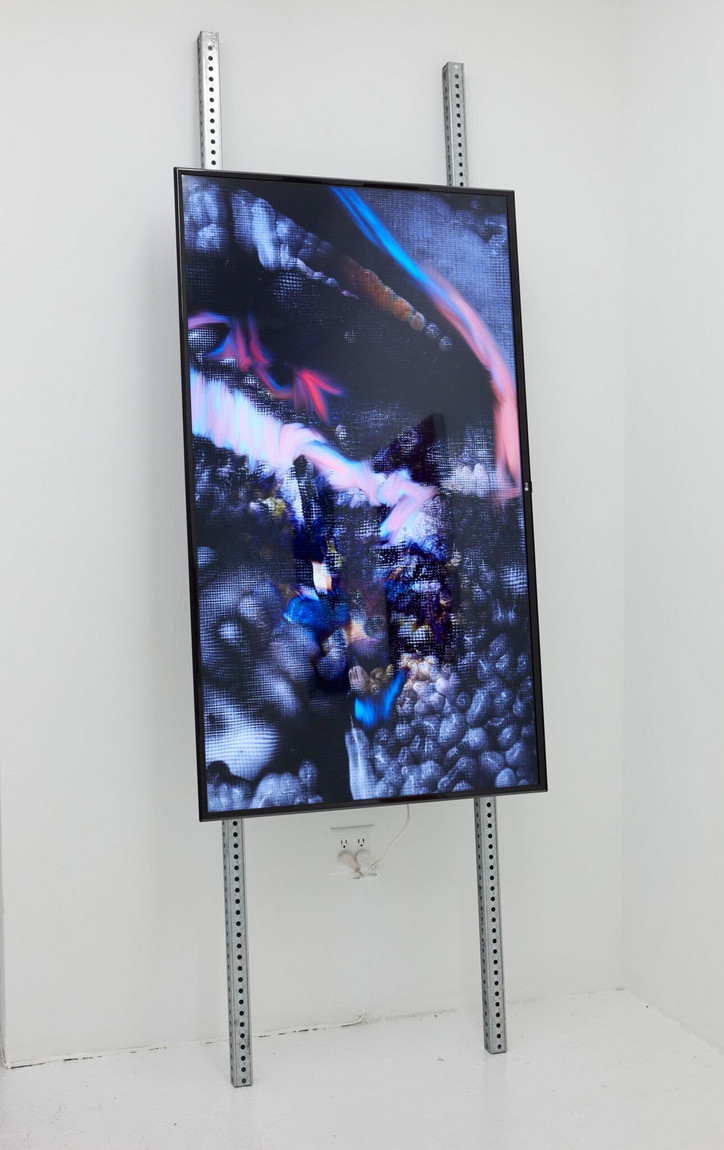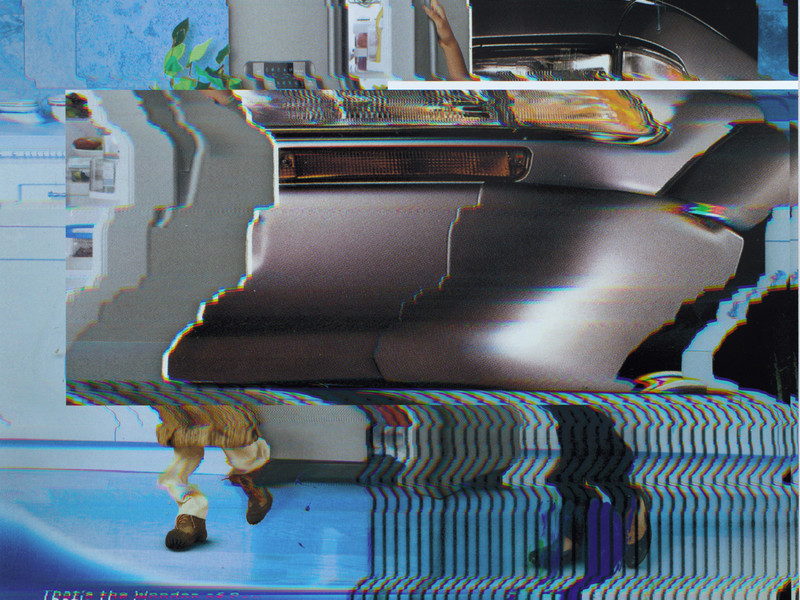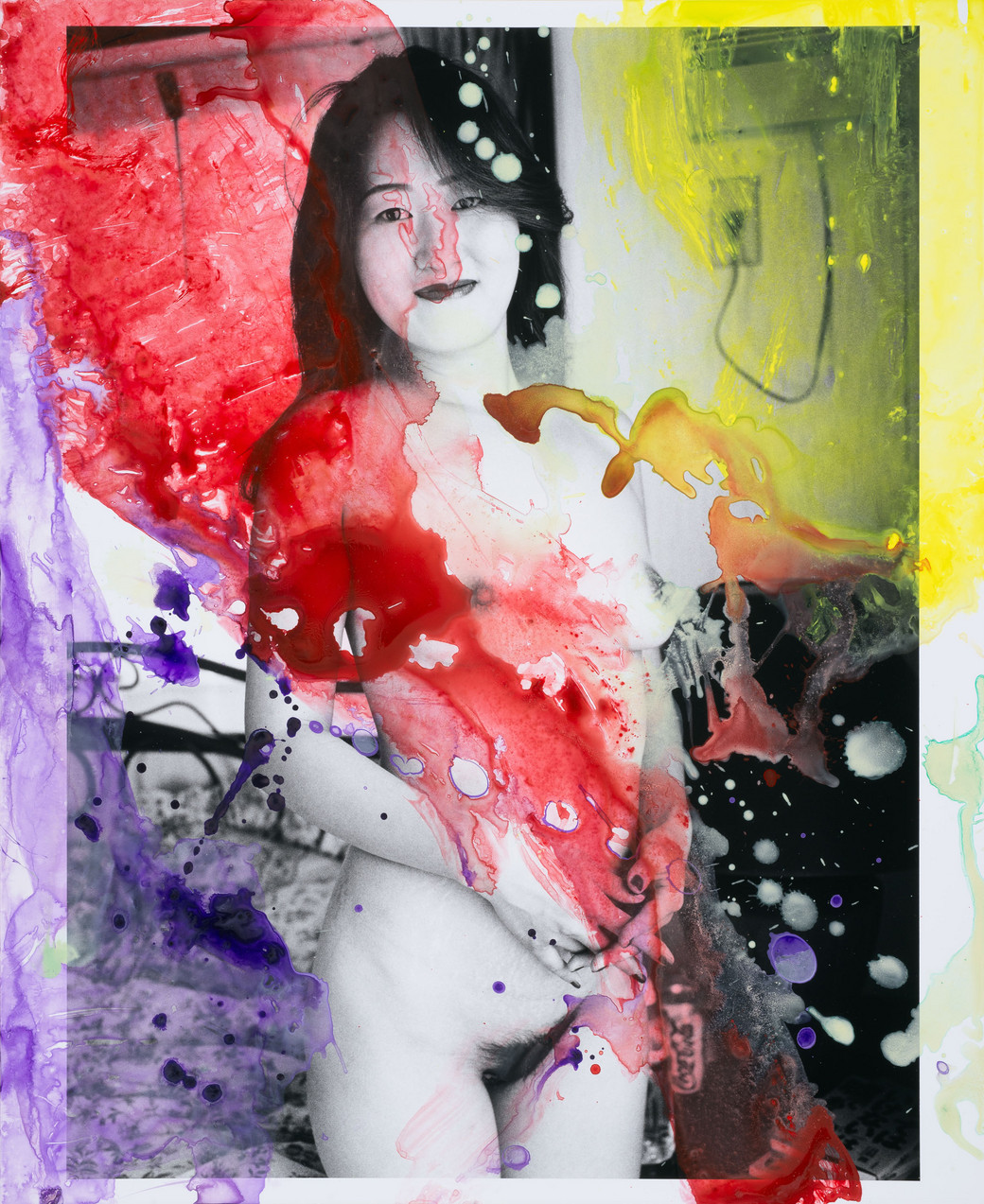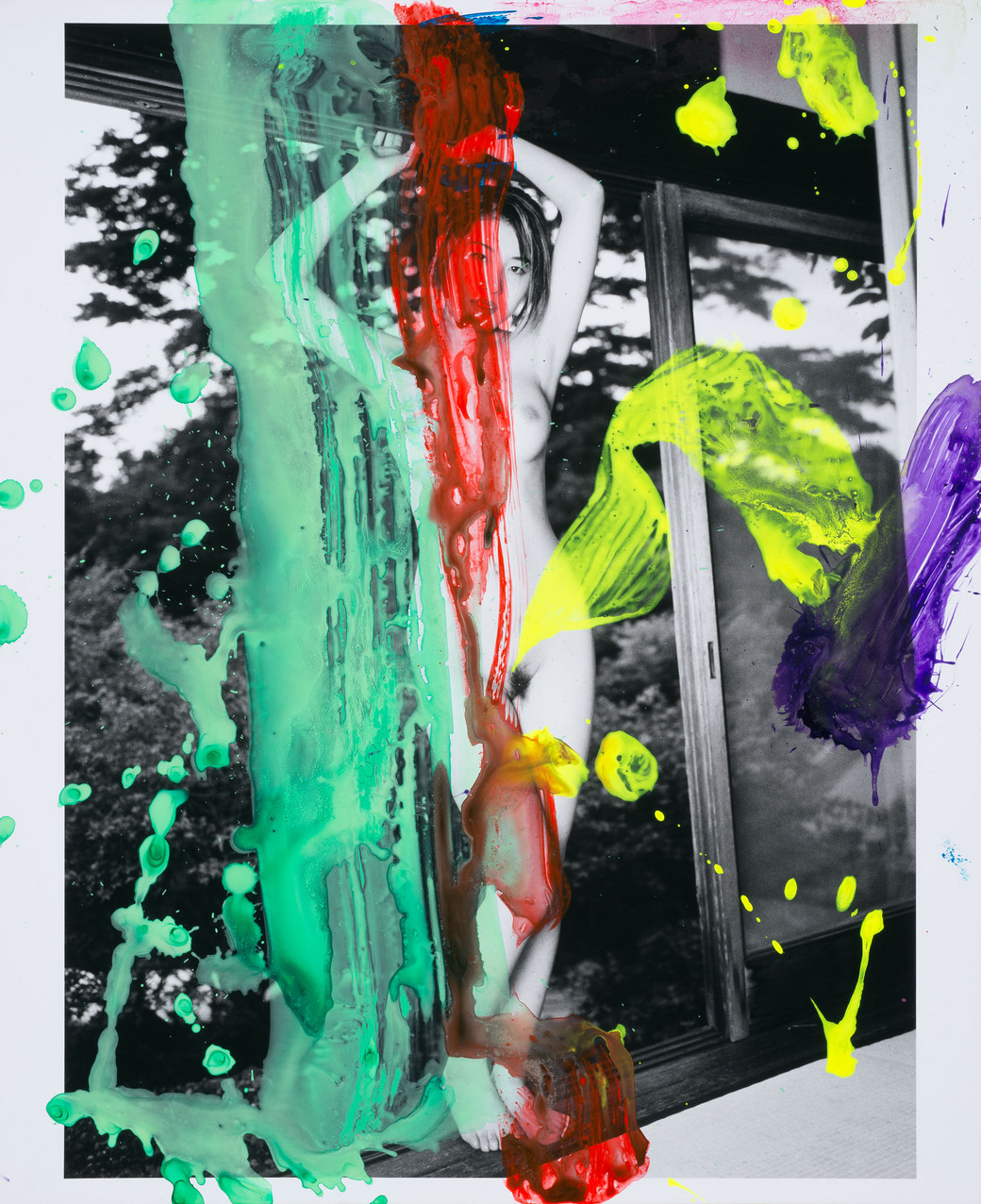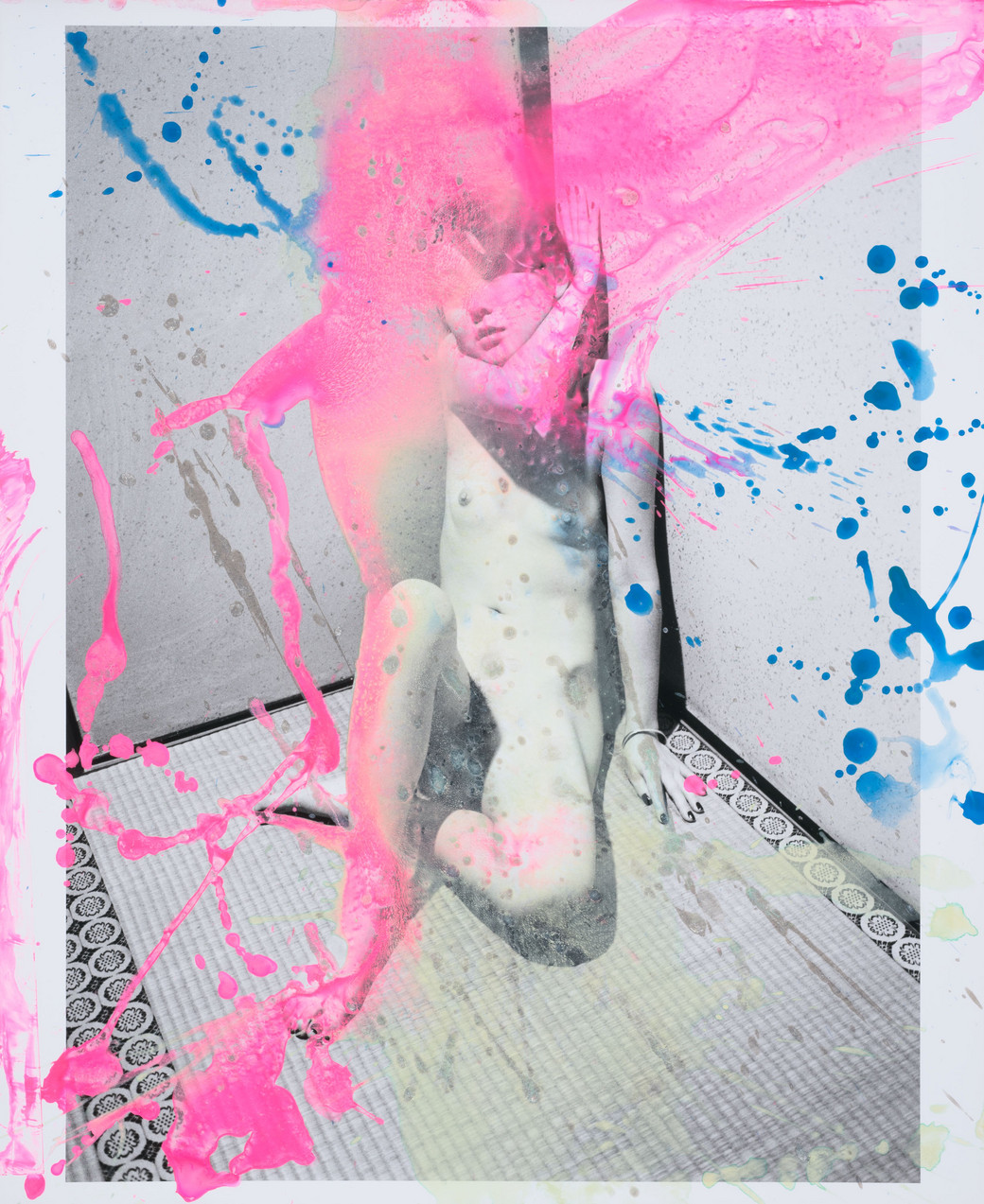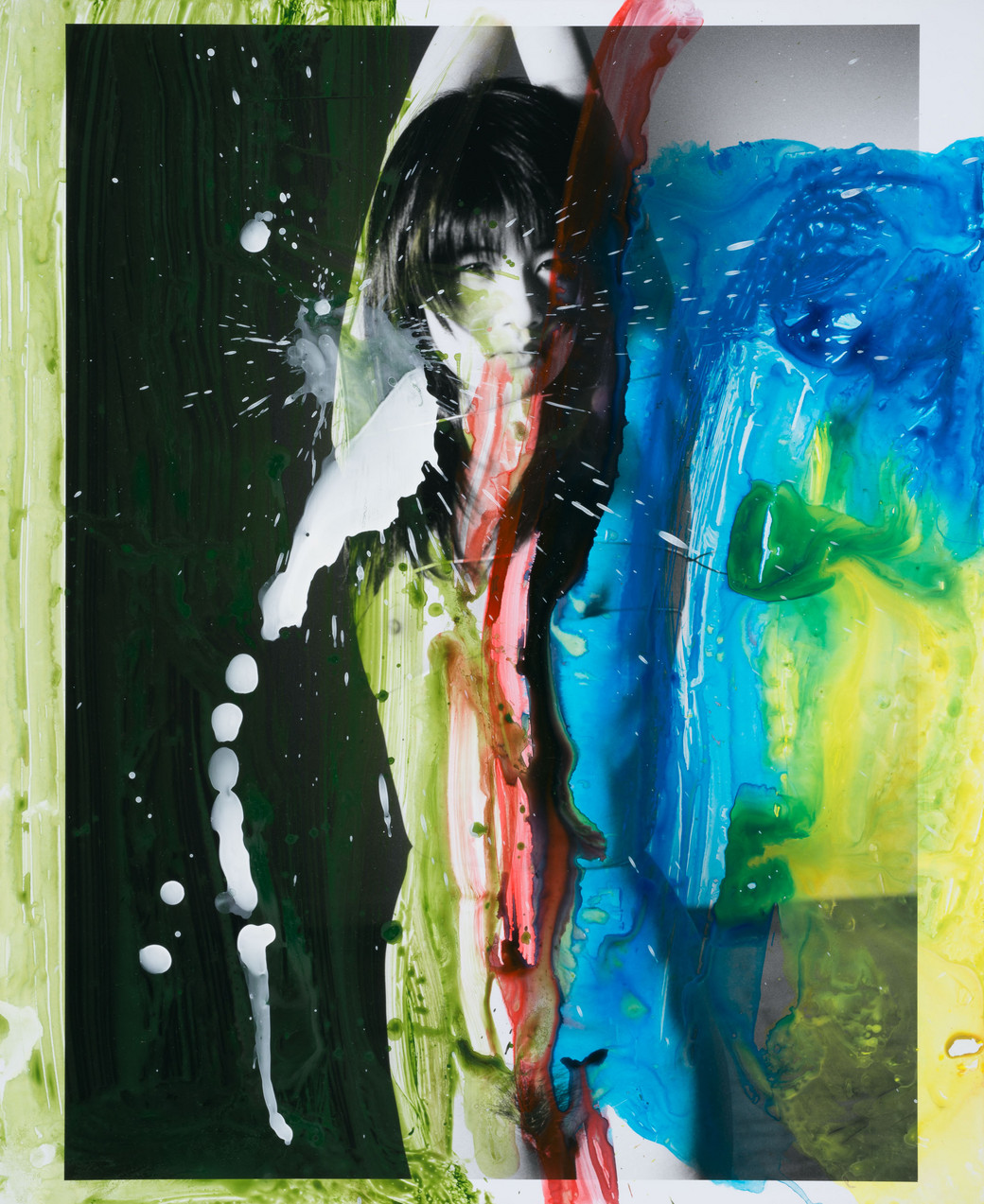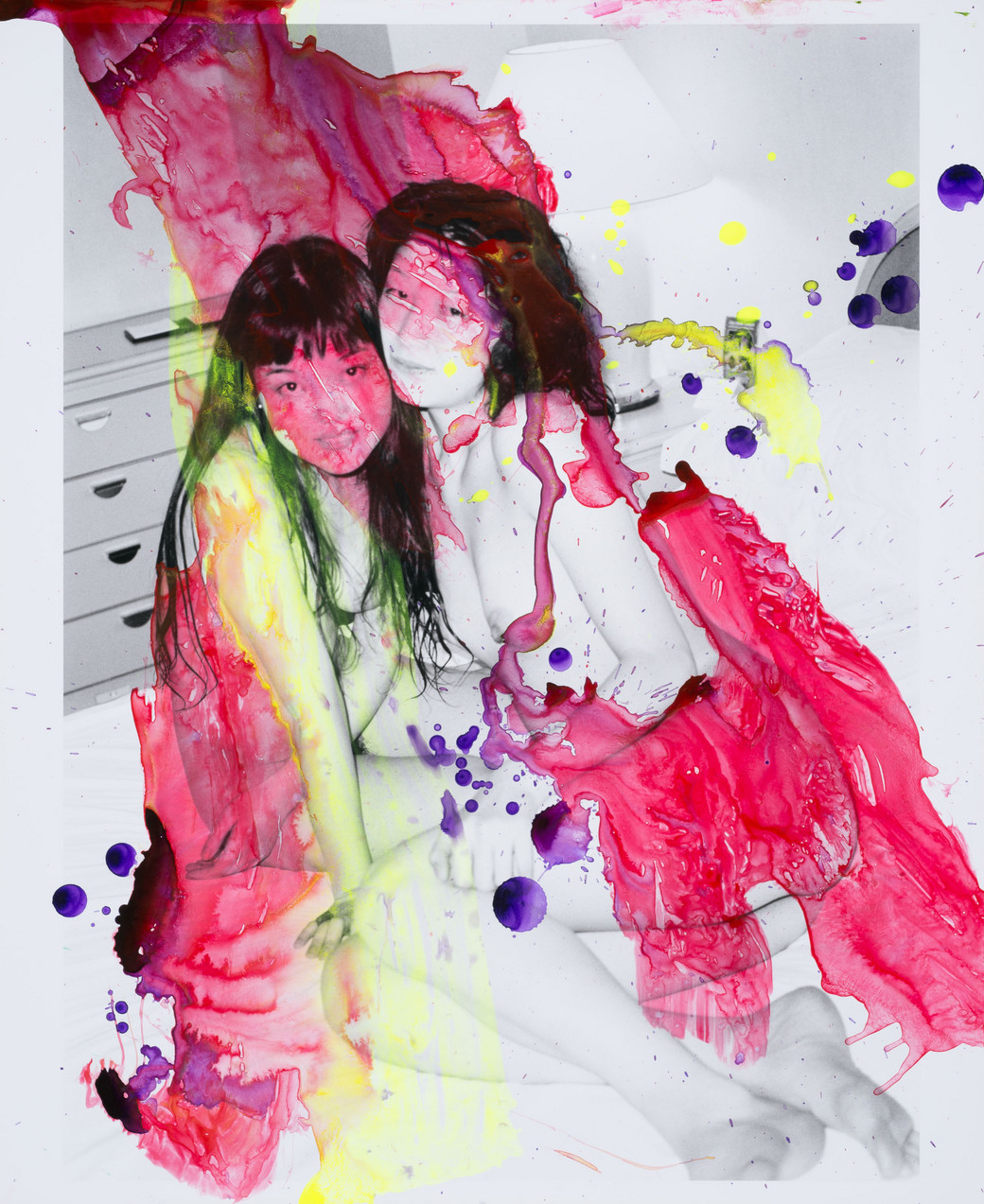

Prints and photographs line the walls, while the showstopper is a rail-mounted 4K monitor leaning against a corner, oriented upright. This orientation, a position becoming increasingly familiar in video art and installation, mimics Darst’s iPhone, the only tool he used to realize this video and the three nearby prints. Sacrificing “professional” tools in favor of the mobile-friendly, Darst moved from app to app to hand draw the over 3,000 frames and nearly three minutes of Mt. Sinai Institute as well as the nearby squiggly dye and aluminum prints One Flight Up, Mental Connecticut, and How Relaxed.
This mobile production clearly read with some now-eye roll inducing words circulating in contemporary criticism—artists working in “post-studio practices” while existing in the perpetual citizenship twilight of the “post-tourist,” itinerantly bouncing from biennial to biennial, sublet to sublet. However, Darst presents these concepts in the most banal way. The aluminum prints were designed on his phone during his commutes. This is hardly globetrotting glamour, this is the worker-as-flâneur, bound to the city and its schedules. Here, the artist-as-user is the post-Situationist freelancer creating their work in a subway fugue.