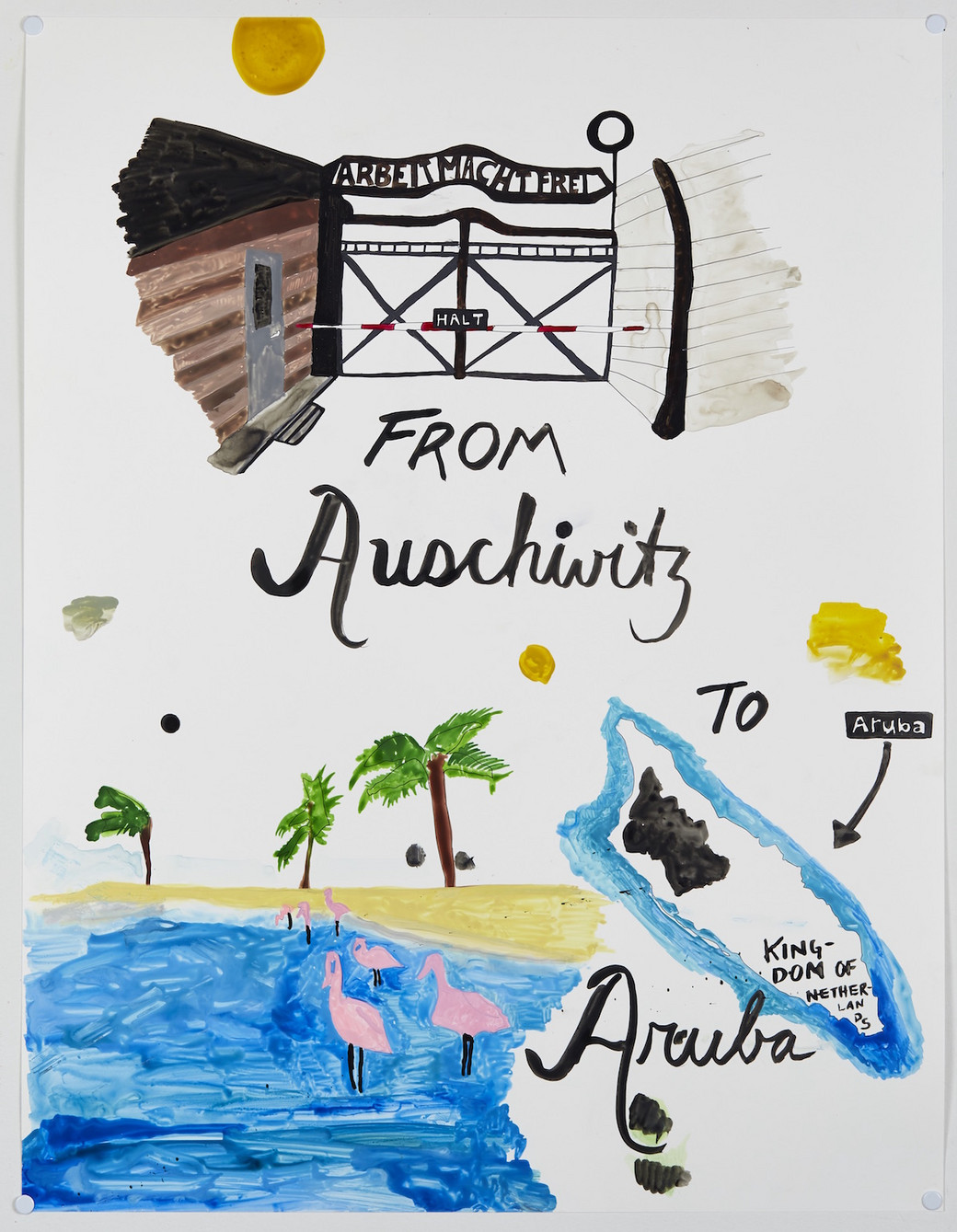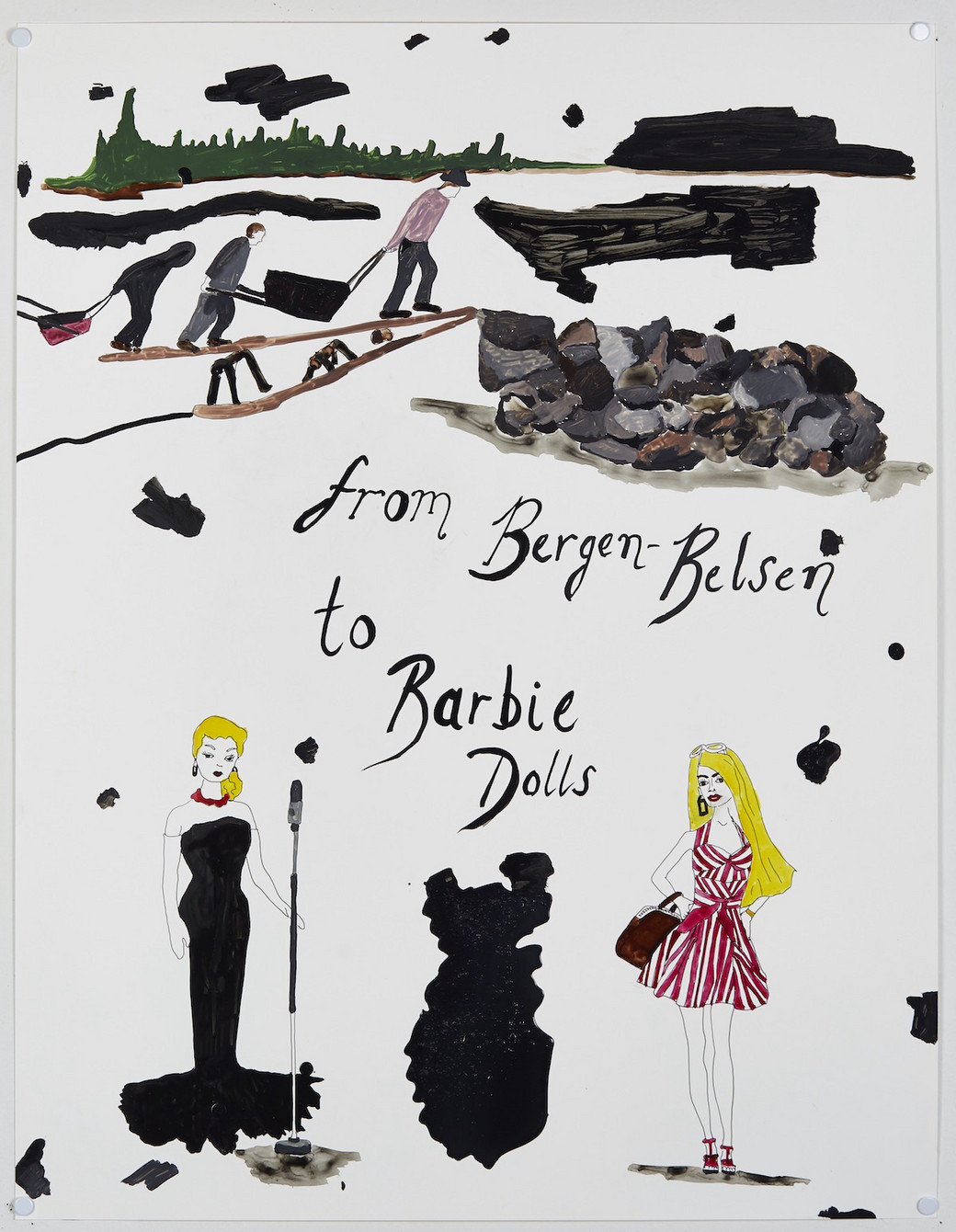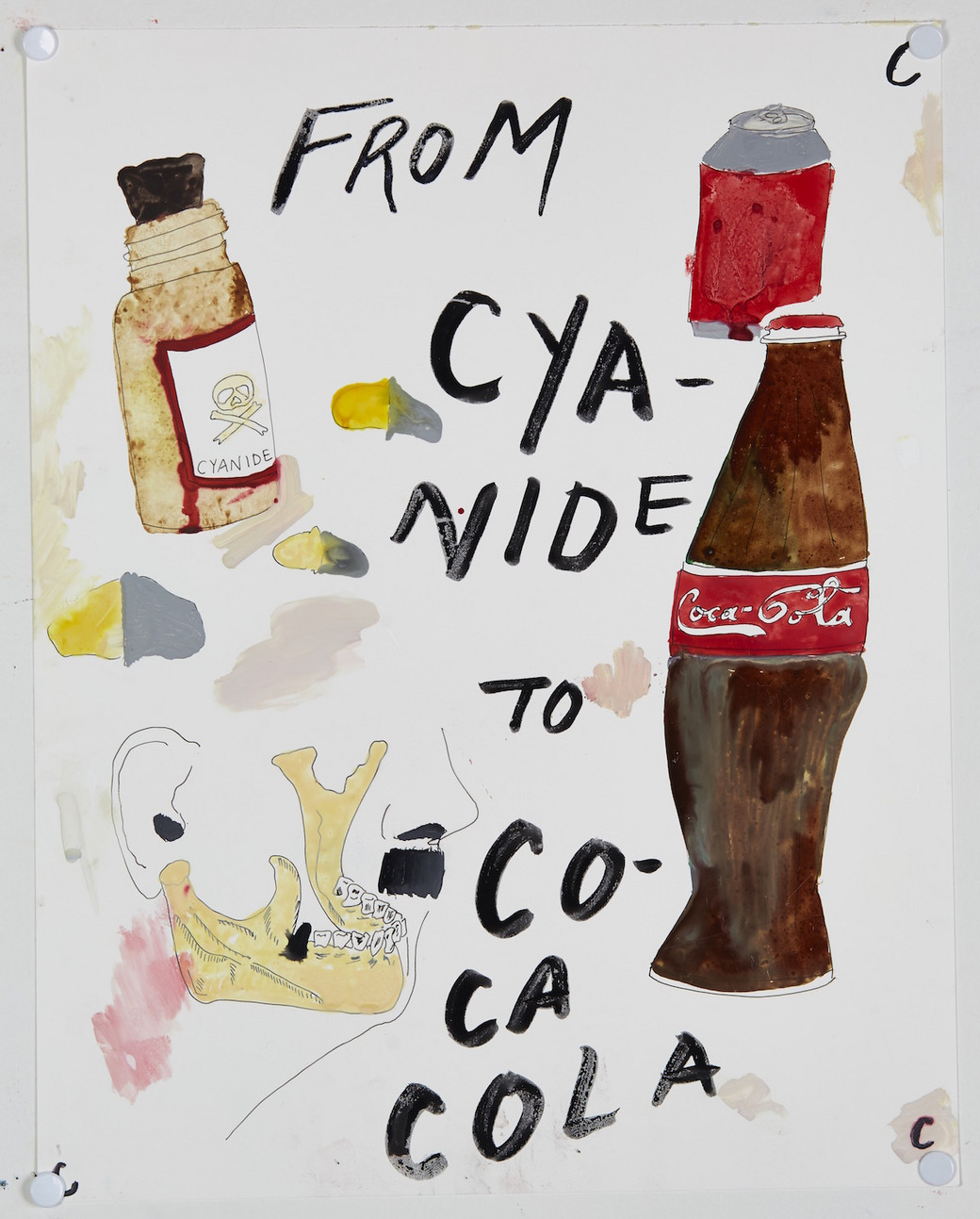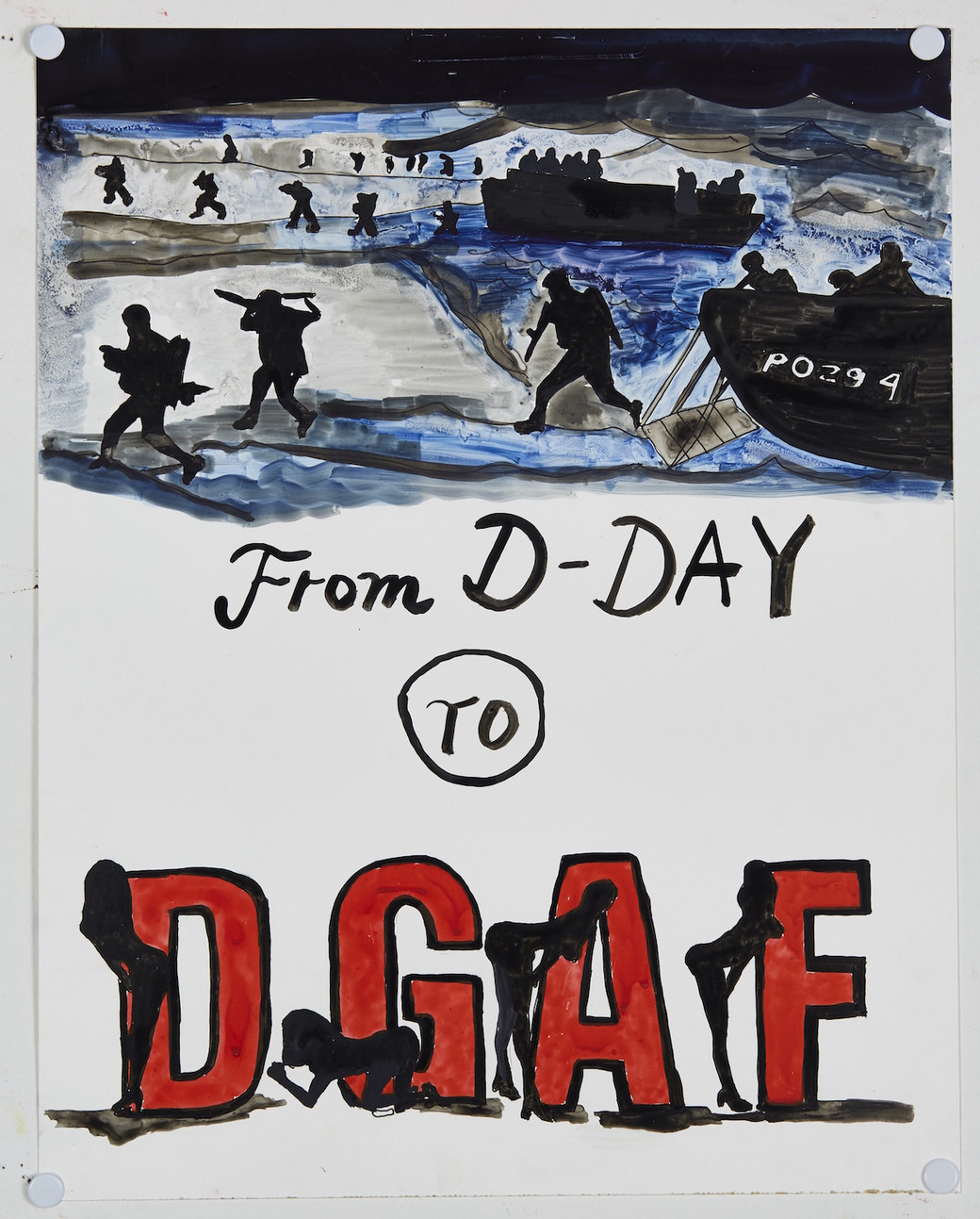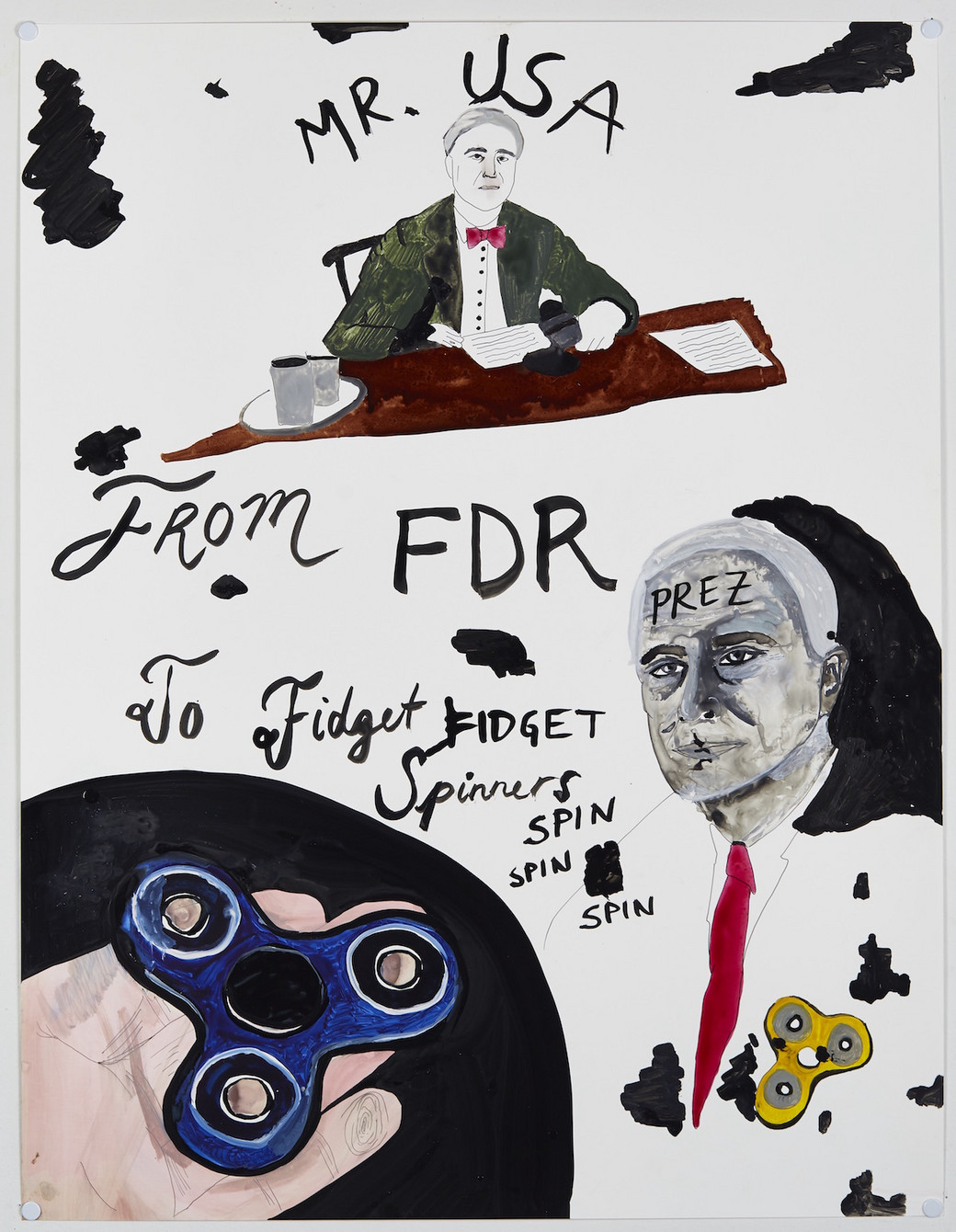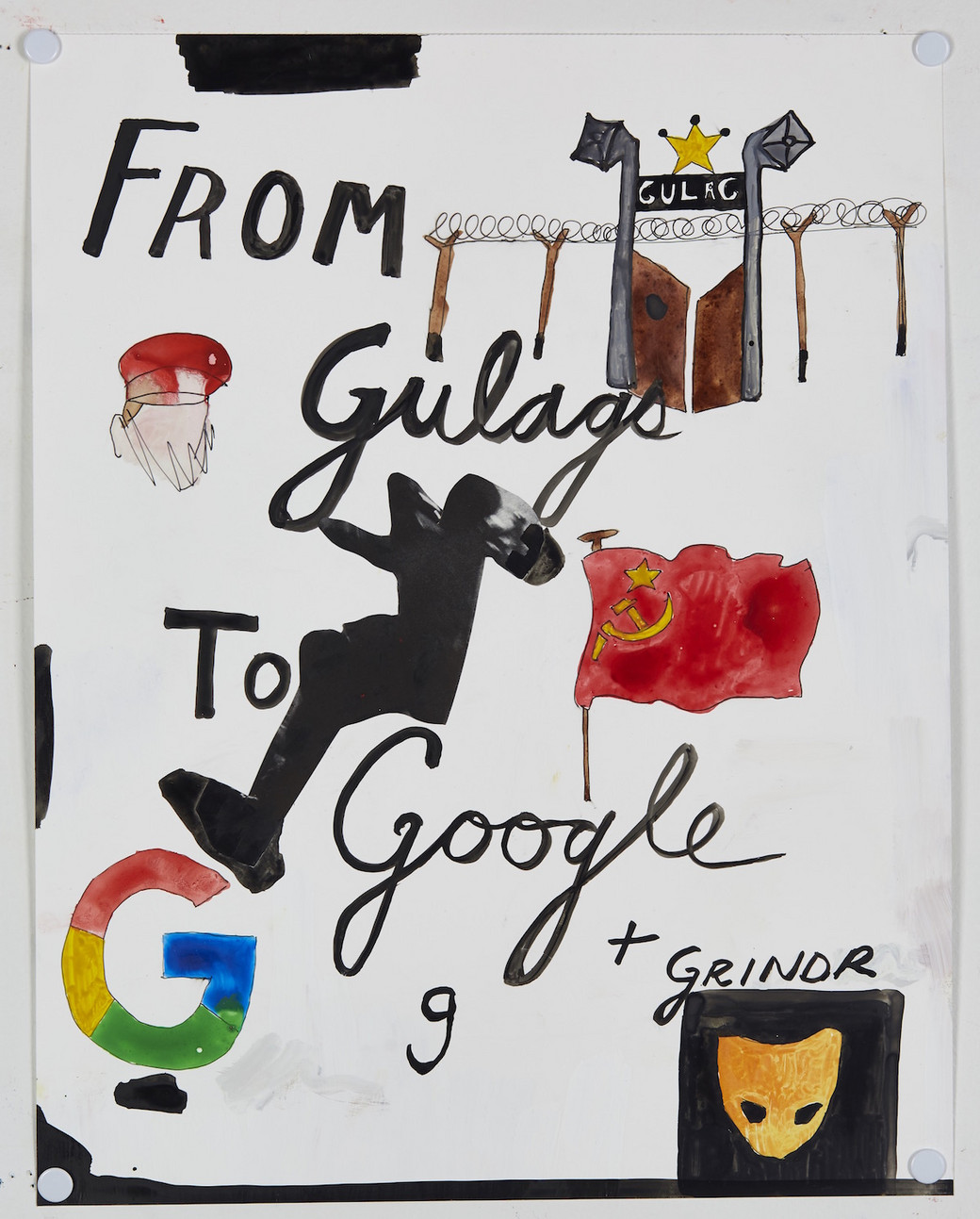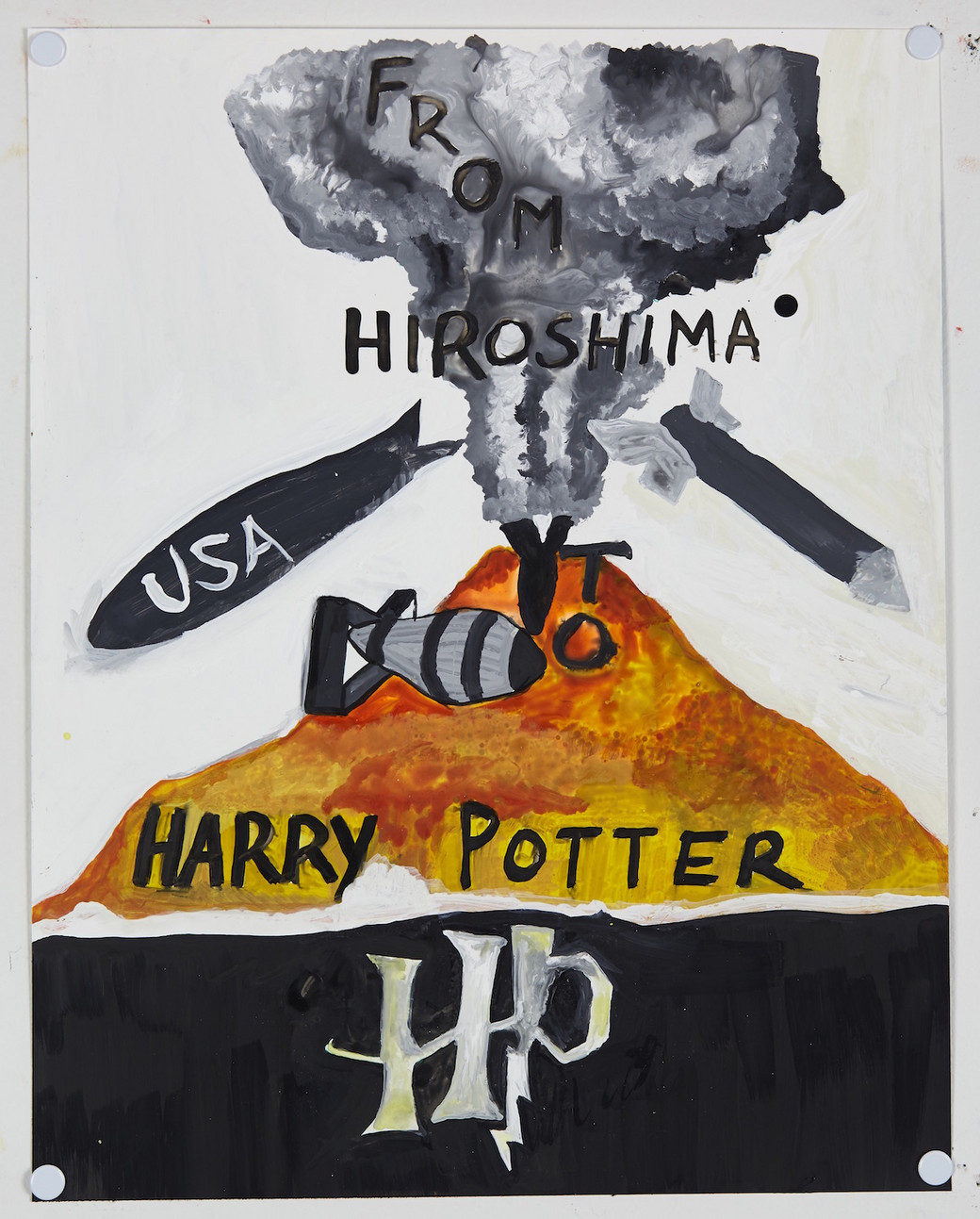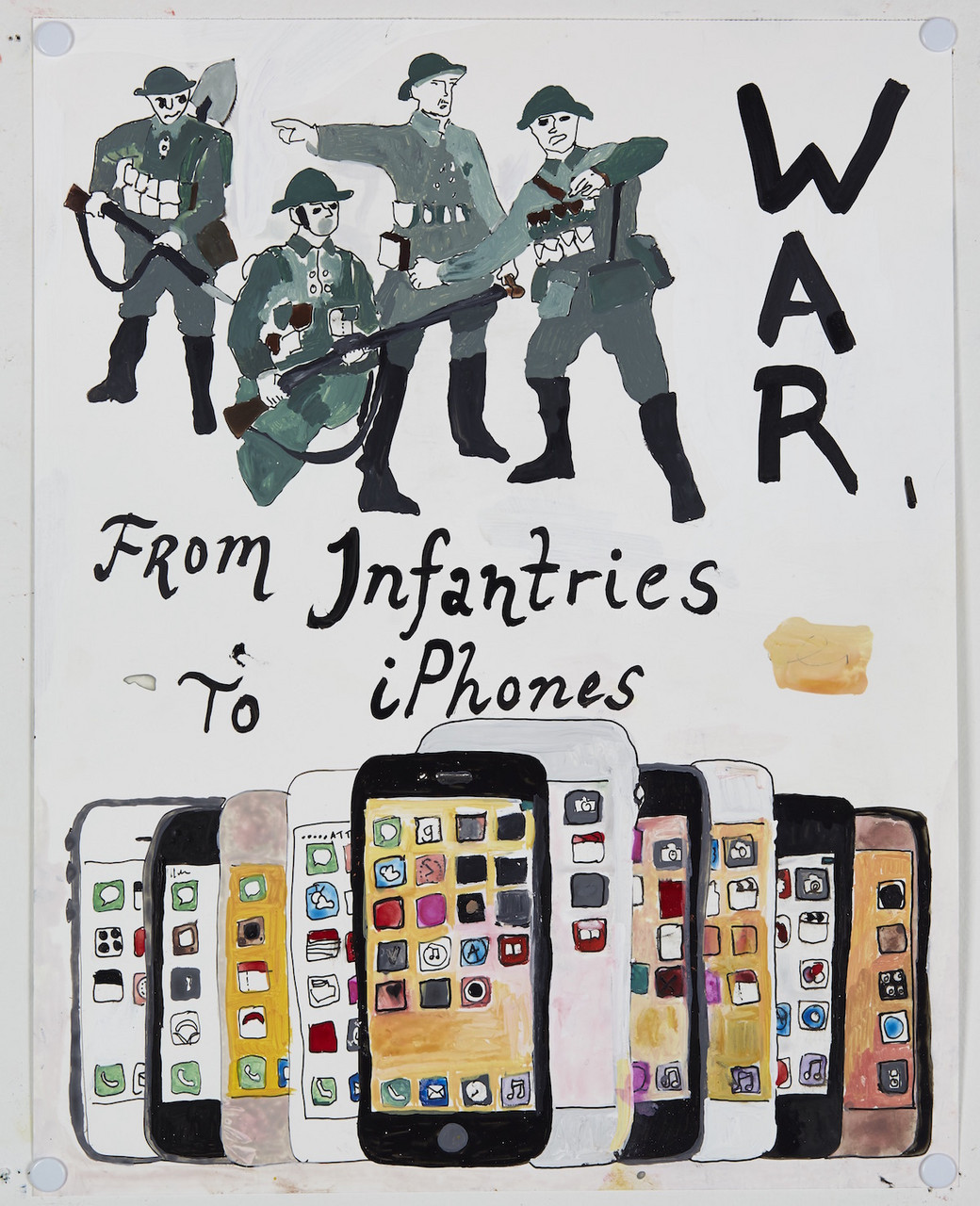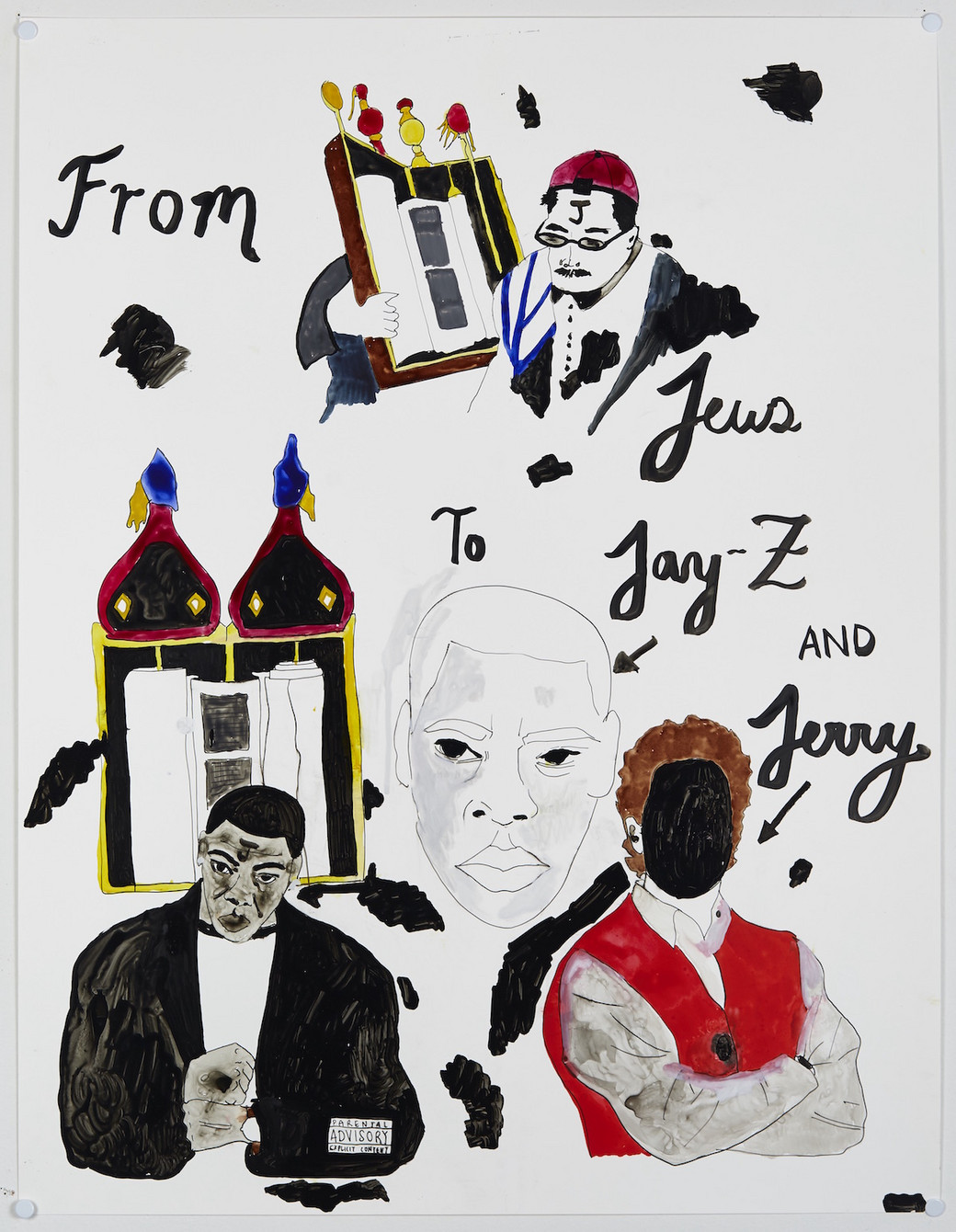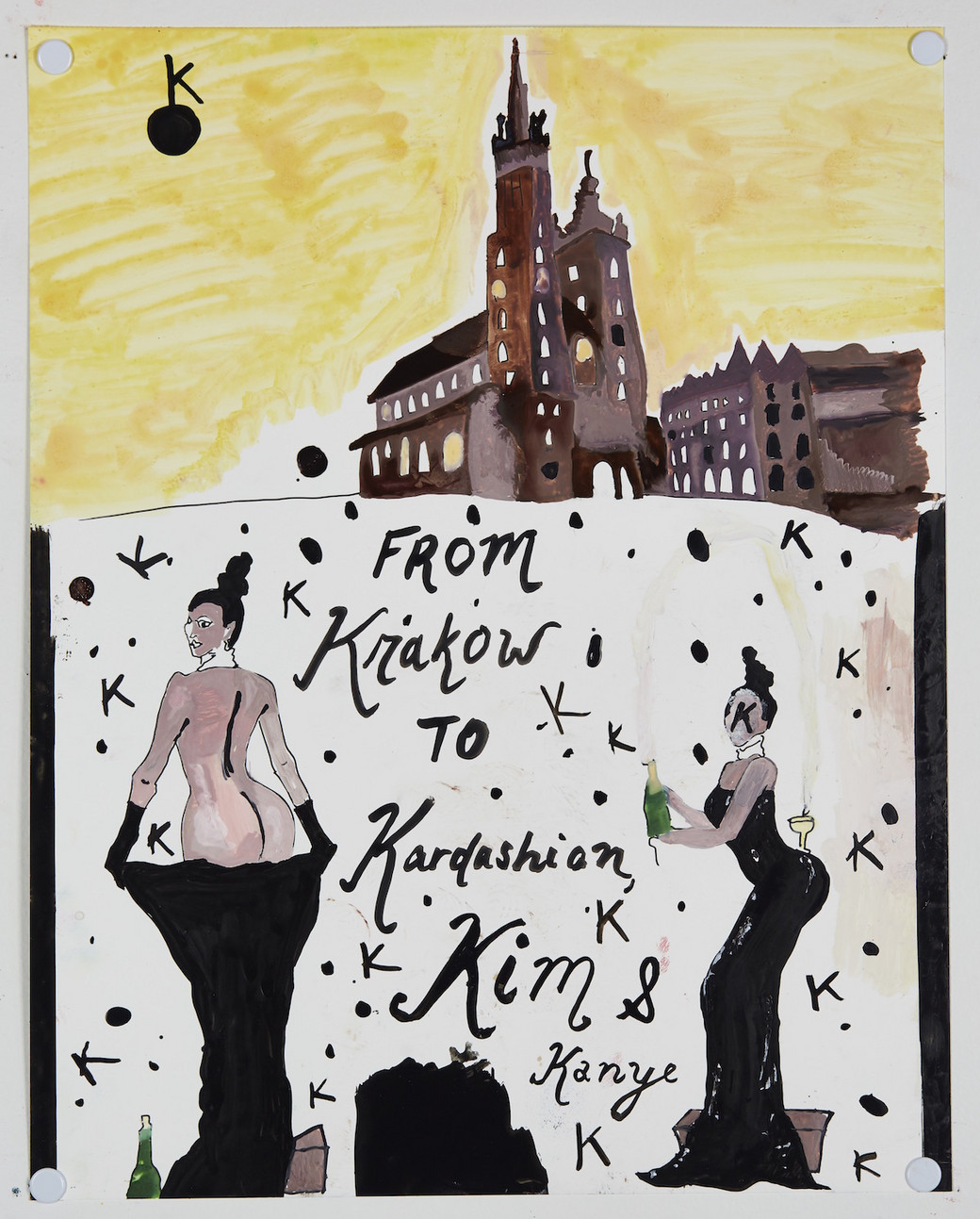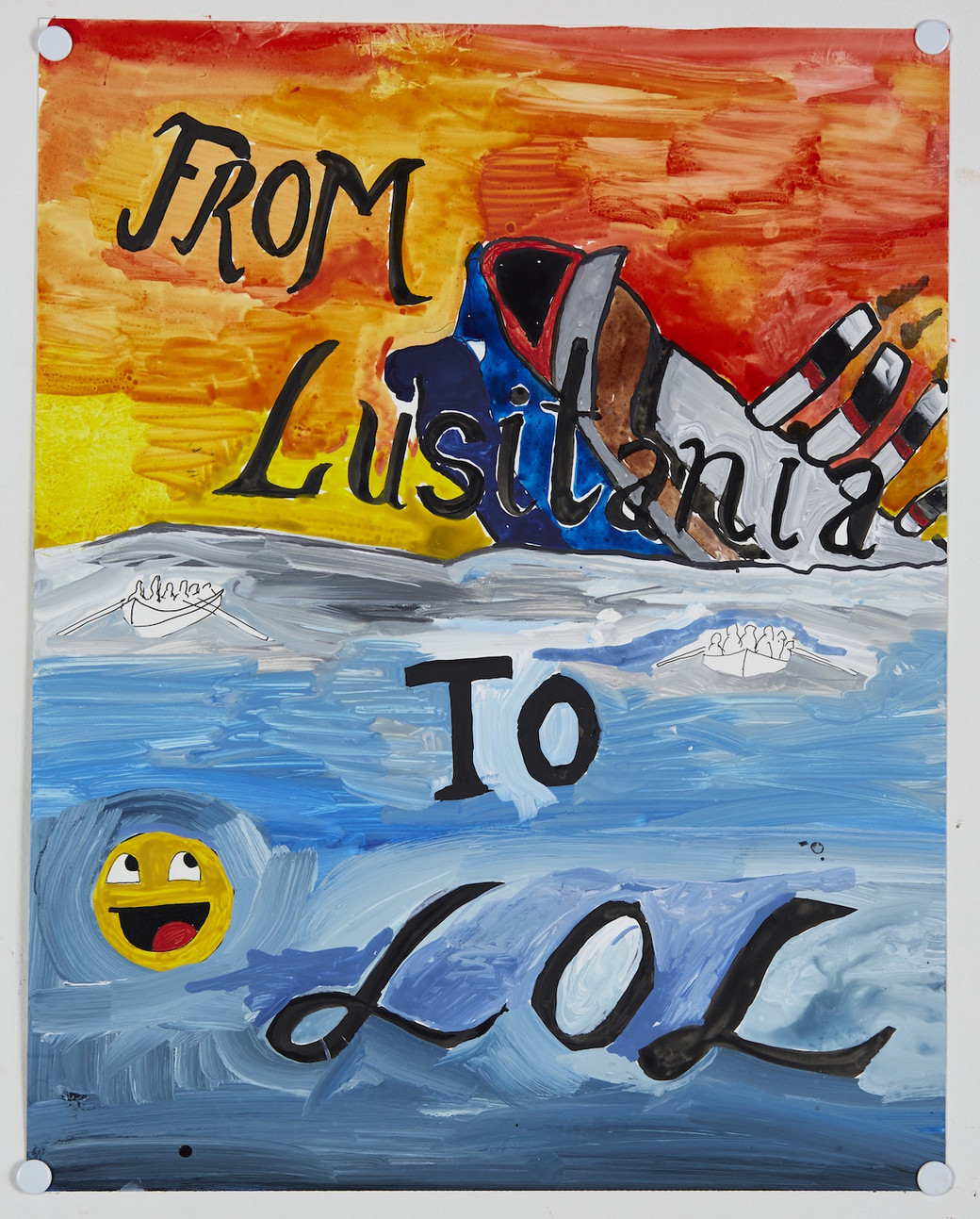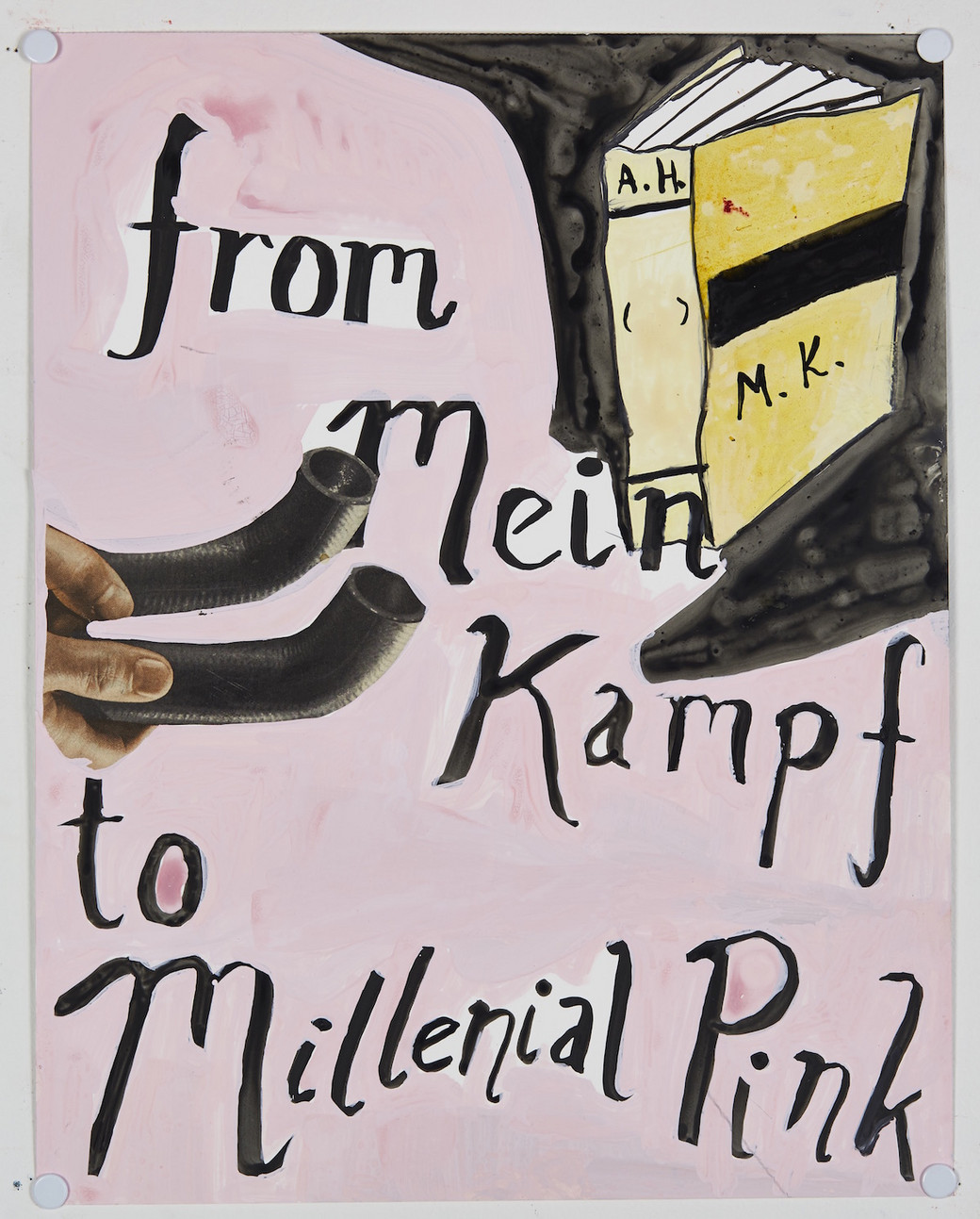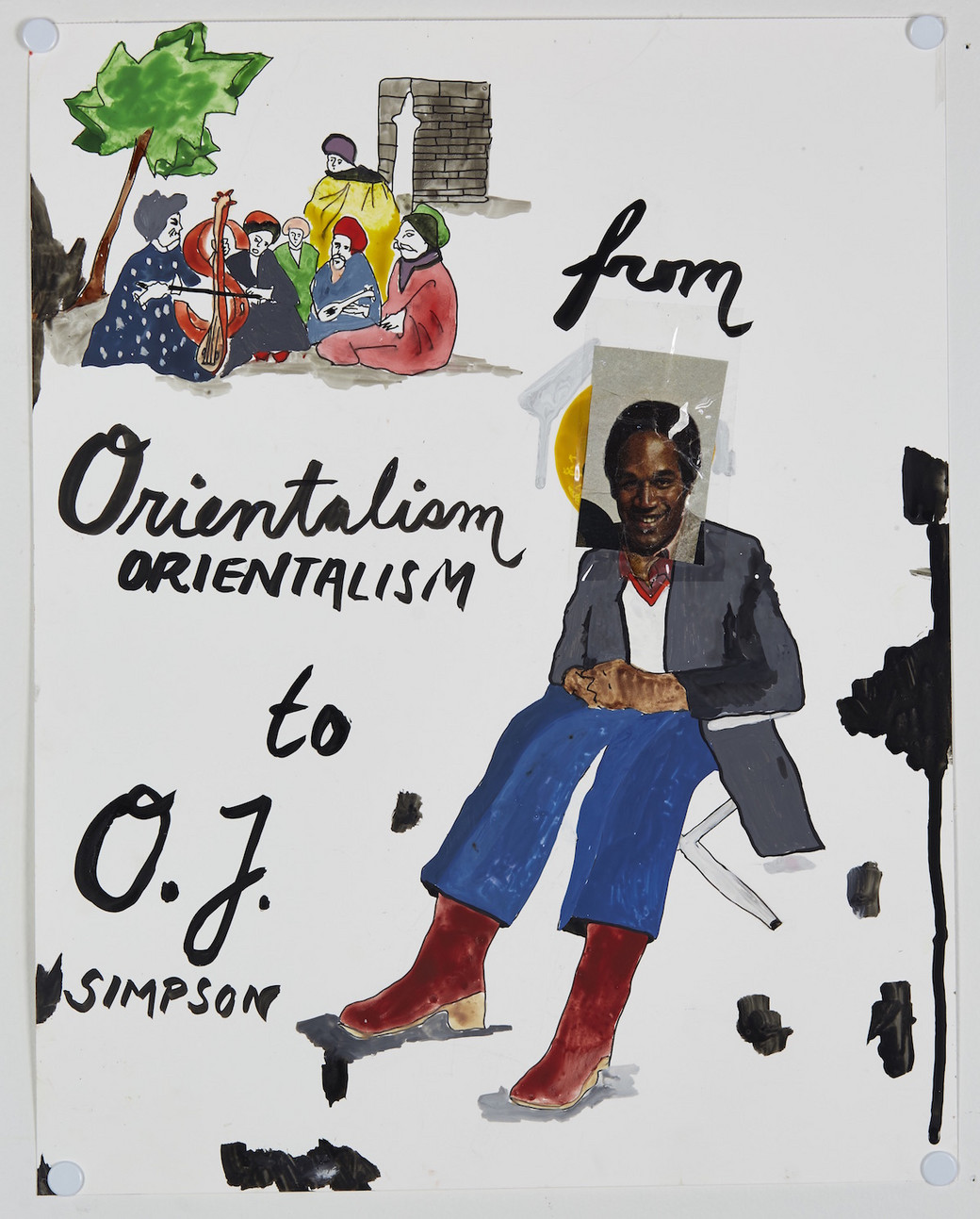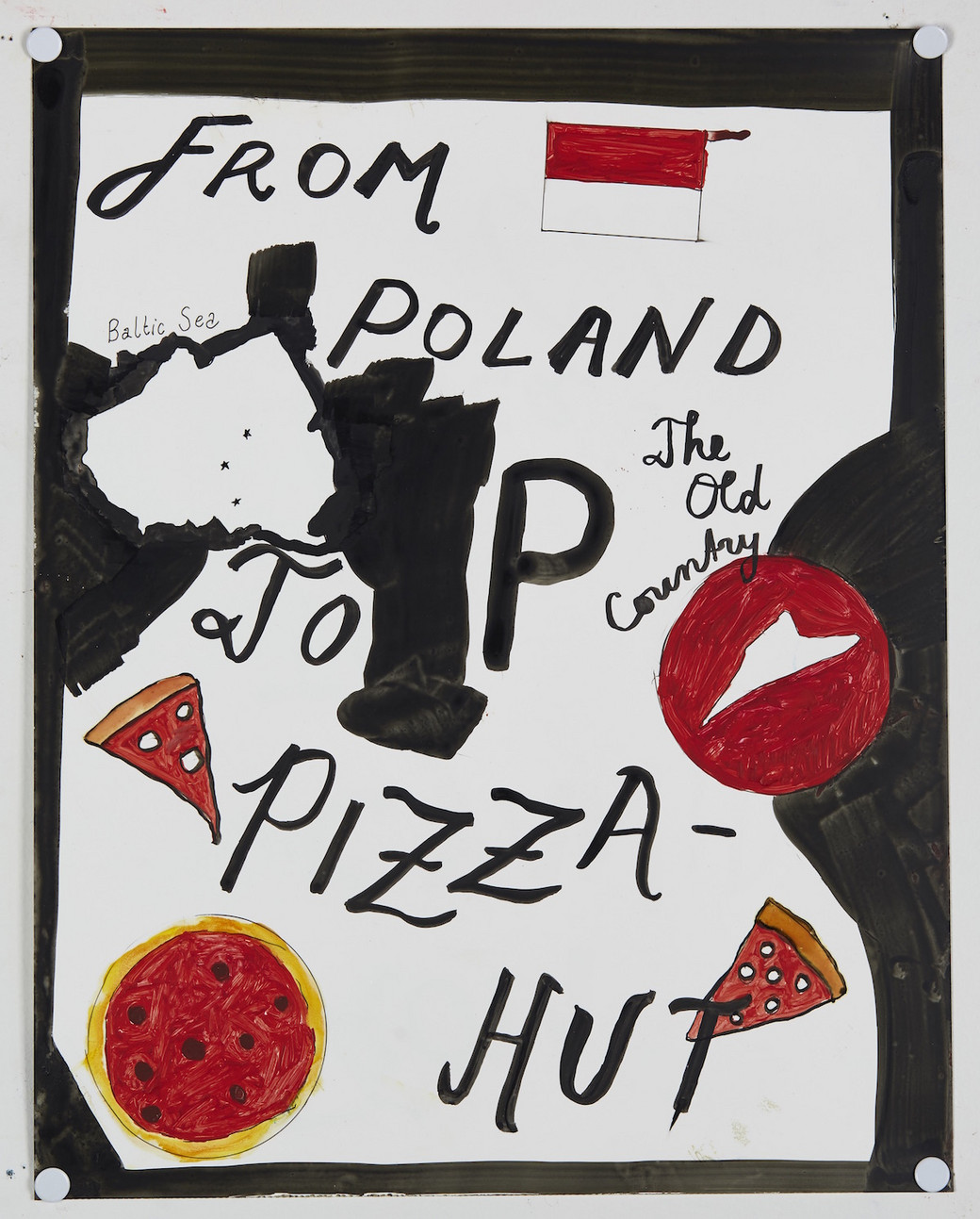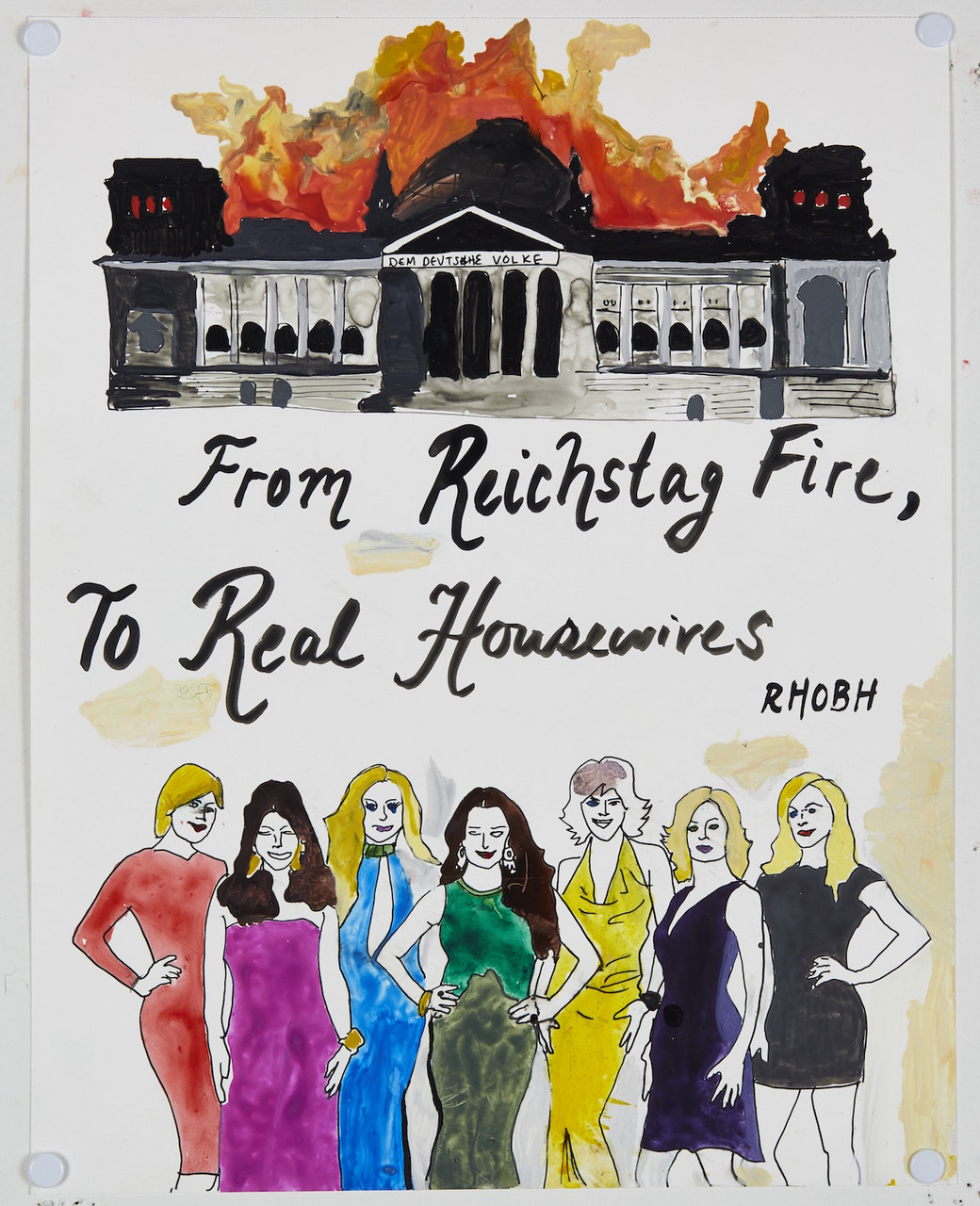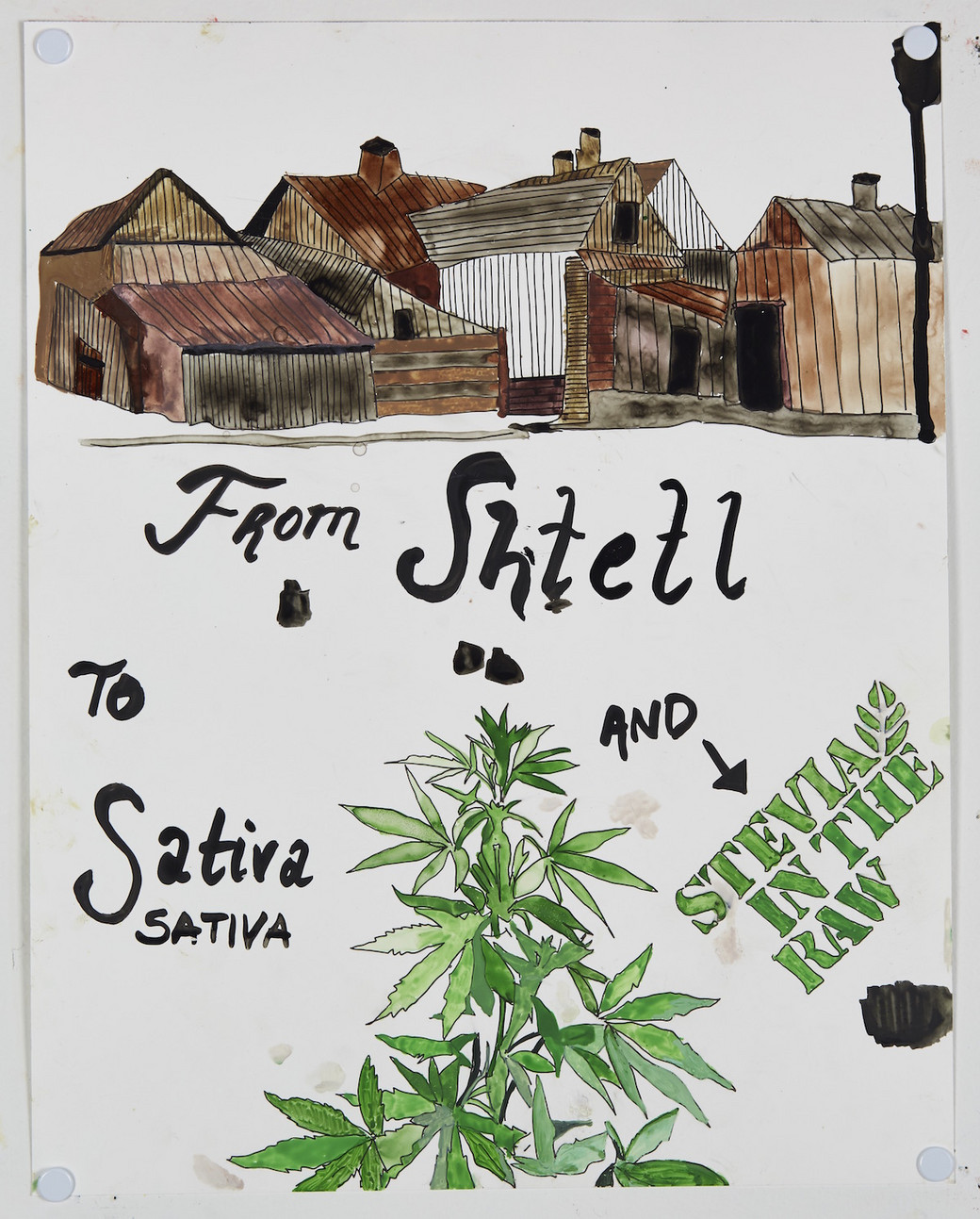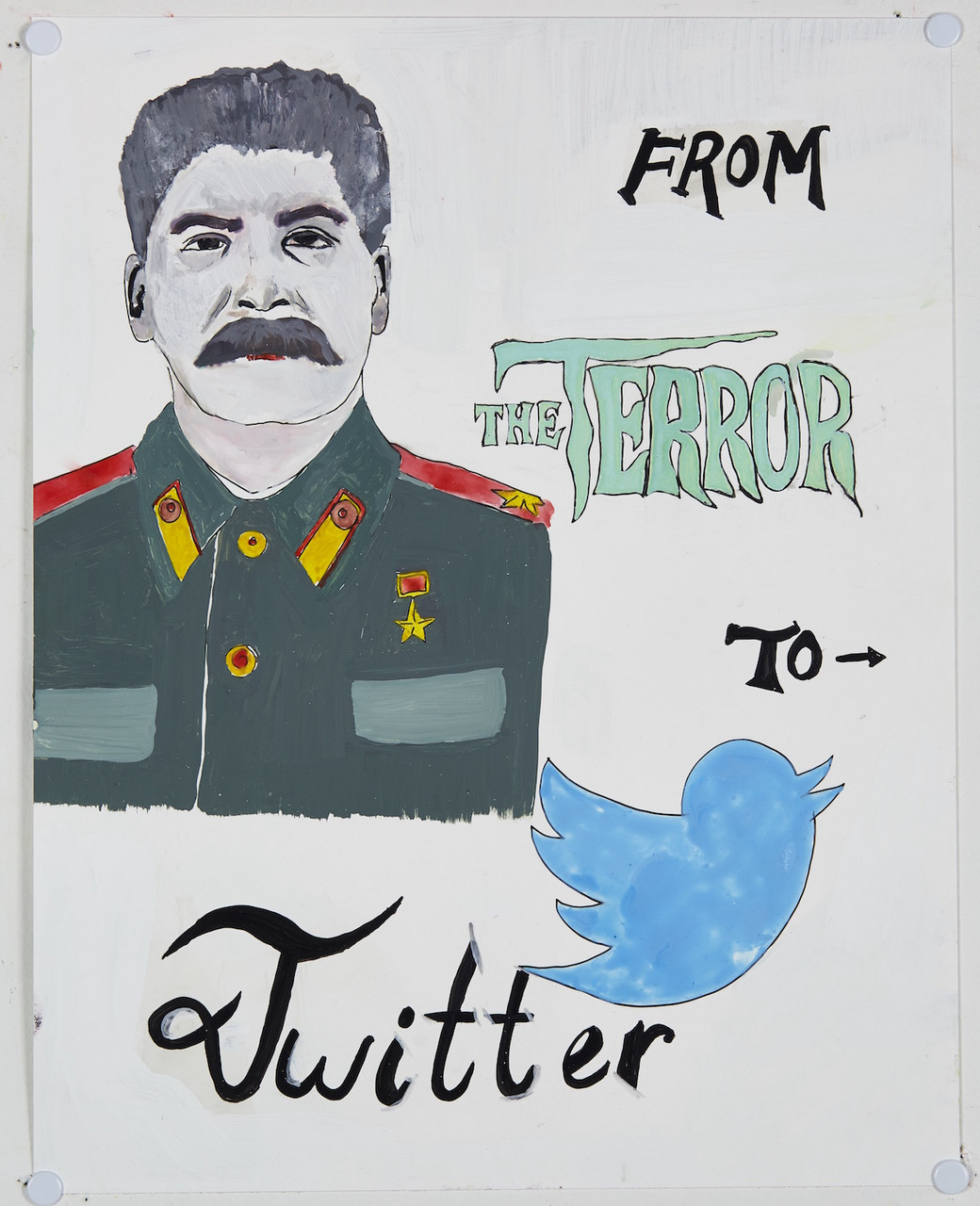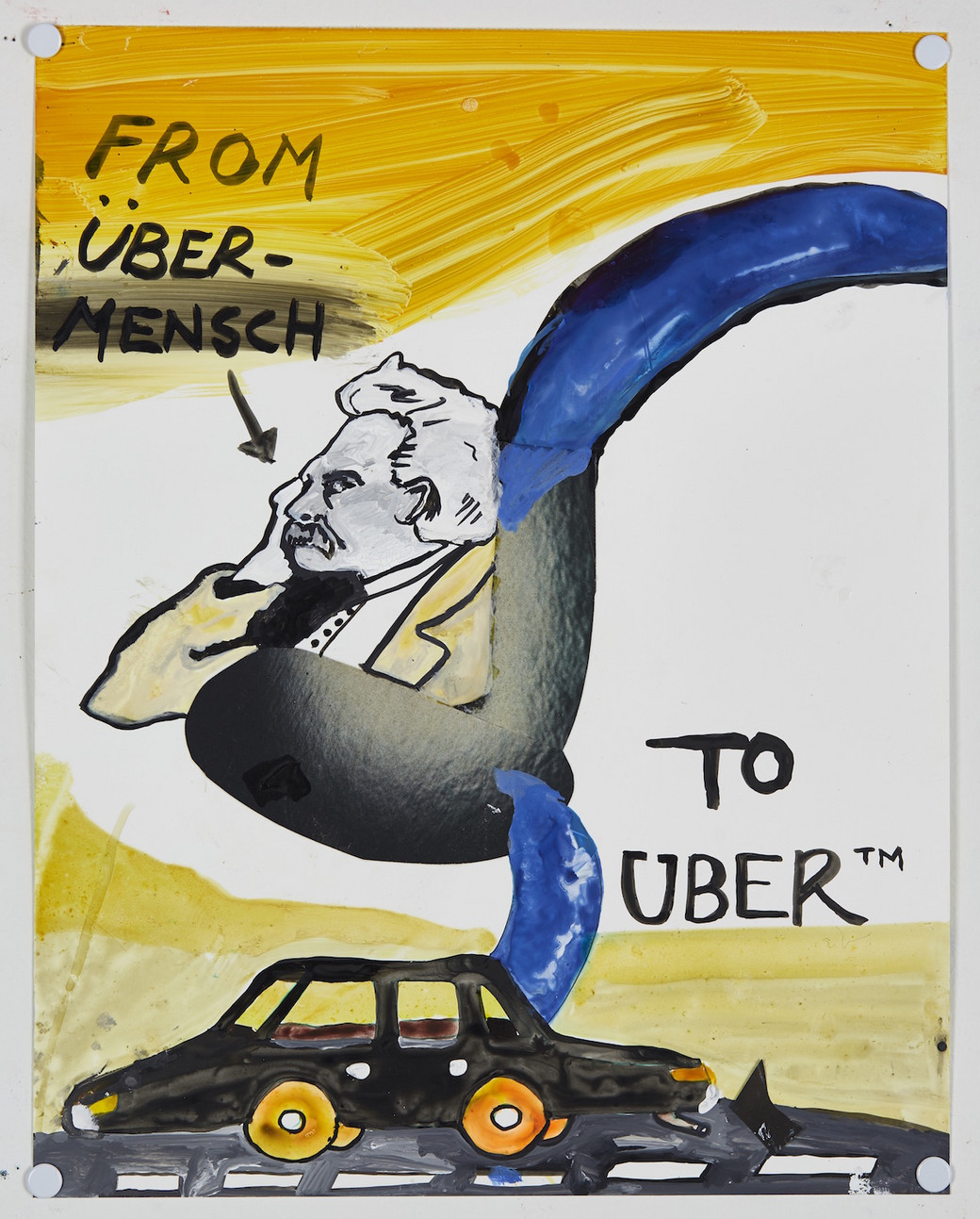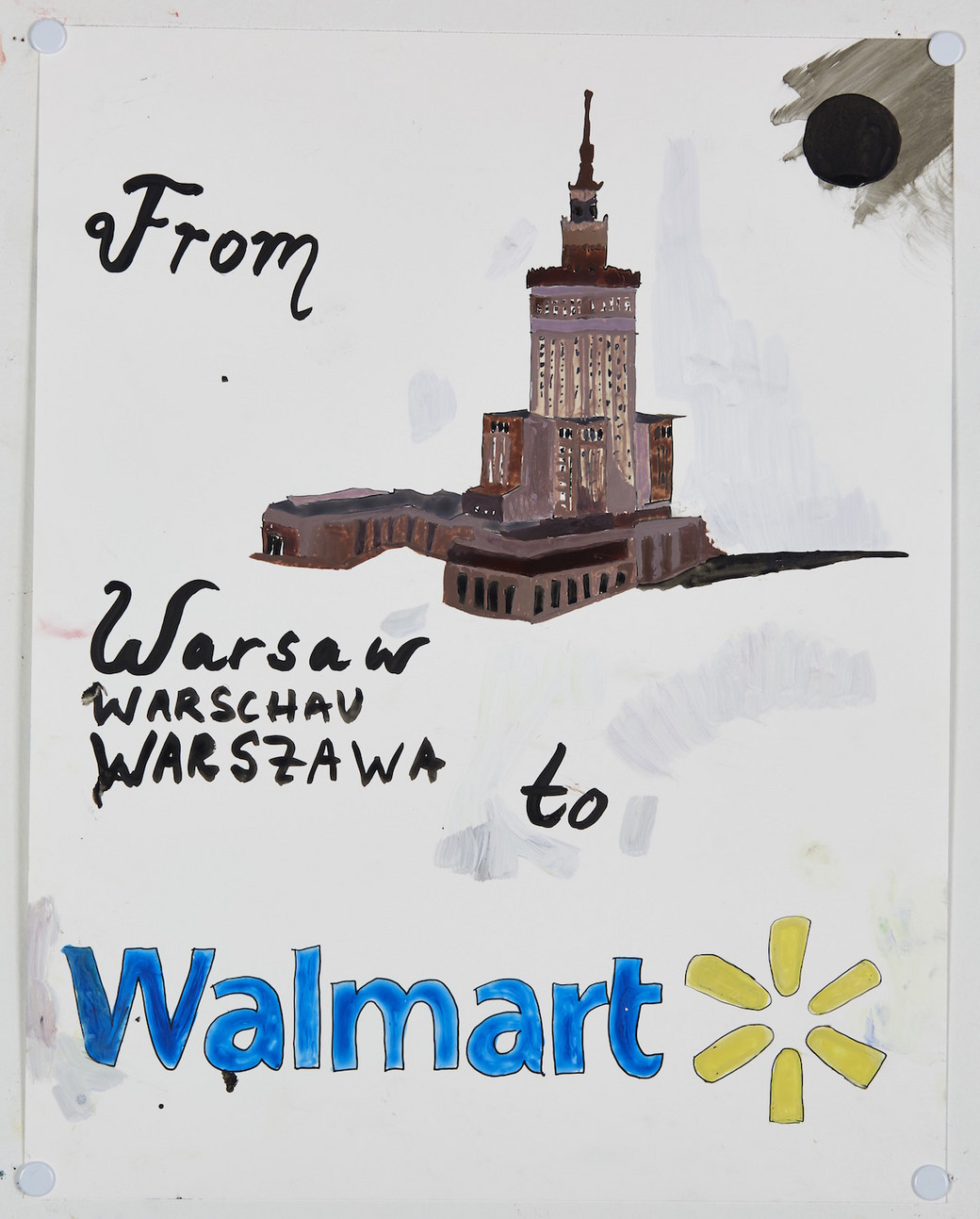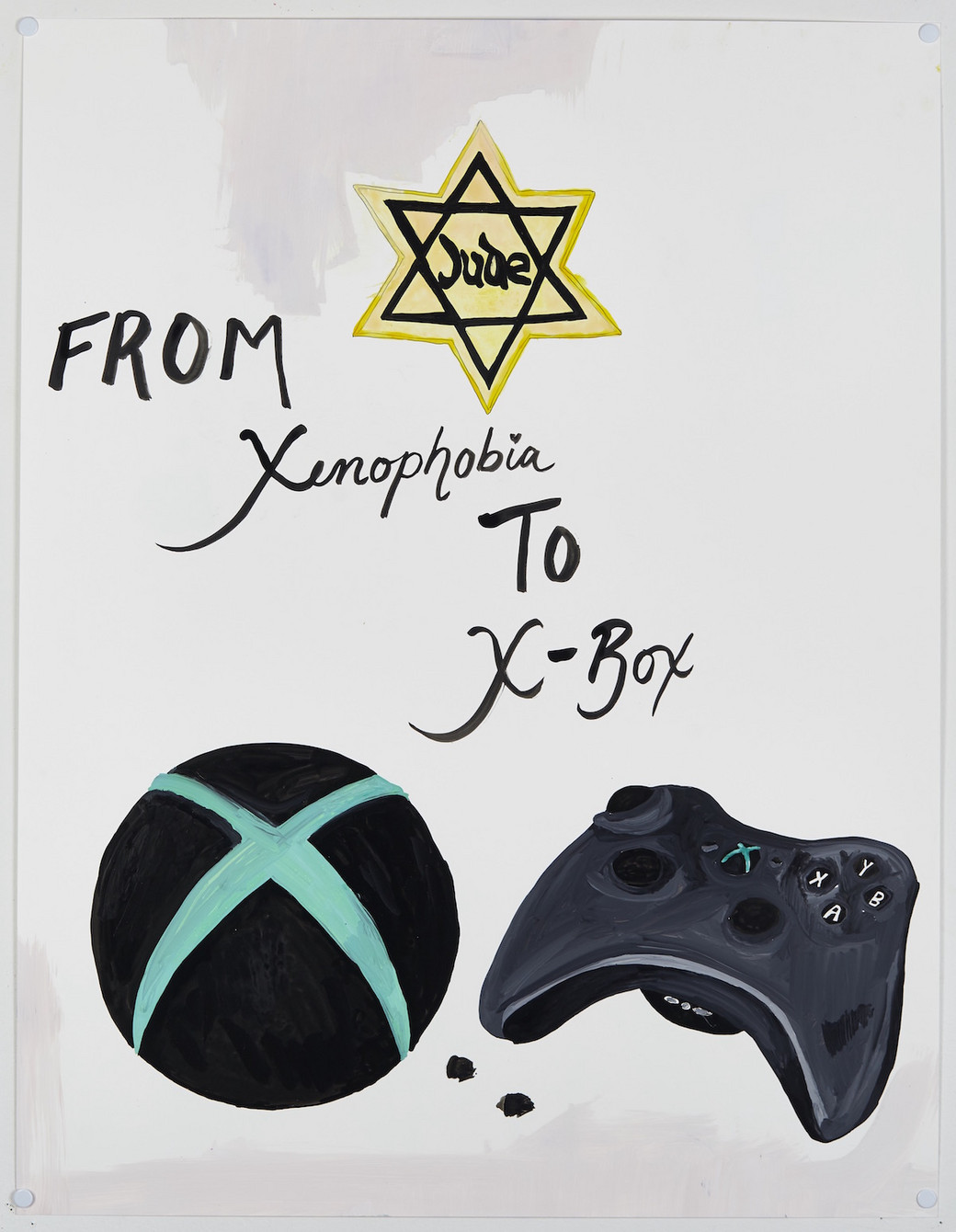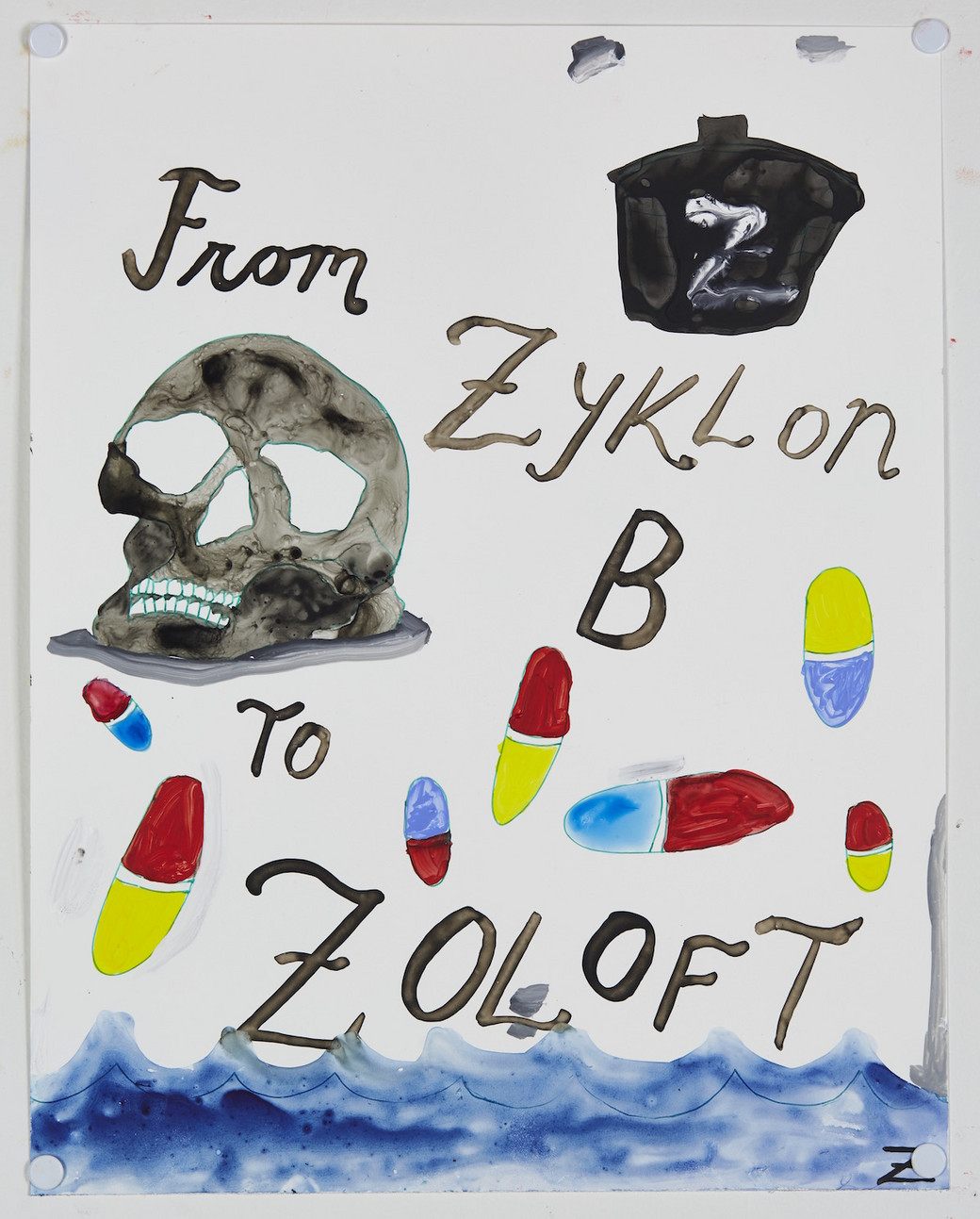


There are the pieces Libeskind knits together in her postmodern bricolage — archival photos are flexible as silkscreens. Warped by the fabric, famous faces stare at the viewer — and what can one do but stare back? Libeskind wants you to look. Despite the serious, personal and political nature of many of these works, they can also be shockingly humorous. She tells me I’m allowed to laugh.
A recent installation and performance called “The Day The Father Died,” curated by Mitra Khorasheh at tANJA gRUNERT highlights Libeskind’s flexibility. She deftly weaves together her practices, people mill about inspecting the paintings and projections on the wall, anticipating the performance to come.
When the time comes, Libeskind’s bare feet slap on concrete as she explains the Soviet Union over a recording of theatrical sobbing. She asks the crowd, “Why would authoritarian rulers love to use the idea of crying little girls? I have no idea.”