Where are you from?
I’m originally from Tunisia, but I was born and raised in France, so I’m French-Tunisian, Tunisian-French.
Do you want to talk about the project at MoMa?
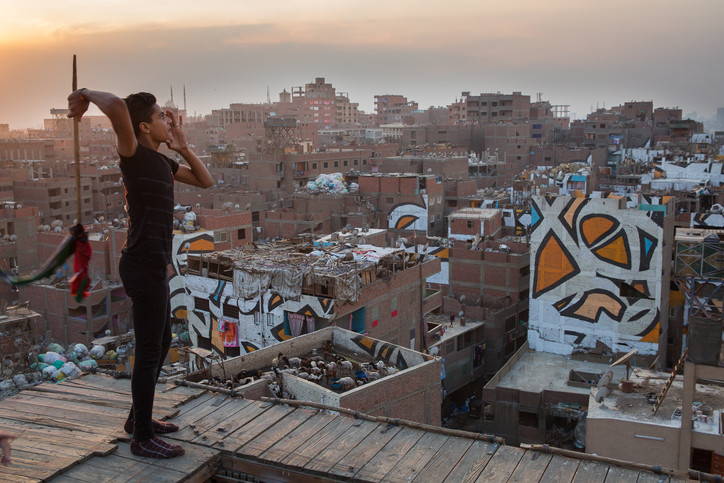
Perception is a project I did two years ago, in 2016, and actually was an artwork located inside the Cairo garbage-collector neighborhood, and the first idea when I decided to go there was to go and beautify this ugly, dirty neighborhood—but I had no idea what it was, actually. I heard about them in 2009, because Mubarak slaughtered 300,000 pigs using the H1-N1 virus and the garbage collectors used their pigs to recycle organic human waste. So, this was in the front of my mind and in 2015, I just decided to go—and I had no idea, I thought these people were kind of dirty, I thought they were living in the garbage, but they were actually living from the garbage. After a few days, my perception had changed already. You realize that the people who are bringing the garbage to the neighborhood, they come with trash, so the garbage comes from another place—and speaking with people, you realize that it’s the garbage of all of Cairo. In Cairo, they call them ‘the garbage people,’ and I kept calling them that for almost a year until we did the project, and I realized that was not their real name. The real garbage people are the ones in Cairo who produce the garbage.
It was a kind of organic project—we went, we didn’t know anyone but we connected with one guy. It’s a Christian Coptic neighborhood, so the first place that I went was the church, and it’s this crazy church that they carved into the mountain. It’s a 20,000-seat church that they built in the seventies, so when you see it you think, 'This is impossible in this place'—it’s inside Garbage City. It’s amazing, when you see it, it blows you away.
So, the people live off the garbage?
Right, so people bring glass, paper, plastic, and each family specializes in one thing. Some people, they collect everything, some people they just collect plastic, some people take care of another specific area. So, each one is allocated one area.
What do they do with it all?
They resell it and recycle it. They recycle more than 80% of what they collect—it’s the most powerful recycling system in the world.
And they just did it because they’re poor?
That’s what it was in the beginning, yes—it started like 60 years ago. There’s 70,000 people living in this neighborhood working together now.
So, you went in and painted the roofs?
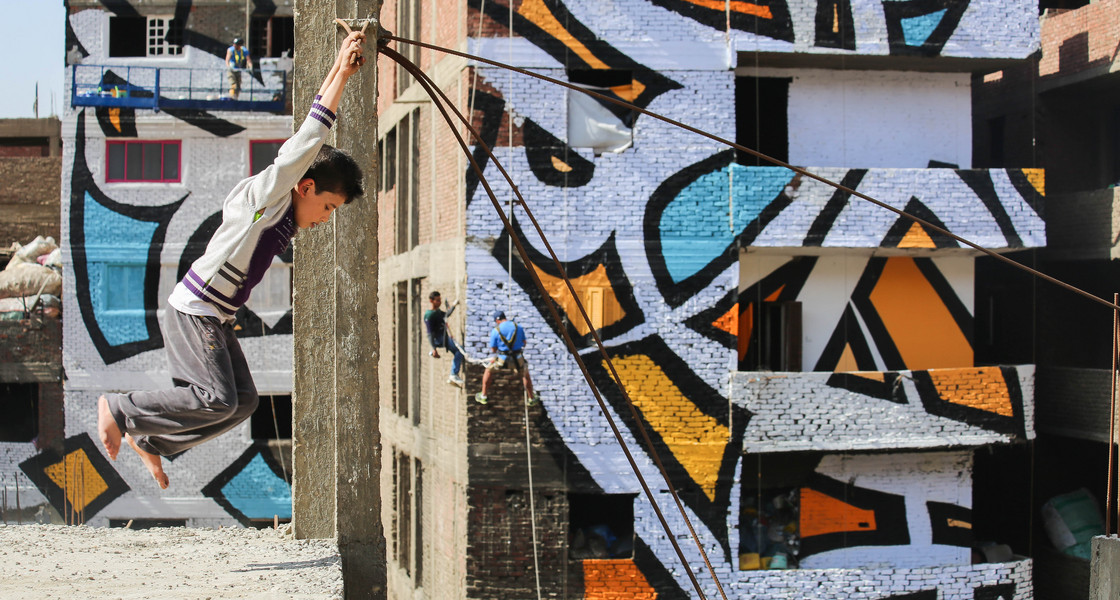
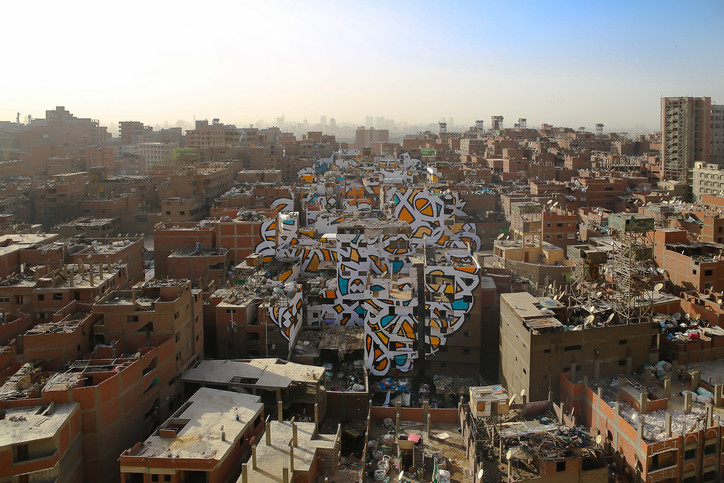
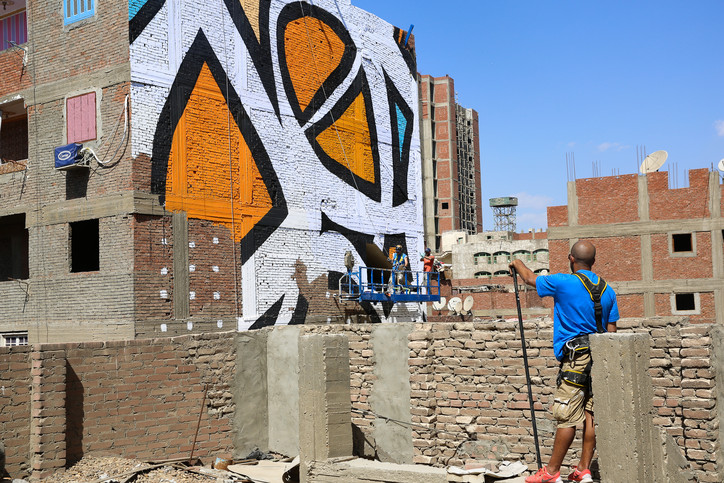
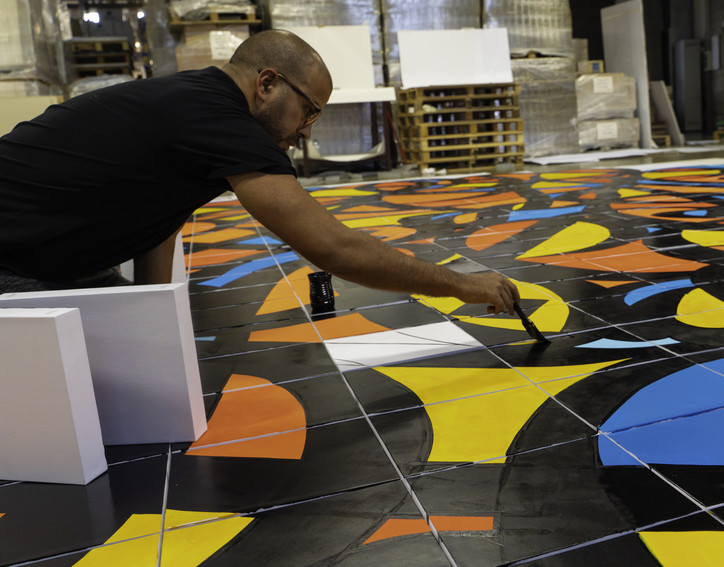
No, it’s an anamorphic piece on the sides of the buildings that you have to go on top of the mountain to see, so it goes over 52 facades and covers 258 meters, something like that. But they’re not poor people, that’s the thing. They’re not poor. Some of them are super rich, that’s your perception—because they work with garbage you already think that they’re poor. There’s a disgust.
So, they do well?
Some of them, they do super well. Some guys have a jacuzzi in the house, huge American kitchen, a flatscreen tv—they’re living the life! And they tell you, 'This is our income, we work from this, we make our money off of this.'
It’s business.
It is business, and you know, when they’re done with work and change, they’re like regular people. And they’re working from something that no one really wants. And some of them have contracts with big brands—some families have contracts with L’Oreal, brands like that—because they collect their shampoo bottles and then sell them back to them.