For Lovers
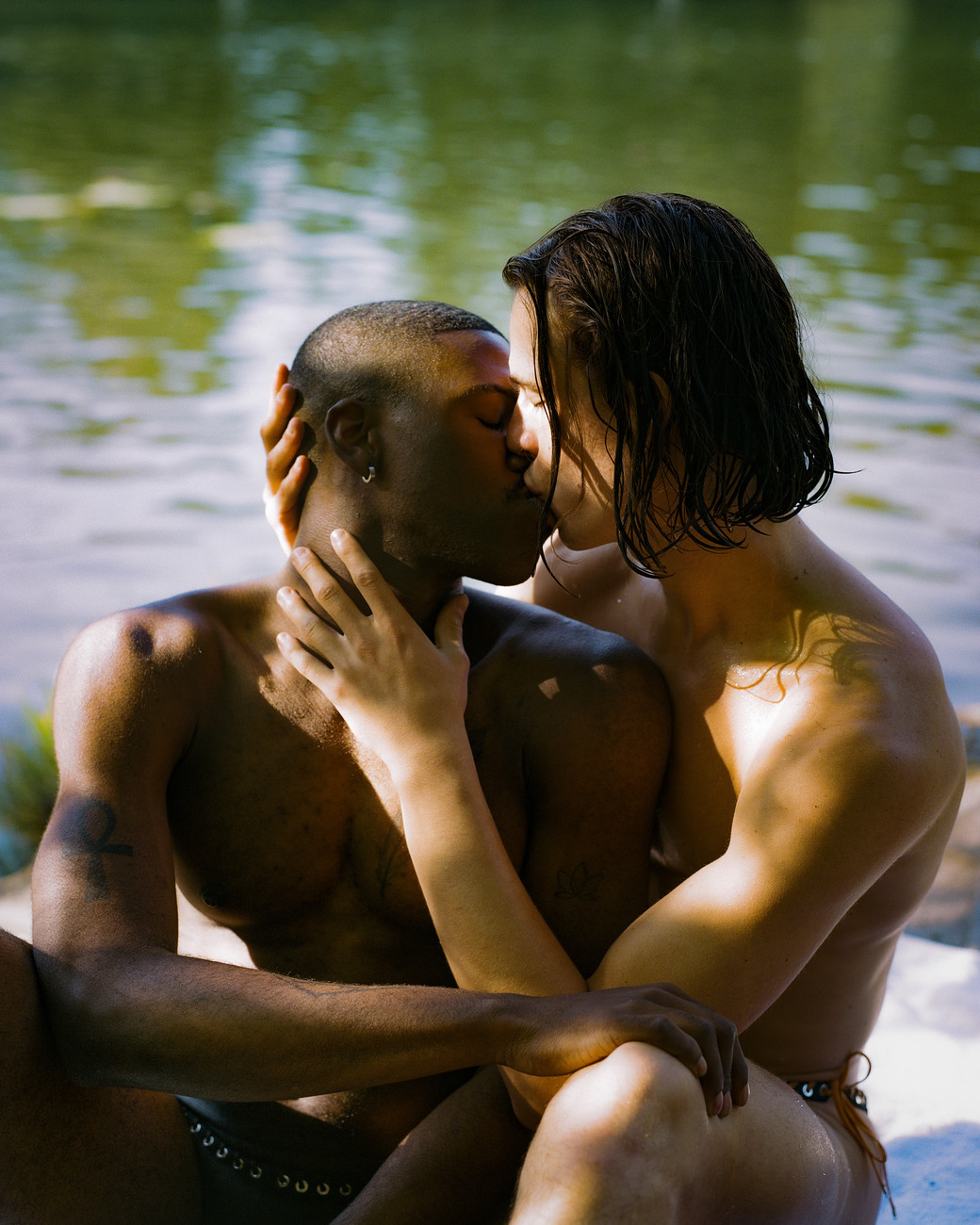
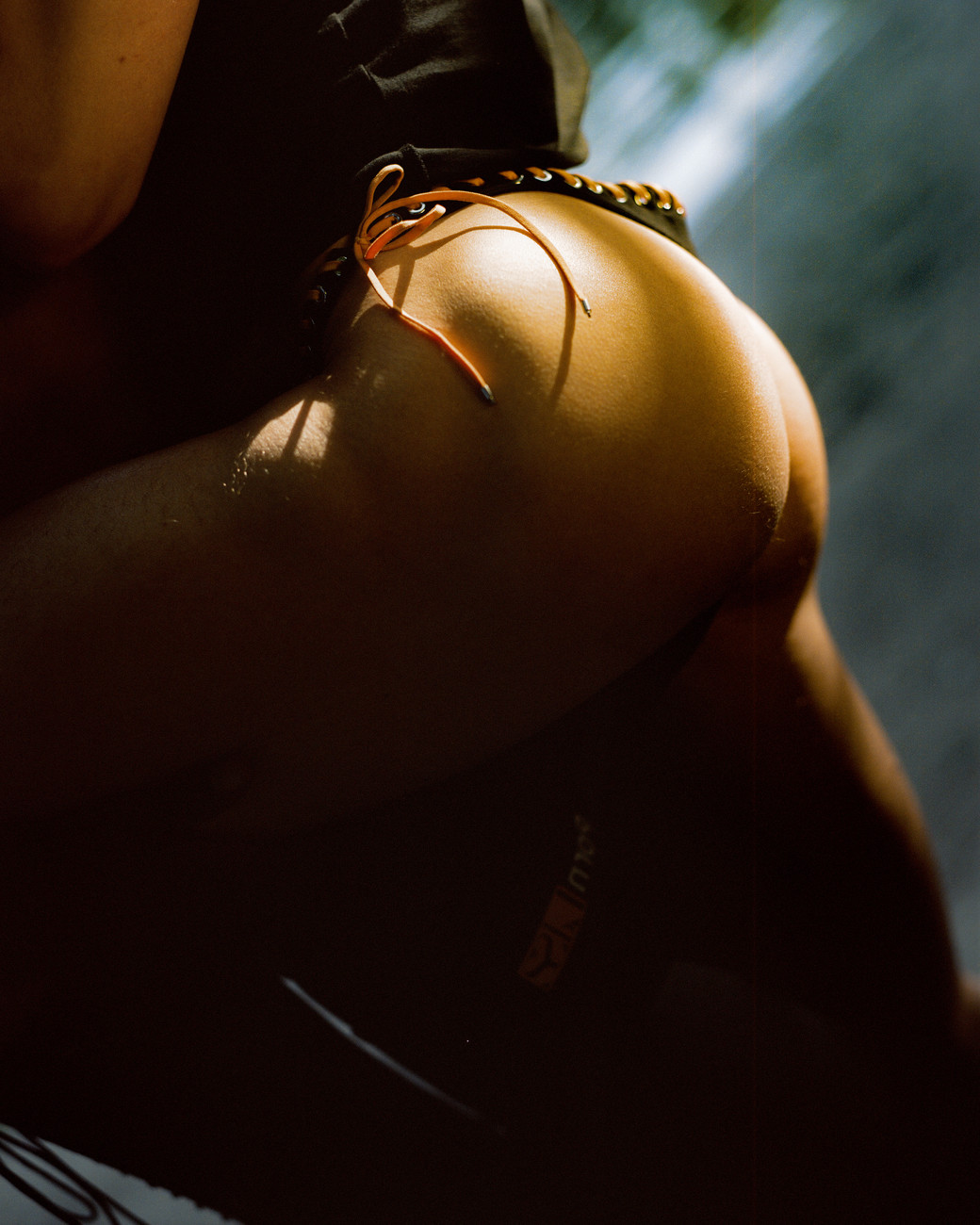
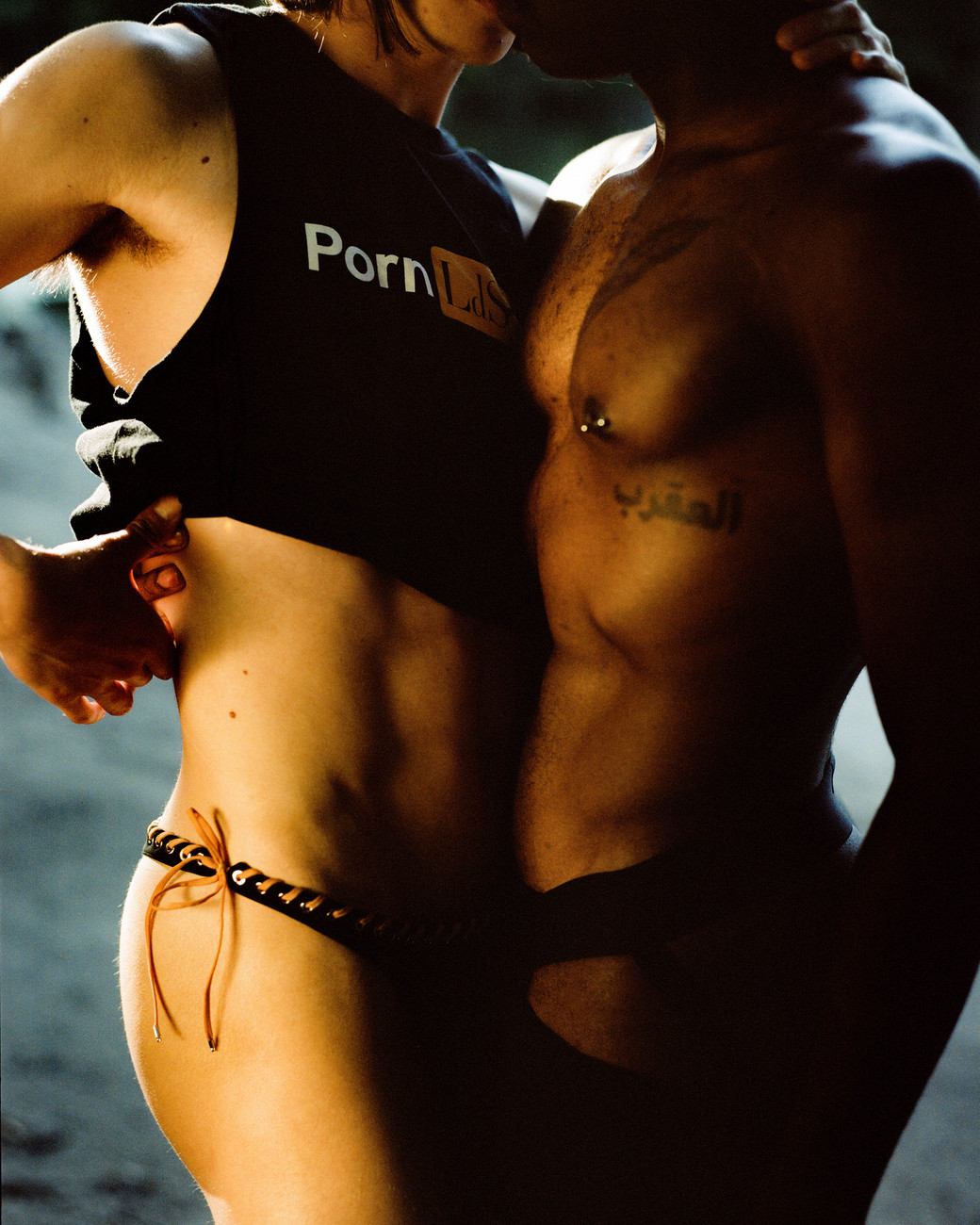
Lamar is a muse for the ages, a lens through which we can explore the love within both our hearts and others'.
Check out the video and photos below.
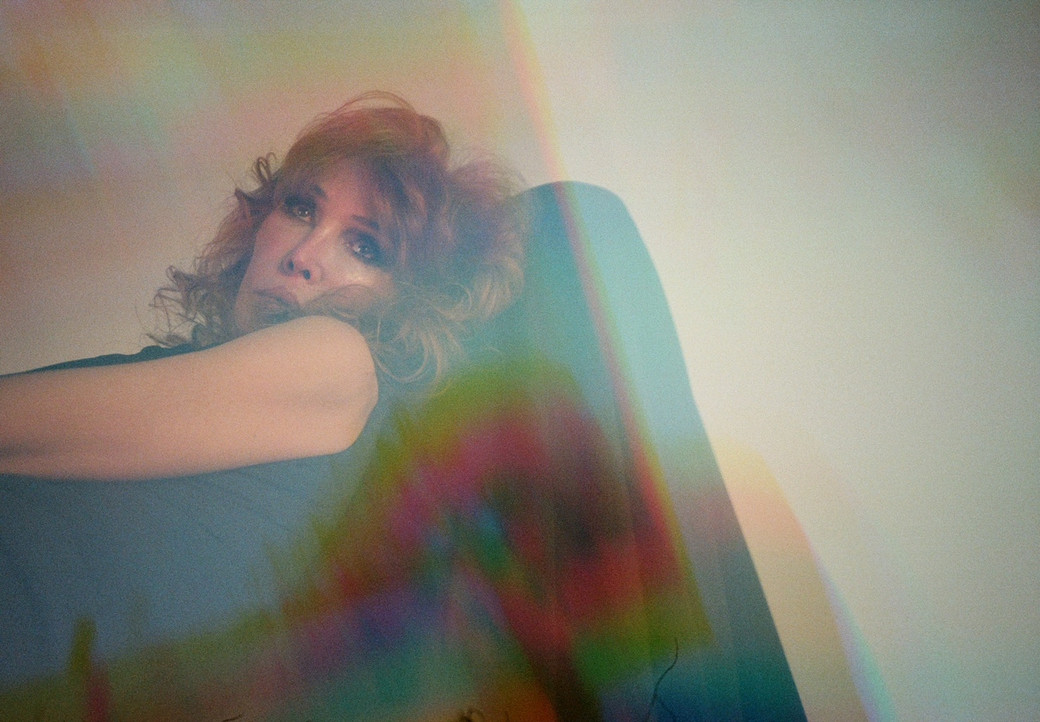
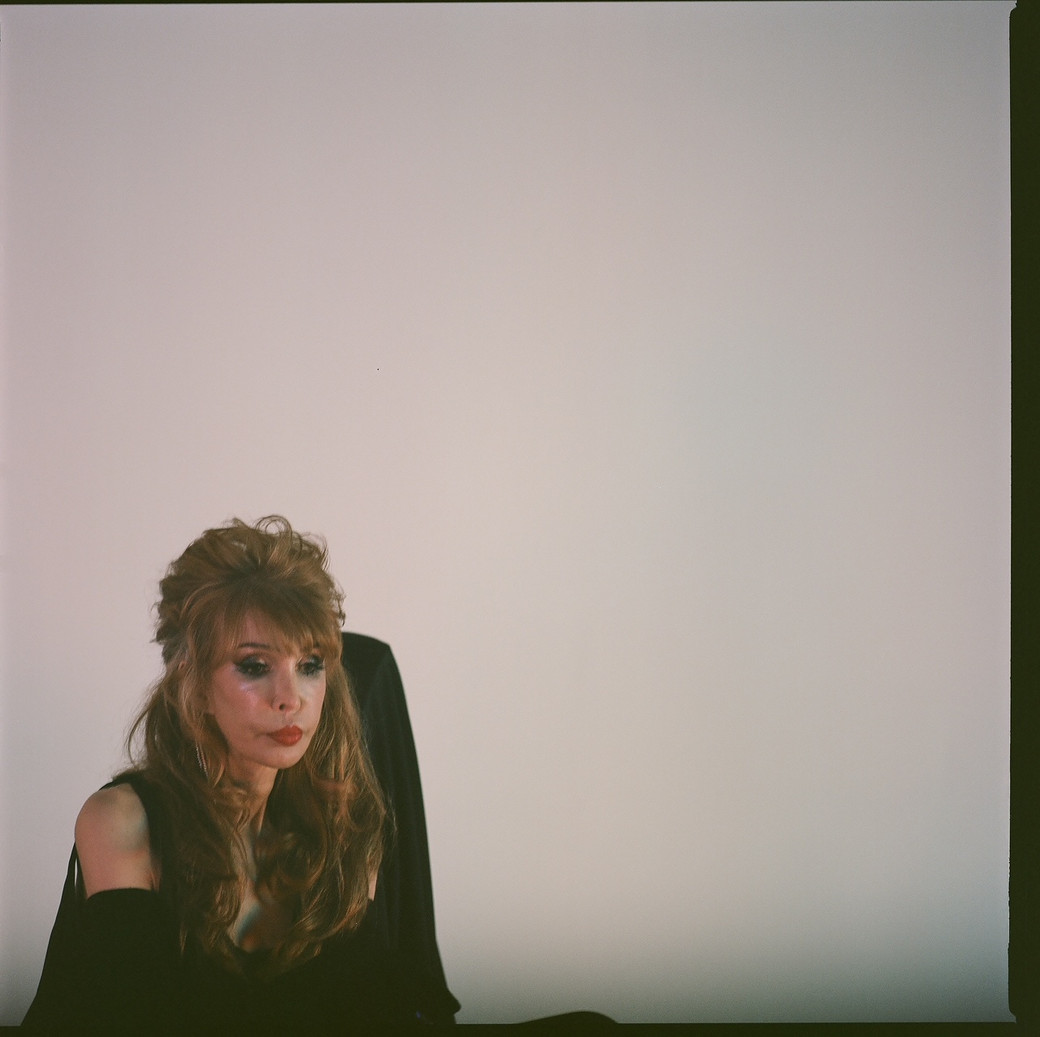
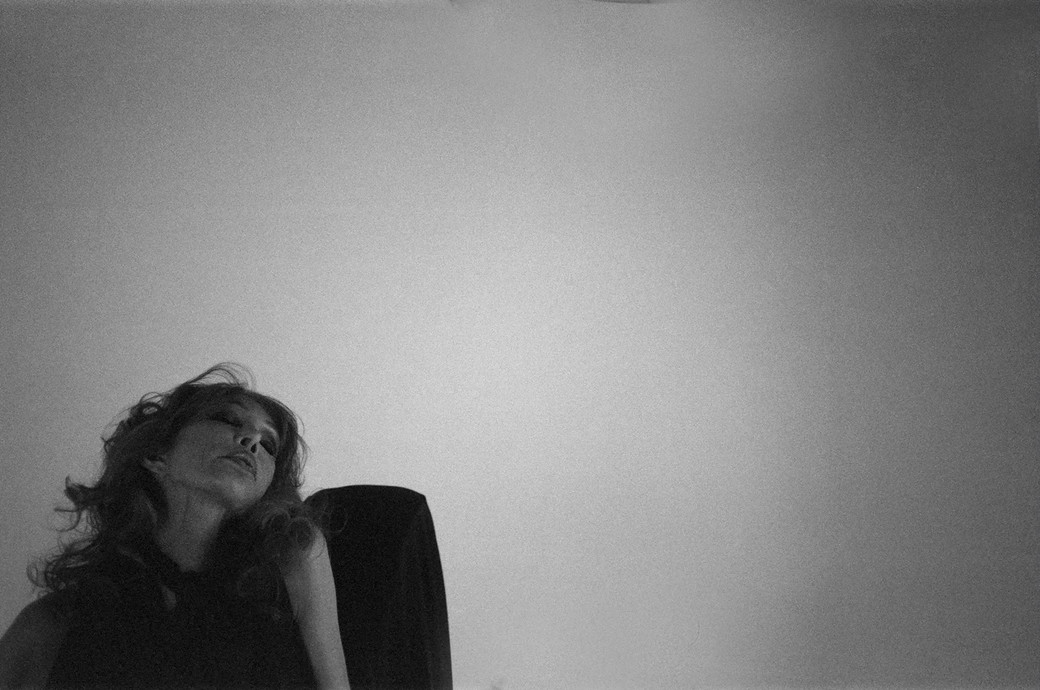
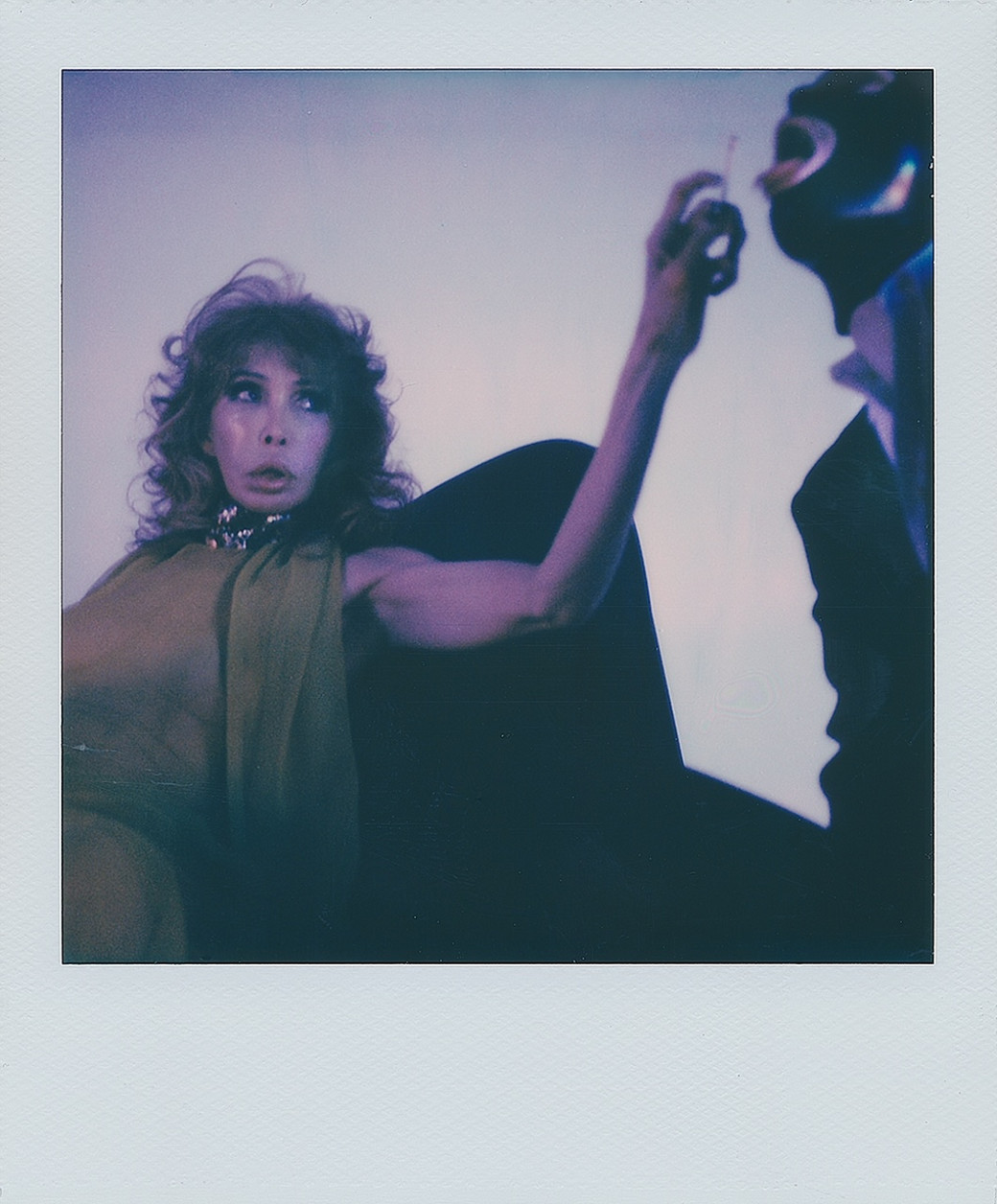
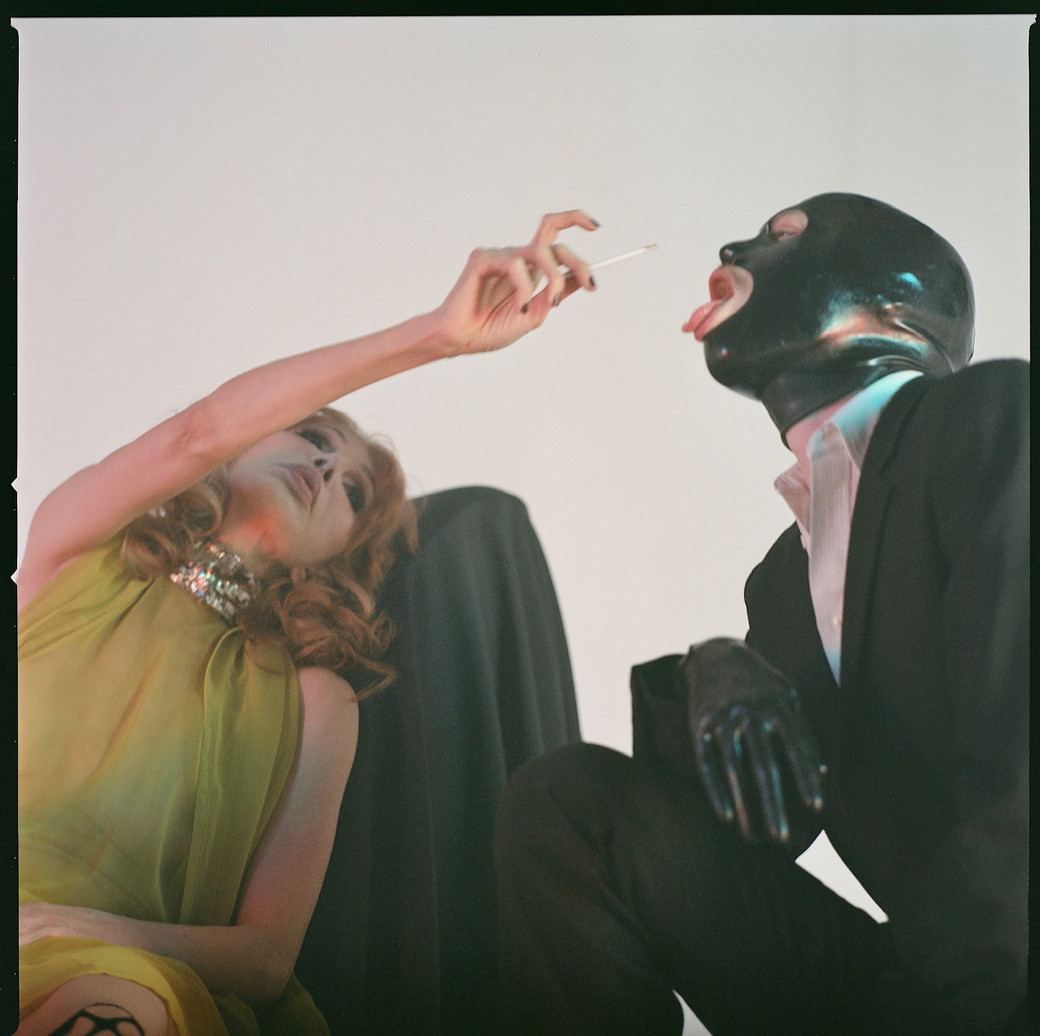
Lamar is a muse for the ages, a lens through which we can explore the love within both our hearts and others'.
Check out the video and photos below.

As chef-owner of queer restaurant and performance space Lil’ Deb’s Oasis, the topic of queer food comes up in conversation with Halo. When Seth asks ‘What is a queer home?’ they respond with essentially the same response they have for queer food: ‘What isn't?’ They describe queerness as a space for multiplicity – queer expression can explore, emphasize, transform, and make those ideas more tangible through symbolic means. In Halo’s case, so much happens through layering, memory, and family. We are not isolated as individuals but thick with the love of our communities. Yet within the aesthetic of layering, meaning somehow feels clearly defined. A celebration of love as a resource, in an environment that is unmediated, warm, and colorful.
Exclusively for office, we are excited to invite you into our space and our interview, on the occasion of the release of Please Wait to Be Tasted: The Lil' Deb's Oasis Cookbook (published June 21, 2022, Princeton Architectural Press). This first cookbook invites folks to bring recipes from the queer and collaborative world of Lil’ Deb’s into their own home, expanding the spirit of the restaurant and Halo’s own kitchen into the reader's hearth, and with whomever they share their meals.
We are in dialogue with our surroundings constantly. It’s active and exploratory. So then how can our spaces be pathways to freedom?

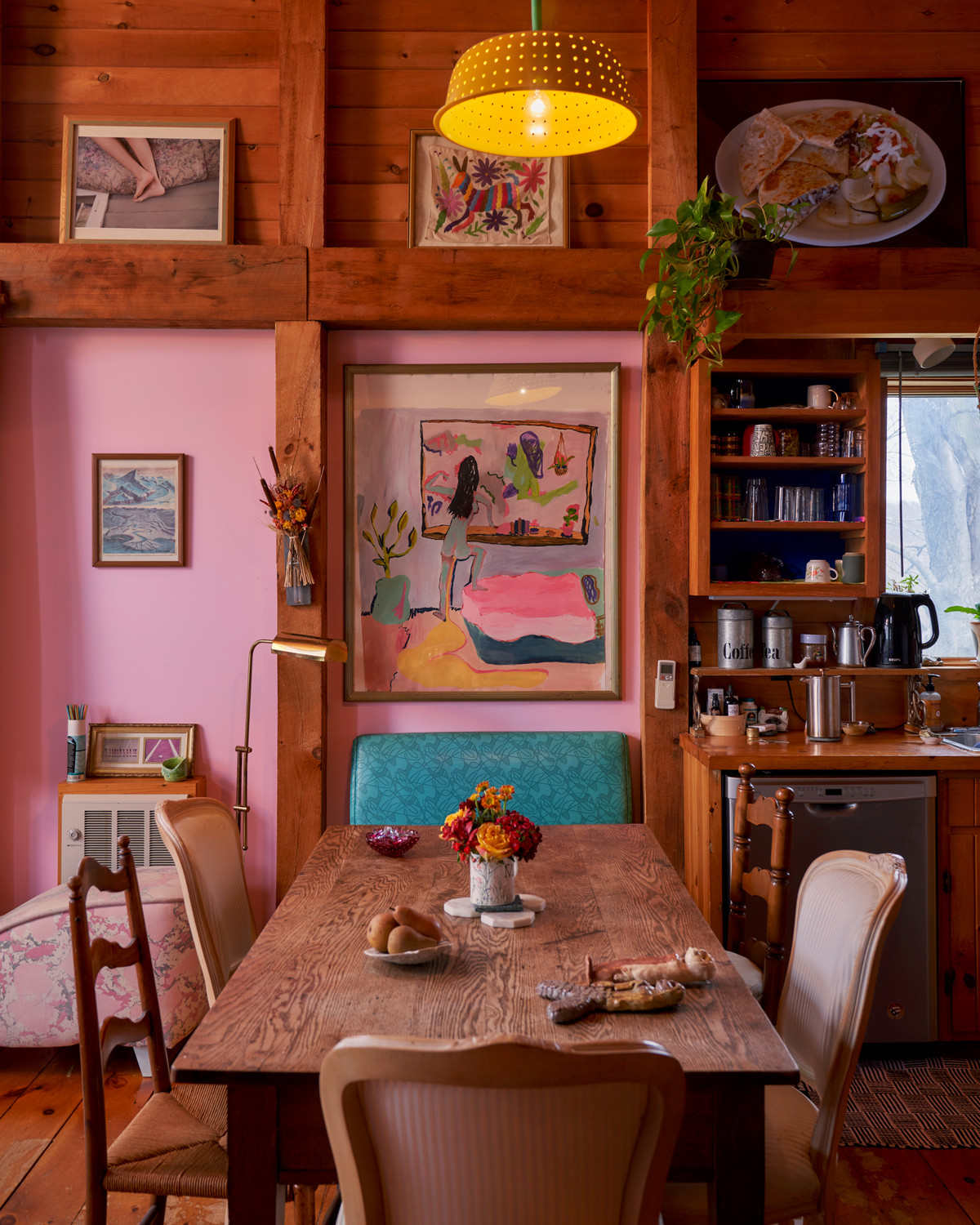
Gilian Rappaport (they/she)— What does home mean to you?
Halo Kaya Perez-Gallardo (they/them)— It means comfort, safety and community. I luckily have a wonderful blood family, and I have a close-knit chosen family that has grown from the community around the restaurant. In terms of my home, it means lushness, coziness, and color. I've always had my arsenal of decor that I've moved with, which has been with me from high school, to college, to Spain, and here in Hudson. There are a few items that I can always take with me and say, 'Okay, I'm done'. I'm at home.
GR— What are those items?
HKPG— There's a fabric from my mom's fabric collection that I adopted. It's an African batik textile, almost Yves Klein blue, with neutrals and warm tones. There's a floral patterned wool wall-hanging from Ecuador that I’ve had since my twenties. It’s a very un-classic Ecuador market textile. I always build an altar wherever I go too, with photos of family, old letters, and objects that I collect.
GR— Living stuff! Can you talk about color and coziness? How do you bring those two elements into your spaces?
HKPG— Color is a big factor for me. I don’t like the word cozy, but it's very effective. It's hard to dissect now where the restaurant begins and where I end, but the palate of the restaurant is similar in its 'tropical comfort' idea. These are colors you don't often see in Western spaces, they're more associated with South America, or the Tropics. I've always detested the Western aesthetic of cold, white, and minimal. Growing up with my Ecuadorian grandma, her house was the blue one on the block. I felt really proud of that, it was a way we stood out. People always comment how her hallway is marigold-toned. Multiple textures, warmth, and multiple colors in one space are elements that I have been surrounded with since I was little and carried over into my adult life.


GR— It seems like colors are evoking memories, like growing up with your grandma and how the colors of her house have stayed with you. Looking at your space, especially the fridge, I see all this overlapping, which also brings to mind the layering of memories. I was wondering if you think about memory in your idea of comfort?
HKGP— That's how the concept for the restaurant started. What matters to me in making and talking about food are memories and what's evocative [to someone], whether it's from a trip, a family memory, or treasures we hold on to. You can walk through a room and smell something and it transports you. Layers of memory have always been interesting to me. I'm a big collector of stuff. I have photos that my uncle took, he died when I was one. I've looked through his archive and been really impressed. One of his paintings is up on the wall. You can get to know someone you’ve never met through memories and the things they made, or the objects they chose to be intimate with.
GR— I'm interested in what you were saying about where the restaurant stops and your home begins. The restaurant is a space that's such a community with so many people coming through, and you're hosting them. How have you designed your home to be different from the restaurant? How do you recharge and rest here?
HKGP— It's quieter here. The restaurant is intentionally overwhelming. From the moment you walk in, we want you to be inundated by sensation. I have days where I don't play any music at home. I’m somewhere between an introvert and extrovert. As an only child, I grew up having reading competitions with my cousin Cristina. I'm internal, but creating the restaurant changed parts of me. I get energy from being surrounded by people. Then I have my home, where I live alone most of the time. It's a place I can come back to and take a deep breath. It's rare that I actually nest.


GR— Aesthetically, how does this space reflect nesting, if at all?
HKGP— I love having areas where you can lounge. Downstairs is kind of undecorated. The couch is the main element. There's fuzzy blankets and a wood burning stove. It’s important for me to be able to wear sweatpants and read when I can. There's a lot of neon in my wardrobe, but in my home decor, there's less. In the restaurant neon is an important element of lighting and objects. That felt necessary to take it away from a 'Barbie cupcake' thing. At home, I don't think it verges on 'cupcake'. I wasn't afraid of that, like how in a commercial you make decisions to arrive at a certain messaging. At home, these are the colors of my heart [laughs hard]!
Seth Caplan (he/him)— I'm thinking about what makes a queer home. How is your queerness is reflected in your living space?
HKGP— People love to ask, ‘what is queer food’? I always struggle with that, because ‘what isn't’? The way I've worked through that is to think about multiplicity, the ways that queerness allows for so much. There are so many iterations of what an aesthetic means.I think about multiplicity and overlap in decor, like you were saying about this fridge. Queerness is an uncontainable container. It's boundaryless, and there are parts of that energy here in my home and in the restaurant, and also maximalism, and abundance.
SC— Do you feel your queerness is about maximamalism and abundance?
HKGP— At the restaurant we talk a lot about our flavors being maximal. More salt, more acid, more heat. That's foundational to what the food and space are, and that's the same heartbeat of my lifestyle. I'm working on finding quieter moments, but abundance is essential to my queer identity. Scarcity is such a mindset of heteronormativity – the way we think about relationships, love, and care, or even clothing and style. Queerness leans more towards bringing it in and bringing someone into the fold.


SC— How does that translate physically in your decor, and emotionally for you and others when you use your space socially?
HKGP— When [my mom and I] moved here, I had a lot of resistance to this house. It was owned by a state trooper and they were unhappy. The paint color was olive green. The art was a single stretched-canvas family portrait. I had a visceral response to the energy. It was important to say: we're putting color in here, we're adding warmth – plants, art, things that are a reflection of the abundance of my life. A lot of my work revolves around color associations with flavors and body parts, like in Ayurvedic cooking, and how that translates into your emotions – color is felt. All of these things are how I formulate the world.
SC— I feel the physical abundance of things here. When you walk in, there are so many moments. I like the idea of how the physical overlapping of items in your space connects with the overlapping at Lil Deb’s, in terms of all the layers of community, programming, and food. It's these things that mix together in the container of Lil' Deb's. That ‘open container’ of queerness you describe holds those layers in the restaurant, just as your home is a container for you to rest and imagine. You put in things from your family, travels, and friends, all these things that might seem like separate ideas, overlap together to become your home.
HKGP— That's cool. [smiles] I like that connection.

Sweatshirt KUON, shirt OVERCOAT, coat ADRIENNE LANDAU, necklace L. JARDIM.
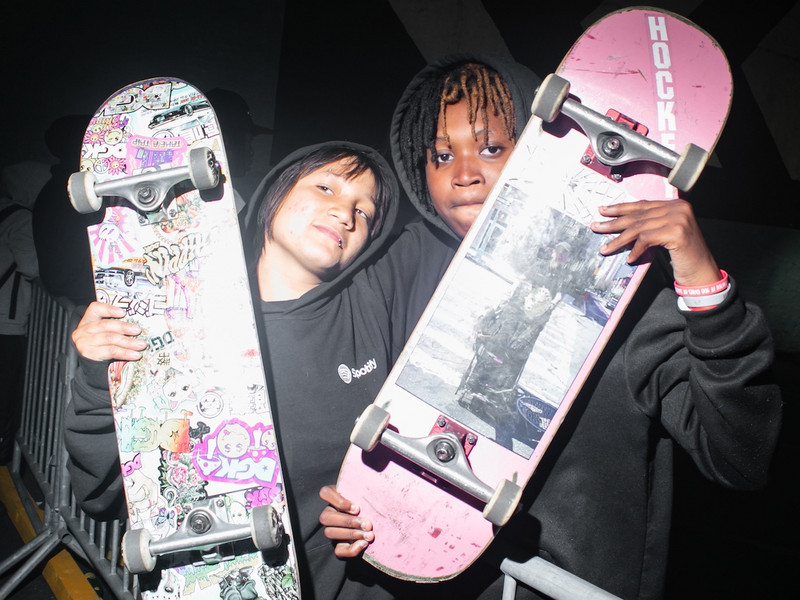
In an interview, James and I got to unpack like two distant cousins at a family barbecue. An undeniable gift of James is his ability to bring you out of your comfort zone. I wasn't prepared to talk shop while he was in the middle of cooking pancakes. This conversation was organic as it traveled across a file of topics. And for those that may believe skating is just a set of wheels, a deck, and some bearings— you're wrong. Nevaskimp will show you that.
When did you begin skating? And what does it mean to you?
So I started skating when I was about 13, turning 14. Before skating, I played basketball for most of my life. Like, when I first moved here from Jamaica, I moved straight to the Bronx. And then it was either I was gonna be on my block like or learn how to do something that I liked. I chose basketball. So I played 'ball for a little while, and then when I got to high school, things began to change. While my mom was very overly protective, as my high school was downtown. So, it was a lot when I wasn't in class as I was dealing with a lot. It was either old protective mom, or just me not being able to go outside because I wasn't old enough. I'll tell my mom like, "let me go downtown," and she would not let me go. My friend persuaded me to sneak downtown and one day, I just went. My best friend was the one who introduced me to skating, and in Jamaica I used to ride those BMX dirt bikes, so it was easy to go into skating. It was like the start of a whole new legacy coming downtown. I got into a park, I ended up meeting one of my one of like, the people that I looked up to for a very long time, and his name was Andre Beverley. I met him, made friends with him and from there, I just started going to the skate park over and over again. When you enjoy doing stuff, you're gonna put time and effort into it. You know, I mean, when you put time and effort into something, it pays off because people see the work that you do.
When did you know that skating would turn into like something you could do professionally?
Probably when I came back from college, I stopped skating for almost 11 months when I wanted to stay to college. I was gonna go get my Associates in auto mechanics. An auto mechanics is a vocation, and my father— He's the immigrant from Jamaica. He wanted me to get a job that was gonna have me currently in work and always in work so I wouldn't have to worry about stressing myself out, making ends meet. So, I was in school, and l was doing okay, but I wasn't happy. I was depressed, as I was away from all my friends for mad long. In Syracuse— that shit was not it. It was snowing every two days. When I came back from school, I made a promise to myself as I did what my mom wanted me to do so now, I'm gonna do what I want to do. I want to try to see how far I can go with that. So I was 17 or 18, and after I finished, I came back home. I'm gonna just fully escape and I'm gonna really focus on skating and making clothes because that's what I wanted to do. And I just did that for the next three years, man, faithfully. I went out every day, I was breaking myself off, I was scared like— yeah, hurt me. You hurt yourself on a daily basis. You sign up for this when you learn how to skate. And I started getting good at skating. From there, I had so much fun and I was getting some connections out of it. People invited me to places, and I'm starting to meet people I never met before. I'm getting offered like, photo shoots and that created a window to modeling. Skating honestly opened the doors for a lot of things for me.
So, that would be the same process that like helped you transition into the modeling world.
I got into the modeling world after designing a two piece set for my friend's daughter. He sent me the sewing machine and tools all the way from Belgium and I just— imagine a set of baby trousers and a baby bubble jacket. He was so happy with the finished product and asked if I wanted to take some photos. I didn't even know what modeling was like, that was not my forte. I was pretty self conscious. And I was camera shy. You know? I mean, don't get me wrong. I could be in front of a crowd, but it was just having a camera lens pointed at me. That just wasn't my ideal. Like, that wasn't what I was into. So, he invited me to my first photo shoot, and I did something for a men's fashion book that went well. People were asking me like, "yo, like, what agency? Are you? Are you fine?" I believe it's solely from me being with the right people and representing yourself the right way. Plus, speaking up when you're supposed to. Closed mouths don't get fed. I'm gonna say this to all the young, upcoming skaters that are trying to get in the industry or want to make the name somewhere. If you don't speak up, nobody's gonna hear you.
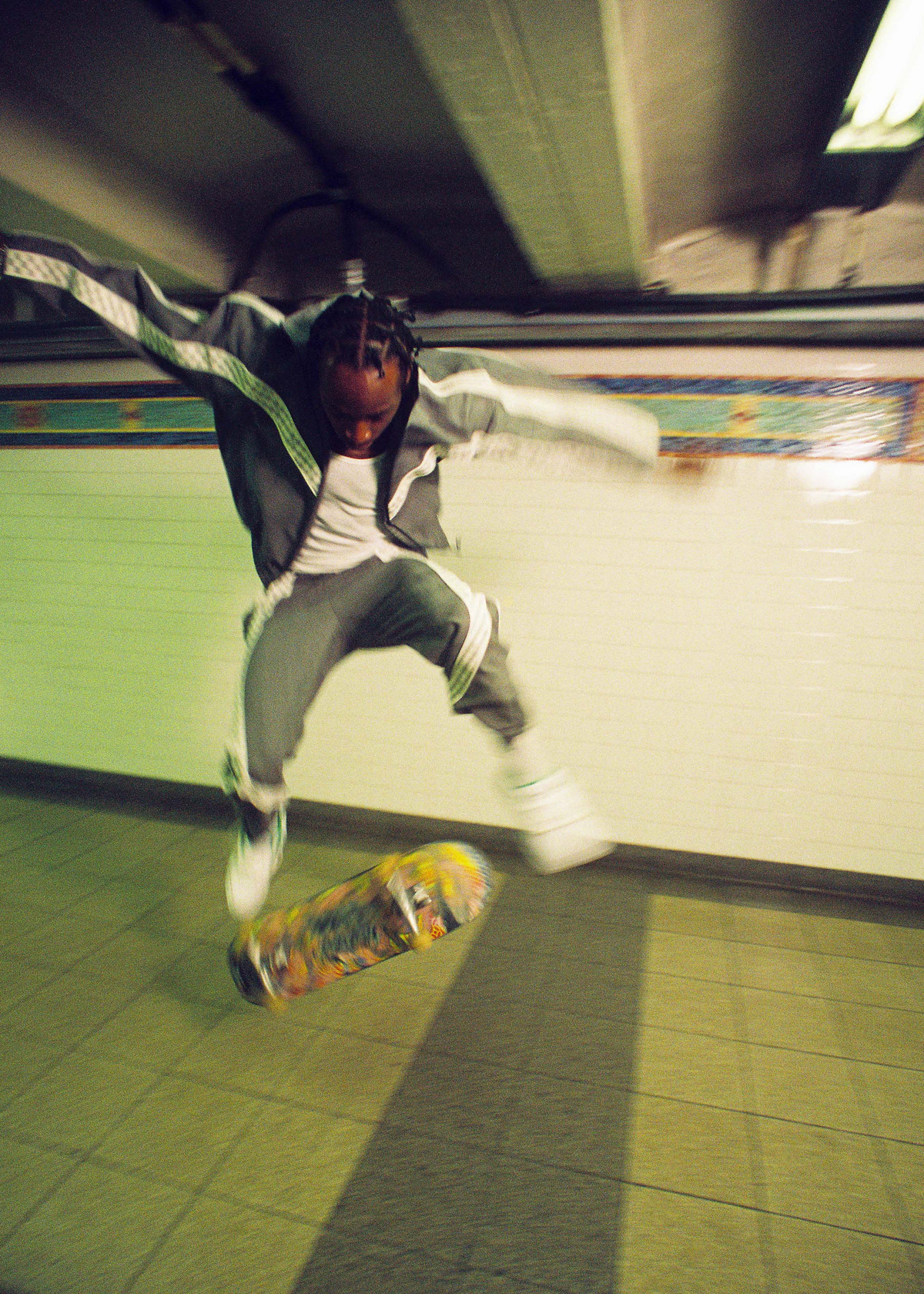
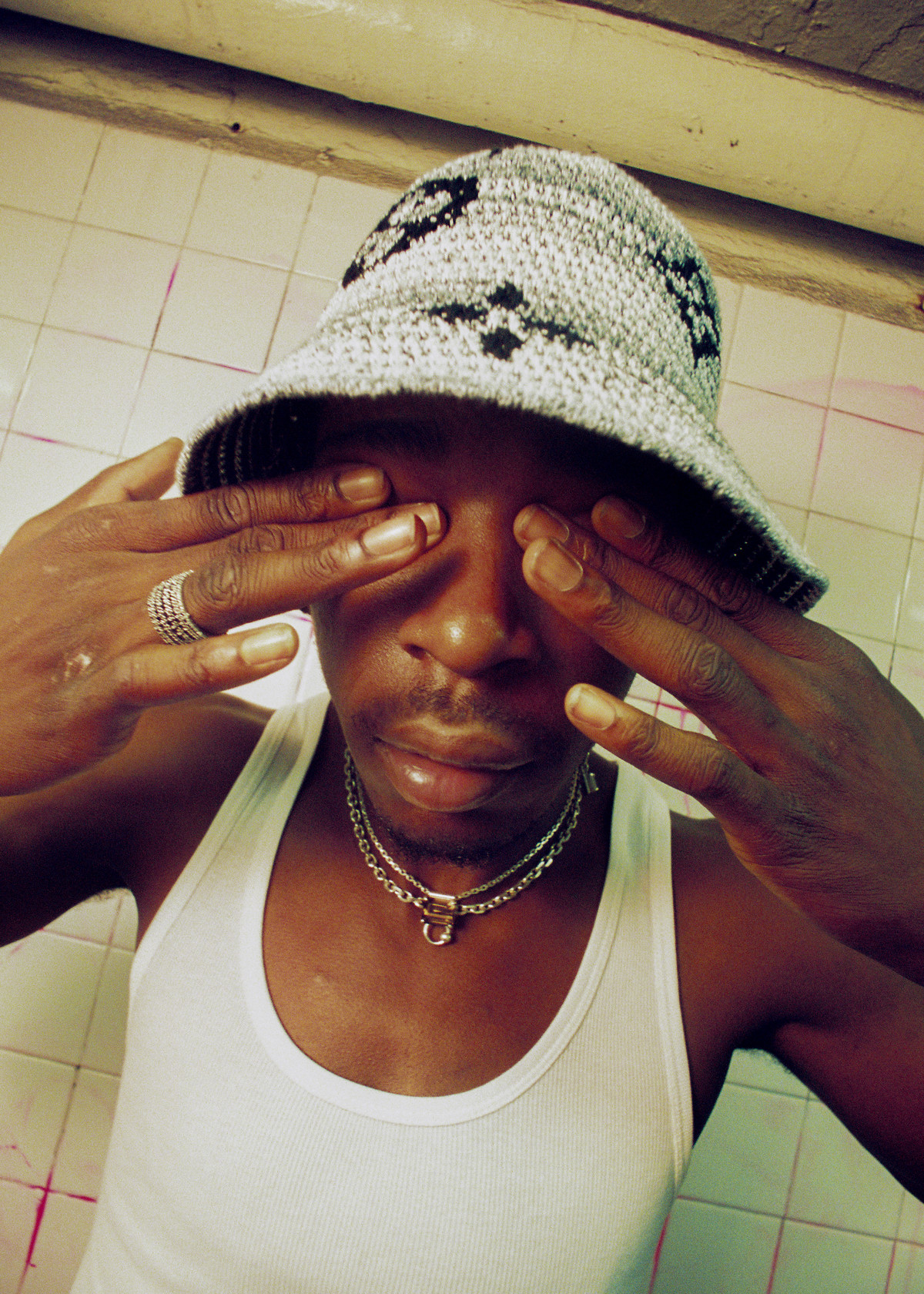
Jacket, pants, and hat LOUIS VUITTON, necklaces L. JARDIM, ring BERNARD JAMES, shoes DC.
Your background is from both Jamaica and the Bronx. How do you think you'll impact the skating world? Plus, with what you've already done, how does it differ from other skaters?
Jamaica is a very beautiful but corrupt place. Skate culture isn't really accepted. It's not even really popular right now. We just got a Skateboard Federation. So, it's like people just skate for the country now. If you're like good enough, or if you're accepted, and you get inducted into the US or the Jamaica skate team. I already have one of my peers already doing it, his name is Lucien Clarke. He was one of the first skateboarders to get a shoe with Louis Vuitton. He set the bar so high for himself. We kinda can't go further than what we've already done because what he's done is what people said that nobody could do and now, he's done that. Now he's on to bigger and better.
I think it's important to have different people from different backgrounds because I mean, on a mainstream level, a lot of skaters that are promoted are white. So that needs to be ruptured a little.
Tell me about it. Say it again for the people. They need to include a lot more melanated skin in the industry. Especially, in terms of what the ideal golden child looks like. Like, so many kids that I know have way more credibility, way more swag, way more style to them but have just been shunned you know? Just because they'd rather take a chance on a clouded up white kid. Nobody wants to say it but I will.
Definitely.
And it's the truth. It's alright to say the truth in life, because I didn't even think I would get an opportunity like this and now I'm doing it. So imagine if I could keep my mouth shut. I need to make sure that everybody who can relate to me or that can look up to me can support me, if they don't already.
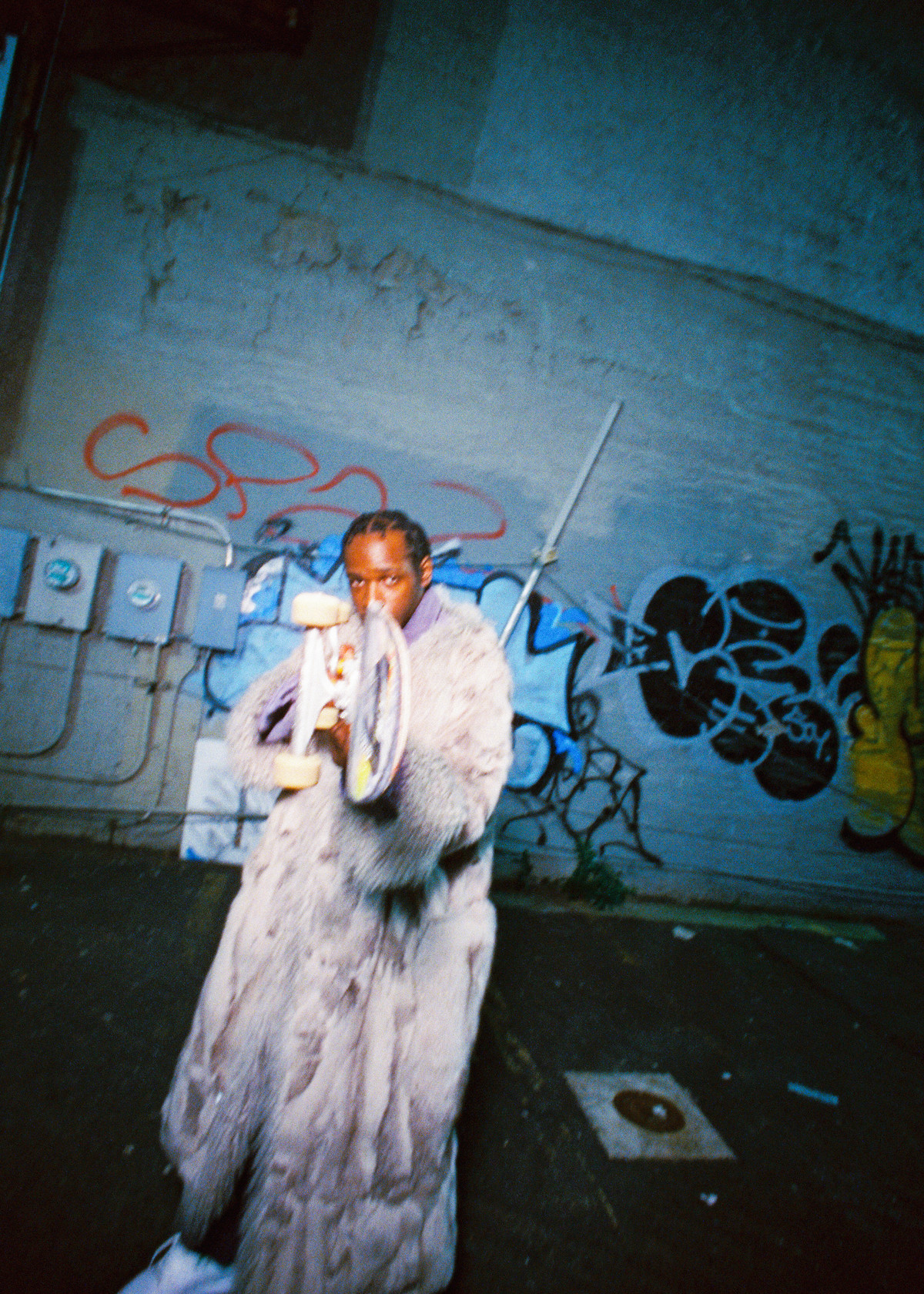
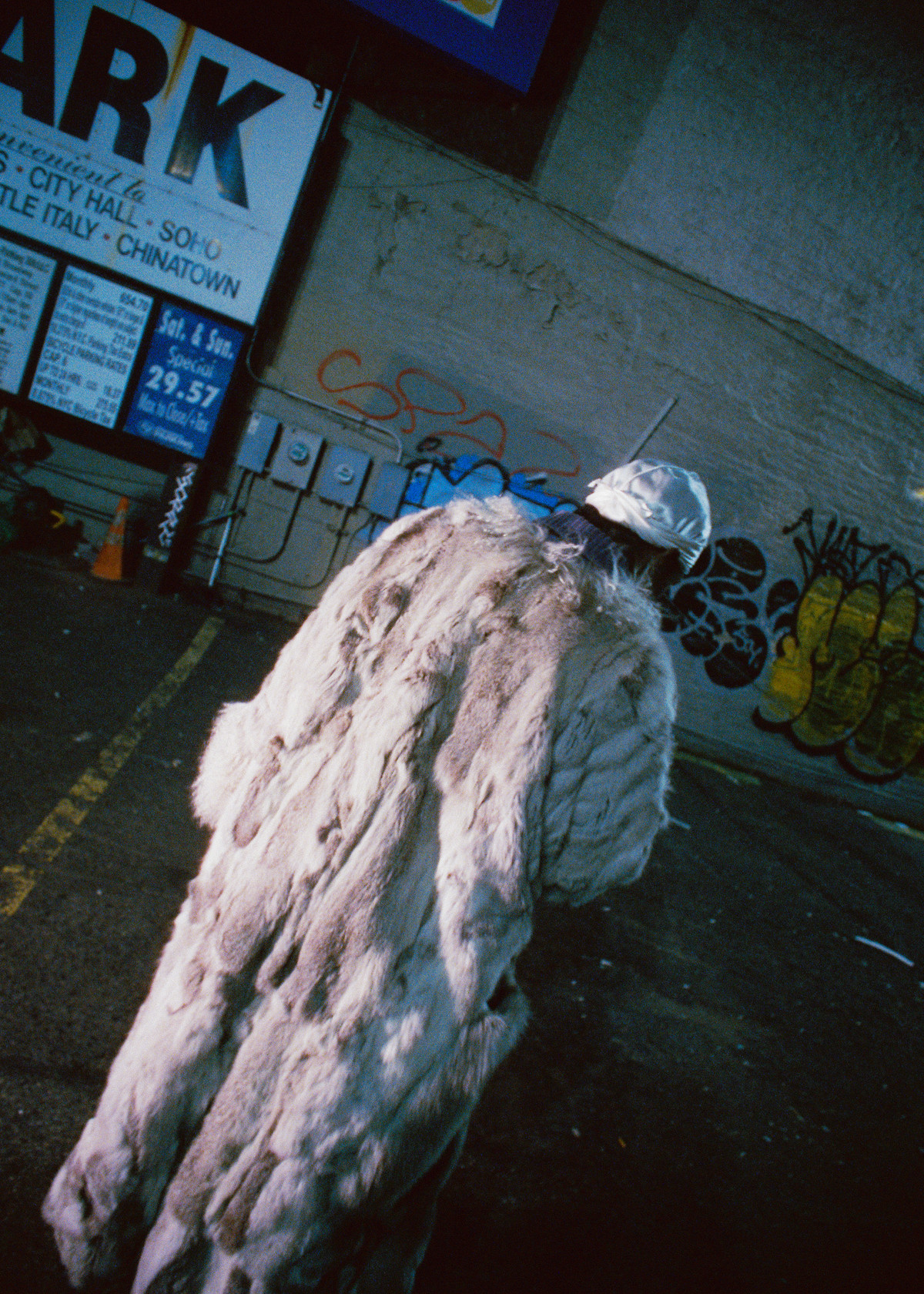
Shirt and pants OVERCOAT, coat ADRIENNE LANDAU, shoes DC.
It wasn't something I planned on asking but the pandemic, one of the biggest moments where they showed love to black and brown skaters. Do you feel companies have continued to show support or has it declined since then?
I feel like it was almost a publicity stunt because it happened during the pandemic. And then it was Black lives this and Black lives that. It's back to normal almost. It's like hard to speak on it because I don't really know and I'm not, I'm not fully in the industry. I can only give my opinion on it, you know what I mean? But yeah, I do feel like that. It made a drastic change where it was promoted on television amongst everybody. And then after the pandemic finished, now everybody's back outside. Nobody has anything to sit in the house and think about.
It's as if we took the physical masks off, but there's still a mental and psychological one.
The pandemic literally shifted the whole world's demographic in terms of how they view everything. And it took a series of sicknesses and deaths for everybody to realize that people need to work with each other as a collective.
That's a good segway. When it comes to your own brand, what do you want to do with Olyympian?
Olyympian is a skater street brand, as it's not high-end fashion. It's gonna be affordable for sure. But I would potentially move into a designer brand. If I want to indulge in more and more textiles and design aside then I'll do that but I want it to be affordable design. You are paying for the name, but you're also paying for the love. You're not paying for it because you see everybody else has it and those who might be doing better than you. It's mainly on how much swag you got. If you don't got no swag, don't put my clothes on as there's people with no swag putting on such expensive clothes, and still looking stupid.
Have there been any scary moments for tricks that you were trying to get down?
So to approach a trick that you've never tried before, you got to bring yourself enough mental and physical confidence to try the trick one time, only one time. The first time you ever try the trick will be the scariest time compared to any other time. It's scary because you haven't tried it yet. You're nervous, your nervous system is on edge. Your body is uncomfortable. You're forcing yourself to try something new. So, you gotta bring yourself enough confidence. If you get hurt on that first try you might not ever try that trick again. But if you really want that trick, and your mental intuition is telling you, "I need this trick and I will do this trick." You're not going to stop until you do that trick regardless on what the repercussions are. Whether you get hurt, whether you break your arm, whether you scratch your body up when you break a board— that's just what comes with skateboarding. That's why I said it's all mental.
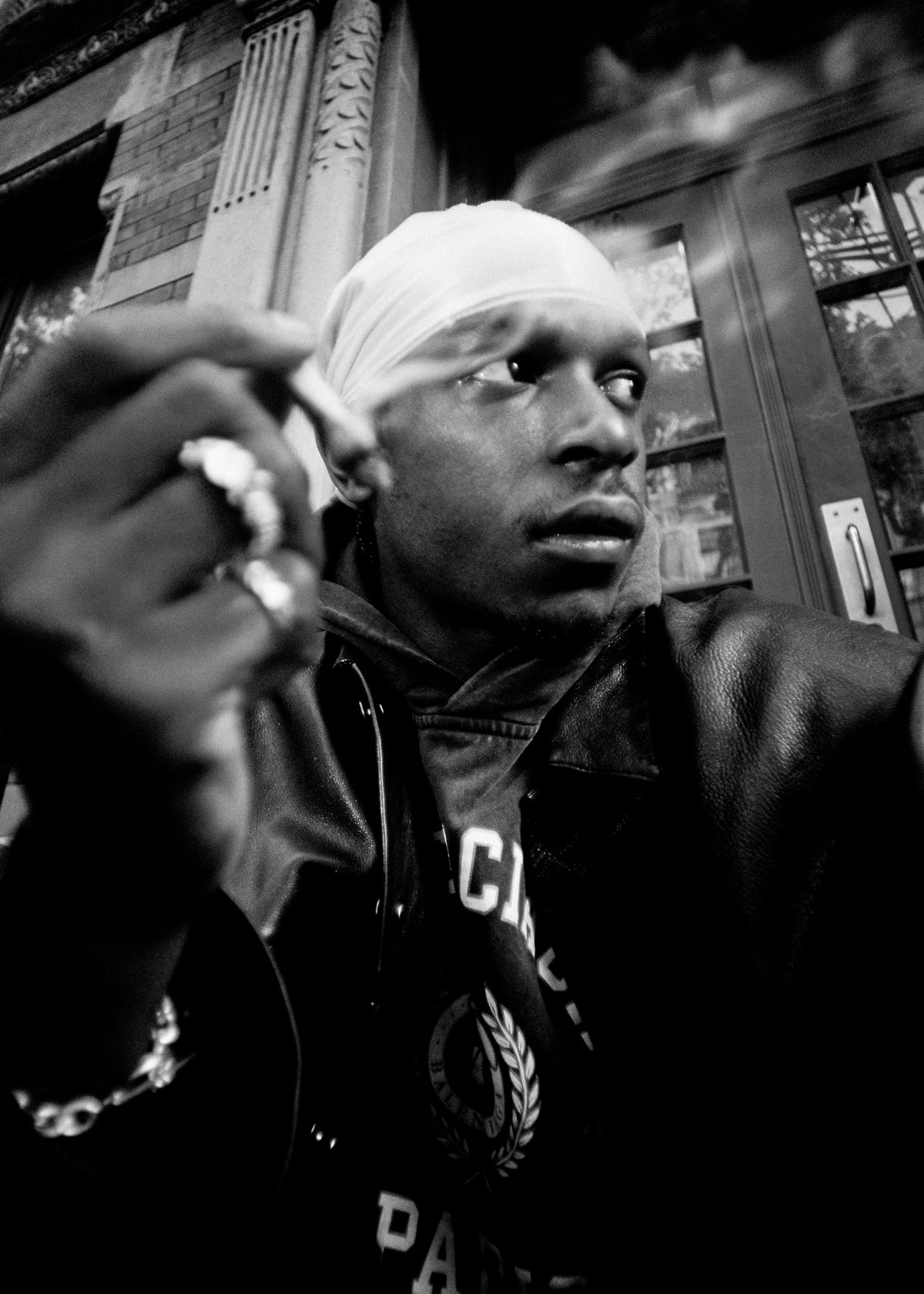
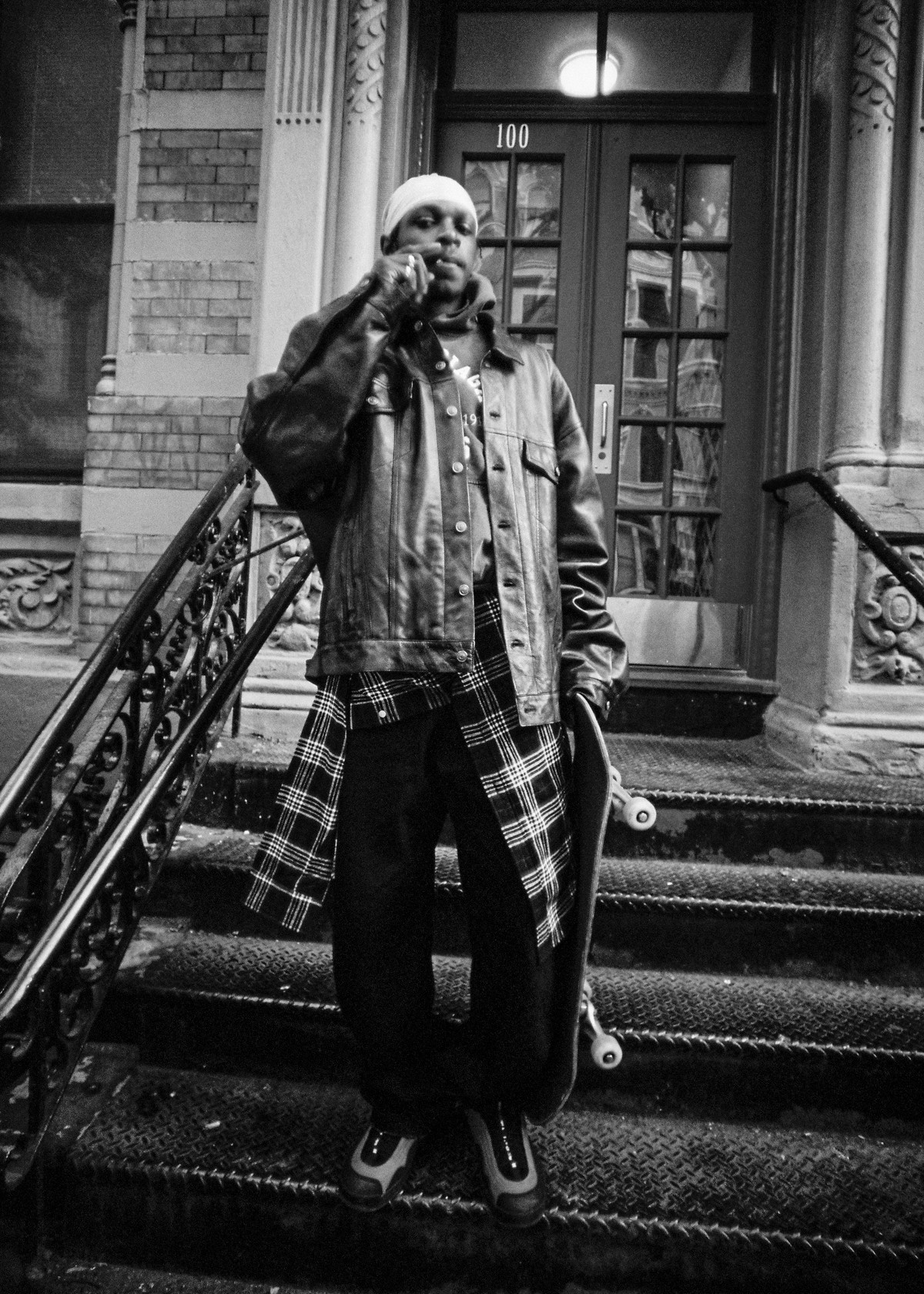
Jacket, sweatshirt, pants and shirt BALENCIAGA, bracelet L. JARDIM, rings BERNARD JAMES, shoes DC.
That's good for people to know, because a lot of people, may back out a bit just because of the fear of consequences.
Yeah. People don't attempt it because they're scared of failure, and they don't want to fall. They don't like how it feels to fail or fail hard for the first time. Everybody who's met me— they appreciate my work ethic. I had to develop this work ethic. Like, I wasn't born with it, you got to develop it. I've done a number of things where I've had to trial and error myself until I felt that I was where I wanted to be and I'm still not where I want to be. You literally just have to say what you want and do what you want until it's in front of you.
How do you avoid compromising your own authenticity?
Don't ever let somebody try to mold you into how you know you look. There's been a number of situations where I've dealt with and, people would want me to act a certain way or follow this code. If you can't be yourself when you're by yourself, how are you going to be yourself in front of a million people?