AM— When you’re touring, what's one thing you need to do everyday to feel normal?
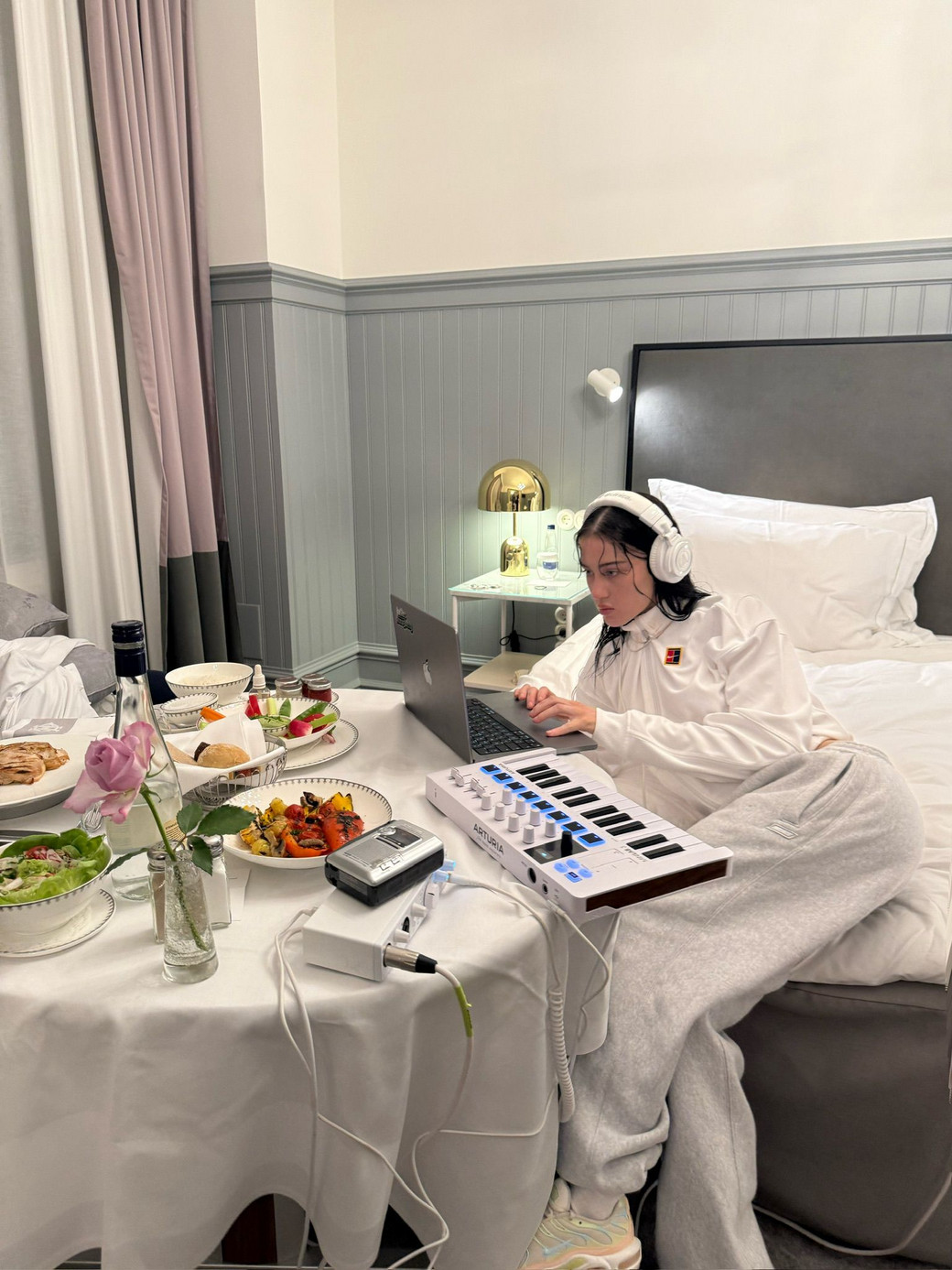
T— Eating healthy, eating well, not eating shit.
AM— Do you have a favorite venue you played on this tour?
M— I loved the show at Night Club 101.
AM— Yeah I felt like the crowd was really excited at 101.
C— I think we're still learning how to play for people who really like our music.
We were a local band for so long, so we would play for our homies, all the time… and that's great, there's nothing wrong with that, but it's…
T— That's easy mode.
C— It’s easier and it's also just different. We have a relationship with those people outside of the band. Now when we play these shows, we've never met a lot of these people… but they know all the songs. It's just interesting.
AM– How has the Atlanta DIY scene changed since you started making music together?
C— When we started playing there was a bigger network of bigger DIY venues throughout the US. These places could fit like 200-300 people.
Now a lot of the remaining DIY spaces are pretty small… 100-150 people. So when we started playing, you could see pretty big bands play at these DIY places.
T— And it would be a big deal too.
C— So that definitely changed by the time that we started touring. And I mean, it was kind of set in motion after this place, the Ghost Ship, in California caught on fire. People died. A lot of DIY venues have disappeared. If you want to tour across the country you need to pay for 300 capacity rooms through these corporate venues unless you’re just doing generator shows. I hope more DIY venues come back in a way that’s sustainable. That circuit generated a lot of creative music because there was a crowd for those venues in the DIY scene. You had those people in mind when you were making your music.
M— We're really lucky to be from Atlanta. So much of the culture is creating a space for yourself that you wanna play with. It’s very inherent to our upbringing and experience in music, and also why we get kind of jolted when people aren't giving that back to us. But it’s a good challenge to try to cultivate it in the younger fans who didn’t have the privilege of growing up in such an intense underground scene like we did. We need more venues that aren't corporate and more real life ticket buyers that aren’t scalpers.
C— Oh my god this is a message scalpers. Honestly, scalpers beware - if we catch you it's over. There are bot scalpers that buy tickets for shows and we're not famous. It's crazy.
AM— What does DIY culture mean to you?
C— It’s one of the only accessible spaces for underground intellect. Music helps because it makes these places open to everyone - you don't have to engage only in the terms of academia. A lot of people know something is wrong with the world and they wanna change it, but they’re not necessarily coming into that with a dense political education or the language used in universities. Music helps bridge that gap.
M— Making music is contextualized by the shows, the interactions with the crowds, and the spaces that we're playing in. We want to write music to fit into the performance, it’s a loop. If there are no DIY venues and people are only imagining playing in these corporate venues then the music is gonna be a feedback loop of that vibe. It's not gonna be original.
T— It's cool for us to be getting going like this, but to be used to DIY spaces. We’re able to not think about it too hard and just make some cool shit. And it's not like we're just making weird stuff - we're making music to have people dance along, sing along to. But we have that combination of being experimental and also wanting to connect with people. I feel like there’s a bigger conversation to be had about how Americans think in general. We’re all brainwashed to wait for acceptance or to be allowed to do something. When you're at a big corporate venue, you can look into the crowd and see that people are awkward and scared to dance because they're waiting for someone to tell them they can.
AM— What is your ethos?
T— When we talk about wanting to be a rock band, I feel like the spirit of rock and roll is to be bold as fuck about doing what you feel like is actually right and not waiting for permission, not waiting for some big corporate guy to co-sign you.
C— We don’t need to be co-signed.
T— Yeah, we don't need that for the future of us. That’s something we're really trying to remember, and hold.
M— Yeah that spirit. We definitely want to grow as a band, but keeping the spirit of DIY is a practice in our music and how we create together.