The Modern Muse


Stay informed on our latest news!


Like the caterpillar cajoling Alice with his smoke rings and nonsense verse, Derek DelGaudio weaves a small wonderland of circular stories that are part Donnie Darko dreamscape, part personal family drama — the various interlocking narratives sprinkled with current political tropes rooted in identity. I AM…. listening.
The show is a slow-burning meta seduction that self-consciously defies genre — at one point, you realize this isn’t really theatre, isn’t really performance art, isn’t really a magic show: but is all of these at the same time, and none of them whatsoever. It is intended to become more interesting after the show itself occurs (the finale would leave even the most stalwart skeptic full of childlike wonder — DelGaudio personally interacts with every member of the audience, if they so choose, in a way that leaves the mind reeling).


A giant book leaves the stage with a voluntary audience member, where they must write the next night’s ending — the contents of the book stemming to the very first show. A gold brick is (spoiler alert) buried under a house of cards, DelGaudio asks for cross streets from the audience, and vanishes the brick to that location in the city (a detail I was made aware of from my friend who had been to the show before, and who, along with a gaggle of audience members, had gone to the cross streets after the show to find the gold brick, which he of course took home with him).
The idea is that the show keeps going after the curtain falls, IRL. Nevermind that DelGaudio is recognized as the greatest living slight-of-hand magician — he has tapped into the basic premise of the chore of an illusionist: to make the audience question the very fabric of their reality. DelGaudio has attempted to take that a few layers further — could he have done more? could it have been more cohesive? Sure. But what he’s created is a delightfully modern mindfuck — brilliant for its off-kilter blend of magic trick with high concept. I AM…. still wrapping my mind around it.
'In & Of Itself' is now playing at the Daryl Roth Theatre.

It's true that we take our online selves too seriously, maybe even causing the line between real and online to blur. It is a phenomenon that can be hard to grasp due to it's intangibilty, yet one Matthew Frost manages to make painstakingly clear in "Boomerang." After attempting to delete her Instagram, Jen (played by Mackenzie Davis) gets a very real shock. In an almost Black Mirror-esque fashion, virtual personalties like Rebecca Dayan are unsuspectingly plopped into her apartment showing us that you really cannot just up and quit social media and that even if you try, it will literally show up at your doorstep.
But thank God the film has shown up at Primo's, because as the credits begin to roll, Frost yells to the crowd of smiling guests, "You're all guilty!" and we realize the film may contain a message we all needed to hear. Read on to learn why.


How does it feel to be presenting this project for the first time?
Matthew Frost Well you work on something for a while, this clocks in at just under nine minutes, but if you do it right it's still a lot of time spent and you require a lot of help. It’s a collaborative effort that extends way beyond the shooting. There's post production and all these different stages you have to go through just like a longer feature. So it's really nice to share it. First online then through a couple screenings here and there just so you can bring some friends.
So this is not your only screening?
MF So I had a screening in LA, now in NY and maybe one in Paris in a couple weeks. Just wherever I’m able to be.
Is your whole team here?
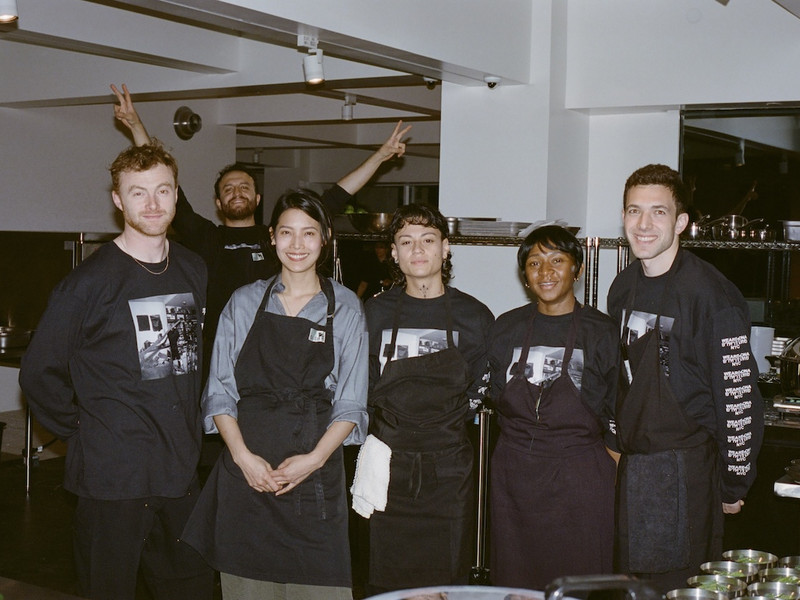
MF No. I have an actor here, Rebecca Dayan, who plays the French Girl and a couple people who worked on it in post, but it's just really nice to see it with an audience. You watch it on your own so many times.
BOOMERANG from Matthew Frost on Vimeo.
It’s nice to have a different set of eyes.
MF Yeah, different eyes. This is also the right audience to watch it with — a lot of followers in the room!
I liked your comment at the end when you were like, “You’re all guilty!” Cause it’s so true.
MF It’s nice for a lot of my “influencer” friends, especially in New York, to have a little laugh about the whole thing. It can all get pretty ridiculous and very relatable.
What is the power of satire to address an issue like this?
MF I’ve always gravitated towards satire. It’s the best way to have fun while making a point and talking shit! It’s the best observational tool you can have and the subject matter is still ripe for humor. There’s also a bit of a “Black Mirror” satire in there too.
We can't take ourselves too seriously.
MF Right. “Boomerang” isn’t trying to be preachy, just having a bit of fun.


What advice would you give to a young filmmaker who wants to create something like this, but may not have as many resources?
MF Well I think it’s just about making a film. Whether it’s one minute, thirty seconds or a documentary, there's really no excuse not to create something inexpensively today. The equipment is cheaper, you don't need a lot. Beyond that, there’s also a lot more opportunities for everyone. I feel like different voices are being heard and that’s extremely positive. You just gotta do stuff even if you feel like it's a bad idea halfway through! You’ll learn a lot by seeing something through.
Is this your first transition from fashion to cinema?
MF Cinema! Film coming soon! Not my first narrative though, I do a lot of shorts that make fun of the thing that I work in whether it’s fashion or advertising (see Fashion Film, Aspirational).
So social media is what you're satirizing but it's also a means to create what you have.
MF Yes, sure. There's a meta thing about it that I’m just drawn to. Like the *Influencer Workshop* I had tonight where people could write their name on a placement card and then take a picture of a fancy table setting as if they got invited to a *sponsored free luxury brand influencer dinner* of their own!

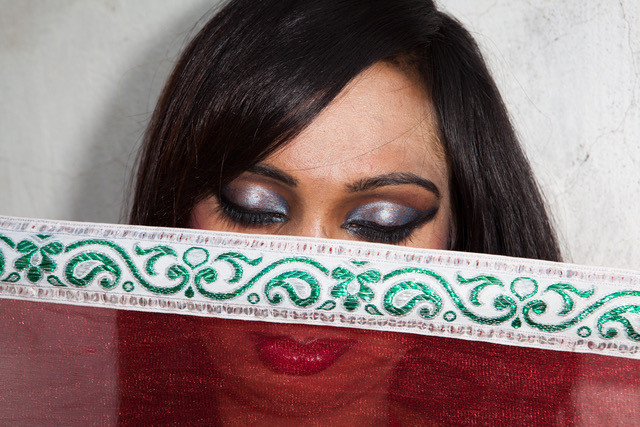
Printed in New Delhi, the 432-page explosion of vibrant imagery is the result of ten years worth of trips to India by Sethi who is American by birth, Indian by heritage. Though there is no set theme, the book touches upon gender, technology (lots of face swapping in there) and creeping westernization (you can spot some incredible rhinestoned bootleg gear imitating brands like Louis Vuitton and Nike). The book's title is the name of a traditional Indian dish, which has various spellings and ever-changing recipes, yet is a staple throughout the country. Similarly, Nick's work in the region reflects the tension between tradition and the threat of constant change.
Read our interview with Nick below, and check out some visuals from the photobook.


Where are you from? What was your upbringing like?
I was born in Maryland, and grew up in Florida. I was always into punk and hardcore, and spent most of my time at shows or touring with bands. When I was 17, I moved to India for a year before moving to NY, where I’ve lived since then.
When were you first intrigued by India?
I’ve been going to India since I was young, but as a kid I never really liked it. Between leaving my friends for weeks, getting sick, and having to make up school, I never understood why I was going. That being said, I think I was always intrigued by it because much of the work I do now stems from things I remember seeing when I was young. When I lived there at 17, I started photographing to try and connect with the country and people (since we didn’t speak the same language). It was then that I really started feeling a connection and need to explore the country. Now I feel so grateful to have those early experiences since I think they really influenced what the project became.


Tell me more about when you first started connecting with India via photography.
The first time I went specifically to photograph was in 2011. The trip was amazing, and it really set the tone for the whole project. Soon after I landed, I met a 6-year old kid named Bobicol who lived on the street with his family. He loved getting his photo taken, and we started hanging out every day taking pictures together. He didn’t speak any English, and I didn’t speak Hindi, so we just relied on physically showing each other stuff to communicate. Working with him really opened me up to this serendipitous way of working; just going out with a camera an open mind and seeing what happens. I’m happy to say that he’s 13 now, and I still see him and we make work together every time I go back to New Delhi!
What else continues to draw you in?
It's really the most interesting place on Earth to me. Every time I think I start to understand something about India, one million new things come into play, making it more confusing and more exciting. Its rich and complex history makes it so things can support and negate each other at the same time, which I find really interesting. Plus it's just insanely vibrant on both a visual as well as a cultural level.


Tell me about working for Terry Richardson. How did that come about?
When I first moved to NY, I didn’t know much about photography, and was working at Vice. Through looking at the magazine, I made a list of people I wanted to work for, with Terry being at the top. I didn’t really know about studios, and first and second assistants, etc… and just decided to email people cold. Eventually a friend put me in touch with his studio manager, and it was the right place right time for both of us, so I started working there the week after.
What was the experience like?
It was great. He and his whole crew always treated me well. At this point, he was shooting mainly huge fashion campaigns, not really any personal work. So I got to travel the world and be part of a very small crew doing huge shoots. Working on the Lady Gaga book with him was definitely a highlight, since we got to tour with her for a few months.


How long have you been working on your new book Khichdi (Kitchari)?
The first images in it were shot in 2007. So unknowingly, I’ve been working on it 10 years. 2011 is when I first started seeing it as a project, and eventually started taking more and more trips there. Every time I came back from a trip to India, I thought I had enough material. But when I started to edit, I knew I was missing things, so I decided to go back one more time. This happened like six times haha.
What were your goals with it?
Honestly, I never really set out with any specific goals. There were definitely subjects I wanted to explore, but other than that, I wanted to let the project kind of build itself. It's been a decade of growth (for the country, me, technology, westernization, culture, etc.), and I wanted to let those things inspire and guide where the project went. Also, from my personal experience, India works best when I don’t try to control the situation too much. I tried to work this feeling into the book as well, both in the layout and production. I collaborated with my friend Brian Paul Lamotte on the design, and we both travelled to India to print it. By working with a local printer, it came out far different from our original idea, but only in the best way. I’m really proud of the physical book as an authentic and special object!


There were so many items displayed at Dashwood and Vitsoe. How did you get it all back to the States? What was the idea behind the curation and all of the items chosen to be displayed?
It all started with these different objects I’ve been collecting and making since I’ve been traveling there, some for myself and some as reference. Obviously I love taking photos there, but sometimes I came across objects with a certain feel or smell or texture that couldn’t be duplicated in a picture. As Brian and I started working on the design of the book, I started showing him these objects. As we spent more and more time in India, we came up with the idea to make a special edition box that included a variety of things sourced and produced in India. So in the six weeks we spent printing the book, we recreated my collection in an edition of 20 boxes that all include shirts, stickers, zines and books, prints, etc. We chose to display them at Vitsoe and Dashwood in different states of completion, giving the viewer a look at the physical boxes, as well as a sampling of the objects inside.