"MY SHADOW"


OFFICE — Leader references club music from the Philippines, Thailand, Indonesia… Have you partied in each of those places?
OMEGA SAPIEN — I wish, bro. I had to wrap up my traveling in December. I just went to Thailand to hang out. To be honest, I don’t really like clubbing anymore.
You made a whole club album and you don’t like clubbing?
I started Leader about a year and a half ago, and I was still clubbing and going out every week. But ever since I got my crib, I’m much more stabilized. I’m staying home. I’m unc-maxxing. Going outside is lowkey annoying. But if there are good parties, I’ll pull up for sure. Maybe it’ll reignite my party life.
You called the album a “fried rice moment.” Did you plan to have this be a sort of multi-ethnic Asian electronic album?
I always do something Asian because I’m an Asian living in Asia. But initially, I really wanted to make brain rot music, because I think we’re all fried at this point. I’m super addicted to short-form videos. And I mostly get introduced to new music through TikTok. It’s easy for musicians to get stuck on a song for a month — they’ll be like, “I have to get the hi-hats perfect,” or whatever. But I always tell people, “You’re thinking too deep. 85% of the time, your songs are going to be played through an iPhone speaker.” And I wanted to make something specific for that.
As I got into it, I learned that budots and a lot of Southeast Asian dance music are incorporated into the short form scene. So while some people won’t be able to pinpoint exact references, they’ll be able to recognize the sounds from TikTok. And it’s such a great fit because I wanted to make short form-focused brain rot music. And I’d get introduced to other genres in Southeast Asia that are also big on short form, so it’s all aligning. I love visiting, too, so I wanted to explore the sound.
I immediately clocked the “Emergency” budots remix by DJ Love. Did you guys ever collab?
Yeah, I did get the DJ Love collab. I think the world is getting inspired by the genre. DJ Love started this in Davao City, when he was the manager of this internet cafe, so he had a lot of time in front of his computer and shit, so he just downloaded FL Studios and created the genre. I have a lot of respect for him. I heard his Boiler Room set and I definitely fell in love. I’m always looking for something exciting and the sound really resonated with me.
Against my parents’ wishes, it’s been a big year to be a party Asian. DJ Love, Charli…
Everything is possible.

You had a lot of Buddhist imagery in the “Krapow” music video—
Like this? [Omega pans his camera up to a massive portrait of Buddha hung above his bed].
Exactly. Do you think that stepping away from the party scene had anything to do with discovering Buddhism?
I wish it was as cool as that, but I got into Buddhism maybe three, four years ago. I was very intrigued by the depth — I guess that exists in all religions, but I just liked Buddhism, and I looked into it and there’s a lot of knowledge that they discovered way before math and science. And now we’re finding lots of similarities with Buddhist teachings and quantum mechanics. I think they were onto something — some new technology that we have no idea how to do. They were tapped into that spiritual energy. Now, we’re more tapped into physical energy, like math and building cars. But it’s just so fascinating. Looking into those things makes me believe magic is real. But it’s not related to the club. Because even when I was clubbing every week, I was still rocking with Buddha.
That also makes sense. When people talk about raving, it sounds like a spiritual experience.
Raving is a really beautiful thing. I think it’s the most peaceful activity that you can do. The thing people do to God — looking up to it, worshipping it — as a culture, we worship work and being punctual and being effective and useful, but we should leave that to machines. And if you’re raving, you’re doing this thing that’s outside the idea of optimal efficiency. They’re like, “Oh, bro, you’re wasting time.” And I think that’s a really crazy way to look at a living, human being. So in that sense, raving is beautiful, because it’s the most inefficient thing you can do in capitalism. Because people are just there to share the music and vibe. They’re just there to go into the same realm. And that’s one of the most beautiful things you can do.
I think religion and partying have so much in common.
All religion has something that revolves around music. They got Gregorian chanting, Buddhist chanting, Quran recitation, which is almost like singing. There’s something with a musical vibration and spiritual energy that all these religions are talking about. If you play a certain tone, it’s almost universal — a minor chard makes you feel sad, a major chord makes you feel a different way. Music is so widespread — it’s really proof of magic.
And it’s always surrounding a collective experience. In the way that people go to the club to have a collective experience, they’re going to church and temple to experience something with the people that are also there.
Type deal.

You call yourself an Asian prince — is there a difference between an Asian prince and K-pop idol?
Definitely. I think K-pop idol is a sub-genre of Asian prince. I think there are many archetypes of Asian princes. But K-pop idols really are like princes because they’re so popular and have so much charisma. When they’re walking by, guards cover them with umbrellas so people can’t get photos. They’re almost like mystic figures. It’s so cool that a human can be that.
Was it ever like that for you?
Oh, nothing close to that. I mean, I get some friendly people being like, “I like your music,” and that gives me a level of satisfaction, like “Yeah, I’m an Asian prince.” It just struck with me. There’s this Korean actor named Jang Geun-seok, and he was one of the first actors who infiltrated Japan, because before this global K-pop movement, the first country we exported our culture to was Japan, and Jang Geun-seok was one of them in there. And he made it really big and bought buildings in Japan. He always claimed himself as an Asian prince. And I think it was 50% a joke, but it felt like he really believed it, because it’s quite a bold thing to do — to be a 30 year old dude calling yourself an Asian prince. So when I was young, it stuck with me. And now I’m around his age, so I guess I’m following in his footsteps.
And it’s more international and covering more of the continent — which I think your album is doing.
The release of the album was very interesting, too. Because I didn’t know about this, but there was some Twitter beef with Southeast Asian and Korean people. I don’t really know the specifics of that, but when my album dropped and the internet saw a Korean dude exploring sounds of Southeast Asian dance music, I think it was quite healing, at least for me. Because once you visit a country and really get to know the culture and people, your vision gets so big. At the end of the day, we’re just living here. I Not just in Asia, but globally. We have so many more similarities than differences. And I think your really feel that when you actually go to a place.

This is your first solo album in three years. Have you noticed a difference between your solo work and your stuff with Balming Tiger?
Definitely. I love to work in teams. And I need support from the team. But sometimes, I’m not very punctual. So in that sense, it was really hard to start my own thing, because now I just gotta take care of everything. That was the biggest hurdle — to jump over my laziness. When I started out, the inspiration would come, and I’d just spiral sending texts to people. I’d fill up my schedule so I had no choice but to execute it. But working with a team is good because there are a lot of opinions. Over the course of these years, I’ve learned that sometimes your ideas are not the best. It’s easy to think that they are, so it’s hard to drop that and go with other people’s ideas, but it’s a cool thing to learn. When producers give me their opinions, I’m just grateful they’re willing to work with me. So I’m like, “Ok, bro. Let’s go with your idea.” The album was a mixture of trying to initiate something by myself while still letting other opinions into the project.
The name of the album is Leader — did that come leading Balming Tiger?
I really don’t think I’m the leader. I’m more the person who needs help the most. So I’m far from a leader. I just love making bold statements about myself. I think it’s funny. It carries a lot of big energy — just like, “leader” or “Asian prince.” The statement is so bold that it has a humorous tone to it. And there’s an interesting balance between a really huge statement that’s also not that serious at the same time.
I came to the name Leader when the inspiration for the project first came to me. At first, Leader was a fake name, a placeholder name, but a lot of times I feel like those are the best ones, because it’s the first instinct. And I really believe that Southeast Asian dance music is going to be very big, very soon. And it would be cool if people thought I was in on it. It would be cool if people think I’m cool.
Trying to be ahead of the curve and lead this musical moment is actually really strategic, because you’re gonna be gone by the end of the year. So to put the album out now in anticipation of the hype sets you up so that it doesn’t really feel like you took a hiatus.
That was actually a very accurate read.
How do you even plan an album release around being gone for a year?
You definitely go into a different mind space. There’s no room to say “Oh, I’ll just do another one next year.” It’s not like I release a lot of albums, but I should. I was imagining the 2028 landscape and I think Southeast Asian club music is gonna be the next big thing. It aligned with the brain rot music I wanted to make, it aligned with that love I have for Asia. I believe it’s going to be the future. Sometimes it just works out.
You’re making music to be ahead of the curve a year in the future.
I really loved this project because there were a lot of games I had to play.
Did you have fun making it?
It’s always fun to make a couple of tracks. But I think there’s a big difference between doing that and coming up with an entire project. There’s a lot of things you have to take into consideration because it has to have one cohesive theme. So my mind is fluctuating a lot — not in an emotional sense, but in the way that that I get intrigued by new ideas very easily. I have a very short but intense attention span. So to work on this for a year and keep it a cohesive theme was difficult for me. Besides that, it was a very joyous journey.
The music is fun. I hope you’re having fun.
I love doing interviews and talking about myself.
I love doing interviews and asking people about themselves.
Have fun in Ridgewood!
Have fun in the army!
See you in a year!
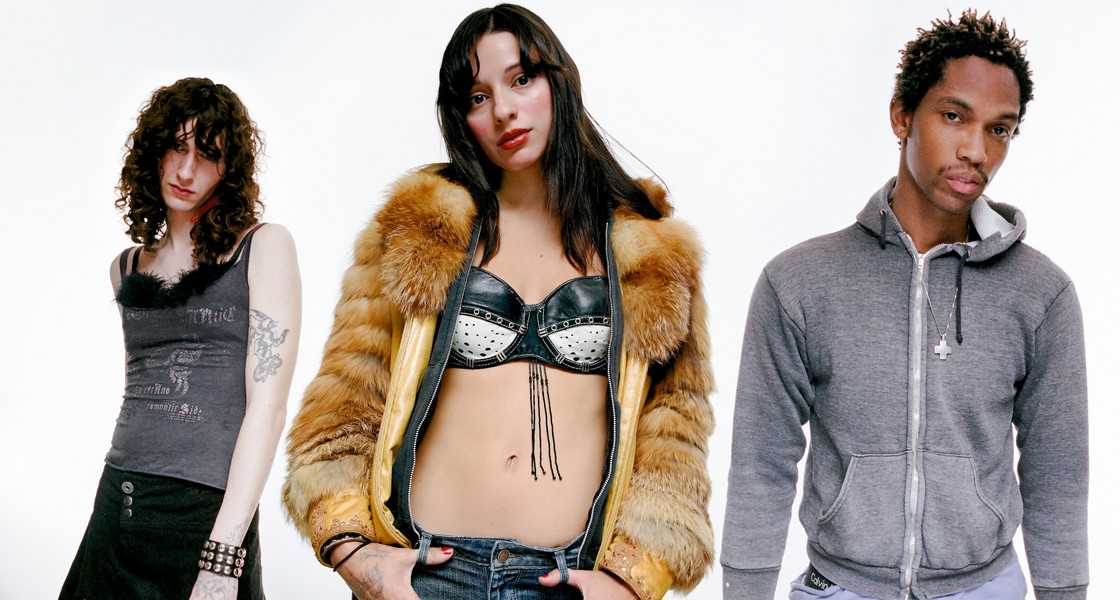
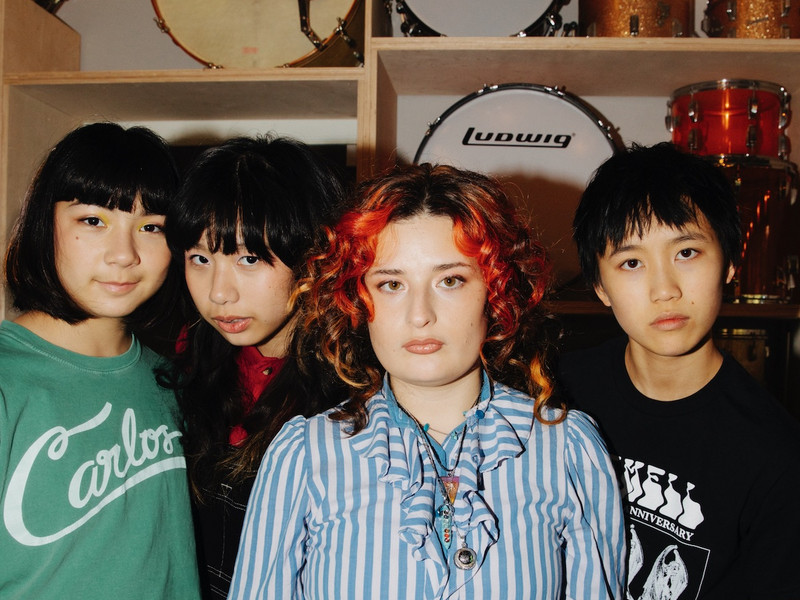
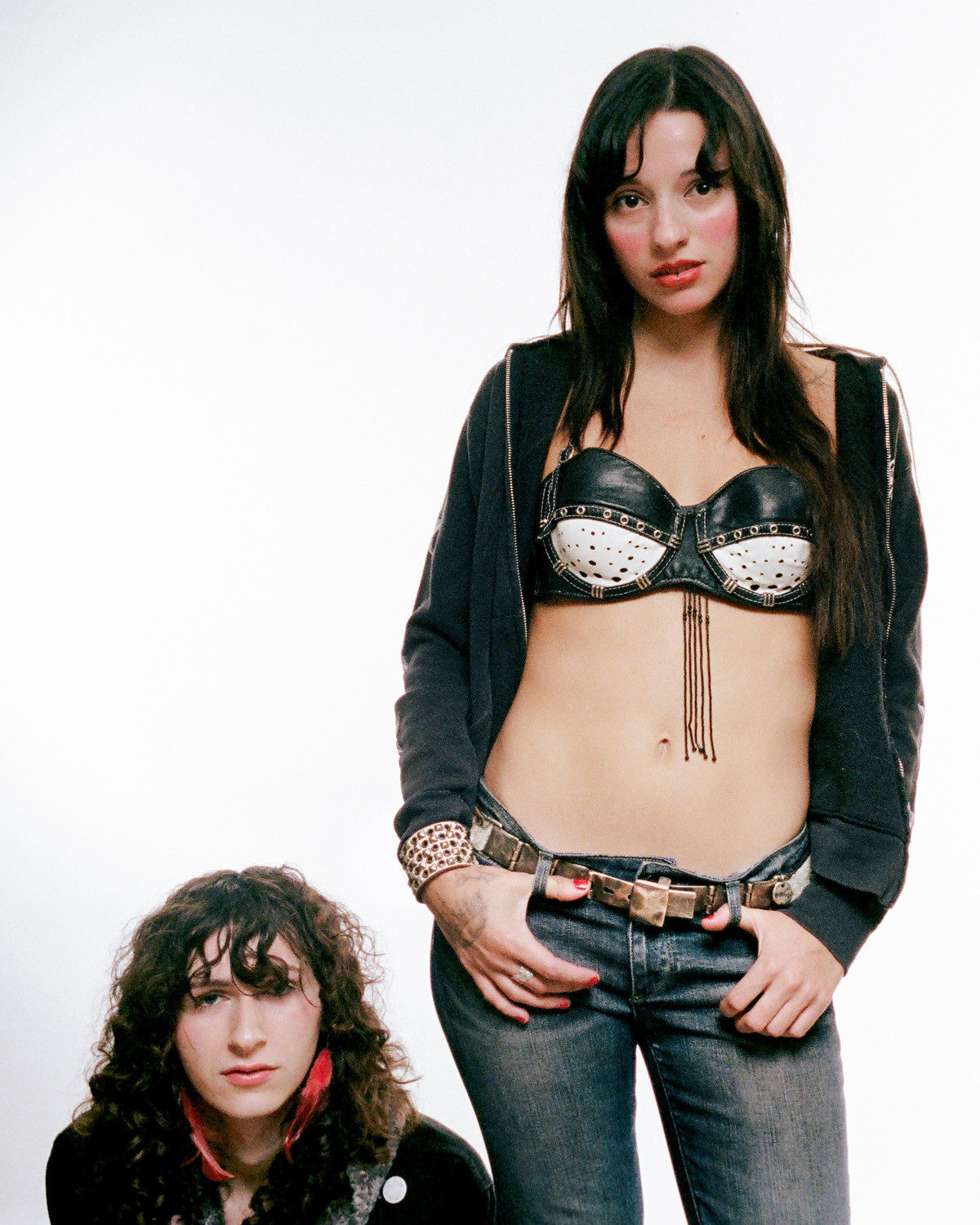
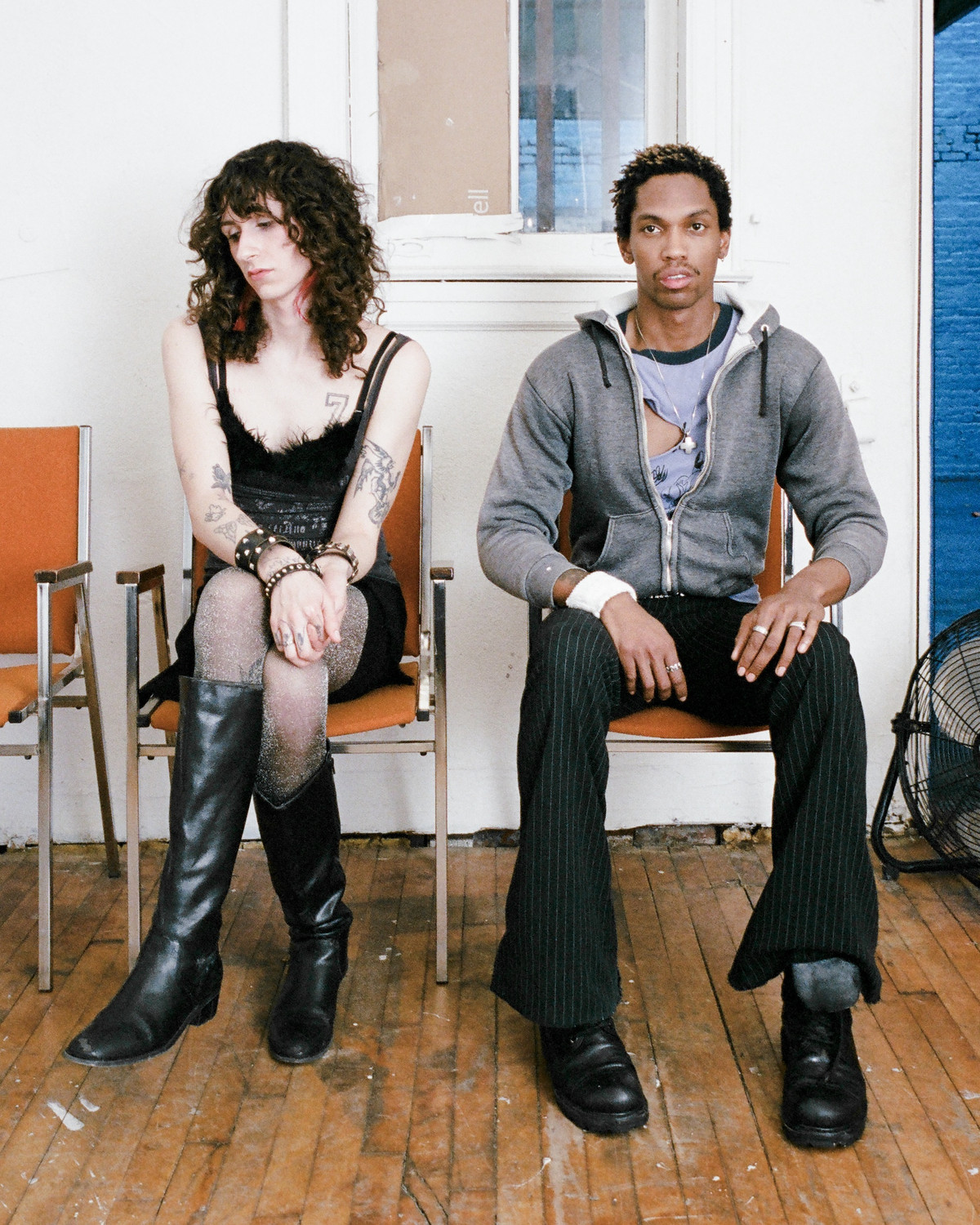
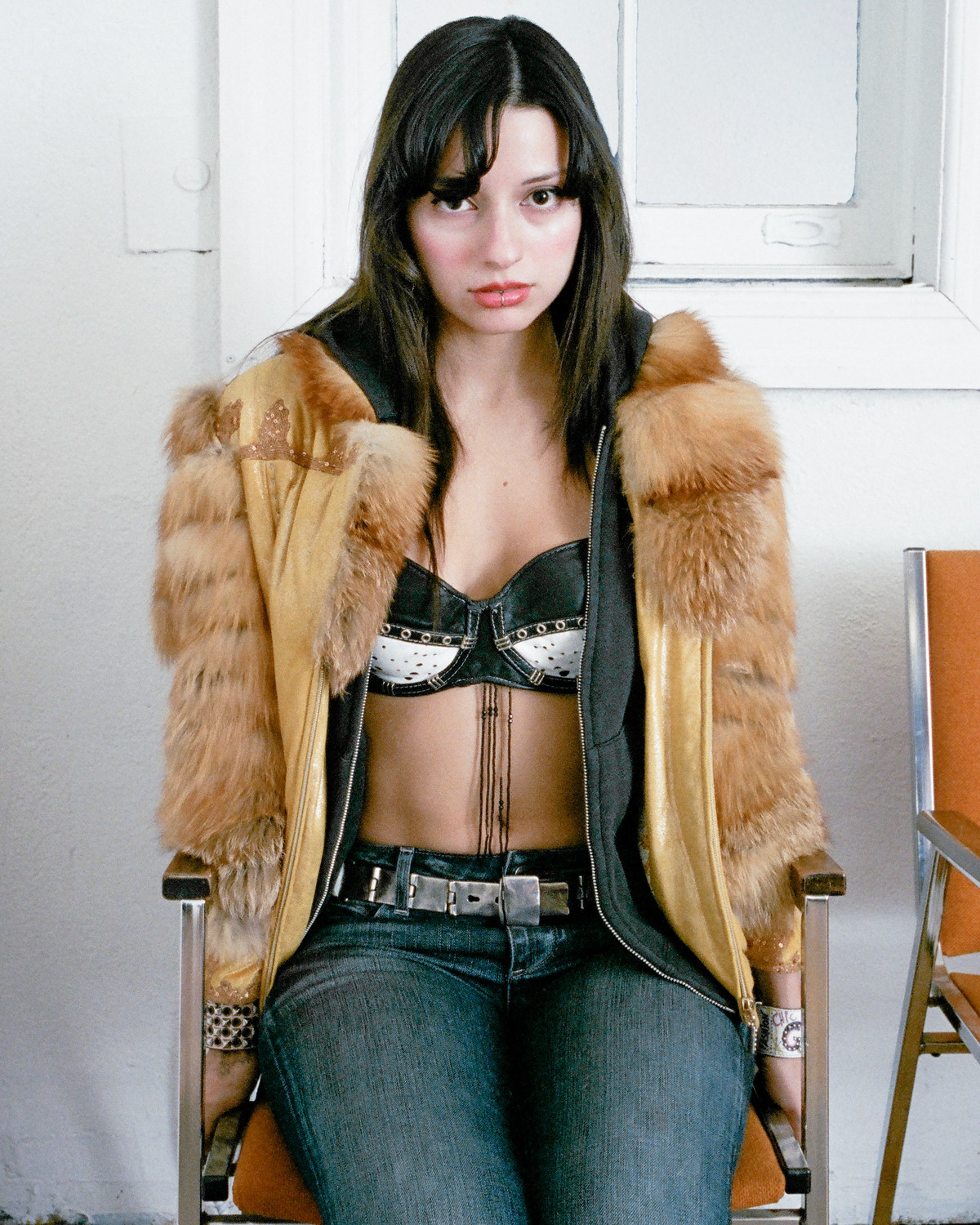
The rockstar still exists as an archetype - both ironically and sincerely - if you’re willing to confront the world directly. Sword II doesn’t shy away from that. Their heart is obvious, but more than anything, they’re impossible to look away from. Like their sound, the stage is shared evenly between three distinct frontmen. Your attention keeps shifting - and it should. Trying to fixate on one would feel like choosing the most beautiful carousel pony as a child. They all are. Individually, González, Arnold, and Zuko hold their own; together, they create something inundating. It’s gestalt. Sword II is expanding beyond a purely DIY framework, but they carry that origin with them. Their work understands that music is as much the sound as it is the listener. Trust is embedded in what they make. It’s music for me, for you, and for us.
Alice Mercy— What’s your name, where are you from, and what do you do in Sword II?
Mari— I'm Mari. I'm from Atlanta. Mostly I play bass and sing… and sometimes guitar.
Travis— I'm Travis. I’m from Atlanta. I play guitar and sing… and sometimes bass.
Certain— I’m Certain. I’m also from Atlanta. I play guitar and sing.
AM— Why did you name yourselves Sword II?
C— We wanted the name to just be Sword, but there was already a band called Sword.
AM— Where did you meet?
C— We met in the music scene. Me and Mari met 10 years ago at a house show in the suburbs at this kid’s basement.
M— It was a kid’s dad’s warehouse. He would throw crazy shows and there were never any adults there - it was just awesome. Then we met Trav around the same time in Atlanta.
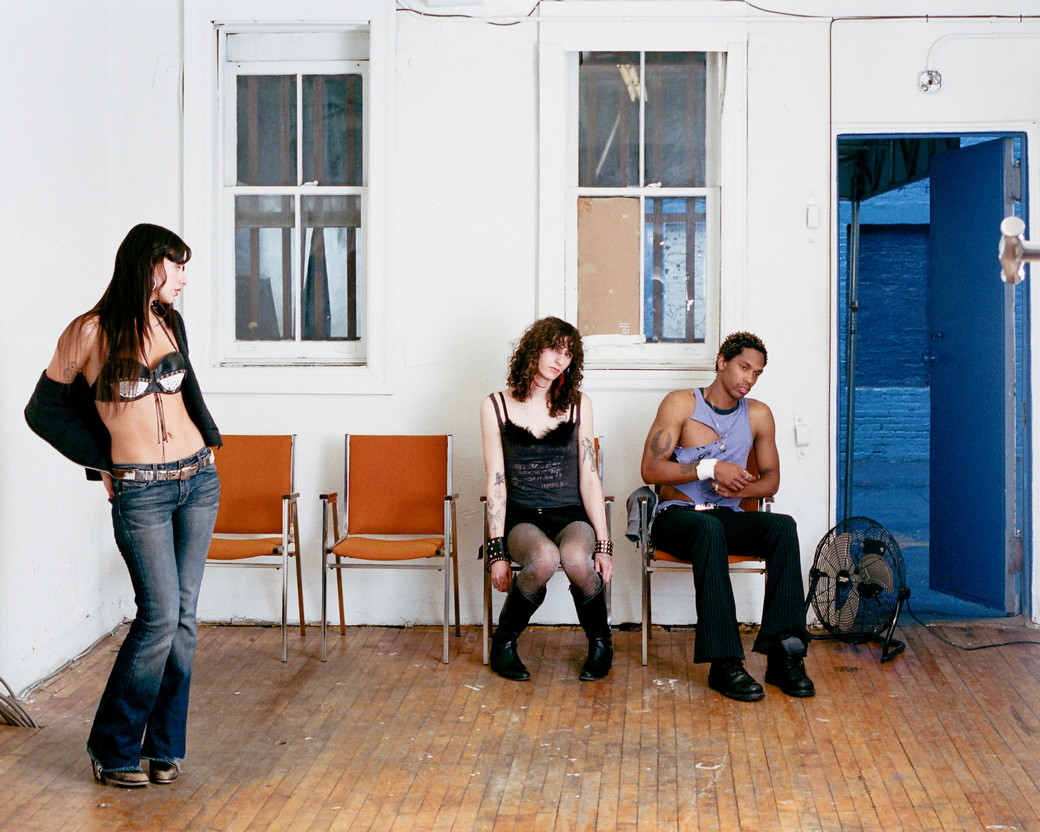
AM— Is there still a big DIY scene in Atlanta?
T— Yeah, but at the time when we all started hanging out there was more of a DIY music scene for sure. That was, like, 2016?
M— Yeah, around 2016.
AM— How did you start making music together?
M— We were all in other bands. Trav and I lived together, then Trav and Certain started hanging out and playing music together. Certain invited me over to play music. A lot.
T— This was probably our most organic combination of people in the scene at the time.
C— I lived at this house where I had a studio. There was a drumkit in there… but the studio was so small. We smoked weed and made music there. It was really cramped.
AM— Do you feel like you fit into a specific genre?
T— We’ve never gone for a genre. Especially at the time we started, there was so much DIY music going on - rave scenes, house stuff, industrial techno, indie stuff, hardcore stuff, and especially rap stuff was influential to us. We were all just playing instruments and were inspired by the idea of being a band. Even though we were individually interested in specific things, the point of the band was to come together and make something new.
C— We were trying to be a band, but not necessarily a rock band.
M— I think if we classify ourselves as a rock band, it's kind of diminutive of everything else we’re influenced by. But the rock vibe is definitely something that comes up a lot.
AM— Even though your sound is unique, do you consider yourselves tied to Atlanta regionally?
T— I don't even think we have a choice.
M— It's a cultural mecca in so many ways. I feel honored to be a part of that.
T— It's cool to make a name for yourself somewhere where it's not necessarily common or the main thing we do. When you think about music in Atlanta, people are rappers, they’re trying to be popstars or whatever. I think it's cool for us to do the band thing here and that's part of our ethos… or swag.
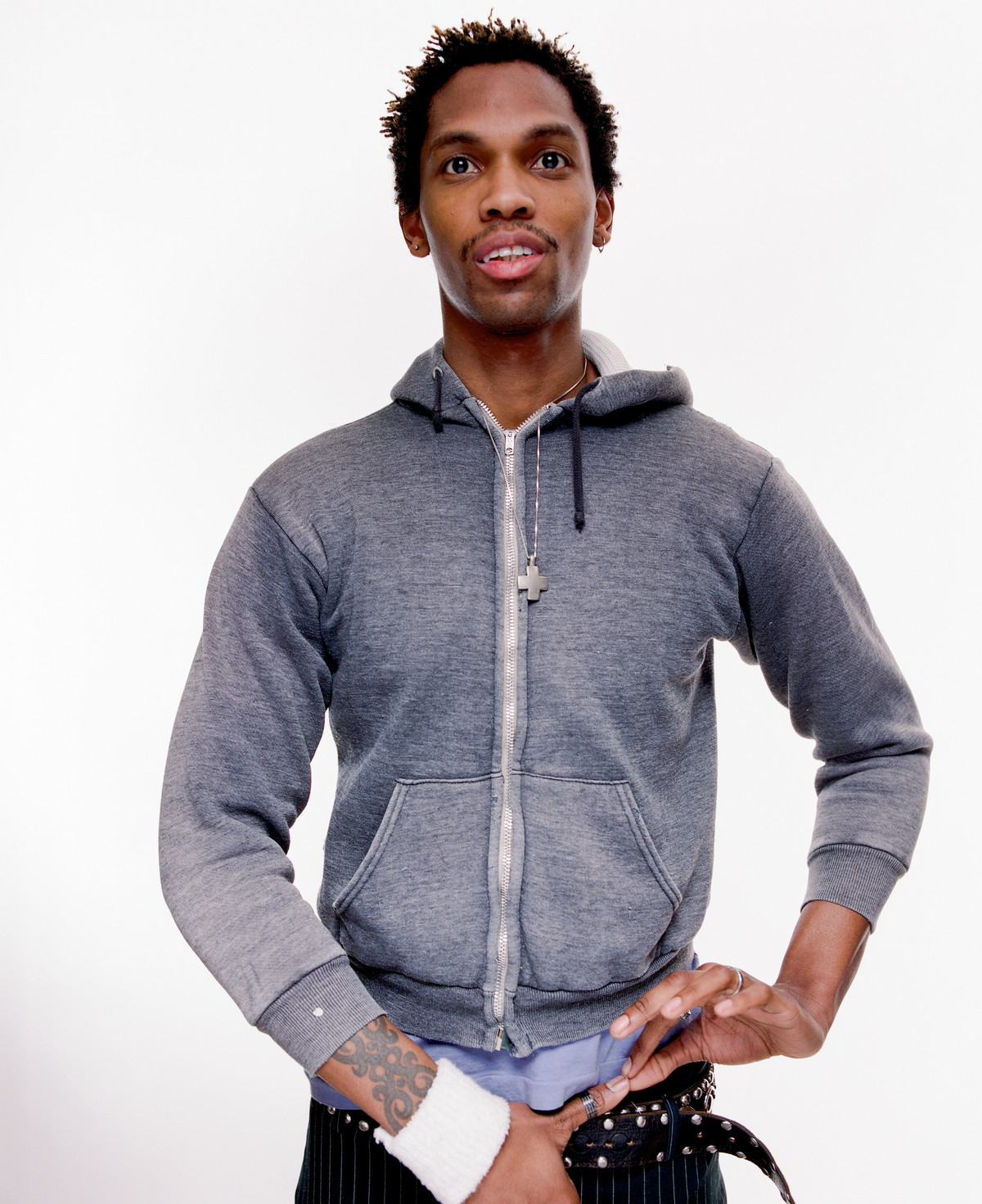
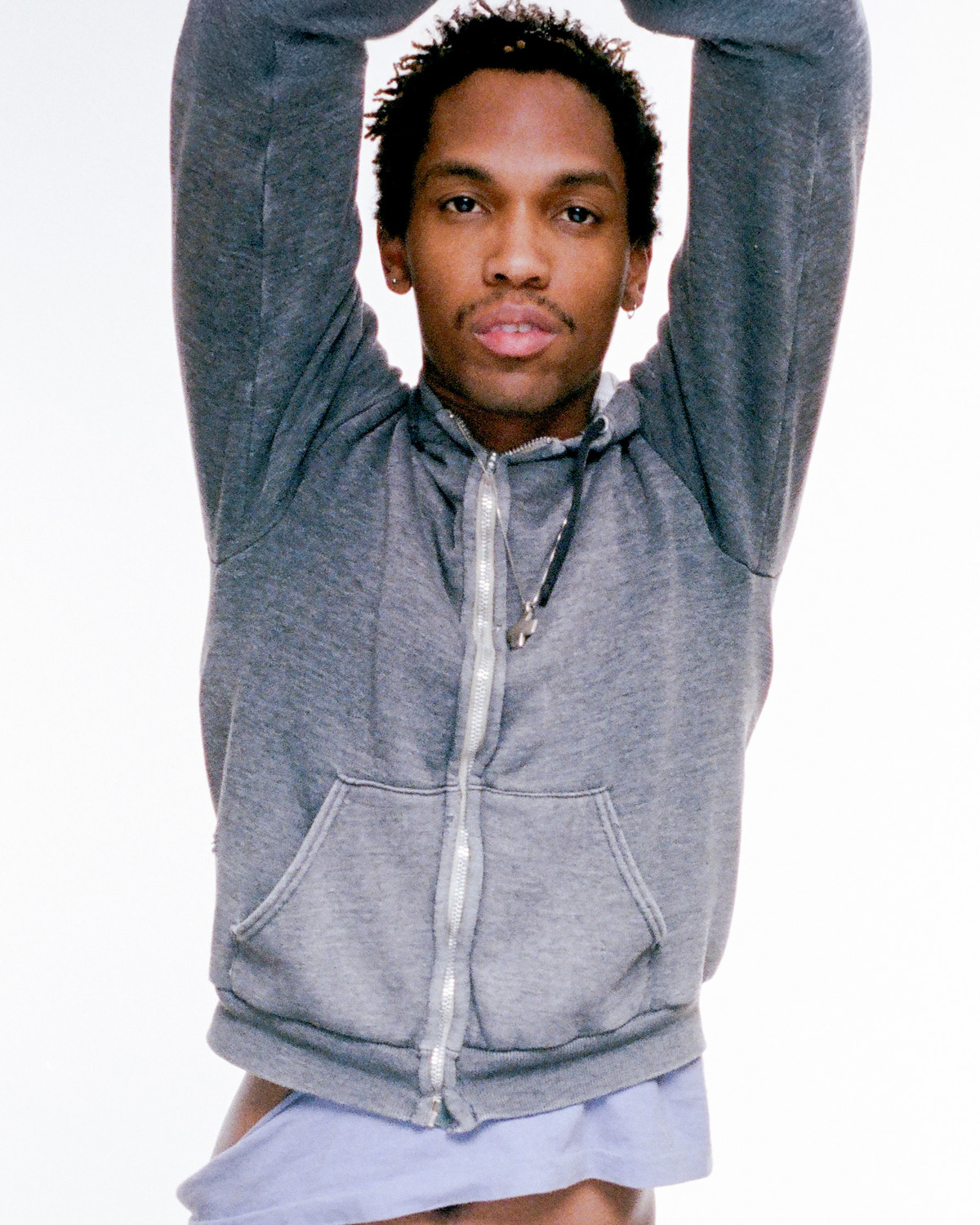
AM— Has your process changed over time?
M— In a way it hasn't changed. We're really committed to how we work together - what’s needed from the music and from each other. Our commitment doesn’t change. This album was the first concentrated version of that. And hopefully the next one will be even more clarified.
T— Making Electric Hour was our first time sitting down and being like ‘okay, we're gonna make an album.’ It was a really good learning experience for us, learning how to collaborate.
C— When we were working before, we’d make one song and we’d fiddle with it forever. Then we’d get bored of that song and make another. But [for Electric Hour] we had to clarify what we wanted to do. Sometimes there's a big difference between what you say you want to do and how it turns out. It's challenging, there's so much music that means nothing. We were trying to make music that meant something to us.
AM— How do you balance all being frontmen?
M— It's never really a decision… at least up until this point.
T— Yeah, it's just a feeling, usually.
M— Anytime someone wants to sing, everyone's encouraging. We have a lot of songs where all of us have vocals - we played a lot more with harmonies and layers on [Electric Hour]. We definitely want to keep going in that direction. The moments where all three of us are singing on stage, are just really...
T— Perfect.
M—Yeah it's awesome.
AM—How do you feel about performing?
T— Performing is lit. Sometimes I have more fun just being at band practice than I would on stage. But that was before this tour. On this tour I learned you gotta really think about what lyrics you want people to scream back at you. Because they will do it.
C— I really felt the love from the crowd a lot of times. It's funny to say, but I did. I’ve felt that way so often before, but it was different this time because we had done something clarified. Now, when we come back to record something else, it's gonna be a continuation of that energy… ‘how do we give to people on stage, what do we want to write?’ The band is us, but now it's also everyone who came to see us on this tour - all of those people are in the room now.
M— As a kid growing up in the suburbs, my parents were really strict so I always had an escapism thing. I was fascinated by performing in theatre: what it means, having something you rehearse that you can just get up and do. It's an extension of yourself, but it's also a character. Tour is dream escapist-mode, really. Your life is in a time warp.
C— We’ve spent like 500 hours together on tour. It takes us probably two or three months to spend 500 hours together when we're home. So all positive and negative things are extremely sped up. You’ll have a disagreement and it's actually just gonna be resolved in an hour. And then the good things, it's just like, ‘oh… that was great.’
AM— Can a tour be a framework to live by?
C— Yeah, you're actually performing the whole time. You gotta make sure you get there with enough time to do your vocal warm up, do your makeup, make sure you drink enough water, make sure you don't get too drunk. It's this constant thing, then it culminates in the show. And then after the show, we have to load up all the gear and drive somewhere. It’s a massive performance.
AM— When you’re touring, what's one thing you need to do everyday to feel normal?
T— Eating healthy, eating well, not eating shit.
AM— Do you have a favorite venue you played on this tour?
M— I loved the show at Night Club 101.
AM— Yeah I felt like the crowd was really excited at 101.
C— I think we're still learning how to play for people who really like our music. We were a local band for so long, so we would play for our homies, all the time… and that's great, there's nothing wrong with that, but it's…
T— That's easy mode.
C— It’s easier and it's also just different. We have a relationship with those people outside of the band. Now when we play these shows, we've never met a lot of these people… but they know all the songs. It's just interesting.
AM– How has the Atlanta DIY scene changed since you started making music together?
C— When we started playing there was a bigger network of bigger DIY venues throughout the US. These places could fit like 200-300 people. Now a lot of the remaining DIY spaces are pretty small… 100-150 people. So when we started playing, you could see pretty big bands play at these DIY places.
T— And it would be a big deal too.
C— So that definitely changed by the time that we started touring. And I mean, it was kind of set in motion after this place, the Ghost Ship, in California caught on fire. People died. A lot of DIY venues have disappeared. If you want to tour across the country you need to pay for 300 capacity rooms through these corporate venues unless you’re just doing generator shows. I hope more DIY venues come back in a way that’s sustainable. That circuit generated a lot of creative music because there was a crowd for those venues in the DIY scene. You had those people in mind when you were making your music.
M— We're really lucky to be from Atlanta. So much of the culture is creating a space for yourself that you wanna play with. It’s very inherent to our upbringing and experience in music, and also why we get kind of jolted when people aren't giving that back to us. But it’s a good challenge to try to cultivate it in the younger fans who didn’t have the privilege of growing up in such an intense underground scene like we did. We need more venues that aren't corporate and more real life ticket buyers that aren’t scalpers.
C— Oh my god this is a message scalpers. Honestly, scalpers beware - if we catch you it's over. There are bot scalpers that buy tickets for shows and we're not famous. It's crazy.
AM— What does DIY culture mean to you?
C— It’s one of the only accessible spaces for underground intellect. Music helps because it makes these places open to everyone - you don't have to engage only in the terms of academia. A lot of people know something is wrong with the world and they wanna change it, but they’re not necessarily coming into that with a dense political education or the language used in universities. Music helps bridge that gap.
M— Making music is contextualized by the shows, the interactions with the crowds, and the spaces that we're playing in. We want to write music to fit into the performance, it’s a loop. If there are no DIY venues and people are only imagining playing in these corporate venues then the music is gonna be a feedback loop of that vibe. It's not gonna be original.
T— It's cool for us to be getting going like this, but to be used to DIY spaces. We’re able to not think about it too hard and just make some cool shit. And it's not like we're just making weird stuff - we're making music to have people dance along, sing along to. But we have that combination of being experimental and also wanting to connect with people. I feel like there’s a bigger conversation to be had about how Americans think in general. We’re all brainwashed to wait for acceptance or to be allowed to do something. When you're at a big corporate venue, you can look into the crowd and see that people are awkward and scared to dance because they're waiting for someone to tell them they can.
AM— What is your ethos?
T— When we talk about wanting to be a rock band, I feel like the spirit of rock and roll is to be bold as fuck about doing what you feel like is actually right and not waiting for permission, not waiting for some big corporate guy to co-sign you.
C— We don’t need to be co-signed.
T— Yeah, we don't need that for the future of us. That’s something we're really trying to remember, and hold.
M— Yeah that spirit. We definitely want to grow as a band, but keeping the spirit of DIY is a practice in our music and how we create together.