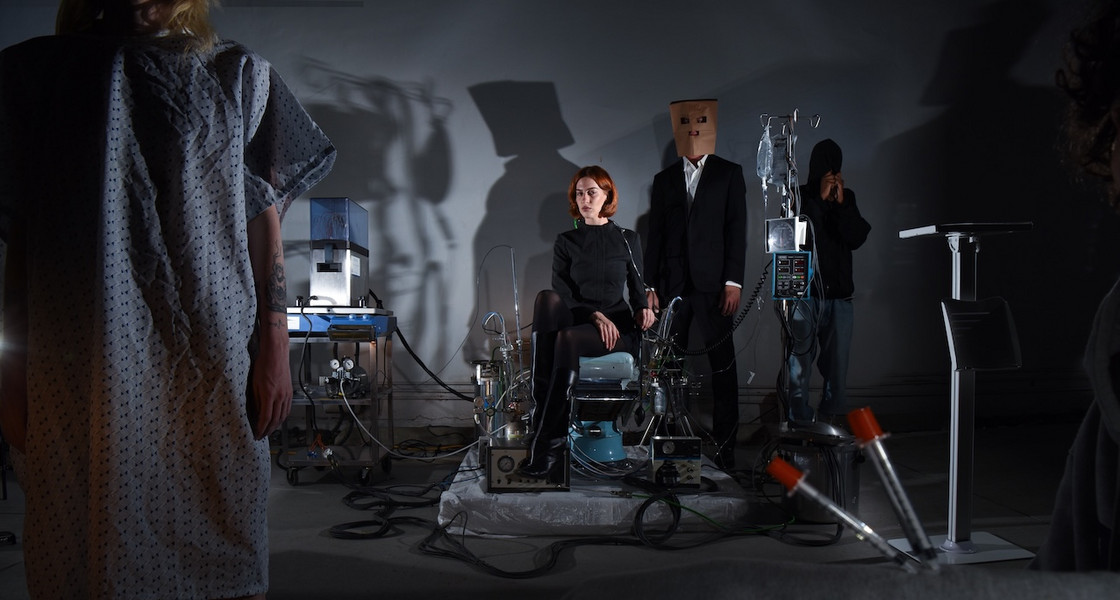
Anonymity in the Age of Overstimulation: Illumitati and Edward Skeletrix's Analytica
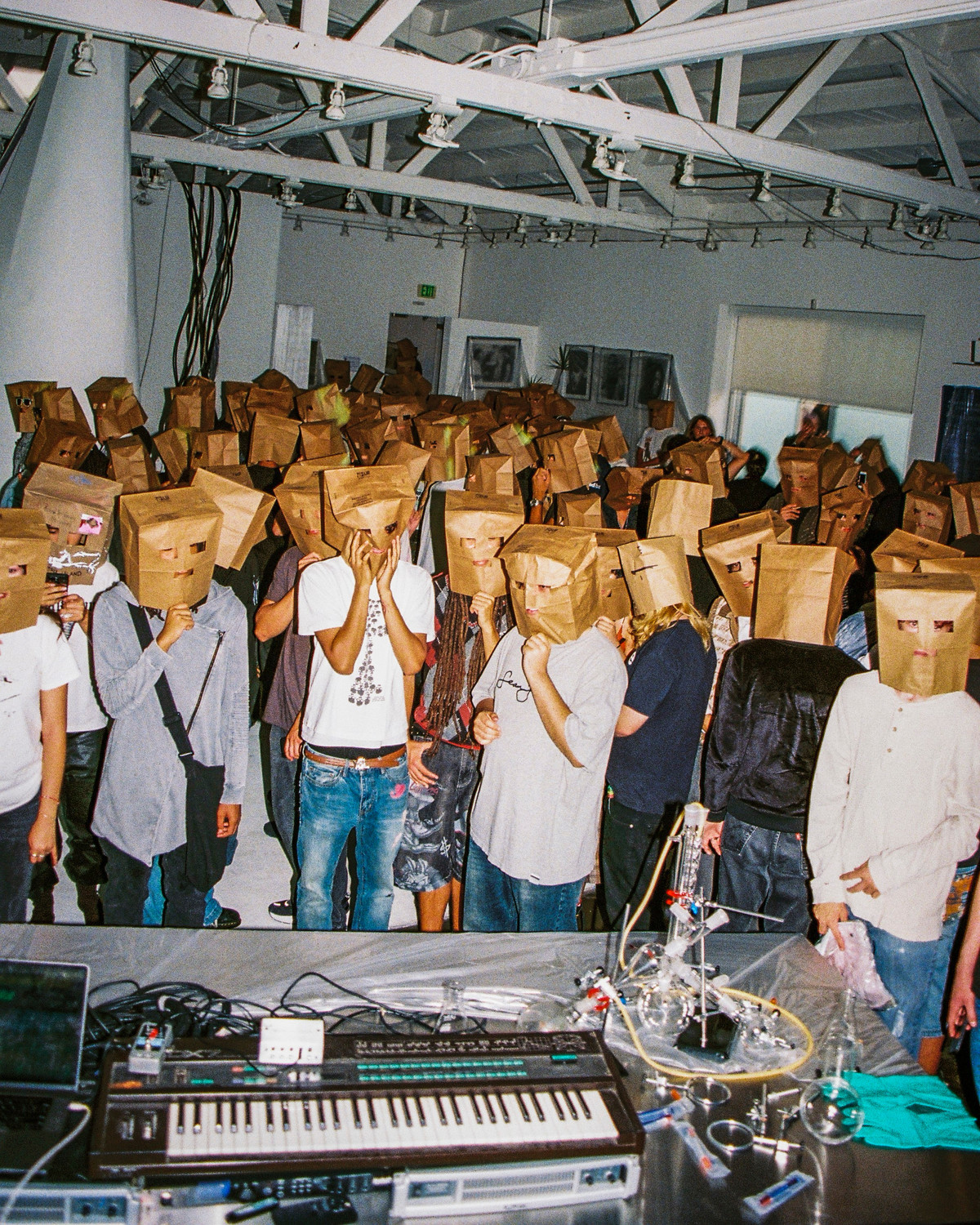
Upon arrival, visitors were greeted with a stack of paper bags to use as face coverings. It was a rather hot day in Los Angeles, and wearing a paper bag over my head felt uncomfortable at first, but I quickly adjusted to the strange requirement. Once placed on, the anonymity it provided transformed the experience: looking up, you saw a long line of people waiting to scan their faces, a person outside using a stimulator in an act that remained impossible to decipher at first glance, and crowds bickering and laughing over which YouTube video to choose for her to watch next. A bizarre yet pleasant confusion washed over me.

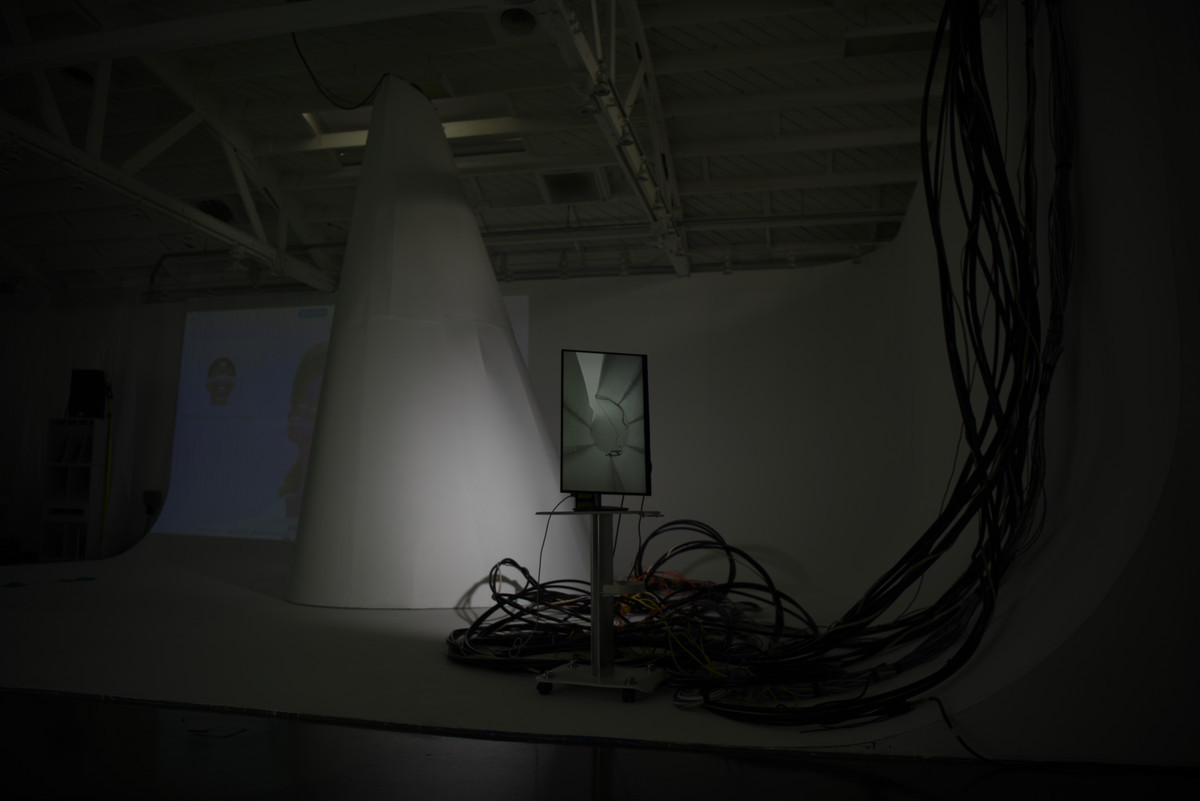
The exhibition was anything but conventional. From Skeletrix requiring every visitor to wear a paper bag over their head to Bruening, wearing goggles and undergoing a six-hour, audience-controlled sensory stimulation experiment, to a “looksmaxxing” station where visitors could scan the symmetry of their own faces and receive a calculated rating out of ten, every element was meticulously crafted to comment on Internet culture and the psychological effects of living under its constant, pressurized umbrella of surveillance, a world that most of us have grown so accustomed to that we rarely think about it.
"I had the idea for the looksmaxxing scanner and leaderboard years ago and presented it to Edward after seeing his performance work. He loved the concept, so I began developing the software with a team, interviewing figures in the looksmaxxing community to understand how these metrics are quantified and the culture behind them", says Bruening.
One of the exhibition's most distinctive features was that all visitors had to wear paper bags over their heads upon entering. Skeletrix’s choice allowed visitors to escape the physical barriers of judgment and self-consciousness, preserving their anonymity while reclaiming the phrase “put a bag over your head”—traditionally used to mock someone’s appearance—and transforming it into a creative device. Rather than allowing perception to control us, the paper bag invited visitors to question it, turning an insult into an act of subversion. Meanwhile, Bruening sat outside, allowing visitors to choose from an array of media, from constant, almost seizure-like flashing YouTube videos to streams of mindless digital content. It was wonderfully absurd to witness.
“The device was a really interesting experience; I spent 6 hours being forced to watch whatever the audience decided. It was wild how quickly they began trying to play strobing light videos to try and give me a seizure. I also found it a bit soul-crushing how many people had used the device for self-promo by playing their own music videos and posing with me like an object, completely dismissing the fact that I am a live human being right in front of them. And FYI, I couldn’t really see or hear anyone from inside of the headset, which added an element of discomfort and confusion", says Bruening.
By displaying some of the very extremes of Internet culture it sought to critique—from the obsession with self-optimization to the endless pursuit of stimulation through social media—the exhibition found its greatest irony in its own visual excess. In going too far, both architecturally and through the immersive role of its visitors, it mirrored the digital world that we seem to have no choice but to inhabit—one that constantly demands more visibility, more engagement, and, ultimately, more of ourselves and our time, only to receive a constant stream of aimlessness in return.

We spend six hours a day on our phones, endlessly consuming and endlessly scrolling, rarely recognizing the harm until it is reflected back at us through art. We judge others’ appearances, both online and in real life, and care so much about our digital personas that we forget we are all simply human beings, face or no face. But there we all were, faceless, gathered in the name of art and music. In that anonymity, no one could be judged by their face or clothing, regardless of the environment, allowing visitors to experience the exhibition free from the pressures of comparing themselves to the images and ideals they encounter online, while simultaneously confronting the ways we willingly subject ourselves to the Internet’s systems of visibility and surveillance.
Analytica revealed the contradiction of visitors willingly participating in the very systems the exhibition sought to critique, commenting on the all-consuming dangers of an Internet culture that has normalized constant visibility, endless consumption, and arguably excessive self-surveillance. More than just an interesting event, it felt like a necessary experience—one I feel fortunate to have witnessed, serving as a reminder to remain present in a world increasingly shaped by artificiality and digital performance.