PRESENTE CONTINUO: the intimate ties between then&now

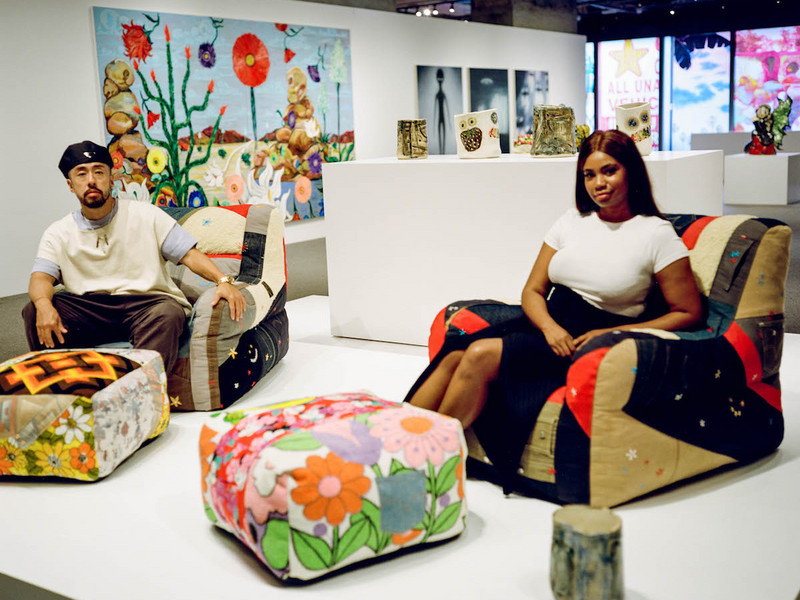
Starting May 30, PRESENTE CONTINUO will be available to purchase on presentecontinuo.com, cpcompany.com, and at the C.P. Company flagship store in Milan, Corso Matteotti 7.
Stay informed on our latest news!

Starting May 30, PRESENTE CONTINUO will be available to purchase on presentecontinuo.com, cpcompany.com, and at the C.P. Company flagship store in Milan, Corso Matteotti 7.

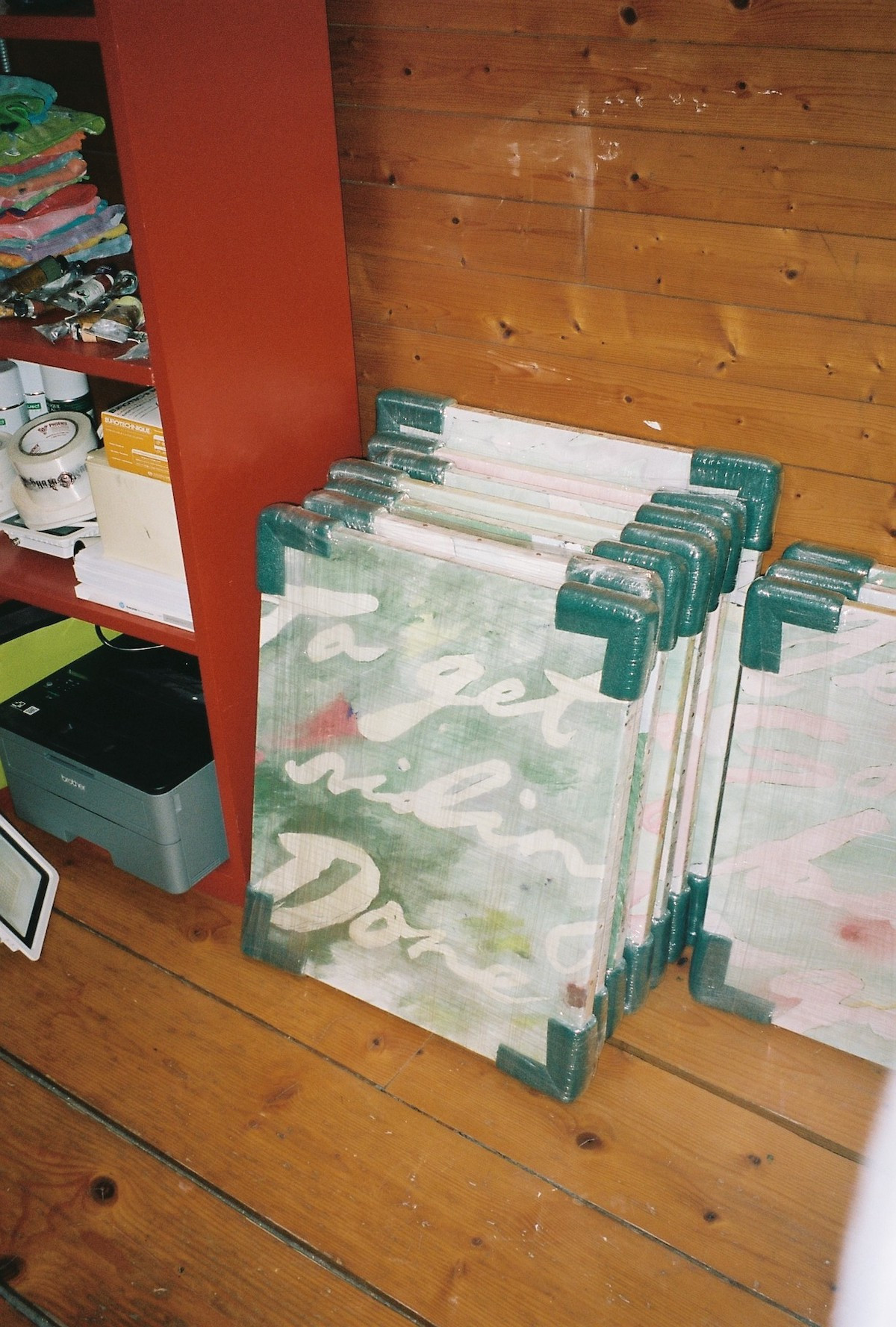
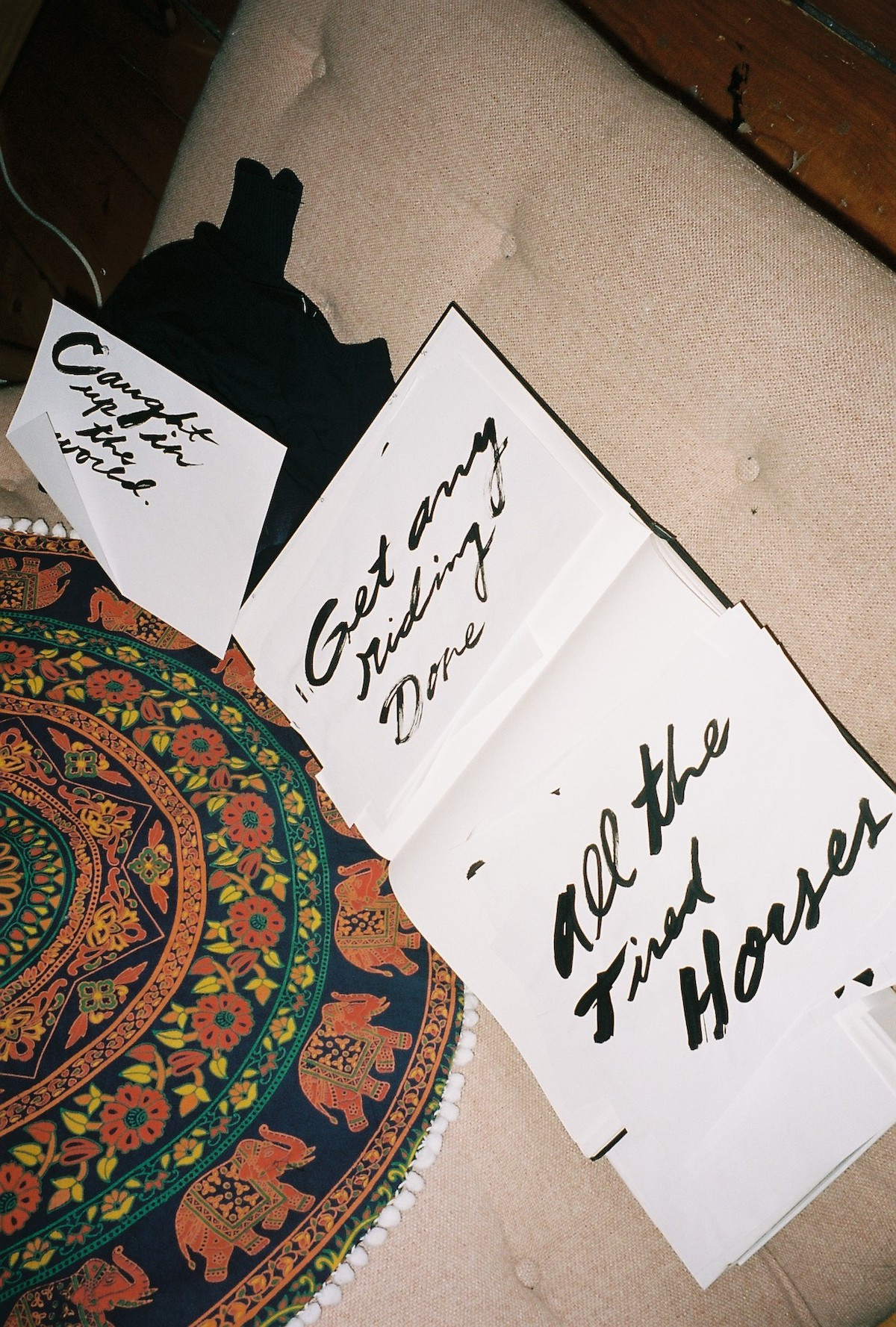
office sat down with the artist to discuss this new series of paintings and the multiplicities that simple snapshots can encapsulate, below.
What is your artistic origin story and what initially interested you in the medium you currently work in?
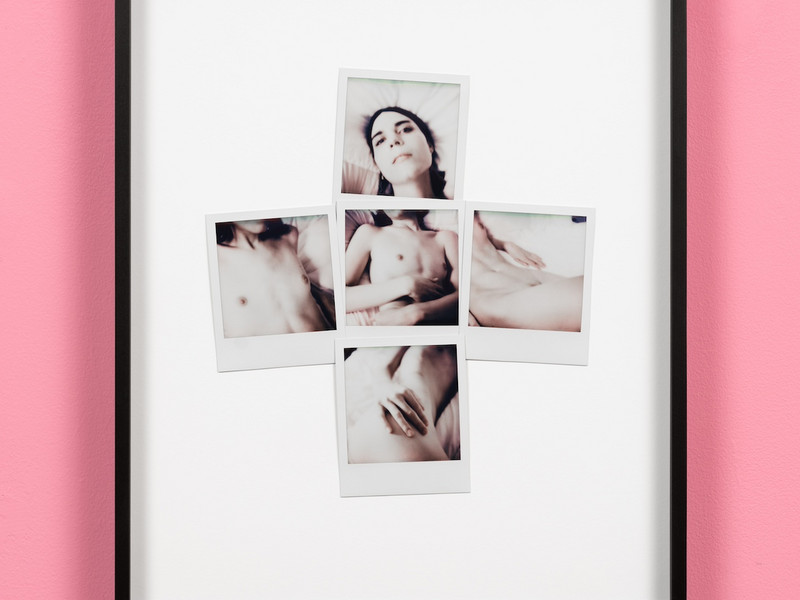
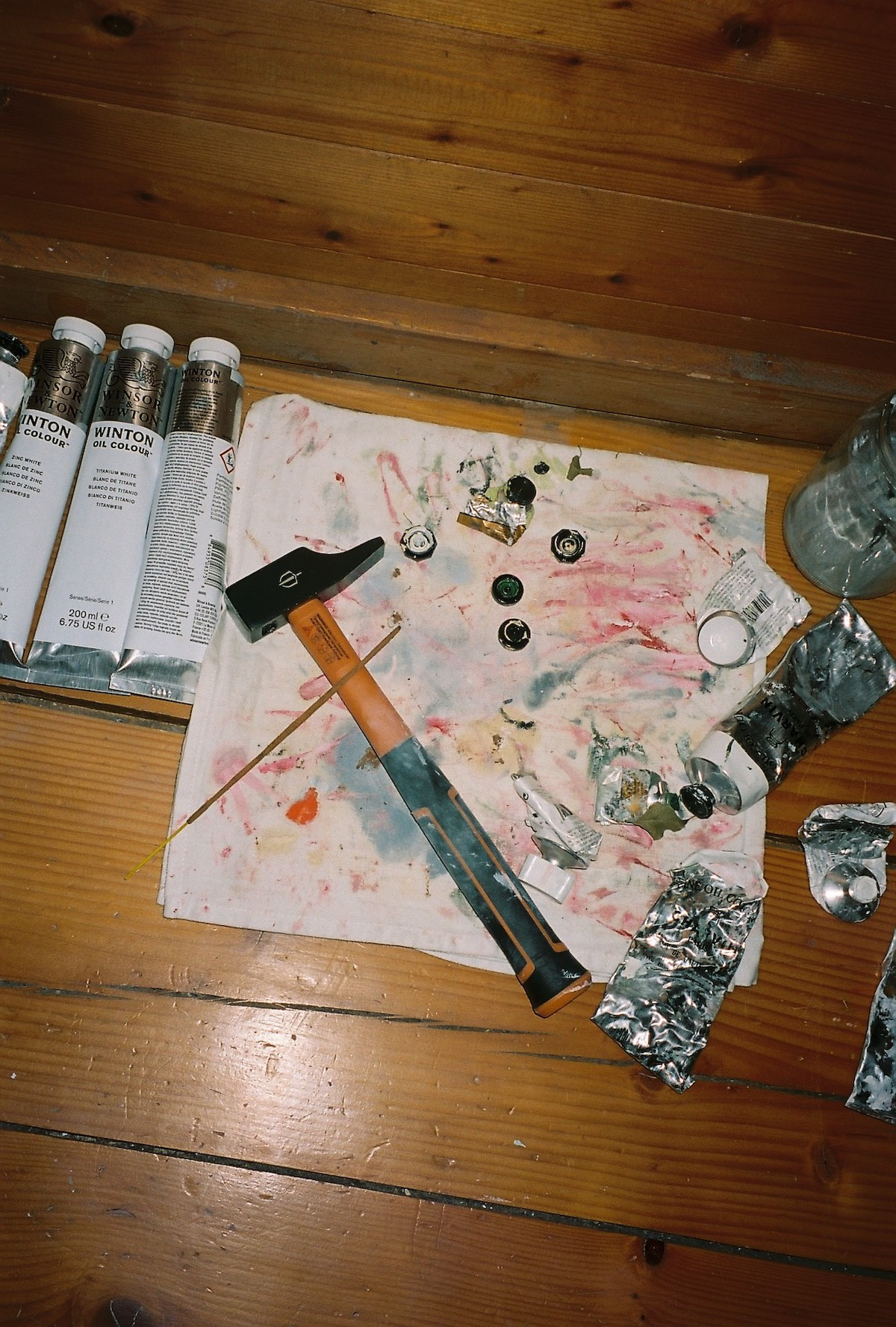
It was a journey with a lot of twists and turns for me because I basically went through every medium before I discovered painting. I was quite consistently working with sculpture and installation for a number of years before I started painting. I think there were some mental barriers there. I feel like the main benefits of art school for me were not what I was conventionally taught, but what I had to dismantle because it was a weird experience. It was beneficial in some ways, but I feel like looking back on that, I didn't feel completely rewarded by the stuff I was making. I felt this need to reconnect and ground myself in my own voice. I think it was 2020 when I was doing an art residency in Seoul with the Seoul Museum of Art, and I pitched an oil painting residency to them and that was the start. I didn't really know what I was doing so I made quite a few mistakes in terms of the technicalities of oil painting. Though it just felt so natural. But in terms of how my practice and the content of my work brought me here, I was dealing with a lot of these fragmented narratives and scenes. I like the idea of taking viewers on a journey that might take them into weird recesses of their own subconscious. So much of my work is about the whole concept of evocation and I think images themselves are such a perfect way to talk about and to trigger emotions in someone.
It's like we're constantly locked into this stream of thought and imagery in our natural mental states. We often limit ourselves by the way that we box things in and simplify things down. So I think, sometimes, one of the major functions of my work is to take that tiny fraction and expand it. I was just interested in the fact that such a simple image can do that and evoke visceral and emotional responses.
Why do you aim to explore what you call “the elusive language of the body and mind” in your work? What sparked this pursuit of unseen knowledge?
I think it's a life philosophy that I have. Growth is dependent on friction, so as soon as you step slightly out of your comfort zone or into this new realm, you're in more of an aware state. And I think that's something that I was kind of fascinated by — the strength of challenging emotionally intense experiences or moments in life that kind of trip us up. It's eternally challenging to step into the unknown. And yet, I'm so invigorated by it and I try to make a practice out of it in my life. So it was just a no-brainer. It was less something I decided to practice and just a part of my life that I hoped other people had an interest in too.


You mention that dualities are at the heart of your work. What dualities make up who you are and how do those juxtapositions appear in your craft — maybe in your color choices or even down to certain gestural brushstrokes?
That's such an interesting question. I feel like there are some personality traits that I bring into the physicality of my work in some ways. But maybe that's just all art making to some degree — it all walks the line between softness and quietness and observation and stillness. A lot of my practices also go leaning into strategic analysis and the associations between images and the bigger picture, so there's this constant zoom-in and zoom-out that I think I'm like always doing personally. And that is definitely reflected in my practice because it's like you've got these tiny scenes or little snippets, but then for me, the most intoxicating part is the combination of images. The paintings themselves often come together pretty quickly, but it's choosing the image and the colors and all that that I get really lost in.
I've also been trying this new thing lately. I used to paint like I was drawing, but oil painting is not like that. It's the push and pull of paint and color and mediums. Lately, I'll make a very perfectionistic painting and then treat it afterward or brush over it in a certain way that adds so much more ephemerality to it. Because for me, I don't love hyperreal work. I prefer for it to still have that dream-like sense to it. At the same time, I'm so drawn to rendering that I can't seem to abandon it. So that's a duality too. I'm constantly trying to take a step back from whatever I happen to be telling myself about something and then add in more context or question it again. Because I think, ultimately, every time I feel like I have certainty or absolute truth about something, then I'm probably on the wrong path. Things should be more gray and multiple things can be true at the same time. And that's the cool thing about life.
Growth and ephemerality are two central themes of your work, as you explore the ever-changing landscape around us. How have you grown, personally, since the conceptual creation process of Love Story?
My last two shows have definitely had more of an autobiographical streak to them. So in some ways, I was navigating family experiences and experiences with loved ones through these works. So there really was a huge therapeutic element to it. I think I was experiencing one of those universal experiences where intimacy can slip very easily into pain. It was something that I hadn't really tackled head-on, necessarily. Love Story was about me going through a lot of those big emotions at that moment — feelings of yearning and love and intimacy. And at the same time, a lot of resistance and self-control and all of these challenging emotions that we feel as we grow up and come into periods in our lives where commitments are deeper.
So I thought the only way out was to make this work. It started with the black-and-white images. The first one I painted, called "Press," recalled these little gestural moments that I was thinking back to and how consuming this experience had been, and how in my mind it became distilled down to just a few little fragments. I felt like these were the perfect introduction to this show because they're all things that happen in a home and in a domestic setting — things that can deeply rattle you and stick with you. But even when I'm starting with something really personal, I wouldn't go deep into it if I didn't feel like I could share that experience with others who may have navigated the same things.
Many love stories, as you address in your works, create unattainable ideals or fantastical narratives as a means of escape. If you could write your own contemporary love story, how would it differ from those we consumed growing up?
I'm a victim of the ideals as much as anyone else. I think we all are and it's something that you constantly have to remind yourself not to do. But at the same time, I feel like if we go too far in the other direction, we can run the risk of disengaging as well. Maybe my story would highlight intersecting moments between not just two people, but many people. Like how a movie will tell a lot of stories at once and then they kind of intersect. I think the more we understand the people around us, the better we can navigate the world.


I think we definitely need more non-linear love stories because it’s realistic.
There's obviously tension and monotony in this work — there's an immense sense of loss. You could read that as, 'Oh my gosh, what a depressing narrative.' But I really think, more than anything, that there's beauty in the simple, everyday moments. It makes me think of the movie Everything, Everywhere, All at Once — the mother and father realize that there is joy in just doing laundry and taxes with each other. Sometimes it is the simplest moments that make me feel the most depth.
We talked about traditional love stories, which often conjure images of whimsy and those images might be super colorful. But the color palette employed in your work is dark and a little bit demure. I know we just discussed monotony, but why did you choose to construct your works in this way and where did this choice of color come from?
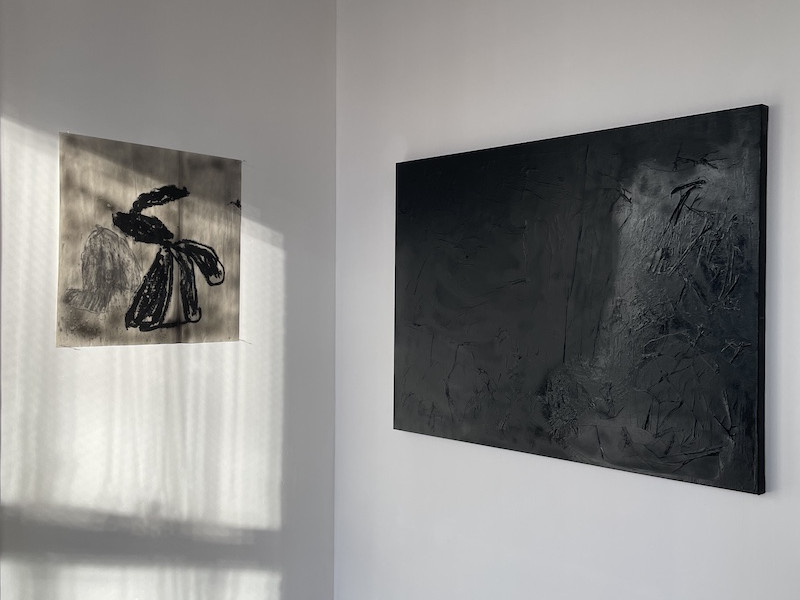
A lot of it is supposed to mimic when you're trying to remember a dream and you don't remember it — it just comes out as blobs of gray. That's kind of how it seems in my mind anyway. But, actually, the darkness is just an evocation of that which is unseen, which I find alluring. So I think that was one of the reasons that I make paintings in these darker hues or those muddied warm tones. I feel like I'm constantly going back to browns, grays, and greens, but I'm also really obsessed with red and I feel like I can't seem to stop painting with it. I love color as its own conversation and I think it can be so symbolic. Like with red, there's something very corporal; it's like blood and flesh. I also wanted to show the dualities of love in my work. There is that conventional lighthearted love, as you said, but it can also be bloody and gory — especially given traditional symbols of live human organs and hearts.
You state that you think of all of your paintings as the sum of a larger whole. One that may not be fully understood yet, but if you had to put words to that larger meaning or goal — what would it be?
There's a line on my press release for this exhibition that I love. "We look for an answer to ourselves, something through which we ascend or escape our physical bounds. Yet despite this hopeful belief, we know that purity could shatter, giving way to less transcendent feelings. It seems to me that there's little difference between reality and fantasy, memory and imagination.” If I had to pin it down to one thing, that's what it would be. Because I think it encapsulates everything. It's like we can't help but simplify everything down to these little moments. We might have this whole robust experience, but for whatever reason, because it's impossible for us to remember everything, we condense things down. And I think that whole concept is particularly strong when it comes to love relationships, whether that's romantic or otherwise because we are playing in this field where the stakes are high and we're vulnerable. We want to be seen and heard and we want to experience intimacy and love and connection. And I think when those things are all on the table, you start to hunger for a very specific moment or a very specific gesture — or you remember only that which served your sense of joy. Or it might be the opposite. It might be that you only remember the hardest elements if it was a really challenging relationship. That for me is what this show was about. And I'm hoping that viewers realize this phenomenon and that we really do need to sort of dismantle the stories that we tell and the things we hold onto.
Gutierrez's groundbreaking three-gallery exhibition spanning three continents is on view until June 30th. RYAN LEE Gallery in New York, Fraenkel Gallery in San Francisco, and Josh Lilley in London will host distinct selections from the series, providing audiences with a glimpse into Gutierrez's artistic vision. Accompanying the exhibition is the artist's new book, APOKALYPSIS, published by RYAN LEE, offering an immersive experience into the rich tapestry of Gutierrez's artistry.
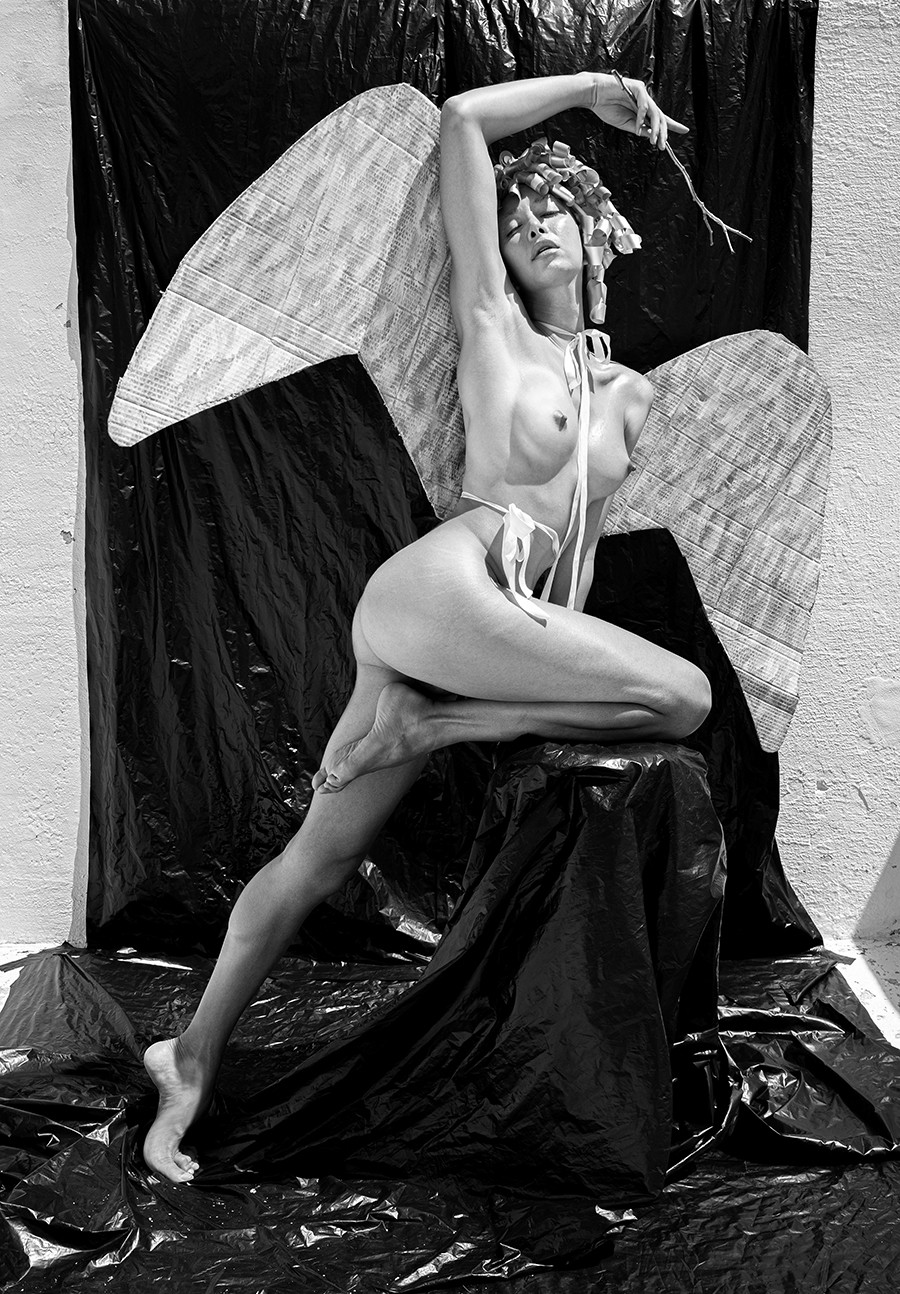
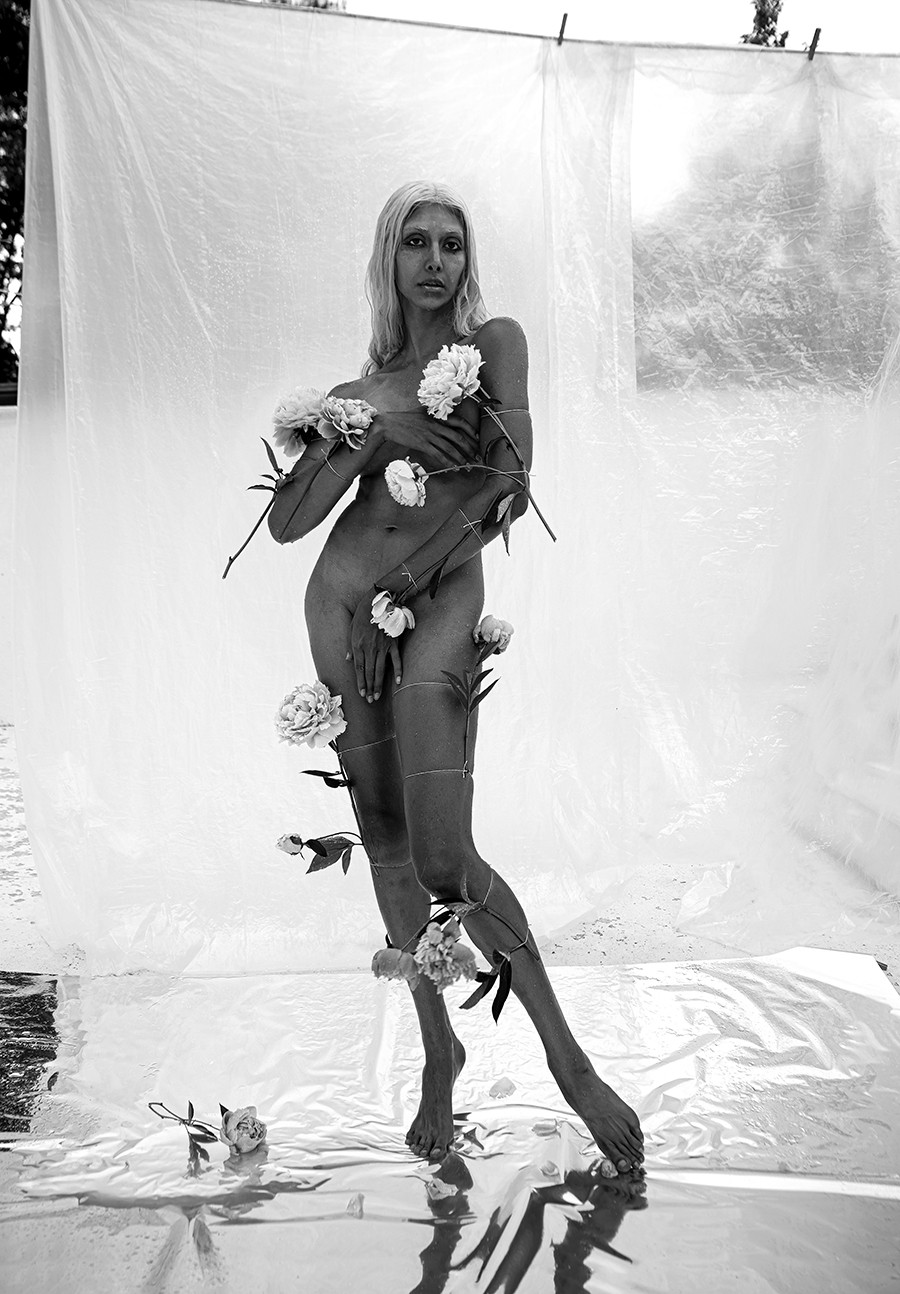
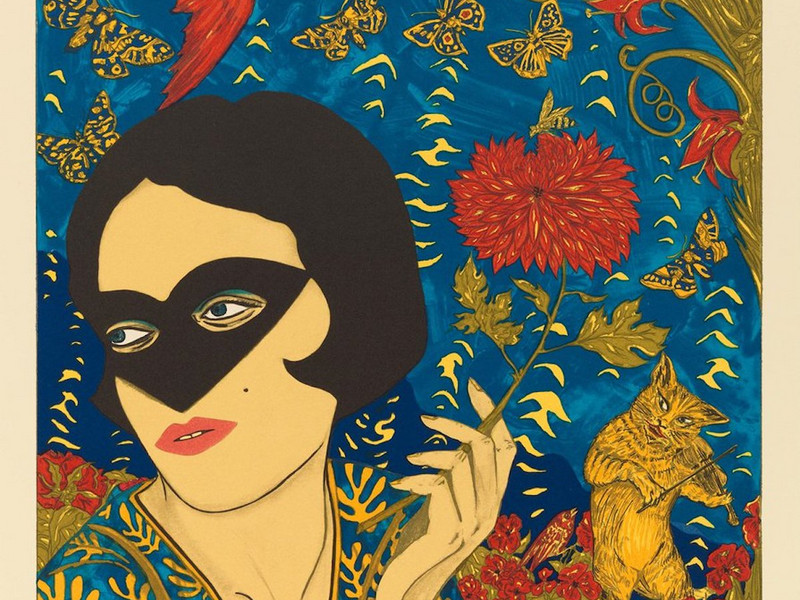
Gutierrez takes on the monumental task of portraying all 17 revolutionary figures herself, transcending conventional gender and cultural boundaries. From Aphrodite, the ancient Greek goddess of love and beauty, to Hua Mulan, the famed warrior of Chinese folklore, each character represents a powerful archetype that challenges established norms and offers a fresh perspective on the human experience.
Through her thought-provoking series, Gutierrez confronts us with questions that dig deep into the essence of power, symbolism, and truth. What is an icon, a cult image? What gives a symbol its power? How does culture influence and perpetuate systems of domination? These inquiries compel us to examine the historical context and the figures who have stood in opposition, shaping our understanding of the world.
While icons have traditionally represented humanity's spiritual ideals, Gutierrez's anti-icons defy the delusion of an inflated self-conception, refusing to conform to the limitations set by society. The anti-icon embodies unobfuscated femininity, revealing an encounter with genuine authenticity that transcends the superficial. In shattering the illusions perpetuated by icons, Gutierrez offers a revelation — a proclamation of clarity and truth that strips away the veneer of deception.
In a world that seems on the brink of collapse, Gutierrez's ANTI-ICON: APOKALYPSIS emerges as a powerful artistic statement. It reminds us that the world has ended before and will do so again, and within this cycle of destruction and creation, a new image of what the world truly is can emerge. Gutierrez's work resonates with the ethos of resistance, as creation becomes a powerful act of challenging the status quo and reimagining the possibilities that lie ahead.

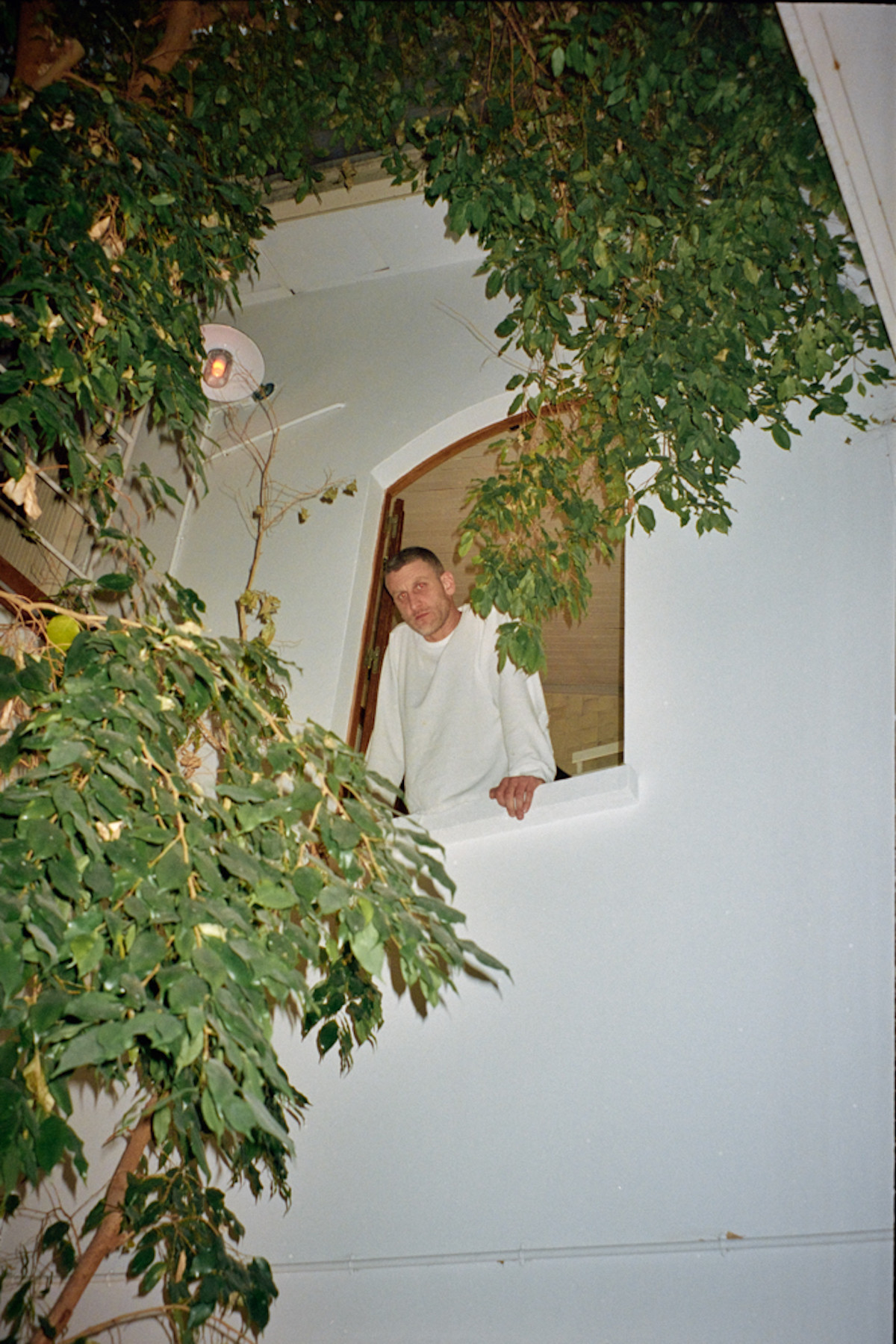
Walk up that spiral staircase today, though, and you might find that there’s a crucial thing missing: the artist himself. It’s because Kulig is in Paris, where he’s been holed up for a year. He’d made the move in order to escape the hustle and bustle of New York City, and it’s a decision that has, at the very least visually, served him well — not to mention he’s settled down in a uniquely inspiring house, that has a living tree growing through its living room floor — save for the fact that he may have to settle for a second-best pepperoni slice. But a move across the Atlantic doesn’t necessarily equal a move beyond challenges; when you’ve made it as far as Kulig has, the challenges tend to be self-imposed.
“These sorts of pieces are much more intense to see and hear than most paintings I’ve ever seen,” he says, musing about works that attack multiple senses. “Which makes me think… is painting my medium? I’ve never actually questioned that.”
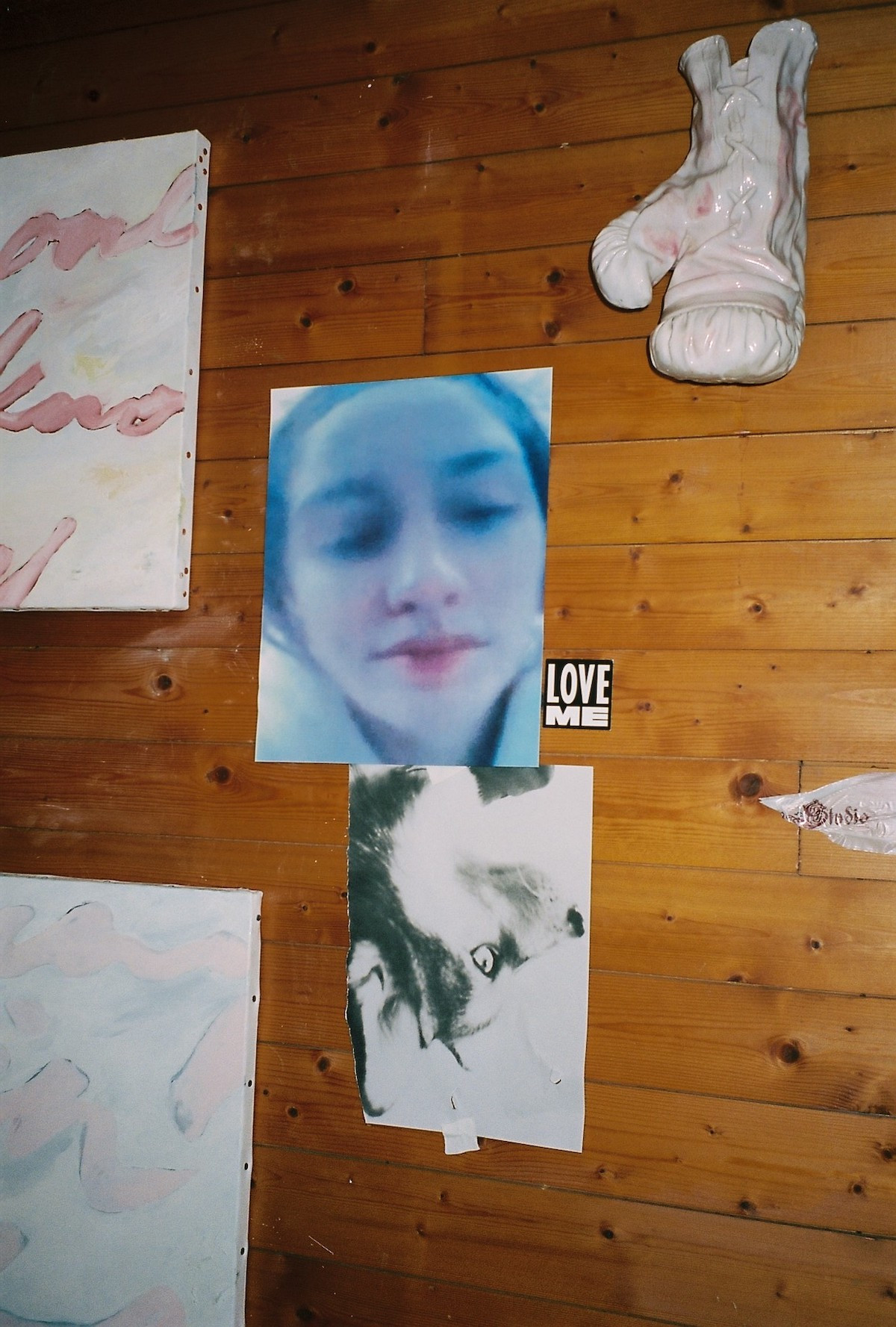
Few others have questioned it either. When Kulig first moved to New York City in the aughts, his infinitely-interpretable plea, “Love Me” — which, on the average downtown walk, you may find anywhere from the walls of large buildings to the pendants of pedestrians’ chains — went from being a neighborhood fixture to a global brand.
Though his beginnings were defined more by sprawling screenprinting and oil paint practices, the years following his move to New York saw him come increasingly into his own right as a multidisciplinary artist. Much like the jazz and Jack’s meows, another guarantee of his Lower East Side studio is eclecticism: one stroll down the expanse gives way to a ceramic sculpture of stacked boxing gloves about the height of a fifth grader, a Moschino piece he plans to wear in a performance piece in the near future, and a set of hefty pink-hued canvases from a recent series he did. All of which are very fun obstacles, should a certain cat be inclined to turn the studio into a funhouse. On a recent Zoom call with Kulig, with his two new Parisian kittens popping in and out of frame, we talked about art and the American Dream, geography, and the concept of rigor mortis.


CURTIS KULIG— It was only when I took the time to understand the layout of this studio that I thought to myself, “Oh. A cat would love this.” Trees and stairs and platforms everywhere… It's basically a giant cat house.
SAMUEL HYLAND— Your studio in New York is, too.
CK— Yeah. And the rooftop with the trees and birds and shit… perfect for Jack. But yeah. There’s two of them [new kittens]. One is Rigor Mortis — do you know what rigor mortis is?
SH— It’s like a stiffening of the body after death, right?
CK— Yeah. It’s a crazy concept. It really is. I think there’s a timeframe for it after you pass. Probably like six hours after.
SH— Why would you name your cat that?
CK— One of my friends was talking about it, and I thought it was such a great name. I like the combination of Rigor and Mortis, but Rigor alone could be cool, too. And he also kind of looks like a Rigor Mortis. The other one is named Napkin. So just like that Rigor Mortis and Napkin came together in a weird way. Rigor Mortis fell in the bathtub the other day, with the water in it. The thing is, with Jack, I never had any drama. He was from the street. These cats, I’ve had for maybe three months, and I’ve brought them to the vet like six times. They’re bourgeois cats. Anyway, Rigor Mortis fell in the bathtub, and he was barely breathing when I took him out. It was so dramatic. I thought, “Maybe I shouldn’t name my cat Rigor Mortis.” Have you been to Paris before?
SH— Nope. Tell me about it.
CK— They say the layout of Paris is like a snail. The middle is the first district, and then it sort of spirals outward to create the shell. I think of it as a large-scale West Village. West Village is probably one of the only areas in New York where I can get lost. But the whole city of Paris is like that. You make one wrong turn, and you’re somewhere completely different than where you intended. I used Google maps for the first bit that I was here. And I always wear headphones on my walks, because interestingly, I feel very anonymous here. In New York I can’t make it a block without a run in. Here I can walk around here, and sure, I’ll run into somebody I know sometimes, but much less in New York. In New York, I never go outside with headphones in. Here, I never take them out.


SH—Music is always playing at your studio –at least in New York. Why?
CK— There’s so many songs that I listen to repetitively. I’m such a repetitive listener. If I get, like, four songs that I feel a certain type of way about, I can’t stop. Especially for painting. For painting, I either do complete silence, for the serene experience of hearing the brush and paint move — did I just say that [laughs] — or jazz. I’ve been into Ethiopian music as well. But I’ll listen to the same song 25 times in an hours. It informs these movements that I want to keep accessing, so I use the music to reverberate what I’m doing.
SH— I feel like you’ve probably answered the New York/Paris question a ton of times, but a specific thing I wonder about is the foot traffic. Do you find it significantly different in either place?
CK— It took me leaving the New York bubble to realize how much of a circus downtown really is. I miss that energy. It’s a free-for-all. Say what you want to say, walk where you want to walk, cross the street when you want to cross the street, wear fucking angel wings, who cares. But also, it’s a complete circus in the most organized way. It’s such a beautiful thing. It’s where you go to do whatever you want. And I feel like I’ve always known it subconsciously — all the cliche stuff like, anything’s possible in NYC… the melting pot. But it’s so cliche because it’s so real.
SH— You briefly came back from Paris late last year. I imagine that must have been some crazy whiplash.
CK— I came back for a month. Life shouldn’t be about how much you can get done and/or how quickly you can get it done, but me working in New york for a month I didn’t even accomplish in ten months of being in Paris. There’s this weird sort of blasé tone. In New York — or maybe in America — there’s this odd take on the American Dream, where “you live to work.”
SH— Where would you say you naturally fall? Working to live, or living to work?
CK— I live to work. But with that said I’m an artist. It’s not really work for me most of the time, it’s just kind of my existence. All I do is make art, and if I’m not making art, I’m still making art. That’s what I think I’m here for. That’s what comforts me.
SH— Ending on a vague note — but what’s the plan?
CK— The plan is to keep making work that I feel needs to be made. Work that feels thoughtful right now, feels right with what's been done in the past and work that will feel relevant in the future . I think the more honest I can be with myself about that, the better I’ll feel.
Also, just making the world a better place. Which might sound as generic as it gets… but also maybe not so generic. The world would be much better if as many people actually did it as the amount of people that say they want to.