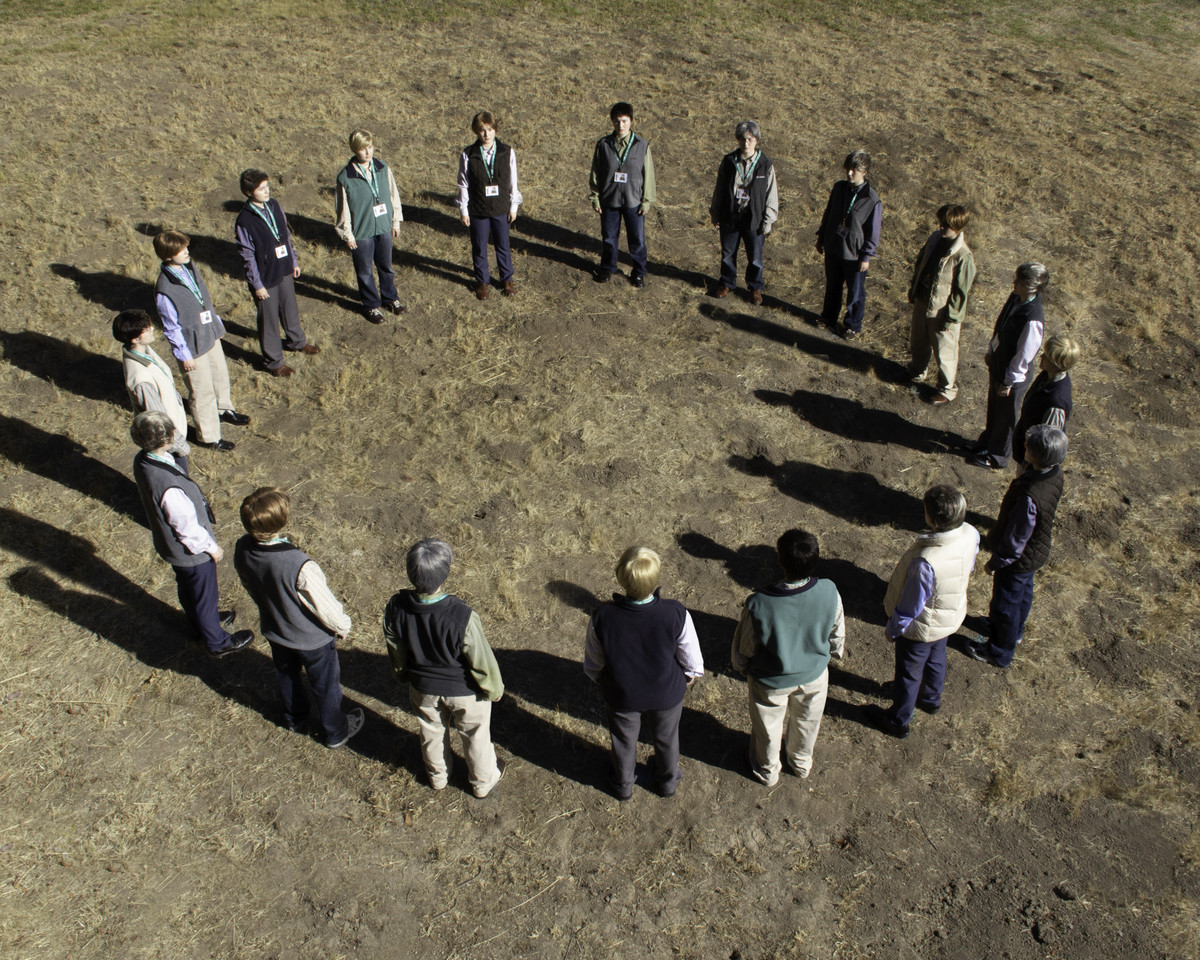
PRESENTE CONTINUO: the intimate ties between then&now

Starting May 30, PRESENTE CONTINUO will be available to purchase on presentecontinuo.com, cpcompany.com, and at the C.P. Company flagship store in Milan, Corso Matteotti 7.
Stay informed on our latest news!

Starting May 30, PRESENTE CONTINUO will be available to purchase on presentecontinuo.com, cpcompany.com, and at the C.P. Company flagship store in Milan, Corso Matteotti 7.

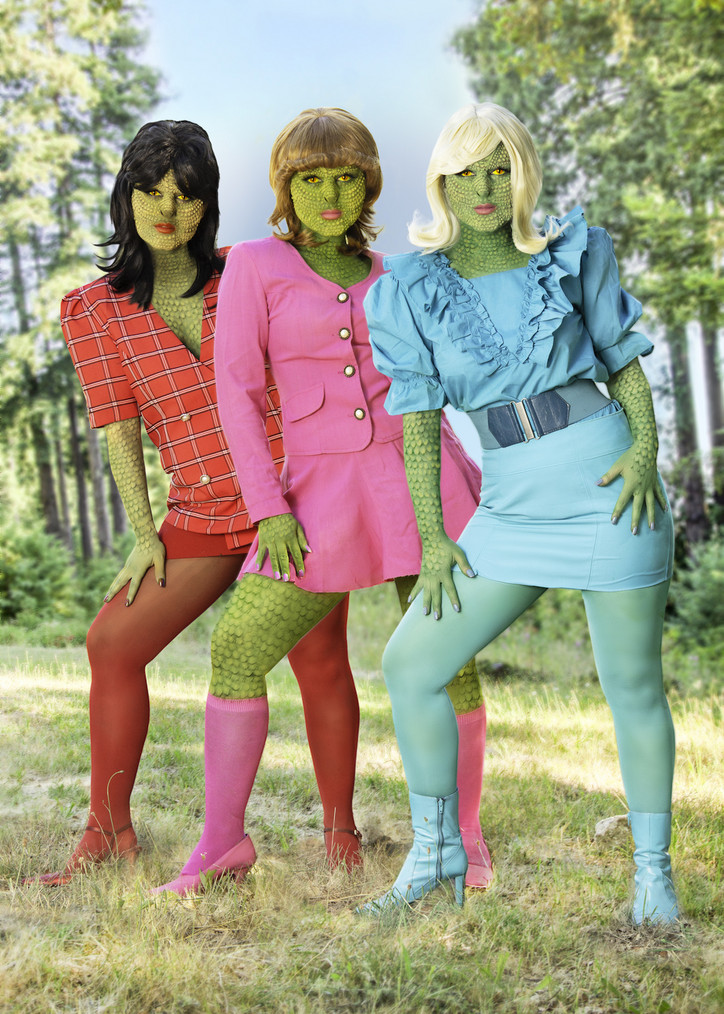
Of course, Facebook these days is this colossal source of misinformation (see: election interference, data misuse, proliferation of hate speech, etc. etc. etc.). But some of the weirdest conspiracies on the web concern the platform’s creator—they’re like fever dreams, complete with reptilian cults, surveillance paranoia, secret societies, and, at the head of it all, Mark Zuckerberg.
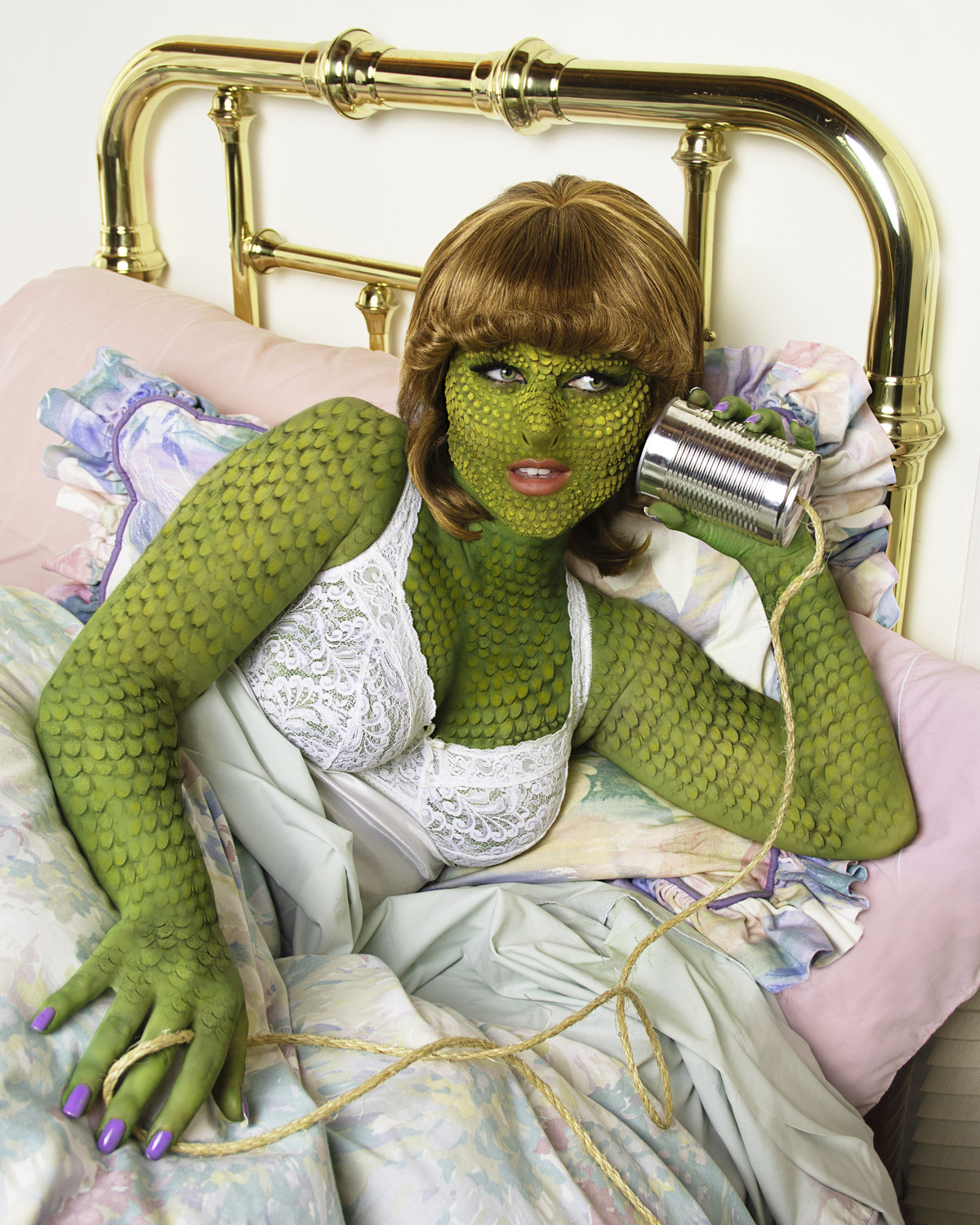
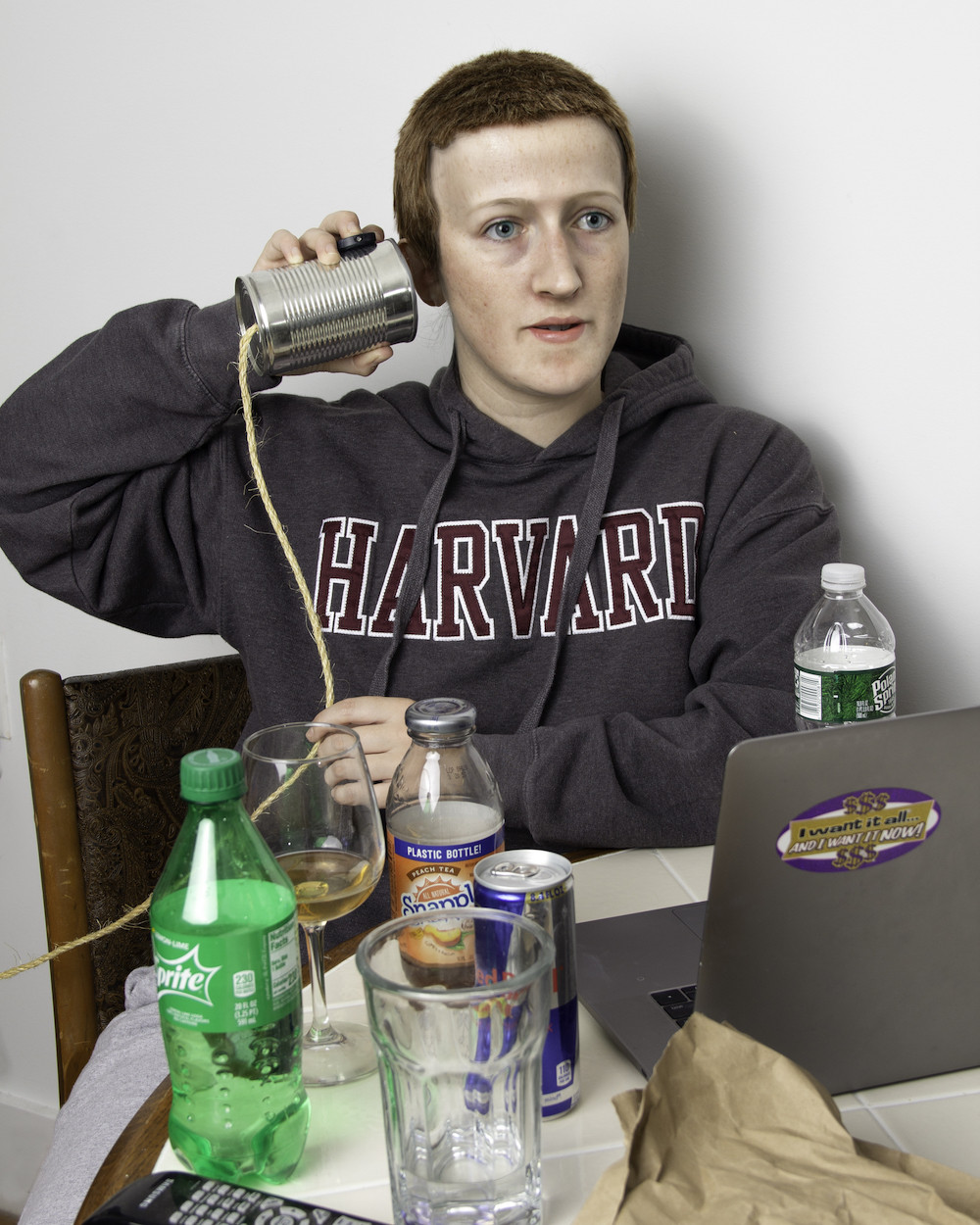
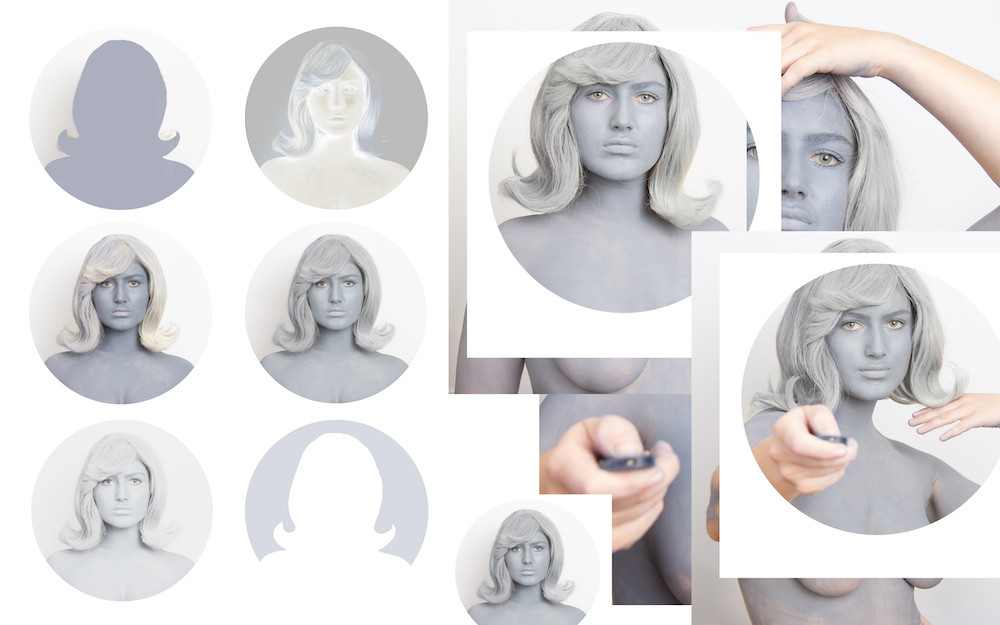
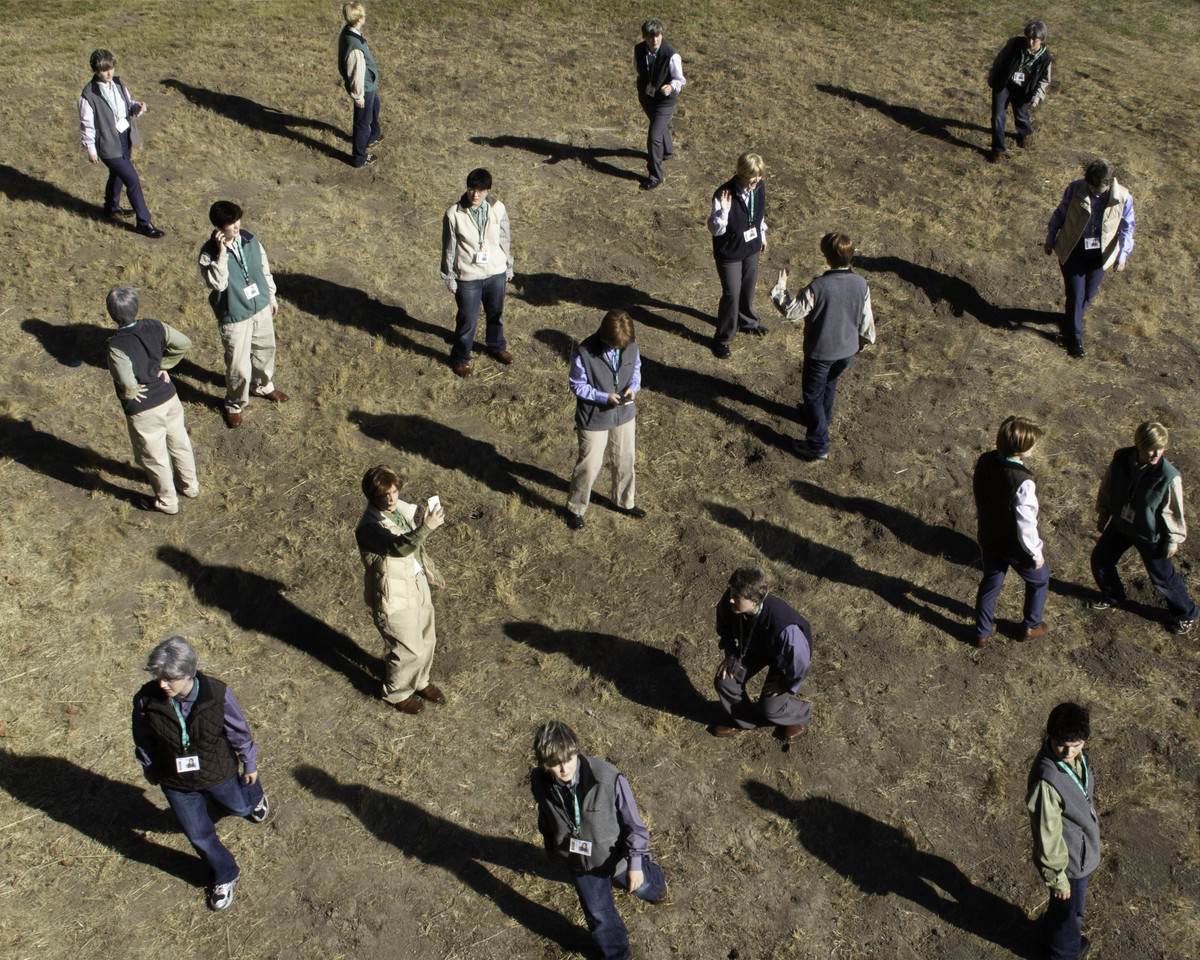
Conspiracies that Mark Zuckerberg is a shape-shifting lizard are almost as absurd as Zuckerberg’s actual, unimaginable wealth. And that’s what intrigues Murrie Rosenfeld, a Brooklyn-based, Bay Area-born artist who describes herself as a “wealth-obsessed, corny, wannabe-intellectual.” Her office-exclusive series Valley Boys imagines the mystique of the elite ruling class as a Goosebumps-inspired exploration of conspiracy, capital growth, tech, and anonymity.


“I’m super fascinated by the ways we try to make sense of power structures in communities that we can’t fathom,” she says. “Even though conspiracy theories can be really fucked up and grotesque, I do think that they’re a really valid response to this disconnect that exists between the average person’s reality and these incomprehensible levels of influence and equity that billionaires and corporations have on our lives and how they shape our digital world.”
And it’s an undeniably weird world we live in these days. office sat down with Rosenfeld to see how she tackled it in her latest meme-inspired series.
So why are you interested in Zuckerberg in particular?
I’ve spent a lot of time researching billionaires and Mark Zuckerberg particularly, and I honestly think that early on, if you look at early videos of him right when he started Facebook, when he’s talking to a CNN anchor and they’re touring his startup, he seems like a cool guy and I would party with him. Now, he’s kind of evolved into this mythological American figure, and he’s literally the third richest man on earth.
With anyone rich and powerful, there’s this bizarre tipping point that occurs in public perception, where they transition from seeming like a normal, uber wealthy person, which obviously isn’t normal but you know what I mean—to someone who’s uncanny and detached and otherworldly. Kind of like the Turing Test or the Uncanny Valley: the weird tipping point where you’re able to sus something out. I find it so sus. Even reasonable people can think he’s like, a reptilian shapeshifter, and buy into conspiracies. Because how do you exist with this amount of money and power?
Where do you draw inspiration from for your work?
I’d say everything is super inspired by being raised in Silicon Valley, and seeing how tech culture dramatically changed the landscape of my home, both culturally and literally. I’m also inspired by going on TikTok k-holes, watching corny horror movies, and I love Goosebumps. That’s something that I’ve always wanted to incorporate into my work and I feel like this was my entry into the Goosebumps milieu with this project.
If I had to name an artist I’m really inspired by, I’d say Peter Saul. Because he’s also born in San Francisco and from the Bay Area, and all of his paintings are super grotesque, tangled, kind of deformed interpretations of pop culture trying to synthesize political and social things going on. Even though sometimes it doesn’t age well to comment on pop culture or current events, I think it’s still worthwhile. I‘m also drawing from David Icke’s shapeshifting reptilian elite conspiracy, which basically theorizes that secret societies, Hollywood, governments, etc., are run by lizards trying to control and enslave humanity. So I applied this logic to the Silicon Valley tech drone aesthetic.

Why do you use yourself as a model?
I don’t know if you can tell, but I'm pictured as Mark Zuckerberg talking to the lizard. A lot of people definitely ask me—are these self portraits? I always get compared to Cindy Sherman. I love her and I think she’s so important for opening a door I maybe otherwise wouldn’t have thought to walk into, but I honestly feel very little relation to her, in the art or photo scheme of things.
I really think about using myself in photo series more in the way that a cheesy comedy movie or sketch comedy would play out. Kind of like an Austin Powers thing—he plays Austin Powers and Doctor Evil and one of the spies. It’s a tool to emphasize the narrative and create connections that wouldn’t otherwise be as obvious. When I model for my own stuff I really feel like it’s closer to sketch comedy rather than playing on stereotypes.
What do you see yourself doing in the future?
This series is definitely a continuation of my old projects. If you put this next to my old work, there really wouldn’t be a huge conceptual discrepancy. I don’t think as a topic I’ll ever get sick of examining the pursuit of wealth and power. I just know that going forward, I want to move away from kind of celebrating luxury while critiquing it, because I feel like that’s something that I witness a lot in other art: straddling the line of, “I hate how wealthy people are but also I want those things too.” And it’s complicated, but I want to try to better understand through visual language or to try to move towards revealing the structures that enable that extreme wealth and its mechanisms. Which is why conspiracy is where I thought to start, because I was like, how do you even begin to understand those mechanisms?
When you can’t even begin to understand these peoples’ lifestyles.
Right—I literally calculated this like 100 times on my computer because I couldn’t even begin to compute it, but Mark Zuckerberg and his wife have created this thing called the Chan Zuckerberg Initiative. It’s where they’ve planned to donate 99 percent of their wealth throughout the course of their life. Obviously that sounds insane, but if you calculate it out, Mark Zuckerberg is worth 100 billion dollars, so assuming that that’s mostly liquid even though it’s not, if he donates 99 percent of his wealth, he’s still going to die a billionaire. It’s now more than ever that we really need to question, should anyone be a billionaire? He has enough money to end homelessness in the entire Bay Area, but he doesn’t. Our brains can’t even begin to cover what that kind of wealth looks like.


The other day I was reading on Twitter about Dolly Parton’s wealth—
Ok well she deserves it.
Right. She’s donated something like a thousand dollars a month to all the families affected by Tennessee wildfires and then I think a five thousand dollar lump sum at the end...I can’t even name all the shit she does, but my point is that even though that seems incredible it also doesn’t hurt her one bit.
And she’s not even a billionaire! It just doesn’t make a dent!
Off the record, I knew someone who worked for Amazon who constantly referred to Jeff as “daddy Bezos.” He’s just reached a level where even if he’s your boss, or your bosses' bosses' boss, he’s not a real person.
Their existence is just so detached from a fathomable reality. I struggle to come up with words for it, but it gets to this point with billionaires where you wonder, are you still human? Or are you some kind of robot/reptile? Check the box that applies.

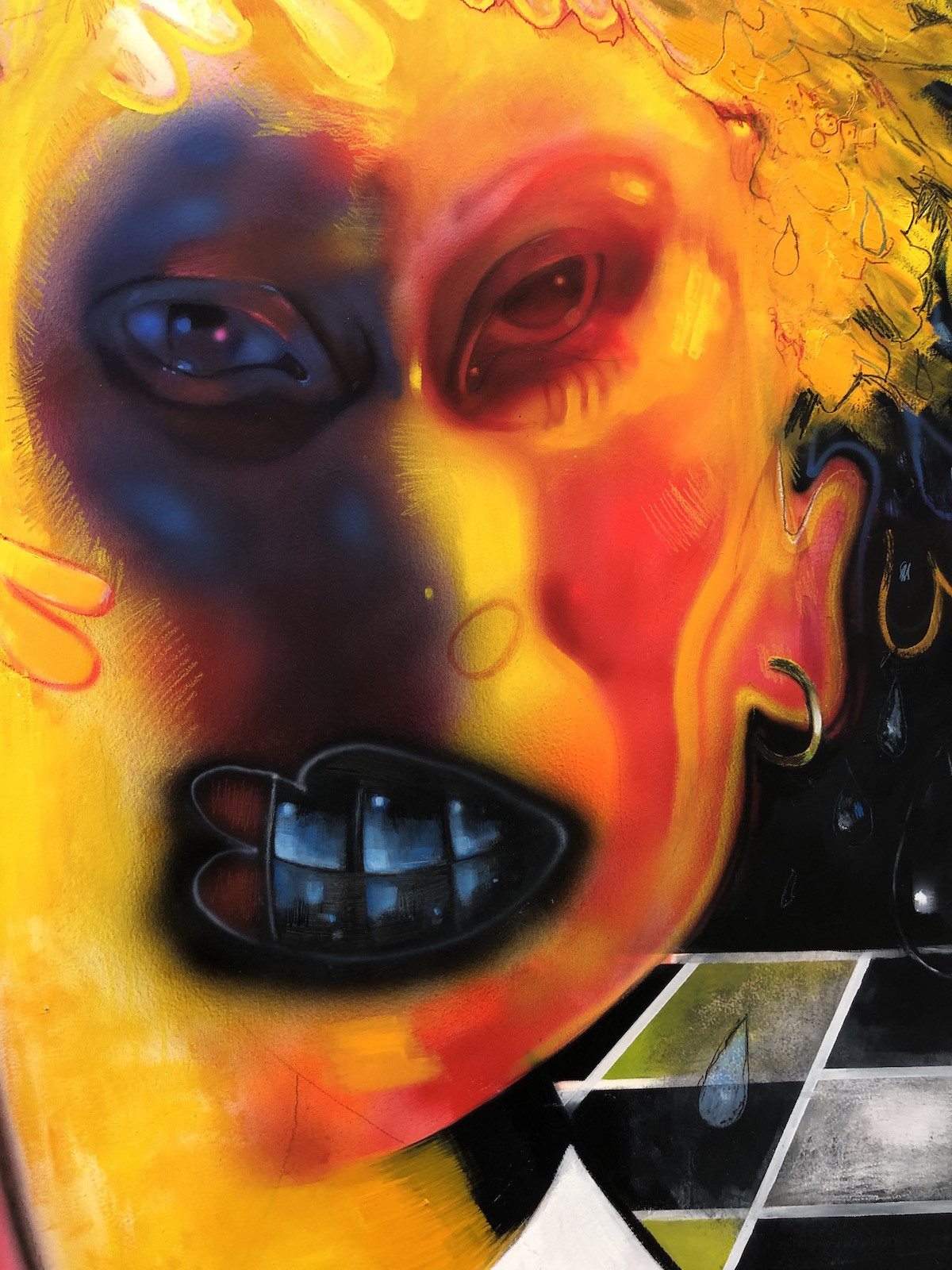
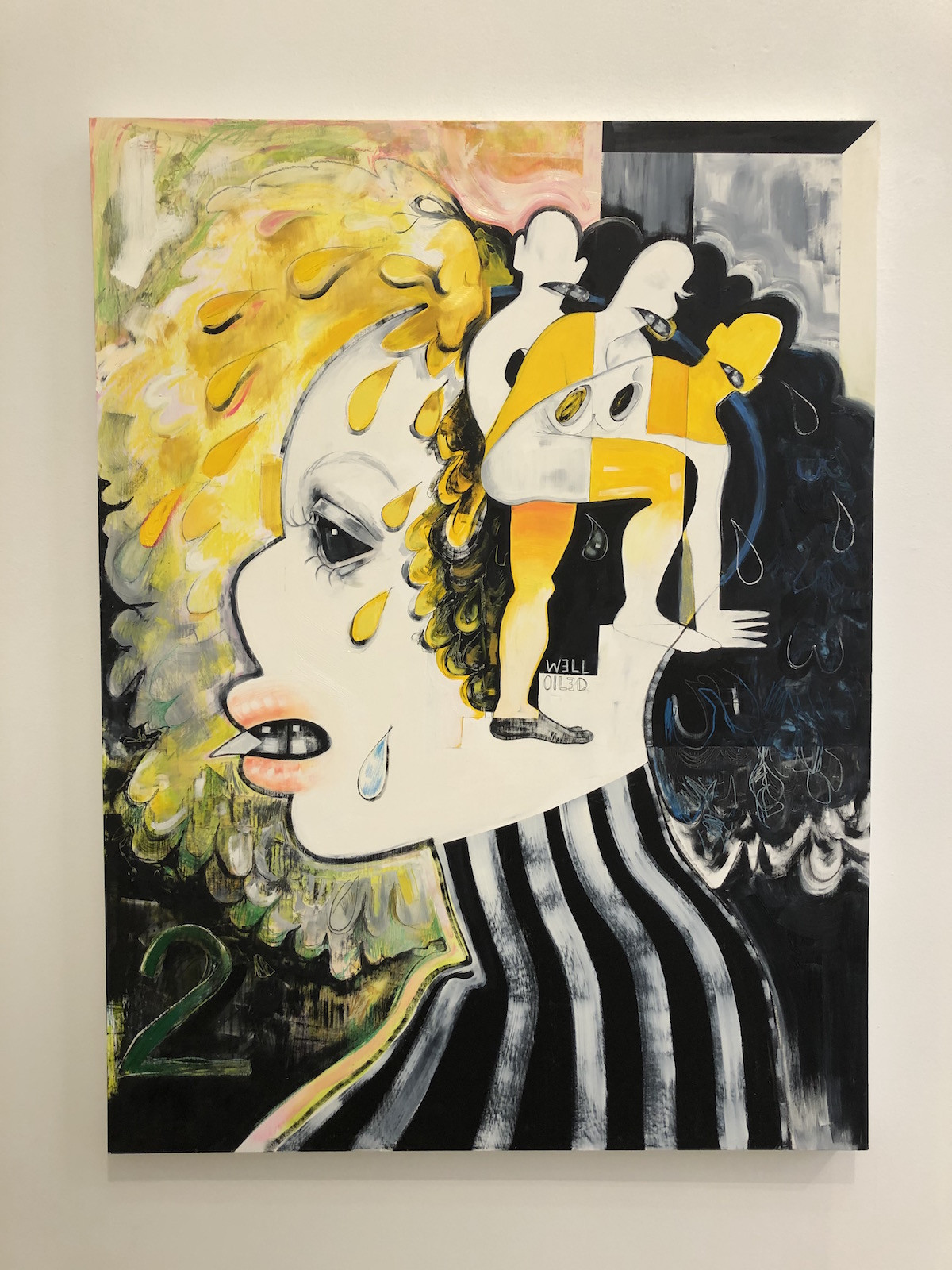
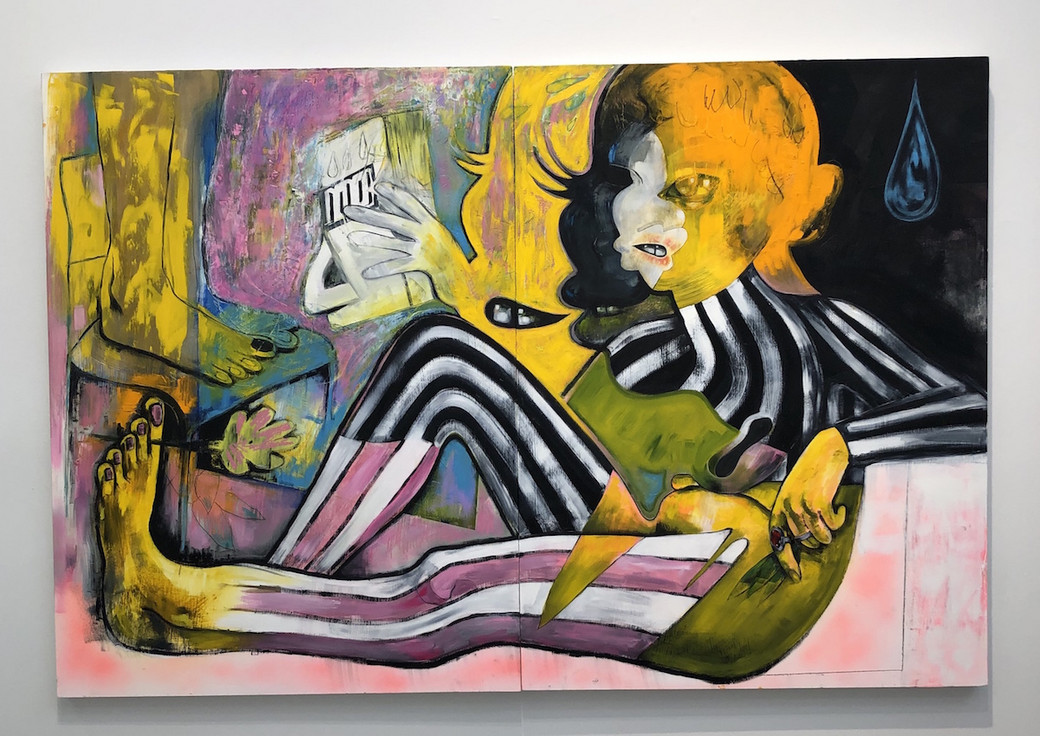
office spoke with Jade about the experience of getting a solo show in New York, her progress from print making to painting, and the different mediums and scenes she plans to expand into next, which are certain to excite.


Hi Jade.
Hey!
How are you today?
I’m doing pretty good today, how are you?
I'm good! What have you been thinking about these days?
Lately, I’ve been thinking a lot about how paralyzing fear is, how attached to social media we’ve become, and how addicted to my phone I am. It’s a lot [laughs].
How has the reception of your show been so far?
The show has gotten a lot of great responses, I’m very happy about that.
This is your first solo show, how did that come about?
It was in the works for a bit. The gallery had found my work on Instagram at the beginning of summer and wanted to start a back and forth. At the time I was just working out of my apartment. We set up a FaceTime so they could see the work and they really liked it and wanted to move forward. After selling a good amount of work through them in a little over a month I was able to get myself a studio space that freed me up in terms of scale. At that point, I just put in a lot of time into being in the studio and the gallery liked the work a lot and it just sort of happened from there.
What’s it like having your own show? What has happened that you didn’t expect?
This solo show has been an incredible experience, I had no idea how everything would turn out and it’s super nerve-wracking putting work that's so personal to you out into the world. I was totally surprised that the show sold out the day before it even opened. It’s been a mind trip.
You graduated from Mass College of the Arts in 2014 as a printmaker. What was it like learning at Massart?
Massart has a great printmaking program. It’s very intense, you can’t really half-ass printmaking. I mean you can and there were plenty of times that I did to an extent, but even then there’s so many chemicals and steps to follow that you have to pay attention to for safety reasons, and you’re dealing with big machinery, so it takes a level of seriousness and focus. It’s science. We were all big nerds about it. I was partial to lithography and etching. Actually, because of the show, a print publisher approached me about doing a printmaking project which will be my first serious printing project since graduating. I’m very excited about that.
How has your background in printmaking affected your relationship with painting?
Printmaking made me see things in layers. And it also made me more open to what’s out of my control. You’re dealing with these chemicals and leaving copper in acid for a certain specific amount of time and sometimes things come out differently than you intended and sometimes that’s the most beautiful part. I look at painting that way. I like to plan to a degree and then after a certain point when enough of my intended information is on the surface, it’s gotta start to do its own thing. When I find myself unable to let it do that is usually when I’m struggling.
What has the painting life been like for you since you graduated?
After I graduated there were 2-3 years that I didn’t really create anything seriously. I think coming out of an academic setting and also just life kind of stifled me. I started creating again without any reason other than it just making sense, it’s second nature. Painting was the easiest medium for me to use inside my apartment. I’d work pretty religiously on paintings on my days off from bartending. It was how I recentered and how maintained my inner dialogue.
Who do you feel are your greatest influences? What do you go to for inspiration?
Some big influences for me across all mediums are Francis Bacon, Belkis Ayón, Egon Schiele, Toni Morrison, Danny Senna, Bell Hooks, Joe Henderson, Herbie Hancock, Stevie Wonder. Music and literature are a major influence. In the studio, I play a lot of different stuff but usually, I like to play music that takes your mind somewhere. Herbie Hancock’s “Headhunters” is great. Max Roach has this song called “Garvey’s Ghost” that really absorbs you into a sense of purpose. That’s the point.
For inspiration, I usually write things down that I feel are important or will be of use later. A lot of it consists of short two, maybe three-word phrases that I think are funny in some way but also personal. They sound vague often but they all have personal meaning. Eventually, they’ll start to flesh out into something visual. Sometimes they don't and it's whatever. I try not to be tragic about when stuff isn’t working. I mean it feels that way sometimes though.



Much of your work is oil on wood panel, what is the relationship you see between oil and wood paneling? What does it allow for?
I like the wood panel because it's a hard smooth surface. I can draw and paint and draw on top of the paint and dig and carve into the paint in a way that's really satisfying for me, probably goes back to how I like working in layers.
What’s the relationship between movement and your painting style?
Movement is usually relevant in the figures in my pieces. They’re usually somewhat contorted or caught awkwardly in the middle of some action or realization. In a general sense, movement is related because I can use my own body as a vehicle for whatever type of energy into the strokes and gestures. In that sense, that movement is in some of the pieces more than others. Sometimes I work super gestural and then pull back and work very tightly. I like tension.
Are there projects you’re waiting for the opportunity to begin? Where do you want your practice to evolve toward next?
I’d love to do a project in LA next. I’d also love to explore sculpture, experiment with that as well. That would be great.

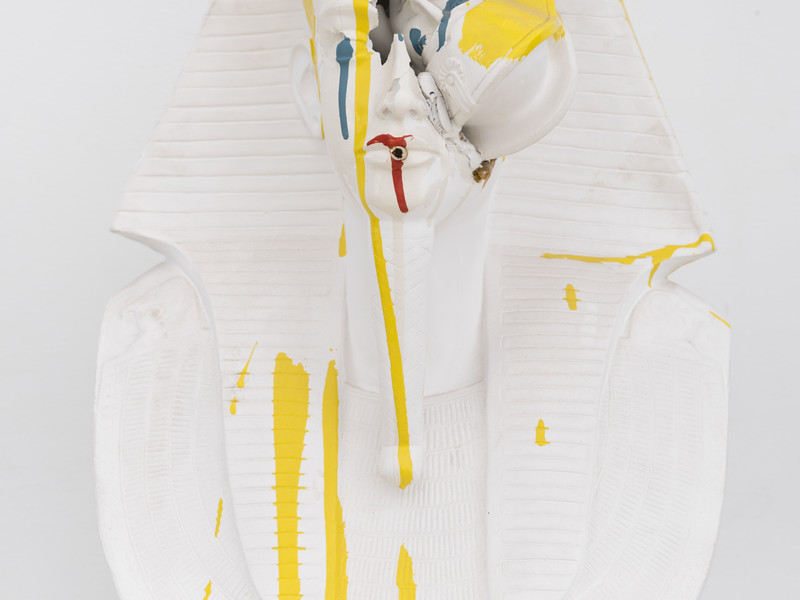
Each one-of-a-kind piece was created from layers of printed pastel using Ross' innovative mechanical process paired with Westly's complex and intricate designs. Check out the two artworks below and above, and purchase them here.