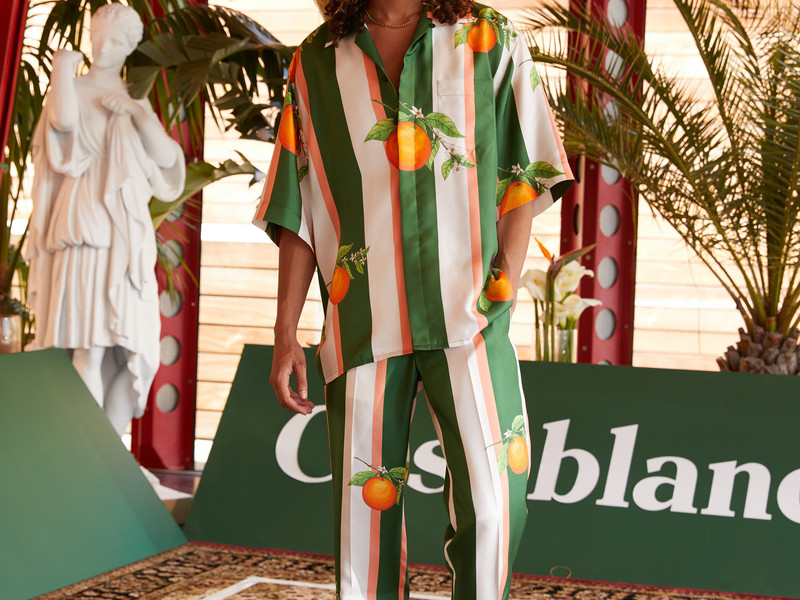
Through the choreography you could really tell that he was trying to emphasize that everyday movement and exaggerate it into something beautiful. As an audience member watching, you were really able to think about these small movements not only in the dancing but in the garments as well.
But that was also something that was really important. We wanted it to be very simple since it could look pretty conceptual. What was also very important was to have the audience very close to the clothes. So much so that you could even touch the garment. You can see all the details since they’re moving very close to you. When we did the first rehearsal with Wayne at his studio in London, it was really interesting because there was no music at the time. We were trying the first prototype of the collection. We just heard the sounds of the fabrics moving. And Karin, Wayne, and I, thought at exactly the same moment, we need to make the music out of that. So we gave the old collection to Joel Cadbury who made the soundtrack to this performance, and he started to work on the sound of the fabric, the sound of the clothes as you move in them. And the result of that is what you heard yesterday.
You’ve been in menswear for quite a long time now. How does COS compare to other brands you’ve designed for?
All the brands I’ve worked for have been amazing. I was lucky they wanted to work with me. They’re all different, but they all have one thing in common, which is the research. There’s the research to create the best garment ever, but more than that, it’s the research to create something that can last. It’s something that is incredibly important to COS. Not only myself, but the buyer, the people involved in the making, are super concerned in the quality. When you work with essentials, the garment needs to last for a long time. You can wear it for one or two years, put it back in your wardrobe forever, and one day find it again and it’s like a gift.