Question Thy Morals, Covet Thy Neighbor
Kayla Curtis-Evans — You were raised in Rome, and your father worked for the Vatican. How did this shape your early perceptions of religion?
Marguerite Wibaux — I definitely experienced it in excess. Mass for Easter would last three hours. Everything was bigger and more intense in a way. My mother would have to be covered in lace, wearing gloves, and showing no skin at all for the Pope Mass. So it was a certain level of ritual that was very intense. And, of course, as a child, you are much more impressionable. In Rome, there's a lot of art in the churches. That's where I discovered Caravaggio. In fact, most of the paintings are still in churches and not in museums. So you have to go to different churches to see the paintings. So for me, this idea of spirituality and something that's bigger than us is tied to the experience of looking at art, and seeing all those beautiful and extraordinary sculptures and architecture. It's a very sensorial experience. At the same time, when you're a pre-teen, that's when you start to understand that sexuality is a powerful force. I realized that in religious art, sex was everywhere. So — I wouldn't say this defines my whole practice — but it's certainly led this show. For this body of work, I really wanted to go back to the roots of that awakening.
You had an artistic awakening at the same time that you began to question the constructs of your religion. I think it's interesting that, for you, those experiences are inextricably intertwined. I feel that this body of work was also you processing your connection to religion as you've matured.
There's something about faith that doesn't make sense. For any rational person, if you start thinking about it, you're like — some of this is nonsense. The level of contradictions within religion is totally crazy. But there's also the aspect of being a part of a community. When you're a kid, everybody believes and finds it normal. And you tell yourself, 'Okay, so this is the way,' and you adopt that blind faith. I can relate that experience to art as well. The idea of me going into the arts as a full-time occupation is kind of crazy [laughs]. You know, it requires the same level of faith or belief that there's a powerful force that connects us all.
Has your faith shifted over time, now that you've grown to process those things you so willingly accepted as a kid?
So it's funny. Yes. Last Saturday, my brother got married. I was wearing my cross, and my father said, 'Oh, you're wearing your cross. But it's not one cross you need — you need a dozen to compensate for all the blasphemy you've been doing.' And at the wedding, someone else asked, 'With everything that you're doing, you're wearing this? Do you really believe in it?' I think that all faith is always very personal, and the spiritual life is very personal. I think I'm kind of doing my own thing with religion. It's still very important to me. I still believe in God. But very generally speaking, I'm very disappointed with the Catholic church and the institution, the power forces — many things are wrong there. There are a lot of parts of religion that I have trouble being part of, but at the same time, it brings me many other things. So I'm in that weird spot.
More than one thing can be true at once. With your work, you're not condemning religion altogether, but you are making your own commentary on these things that you grew up with. You're able to identify these cracks.
There's tension, you know? I think the attraction for eroticism is interesting because it's forbidden. Even the whole process of the confession is something that's voyeuristic for the priest and exhibitionist for the person confessing. The whole thing is super double-sided.
I want to talk about the feminist lens that you approach a lot of your work through. I love this perspective that you took because I feel that you're challenging or redefining women's roles as identified in the Bible. These recordings in the Bible usually position women within secondary or homemaking roles. How do you flip that on its head?
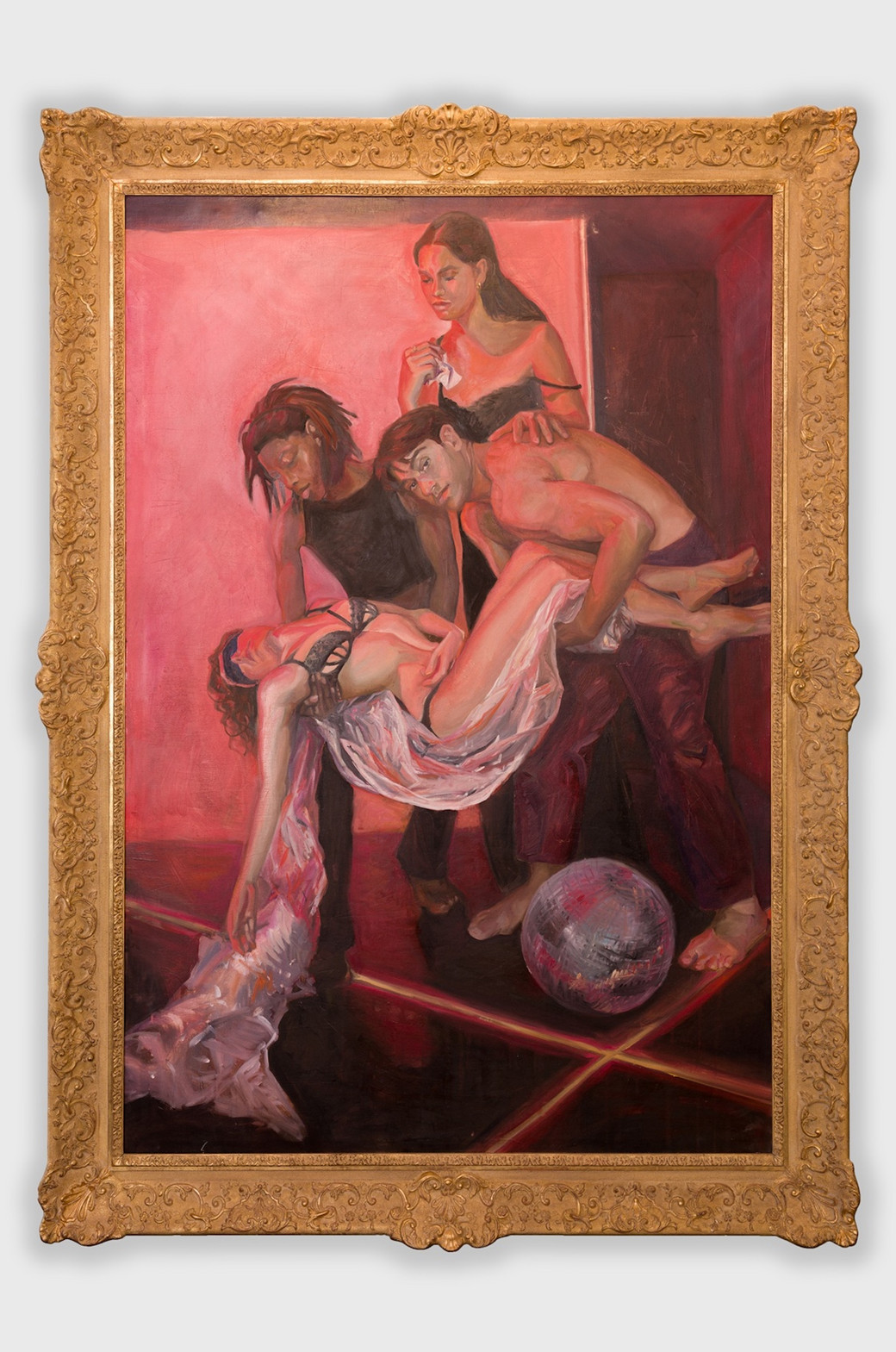
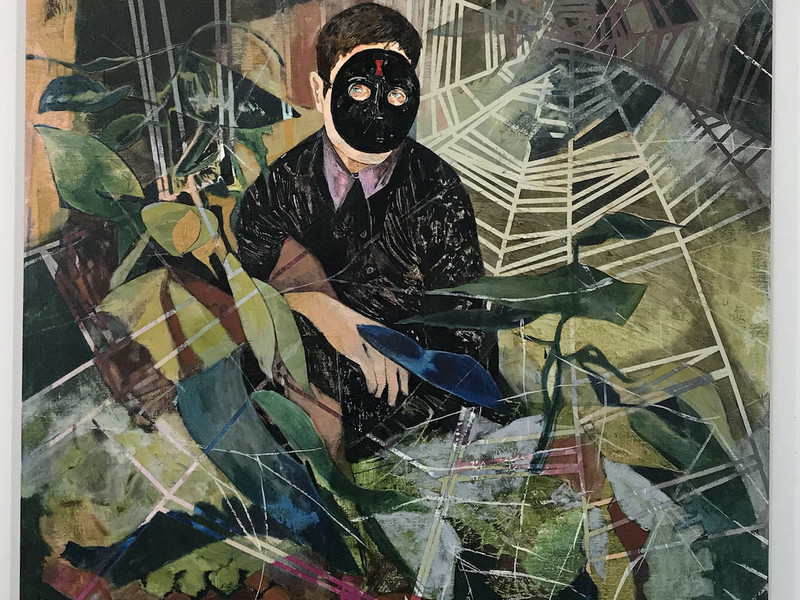
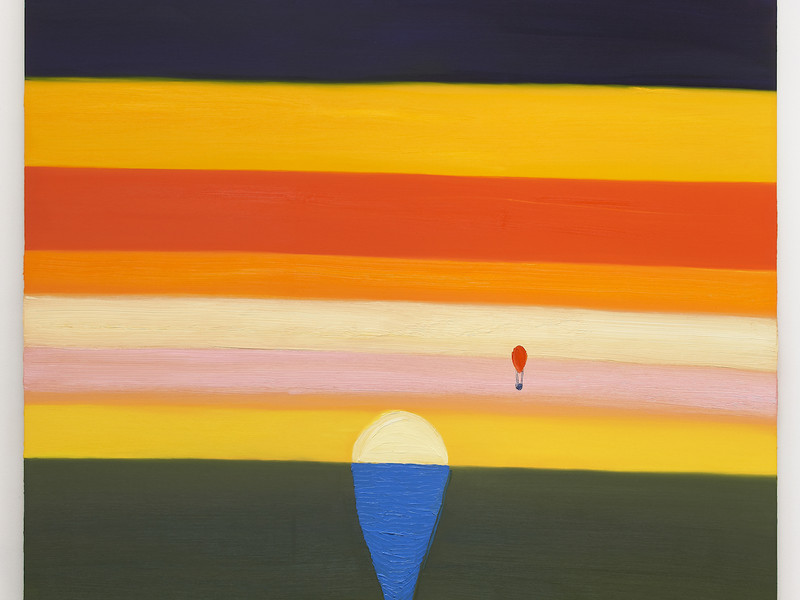
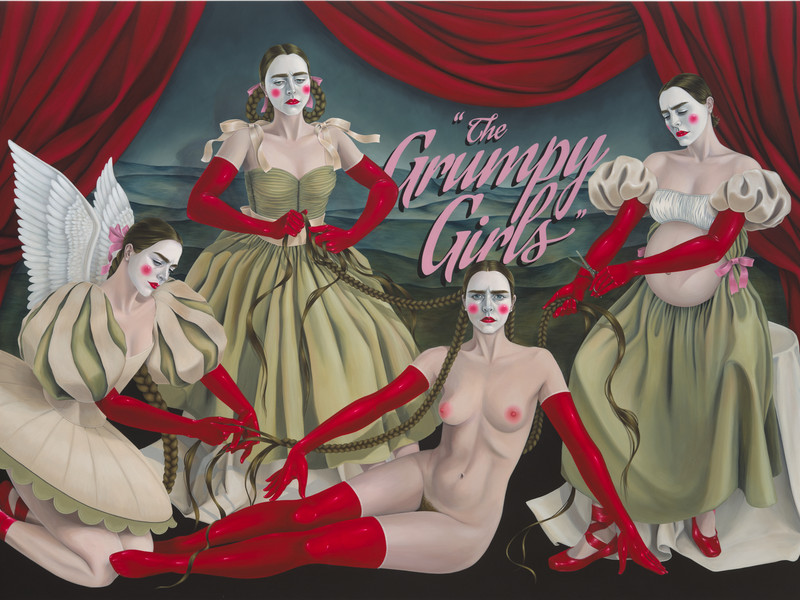
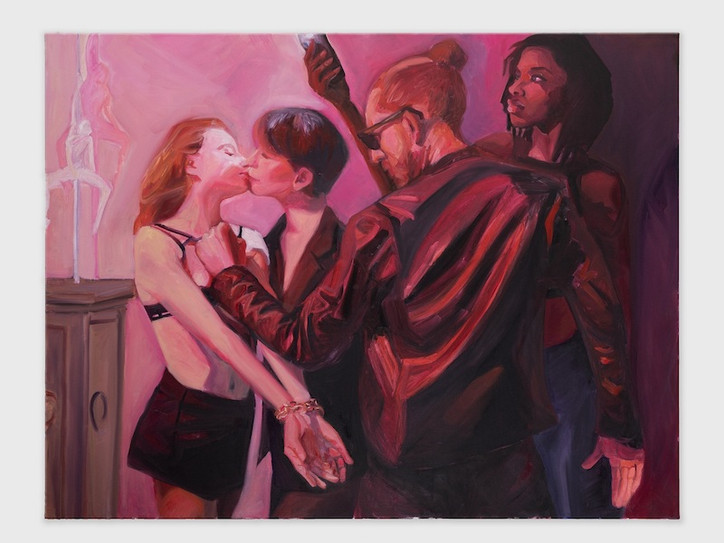
Yes, the role playbook for women in the Bible is very, very limited. There are only a few characters that stand out. Especially if you look at the New Testament. Basically, what came down into our society is the Madonna/whore dichotomy. Those are kind of the main female roles that we have available to identify with. This is a very male-gaze, male-centric kind of story. The starting point of this body of work, especially for the paintings, was that I identified that Christ is a figure that has a lot of the female experience embedded in it. It's very interesting — in Latin America in the 70s, there was this movement that was called the Theory of Liberation. It was a revisit of the figure of Christ. So the idea that he was a revolutionary, that he was fighting for the poor, that he was attacking the system. And there were a lot of left-wing revolutionary thinkers who used the Bible as a way to revolutionize South America. The idea that Christ can be revisited as many different figures stuck with me. And I think that Christ being dominated, offering his body, being betrayed, sacrificing himself — I related all of these experiences to the female experience in society. So that's why I decided to put women in the role of Christ. And also, Christ is the God of love. I think all those things go together with love and eroticism, the idea of submission, of abandoning oneself, of trust and sacrifice. All of those things are also part of the erotic experience. So that's the connection.
I think it's a very interesting through line of this body of work. Covet Thy Neighbor functions as a church stripped of doctrine. In many of the works, you reinterpret or reinvent traditional biblical depictions. If you led your own religion, what doctrine would you abide by?
[Laughs] That's a good one. If I were to be the leader of a cult, what would my speech to my believers be? I'm a firm believer in the idea of desire. Actually, before I named this exhbition Covet Thy Neighbor, the title of the show was Theology of Desire. I think desire is an energy of life. They're the same feelings. It's what makes you want to create something. It's what makes you want to connect with someone else, and maybe even have sex with someone else. An appetite for life. That would be my main tenet. I think that being scared or holding back from that is like trying to tame yourself. So that would be my main teaching — freedom to desire. I've never really said this before, but what I think that what makes sex 'dangerous' is the way it's repressed, in a way. I think that some people see sex or eroticism as animalistic notions, separated from being logical and reasonable. I feel that it's this opposition between body, animal, and human spirit that's completely wrong. I think that the way that desire and sex can connect you to something — it's a beautiful experience.
The Catholic religion can breed a lot of shame. You're taught to repress and push down those parts of yourself. Your work encourages exploring your body and your mind's connection with these notions, and I think that's really important.
It's also about love and surrendering, and letting go of yourself. I don't know how you can love if you don't engage in desire. And that's why it's weird with religion, because they preach love everywhere.
You take a multimedia approach to your work. Why do you choose to channel your artistic perspective through multiple mediums, and especially for this body of work, why did you feel that sculptures and paintings were meant to live together?
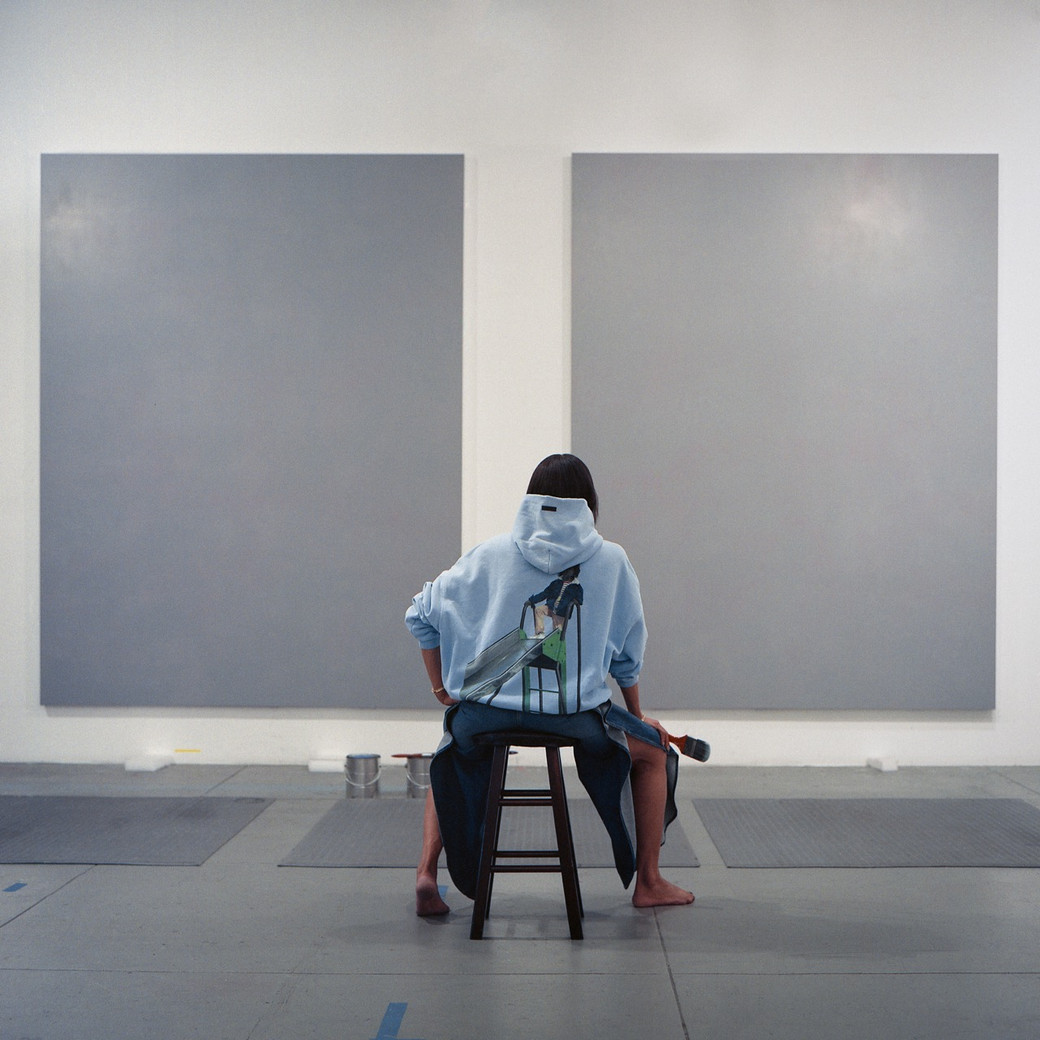
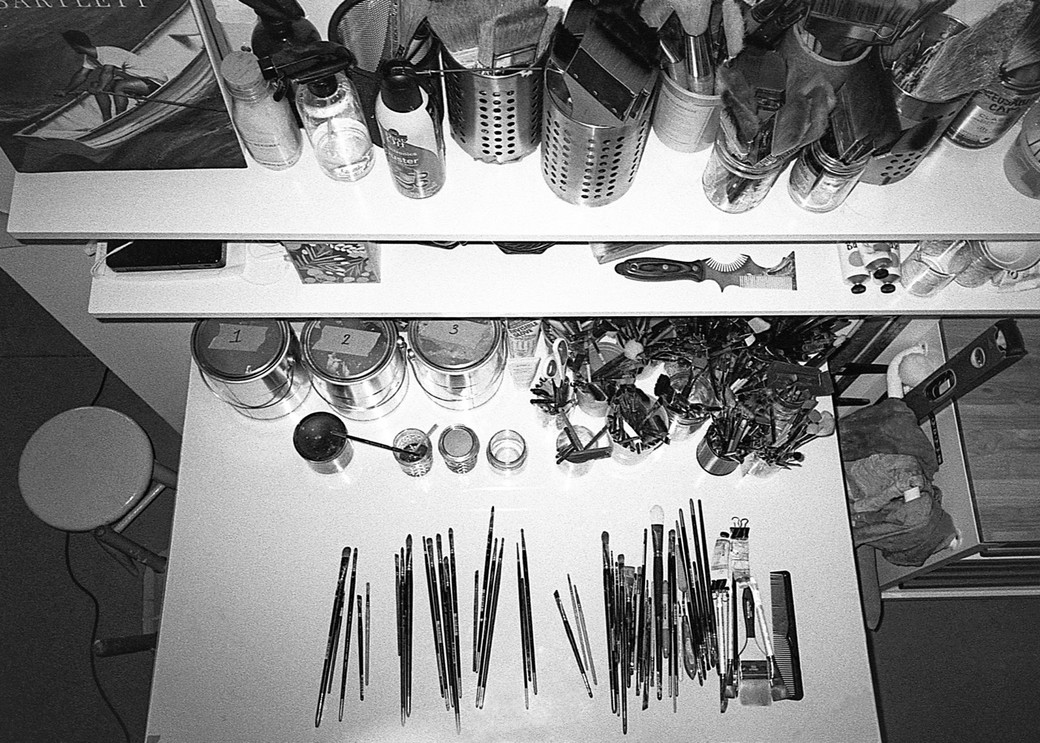
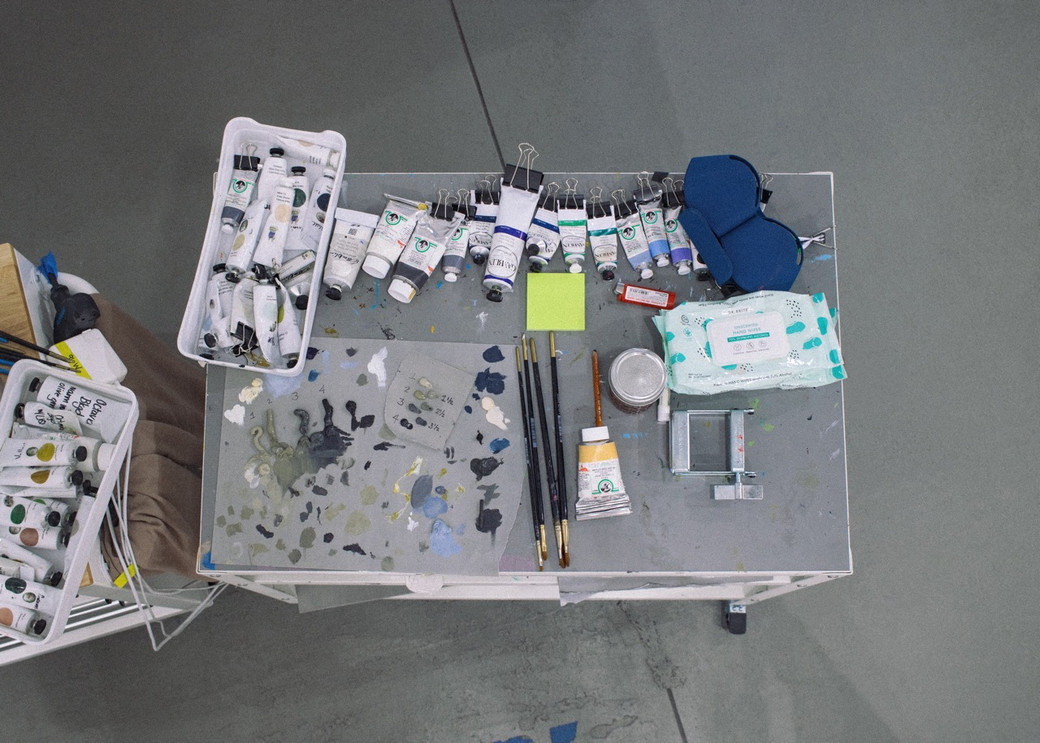
Because I wanted people to get immersed in a universe. On top of that. I'm a multimedia artist, but I'm also a multi-size artist. I go from miniatures that are about five by five inches to the six or eight-foot-long paintings. And I do those small sculptures as well as very large ones. The miniature paintings are more meditative. I paint standing, but with the miniatures, I'm sitting. It's the way I keep my balance and flow, and keep my energy moving in the studio.
It sounds like you have different parts of your brain that you tap into for these practices. So it's cool you get to feed those different parts. On the note of immersion, I think a big part of making the exhibition feel authentic was the techniques or treatments that you applied to certain sculptural pieces. You wanted to conjure this look of patina. Were there any special processes you undertook to achieve that?
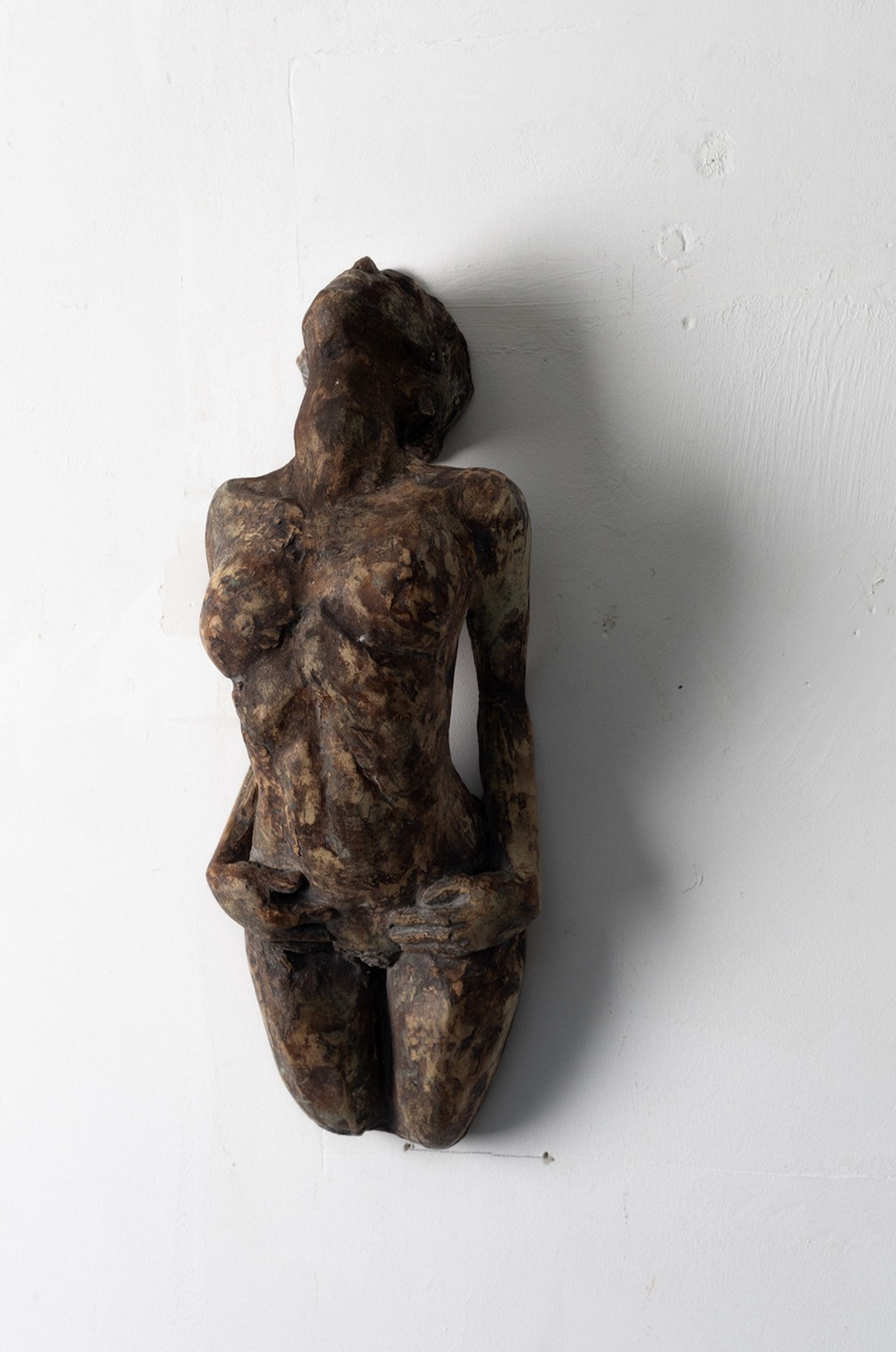
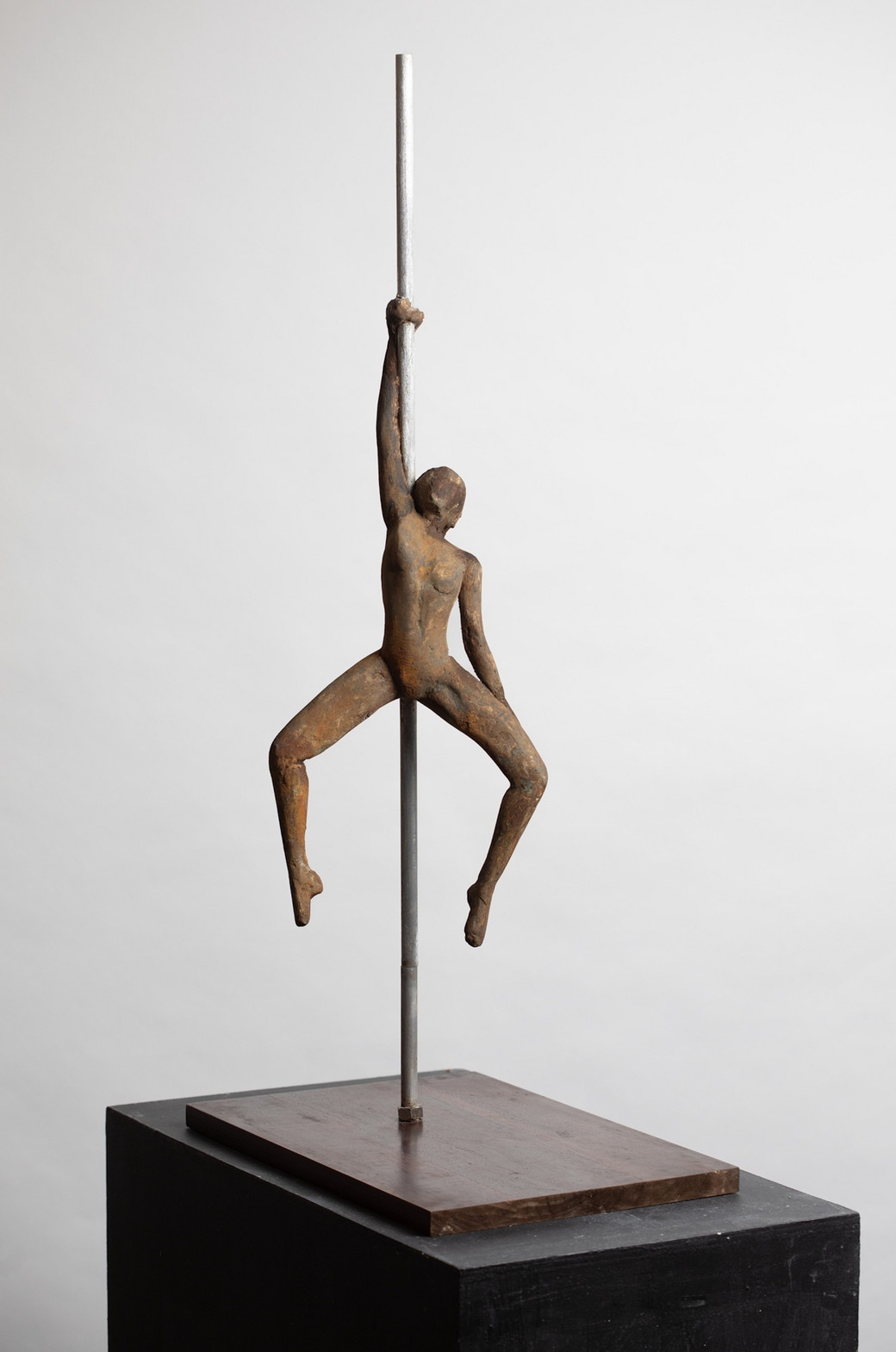
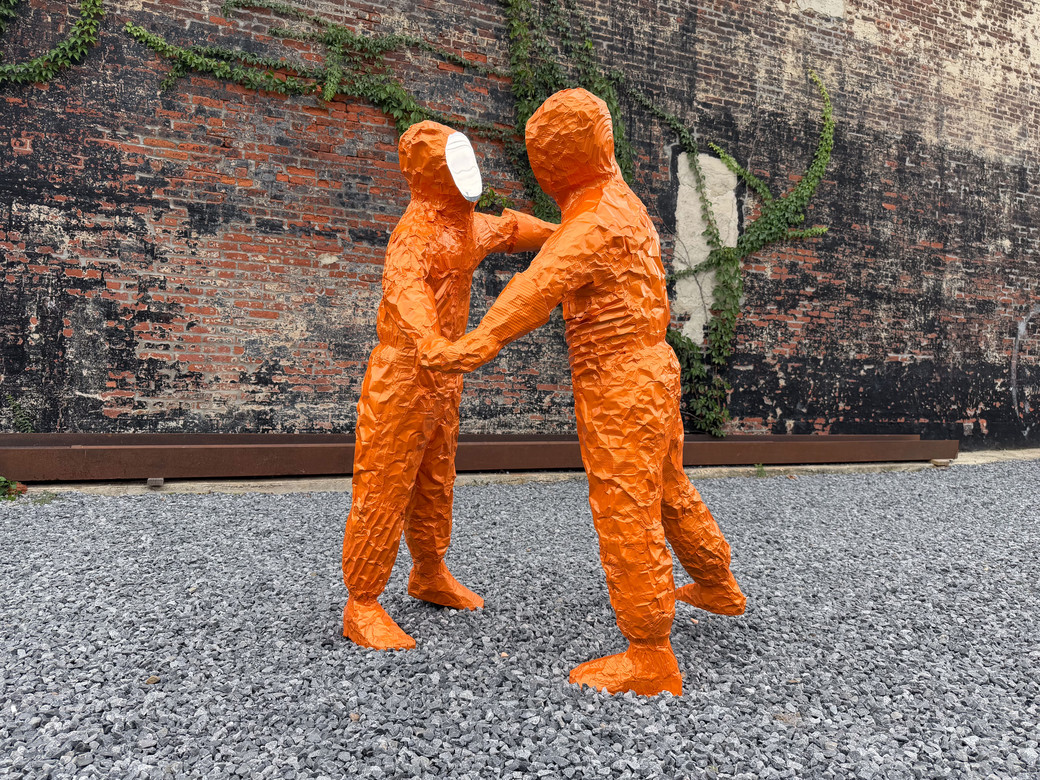
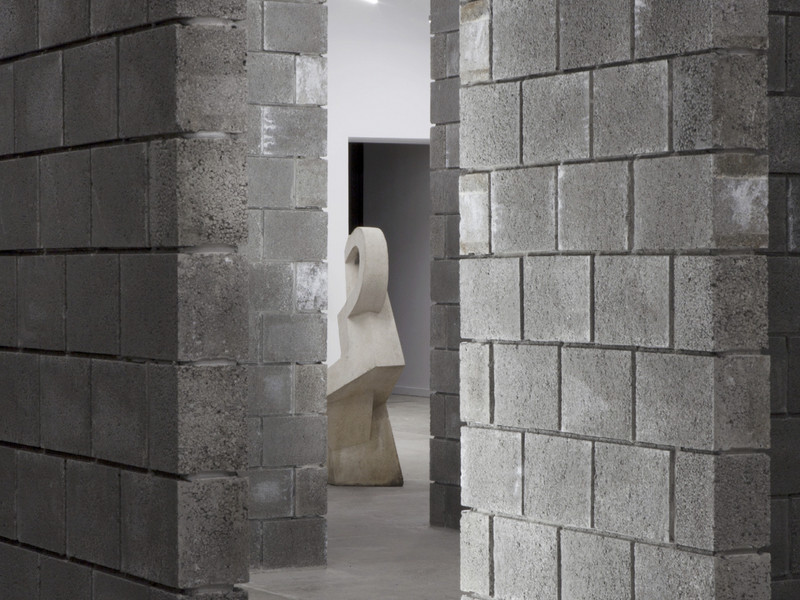
There's this idea where I'm kind of attacking the ideals of religion in this show. I love plaster, and I work mostly with plaster. Most of the sculptures in the show are made of plaster, except the fountain, which is made of stone. If you've looked into my previous body of work, I used to love white plaster. And it lasts forever. It's very forgiving, so if you make a mistake, you can always repair or change it. But again, since this show was about breaking down certain ideals, I started exploring ways of soiling the plaster without applying paint on it. I started looking into different chemicals and how to make a reaction with the plaster. I rubbed them with wood wool, and then from there, sprayed them with vinegar. I realized the wood wool with the vinegar would create rust on the surface. And from there, I kind of developed this technique. I'm a very impatient person, and I want results immediately. But that's not how rust works — it takes multiple days to manifest. So to speed up that process, I started adding other elements like copper and graphite. And then ink, and then silver powder, alcohol, more vinegar, salt. I was playing chemist. It was this idea of rehumanizing the sculptures and making them very imperfect.
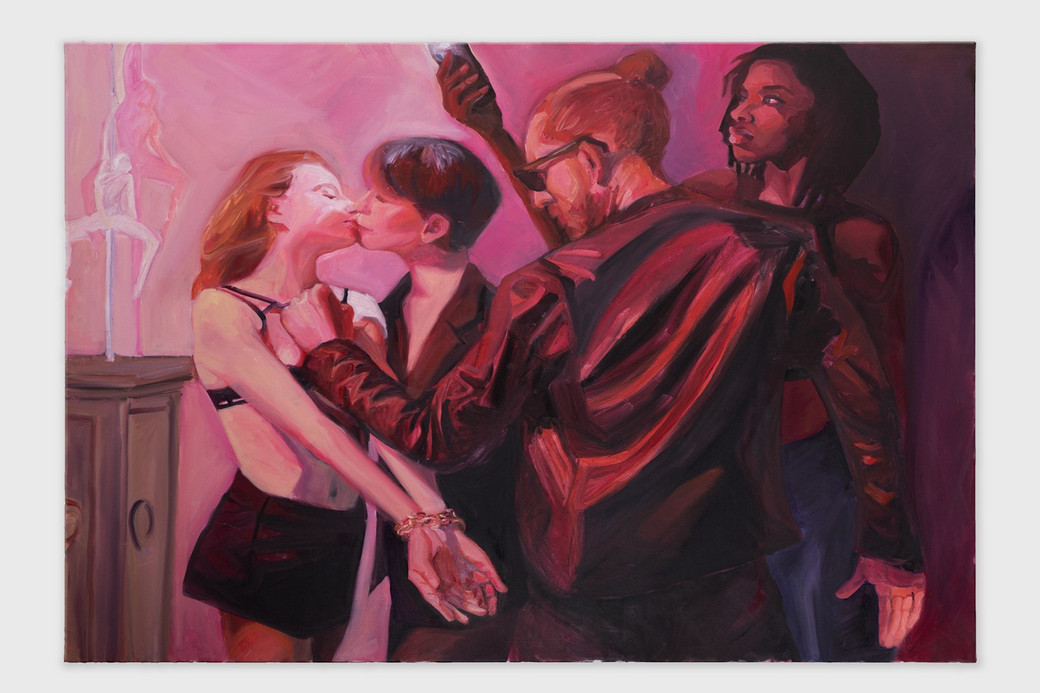
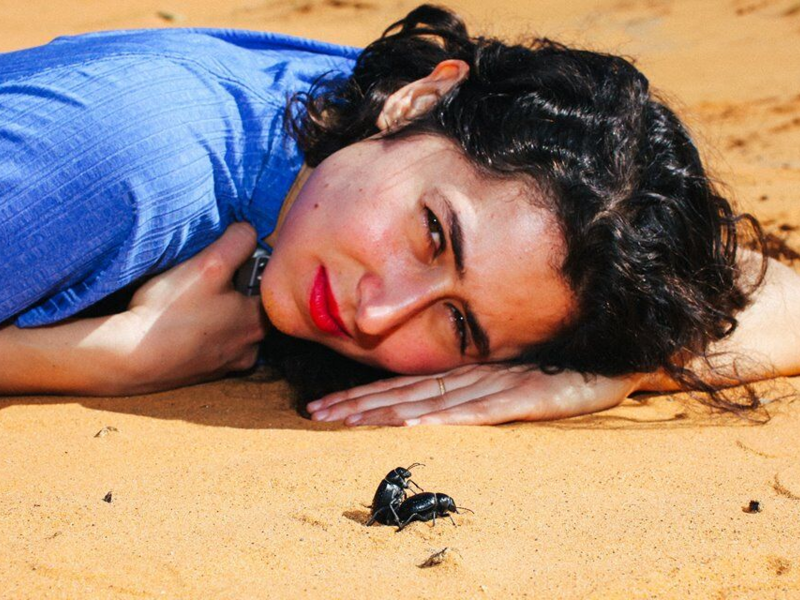
A lot of your paintings were about reframing Biblical scenes through a modern lens. I also wanted to touch on the fact that this was your first New York solo debut. New York is full of underground communities, and I think a lot of your paintings alluded to those spaces — like a sweaty nightclub or the back room of a dive bar. Why did you also choose to include these erotic disco themes in this body of work?
I think that it goes with the idea of transgression. The idea of going into the forbidden places. I think that those places come from my subconscious and my own fantasies. It's also about the contrast between light and shadows, from an artistic perspective.
You expressed that your faith is channeled into this work and into your practice. But now that your experience with religion has shaped you in different ways, these days, who or what do you find yourself praying to?
I pray to God as the overall force of love and connection between people. The creator of all beauty. I was recently reading a book about Michelangelo. His approach to art was about understanding, 'What is beauty?' And he says that beauty comes from seeing the creation of God within nature and the human. He says, 'Whenever I see a man, or whenever I go around in nature, I see God.' So art is my way towards spirituality through beauty. My quest for art is deeply connected to my quest for my faith and my quest for beauty, and for making something good in this world. Sometimes when I go into the zone, and I finish an artwork, I feel, 'This is not me, this is something that was channeled through me.' I want it to feel like something bigger than me.