AS-Didn’t expect we’d get into Buckminster Fuller. The geodesic dome guy, right? Love that. You were telling me earlier about discovering this reflective material. Can you share that?
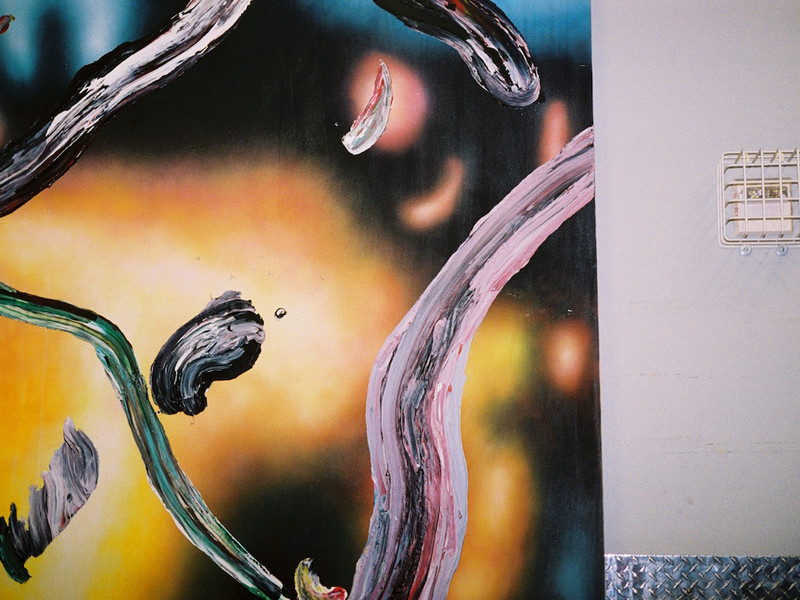
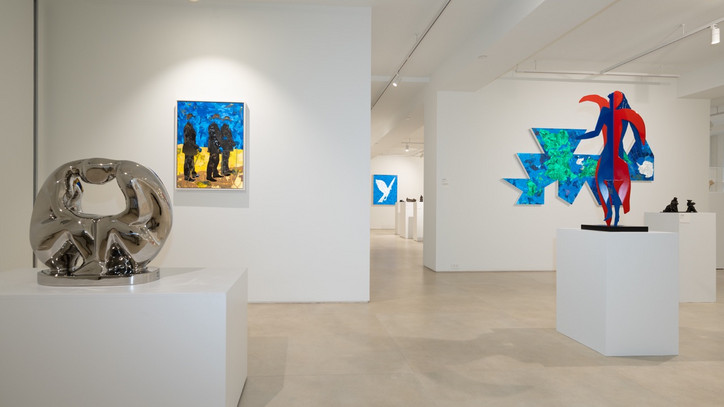
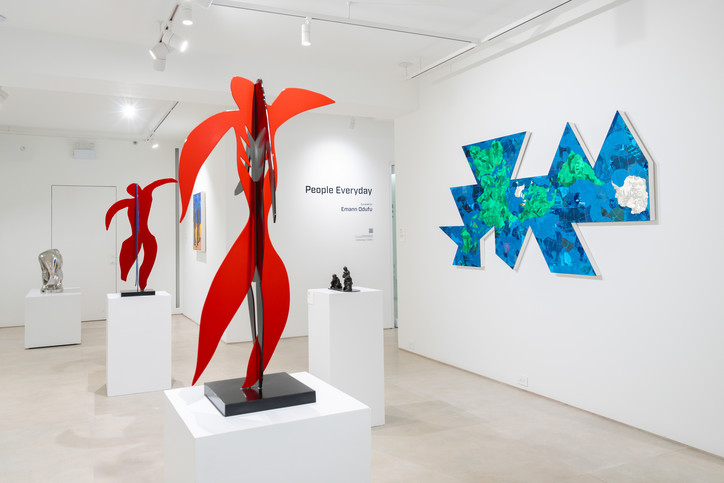
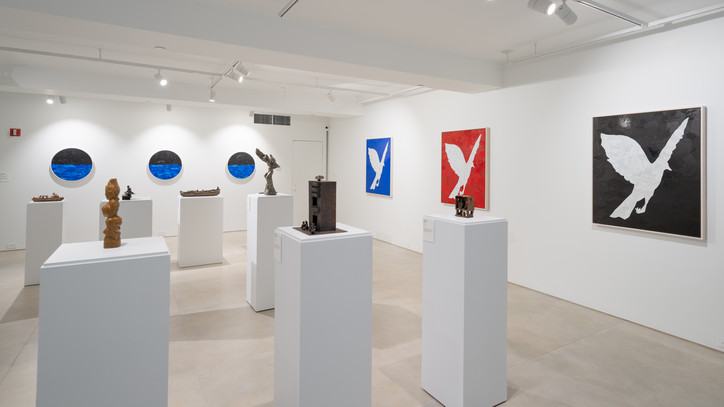
HWT-Yeah. I hope everyone gets to see the show downstairs, if you havent already. The two-dimensional works down there are made using retroreflective vinyl—the same material found on street signs. It reflects light directly back to its source, so at night, a stop sign only lights up when a car’s headlights hit it. I was interested in taking this material—used for wayfinding—and repurposing it to explore history. Because history itself can be distorted or obscured. Using light to reveal layers beneath the surface became a metaphor for illuminating forgotten or overlooked narratives. The first time I saw the material was in a sign shop. I had this epiphany: if I printed green ink on green retroreflective vinyl, it would disappear. But if I printed blue on blue, it would become visible. That sparked the idea of working with visibility and invisibility—literally and metaphorically.
AS-Do you have to prompt yourself to have these kinds of revelations? Is it a discipline, or do they just hit?
HWT-Good question. If I could prompt myself on demand, I’d probably be much happier. (laughs)
AS-Yeah, it's that pressure. You sit there thinking, “I have to come up with something.”
HWT-James Baldwin once said the artist’s struggle for integrity must be seen as a universal human struggle—to become truly human. That quote stays with me. In my work, I’m just trying to be the best version of myself—and often failing. But artists get comfortable with that—failing, and doing so publicly.
AS-Don’t be so hard on yourself! But that’s part of the territory, right? I avoided becoming an artist for that reason. Though my field has its failures too. Also, props on quoting Baldwin—that’s no small feat. His sentences just keep going! Okay, let’s talk about the Embrace and the two Liu Shiming pieces you paired it with. Emann?
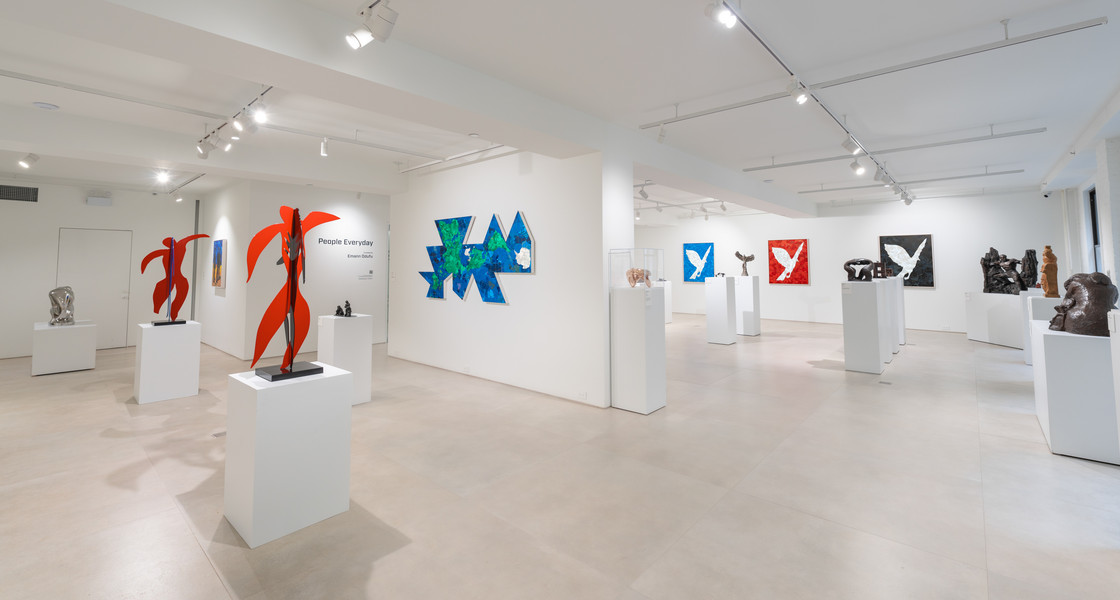
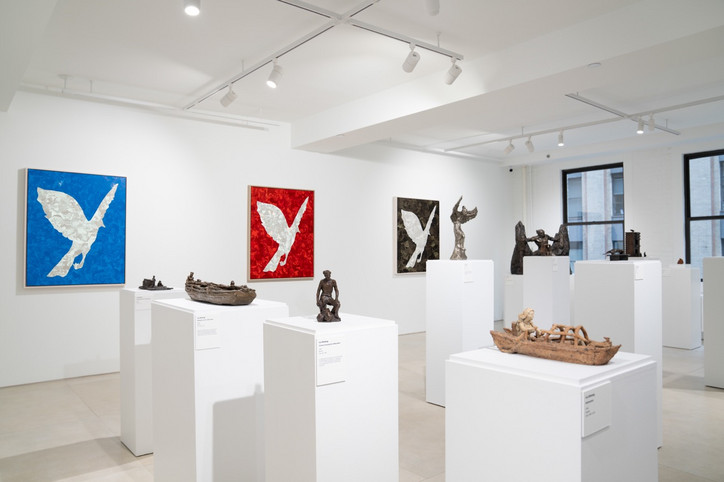
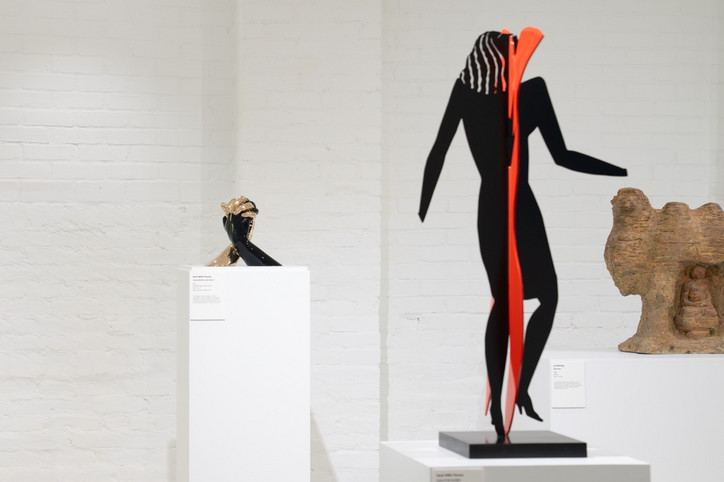
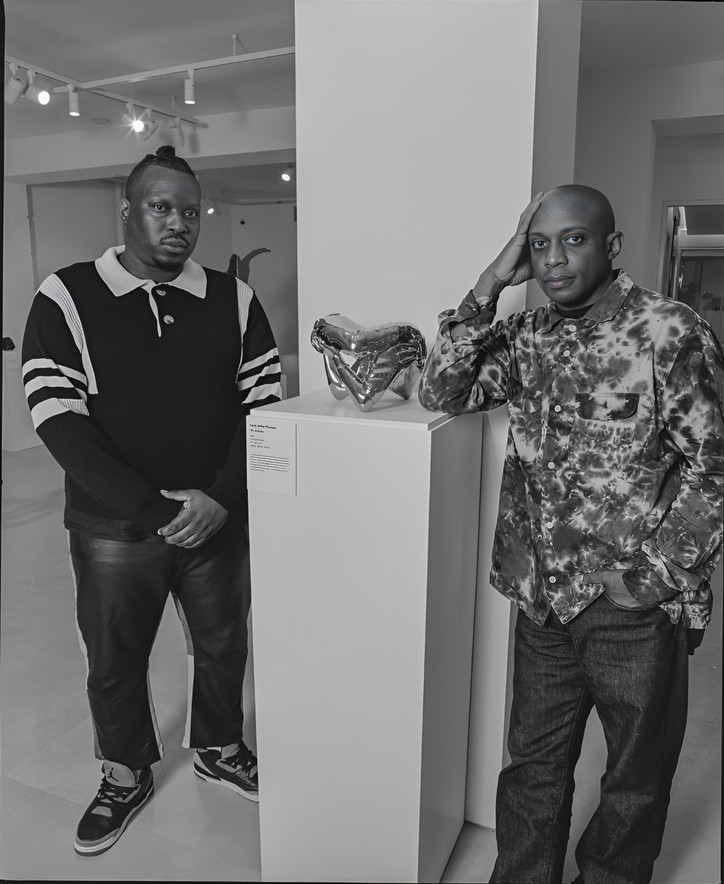
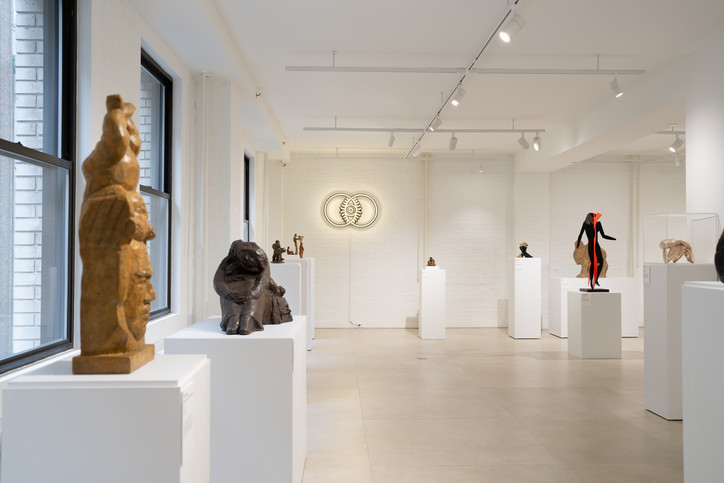
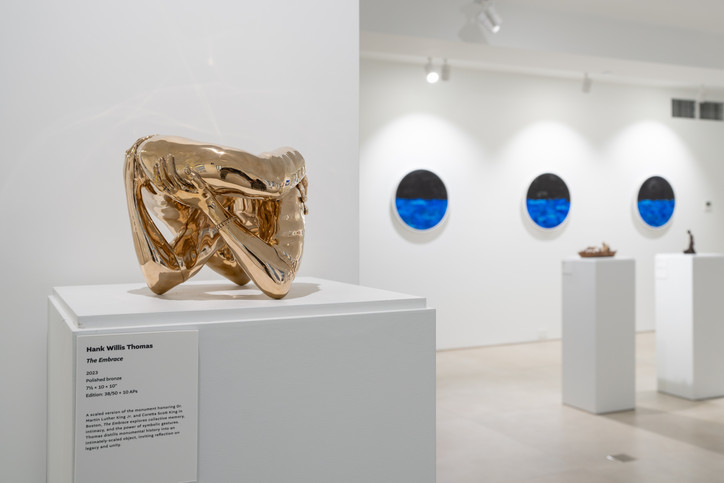
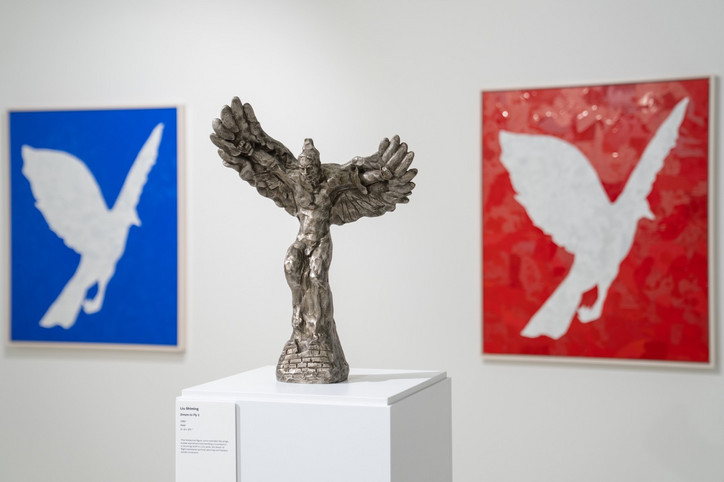
EO-Sure. One of the early connections I made as the curator was between Hank’s The Embrace and Liu Shiming’s Cutting Through Mountains, Submerging in Water. Both works subvert traditional notions of monumental sculpture. Historically, monuments have been about glorifying power—leaders, institutions. But Liu was doing something different. When he created Cutting Through Mountains, he was still at the academy in Beijing, and it was considered unusual, even frowned upon, to incorporate landscape into sculpture. He broke with tradition—kind of like Rodin’s The Thinker, but instead of focusing just on the figure, he included the environment. And with The Embrace, Hank zooms in—not on a whole figure, but on a gesture. A hug. Instead of a towering heroic pose, he monumentalizes love. It honors Dr. King and Coretta Scott King, but also speaks universally. Anyone can relate to a hug. Just like how Liu’s figures—riding bikes, working in boats—are universally resonant. So both works challenge the idea of what a monument can be—and who it’s for.
HWT-Exactly. And when I look at Wrestling and The Embrace, I see echoes. These sculptures were made decades apart, but their forms resonate. I didn’t know about Liu’s Wrestling when I made mine, but there’s an undeniable kinship. The tension in the arms, the closeness—it reminds me of The Thinker, but rendered in motion, in intimacy. And to cast that in bronze—a cold, static material—while still trying to convey warmth and vulnerability, that’s a challenge I embrace.
AS-It’s kind of Jungian, right? Like shared archetypes—Mayans and Egyptians both built pyramids without knowing each other. Maybe these gestures of embrace or struggle are just embedded in the collective unconscious.
EO-I love that. And it’s fascinating—Embrace and Wrestling are almost opposites emotionally. One is love, the other is friction. But both involve touch, engagement, presence. Wrestling can be playful or aggressive, but it’s still a connection. The forms are similar, but the emotions are flipped.
AS-Do you look at ancient or modern art for inspiration? Or do you try to stay in your own head?
HWT-I love history. Looking at historical art is like time travel. And if I can bring an idea like the Dymaxion map into the present, it feels like I’ve pulled an artifact through time.
AS-And what about current events? Are they influencing you right now?
HWT-Absolutely. I’m inspired by people taking to the streets, using their voices, standing up for democracy. That takes courage—especially in an age where our devices mediate almost all interactions.
We think we’re connected, but these platforms are programmed—literally. We don’t even understand the code that’s shaping how we engage with each other. That disconnect worries me. So seeing people here today, putting their phones away, listening—that gives me hope.