Vulvatious

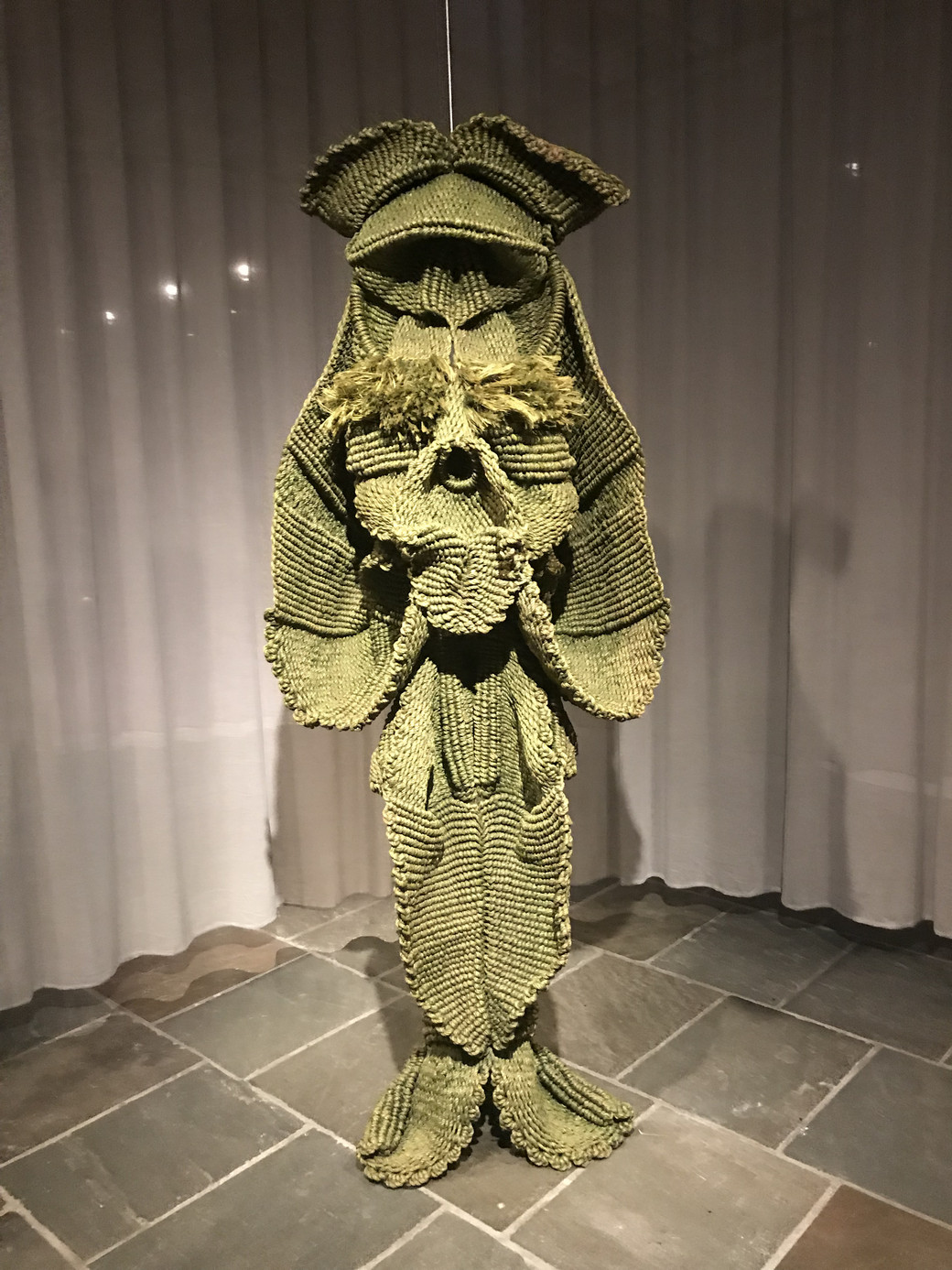
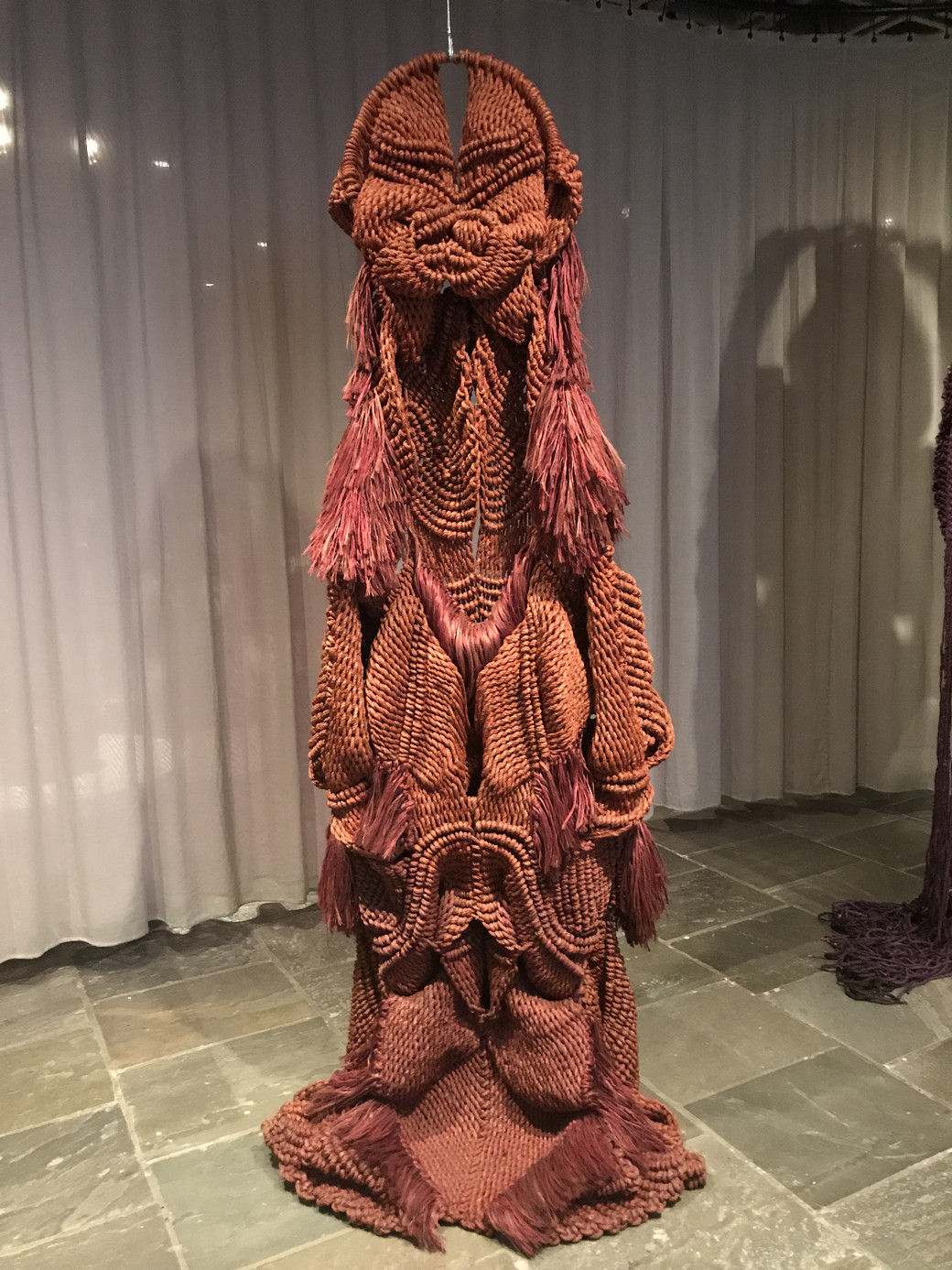
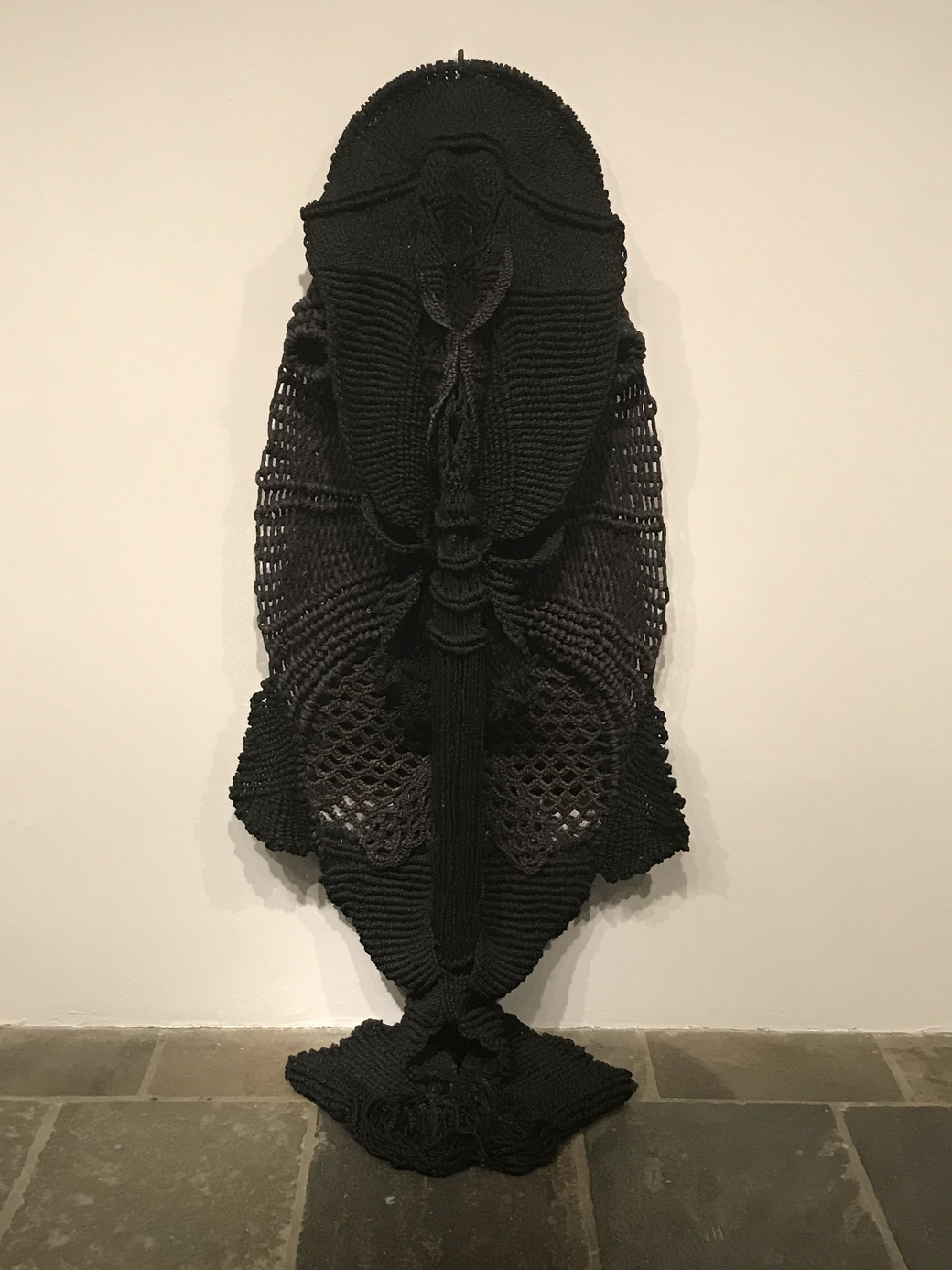
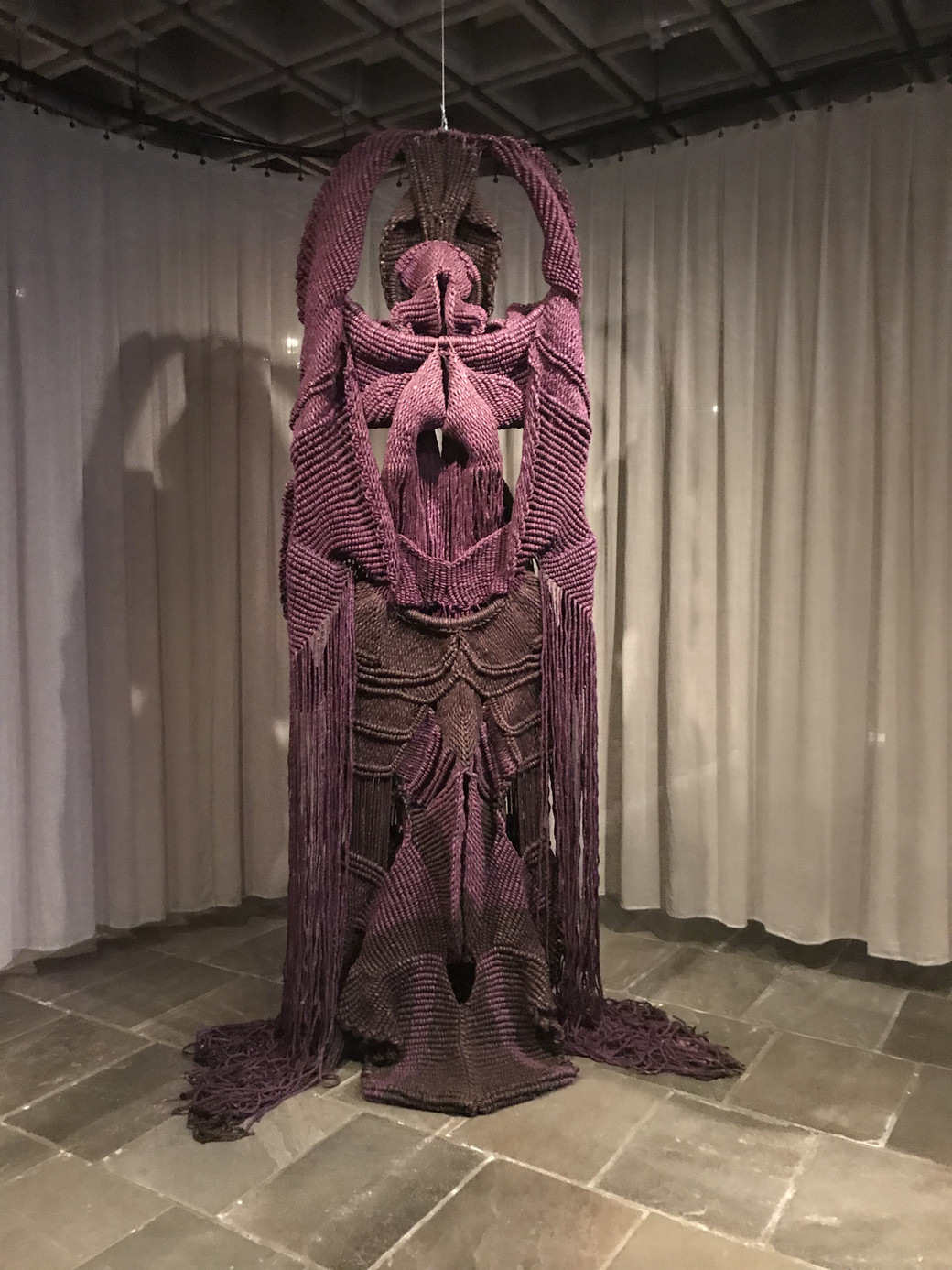
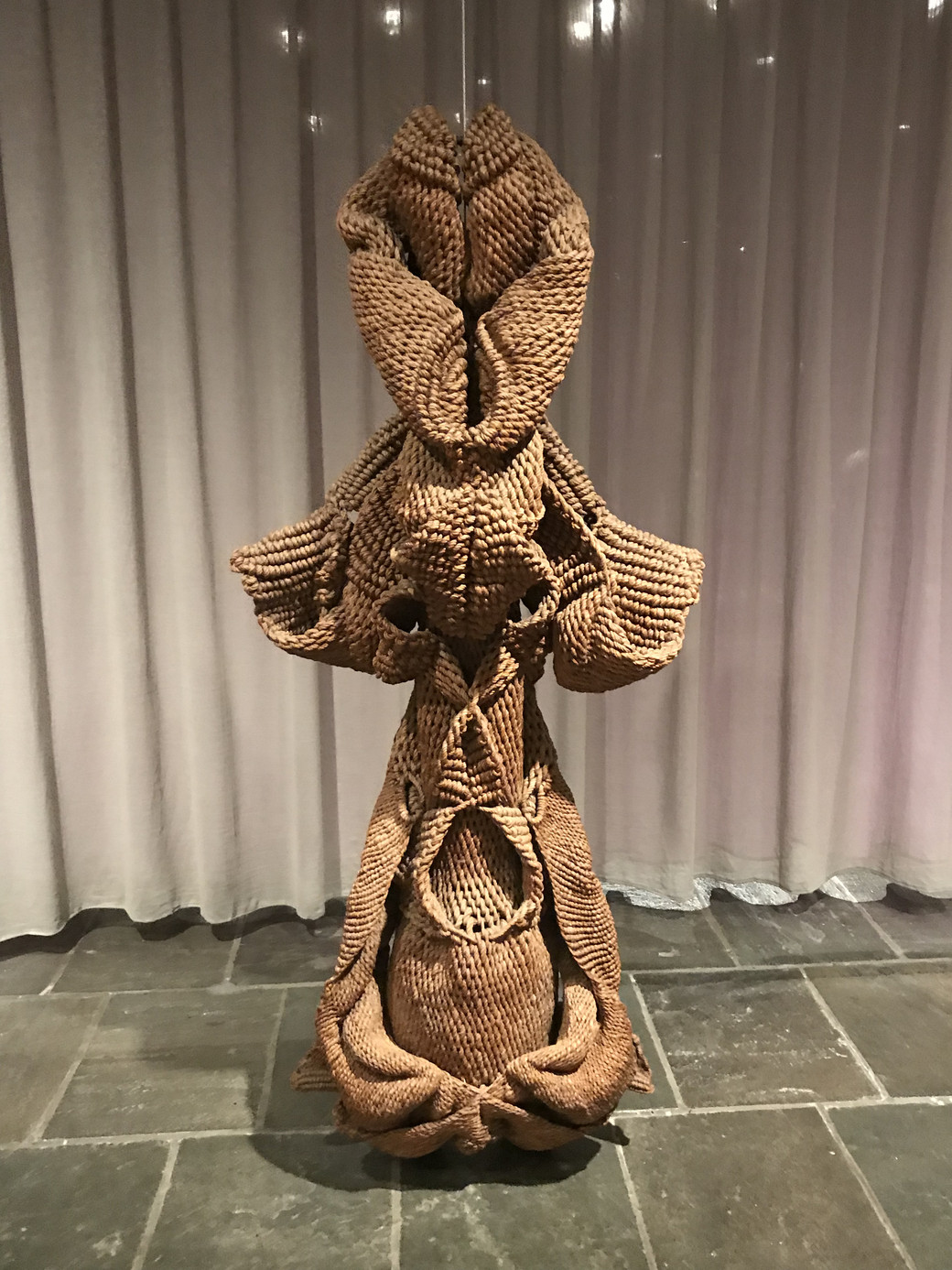
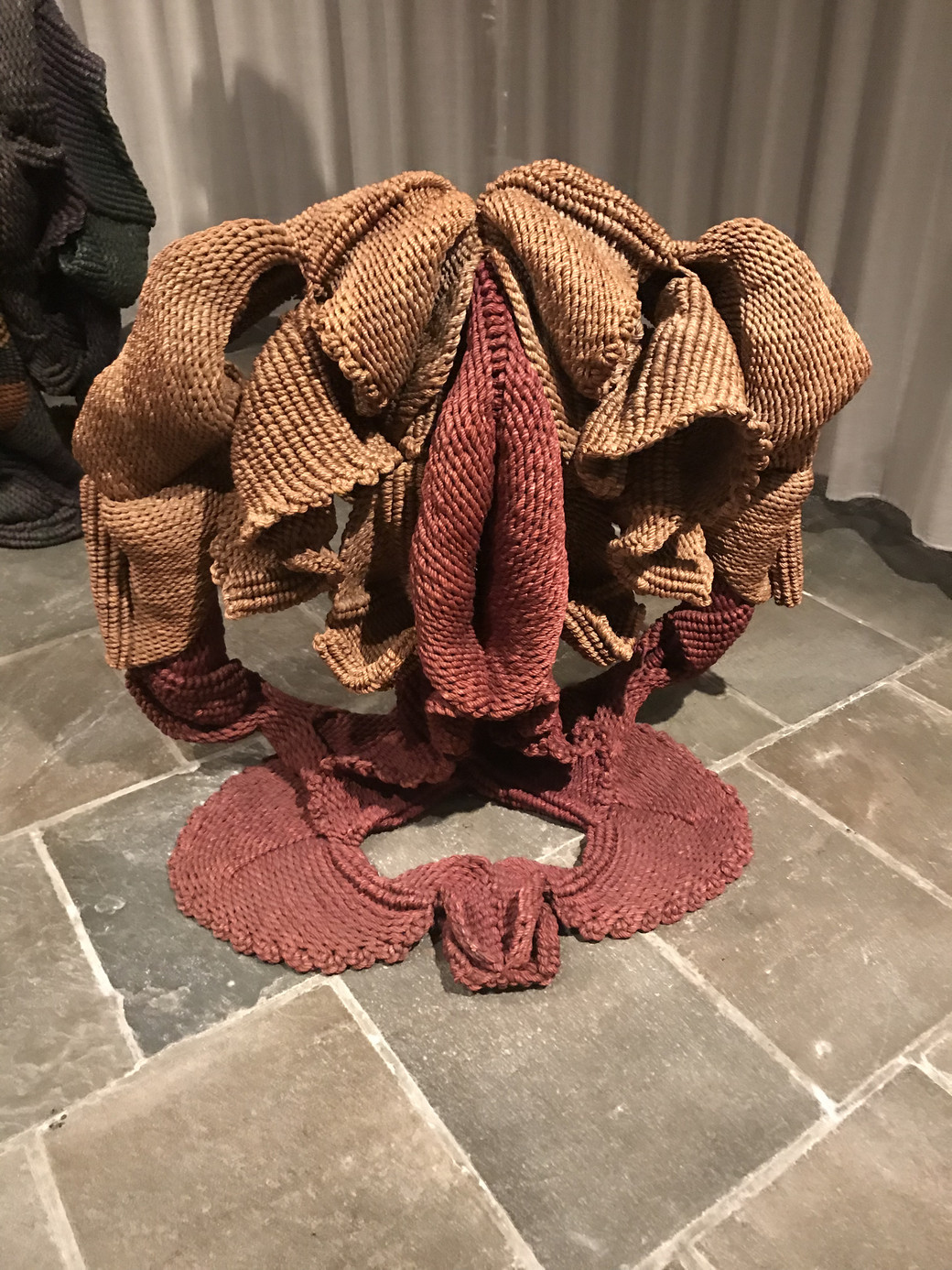
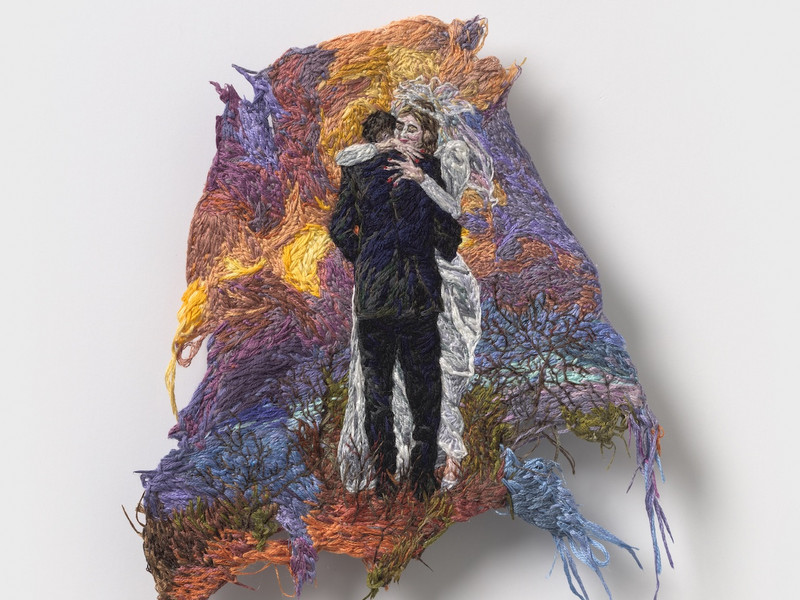
"Phenomenal Nature: Mrinalini Mukherjee" is on view at the Met Breuer through September 29th, 2019.
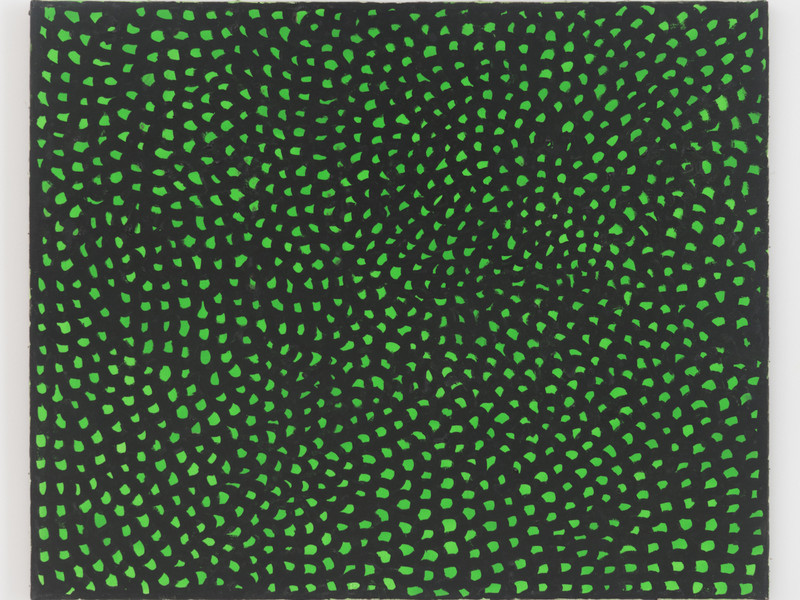
"Phenomenal Nature: Mrinalini Mukherjee" is on view at the Met Breuer through September 29th, 2019.

"For Hot Concrete LA to HK, we really wanted to share a piece of Los Angeles in Asia, and Hong Kong was the best place to do it. All the artists were so excited to represent their home city in a region they'd never visited before. The ethos at Sow & Tailor is "family," so having our love for LA and its energy is important. We are thankful to our Hong Kong family for inviting us out here to bring this incredible exhibition. Hong Kong has never seen a show like this before, so it was important to engage with artists who are multi-generational, emerging to establish to give a wide range of what is currently going on in the LA art community. We are showcasing painters, ceramics, furniture design, video installation, leather-worked tapestries, and more. Having a well-rounded perspective is what drove the curation," Galloway details the meaning behind the show.


Marking Sow & Tailor's most ambitous show yet, their first one overseas, this curation took over a year of planning, making this opening even more special. "My approach was pretty natural. We started with our close group of friends and family who are artists. Then we started to reach out to people we knew in our greater community as well as some new faces who we quickly became close with. We did several selections of artists for the show, and when we reached 30 artists, it felt complete. It took a year of planning, lots of studio visits, and many hours of video chat. We practically organized this show in HK timezone with our HK team, who are now close family. Such a humbling and unique experience!" Galloway explains.
Having a solid support system in place, including Sow & Tailor Co-Founder Greg Ito, a participating artist and husband of Karen Galloway, "Hot Concrete: LA to HK," had many hands bring this show into existence, including WOAW gallery founder Kevin Poon.


"As the founder of Woaw gallery, I’m super excited and humbled to be able to have an opportunity to co-host with Sow & Tailor, 30 super talented artists from Los Angeles, to show in such a beautiful backdrop in k11. It’s a fully cross-cultural event, and to be able to connect both worlds together it’s been such a blessing. I’m looking forward to the reaction of people who see the show and hope this can be a catalyst to doing more to bring the world closer" Poon notes.
From established artists like Peter Shire, a Los Angeles legend, to emerging sculpturist Diana Yesenia Alvarado, “Hot Concrete: LA to HK” invites the viewer to not only see the vibrancy that Los Angeles has to offer but look inward and acknowledge the vibrancy within themselves and the places they call home.
While the show consists of 30 unique artists, office spotlit 10 artists below, commenting on their creative processes and the importance of this exhibition.
Can you speak to your process of selecting your contribution for "Hot Concrete"?

Greg Ito, Co-Founder of Sow and Tailor, Participating Artist
The process has been really exciting to see everything built from a simple idea proposed a year ago. I haven’t worked on a show this size in Asia ever before, and it's the largest painting I have completed this year. It’s been so gratifying to work on everything. I’m just happy to be out in Hong Kong with new friends and family and represent LA with this incredible group of artists.

When I was thinking about making a work to show in Hong Kong, I wanted to bring the viewer into my everyday experience of my hometown, Los Angeles. I began to look through my archive of cellphone photos and found an almost-forgotten image I shot while sitting at a red light. Painted on an eight-foot canvas, I wanted the viewer to feel like they’re standing on a hot concrete corner in LA.

This painting is called, Almost Everything Burned. The fire in the mirror is a metaphor or a trigger about the ravage of war or destruction, butted against a peaceful home. This is a very familiar feeling amongst my Cambodian community that had settled in America since the 80s. It is a household we live in filled with many unanswered questions and with emotional ties to a past that is wanted to be forgotten by an entire generation and country. So I created this painting in response to that they couldn’t even if they wanted to because many of the children are trying to reconcile why.
In terms of process, intuitively, I’m responding to an issue that is personal but beyond just me. In this way, my explorations expand into what, where, and when. The painting is pieced up by references to people in my life, as well as objects and places that hold intrinsic value. Together they encapsulate a context across timelines and lived experiences. And when the paintings are finished, they’re like an affirmation. That this is what it is, and I’m no longer wondering why.

My work for Hot Concrete comes from a place of internally fighting with the idea of which spaces I felt the world somehow made me feel I never belonged in or felt I didn’t deserve to be a part of. My painting is an ode to the intricate structures of people, and the specificities of perceptions people experience that navigate where they find themselves to exist.

When I created the work “A Utopian Dream in Four Vignettes,” I was exploring ideas relating to commodity and labor. These ideas stemmed from examining issues that I felt were connected to the nature of Capitalism, which eventually became an indexical idea living in the current iconography of my paintings. In the video, I’m juxtaposing a truck and a horse, seemingly racing to the top of a mountain, mimicking each other's movements. The work invites the viewer to make associations while, at the same time, revealing a sense of freedom or utopia. I felt it was important to show this work in Hot Concrete (Hong Kong) because my family at Sow & Tailor offered me a unique opportunity to exhibit this work in a museum-quality aesthetic. My friend Greg Ito, truly understood my vision.

Yes, I wanted to show a window to what is just outside of Los Angeles to the southeast. The desert!
This is also the biggest painting I’ve made and also the biggest painting that will fit in and out of my small Chinatown studio. I love how this painting came together.

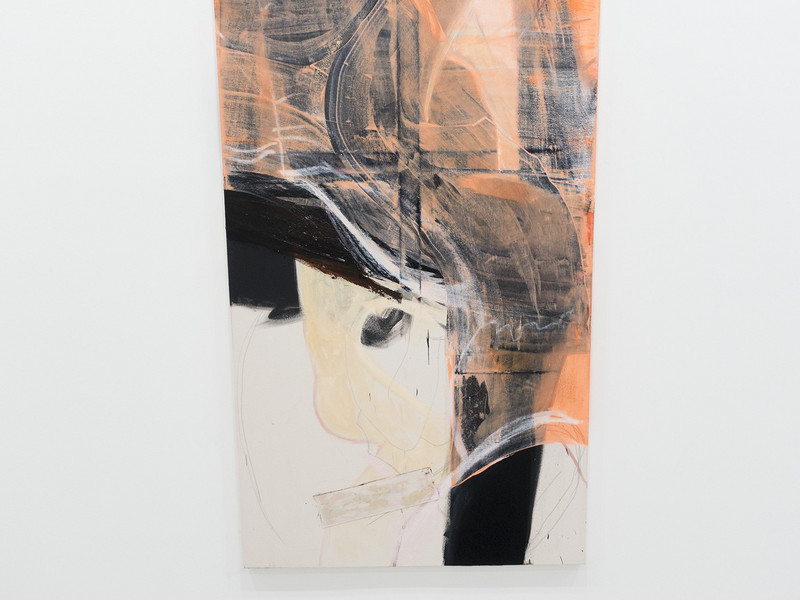
Working with airbrush and spray guns, I use paint I make from optical pigments that were originally intended for car-paint jobs. The grey color reflects rainbow glints in the light. I use hand-masking techniques to build up the precise image, section by section, with a series of cut-outs. I never add white paint and instead use only the original gessoed surface, more like drawing on white paper.

I love painting still life as a practice in looking. The subtle movements and light that created shadow and reflection provide endless new imagery to work with. This painting was made from an arrangement in my studio. The vessels and bowls have made many appearances in other paintings, but their arrangement, along with the varying flowers and textiles, is forever changing. This particular arrangement felt balanced in a way that I enjoy, so I was very happy to have it included in the show.

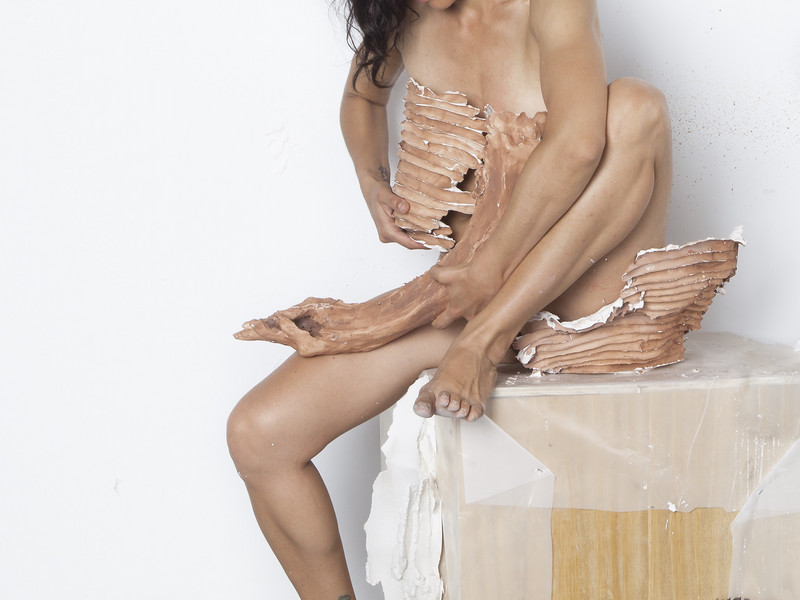
I start with a general form in mind and search as I build. Most recently, I’ve been drawn to winged creatures and angels for their symbolic meanings throughout history. Im starting to bring some of my sketches to life, and my pieces in hot concrete are a result of these explorations.

In Sharp; Zettai Mujunteki Jikodoitsu; Fluid, I was interested in combining the themes of my research into a triptych as a method of expanding the boundaries of my narrative paintings. I’m inspired by frescos and religious iconography, as well as a multitude of Eastern scroll paintings, and I found myself playing with continuous narratives. Repeating figures are seen in each panel, though the flow of time is not necessarily identifiable - perhaps they could also be existing all simultaneously. Zettai Mujunteki Jikodoitsu can be translated as “self-contradictory identity” or a “unity of opposites.” Contradiction is the operative variable of oneness. Within the struggle of finding a footing in relationship to a multicultural identity, womanhood, and sex - that dissonance is ultimately the harmony.

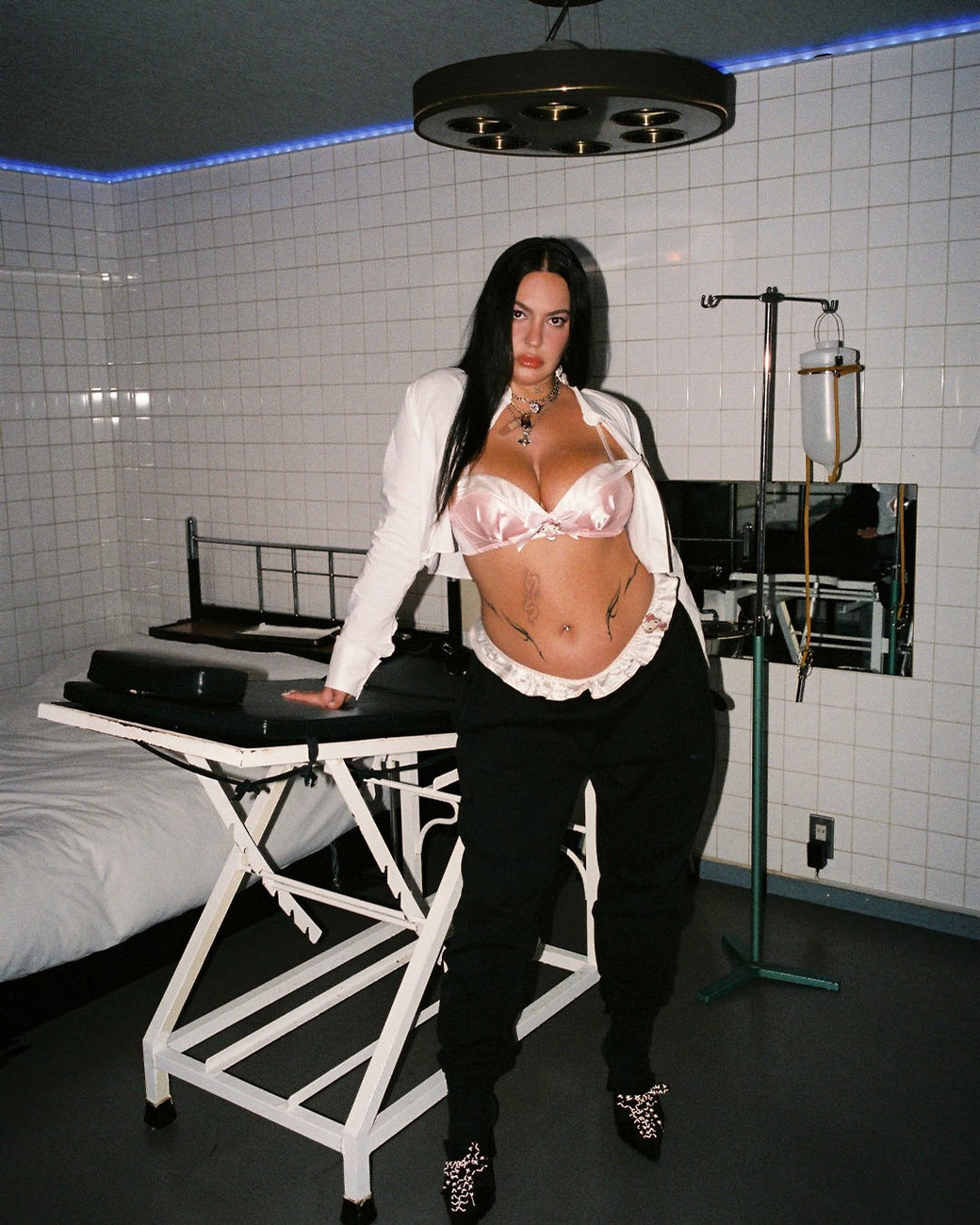
The “girls” refers to the main characters of the Moratorium exhibit, Soto’s latest creation that reclaims her works existence as her own the same way she helped her audience to reclaim their bodies and heal. Yet in giving birth to these caricatures of affirmations, Soto would watch her girls walk out the door, hardly laying eyes on them again except via the occasional tag on Instagram. The artists work never truly felt her own, but after a year offline she is determined to create a space that she can actively share with her pieces.
Soto has long-since enabled her audience to see themselves the way she sees them, with pouting innocence, anime-inspired characteristics, and insolent sex-appeal, by creating “self-portraits” that they would forever wear on their skin - visual reminders of self-actualized armor.
"The girls were born to channel my anger while learning how to love and heal myself. As I discover myself and grow more peaceful, my work, and therefore the girls, become more assured, in their size, their weight. They take charge of spaces, bigger and stronger than ever seen before… No god, No master."
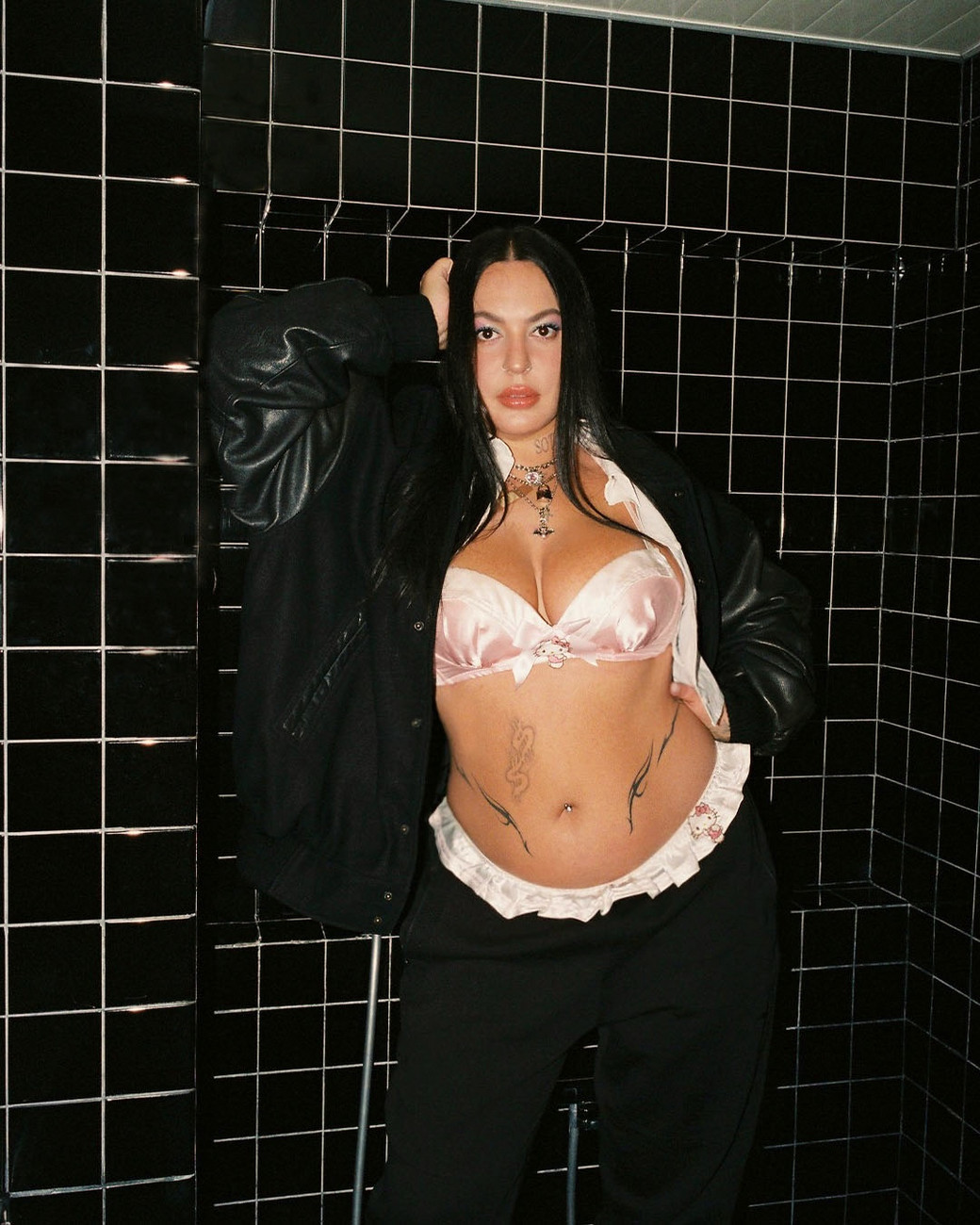
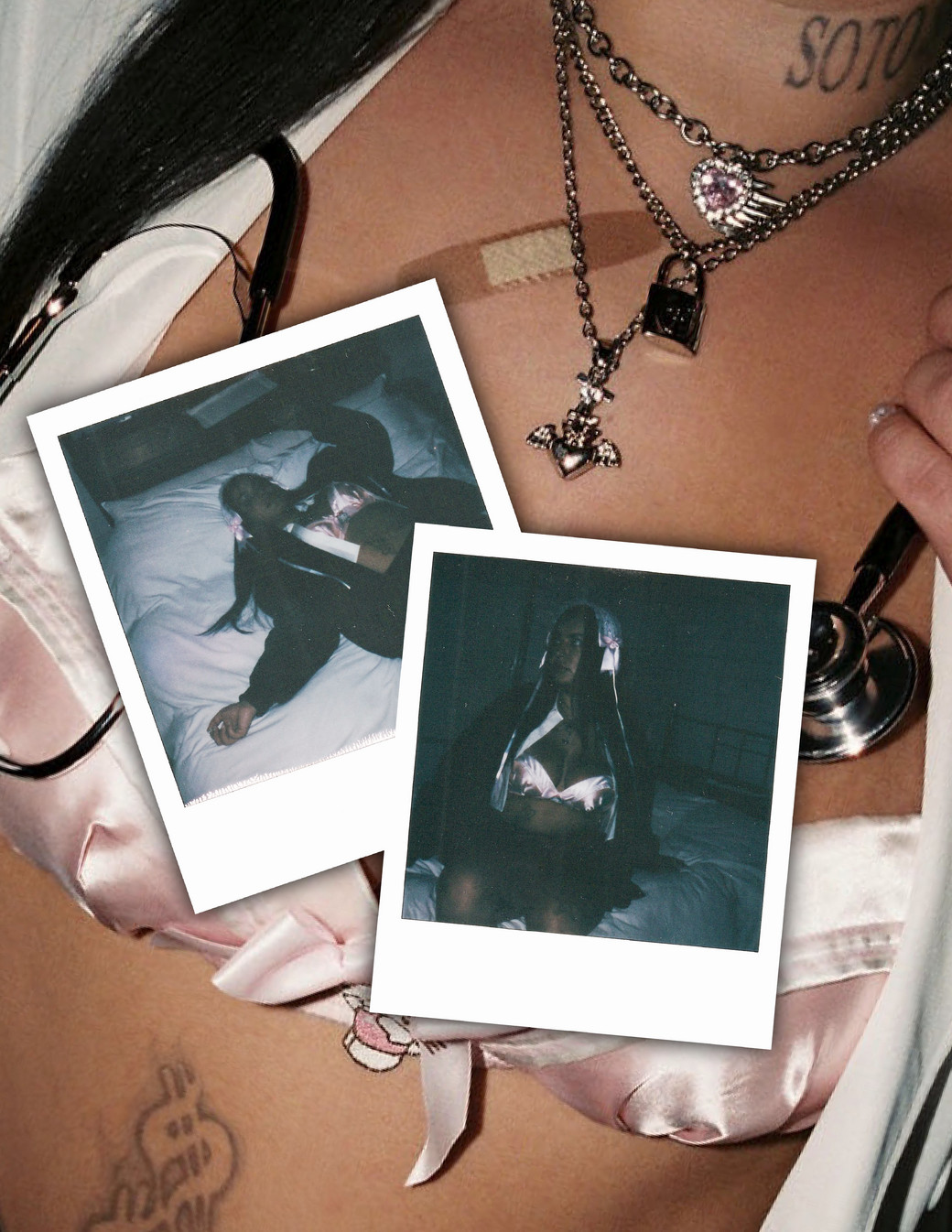
Photography: ifucktokyo
Through this installation Soto reclaims her works existence as her own, the same way she helped her audience to reclaim their bodies and heal. Here, she has the courage to realize her own self-portrait through a new medium, it is Soto that hangs for us all to witness. Only she can find serenity as gravity pulls her under from the top down.

When Dunham hears a sound, they see an environment. “If you were to play a song for me, I could tell you what the air felt like in the song, if there was broken glass or if there was an open field or a swimming pool, what the consistency of the water is. That's how I experience sound,” they say.
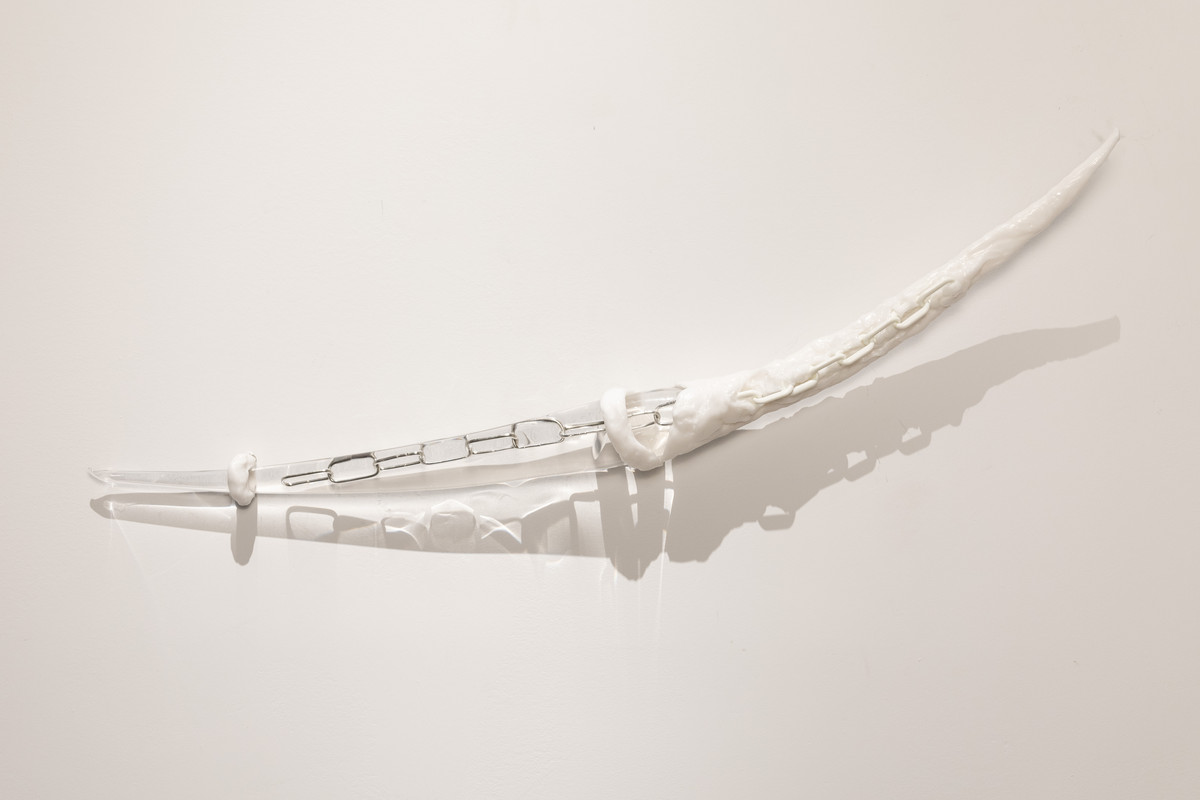
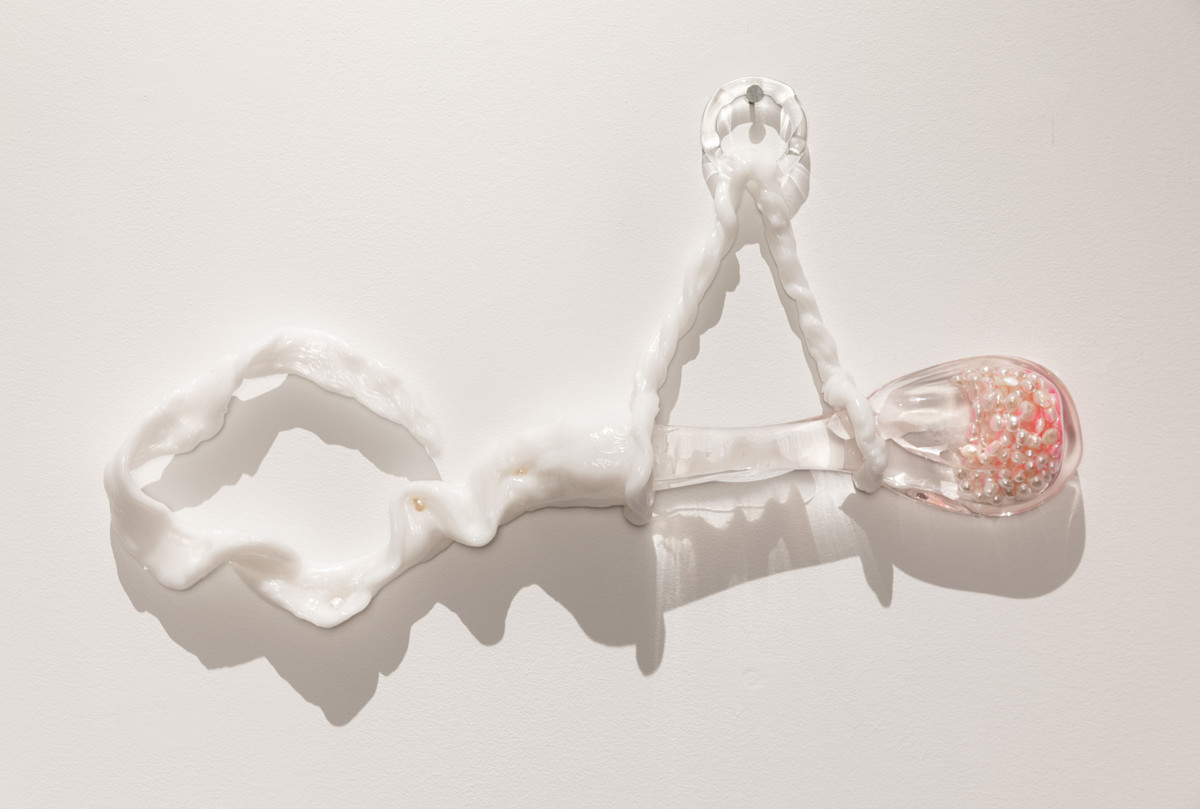
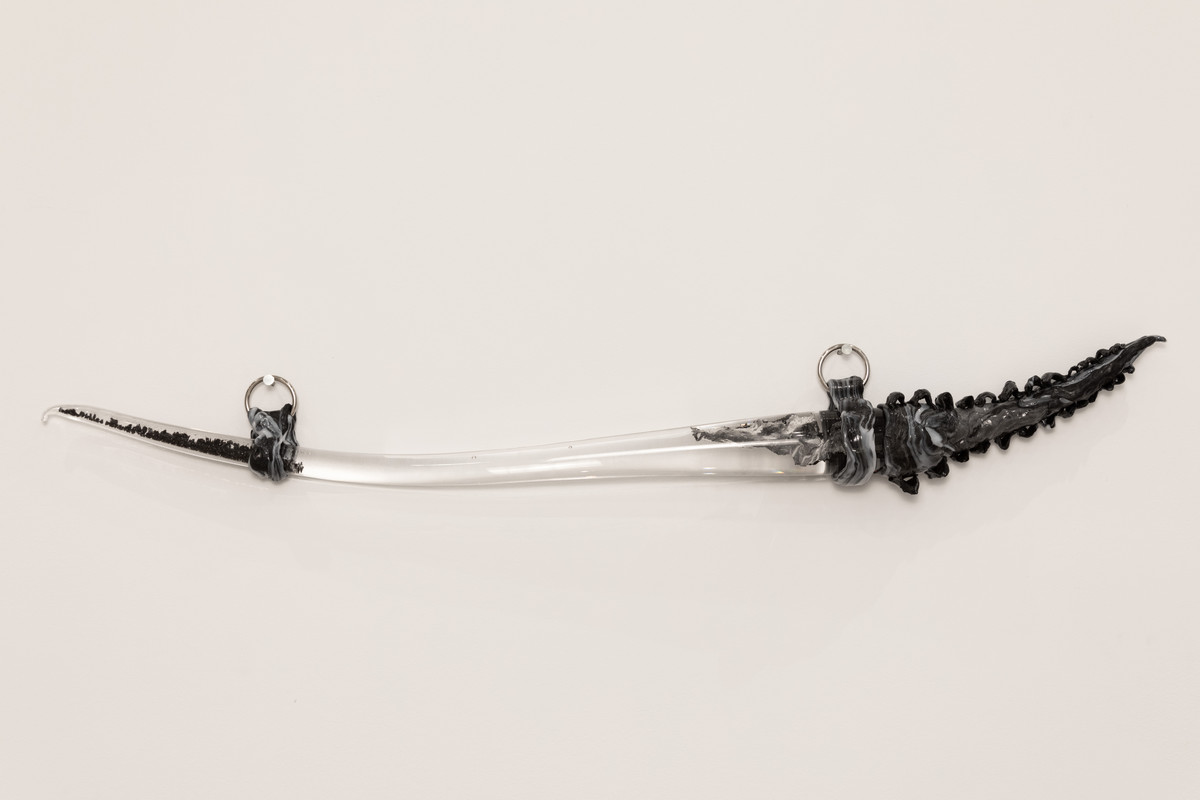
Transmutation starts with sound. A soundtrack by Dunham and composer Finn Keane greets visitors as they enter the immersive exhibition: mist exhales from a slide, a gentle scent hovers, translucent glass sword-like sculptures glisten on the walls and a milky fluid drips into a pool.
Transmutation explores the four phases of water: liquid, solid, vapor and semi-liquid. Dunham spent the last few years creating a mutable material called H+ that pulses through the veins of every piece.
A slide in a corner of the gallery titled “Rehearsal for the Rest of Our Life and Pure Joy” is a reference to an ongoing conversation between Dunham and their longtime partner and collaborator Sophie, the late experimental musician and producer. If you listen closely, Dunham’s dialogue with Sophie vibrates through everything they create. Keane and Dunham composed the show’s soundtrack from the chords of Clearing’s single “So Clear'' which the two co-wrote with Sophie.
Dunham’s world has an ineffable quality — it is hard to pin down, poetic, nonlinear, and open to spontaneity. It makes sense that they find inspiration in alchemy that occurs in the natural world and often visit places that are in a constant state of flux like the Blue Lagoon in Iceland, power plants and volcanic sites. “I think that as humans, we get to be in a continuous cycle of transformation and I feel that within myself as well. We are not fixed into one form, we are allowed to keep becoming,” they say. office talked to Dunham about what keeps them grounded in the ever evolving world from their art to their music to their collaborators.
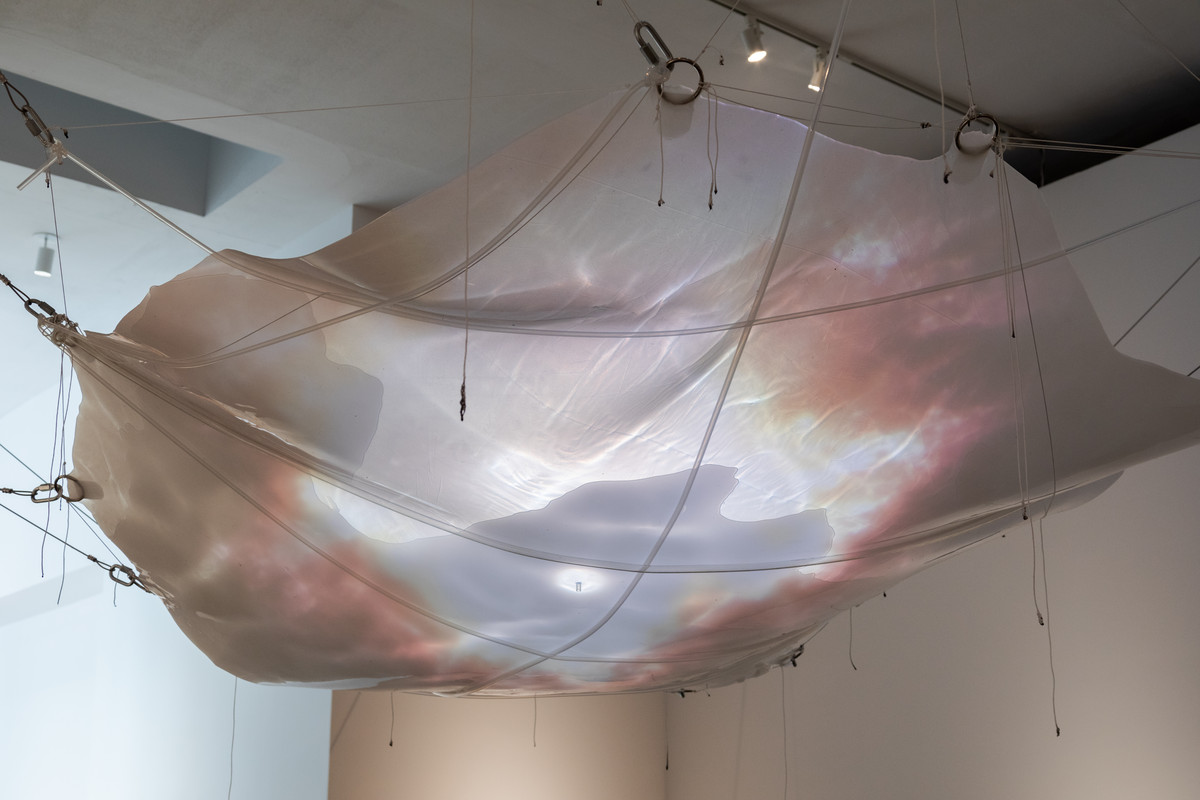
Transmutation investigates the four transitional states of water and in your process, you created a new material called H+. The centerpiece of the show is a silicone tarp that holds H+ as it drips into a reflective pool. Across from the gallery, there's a cloudy substance that exhales from a slide covered in a tarp. When I saw the show, I couldn't help but think that you created a living ecosystem that is breathing and dripping and seems alive. Can you tell me more about the material H+ and how you created it?
A large part of my practice is creating new materials through different processes, a lot of which involve failure or things not working. H+ took me a few years to develop. Most things I make take multiple years to work through. H+ is a material that is mutable. It oscillates between air forms, liquid forms, solid forms. It’s something that was always in motion, in a constant state of becoming. So the material that you described as a silicone tarp. That is a material called Dragons Skin 30. And it's a type of silicone that's a platinum silicone. My background is in supporting materials to move beyond their form. I get really excited about the sensory component, the way it smells, the type of air that's in the space, the way that it feels in your eyes. Not as much the way that it looks, but the feeling that happens in this arrangement. Almost in the same way a petri dish operates or a container operates. When you put all of these different compositions into one space, what can happen inside of a body?
How does that connect to what you do in your music where you take certain lyrics and imbue them with emotions that allow you to transcend whatever the colloquial or literal idea of the word is?
I think that's really interesting and exciting when something can blur, when something can leak out, if a feeling can’t be held by a word or a container. Even a person. I get most excited about the ruptures. At the beginning of my career as an artist, I worked exclusively with liquids and vapor. So I have a lot of experience with vapor as a medium. And in the last seven years I started working with air, thinking about it as a material. Air is something that you can sculpt and move through air vents, through your body, through your mouth. Inhaling, exhaling, my interest in singing is related, it's vibrational. In the amount of time that I've worked in glass, I've found glass has this special clause, it is very sensitive to vibrations. That's why you can also break glass with your voice — the vibrations around the glass can shatter it. So there's something here that I find really interesting in working with a voice. It is so powerful.
This album I made, Clearing, came from a place of pushing through into this air realm where I found that you can consolidate very complex ideas into extremely succinct and concise sound bites that are two to five minutes long. You can really translate entire worlds. For a long time, those worlds really facilitated me being able to be present here on Earth. I would use songs as a support system, as a care system, as an empathy frequency. It was something that I wanted to circulate. To circulate, full stop. But also to be circulated in. Sound is very accessible in a way that spaces aren't.

I remember reading in one of your interviews, you described when you had created an energy drink and then it exploded in your suitcase as you were traveling. I think that many people would have been upset about that but instead for you that was probably an amazing moment where the art became alive and did maybe what it should have done. That unpredictability is also written into the fabric of a substance that potentially could explode.
Yeah, it really did. It was so extreme. I had been working on the formula for a year and it was just too effervescent to withstand the pressure of the air. I get really excited about that kind of stuff. I'm constantly feeling shocked. The materials really challenge me. This show Transmutation is a very rigorous show materially where I really pushed the materials that I have worked with for so many years, who I know really well, who I feel really close to, to form something new. These material relationships that I have, they're ten plus year relationships, they're conduits. A very loving conduit is a way of saying it. I really feel that they are extensions within themselves. So if something ruptures, I'm listening. I'm trying to listen to the materials. I'm also trying to support them and also not be an expert here, but also be mutable in my own form.
My sculptures also came with a manual that had a statement of intent. So if you consented to caring for my pieces, being a guardian of let's say art handling or shipping them, there was an agreement of how to interact with them and how they would interact with you. Care and ethos of care are really special to me. It is a larger blueprint for living here. I take this really seriously. And with music, it's so embedded into the way that one interacts with sound in a listening stance. In your body, you are listening. I think that way of being open and receptive and curious, that stance for a body is one that I find really interesting. In this piece, I'm really working with sound to move people. The soundtrack really moves the work first into a listening space. Because before you see the work, you hear the sounds.
There is this thread of collaboration and care that comes with your work from musical collaborations with Sophie, with Caroline Polacheck, A.G. Cook, to building art installations that engage with the viewer and opening up a space for them to actually listen, to developing materials with physicists and in conversation with actual spaces. You've likened collaboration to alchemy and chemistry. Is this drive to lean into collaboration something that you've always carried with you or has it developed as you've expanded your practice into more mediums?
In a sense we are in a dialogue here together on Earth with the materials here. I'm really excited about this dialogue in general. Multidimensional dialogue is something that I have a very devotional relationship to in my friendships and my collaborators. I am very available to them and they are to me which is very lucky because so many things that I want to see realized here are not possible for me to materialize on my own. Like a pop song. Or quantum particles or magnetic liquid. Or bringing heaven to earth. It is a shared vision. So I work with physicists, sound engineers, magnetic specialists, and gardeners.
When I started working with materials like large scale sculptures and building out worlds, I thought about materials as a language system and only I spoke the language. At the time my sculptures were 100+ feet and often had liquid and explosive elements. And then over time, as I developed that language system, it resonated with other people and continued expanding.
My long time partner Sophie and I started working together in 2013. She witnessed my language system and I witnessed hers. We were always trying to make new materials using the tools we had and pushing them to extremes. For me, bending liquids. For her, bending sounds. We had a very circular process to develop a new communication system between us. We collaborated on our work as one and also her work and my work separately. It always has been that way. This dialogue that we have been in continues now. It's different now because she is not in a physical form and so I have to listen differently for her. These dialogues don't only take place in the physical realm. So for us, that was translated into these songs, many of which you hear on the album, many of which you experience in my work, you hear in her work.
Finn Keane who made the score also made So Clear with Sophie and I. Working on this piece was really moving for me because it began with the chords that the three of us made for So Clear and moved into different material terrains. How we made this piece is by sending voice memos describing various processes and Finn responding with sound clips. Eventually my voice became a netting for the structure of the score which is what you experience when you enter the gallery.
Caroline Polacheck is another person. We met when I was 18 in New York. I lived in New York for a year. I had just moved there and we were in the same performance piece and we were both underneath a white sheet. I couldn't see her. I never saw her face, I just heard her voice. I was under the sheet when she walked into the room and then she joined me, but I couldn't see her under the sheet. So we had this whole nonphysical dialog that involved both of our sounds. This invisible messaging is something that I'm super fascinated by.
And your latest album was produced by A.G. Cook of PC music who has been a constant collaborator.
A.G. Cook is on almost every song. A.G. and I have been collaborators for eight plus years. He and I have developed a specific communication system that involves nonverbal communication. We sit in silence and can hear each other. If I play him something, I hear him before he responds. He and Sophie came with me to this volcanic island where the songs for Clearing started forming. Sophie and I had started working on these songs in Los Angeles at our house where we lived together and then we went to these specific locations because of my interest in energy. We wanted to translate the sounds. At some point we did a field test where we went to a volcanic field and I wore shoes and stepped on the volcanic ash and it made this special sound and A.G. recorded it. Jonsi and Alex Summers also collaborated on this and both of them lived in Iceland.
PC Music is a collective and we have all kind of grown up together and supported each other's work and really created and fostered an ecosystem of care. If someone needs help on the temperature of a song, I will get called in to push the feeling and go into the heart of the song. Everybody has special skills in this collective and we all support each other.
Non-linear or nonverbal communication seems to open up a space for intentional listening. There's this idea that listening only engages one sense, but when we listen, the rest of our senses don't disappear. Can you describe the landscape of your song Breaking Ground? How would this world engage all of the senses?
That is a really apt question, because that is how I approach songwriting. I have a sensory augment, which is also called synesthesia. When I hear a sound, I see an environment. If you were to play a song for me, I could tell you what the air felt like in the song, if there was broken glass or if there was an open field or a swimming pool, what the consistency of the water is. That's how I experience sound. In making Breaking Ground, for example, that landscape takes place in a clearing where there is new dirt that comes from a place of being burned, a place of loss. It is waiting for the seeds to break through the ground, to come up. These seeds have been germinating under the ground and have been in a very soft environment of total and complete darkness, just reaching up to the surface. And when they finally break through the ground, they're very soft. You know, little seedlings are really tender and also deeply resilient because they have root systems to rely on and root systems to feel supported by. This song is a reminder of those systems, that even in a moment where you feel outside of your body, you feel scared, you don't really know which way to go, there is this support system around you that you can rest into. In the song, there's a break and it moves into "burning it down, burning it down." And it's taking back that space and agency of being able to burn through fear, burn through isolation, burn through this feeling of loss and connect with all of the support around you.
It makes so much sense in the way that your art connects across all the different mediums because the way that you see it all as part of this universe, this world. For your album Clearing is each song its own terrain that is part of a larger world?
Basically, yes. The album follows different cycles. It follows this pattern of total loss. You can imagine that you are in a gorgeous forest and the forest catches on fire and the fire is burning and all of the plants are burning to the ground and becoming ashes. The forest transforms into a matte black shiny material that you see in total destruction or in ravens wings. The secret is that inside of ash are seeds. Ashes are seeds. So in this moment where you think that all is lost, if you just wait, if you just rest, the rain comes down, moves to ashes into the ground. The ground cares for the ashes. Seeds emerge and germinate and eventually push through and begin again. So this cycle, or to put it in really simple terms, chaos, ashes, germination and growth, is a reminder that we are part of a larger state of returning. There's an opportunity to begin again. I find that incredibly comforting and exciting because it means that nothing is totalizing. You can start over again, you can become something else, you can transmute —.we can transmute. This album is really personal to me, but I hope through this micro system that it speaks on a macro scale of the potential of regeneration.
You're going on tour soon and I was just wondering is Hyd different from Hayden Dunham? Is Hyd the vessel that you use to communicate these ideas that exists when you are performing, almost as a living sculpture? Or are Hyd and Hayden one in the same?
I love this question. I think this is such a beautiful question because it's all about centralized or decentralized information. For me, Hyd is a circulation system. When I say system, it sounds really cold and the reality is it's bodied, it's warm and it's inside of me. So Hyd is something that I made to be able to move through and circulate in its most simple term, as a frequency. So I go by Hayden, I go by Hyd. I think that as humans, we get to be in a continuous cycle of transformation and I feel that within myself as well. We are not fixed into one form, we are allowed to keep becoming.