How many times have you been arrested?
Oh I have no idea… I mean probably more than a dozen. Not only here, but in Germany, in Canada, and in other parts of the world.
That’s a few more times than me. But how exactly did this all start?
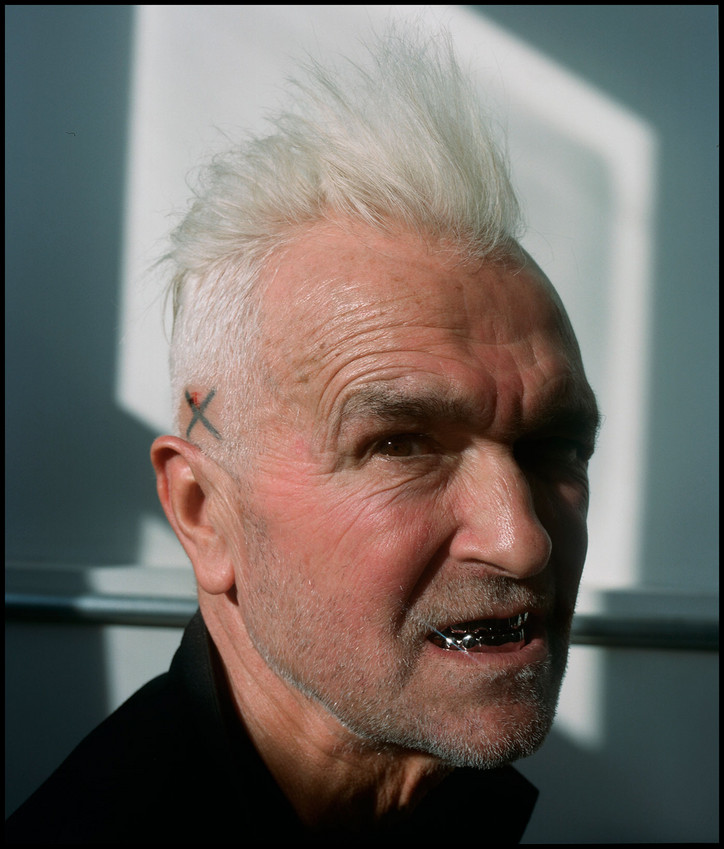
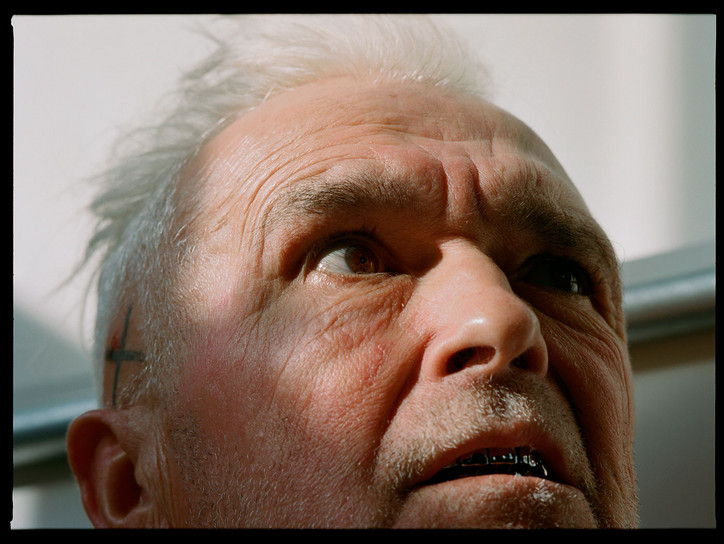
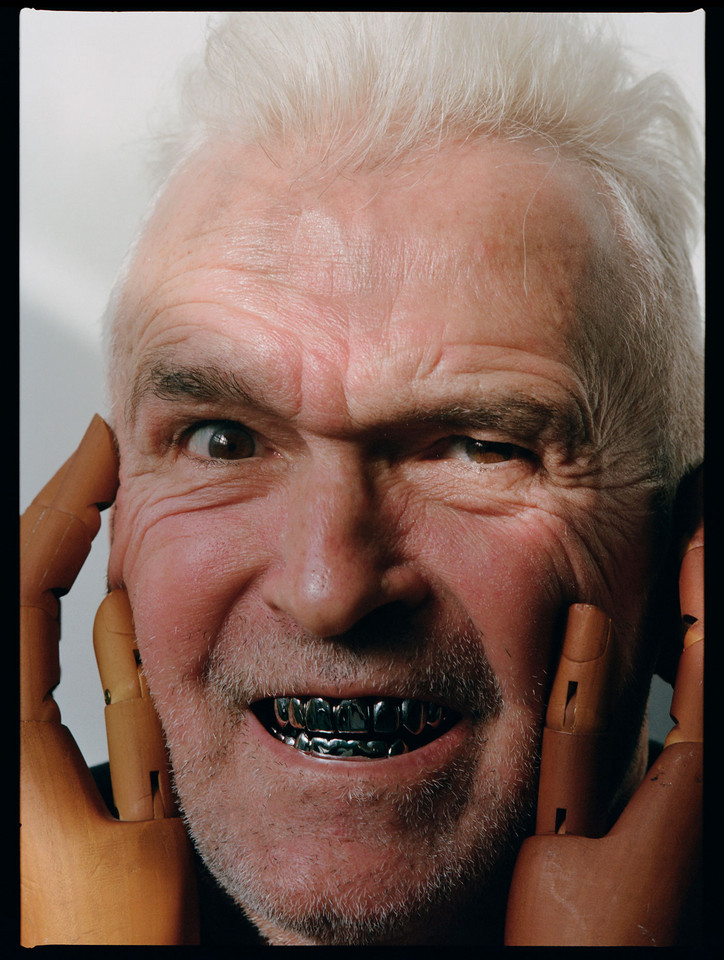
So, I started this blood campaign in 1979. I’m coming from the eastern European, revolutionary country of Hungary. I had already for a short time studied medicine, and when I was 20 years old I was a paramedic. So, blood and the human body and all these things are very close to me as you would expect. In my early 20’s, I left, and I went to Paris and then to North America. I decided to devote myself to the arts. I was already so interested in body art. At that time, body art wasn’t just tattooing, but it included artists doing performances: getting naked, exploring their bodies. That’s the type of art form I wanted to explore, and I had many influences from the Vienna Art Action Group in the 60’s. They were exploring the body in a very radical form, cutting themselves and pouring blood on themselves and other strange experiences.
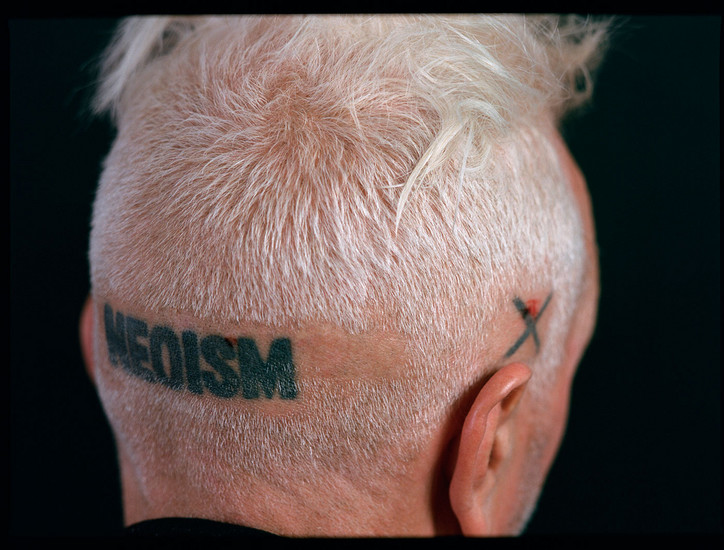
In ‘79, I began this blood campaign, and as part it, I thought I would sell my blood as an art object, and this way support neoism and give a significant value to my blood. I made plans that from ‘79 to ‘84 my blood will increase in value from $10 to $1 million a milliliter. It never happened this way, but I tried to explore performances with my blood that created lots of reactions, shocks, and arrests to make it known. To do this, I went into museums, and I splashed my blood between very important artworks like I did it here, in the Picasso room (at the MoMA) in 1988. I splashed 6 vials of my blood between the two most important Picassos. I was arrested and charged with $10 million damage because some of the blood went on the Girl before a Mirror, the most famous Picasso. That was over two years at the court, and it was a second degree felony.
I was very lucky because when I came out of prison, a young lawyer around your age was waiting for me, and she was very ambitious. She said, “Mr. Kantor, I want to take your case on for free because I just want to do it. I think it’s very important for me and my experience to start my career.” And she did it! After two and a half years, my ruling was reduced from a second degree felony to only five years in prison, then to criminal mischief. I paid only like $1000. It was great because during this 2 years, I could talk about why I’m did this, why I splashed my blood in the Picasso (room). I got publicity almost daily at that time in the newspaper, and this helped me a lot to declare myself as Monty Cantsin and talk about Neoism. The initial idea however, for the MoMA performance, was the Tompkin Square park riot.
The riot happened in 1988 in August. The homeless people occupied the park. It was a tent city. The police were called to kick them out. The art community got together and tried to save the homeless, and that caused a riot. Tons of people were arrested, beaten up, and jailed. The people built barricades, they brought in helicopters and everything on Ave. A., even a tank. A lot of my friends were arrested and prosecuted. A couple of weeks later, I went into the MoMA and splashed my blood and dedicated it to the artists, homeless and everyone who was part of the riot.In this way, I started a discussion about what was happening in this community in the Lower East Side and in the arts. There was a big problem with police brutality and dictatorship at that time, and all these things were bothering everybody. It also gave me a chance to talk about how museums try to oppress us as well.
So, it was more than just this idea of vandalism? And anarchy being created?
Absolutely, absolutely. Basically, when I explain everything today, I rather like to say that it’s an anti institutional declaration. It is because institutions and artists are alienated. There is not any direct relationship. They are kind of leading the artists completely against what artists would like to do and what would be creative freedom normally. The museums today are really not trying to help artists. They are trying to glorify themselves through exhibitions that show they are on so on top. That’s a very big problem. This kind of alienation! That’s a big part of it! So, I continued in this direction. I did many other museums in Berlin at the Hamburger Bahnhof, Ludwig Museum, National Gallery of Canada and so on. I’m basically banned from most museums for that reason.
If not, museums probably have your named bulletined around.
Oh yeah, they do. They have in the lobby a picture, I bet. It happens to me that they stop me even if I wear a wig or disguise. I’ve tried to this sometimes.
Wait, have you really tried to wear a wig?
Yeah, and they caught me because there are spies. There are spies and all kinds of people who tell them, “I heard that he’s going to come and do this and that.” That happens all the time actually. Anyways, one of the very successful numbers recently was the Jeff Koons exhibition at the Whitney in 2014. Jeff Koons had his retrospective, and I actually splashed my blood behind one of his most famous sculptures, The Balloon Dog. This time they took me to a lunatic asylum, which was amazing. I was escorted by two police cars in an ambulance with sirens, from the museum to the lunatic asylum. There I went under examination, and I enjoyed it fully.
They didn’t want to believe me, and all my stories. There was only one young doctor who believed me. He googled me. All the other doctors kept just saying, “Yeah, okay just take a rest. Would you like something to make you sleep? You can stay here as long as you want.” They came up with the diagnosis of “Narcissistic Personality Disorder”. I got a very nice chart about it. They told me anytime I want to come back and talk to them about anything they can put me on therapy. (laughs)