Book of Love
Stampa per sempre!
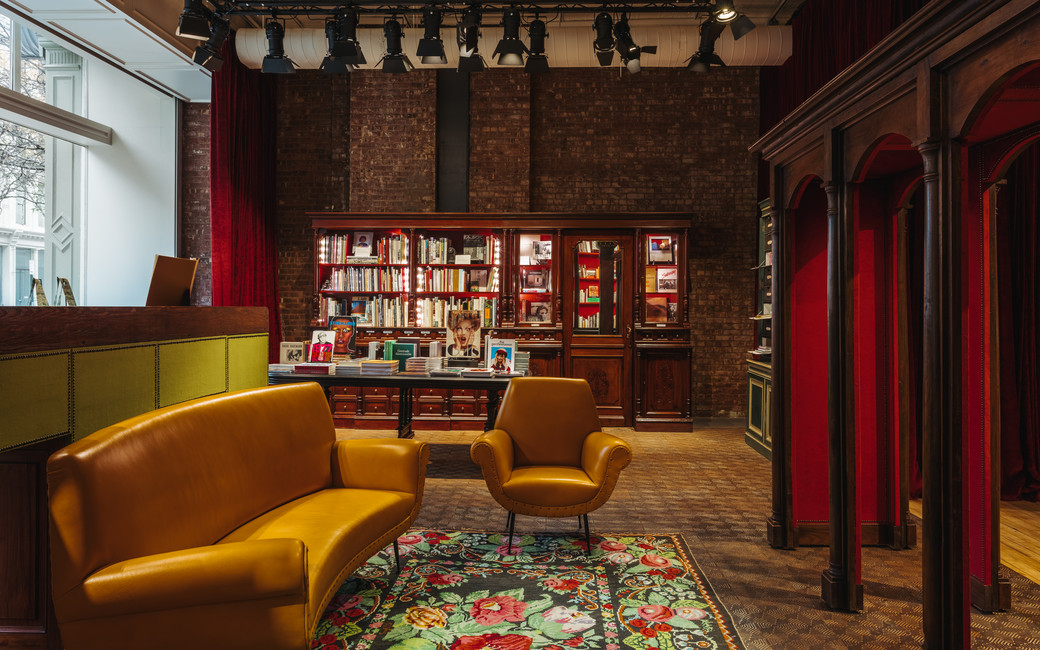
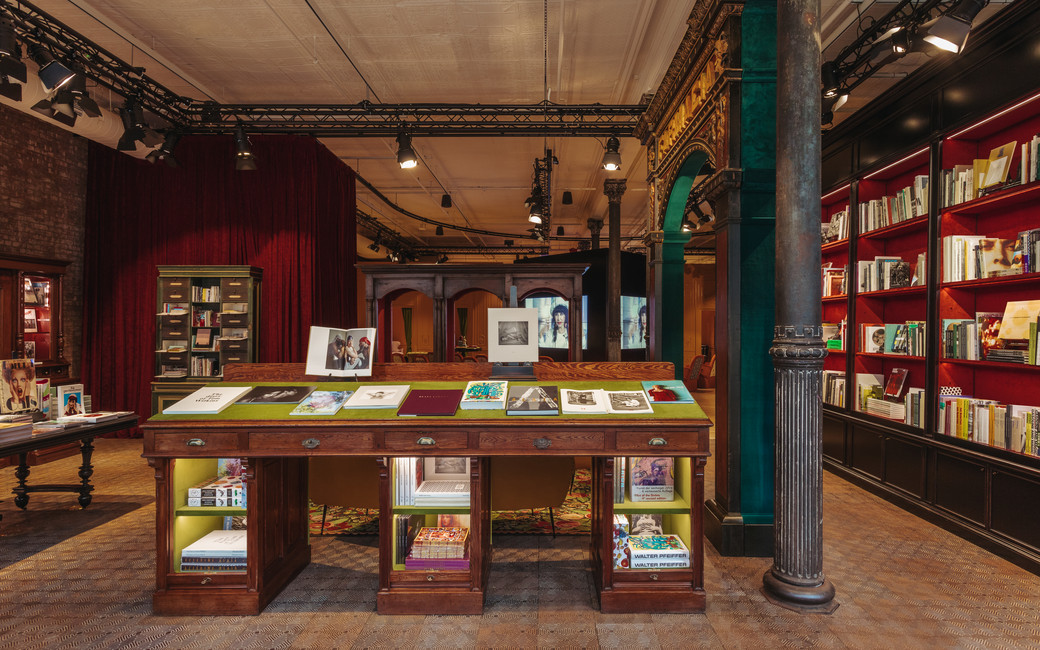
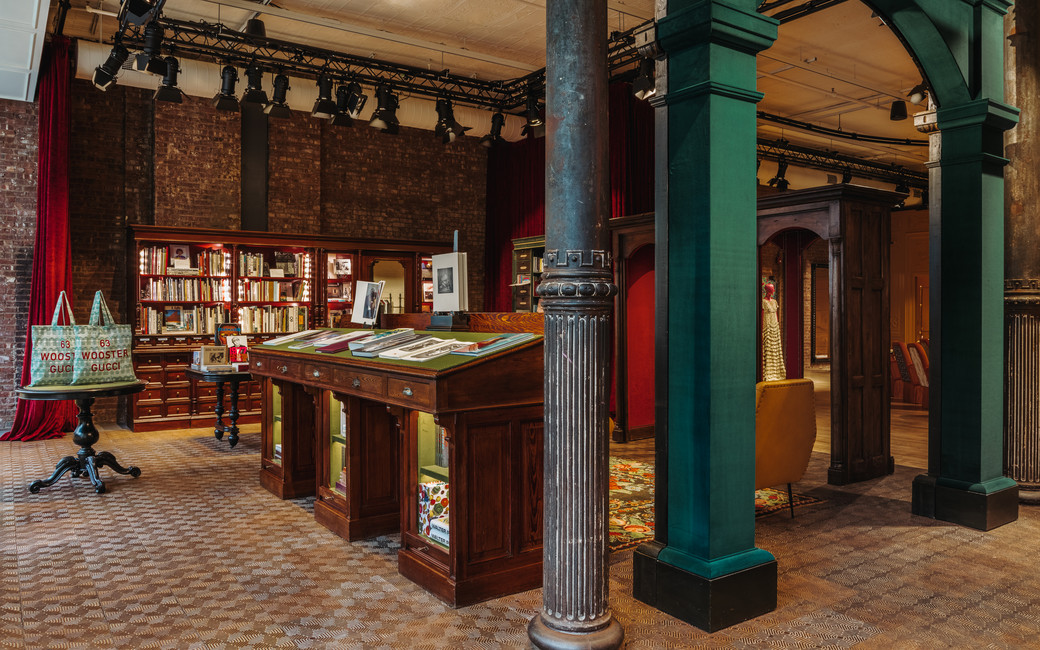
The Gucci Wooster Bookstore is open now at 375 West Broadway in Manhattan.
Photos courtesy of Gucci.
Stampa per sempre!
The Gucci Wooster Bookstore is open now at 375 West Broadway in Manhattan.
Photos courtesy of Gucci.
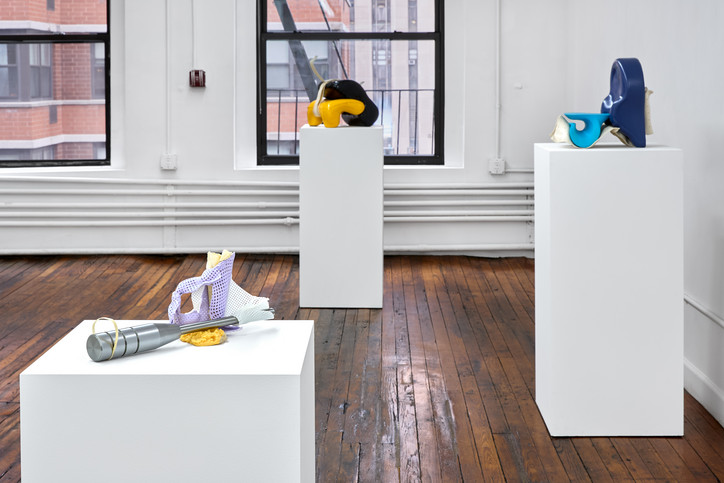
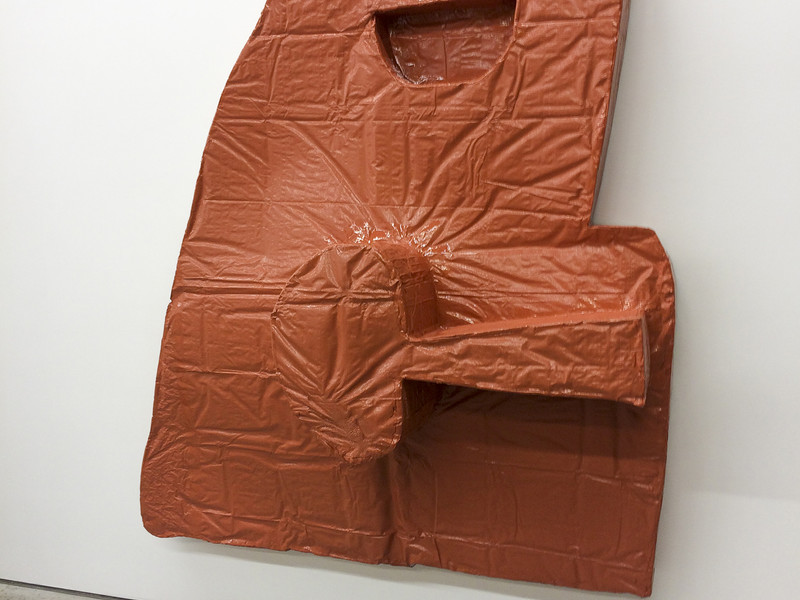
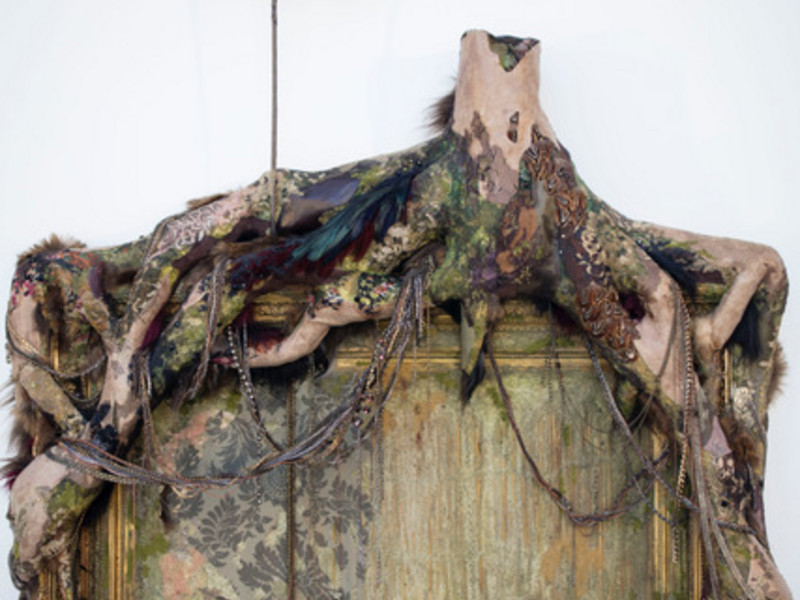
Continuous Squeeze is your first solo show in a decade. How have you been working on your sculptural practice without the pressure of making a show? It seems that there is a mystery or privacy to your works that does not fall into trends or categories.
I am in the studio on a regular basis, I’d say on average 3-4 days a week. So, whether I have an immediate deadline or not generally does not determine how offer I’m working in the studio. Studio time for me is split between different activities or “work/labor”. I usually have at least one thing that is progressing well and moving towards completion, one that appears or feels like it’s stuck or stalled and then there is something or new material I’m experimenting with or trying to further understand and whether it has any future place in my work, or not. It is this last endeavor that is the slowest process with no guarantee that anything will be accomplished.
And yes, the studio is isolated from others, meaning I do not have a staff of studio assistants with a definitive set of tasks to perform. I generally work alone which allows for risk and discovery, no audience to watch me have a bad day in the studio or fail. The studio for me is a very private head and body space which I think allows me to be less inhibited.
As to the 10-year period two of those ten were effectively surrendered to the COVID pandemic when it came to studio visits and public venues. This was also when both of my galleries (Team Gallery and Richard Telles Fine Arts) effectively closed, which looking back on it proved to be somewhat liberating for my studio activity. At the time it was a lot of what I thought was bad news all at once however it all probably came at the right time for me. I’m now enjoying the change of scenery.
A central part of your practice is exploring how inorganic materials can become organic-looking. Tell me more about your interest in creating this kind of visual effects?
Thinking and talking about the space between the organic and inorganic is a curious thing. There might have been a period when we lived in a world where these two were clearly defined. Now I know scientifically they still are and mutually exclusive. But I I’m not so sure that’s haw we as a species experience the two. We seem to live in a time and space where the two slip in and out of their ontological categories or definitions. The “organic” and the ‘non-organic” are increasingly becoming conflated. How else would you describe our fledgling relationship with AI or CGI.
Now I’m still working with “real” materials and fairly 20th century methods of object making/ rendering. But I’m interested in how the natural, whatever that might mean, and the un-natural join or intersect or maybe just collide.


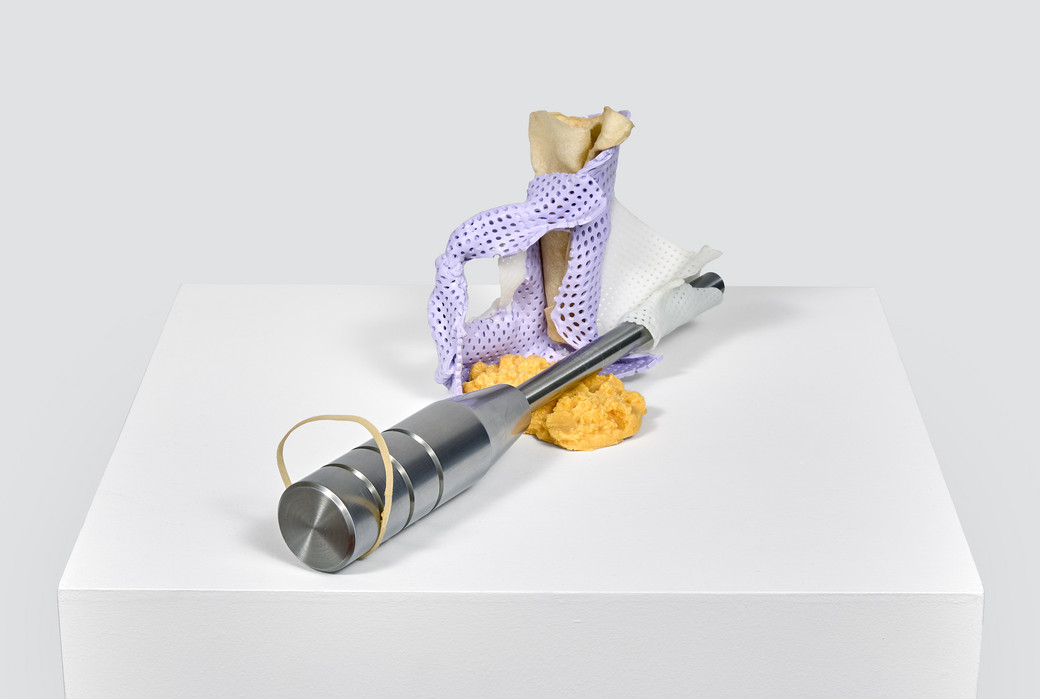
The erotic, acts of coupling and decoupling, is paramount across your body of works. I am especially fascinated by how you combine erotic imagery with visual perspectives. A sculpture that seems clinical can appear to be ludicrous at a different angle, such as Coupled Prop (white, green), 2025. How do you think through shifting interpretations in your work?
I love thinking about the phenomenology of objects. Their shapes and possible meanings through association, both familiar and not so. Sometimes a thing can be both familiar or understood and then quickly shift into alien obscurity or the abstract. A lot of what humans do or to be more precise invest in is kind of ludicrous. Over designed fetishism can be found everywhere we (humans) have had complete control over. Look no further than the kitchen gadgets and high-end bathroom architecture/design that is venerated. It seems to me that most of our production values are born out of the act of arousal. Value has extended beyond basic needs or task completion. We live in a period when corporeal arousal is value dominant.
Your earlier works seem to be more interested in tensions of mutual dependency or thresholds, whereas your recent works are more about how the human form can be evoked in the absence of a human body. What motivates this shift from constructing an intricate system toward hybrid structures between bodies and functional objects?
Well, whenever you have two or more things (objects) coupling up to form one dependency as a subject is always present in the narrative. What I’m interested in is that space or gap between the surrogate (stand in) and the accoutrement (ornament/equipment).
Another dimension of your exploring hybridity is that your recent sculptures often play with surface and depth, especially through using negative space. I am curious as to how you think about dimensionality.
I would consider myself a sculptor in the truest sense of the word. Which means I find myself thinking about fundamental attributes that define both an object/sculpture and how we coexist with it. So, things like space and time, surface or skin, weight and volume are paramount.
The motifs of wellness culture often recur in your sculptures. What attracts you to the culture of self-optimization?
This is such a great question and topic, wellness culture and our pursuit of self-optimization.
If we look at Maslow’s Hierarchy of Needs diagram wellness culture of self-optimization might find itself positioned at the top of the pyramid under the heading “self-actualization” but with a sometimes-weird twist to it because this wellness culture end game seems to try and cheat mortality. Which is the most un-human thing I can think of.


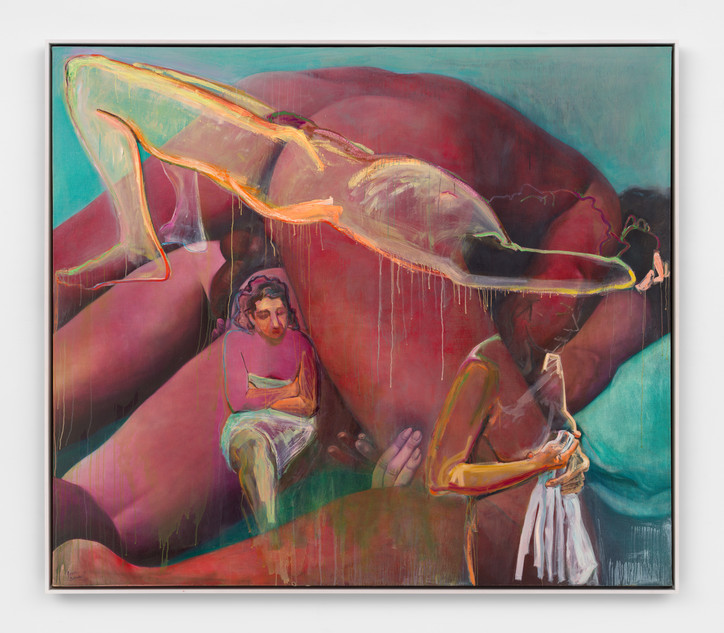
The show’s namesake piece, Anita Steckel’s Giant Women on New York (Coney Island), 1973, is part of her greater Giant Women series. A nude woman, stylistically larger than other figures, lounges outstretched in the water of Coney Island beach. Known for mixing erotic imagery with recognizable landscapes, Steckel protested art history’s double standards by portraying female nudity on her own terms. Her figures take up space both literally and figuratively in her landscapes, emphasising an ongoing uphill battle for women to secure their place in the cannon.
In 1972, a Republican legislator demanded that Steckel’s solo exhibition, The Feminist Art of Sexual Politics, be cancelled, considering her works too obscene for the public. Steckel responded to this accusation by forming the Fight Censorship Group, which would go on to advocate for the right for women to use male nudity and sexual subject matter in their art works, just as men did. While we might like to think this kind of censorship is some far off dystopian reality, it’s all too familiar to the political control we’re facing again today.
Bringing female experiences to the foreground of painting was part of a larger initiative to give humility and dignity back to the sitters, especially when painted in the nude. Male artists often depicted their models as mere sexual objects or muses, painting them as nothing more than nude flesh, disengaged from personhood. Alice Neel was uninterested in producing the next Grande Odalisque, and opted to humanize her subjects through her honest and raw depiction of the nude figure. In Ruth Nude, Neel’s unforgiving re-examination of the female body takes away an overly idealized exterior. In doing so, Neel provides an opportunity for the viewer to inquire about the sitter’s inner psyche.


This unvarnished approach to the body can also be seen in the work of Joan Semmel, who began as an abstract expressionist and later turned to figurative painting. Her sexually charged imagery was part of a larger second wave feminism initiative for women to explore and get in touch with their bodies as a means of taking back ownership.
Semmel did this by painting her intimate angles of her own aging body, depicting its inevitable changes. In other pieces, she intentionally leaves the face of her figures out of the frame, allowing the viewer to impose themselves into the work. She depicts visible sexual pleasure from a woman’s perspective, outwardly rejecting the male gaze. Bottoms Up (1973/1992), is part of a larger Overlays (1992—96) series, combining an underpainting from her Erotic Series (1972), with later imagery from her Locker-Room paintings (1988—91). Semmel revisits the same themes throughout her life, emphasising the lifelong commitment she has made to her figures.
These women not only refused to sacrifice the woman for the artist, but created a community to support a greater discourse surrounding what stories we highlight in art history. Giant Women On New York seamlessly demonstrates this unending determination to compound the worlds of activism and art, while also revealing how much work there is left to do.
The art landscape is changing quicker than we can keep up with, and with that, our commitment to the figure seems like a distant memory. Giant Women On New York feels like a call to the past, a point of reflection in a time of turmoil. There is work to be done and work to protect regarding women's rights. The works of these “giant women” provide us with opportunity to ruminate on the complexity of the female experience, and encourage introspection.