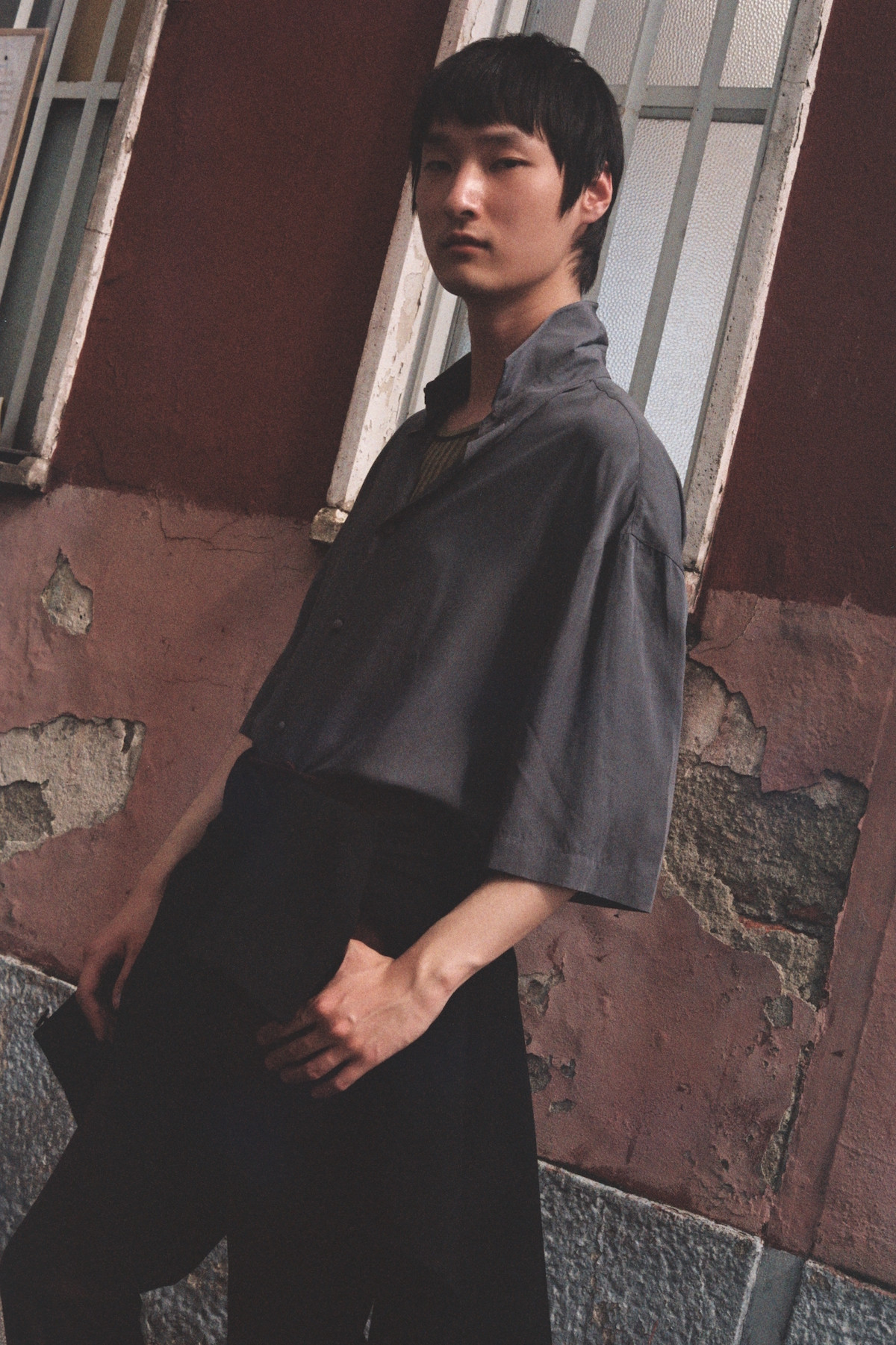
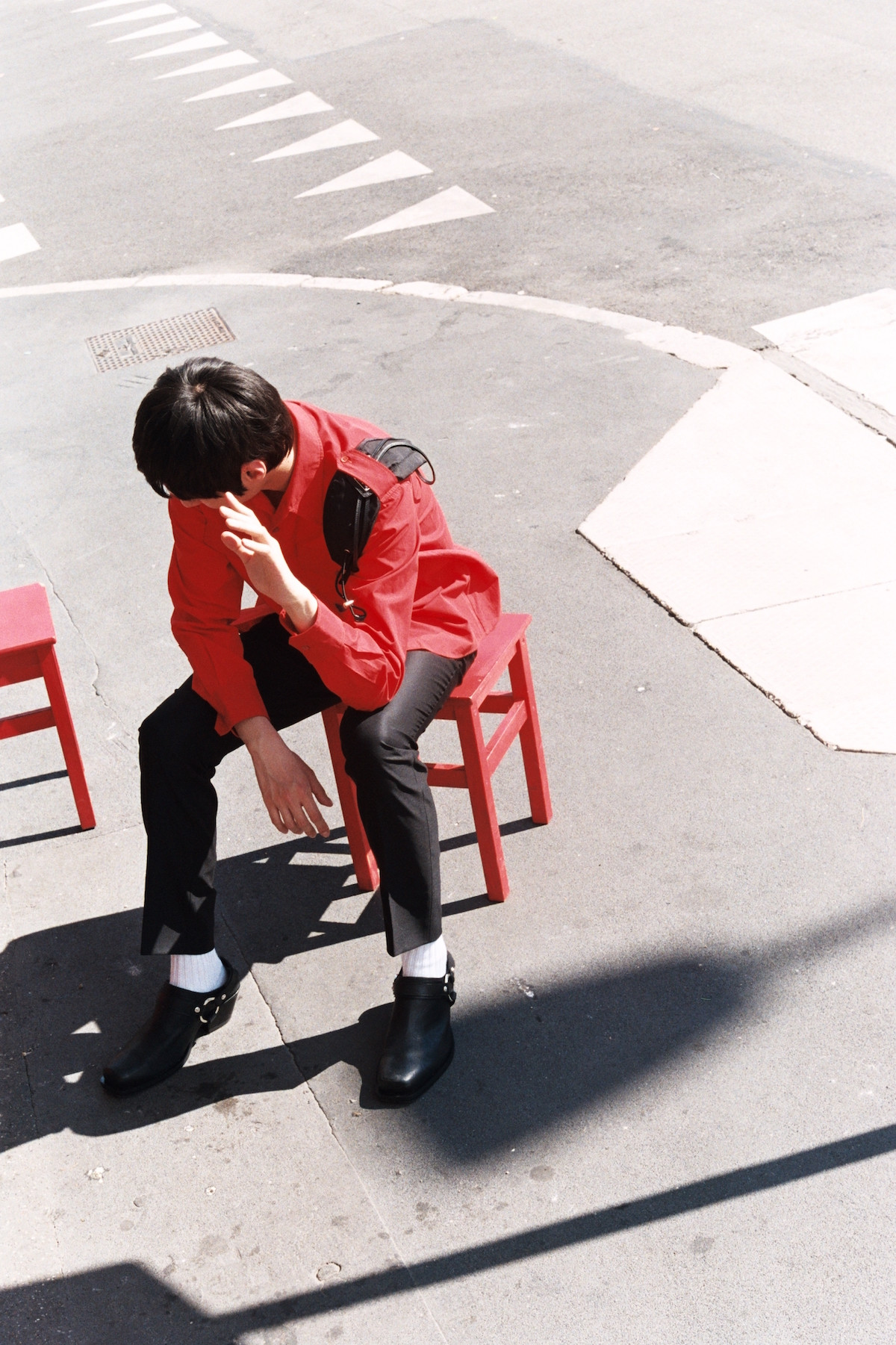
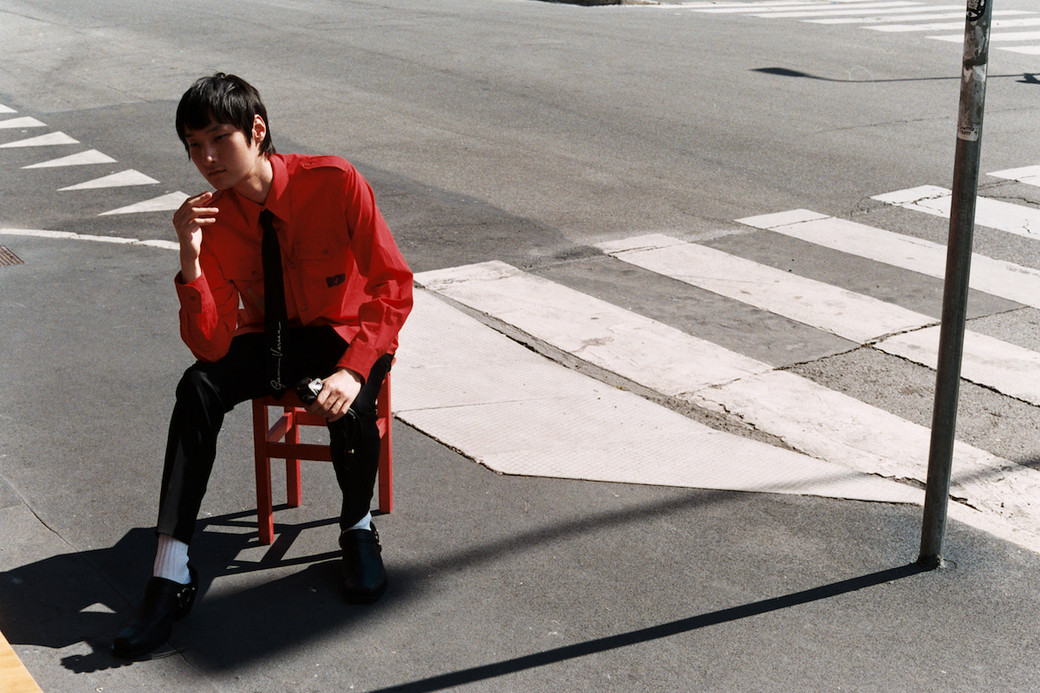
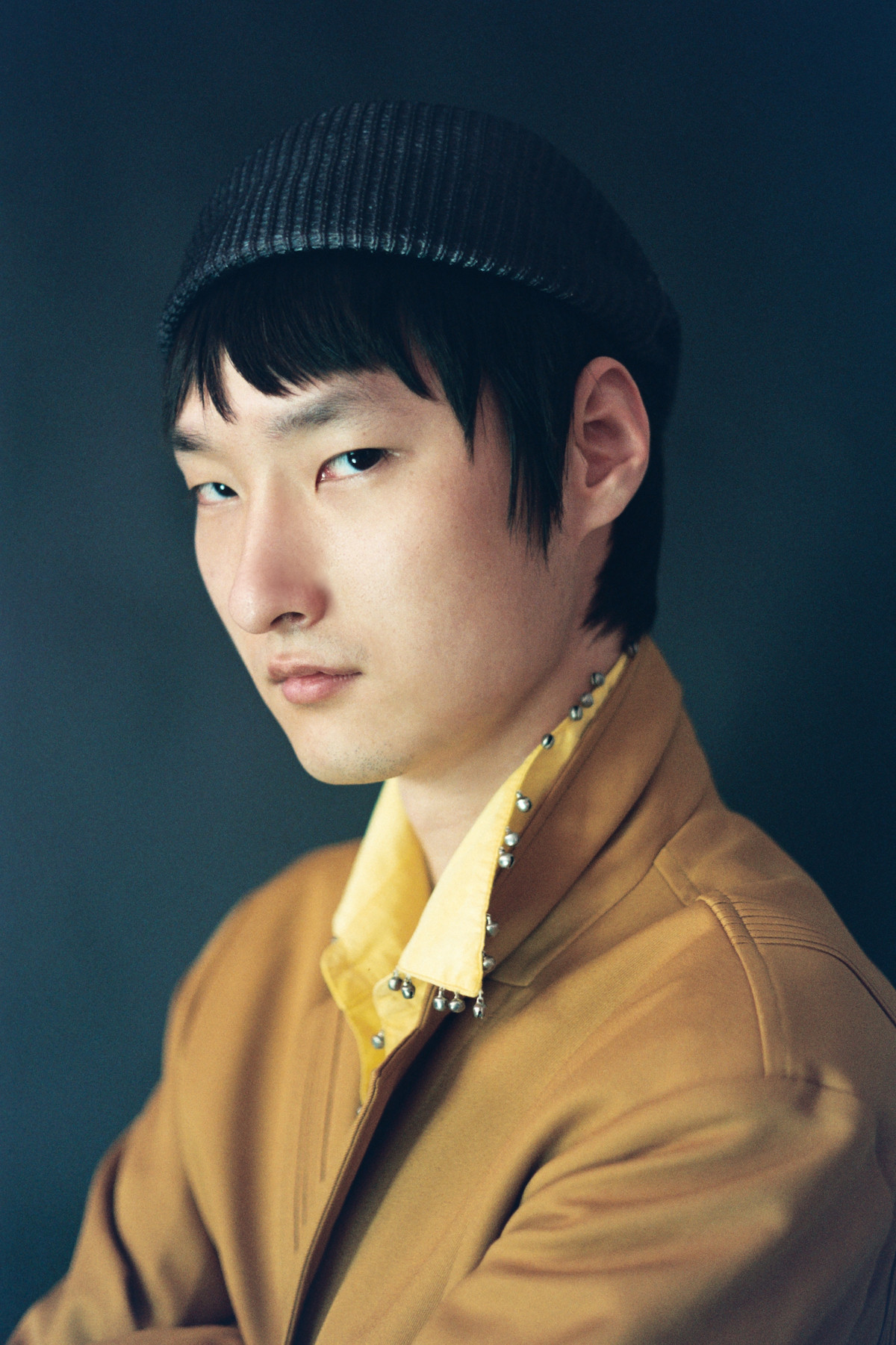
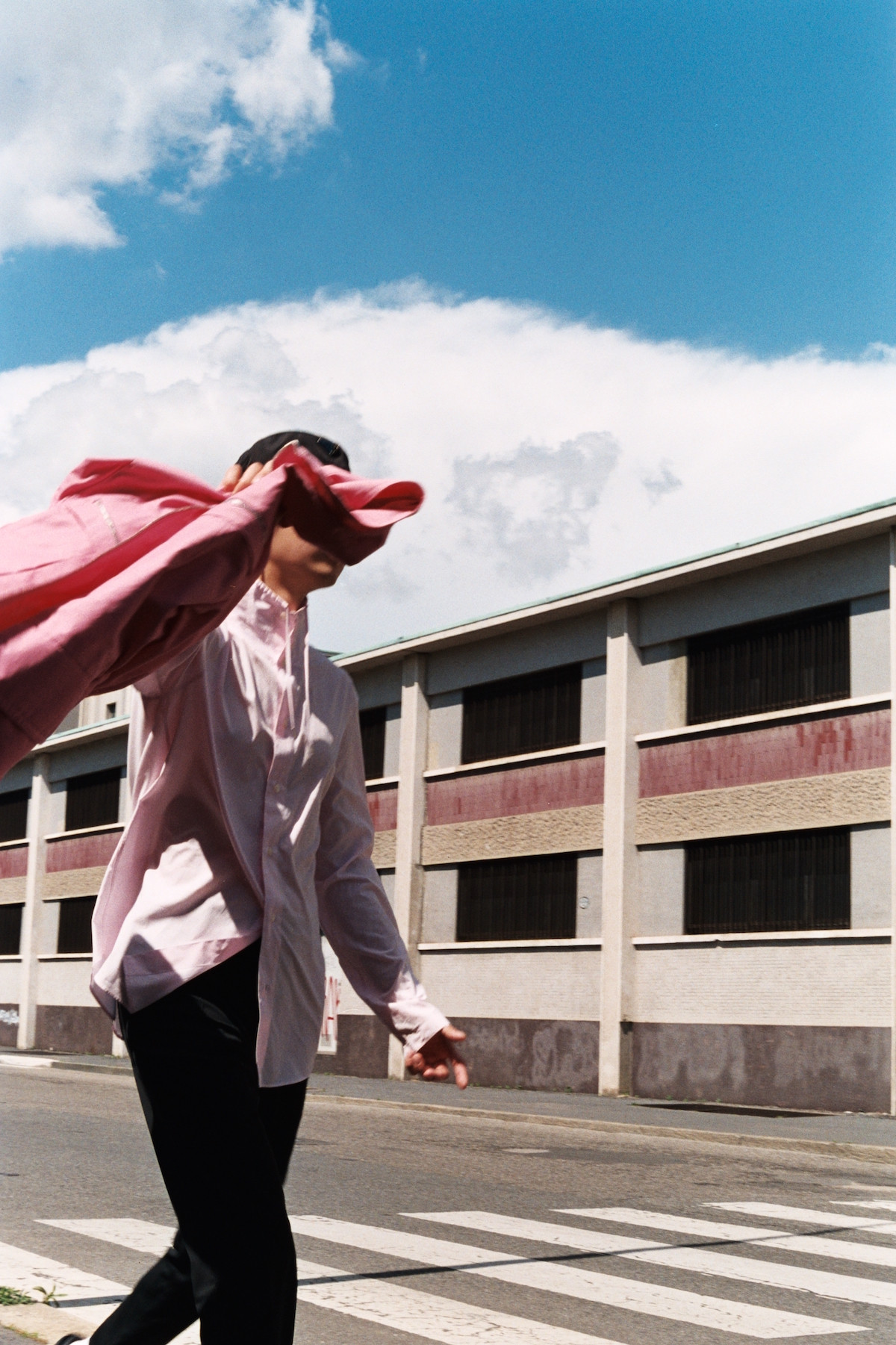
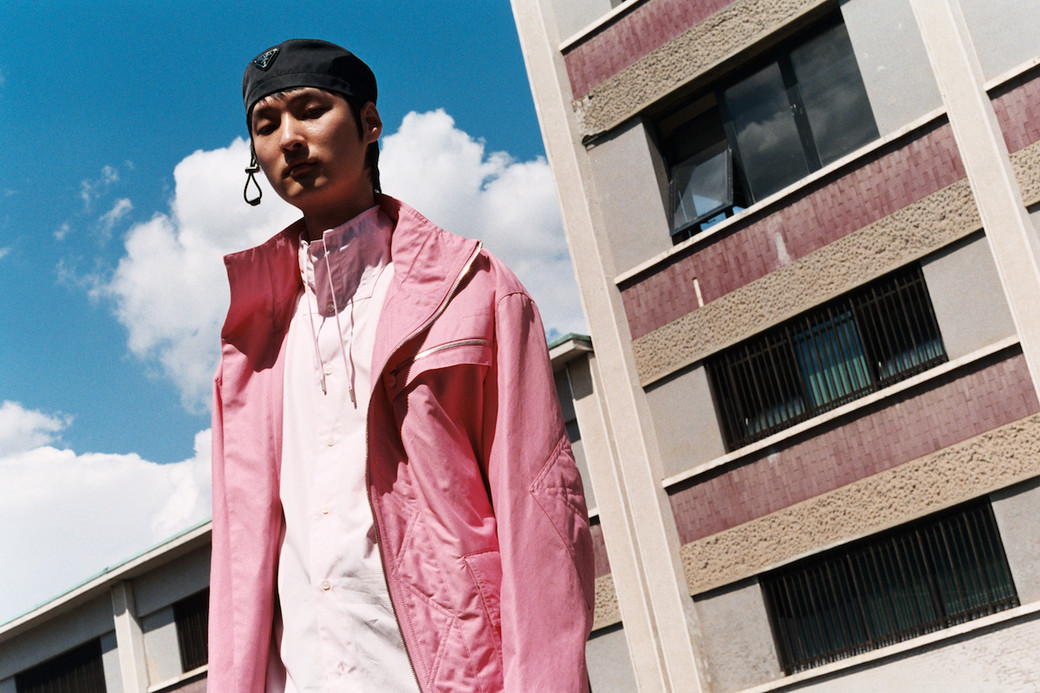
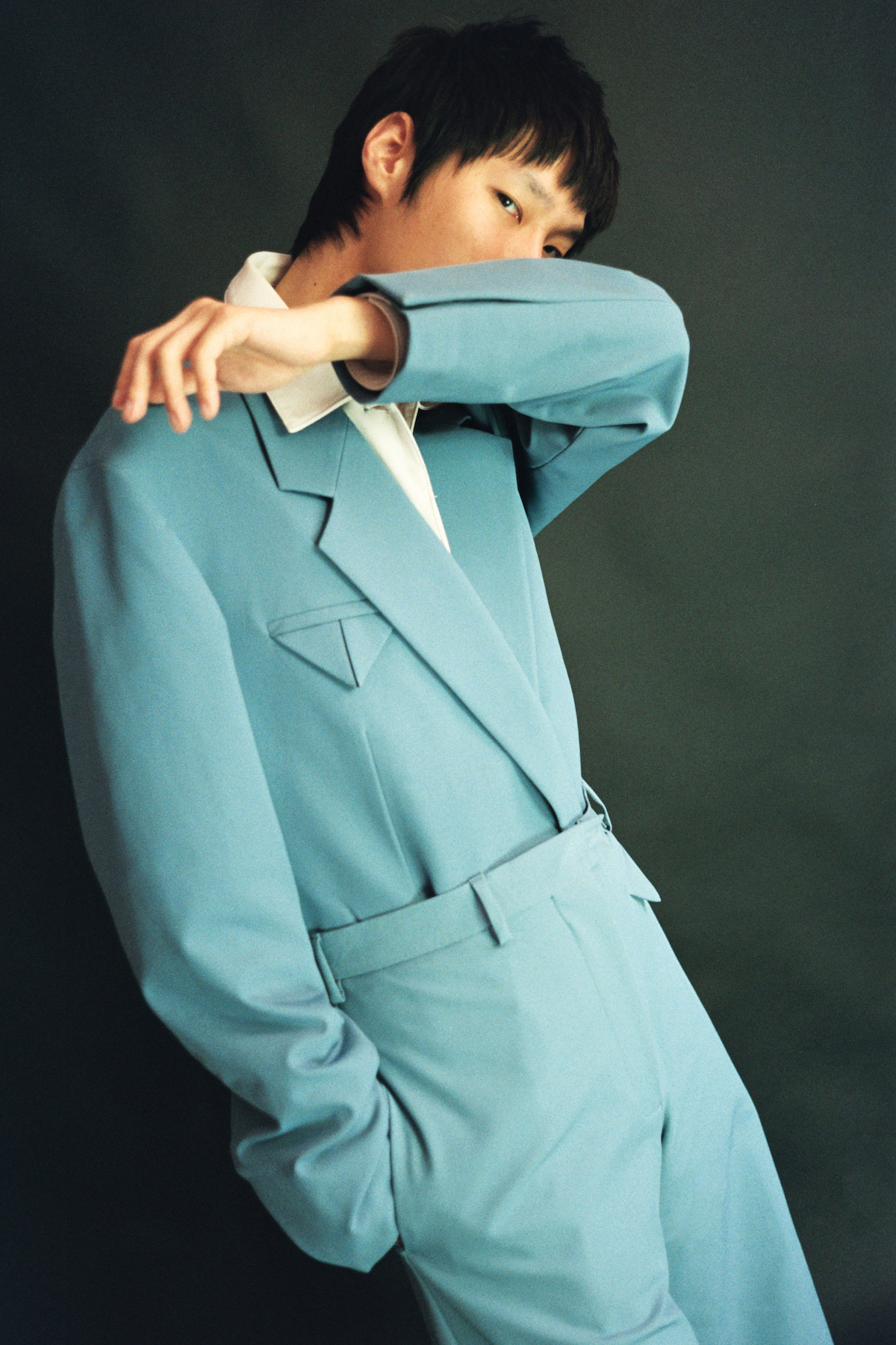
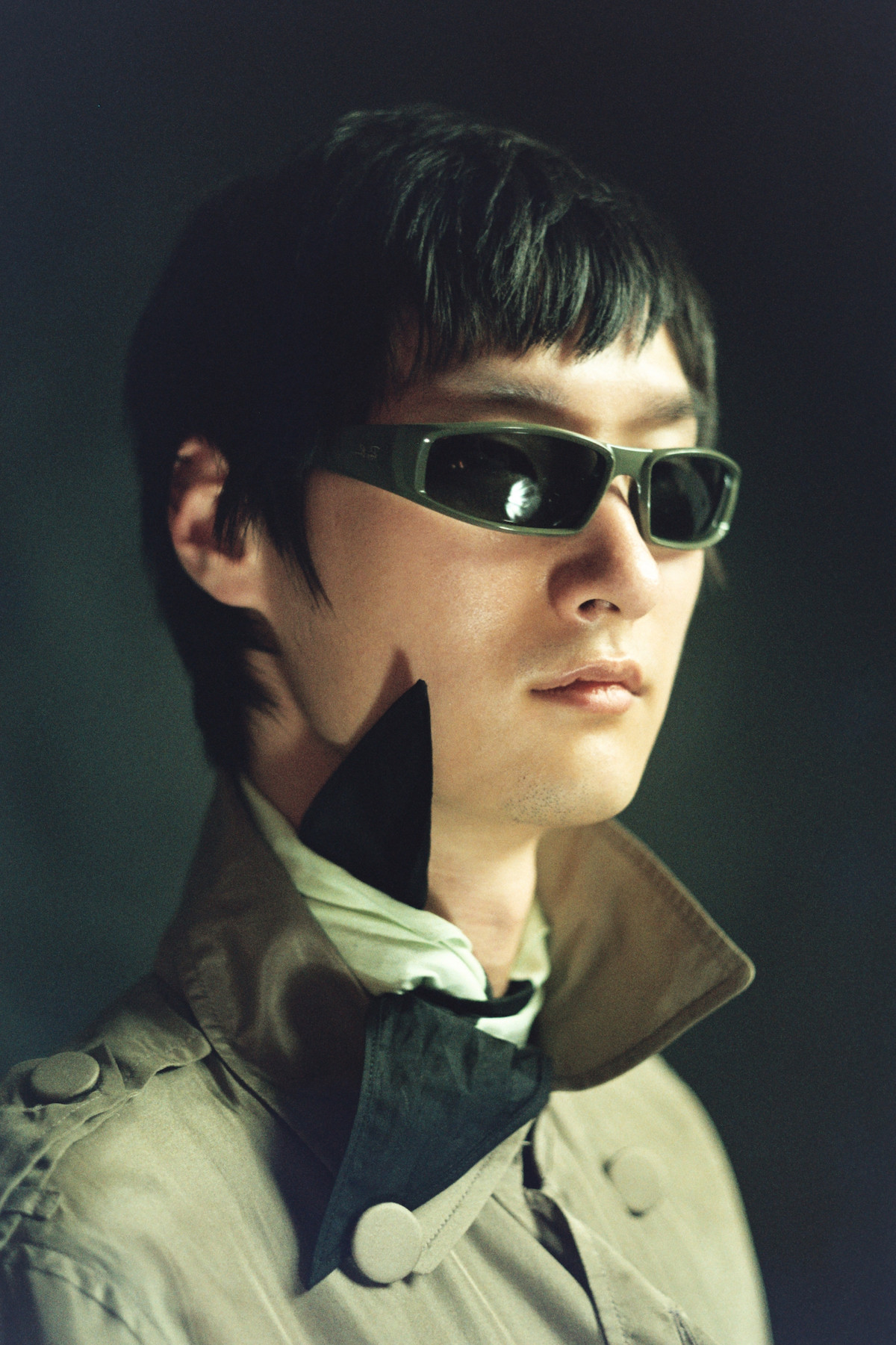
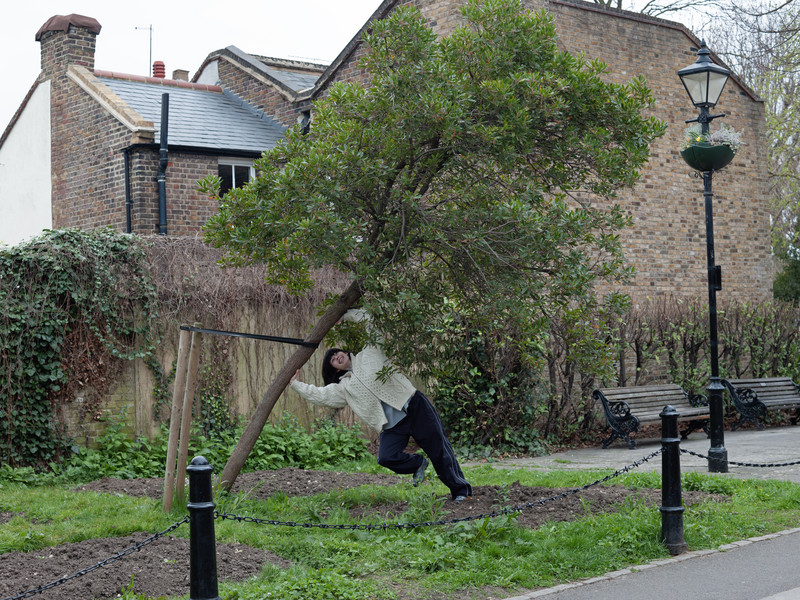
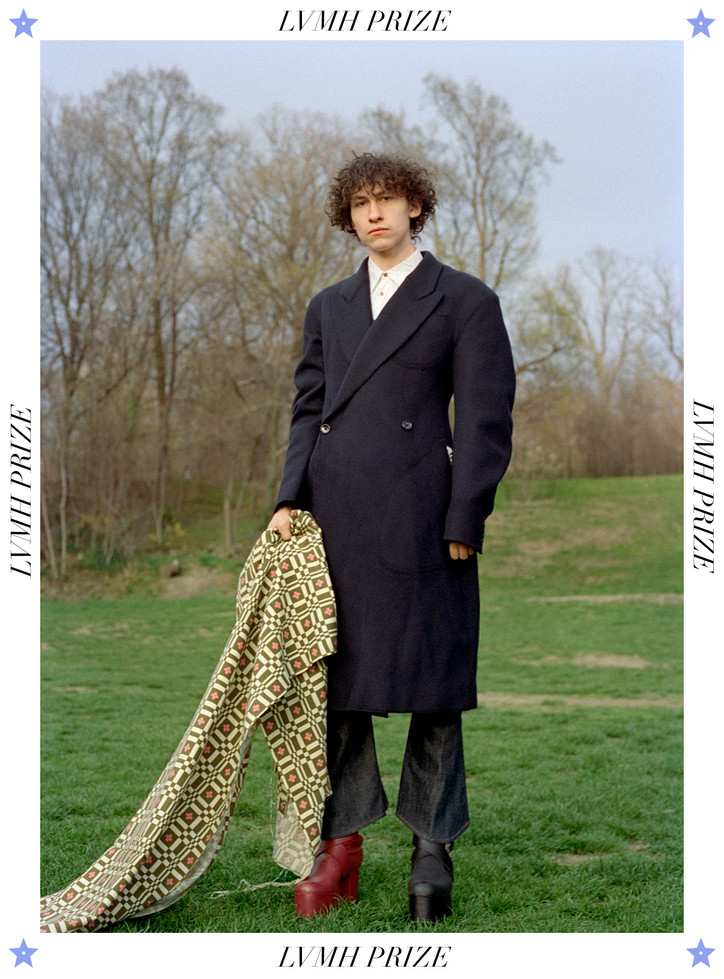
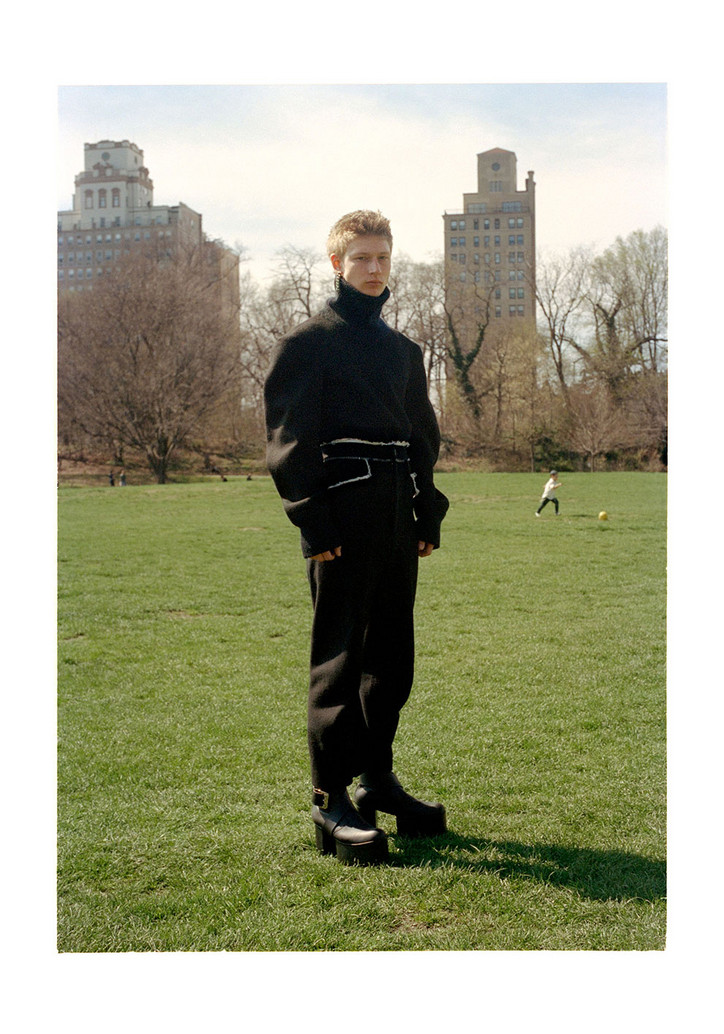
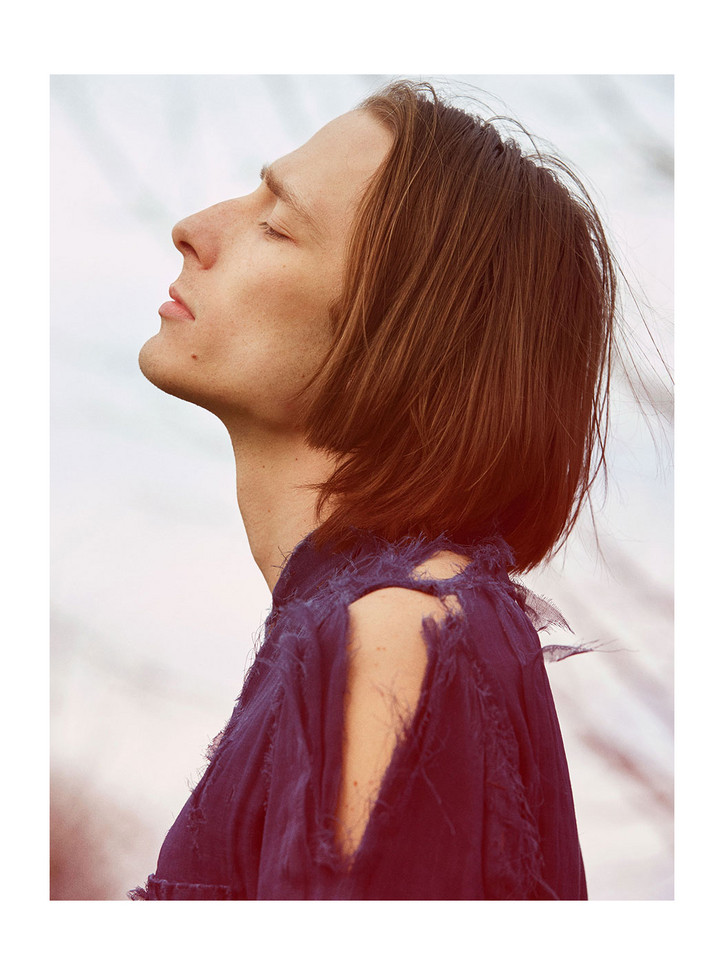
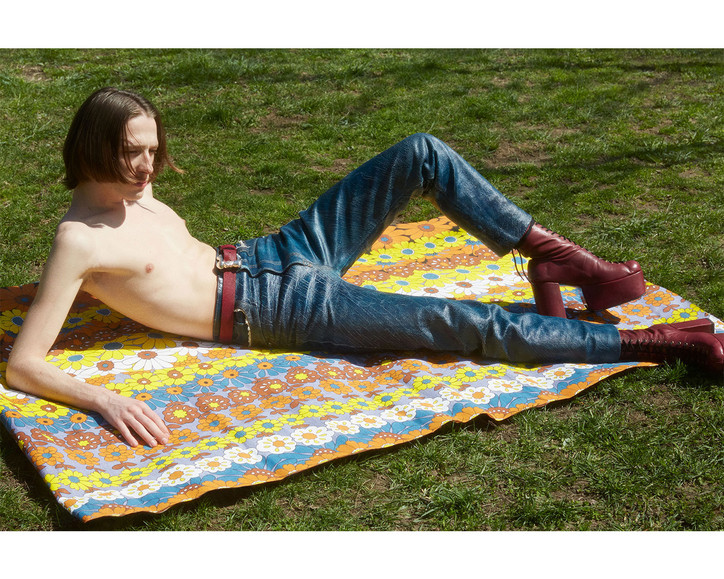
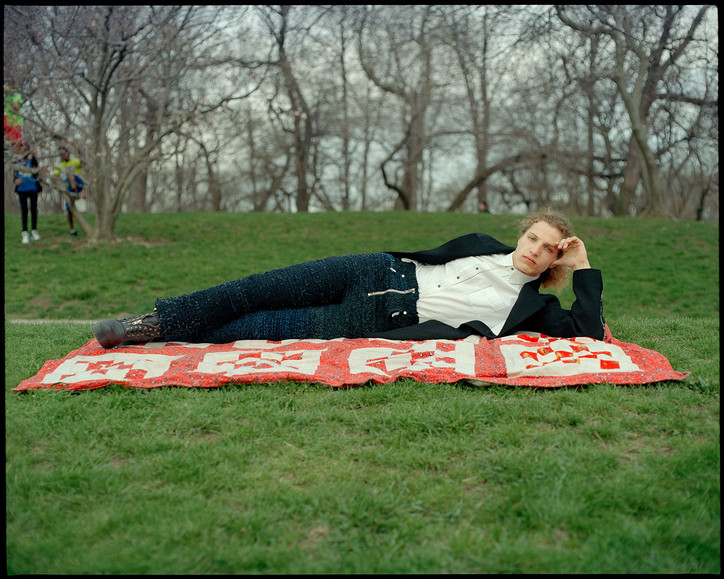
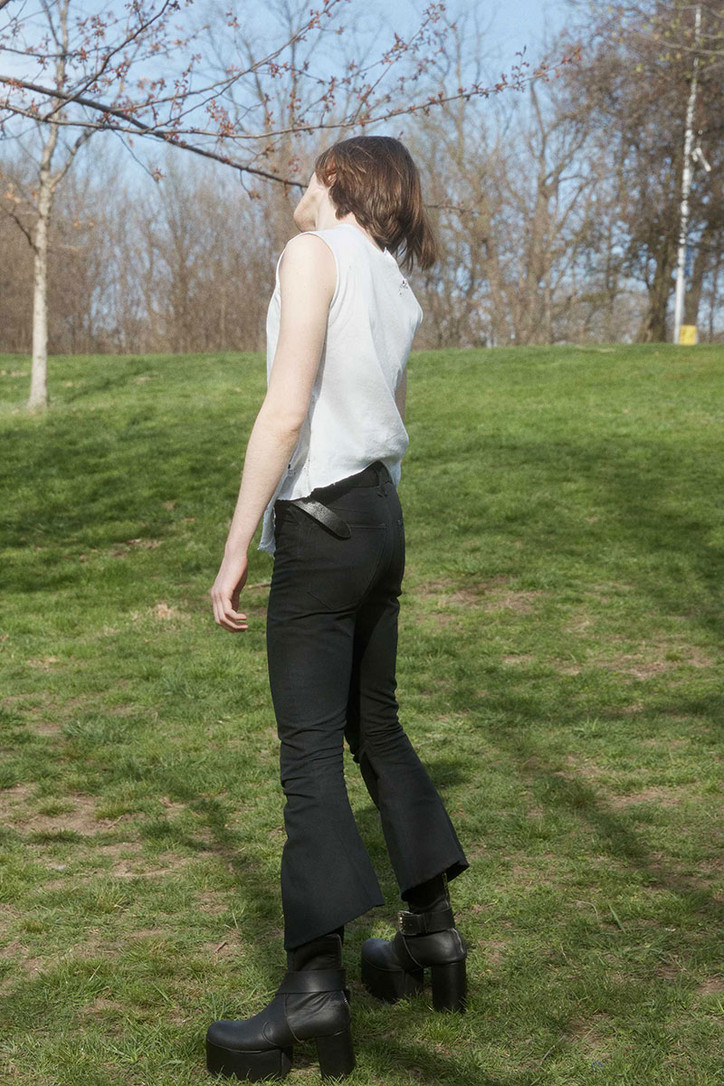
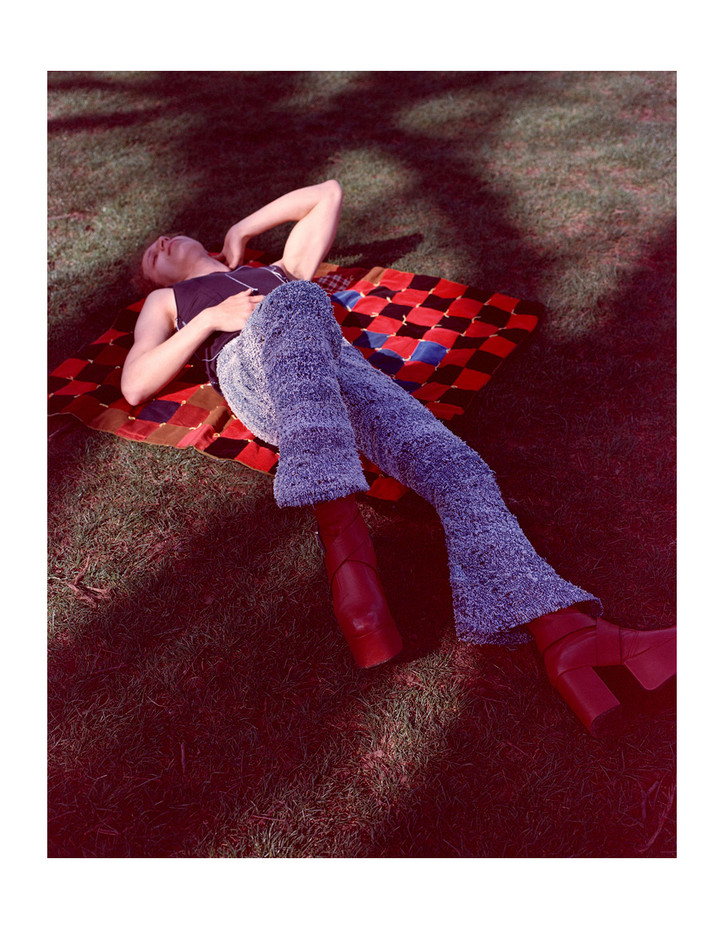
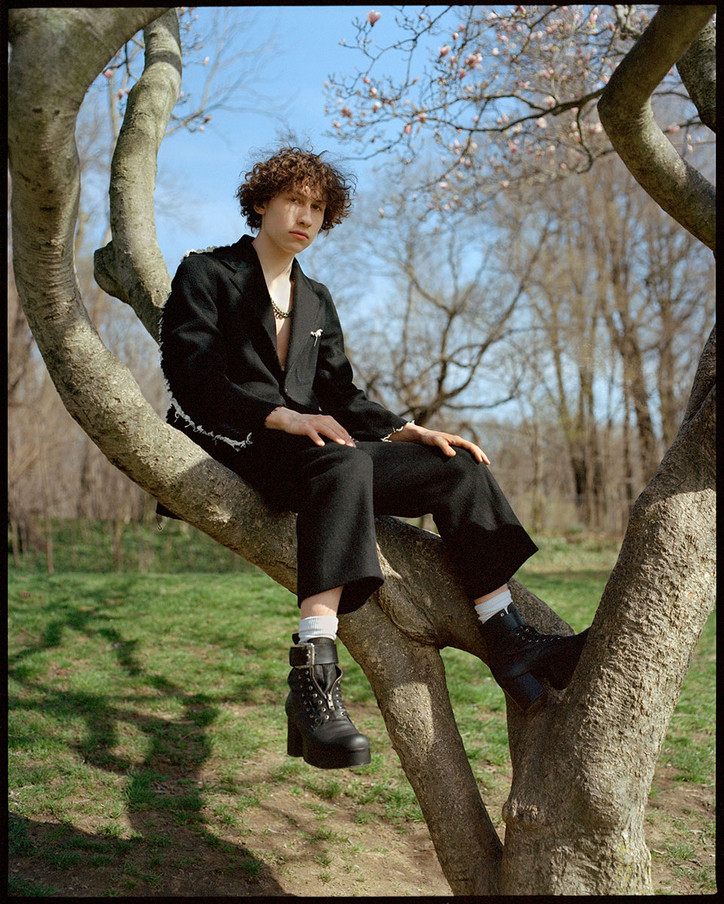
How has this emphasis on individuality translated into casting? Is there a prototypical Kozaburo model, or do your leanings change with each collection?
Generally, I like each model to be different—no specifics for skin color, hair length, or body type. I want to combine individual looks that together create a harmony. Seeing how they carry themselves, you just get a sense that some people fit, that they look great in the clothes and match the vibe of the brand. It’s really more about attitude.
Between Central Saint Martins and Parsons, you spent some time as an assistant at Thom Browne. What was that experience like? Have you retained any lessons from your time there?
For me, the biggest lesson was simple but crucial: You must be true to yourself. In that sense, Thom showed me by his example. As a designer, I really respect how he’s been able to extend his vision yet retain a signature style. Of course, we shared a certain dedication to technique, but more than anything, I was impressed by how he built his brand as an individual. By the time I became interested in his work, around 2007, he had been a guest designer for Milan Fashion Week, where he had a show of forty models wearing the same suit on the runway. To me, that was very punk. It wasn’t only about the clothing, it was about the statement being made. So that was the main impact he had on me—his attitude. I try to carry that same approach today in everything I do.
You’ve said elsewhere that “the timeless design of classic men’s apparel is at the core of [your] aesthetic.” I wonder which elements, material or otherwise, might lend themselves to “timelessness?” In your own designs, has this meant retaining specific cuts, proportions, palettes? Or is it something less tangible?
I think my vision is an honest one. I want my garments to be relevant over a timeline. I look at the past hundred years, imagine the next hundred, and then try to make clothes that I could see people wearing at any point along the way. Part of that is producing items that people have been wearing for a long time and will likely continue to wear: jackets, jeans, shirts. I’m not inventing any new garment categories, I’m just using classic formats and showing differences in the construction and detail. I want my clothes to feel somehow both vintage and current, and to take on new qualities over time as well.
What about your use of recycled materials? Given what you’ve said, one might read that practice as a literal means of extending a narrative—or then again, it could simply be a matter of aesthetic preference, even of finance.
When I’m creating a new collection, I might not know how much of a certain textile to buy, what to have fabricated. Oftentimes, recycled material has simply been more accessible and affordable. At the same time, I do like the notion of the material carrying a unique history, even before I use it. From the beginning, my clothes already have a little bit of age to them, a bit of character—and then, of course, as people wear them, they take on additional character as well. In Japanese, there’s a term called mottainai, which essentially means “waste nothing.” That’s part of how I was raised, “Finish your meal,” and so on. So the notion of “sustainability,” which is such a big word in fashion right now, is already quite natural to me. It’s about using what’s available, recognizing a “soul” in each item, and creating new narratives.