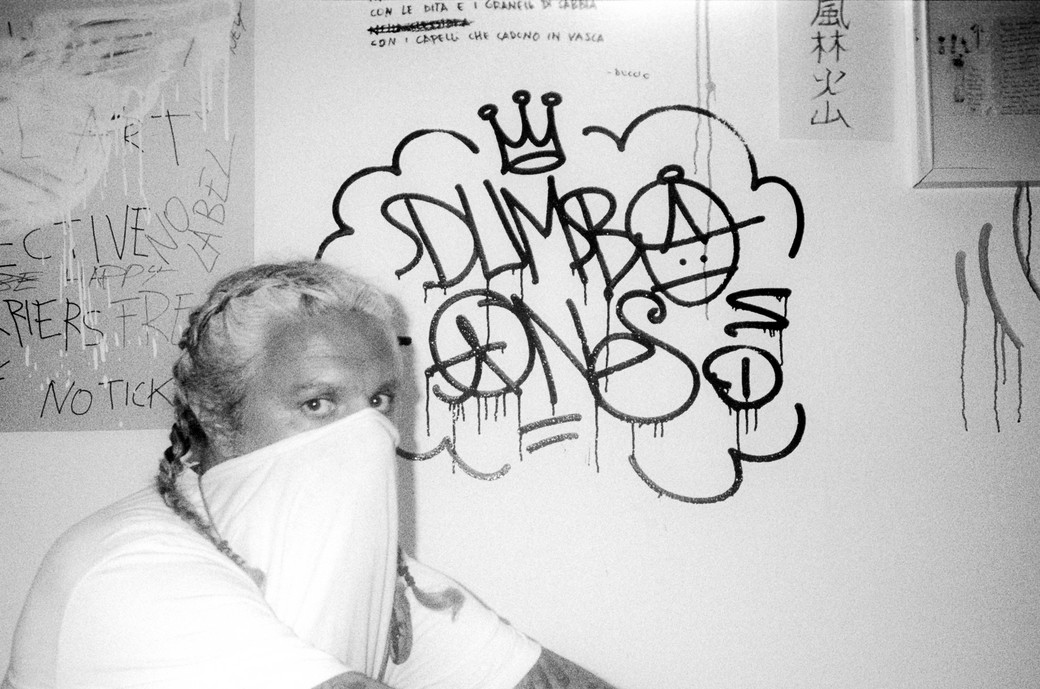
PRESENTE CONTINUO: the intimate ties between then&now

Starting May 30, PRESENTE CONTINUO will be available to purchase on presentecontinuo.com, cpcompany.com, and at the C.P. Company flagship store in Milan, Corso Matteotti 7.
Stay informed on our latest news!

Starting May 30, PRESENTE CONTINUO will be available to purchase on presentecontinuo.com, cpcompany.com, and at the C.P. Company flagship store in Milan, Corso Matteotti 7.

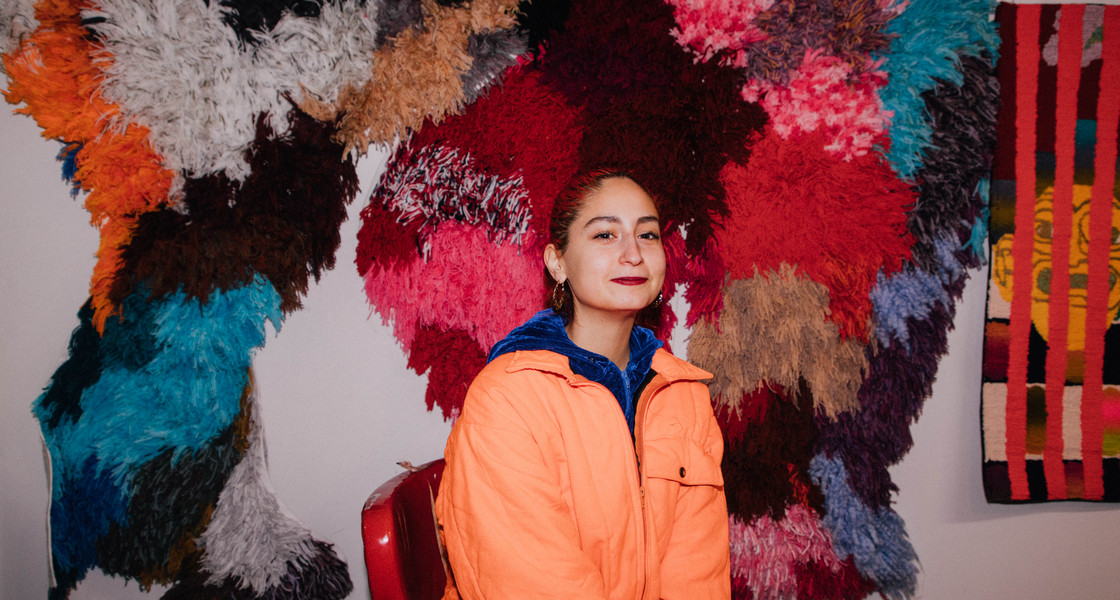
But what moves her? Included here is a helpful, if abbreviated, list of Sarah Zapata’s interests, the foremost being—


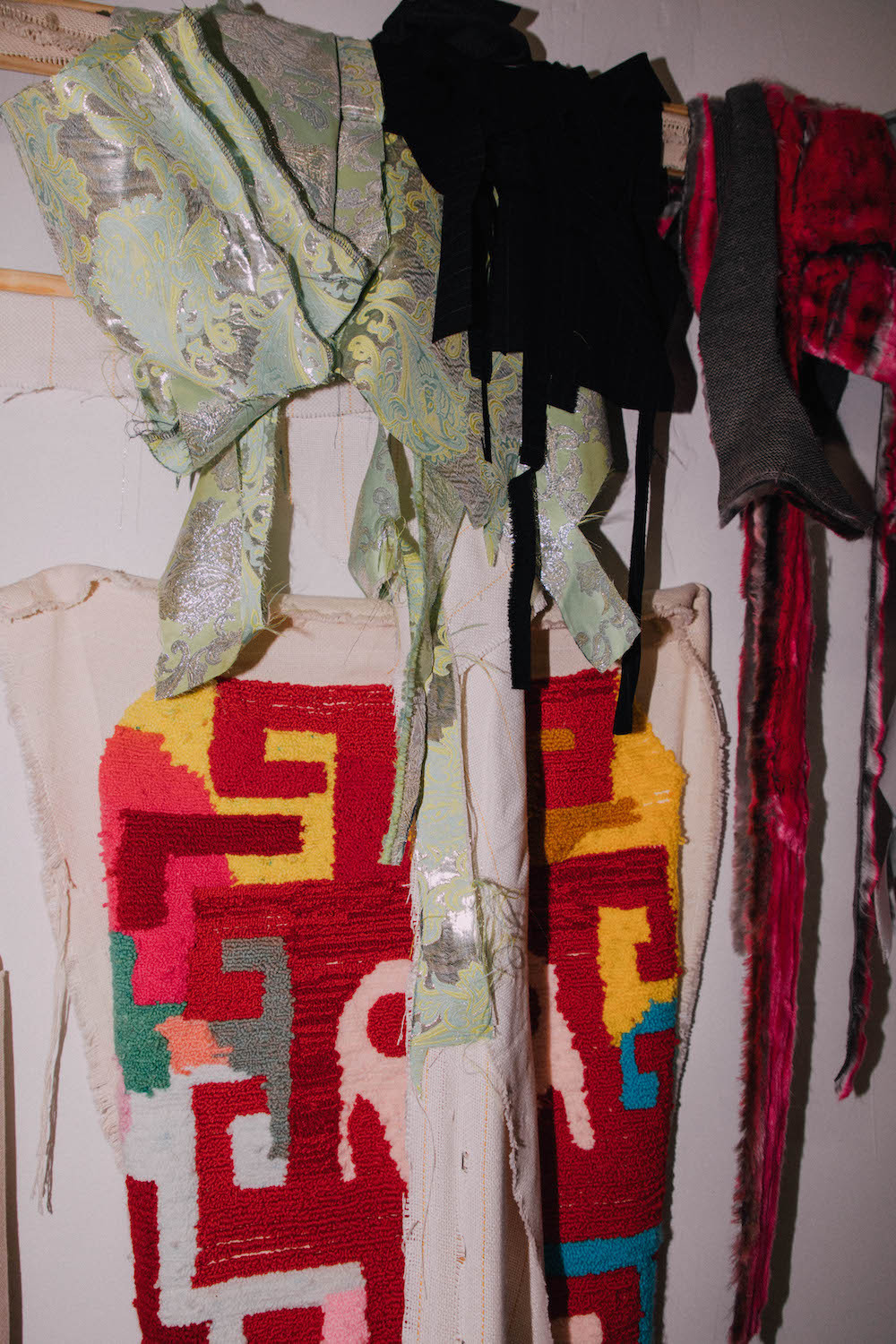
What’s more accessible than textiles? We’re in (almost literal) constant contact with cloth; tapestries and weavings have been traditional art forms for thousands of years. But one of Zapata’s strengths as an artist is her refusal to take anything for granted.
“I’m interested in the familiar,” Zapata says. “I think textiles are very familiar, and I’m warping that relationship.”
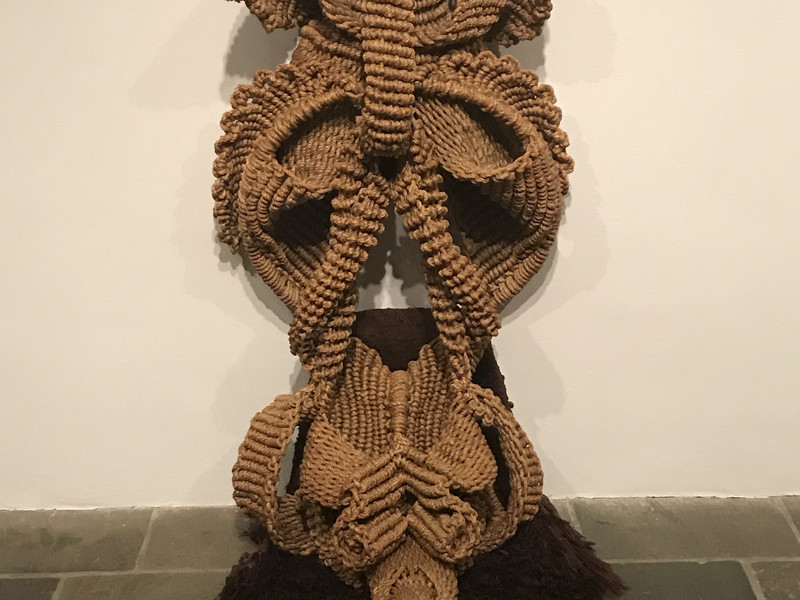
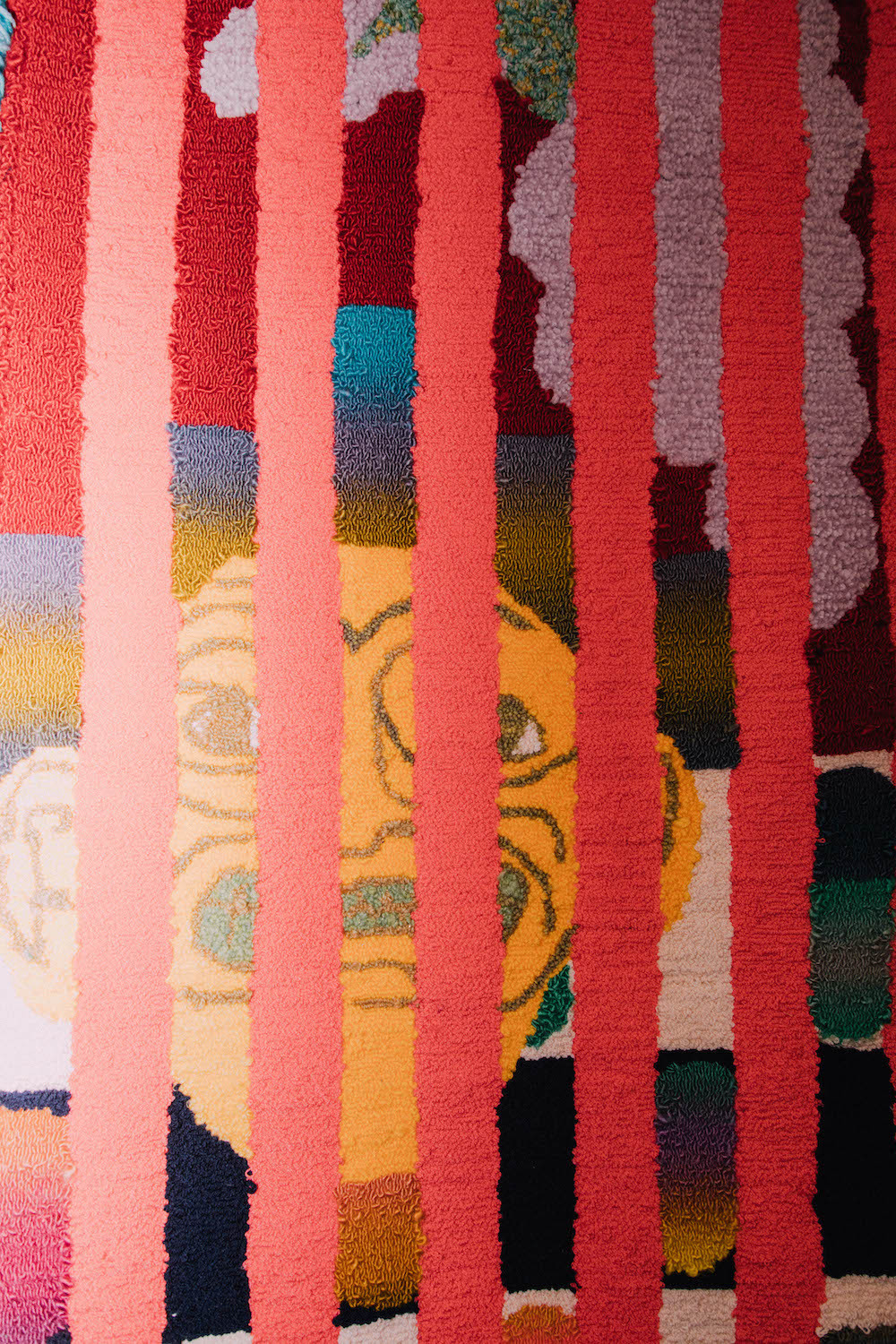
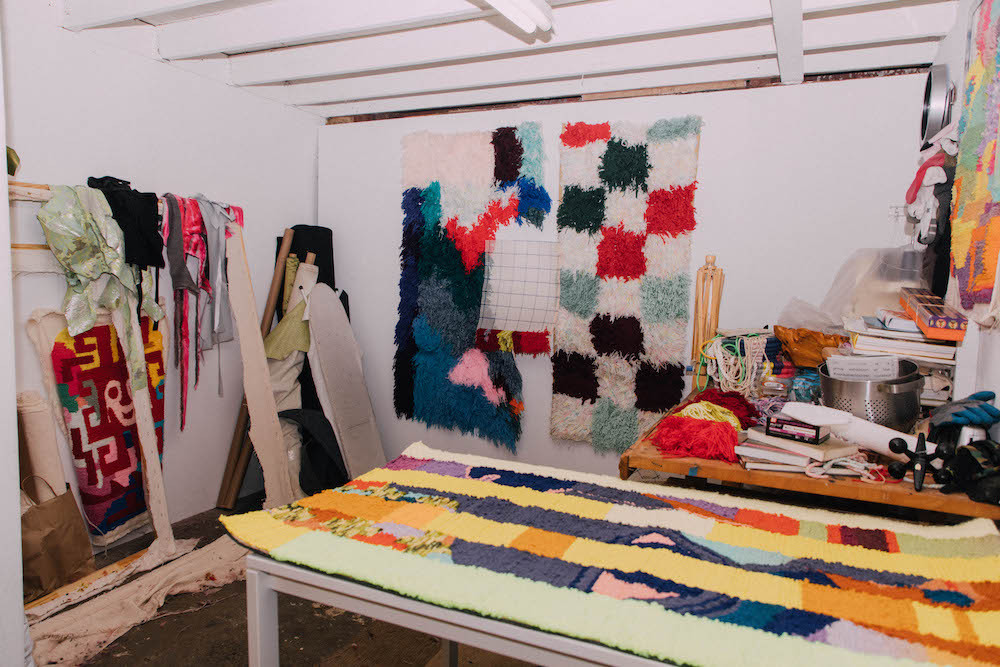
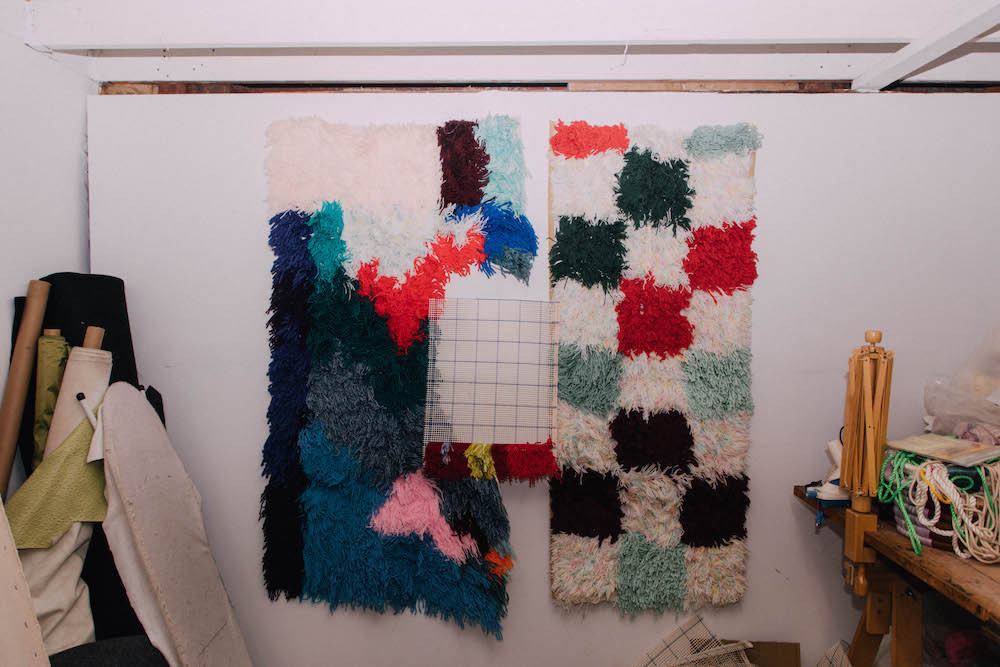
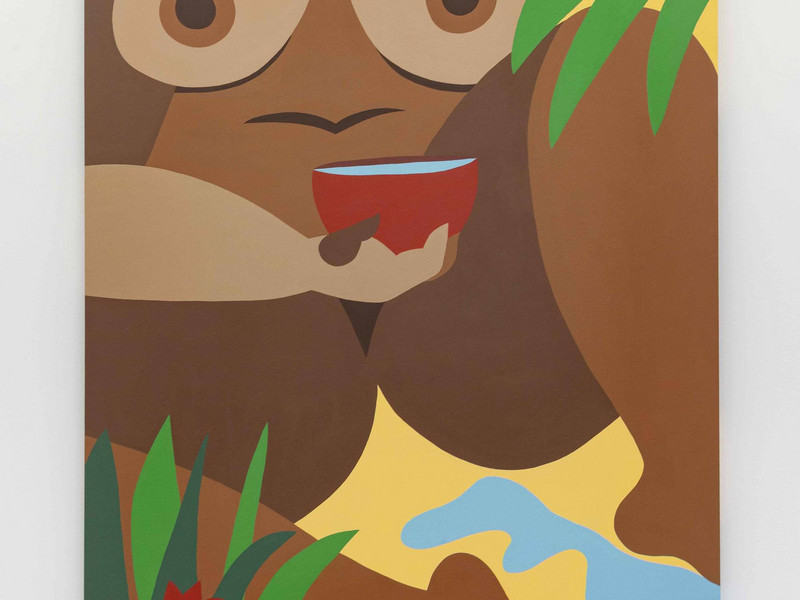
At her Performance Space show A Famine of Hearing, viewers walk into a square gallery room divided diagonally into two distinct sections, one red, one green. Walls of colored carpets stand in the center, perpendicular to each other, broken up by carpets hung on the walls referencing the style of stained glass windows. The red and green, she explains, expressed two questions on her mind at the time:
1. How did we come to accept modern Christmas colors?
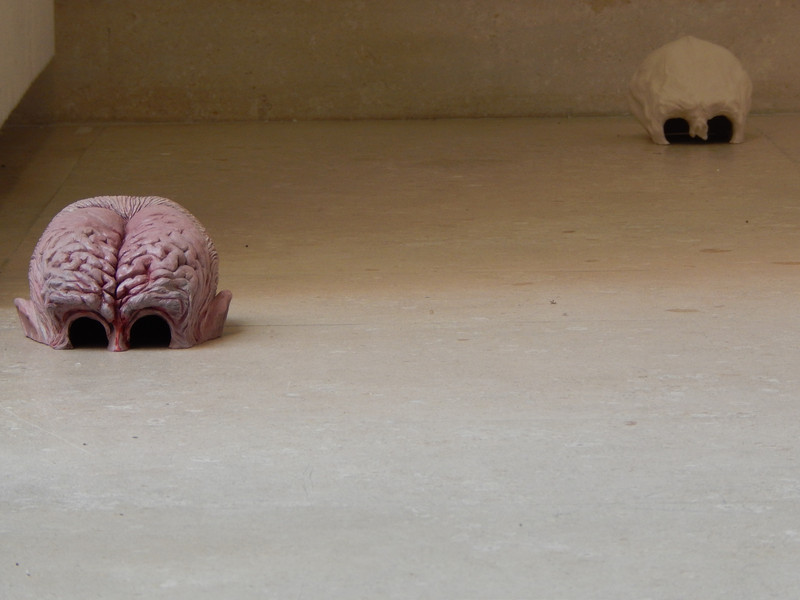
2. How could she work in her interest in the metallurgic trophy heads she came across while studying the Pre-Columbian Moche civilization?
Through research, Zapata found that a single Coca Cola advertisement had established green and red as a specific visual language for Christmas. “I liked these two colors representing something that has this sort of spiritual beginning and was then hijacked by capitalism,” sha said. As for the Moche heads, she explained, “I wanted them to be these agendered sort of figures from an anti-hero society, rather than the western canon.”
The result was a gallery space resembling a synthetic, fluffy Garden of Eden, or a trippy little cathedral. A high situation, if you will. In spite of its intricacies of intent, A Famine of Hearing is, at its core, about—


The art world is rightfully obsessed with access right now, and so is Zapata. We want paid internships and participatory museums! Better representation and more national arts endowments! And above all, when we see a carpet, we want to touch it.
Zapata knows this. “With textiles people are so hungry,” she says. “They just know that they can touch it, even if they’re not supposed to.” And in a gesture of humility, she often allows gallery-goers to feel her works.
All of her environmental installations are comprised of different components assembled specifically for the show; though each piece is for sale, Zapata is interested in giving an experience to the viewer that’s free and only exists once.
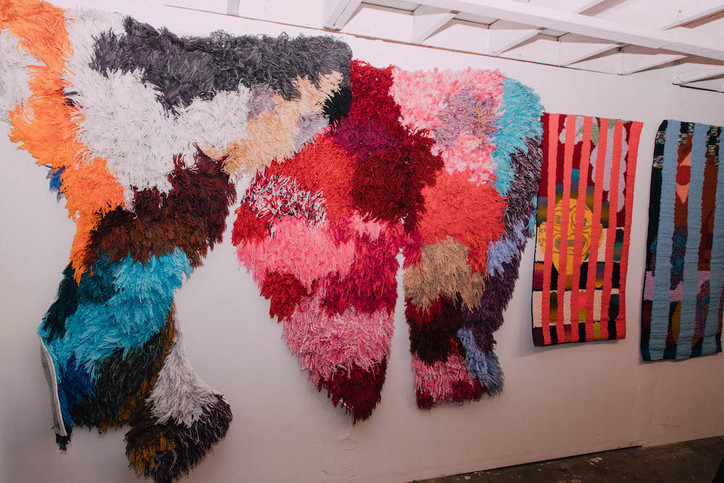
Zapata’s show If I Could, which ran at Deli Gallery in 2017, was a wall-to-wall exhibition of vivid patchwork carpet relieved by islands of stout, furry sculptures. Made in the aftermath of the 2016 election, to the tune of NPR playing while she wove, Zapata was amazed at how colorful and lush the installation turned out. “Everyone was in such a state of shock and needing to have some sort of comforting escape,” Zapata says. “ I think that I was definitely trying to give that to people, as well as myself.”
The title If I Could samples a song by Simon and Garfunkel, which in turn samples the Andean folk song “El Cóndor Pasa.” It’s the perfect name—a synthesis of Zapata’s Peruvian ancestry and—


If I Could was installed in a way that made it nearly impossible for the viewer to take a good look at the work without taking off their shoes and plodding around the room, feeling the yards and yards of labor-intensive, carefully-constructed fabric on their toes. It was a scenario Zapata planned for and encouraged.
But what does humility have to do with textiles? Aren’t artists already supposedly eking out a humbling existence? (“Starving artist" trope anyone? Unheated studios?)
“Humility and guilt are definitely not synonymous,” Zapata says, “but those are the two pillars that I’m sort of living my life in.”
As a lesbian raised in north Texas and steeped, early on, in Christian evangelicalism, Zapata tends to deal with a lot of guilt. Throwing herself into theological studies is as much an act of healing as it is a manifestation of her interest in, as was the case with her questioning of Christmas colors—


Zapata began working in textiles out of a desire to form a tangible relationship to Peruvian culture, part of her heritage on her father’s side.
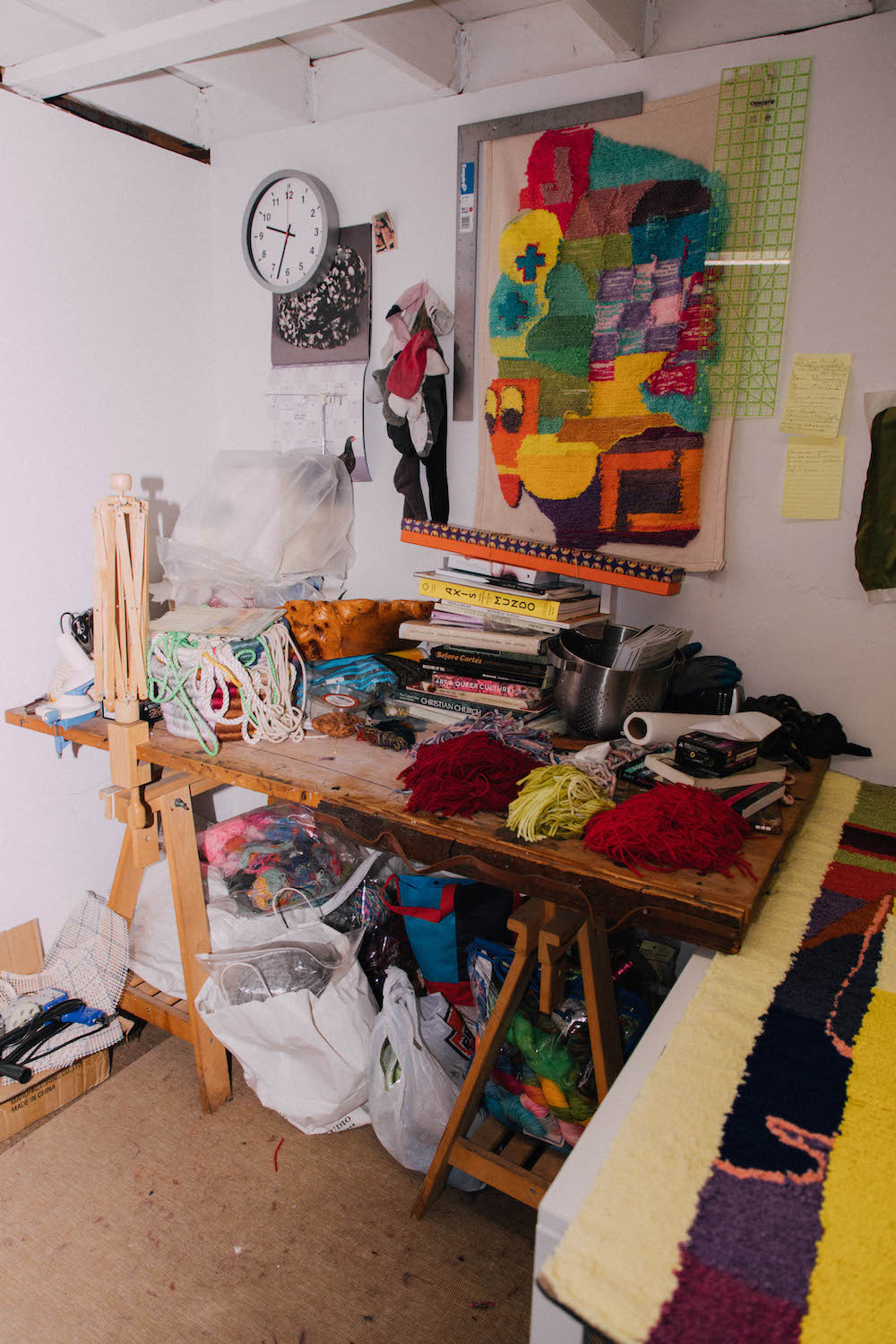
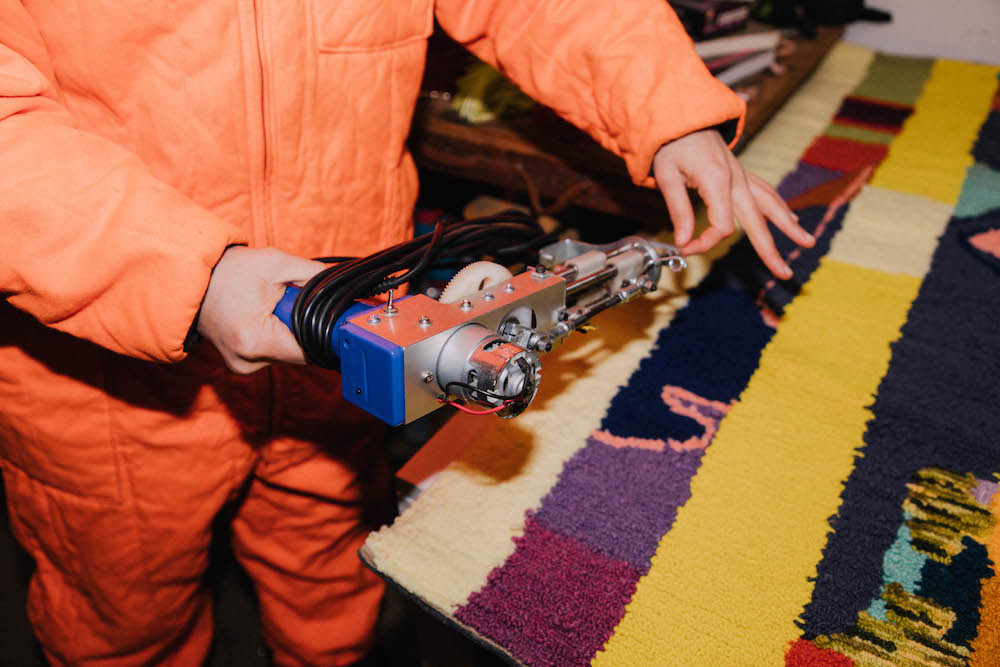
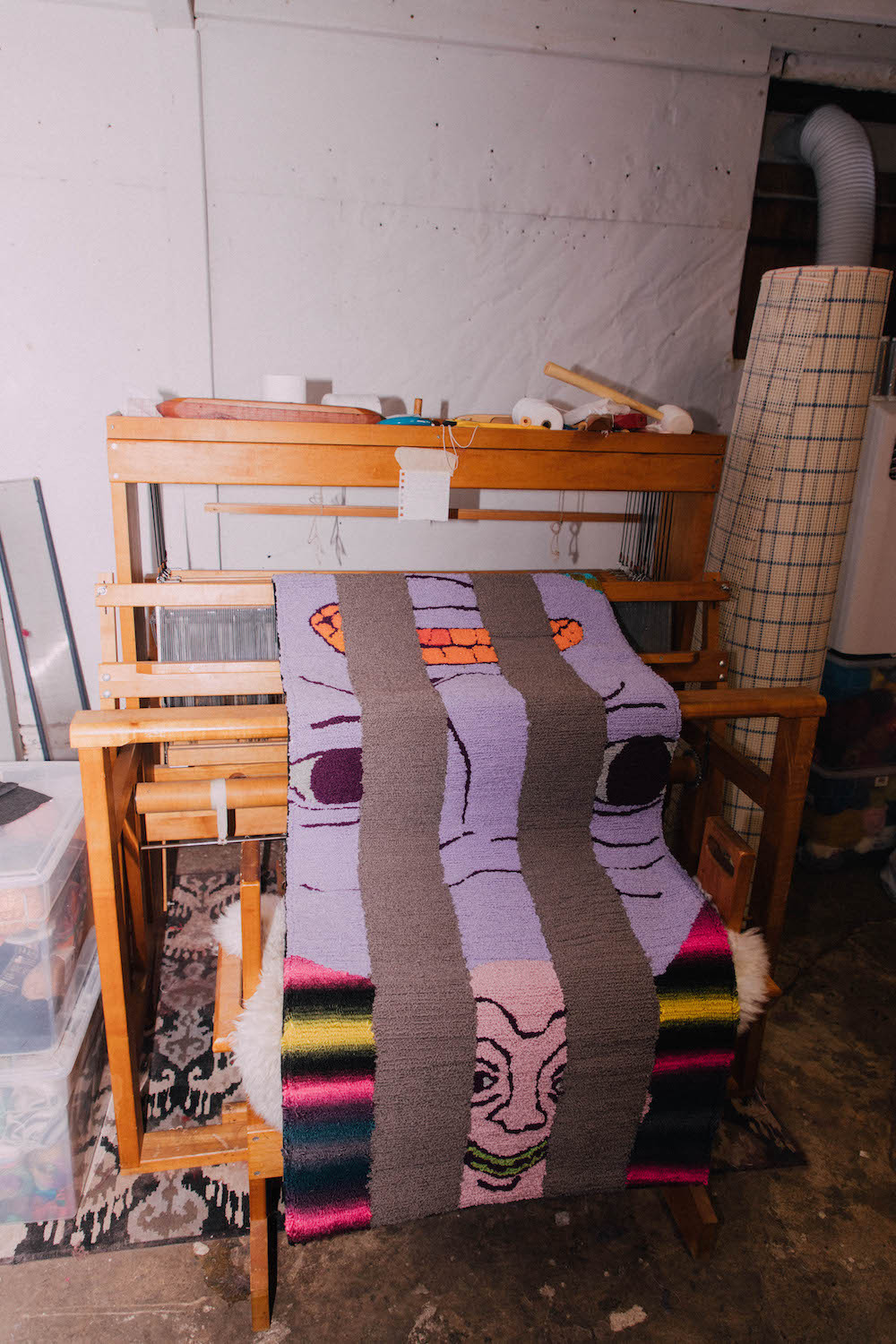
Since starting textile work at 18, Zapata’s spent a considerable amount of time in Peru, and has an upcoming show in Lima, for which she’s been researching rocks. “This is the first one that I’ve been researching around an object, but rocks are really important in the Bible, in the Battle of Jericho specifically.” From the research, she’ll write and then craft an idea of what she wants to produce in the form of watercolor sketches. Construction involves a lot of math, and the final product takes a lot of time.
Though the act of weaving is a solitary process, many of Zapata’s shows incorporate the works of other artists, including performances and readings. It’s a mode of humility, too: “But what was so great was that I was able to curate some performances that went on in the space, but they also took control of it, and it went out of my hands and was able to be activated in all these different ways. Which was great.”
Occasionally, performances will include readings of her own—

You could call Zapata’s foot erotica a sort of fanfiction. Biblical fanfiction, that is, injected with a particular strain of foot fetish.
The longest one she’s written concerns the canonical story of a woman having been healed of a 12 year period by touching the hem of Jesus’ cloth. In Zapata’s retelling, the cursed woman ends up in an affair.
“It’s just sort of everyday situations but using text from the bible to elevate it and change the situation,” she explains, half-blushing, half-deadly-serious. “The bible has really incredible, beautiful text. There’s something very satisfying about it.”
Religion, she muses, “feels like home, even if it’s not at all.” Regardless, it is inescapable. As is the connection between textiles and the feet, especially when viewers were encouraged to take off their shoes to fully experience If I Could. “Textiles are so related to the body, and I wanted to be in control of how they related to it,” she says.
The only thing that may be familiar to each of Zapata’s works is her tendency to warp any complacency—on a personal level or on the part of the viewer—into a sense of wonder. “I’m very comfortable with what I do but I’m always trying to challenge that," she says.
Her upcoming show in Lima revolves around the Battle of Jericho, rocks, and time. If her works are based on a question (such as why these Christmas colors?) this show takes a metaphysical cake: “I’m interested, now. in how we’re just dropped in the middle of time and having to navigate why things are the way they are. I’m interested in creating strange senses of time.” Until the next show, you can find Zapata weaving rock ruins, warping the familiar in her Red Hook studio.


Graphics by Collin Fletcher
Where does the name Actual Objects come from?
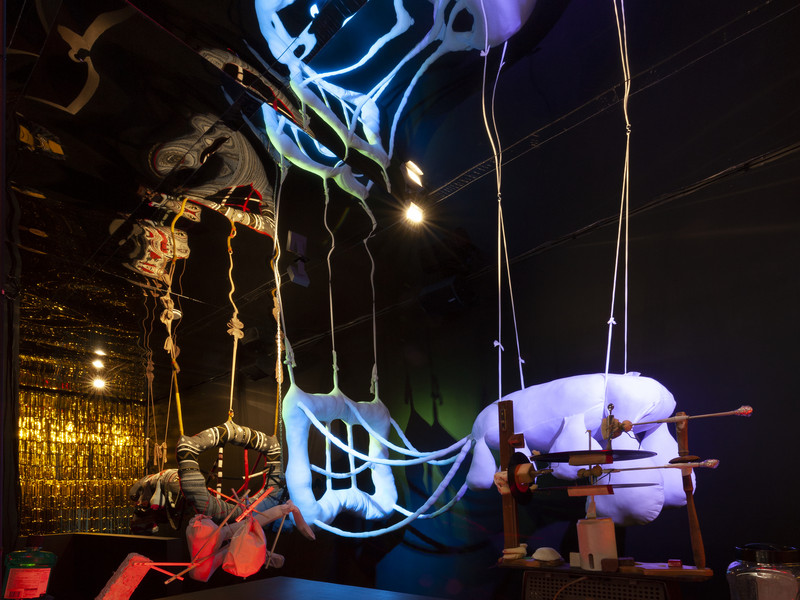
The name comes out of our research into the materiality of technology. It’s the idea that digital things contain embedded material, and emotional knowledge; the cloud is not bodiless. So we see the work that’s created in the studio—primarily digital imagery and films—as “actual objects,” artifacts made of simultaneously 0s and 1s, but also rare metals, spinning in an HDD, intrinsically tied to the hyperobject of computer production. In the time of climate collapse, and our increasing digital existence, we think it’s extremely important when working with digital tools to evaluate the extent of materiality that compose our work.
How did the members of AO come together? And why did you decide to work together rather than individually?
We all met about seven years ago, and have been working together on various projects since. Claire and Rick lead the creative production, and Nick handles everything else.

When developing a new concept, or project, how do you map out your process? Are there any guidelines that you set for yourself?
Most projects begin as a conversation between Rick and Claire. Our formal collaboration is relatively new, but we’ve made work, whether it was Claire’s drawing & painting, or Rick’s music & architecture, alongside each other for 7 years. So, we’ve honed a tight conceptual and formal language that informs all of our work. Every project presents us with something we don’t know how to do, so we usually start there. How can we make this particular thing happen? We troubleshoot, and research until we inevitably figure something out—and that solution is usually the first moment energy is really breathed into a project. From there, it’s pulling references, developing narratives, talking to our brilliant friends / AO team, drawing, photobashing. We’re a little all over the place, honestly. We tend to work fast, and for long hours, very much guided by our intuition, and not very much planning.
Is there anything that scares you?
Claire has an injection phobia; and Rick has a fear of heights, and mice in the bedroom. Nick has a fear of reborn baby dolls. Other than that, climate disaster.
Since much of your work is video based, are influenced by cinema? If so, what films inspire you?
We kind of fell into making films—it ended up being a natural transition from painting, and music/architecture. Of all the art forms, film is funnily enough one of the ones that we’ve paid the least attention to, but have found to be the most representative of what we’re trying to say—film is the strongest combination of image, sound, and space.
What is your relationship to nature?
Nature is a problematic term in 2020, and the way we would define it is perhaps unconventional. Nature as an untouched, vast wilderness struggles to exist in the age of climate crisis; it no longer sits patiently awaiting manifest destiny. We believe nature is something all-encompassing—a motherboard is just as much “natural” as a pinecone, or thistle plant, or star, or jaguar. Classic dystopian futures are spaces devoid of that quintessential, sublimic wilderness, replaced by computers, and plastics; white walls with some well-manicured gardens. We think that breaking down the implied separation inherent in nature’s definition—the wall between animal and human, between technology and ecosystem—breaking down this line might give us clarity to coexist as our civilization continues to accelerate.
When was the last time you dreamt?
We probably dream every night, but doubt dreams are very informative to our practice.
How does architecture inform 3D design?
As an architecture student, Rick was never interested in making buildings—most of his time was spent making experimental electronic music. Outside of the technical knowledge that architecture brought, it gave us an understanding of composition, and of pace, a foundation by which to create, and assemble disparate disciplines together.
The Marine Serre F/W '19 Radiation film is very much a digital runway—did you work with live models? Are reference images a common practise?
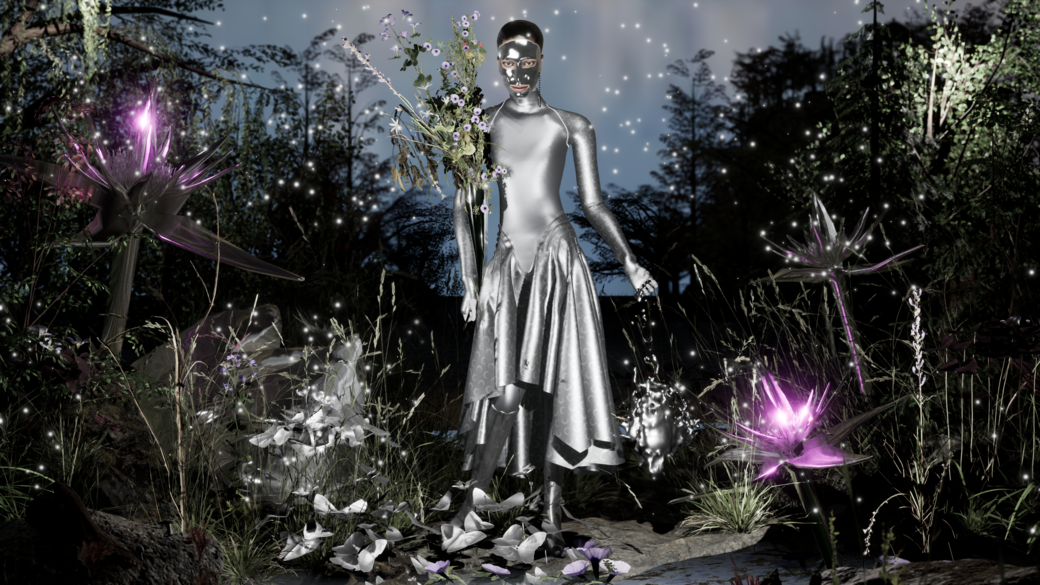
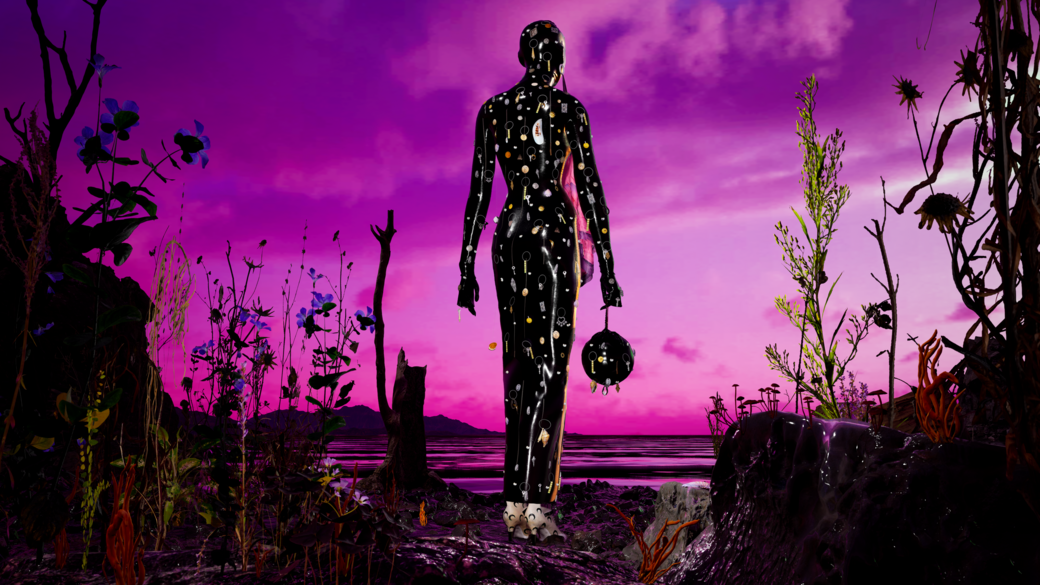
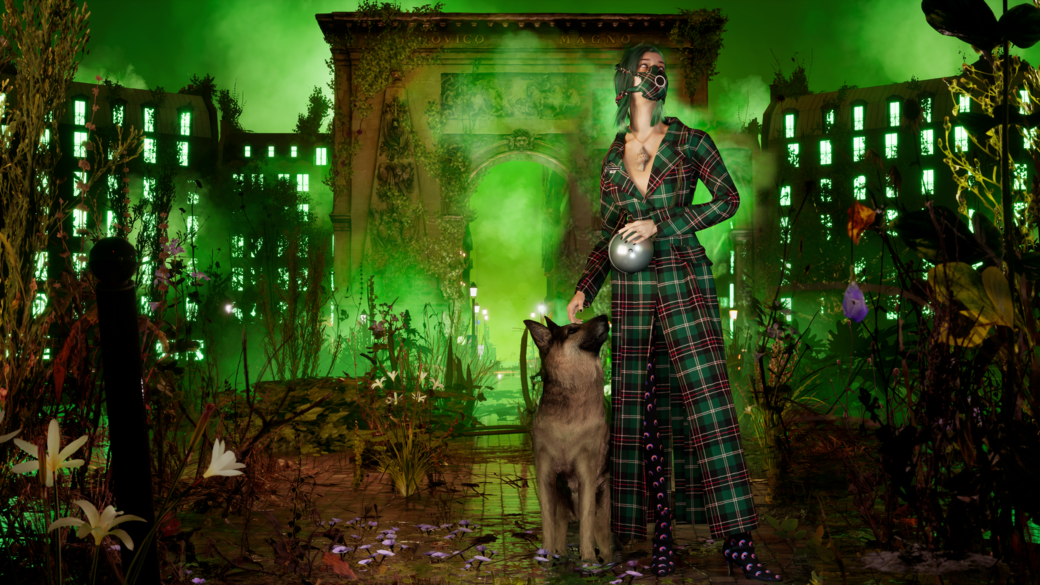
We didn’t work directly with live models for that piece, but have in the past, through motion capture, and 3D scanning. For this project, everything was created by hand: the models are sculpted and textured first, followed by 100s of reference photos of garments which are then hand-patterned in a 3D clothing program. These are then collaged, and assembled into the final garments you see in the film.
What are some unique challenges of working in 3D; and how do you overcome them?
The world of 3D is vast, and ever-expanding. We’ve barely grazed the surface of what’s possible to do and learn, which is simultaneously overwhelming, and invigorating. We hope to always be on the frontlines, working with emerging technologies, which is expensive, and labor intensive to constantly build new skill sets, understand new interfaces, research, and troubleshoot. It’s tempting to just relax into what we’re already familiar with & good at, but the desire to push ourselves is stronger.
Can CGI change the way we perceive reality?
The larger question here is whether (or if) CGI can be considered something real, something with a material, or emotional knowledge. CGI certainly has a shape to it, a list of aesthetic and technical attributes, and maybe even some exciting or novel traits, but is it tangible? The highest achievement for game developers is creating something immersive, and I think what’s more important to us as a studio is to create things that feel like they aren’t trying to mimic reality, but rather an uncanny subversion, to create an alternate perspective through which to view our non-CGI existence—the production of reflections, and mirrors.
Who do you find original?
We don’t value originality very much—the act of making is entering into a long conversation that’s been going on since the birth of humanity. We think the concept of originality undermines the work of all of our influences, references, predecessors, colleagues, etc. In the age of the poor image, we consider the concept of originality, and the “hero artist” to be irresponsible. That said, we’re inspired by Marlene Dumas, Arca, Marguerite Humeau, Amnesia Scanner, Graham Harman, Chino Amobi, Ian Cheng, Michael Armitage, Hito Steyerl, Ed Atkins, Isamaya Ffrench, Gerhard Richter, Marine Serre, Timothy Morton, to name a few.
Chess, or checkers?
Tennis.

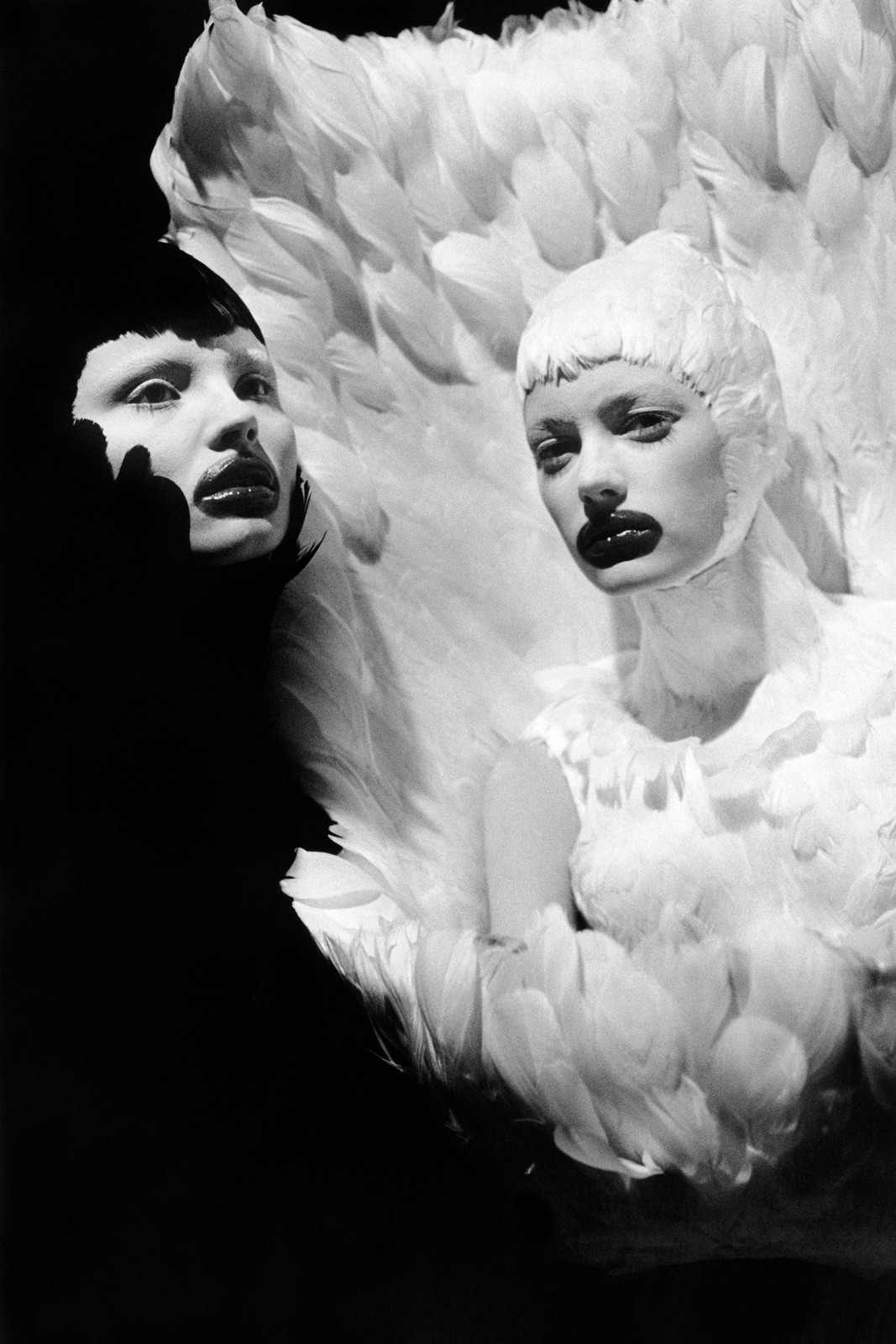
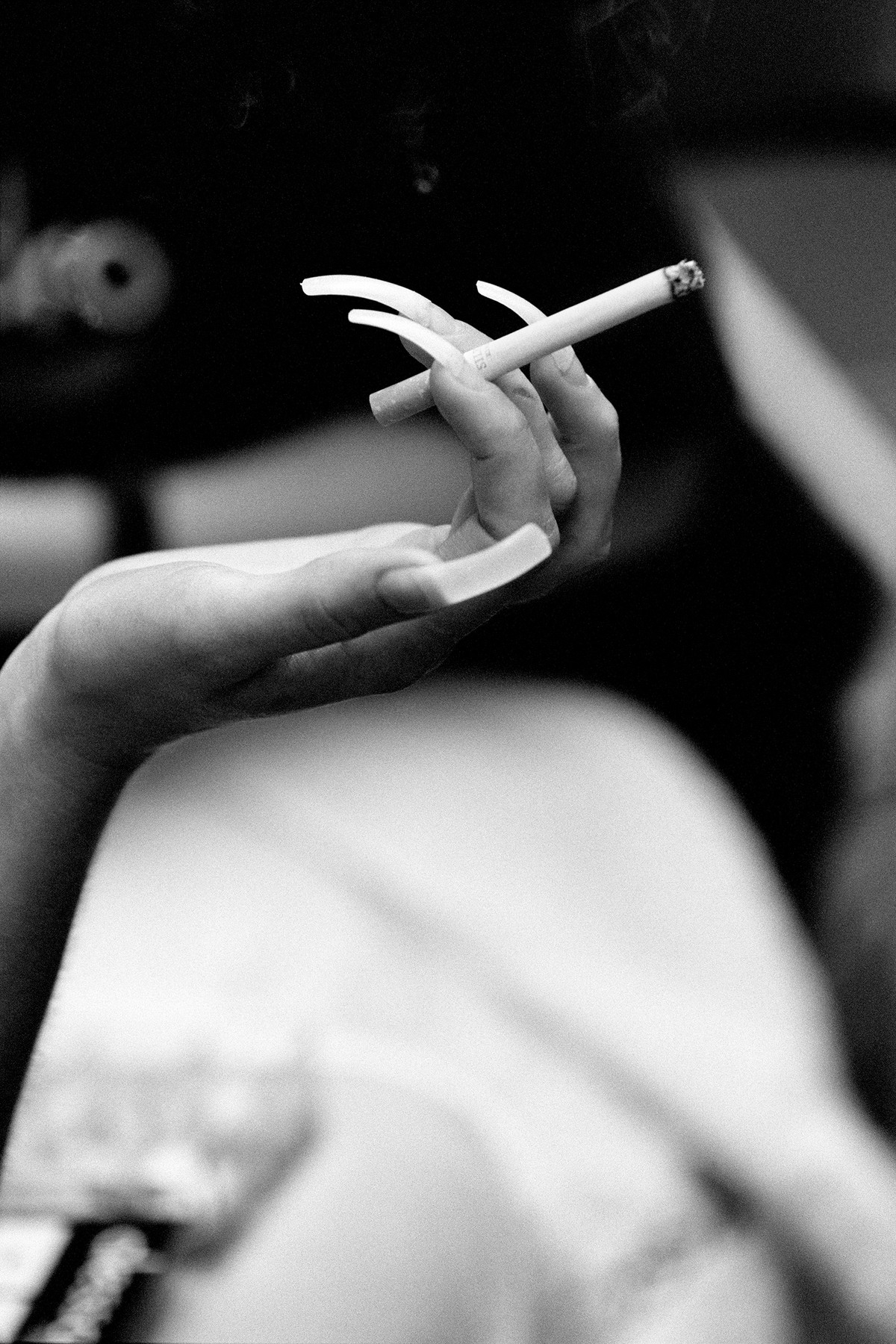
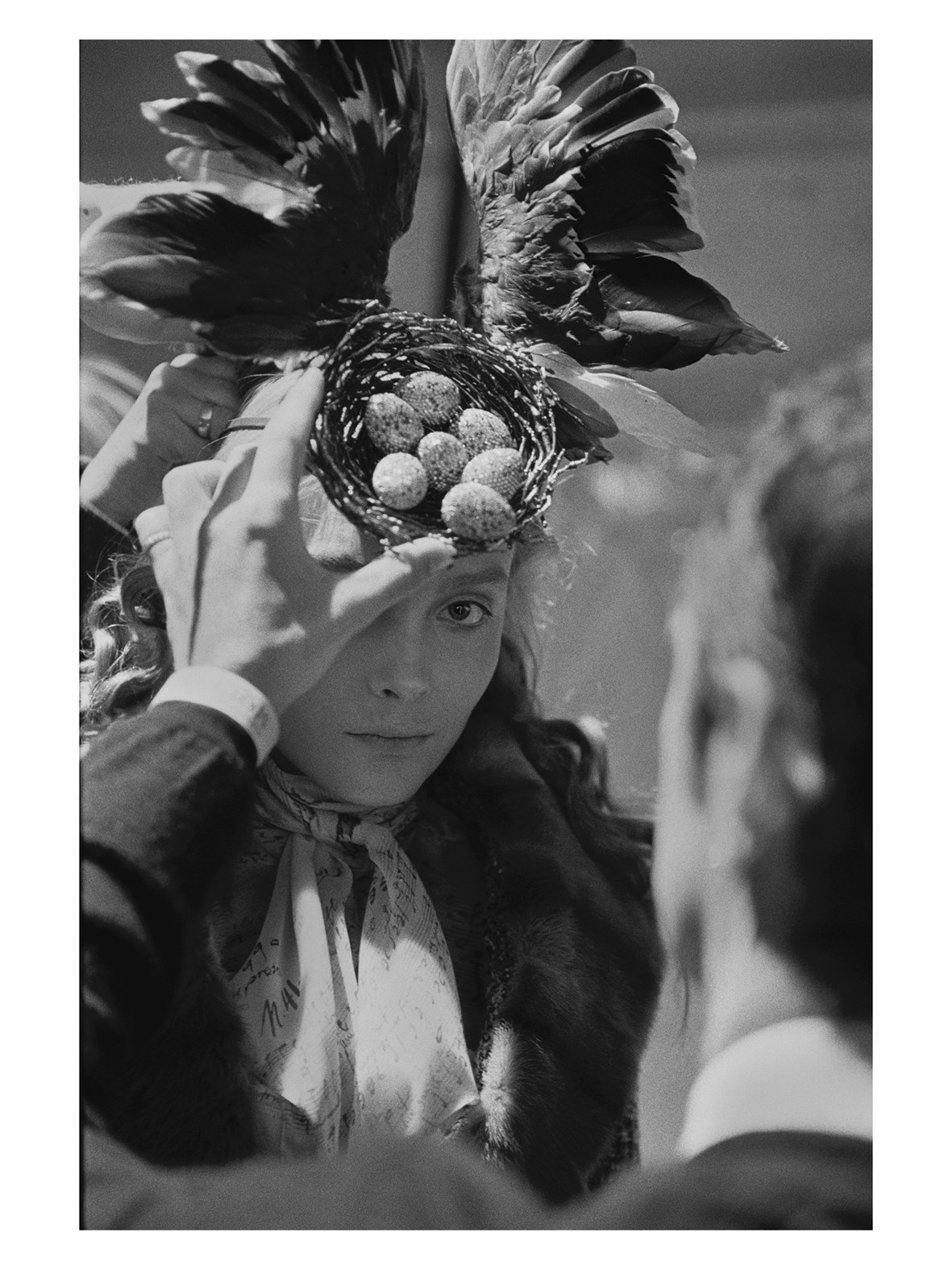
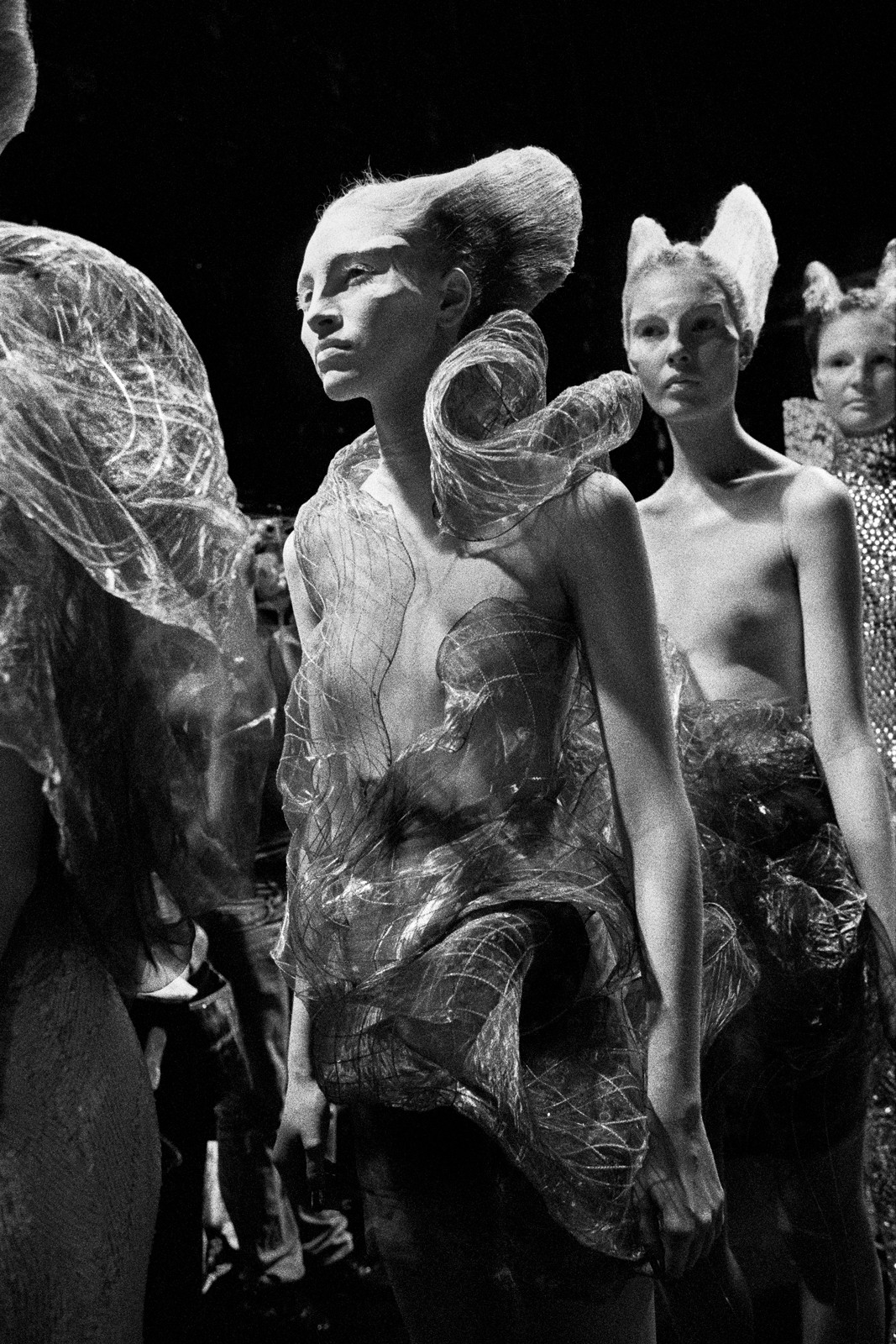
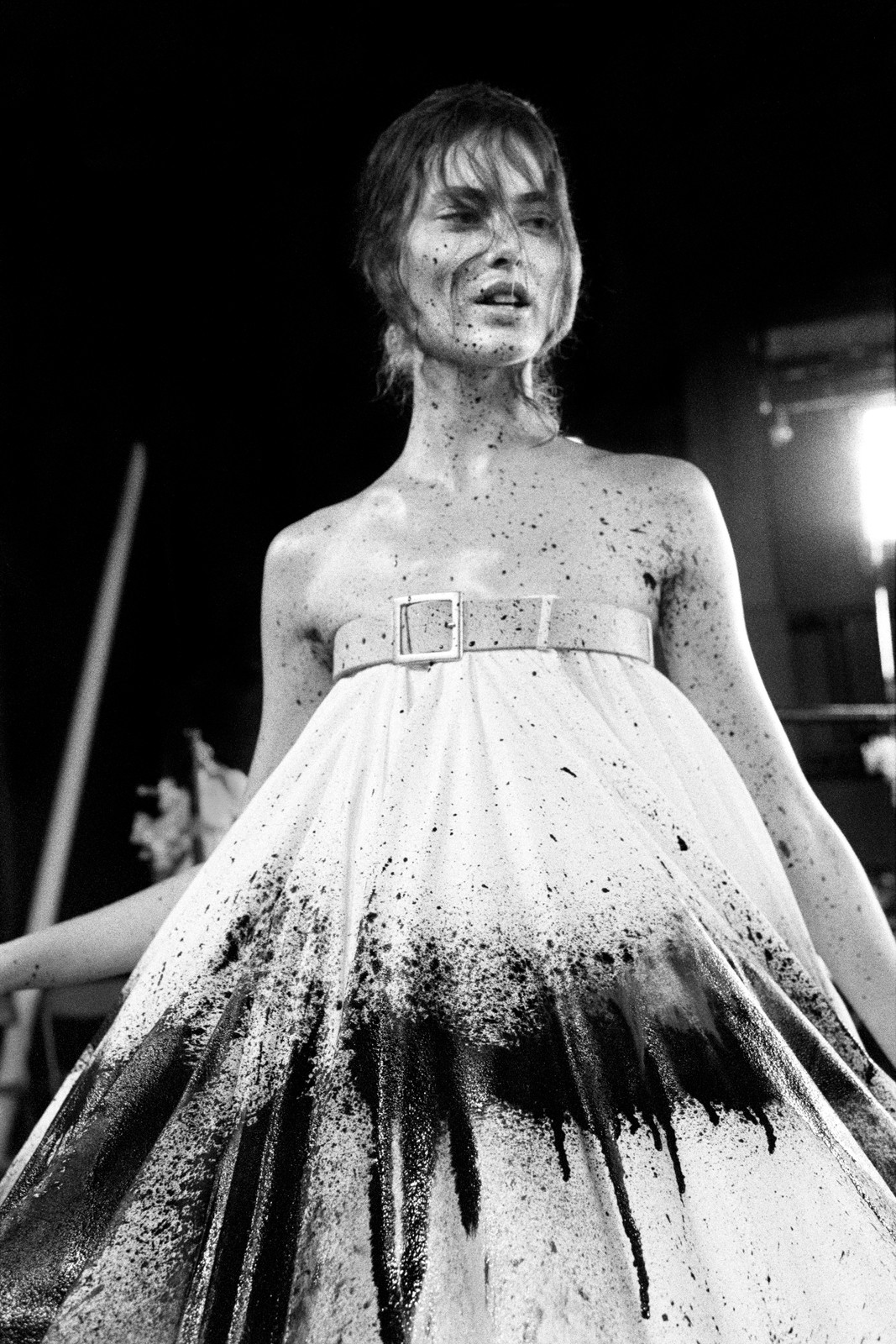
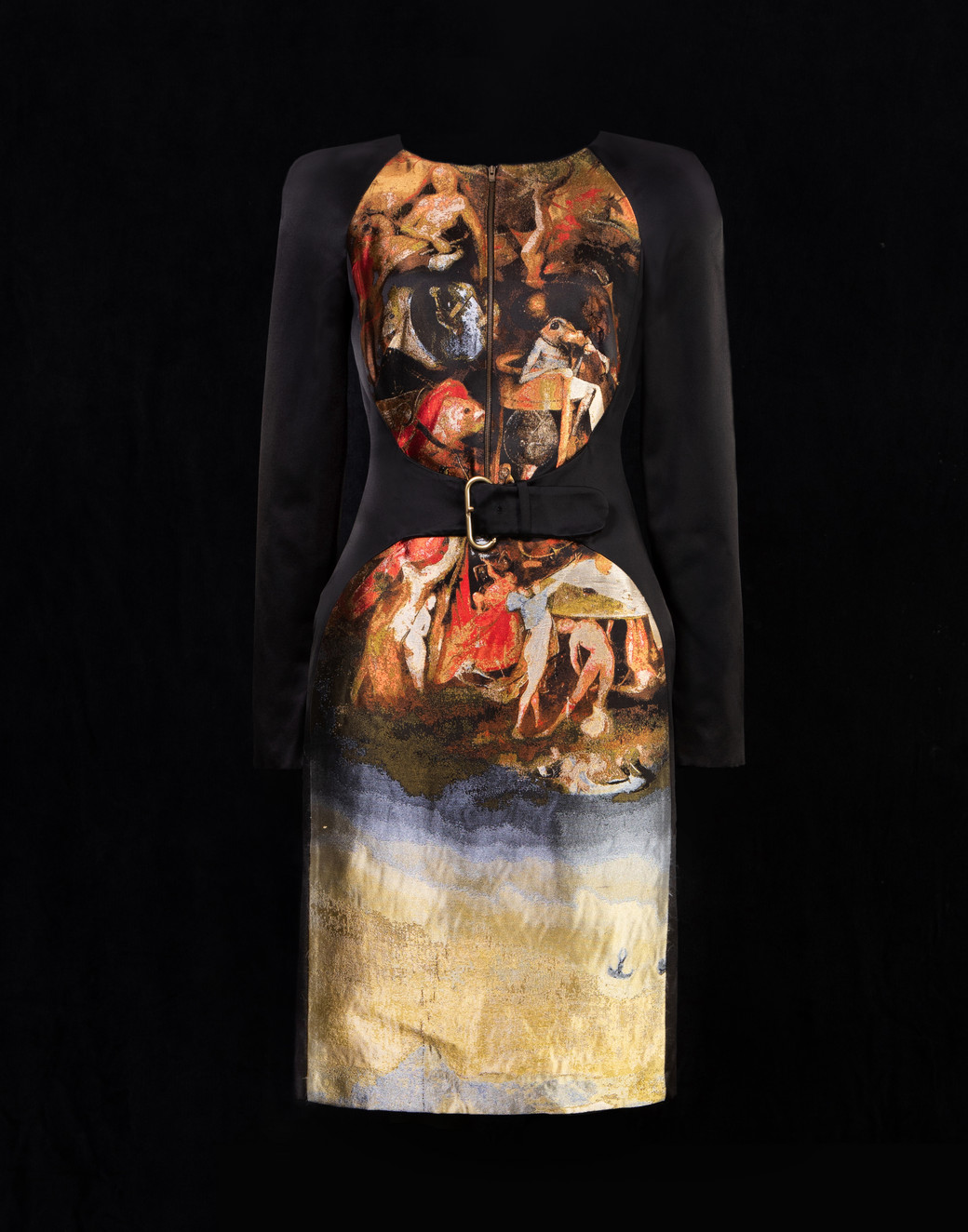
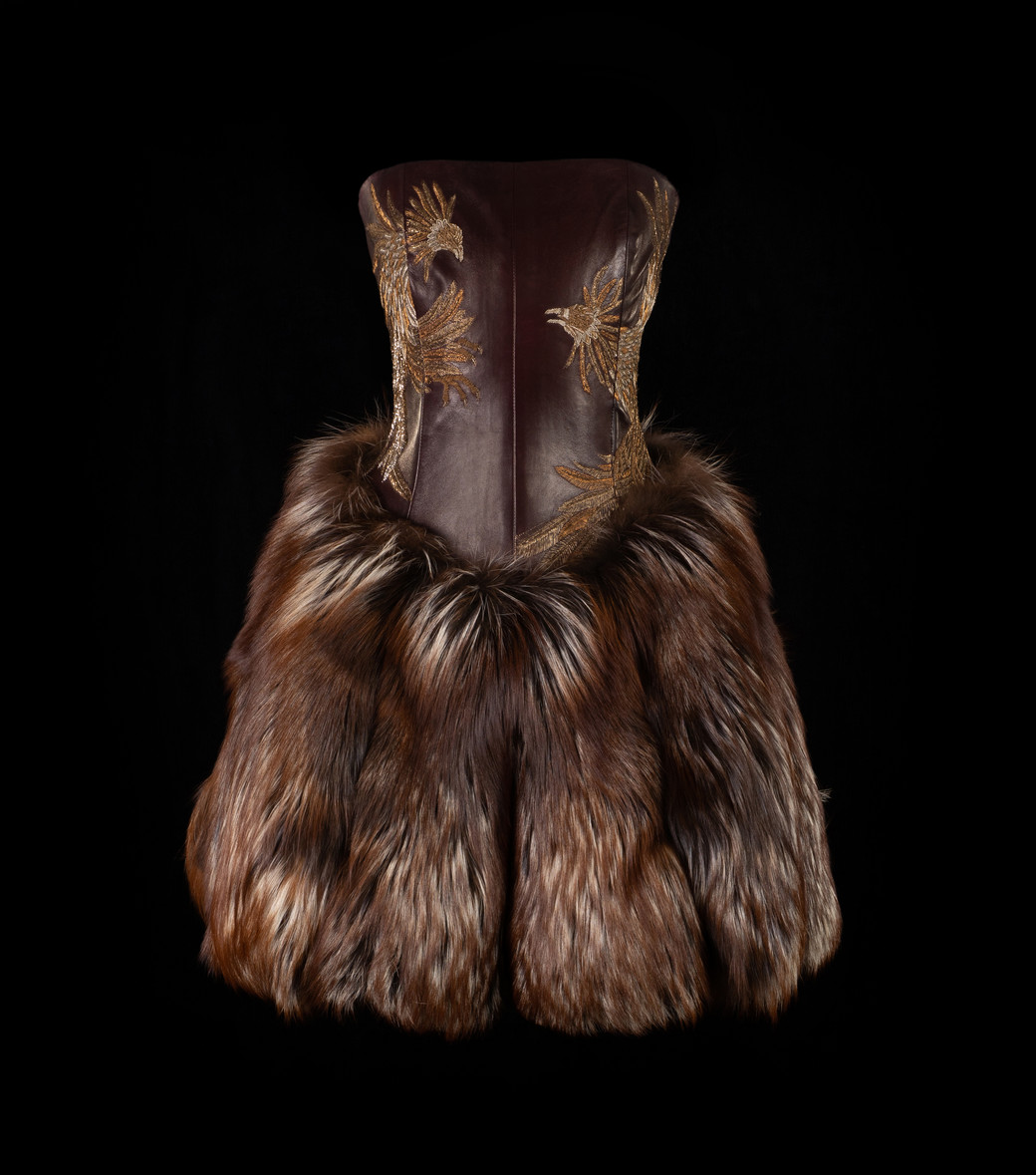
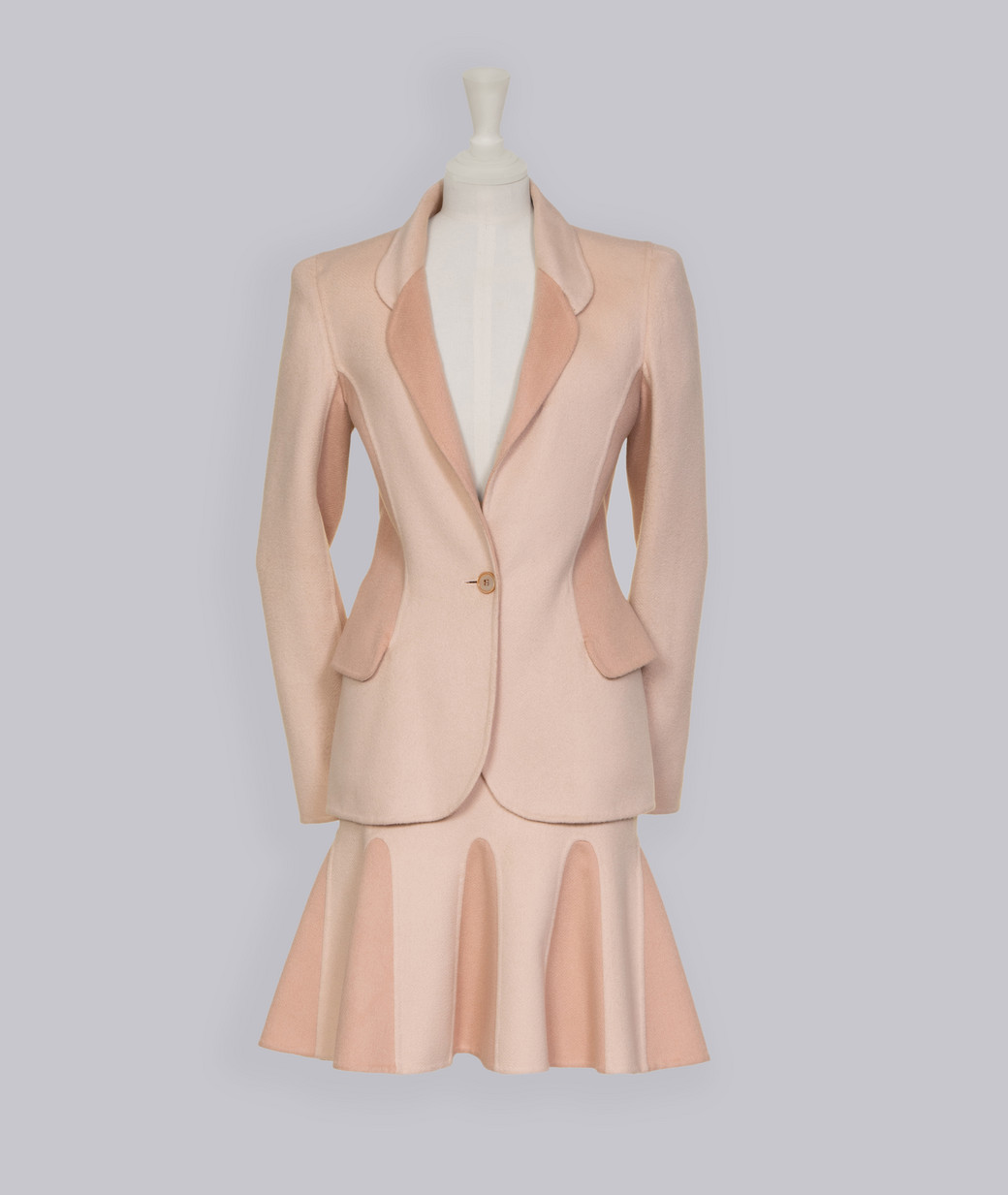
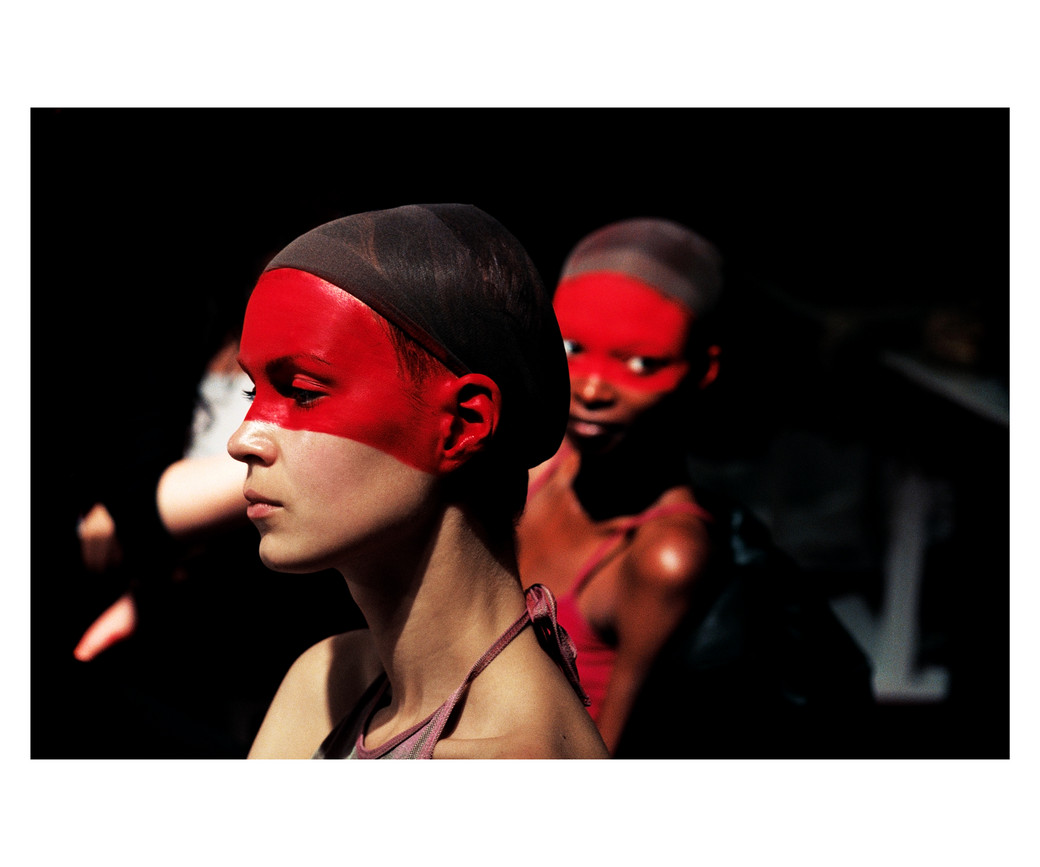
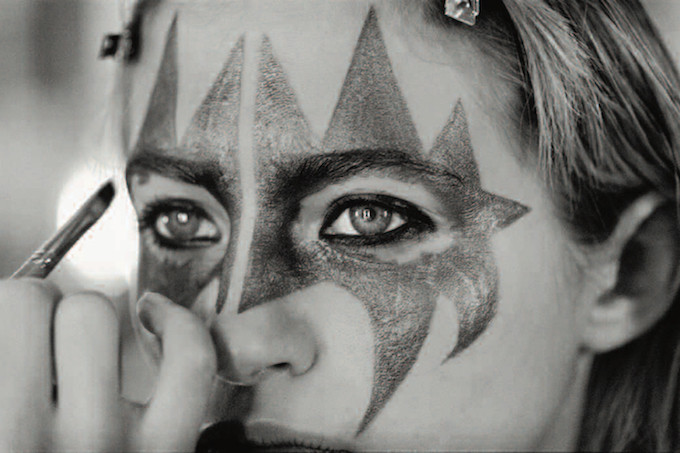
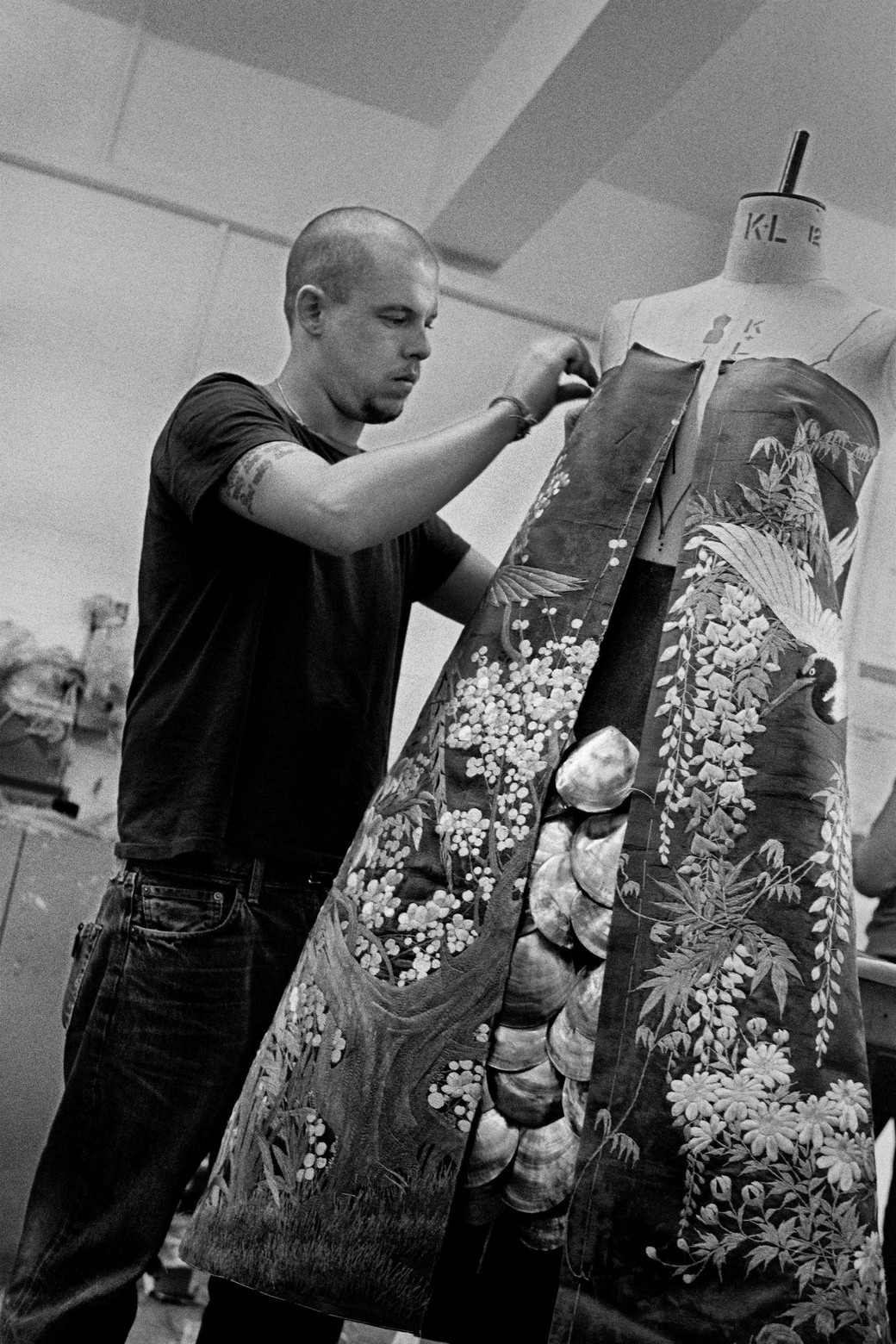
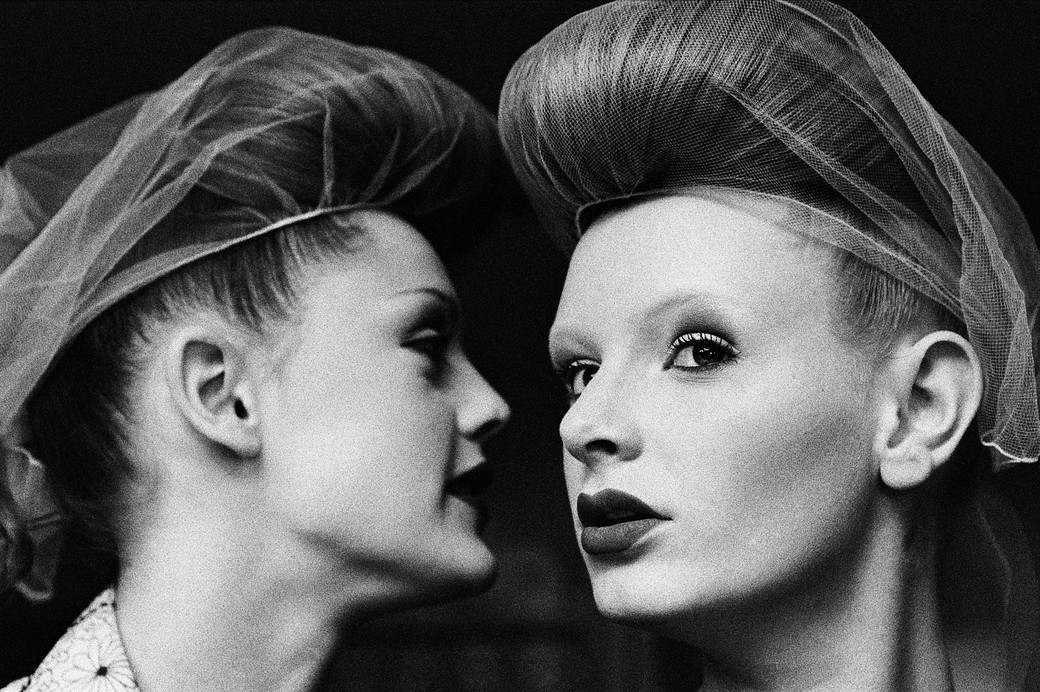
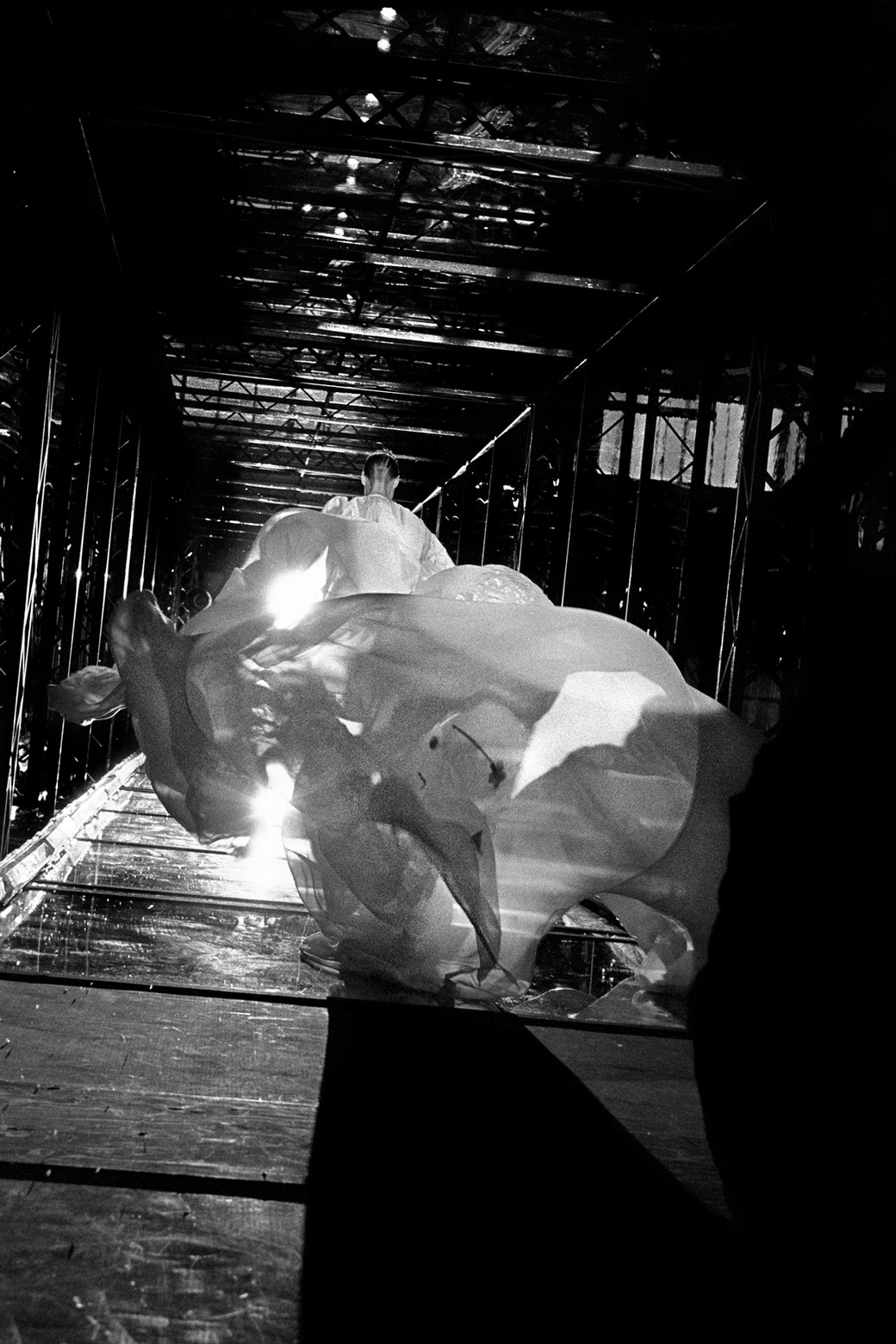
The photographs capture intimate moments backstage, McQueen’s hands visible here and there, and occasionally the man himself in all his rough and tumble glory — that such ethereal fashion magic came from a South London boy prone to sleeveless shirts and baggy pants is one of the many sweet puzzles that lend to the McQueen mythos. Beyond the photographs is a smattering of the original pieces Barrett was able to gather, with a few from Ann Ray herself — in the early days of her collaboration with McQueen, he was unable to pay her in anything besides clothes, a barter she willingly accepted.
office caught up with Ray to discuss her work, his work, and everything in between.
You said during the walkthrough that McQueen’s genius lay in his ability to make things happen, to dream things into being—do you think this energy of his has come out in your work?
I have always been fiercely independent, but Lee encouraged me to be strong, to believe in myself and to follow my instinct. To try and search and learn and create. He disliked what he called “ignorants.” I guess I am the same. There is no problem in being ignorant – we all are, in some respects – however there is no excuse for not trying hard to learn and understand. Observe, absorb, try. I would certainly not be the same person if I had never met Lee. I am immensely grateful and I will always miss him. I feel connected to most parts of Lee’s life, including his lucidity and the melancholy that comes from it sometimes. Life is a strange process. I learned from him what was summarized in his now famous formula: “No compromise / If you can make it small, make it big / There comes a time in your life when you do what you believe is right, regardless of what everybody else is doing.”
When I worked with Lee, I never thought of « documenting » his life. I was in the presence of something raw, sincere, overwhelming: himself, and his creations. As an artist myself my photographs were my answers to what was delivered by Lee, in front of my eyes. Like a silent conversation. I want to believe he liked what he found in my images, like an echo maybe, otherwise I don’t think it would have lasted so long. It just happened, it started, and never stopped. I loved him and felt the necessity to put into images, as symbolic as possible, what was happening in front of me. Many people were talking about fashion, whereas for me it was something else. Far beyond. I was in search of the naked truth, his truth, and mine probably, through interstitial moments, who may reflect the ephemeral beauty of what was visible for a few moments. Of what it inspired in me. It had nothing to do with fashion, it was more like putting silent screams, hopes, dreams, nightmares into photographs that would last.


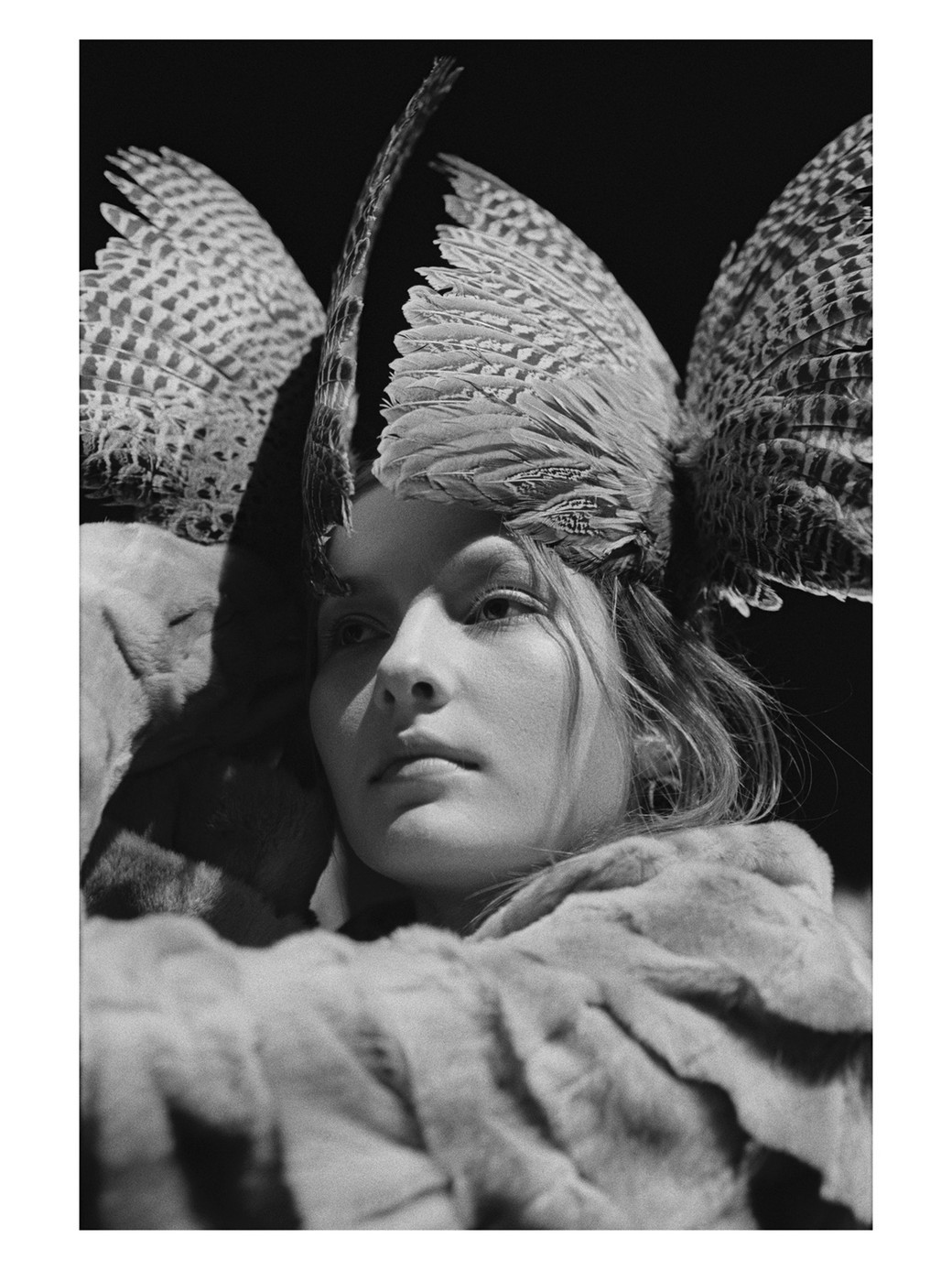
Above: 'Unfallen Angels' 2009 and 'London Years' 1997.
What conversation are the photographs having with the clothes?
You have to put things into prospective. As strange as it may seem, clothes are not the subject of my work. They were only one element of a global act of creation. There was a concept, coming directly from Lee’s mind, and a group of people doing their very best to make it happen, to materialize Lee’s idea, according to his very precise vision. Scenographer & production team for the set, the studio team working in the ateliers around Lee for the clothes, the fabric makers, shoe-makers, the hair & make-up artists, Philip Treacy for the hats, and Shaun Leane for the jewelry or metal pieces (crown of roses, corset, etc.), to name a few. That’s precisely why, when I started to work on a selection of images for Arles, I said to my curator, Sam Stourdzé, Director of Arles Festival: “I don’t care about the clothes, they cannot be the main thread. The main thread is an artist and his visions, Lee McQueen. I am going to select images that reflect the soul and work of my friend, images that he liked too, whether there are clothes, or not, in the images. Clothes will appear, of course, but I am not talking about fashion. I am talking about art.” Sam was surprised but he understood and respected my intention. L’homme, et l’œuvre. L’esprit de l’homme, et l’essence de l’œuvre. Or: the truth of the legend.
Lee McQueen expressed it himself, actually: “Fashion is just the medium.” That says it all.
In St. Louis, with the “Rendez-Vous” exhibition, which is another project and therefore another approach, it is slightly different. The main thread is friendship & creation. How friends make things happen together, focusing on Lee McQueen, of course. But not only that. Susan Barrett is a close friend, and so is Myriam Blundell, my manager. These two make things happen. Thanks to them, and the fabulous teams at Art Cinema & Barrett Barrera projects, I can keep going which what I call my duty: transmission. I feel sometimes like a keeper, with these heavy 35,000 analogue photographs. It’s my responsibility to transmit, as accurately as possible, to draw the portrait of a man I loved and an artist I admired. To have him remembered in the right way: truly. Therefore I need help. Therefore I am very grateful to Myriam & Susan, and very admirative of Susan’s dedication and efforts to gather an astonishing collection of McQueen’s garments. Her collection is truly unique, worldwide, and only a small part is exhibited in “Rendez-vous”, because we all wanted to let the images speak and breathe. To let the visitor wander in Lee’s universe and “see” him – and then, in the second part, to watch – very closely, in details, in real life – these astonishing garments that he created and which sometimes appear in the photographs.
In her way, Susan is doing with her McQueen garments what I am doing with my images: celebrating Lee McQueen and his unique artworks. Our works are complementary, based on these wonderful things which are friendship and memory. Photographs evoke, invite, charm, shock or propose interpretative elements, like a train of thoughts, about Lee McQueen, whereas clothes crystallize the thoughts: voilà, McQueen’s garments, this is it. One common intention, two processes.


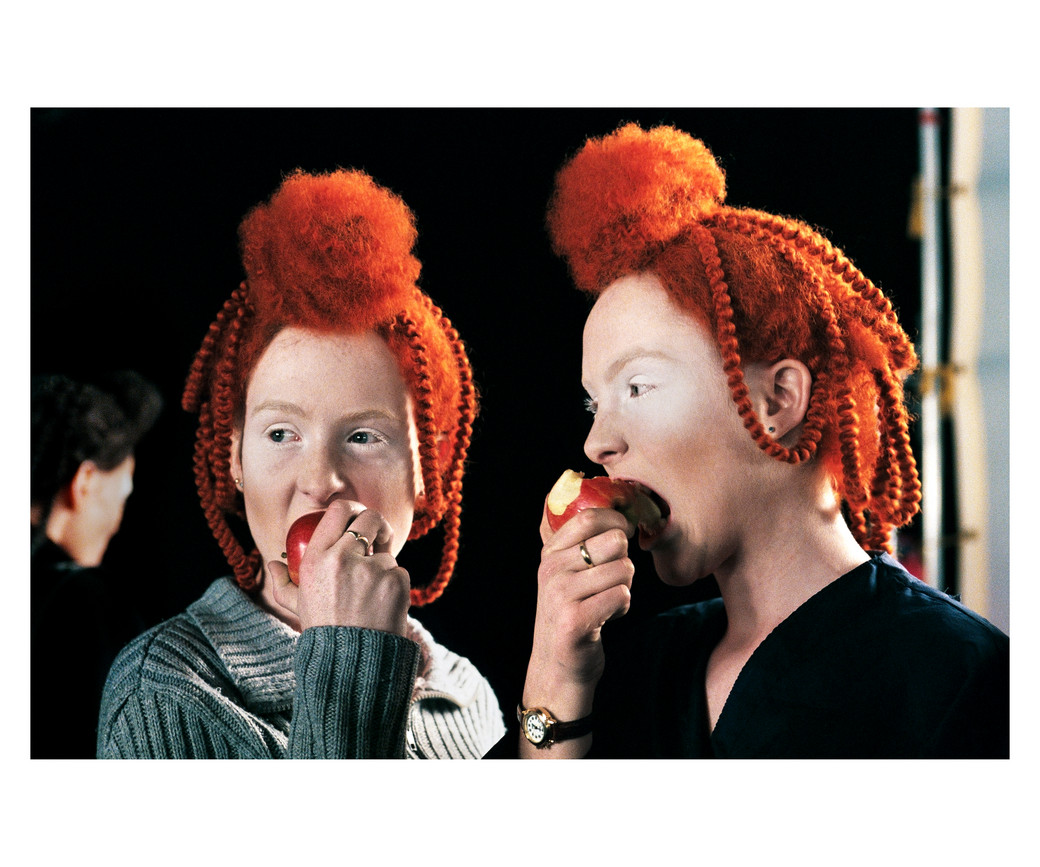
Above: 'Inside' 2000, and 'Cycle' 2006.
How would you describe your relationship with McQueen?
I met Lee McQueen at the end of 1996 in Paris at Givenchy. I was asked to photograph him for 2 weeks during the creation of his first Couture collection. We were both very reserved, so it was a kind of mutual observation – what shy people do. We didn’t talk much, but the connection was intense. Then I moved to London during summer 1997, and the first people I met on my arrival was the McQueen team, in the Rivington street studio at the time. Lee had no money, so the deal was settled in a very simple way : “I love your photos. Give me photos, and I will give you clothes.” It never changed afterwards. It was all about freedom, and trust. We worked as much as we laughed, that time – January 1997 — was a blast. I precisely remember observing Lee create a dress as a volume in space from a roll of fabric in 30 minutes or so. It was astonishing. I was observing, absorbing, and Lee watched me observing. I remember with the same accuracy the night before the show, in the atelier, when Lee asked me what I thought of his work… tough question. It was already about truth. It seemed obvious though that the only possible way between us was radical honesty. So I told him honestly what I loved in his collection, and what I liked a little less, and why. “You’re right, I failed, it’s crap,” was his answer. I denied and nuanced his words, and reassured him the best I could. He was hearing much more the criticisms (even carefully formulated) than the compliments. Already in search of excellence, by all means.
It’s an interesting location for the show—St. Louis. How do you think the locale influences or speaks to the show?
The exhibition in St. Louis is about friendship and artistic adventures. The main thread in the exhibition is to explore my link with Lee, and also links between people who create things together. Who make something happen together. In the McQueen context, and generally, in a lifetime. Susan Barrett was the first one to exhibit my McQueen photographs in 2013 in St. Louis. It felt like a necessity to work again with her. We wanted to make something happen together again! We agreed very quickly with Susan and Jessica (the curator) on the main theme and the title, “Rendez-Vous”. Then it seemed interesting to exhibit as well some garments form BB Projects’ private collection. Susan devotes so much of her time and energy in gathering for this collection, it is meaningful to share it with an audience. I love St. Louis, the beauty and history of the city (with very strong French connections), and the amazing people I met there, thanks to Susan. St. Louis has a very active artistic life, and many fascinating art lovers. It’s a blessing to exhibit in a city where you feel understood. On top of that, there is nothing “blasé" in St. Louis. The positive energy of the city, of the people, is truly extraordinary. I enjoyed every second working on this project and can’t wait for the next one.


Above: 'Deep Dive' 2009 and 'Intense' 1998.
There are many photos of McQueen but none of you—how does your work reveal you?
It’s very common not to see photographers. They see you, you hardly notice them. Meaning, when trust is involved, is fundamental in my photographic works. The truth is that, obviously, I am in my images. Every joy, every crack-up, every fear, every enlightenment you may see or feel in one of my photographs is a part of my soul. Each and every emotion. No image is innocent. Photographs speak for themselves, and they say a lot about myself. I don’t need to appear, except with my family and my close friends. These two worlds are pretty separate, I need that level of protection. Because photographers are over-exposed, indeed.
What sets McQueen’s work apart from that of other designers, in your opinion?
The fact that Lee McQueen was not a designer. He was far beyond that. He was an artist, a one of a kind artist. Often imitated, never duplicated. I loved the man and admired the artist. Of course I miss them both. In my opinion, McQueen belongs to another era, when creativity had a wide place in fashion. Nowadays I see fashion mainly as an immense business, which is sad and not very interesting to me. Luckily there are always exceptions. I will name just one: Sarah Burton. Sarah’s work has been touching me endlessly over the last 10 years, since Lee’s tragic death. Sarah has given me many emotions through what she has been doing, through her fabulous dedication to the McQueen house. I am endlessly grateful to Sarah for continuing Lee’s oeuvre, in her own way. It reminds me of these words from Rodin about Claudel: “I showed her where to find gold, but the gold she finds is very much her own.” This could apply to my photograph’s too, I guess.
'Ann Ray & Lee McQueen: Rendez-Vous' is on view at Barrett Barrerra Projects in St. Louis, Missouri through February 15th, 2020.