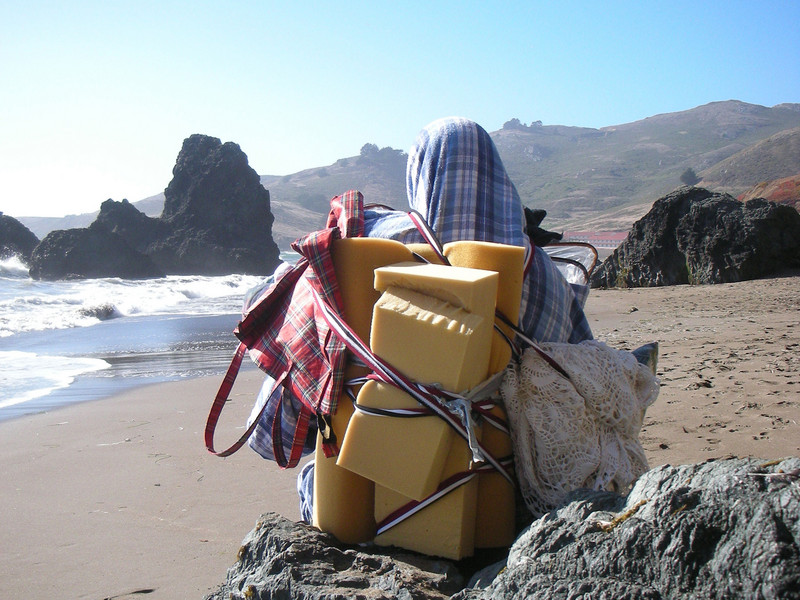
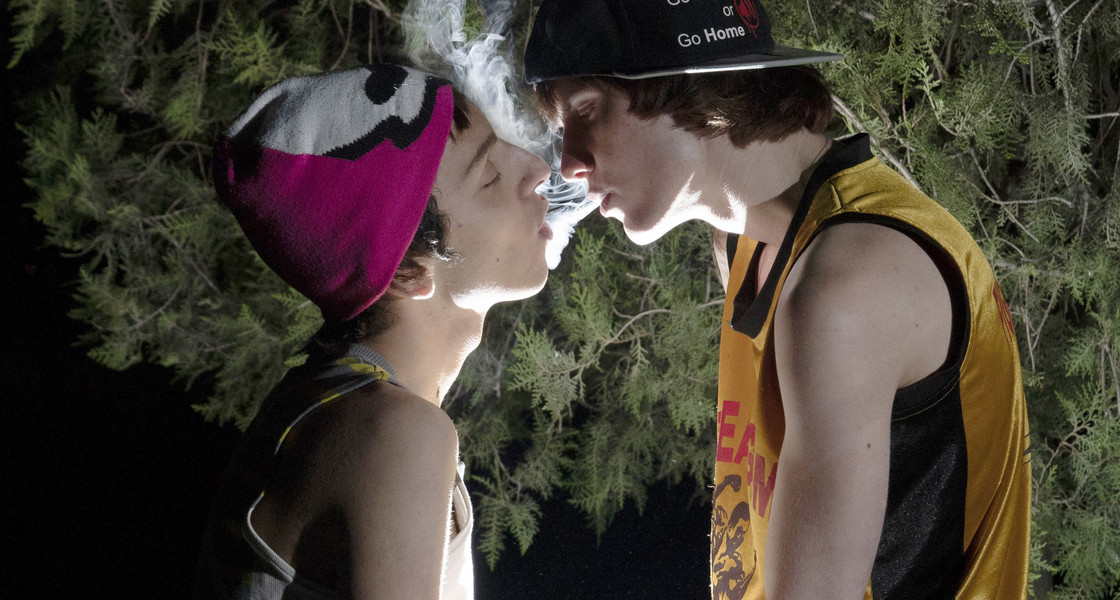
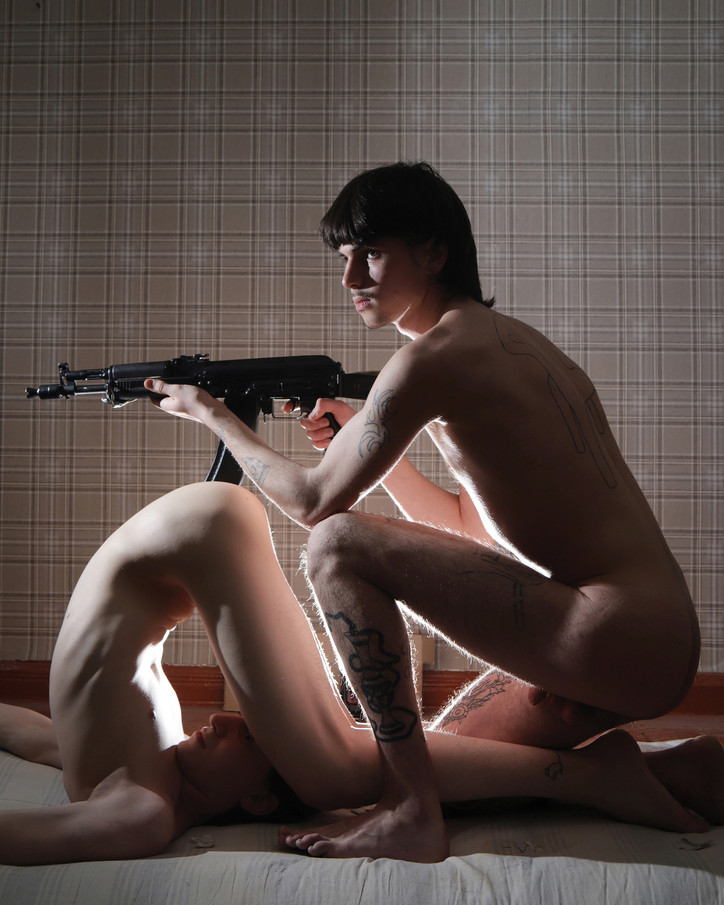
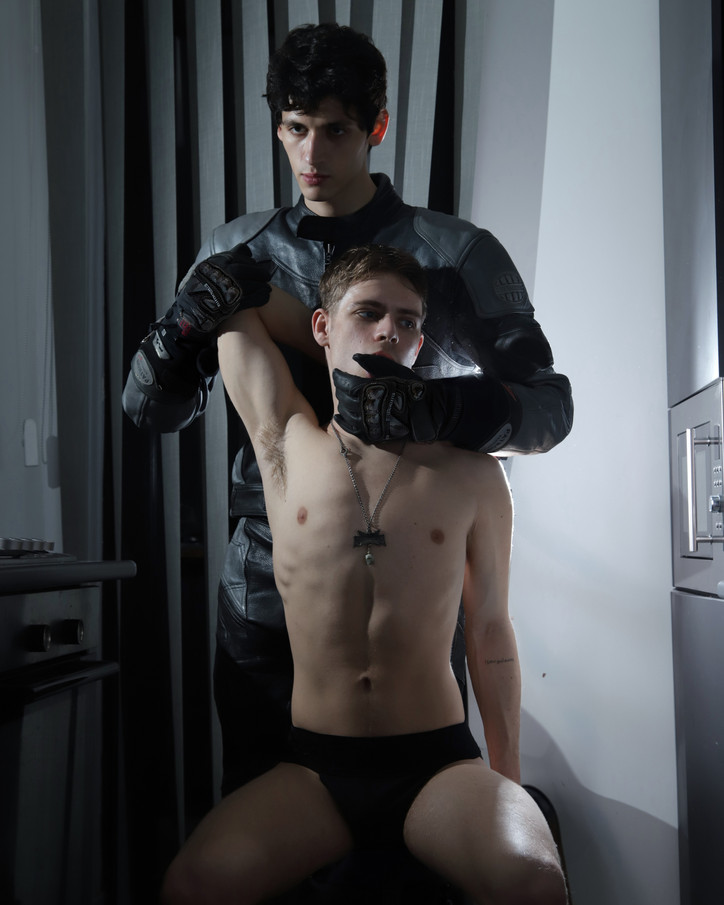
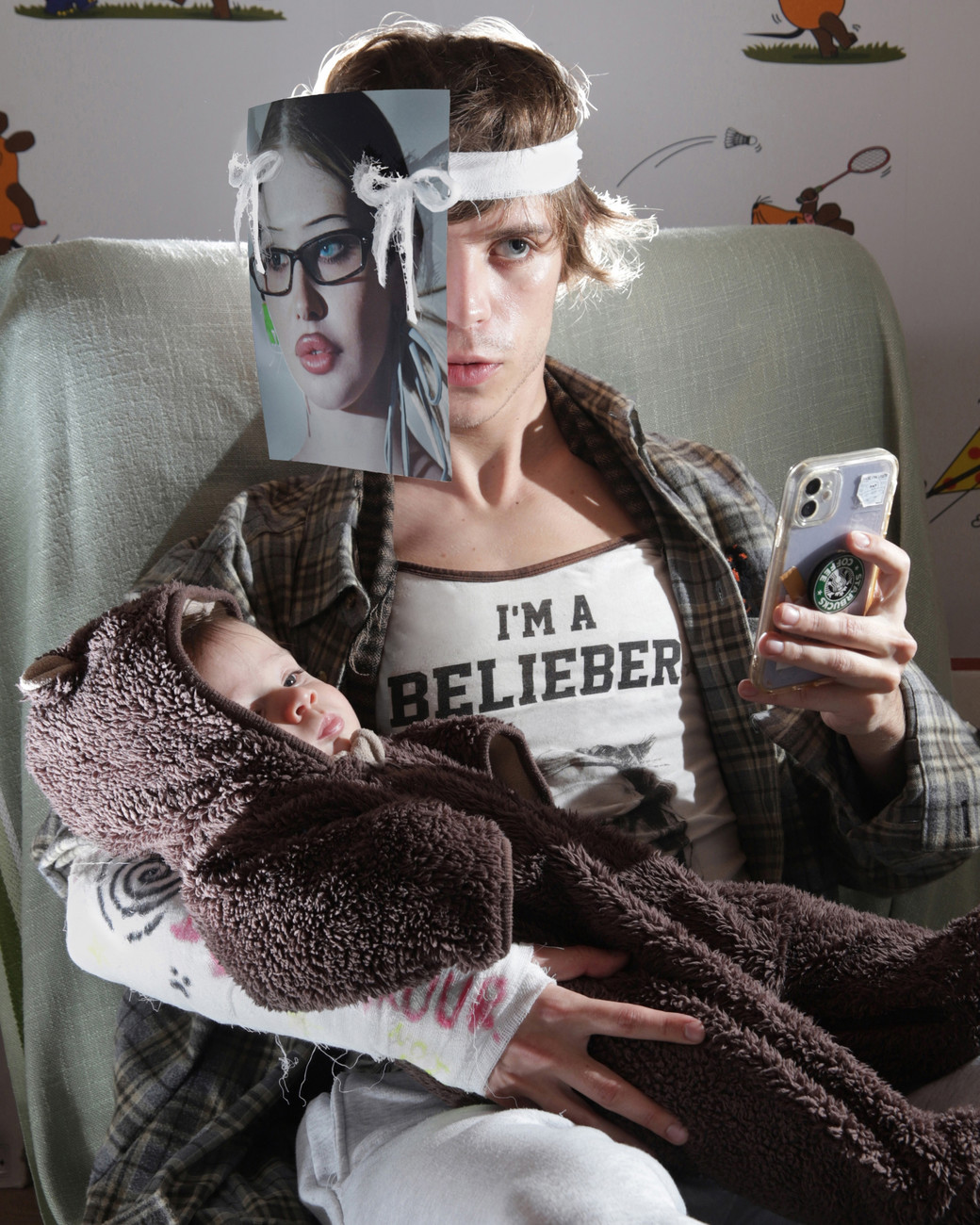
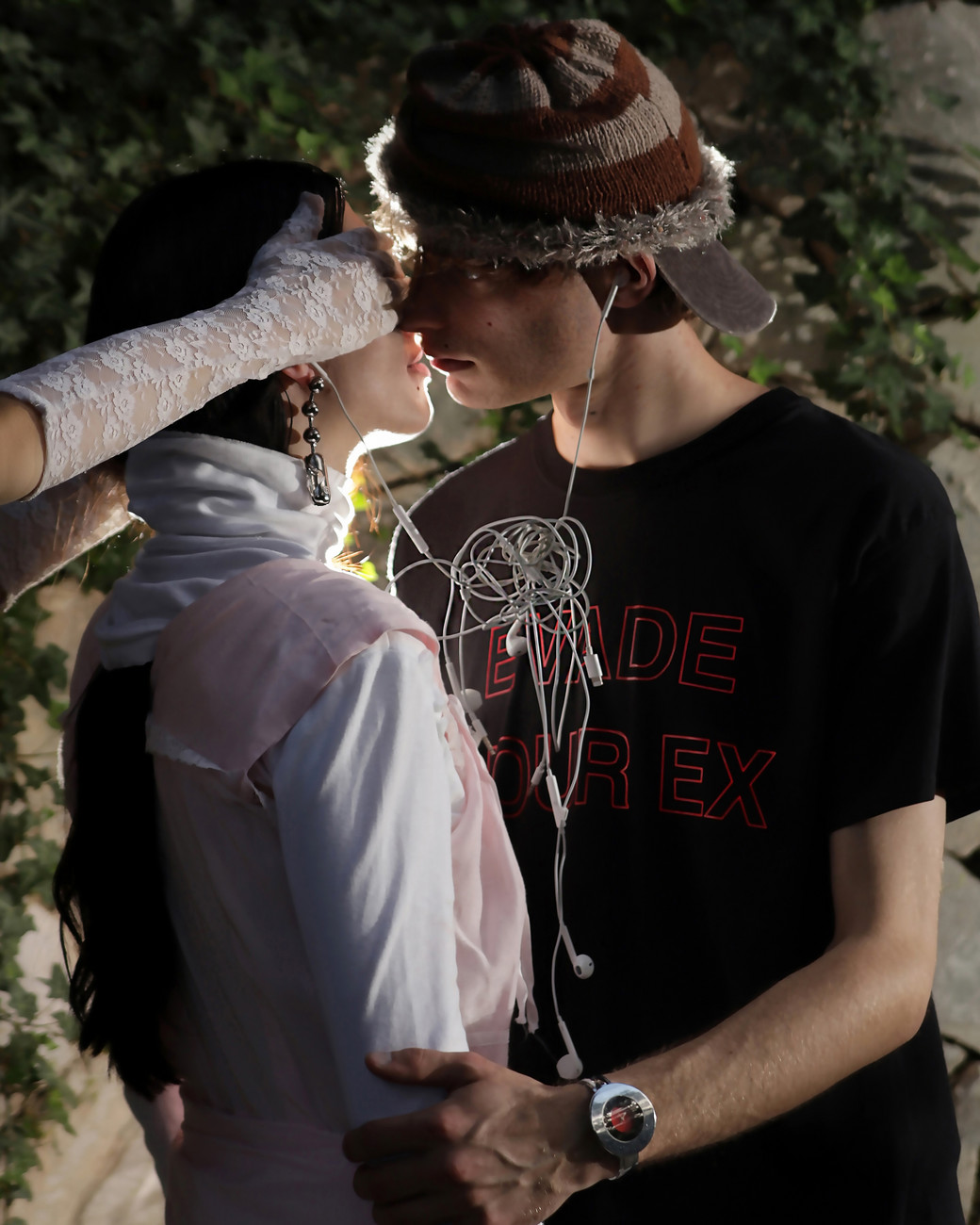
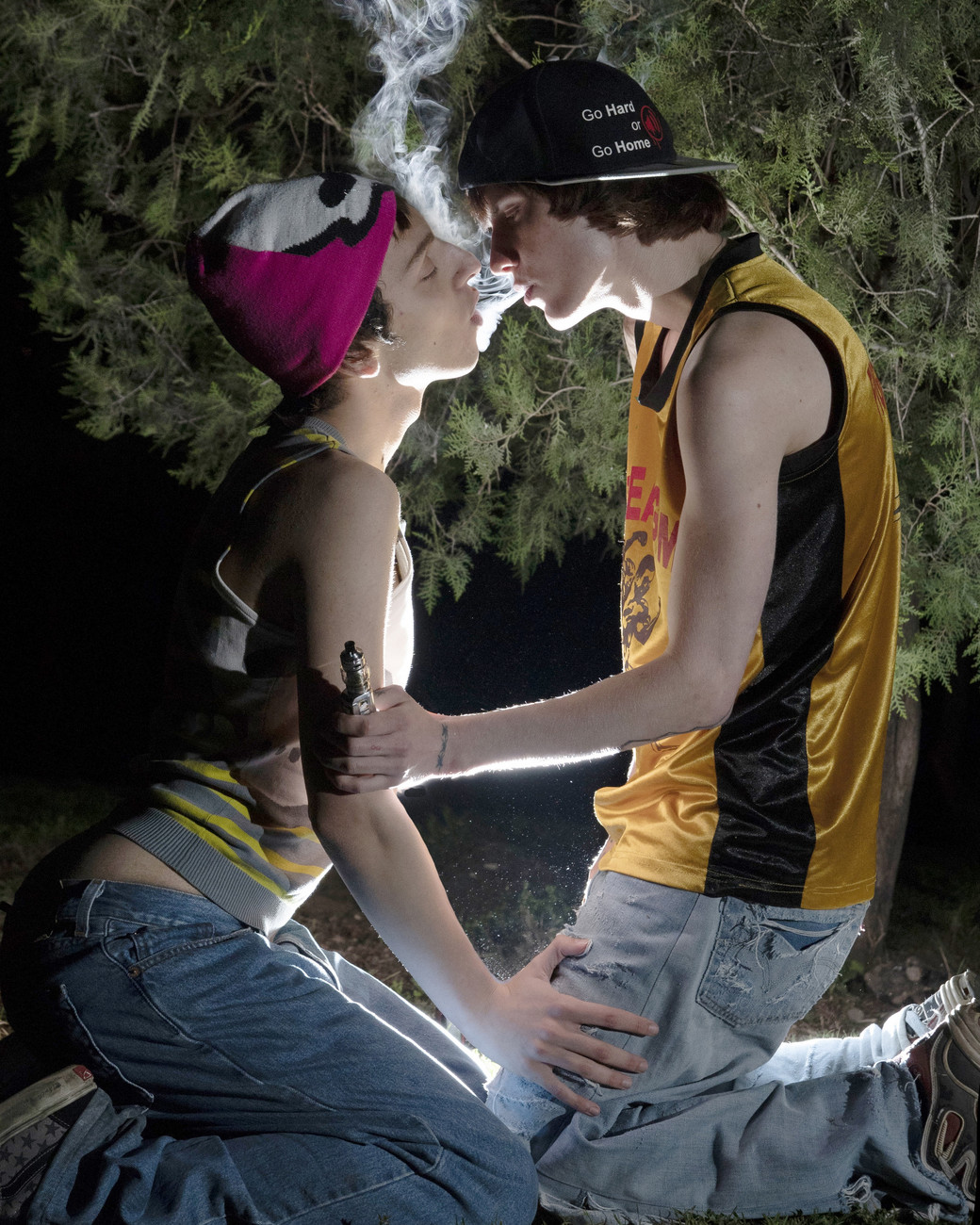
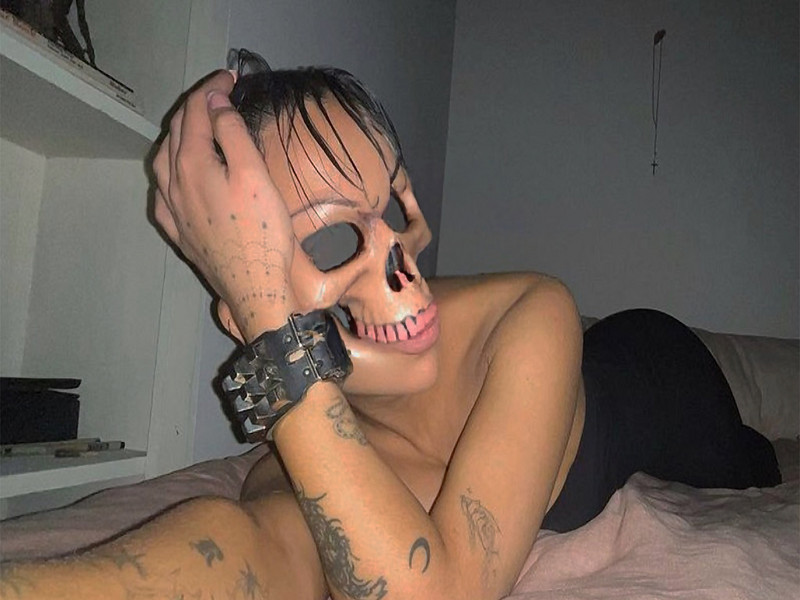
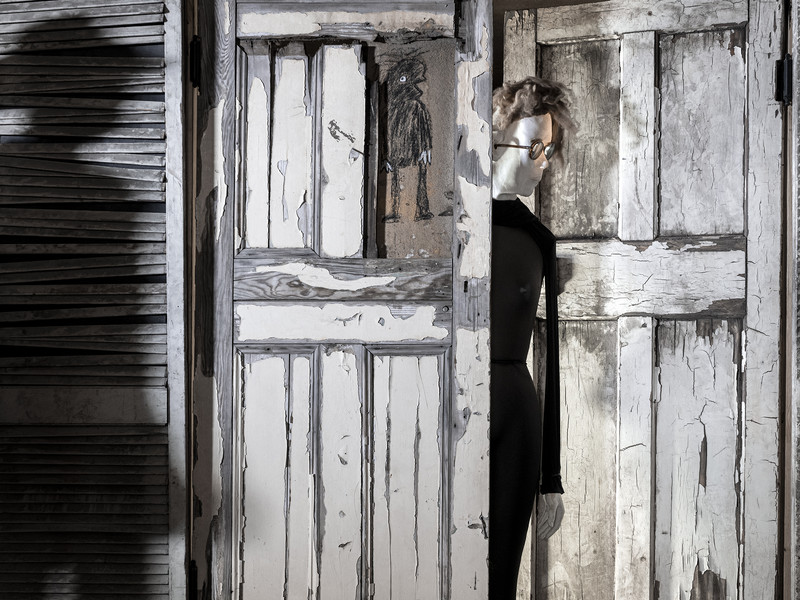
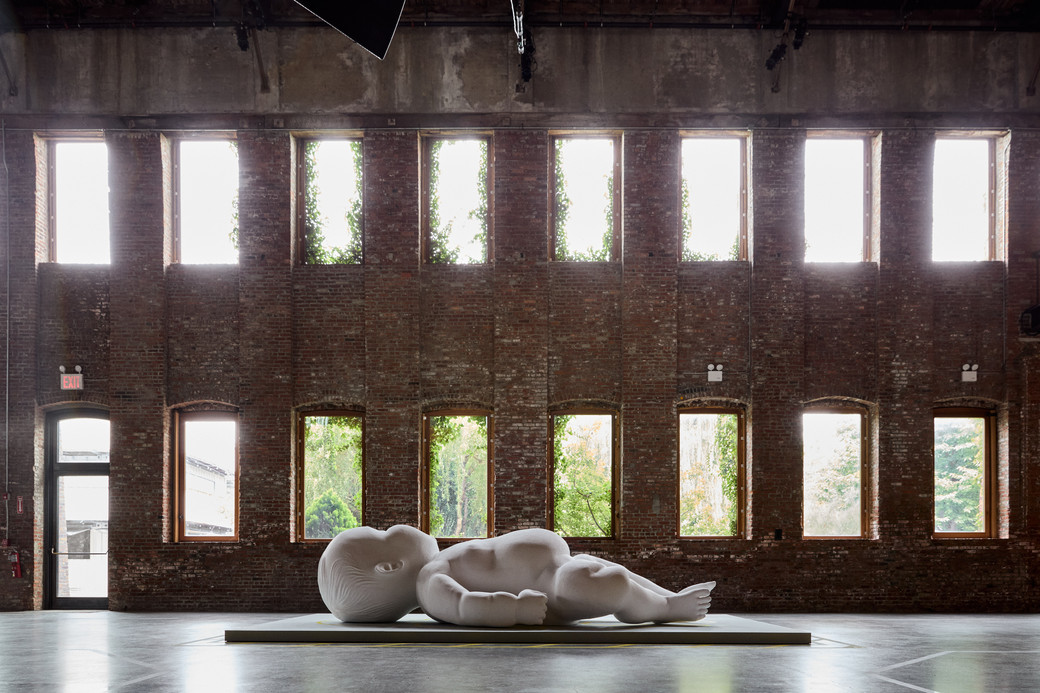
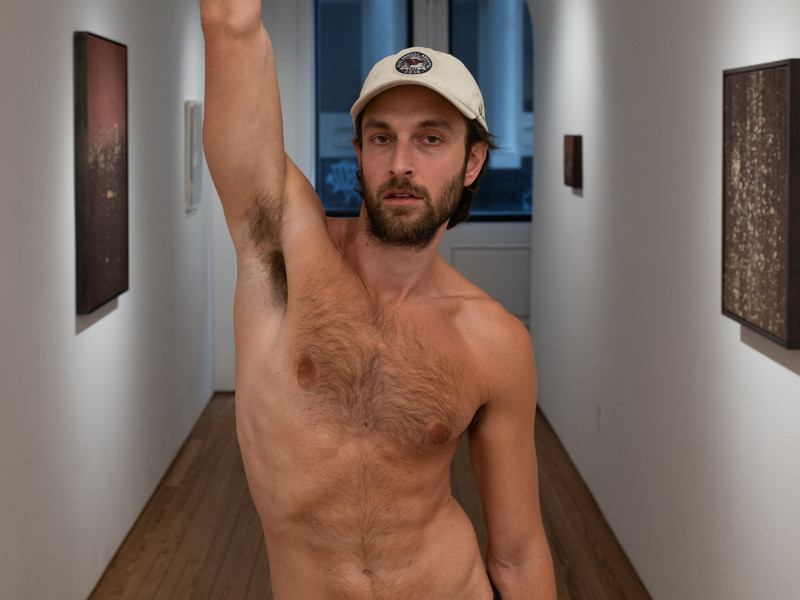
It echoes so much with Haraway's Cyborg concept. This refusal of purity. The hybrid body that resists categorization. I noticed the omnipresence of technology in your work, such as earbuds intertwined as people kissing, as well screens, wires.. Does the figure of the cyborg resonate with you?
Absolutely, my work fights with language and the idea of "naturalness". Nothing is truly natural. Also the cyborg idea aligns with Gilles Deleuze's concept of schizoanalysis. He and Guattari came up with "rhizomes", meaning networks without a center or hierarchy. It's a nonlinear web of connection between everything in the world. That's what, in the frame, are my “body experiments”, maybe a kind of new Dada. Because random connections and the belief in them can become a new truth for you. I collect elements from the world that resonate with me and become part of my world. So yes, I consider myself a cyborg artist. People often emphasize genetics or biology, but I believe we are more shaped by our social environments and patterns. Blending the body with other elements is, for me, contemporary nature.
Thinking about what you said, this idea of a body as a site of assemblage, of collecting resonances in a nonlinear way, I’m drawn to how that manifests in the emotional texture of your work. There’s this haunting, tender eroticism that I feel is striking in your photography. In a world which tries to erase or criminalize queerness, showing this intimacy can be seen as an act of resistance. How do you allow queerness in your photography remain porous? How do you frame something without framing it in?
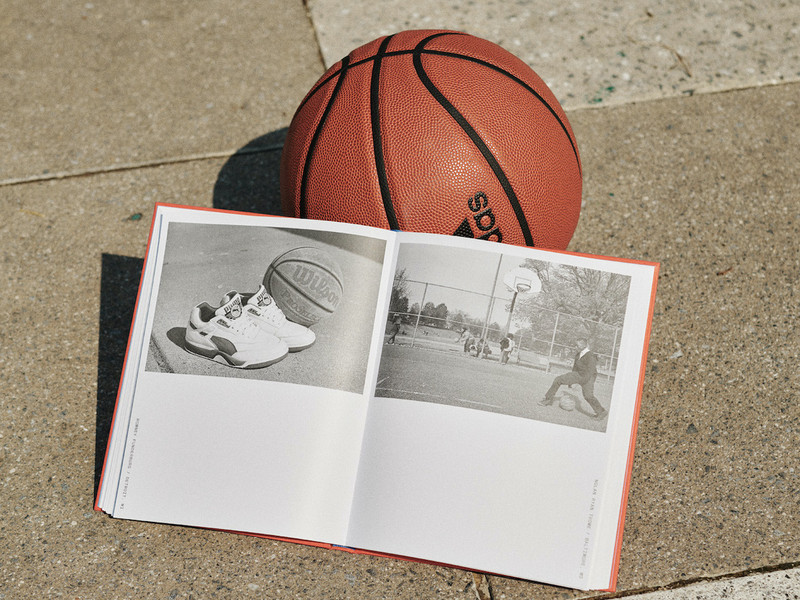
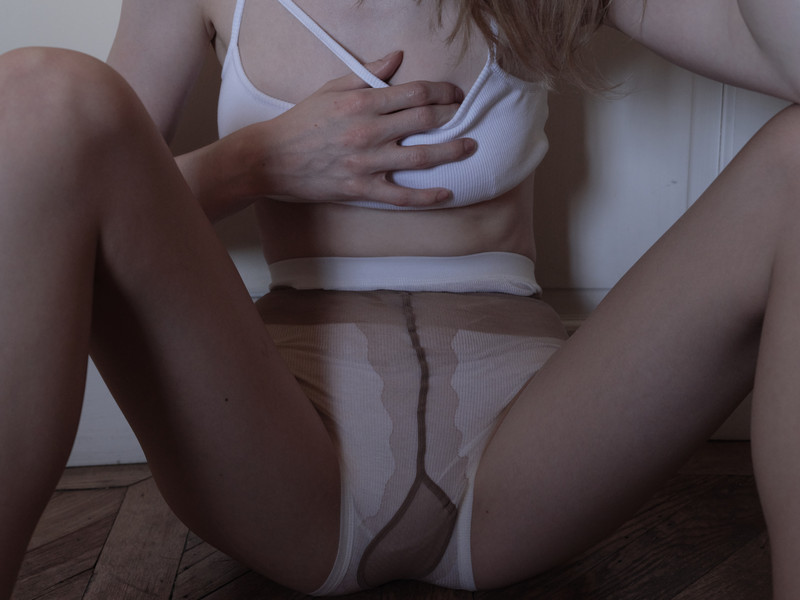
Now in England, I don't face much homophobia, but in Russia and Georgia, it was a big deal. For me, making queer bodies visible became important. Maybe because I was scared to be that queer person. I didn't feel powerful. My self esteem was low. Now, each day, I can be a new person, even if I don't have a name for that identity. And I find that fucking cool. I'm trying to find what's beyond the social structures shaped by language. I think new forms of connection and kinship are possible when we move outside fixed categories, like outside roles that tell us who’s supposed to hold power, even within queer spaces. That's why I rely more on affect, on presence, spontaneity, sensuality and the body itself. Queerness representation today can be depicted through these affective, rhizomatic connections between people. I don’t think that it’s something to define but rather something to live. Almost performative, something that resists being pinned down by names or labels, because otherwise it often ends up reinforcing norms. As Judith Butler explained, words don’t just describe who we are, they shape and sometimes limit us. So I try to keep things undefined, in motion, and porous. As for the erotic, there was so much stigma around sex and gender where I grew up. Everything was hidden from us. That probably shaped my interest in eroticism, but not in an obvious way. I don't think my work looks traditionally sexual, even though contemporary porn is a source of inspiration for me. It’s more about how bodies relate to one another outside of scripts.
How do you imagine this might translate across time? If someone found one of your archived photos 100 years from now, what do you hope they would feel or understand, first?
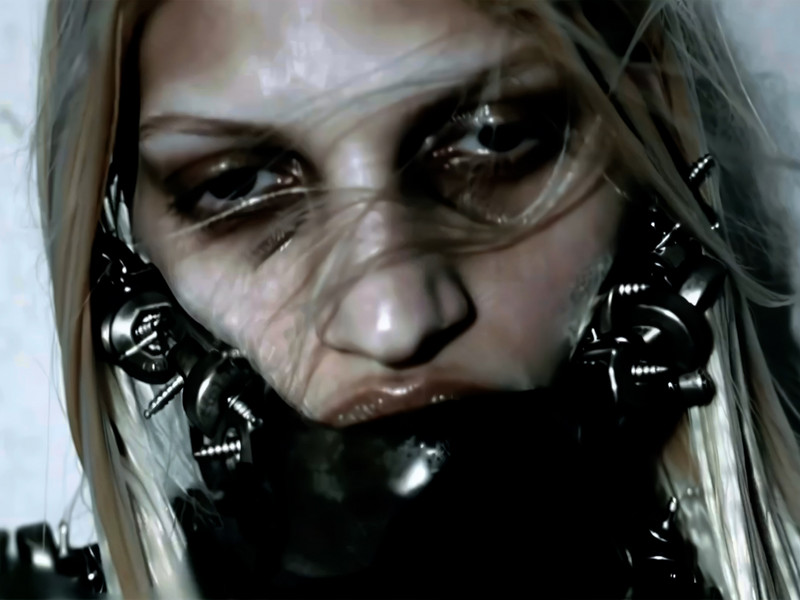
For me, art is a mirror. I don't want to be the kind of artist who says "This is what you must think when you look at my work". I believe in the death of the author. I want people to feel something freely, through their own experience. I'd hope that someone looking at my photos in 100 years would feel something about themselves. Maybe it would prompt them to think about how they live, how social systems shaped their actions or worldviews. I also think my work speaks to the time it's made in- maybe harsh, uncomfortable, problematic times. I try to create a kind of reality that is sexual, disturbing, romantic, apocalyptic. Not necessarily what's happening now, but a dream of now- a nightmare, maybe. Frightening and seductive at once.