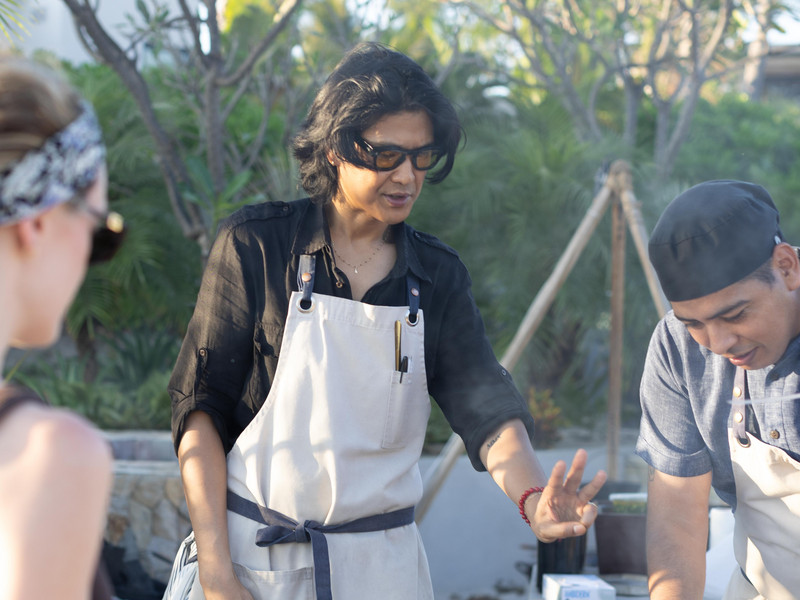
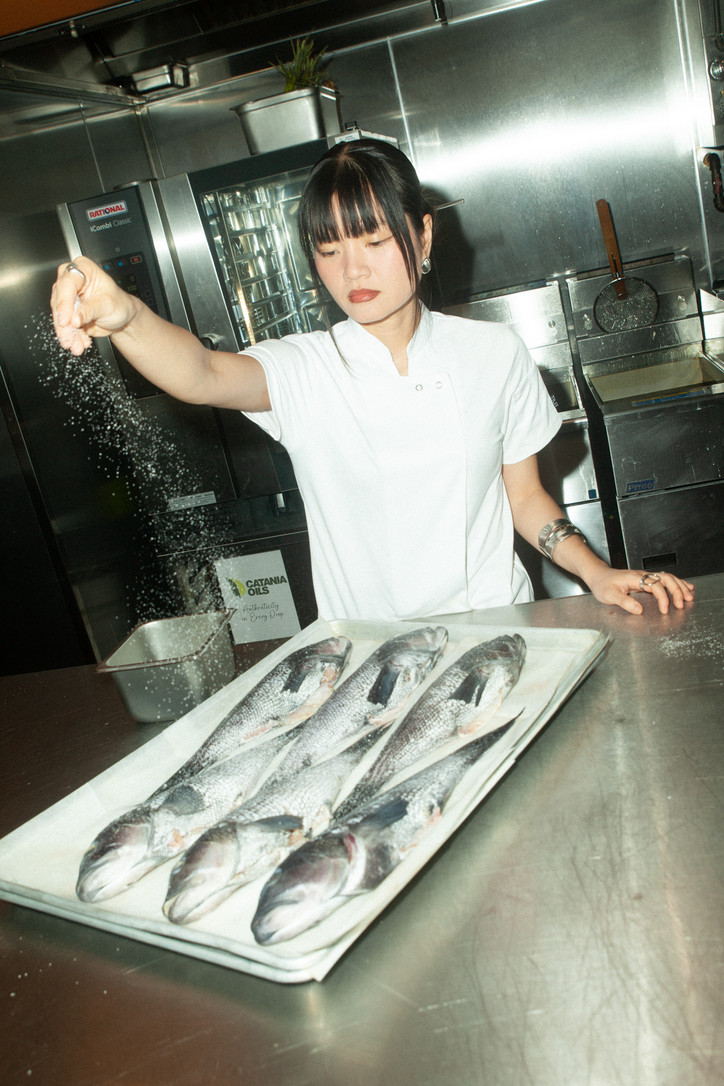
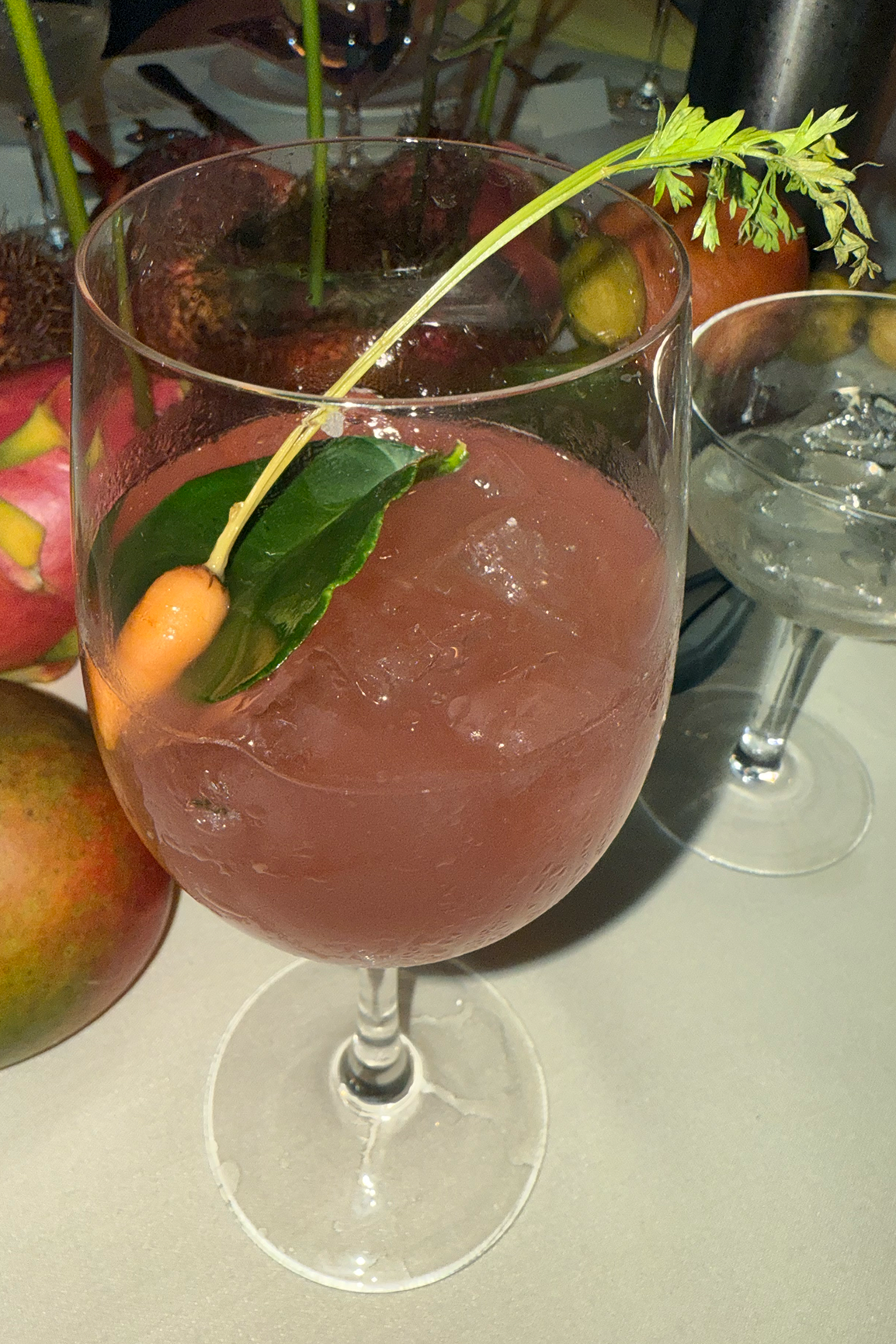
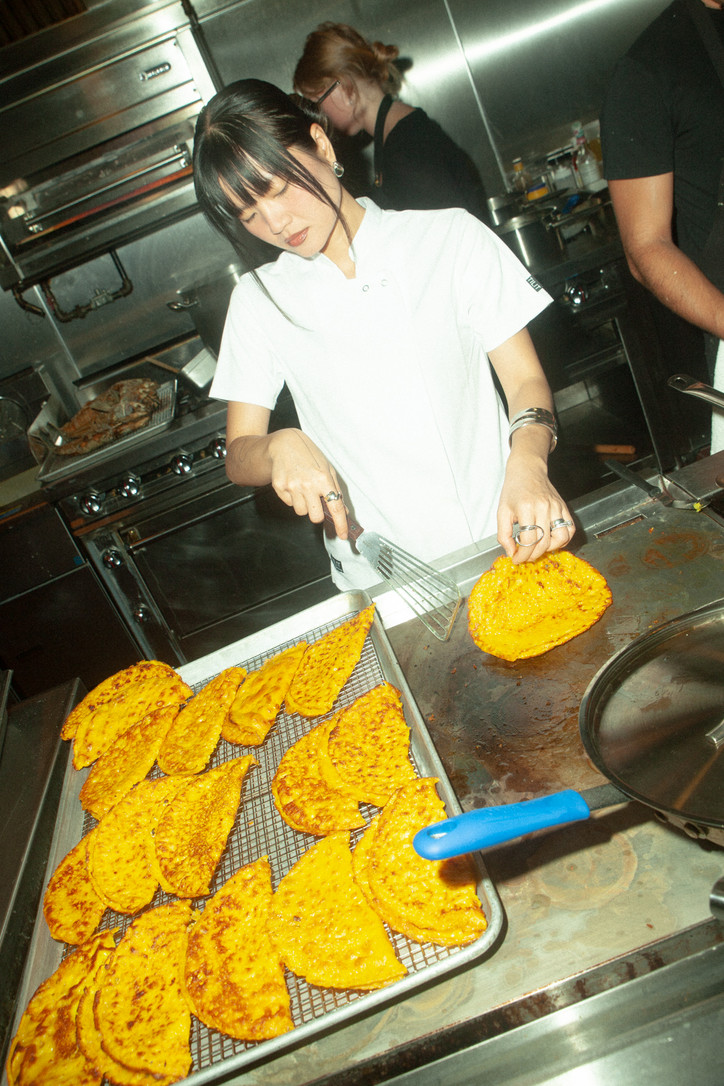
You encourage guests to interact with their meals—building their own wraps, picking from fish, and getting their hands a little dirty. What else do you think Western cuisine can take from SEA tradition?
I always urge people to seek more intuitive completeness in their meals. Vietnamese food has this millennia-old Five Elements theory (wood, fire, earth, metal, and water) that is less mysticism and more about using our instinct to balance flavors, temperatures, and textures so a meal feels complete and the body stays in harmony.
The science is shaky, but I do believe that the completeness of dishes, texture, color, flavor, and temperature is super satisfying. When I first moved to the States in 2017, I was shocked that everyone ordered something individually, and they could just eat a steak and mashed potatoes and call it good. I absolutely, hands down NEED a brothy soup at least once a day. A typical Viet dinner will have a meat dish, a veggie dish, soup, salad, rice, and some chilled fruit to finish. A perfect meal will also be a little symphony of color or flavor, and we aren’t afraid to lean into bitter things like bitter melon, which should stimulate appetite.
But intuition and completeness don’t just start at the dinner table, Vietnamese people touch and sniff every single thing they buy in the grocery store, starting to build that sense from the selection process to the final taste and season as they go.
Talk to me about the process of food styling. When do you know that a dish is finished? And what motivates certain design choices?
The process of food styling begins with ingredient selection. Food fills so many emotional needs for us, so I always think about the philosophical purpose that food will play in the final product, whether it's a commercial, cookbook, or editorial piece. Sometimes it needs to feel cozy, familiar, and gentle. Other times, it needs to be sassy and loud. My favorite things to style are the ones with more flair and attitude, especially if they fill three-dimensional space through stacking. Then, ingredient selection is all about looking for quirks or cues within the produce that might accentuate that role. For example, if the pepper has a super pronounced shape, or if the mushroom seems to bloom in a dozen directions.
I work to bring out that natural beauty through the cooking, preparation, and preservation process by trying to see the image in my mind through the camera’s eyes. Cameras can be so finicky with food. Things that look sumptuous to our eyes read flat on the screen. Things that are lush and abundant can be busy or crowded when cropped to a frame. When something feels “right,” that’s when I know that it hits the right mood of the shot—when things look layered without feeling arranged. When I see the photo and think it looks both beautiful and yummy, I feel like I did a good job!