BY:ERA Reframes Skincare
With its focus on balance and longevity, BY:ERA positions skincare as an ongoing dialogue with time, one that values patience, consistency, and clinical intelligence over quick fixes.
With its focus on balance and longevity, BY:ERA positions skincare as an ongoing dialogue with time, one that values patience, consistency, and clinical intelligence over quick fixes.

Kanako has beat the faces of every model in the game on the covers of magazines like i-D and Vogue Italia, and on the runway for brands like Eckhaus Latta and YSL; Mark Jen Hsu has styled campaigns for Kenzo, and worked with almost every major mag; Tina Outen is a fashion industry OG who, just this Fashion Month, styled hair at Unravel, Koché, Philipp Plein, Luar, Markus Lupfer, Natasha Zinko, Bora Aksu, Charlotte Knowles and more; Alexandra Marzella, who you've probably seen online as @artwerk6666, or before that, @artits6666, is a model, artist who's posed for brands like Eckhaus Latta and artists like Richard Kern, while sharing openly—and in the nude—online; and of course, Kyra Cheria is a singer/model/dancer/actress and all around cool girl, who you've likely seen on the runway for brands like Gypsy Sport and Hardeman, or posing on Instagram as her alter ego, @tacobell_DSL.
Get to know them better below, and be sure to follow all of their committee antics at @officebeautynyc.

KANAKO TAKASE, 32, BROOKLYN
How do you describe what you do?
Helping people‘s visual imagination to come alive on their face.
Where were you born?
The southern part of Japan.
What’s your favorite childhood memory?
I was stung by jellyfish after a typhoon. It lit up fluorescent green when it wrapped around my left arm and stung me. It was so painful, but I laughed so hard.
What’s the most embarrassing beauty look or trend you fully adopted?
Straightened perm hair in Junior High.
What’s invisible but you wish everyone could see?
A connection from our past life.
Your journey from the womb to the present moment in one sentence:
It’s been smooth—no struggles.
What’s your personal beauty philosophy and/or mantra?
Sometimes we need a break from fancy products to not to spoil our skin.
Who’s your ultimate beauty icon?
Björk.
What’s the one beauty product everyone needs in their bag at all times?
Lip balm. I like Odacité lip serum right now.
How do you measure your personal success in your industry?
If I’m happy with what I’m doing and the people I work with are happy at the end of the day.

MARK JEN HSU, 28, NEW YORK CITY
How do you describe what you do?
I’m a fashion stylist, so I work with other creatives to make images—hopefully memorable ones.
Where were you born?
Taiwan.
What’s your favorite childhood memory?
I grew up in a countryside home with my grandparents. One day I rode on a goose thinking it was a horse and I was a knight. That evening, we had goose for dinner because I was too heavy for it. I was 3 years old.
What’s the most embarrassing beauty look or trend you fully adopted?
I am obsessed with eyebrows and do a lot with them. Pai Mai has fierce eyebrows.
What’s invisible but you wish everyone could see?
Nothing is invisible, eventually everyone sees everything.
Your journey from the womb to the present moment in one sentence:
DON’T THINK ABOUT IT.
What’s your personal beauty philosophy and/or mantra?
Take selfies when you are hungover.
Who’s your ultimate beauty icon?
My Asian ancestors.
What’s the one item everyone needs in their closet?
Sexy underwear.
What’s the most important trait to have in your line of work, besides style?
An eagerness to learn.

TINA OUTEN, NEW YORK & LONDON
How do you describe what you do?
I’m a hairstylist and colorist working in the fashion industry on set and on runway shows.
How old are you?
Ladies don’t tell.
Where were you born?
Chatham, Kent.
What’s your favorite childhood memory?
I have hardly any childhood memories, though one I do clearly still see is lying on our back lawn watching a plane fly overhead thinking it was my parents on board en route to Jamaica. I think I was around 4 years old, and they were going away for the first time. My sister and I were playing in the garden with my nan and she was telling us they were all the way up in the sky. I’ve been fascinated with planes ever since.
What’s the most embarrassing beauty look or trend you fully adopted?
I’ve never been embarrassed by any styles I experimented with as I was a teen in the ‘80s and we fully went for it. Personal expression was what we were all about. Always. So, I grew confidence young and have never wanted to look like everyone else. Everything now is tame in comparison.
What’s invisible but you wish everyone could see?
What people do and don’t see is a reflection of their own self-worth. I’ve never been interested in what other people think of me, so I have no desire to be seen.
Your journey from the womb to the present moment in one sentence.
Magical.
What’s your personal beauty philosophy and/or mantra?
Be yourself, be happy, experiment and express yourself .
Who’s your ultimate beauty icon?
Growing up, I was obsessed with Marilyn Monroe—I had posters of her everywhere. I loved her hair, her make up, her sadness and her joy. I could relate to the power of her vulnerability, all the emotions that created her feminine strength and weakness, packaged as a total sex bomb.
What’s the one hair product everyone needs in their bathroom?
Hair Masque. And use it at least once a week—don’t just have it sit there looking cared for. We all should have shiny glossy hair.
What distinguishes hair from other mediums of expression?
Hair is completely individual to the head it’s on. How it behaves depends on how it’s cared for, so it’s responsive to what you put on it, what shampoo, conditioner, masque, color, bleach, styling products, heat, cut, which can all be changed up to create a different response. So, it’s alive, it has a life, it gives you an identity you can elevate or bring down, use it to rebel or conform. No two heads of hair are the same, so it’s your one truly personal identity to express and own.

ALEXANDRA MARZELLA, NEW YORK CITY
How do you describe what you do?
Gosh, I really try not to. Lately I've been saying I'm a performer/entertainer. But I usually sum it up with a succinct, ‘I'm a clown.’
Where were you born?
Providence, Rhode Island.
What’s your favorite childhood memory?
Being a bad bitch.
What’s the most embarrassing beauty look or trend you fully adopted?
White feminism.
What’s invisible but you wish everyone could see?
The truth.
Your journey from the womb to the present moment in one sentence:
‘Private ATV rides in the dunes of my heart.’
What’s your personal beauty philosophy and/or mantra?
This.
Who’s your ultimate beauty icon?
Me.
What’s the one item everyone needs in their closet?
Me.
What’s the most important trait to have in your line of work, besides style?
PIZZAZZ.

KYRA CHERIE, 23, BROOKLYN
How do you describe what you do?
I’m a multi-dimensional artist who teaches dance fitness, exotic dances and models on the side for the coin!
Where were you born?
Redwood City, California
What’s your favorite childhood memory?
Every Christmas morning my brother would wake me up at 4 or 5AM to see if Santa came, even though he knew he doesn’t exist. He would still play along to make me super excited. I’ll never forget that and the way it made me feel.
What’s the most embarrassing beauty look or trend you fully adopted?
I definitely had a bindi phase.
What’s invisible but you wish everyone could see?
How much of a sensitive empath I am.
Your journey from the womb to the present moment in one sentence.
Dance, music and fashion have been at the core of my expressive self throughout my life and are the essence of my colorful, badass personality.
What’s your personal beauty philosophy and/or mantra?
I try to remind myself that I’m that bitch and there’s no one out there like me. I’m my own sickening entity.
Who’s your ultimate beauty icon?
A tie between Aaliyah and Christina Aguilera in their prime.
What’s the one thing you’ll never get on stage without?
Falsies! Gotta give that eye a dramatic lash, always!
What stereotype about your profession have you found to be total bullshit?
I guess when it comes to striping, people make the assumption that we don’t respect ourselves or our bodies, and that we only choose to strip as our last resort. Both of these are often times false, bullshit accusations.
Lead photo by Dario Catellani from office Issue 01; all member photos courtesy of the committee.
Follow office beauty at @officebeautynyc.
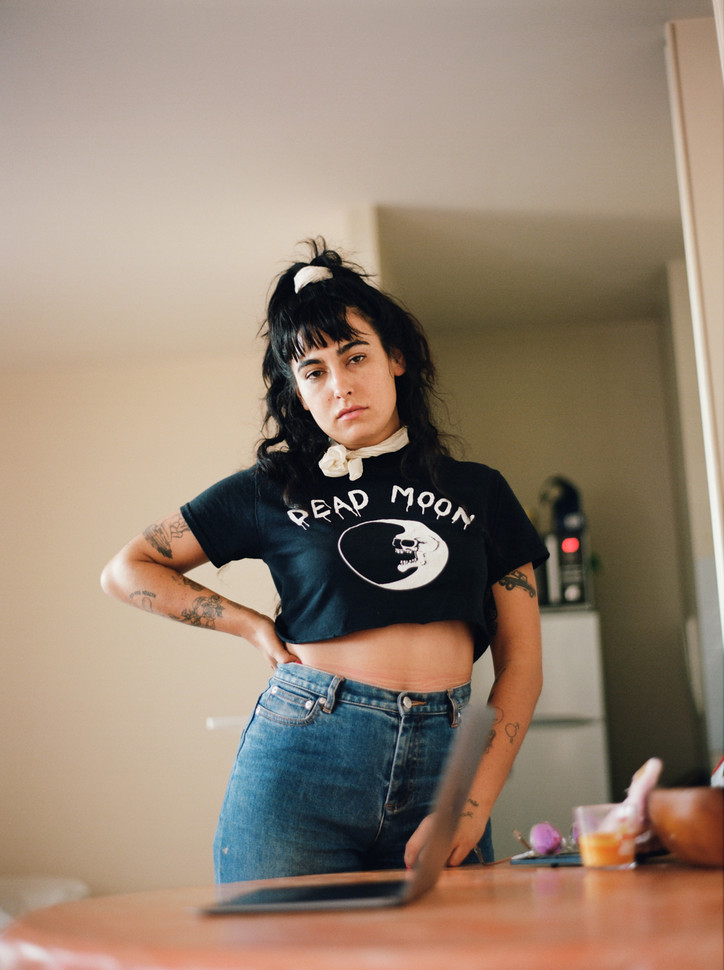
Take the mullet, for example—a look Chavles popularized after she began posting photos of the shaggy cuts she gave herself and her friends. But after seeing it on the cover of fashion magazines, and in the Instagram captions of a random fashion blogger, “I have to find something else to do,” she says.
Just think of the hair stylist’s cuts like The Anti-Rachel.
“It’s about embracing your look and being okay with yourself,” says Chavles. “I just don’t like people who want to look safe, or refuse to take any risks. And for me, I want to grow and experiment," she adds. "I never want to get stuck doing the same fucking thing.”
office caught up with the hair stylist before she headed to Paris Fashion Week to talk about hating beachy waves and the unwavering power of hair.
You recently styled the Vaquera show during NYFW. Tell me about the vision you had for the hair. How did you execute your idea?
I’ve worked with Emma Wyman a few times, and she called me and said, ‘We’re doing this thing and it’s supposed to feel kind of like high school.’ But I didn’t want it to feel obvious. I wanted it to feel insecure—like right before your punk, or right before your goth, or right before you find out what your niche is in your teen years. So, I wanted it to feel like that moment when you’re trying to figure yourself out, and figure out what speaks to you, and you kind of have a grip on it, but you’re also not totally sure yet, which I think is a really stressful, testy, but fun time to be alive. I think we all went through something like that—where you are not totally dedicated to it but you’re almost there. I just wanted to make sure I didn’t go ‘90s. So, some of the hair was also super inspired by that really crappy, MySpace, hardcore music scene that had such a specific underground vibe.
Do you always have that detailed kind of story when you style a show?
I try to—I think it’s important. Even if the hair is super technical, I like to have a reason and figure out who that person is before. As much as I like working technical looks, I believe everyone can learn how to work in that way. But I think it’s important to work emotionally, as well—that’s the kind of thing that makes it fun, instead of trying some crazy look that no one understands except for the hairdresser. Having something that can make everyone feel a certain way is really important.
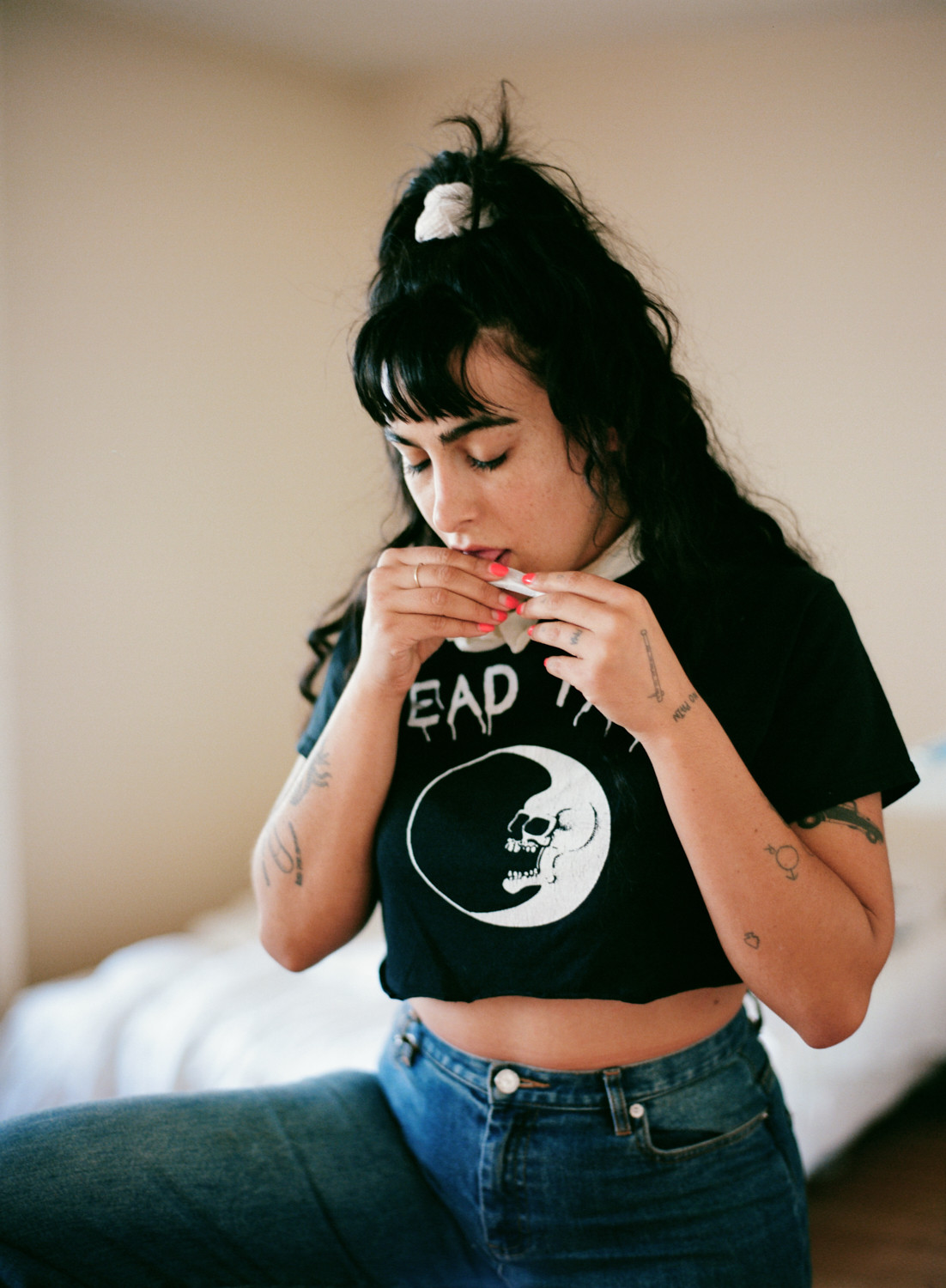
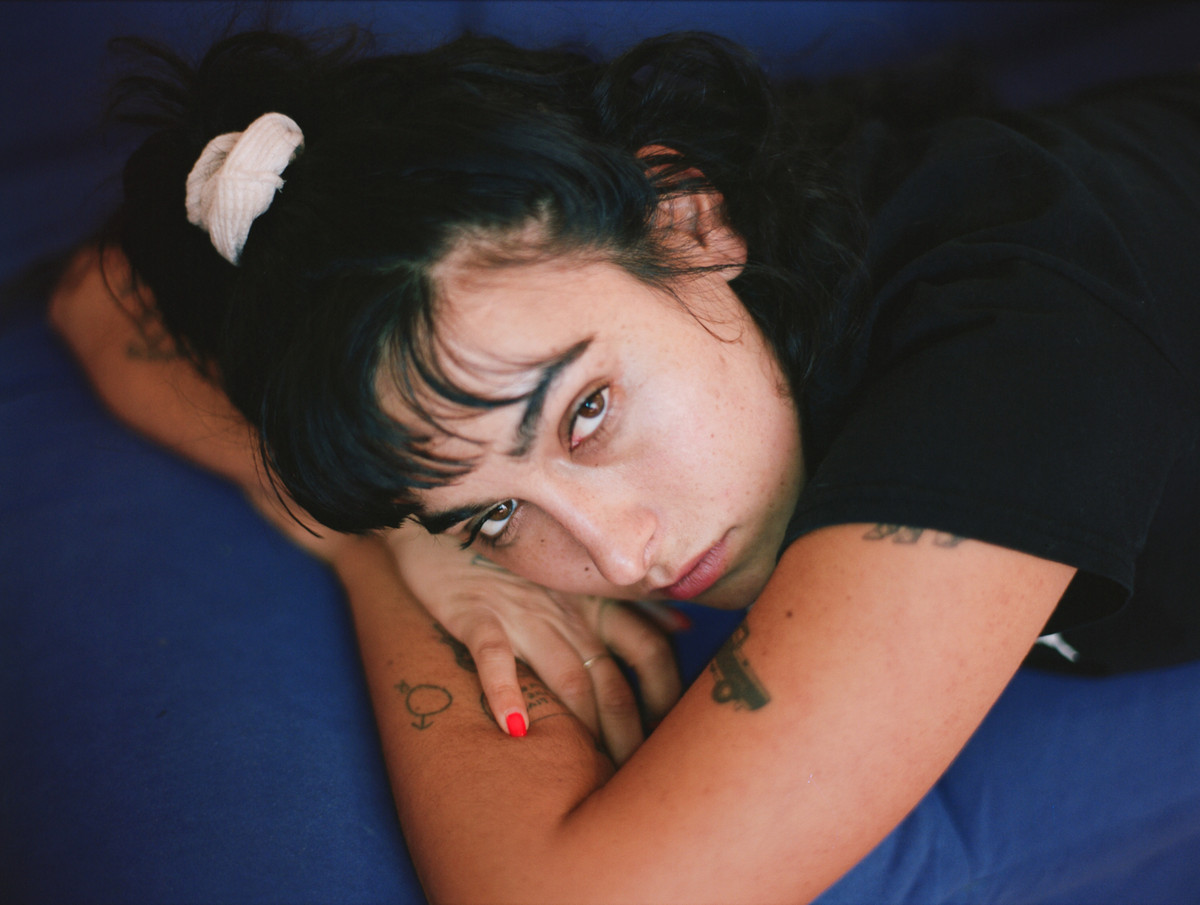
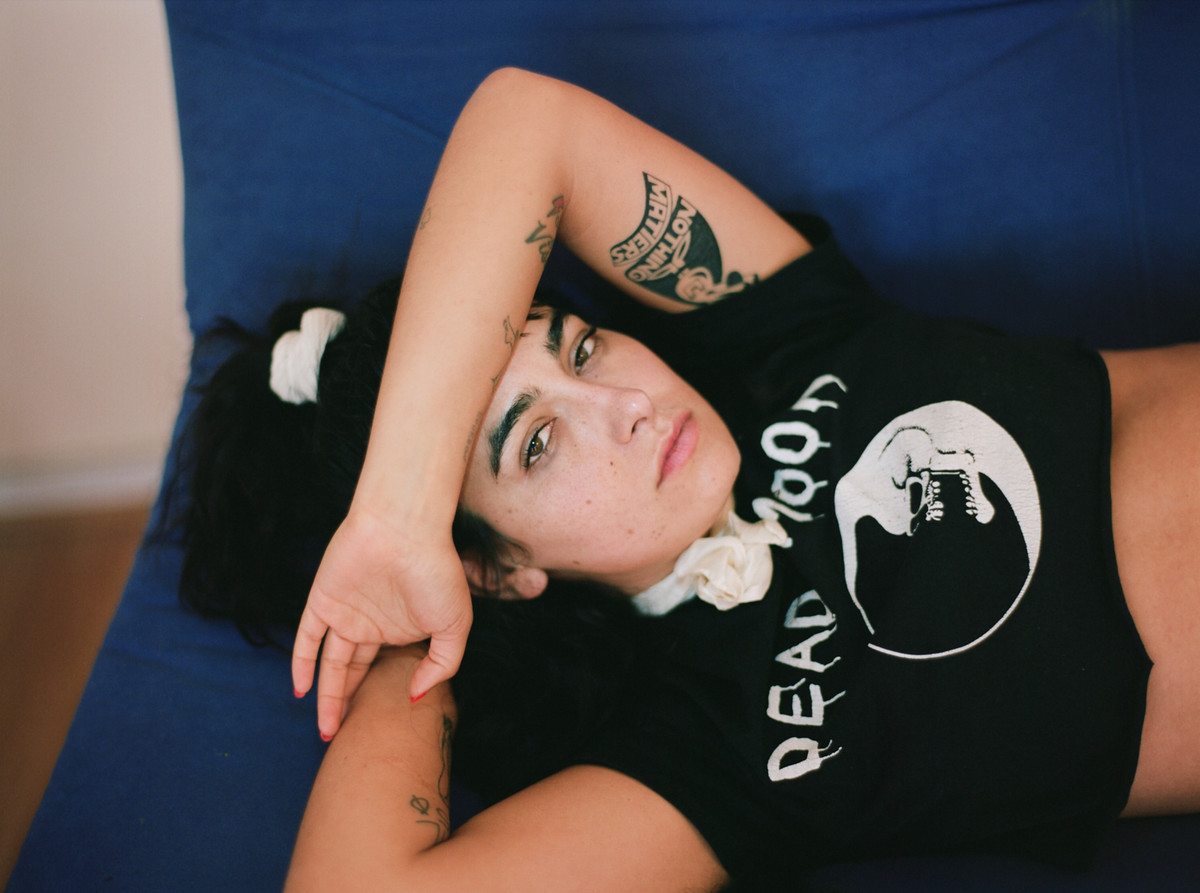
Vaquera has obviously been pretty outspoken about their political beliefs in the past, when it comes to their collections. Do you think hair can be political on its own?
I think it is. There’s actually something that I am working on now, where I’ve been interviewing radical people and trying to figure out a way to mush beauty and being radical, or being active, together. They often seem like really separate things, and hair can seem like something that isn’t important, but I don’t think either is true. For me, I can definitely, for the most part, look at somebody and based on their hair figure out if we will get along or not. It sounds weird, but there are certain haircuts, and certain colors, and ways of wearing your hair that are radical.
Also, being okay with what your texture is, is a really radical statement in itself, especially if you grew up with curlier hair. Like me—I’m Greek and Jewish, so I have a beard, and lots of thick, dark, curly hair that’s really considered unmanageable, and unprofessional. Even more so for black women, too. I mean, adhering to white beauty standards doesn’t make you more professional, or richer, or smarter, or better. In cities, those kind of differences are more acceptable, but for people wearing their hair naturally outside of cities, in a lot of ways, makes it harder for them to, for example, get a job. If you want to be hired, you have to look like a clean, white lady—you have to always think of the public eye and commercialize yourself.
You said you could tell by someone’s hairstyle if you would get along with them. So, what’s a hairstyle that makes you want to be best friends with someone? What’s a hairstyle that makes you think someone is lame?
I basically get along with anyone who doesn’t have beachy waves. Beachy waves, for me—especially because I do live in LA most of them time—are a boner killer. That look just bums me out. Like, this weird concept of what you think is normal. But it’s just boring, everyone wants to look the fucking same—like someone from Instagram. Literally, if someone comes to me and says they want the beachy waves, I won’t do it. I tell them they should find someone else because that’s just not my style.
But also, the most annoying thing about beachy waves is that it’s advertised as looking natural, but no one’s hair looks like that ever! So, it sucks when I meet girls who are like, ‘I want this picture with natural waves,’ and I’m just like, ‘That’s not natural, that’s a blow dry, and then they put a flatiron through it, then a curling iron, and used about $200 worth of product.’ It just creates this horrible idea of what hair is supposed to be, which takes us back to our conversation about hair being political. It’s manufactured. So, don’t beat yourself up because your hair doesn’t look like that when you get out of the shower. When did that fucking happen?
Well, if you think about it: in the ‘80s, everything was so huge and unnatural. Then, in the ‘90s, it went back to more natural, so-called normal hair. So, you have all of these people who want to be on trend, and they see grunge in fashion magazines, and try to recreate what they think is naturally messy, but then it’s totally stylized.
Right, but it’s a slightly stylized messy for people who already have straight hair. So, there is no beachy, effortlessly natural messy hair for anybody who doesn’t have pretty straight hair. And if you have a lot of hair, like me, it doesn’t work for you either. But it’s not like I’m not going to be a bitch about it and say, ‘I don’t like your hair we can’t hang out.’
When we’re talking about beauty, I think hair has the most ability to be radical just by being itself—having short hair, or naturally curly hair when it’s supposed to be straight. So, I think what you do is really interesting because you work with what people already have. I mean, I know when I was younger, I wish I had a hairstylist who didn’t always make it look like they had styled my hair—it just didn’t make me feel like myself.
Yeah, it’s about being okay with yourself, which sounds like an easy thing to do, but it’s fucking hard. I mean, we have mirrors in front of us, we have the most beautiful people in the world on magazine covers that make you feel like, ‘What? Wow, I don’t look like that, I guess I’m just trash.’ I don’t care how much you’ve worked on yourself, or how much self-esteem you have, or how much you love yourself—it’s fucking difficult. And then things turn into a trend! Like now, certain body shapes are trendy–that’s just so weird to me.
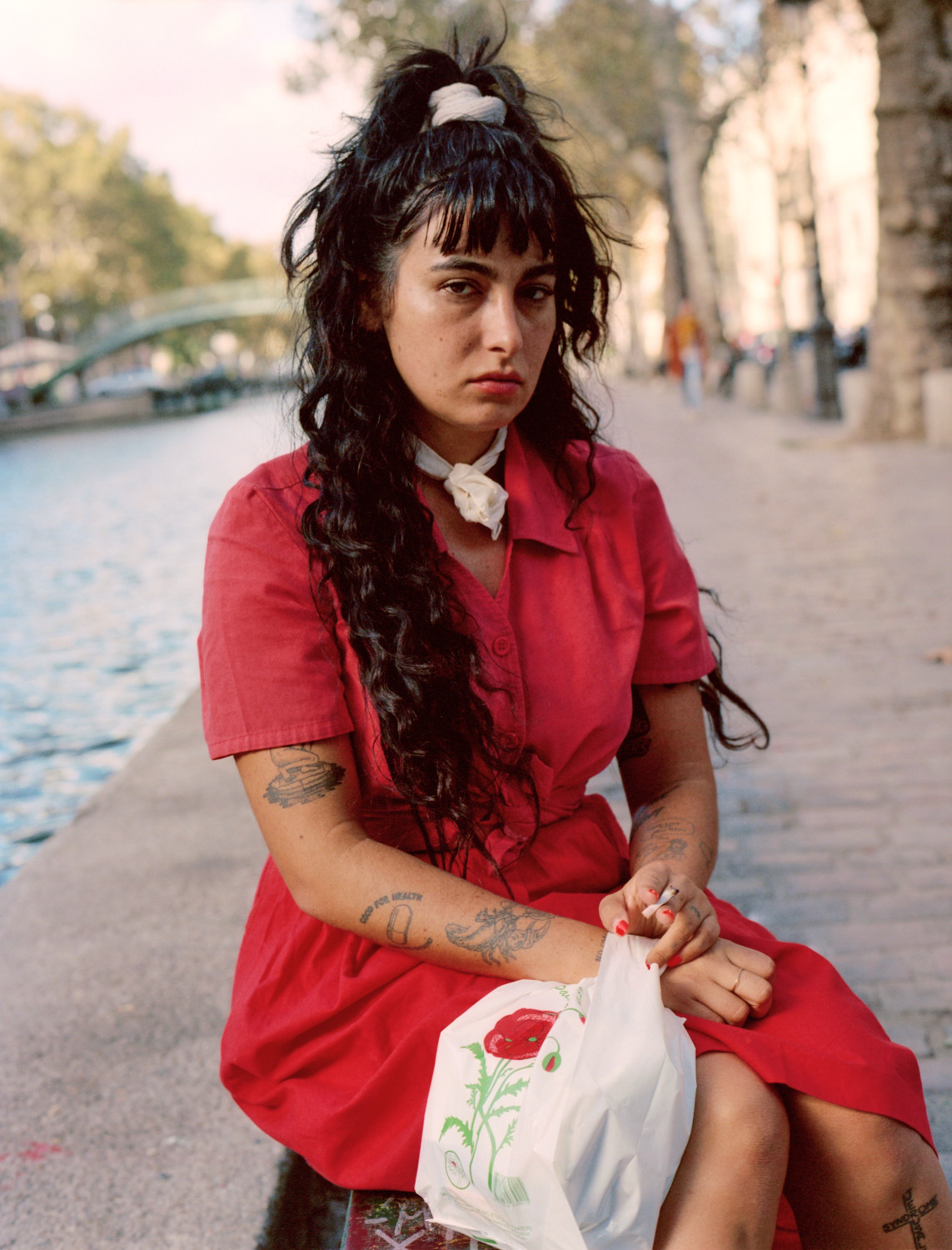
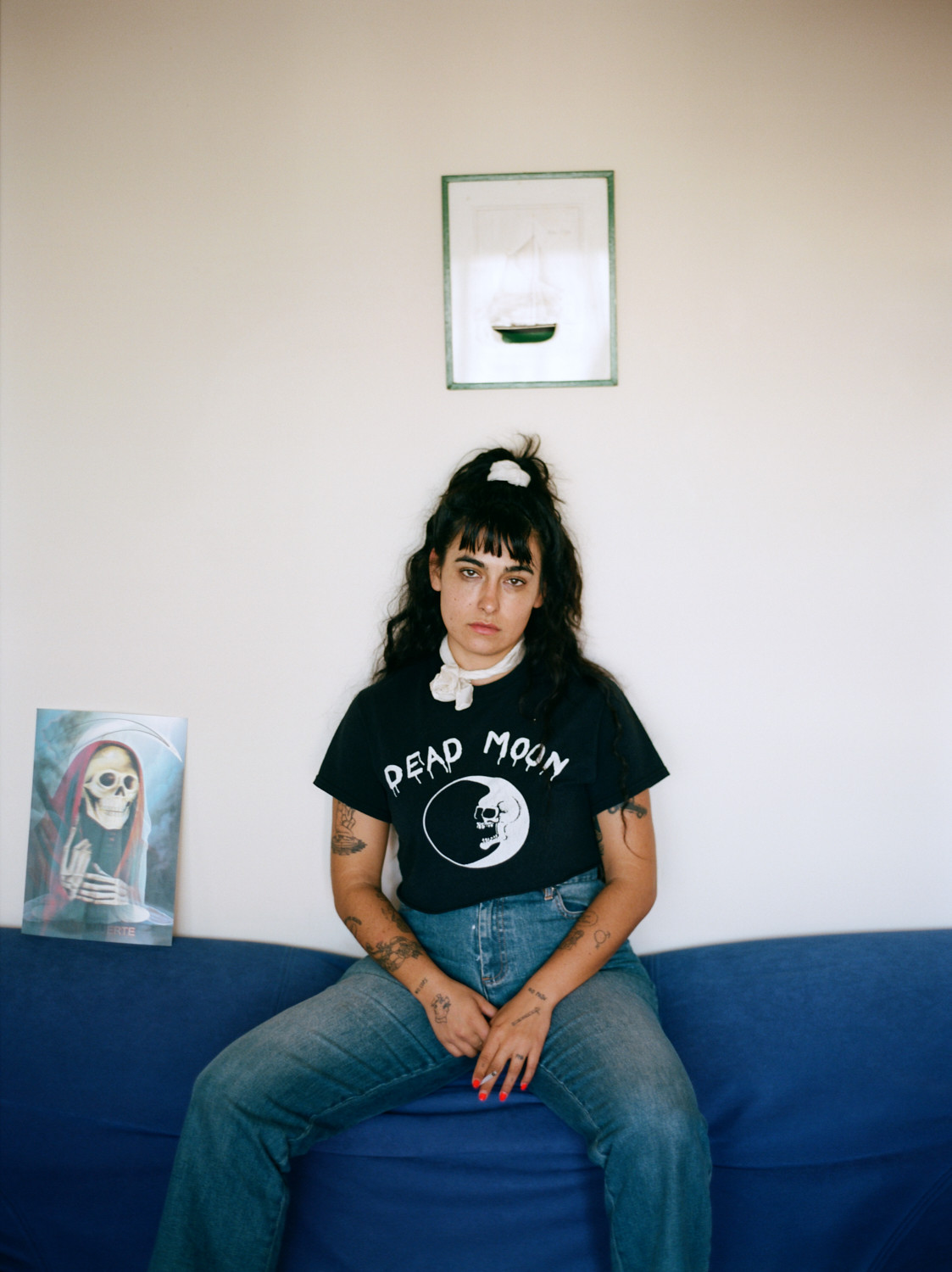
Right, as fashion has gotten ‘inclusive,’ it’s made it so more sizes are accepted. But then it’s like, only certain types of 'big' become acceptable.
Yeah. So, now the Kardashian body is socially acceptable, but that’s a body that most black and brown women have always had, that’s now become fetishized and turned into this cool thing. I remember reading an article about one of the first fitness models with a big butt, and it said, ‘Big butts are in now,’ and I was just like, ‘Are you kidding me? I have had a big ass my whole life.’ I mean, I’m glad that these things are now starting to be accepted, but it’s also super annoying that things I’ve struggled with my whole life are now suddenly being appreciated by the American public. It’s just a really weird thing to me.
Hair has that power, too. I mean, think about The Rachel.
Exactly, and those haircuts made those hairdressers famous. Sally Hershberger has the empire she does because she did the Meg Ryan haircut. Or Michael Canale because of Jennifer Aniston’s highlights. So, haircuts definitely have a serious power.
What is today’s Rachel? Or rather, what do you wish it were?
I wish there was no Rachel. I mean, a lot of people come to me to get a mullet, and people with curly hair who want bangs but are scared to cut their hair because it’s curly—I have a lot of them, too, which is awesome. But I don’t want everyone to look the exact same. Just recently, I saw some random fashion blogger posting about how she wants to get a fashion mullet. So, now that I’m starting to see them around, I want to move away from it. Of course, it’s cool that something that’s not conventionally beautiful is becoming popular, but now it’s my time to move on and figure out something cool and new. So, maybe a really odd Japanese teen haircut will be my next thing. Or more people with big, puffy hair, or short, weird geometric cuts with weird shapes.
What made you want go into hairstyling to begin with?
I was the person in high school who could do hair. I grew up bleaching everyone’s hair in my bathroom and giving everyone these weird little haircuts, and got them ready for prom. Hair was just kind of like, my weird thing that I was capable of. Then I tried to go to college, but dropped out. So, I was broke, living in San Francisco when I was 17, and one day I passed by a hair school and thought, ‘Why not try this?’ Eventually, I went back to LA and went to school, then trained under Benjamin Mohapi for four years. He’s basically my dad, and one of my best friends. But so, I went to school and worked my ass off, sixteen hours a day, seven days a week, eating shit and learning everything. But it paid off—and I can do basically anything, because I have classic training.
I’ve noticed younger hairdressers now, especially on social media, who want to be good—but they don’t really want to be good, they want to be popular. So, they don’t want to go through actually learning how to doing something, because it’s difficult. But I think no matter what you do, you just have to learn how to do it—I mean, you can’t just fuck around and be a shitty carpenter, then you would really mess up someone’s house. The same thing goes for hairdressing, or plumbing, or any other kind of hands-on work—you need a lot of experience. You need to keep practicing and do it all the time, and learn from someone who is really good.
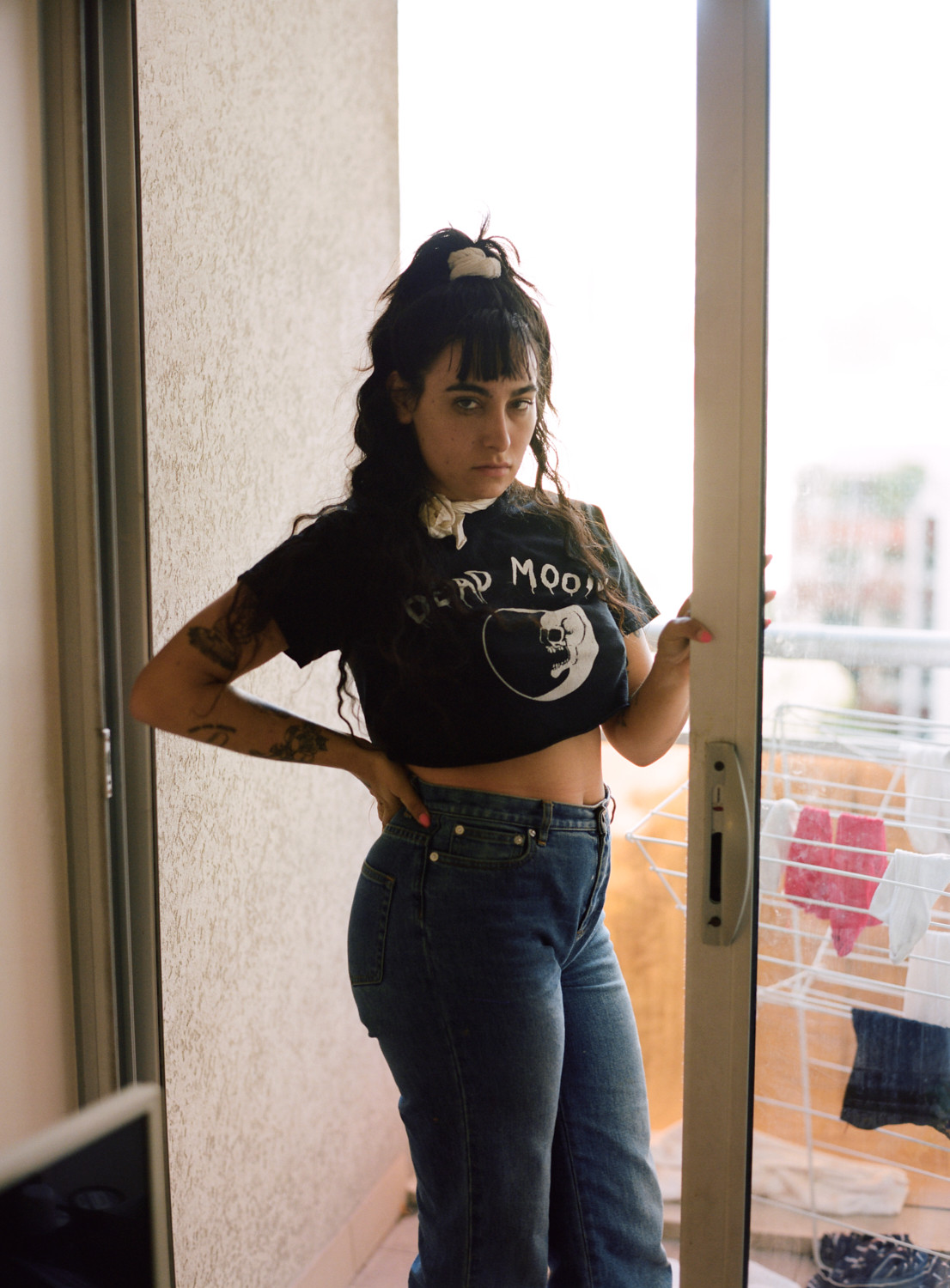
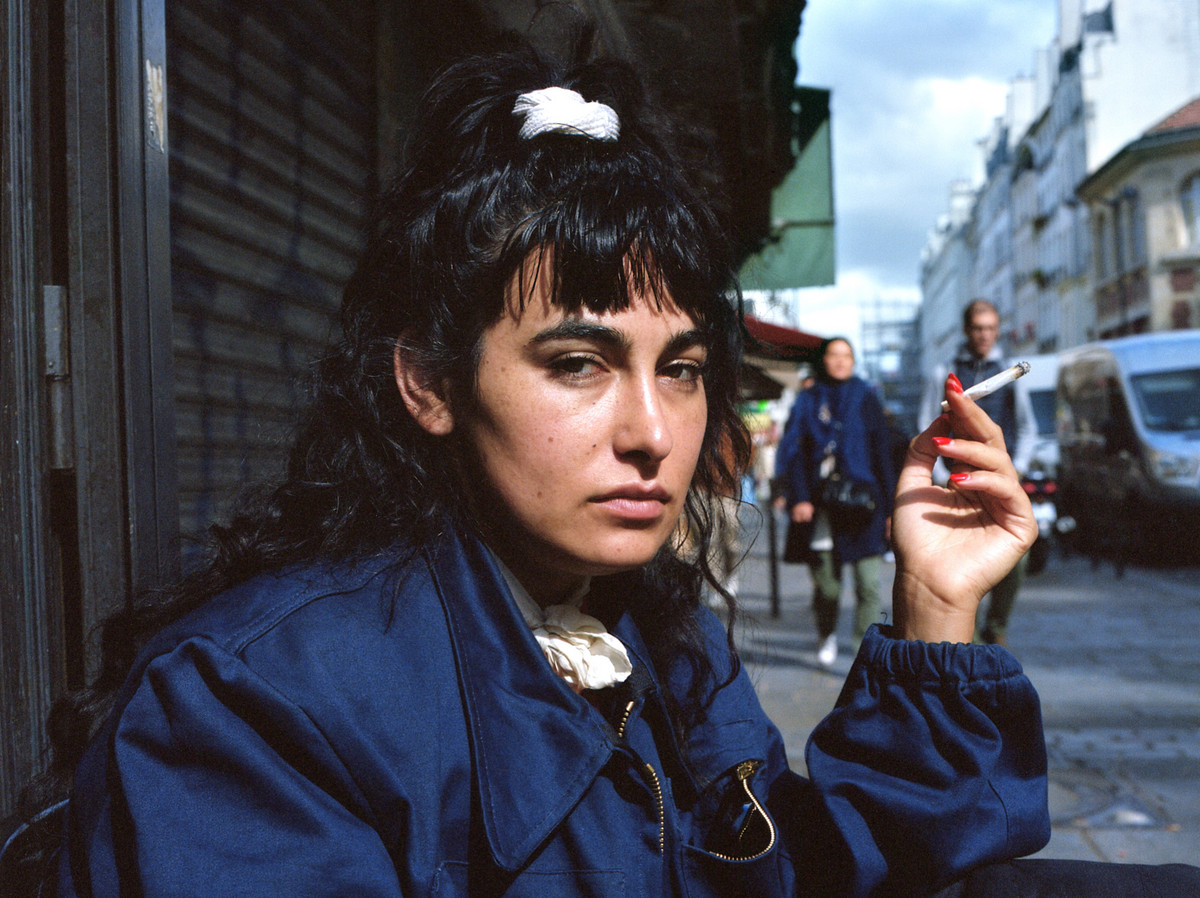
People are really emotionally attached to their hair. A lot of people see it as their identity. So, I think cutting someone’s hair becomes a huge responsibility in a way that doing makeup, or something on another part of the body, might not be.
Absolutely. I mean, it’s something you look in the mirror everyday and see. People say to me, ‘Oh, I don’t know why I care so much about my hair,’ and I’m like, ‘Uh, because you have to stare at it all day!’ It’s part of your face; it’s part of what you are wearing; it’s a part of how you want to represent who you are. So, when you get a bad haircut you feel misrepresented, and you feel hurt and ignored. Then when you get a really shitty haircut, it’s a violation because the hairdresser didn’t hear, or listen, to what you had to say. Trusting somebody with something that makes you who you are, and then you get something you don’t stand for? You just feel totally taken advantage of. I’ve had a lot of clients that have gone through chemo, and I’ve cut their hair when it’s growing back, or made wigs for them, or given them extensions until their hair grew out.
Also, depending where you’re from culturally, hair can be super emotional—that’s part of why I love to do it so much. I like talking to people and getting to know them, and it’s almost like this weird sort of therapy, doing someone’s hair. Even just touching someone’s head, I can feel their tension and their emotions. So, I feel like doing people’s hair is almost like helping them in a certain way. And on a superficial level, changing people’s idea of what looks good, or what’s cool, and helping them achieve what they want—it’s just another part of being heard and understood.
Let’s talk about that superficial element. Being in an industry like fashion, where they’re the ones dictating all of the things we’ve been talking about—like, what’s cool, or what’s in, or what’s beautiful—can, in a lot of ways be exactly that: shallow. So, for someone like you, who’s incredibly outspoken about your political beliefs, how do you make sure your ideals are being represented in what you do?
I mean, it’s definitely hard sometimes. There are times where I’m just trying to help and they don’t care about what I’m saying, and during those times I just think, ‘At least I am getting paid for this job.’ Because I want to murder myself after doing shit like that. But I try really hard to choose the things I want to do, and now, I can allow myself to be more selective. If it’s a commercial job, I don’t want to do hair for fun and have to work somewhere else. But you know, everyone needs to earn money to live. Still, there are some things I’ll just never say yes to—like, I’m never going to help some white chick braid her hair because she wants to look black. And if they want to fire me, so be it. I’ll work with someone who wants to work with me, and shares the same ideas.
With Instagram, people do kind of vibe out who you are, and people have decided not to work with me because of my political views. Straight up, people just said, ‘No way,’ because of the things I share online, and that’s totally fine. There are plenty of amazing people in the world doing good things, and those are the people I know I will end up working with.
That’s probably why you ended up working with a brand like Vaquera—because you’re both fighting for the same things through different mediums.
Right. Like, I’m probably never going to work with Dolce and Gabbana, but that’s fine. I don’t need to work with people like that. But what you said about being superficial—I struggle with that all the time. So many people say, ‘But your job is so superficial,’ and I’m like, ‘No, it’s really fucking not.’ Everything I looked at as a kid, in magazines and editorials, or any art films that inspired me in the way I dress and the way, I represent myself and what I want to do today. If nobody radical is working in these fields, then it’s just going to be a commercial shit show. So, it’s important to have people of all facets, and belief systems, and moral codes, to all work in different aspects of everything. It’s also something I just love doing.
What’s your favorite part?
There are two: I like that you really get to know someone in an hour and give them something that they are going to be able to look at every day and enjoy. Tbat’s really cool, and personal, and intimate. As for session work, I love making and creating a different world, and a total fantasy for a day or two, then destroying it and never doing it again. I can think for ages about what I want to do, and develop the idea just for the right moment, and then I’m so happy after I have executed it, I don’t have to look at it again, I don’t want to do it again, it’s finished, I did it, I’m happy, it’s dead now. Then I get to think about some new idea. I mean, I think all creative people are obsessive and anxious. I know I definitely am.

Born under a tree in a refugee camp in Kenya, Aweng eventually moved with her parents and 11 siblings to Australia, where she was scouted at 16 while working at a McDonalds. Now, at the 19, and more vibrant with a capital V than ever, Aweng shows no signs of slowing down.
An office favorite from the jump, Aweng popped by the Newsstand to chat about beauty, what it’s like growing up in such a large family and how to save the world.
Tell me a little about yourself. How did you end up in fashion, and all that good stuff?
I’m from Australia, and I was scouted at 16 while working at McDonalds, then again at 18, because I couldn’t get in the industry at that age because of school. So, now here we are! It was nothing fancy—I got scouted that day, and a week later, I was in London walking in my first season in September.
That’s the best way to do it.
Yeah, I just hopped on a plane, got to London, and had a great first season there. Well, this is still my first season, technically—my first full-circuit season.
What’s the first thing you do when you get home after a long trip?
I sleep. Lately, I’ve had insomnia—and I found that out the hard way. I don’t sleep because I’m studying politics, and I’m also studying psychology, and it clashes with my sleep pattern. New York is 14 hours behind Australia, and since my school is online, it’s 4AM in Australia time when I need to start school. So, when I get home—which is not something that has been happening lately—I’m lucky to nap for an hour. When I do go home, though, I usually sleep, or hop in the shower. I do a face mask here and there, too, but it depends on the week. Recently, it’s been non-existent, but usually, if I had it my way, I would go home and knock out.
What’s your morning beauty regimen?
Depending on what city I wake up in, I have different morning regimens. I believe that each city holds a routine of its own, and when I enter it, I want to be lost for a few minutes. So, I usually never do anything—I just breath for a few minutes, almost remind myself on the energy of the very city that I got to wake up in. This morning, I got up in Los Angeles. I was on a 12-hour flight just 12 hours ago, so I got up feeling very euphoric. I did my regular facial routine—just using some Dr. Bronner’s products and their magic soaps—and then had a warm shower. Since it’s still morning, I’m currently catching up on some reading for school, while drinking ginger tea. But every morning is different, and that’s the exciting thing—nothing really stays in routine.
How do you think we save the world?
We wrap it up, throw it away and start over again. Honestly speaking, we’ve kind of messed up our society in the sense that we haven’t just messed up politically—we’ve messed up environmentally, and socially, we’re messed up technologically—we’re just messed up as a whole. If someone were to ask me at a pageant, ‘How do we change the world?’ we just save the children, I think. The world is done—our era, our generation doesn’t have a chance. We can’t just enjoy our time—our time is done. It was wasted. So, I feel like we just need to save the children and make sure they’re safe in their environment. We need to find life on Mars—that’s how I see it! But there’s literally no way that you can actually save the world at this point. So, we just need to make sure the children are safe, mentally, physically and financially, throw them on Mars, and start again.
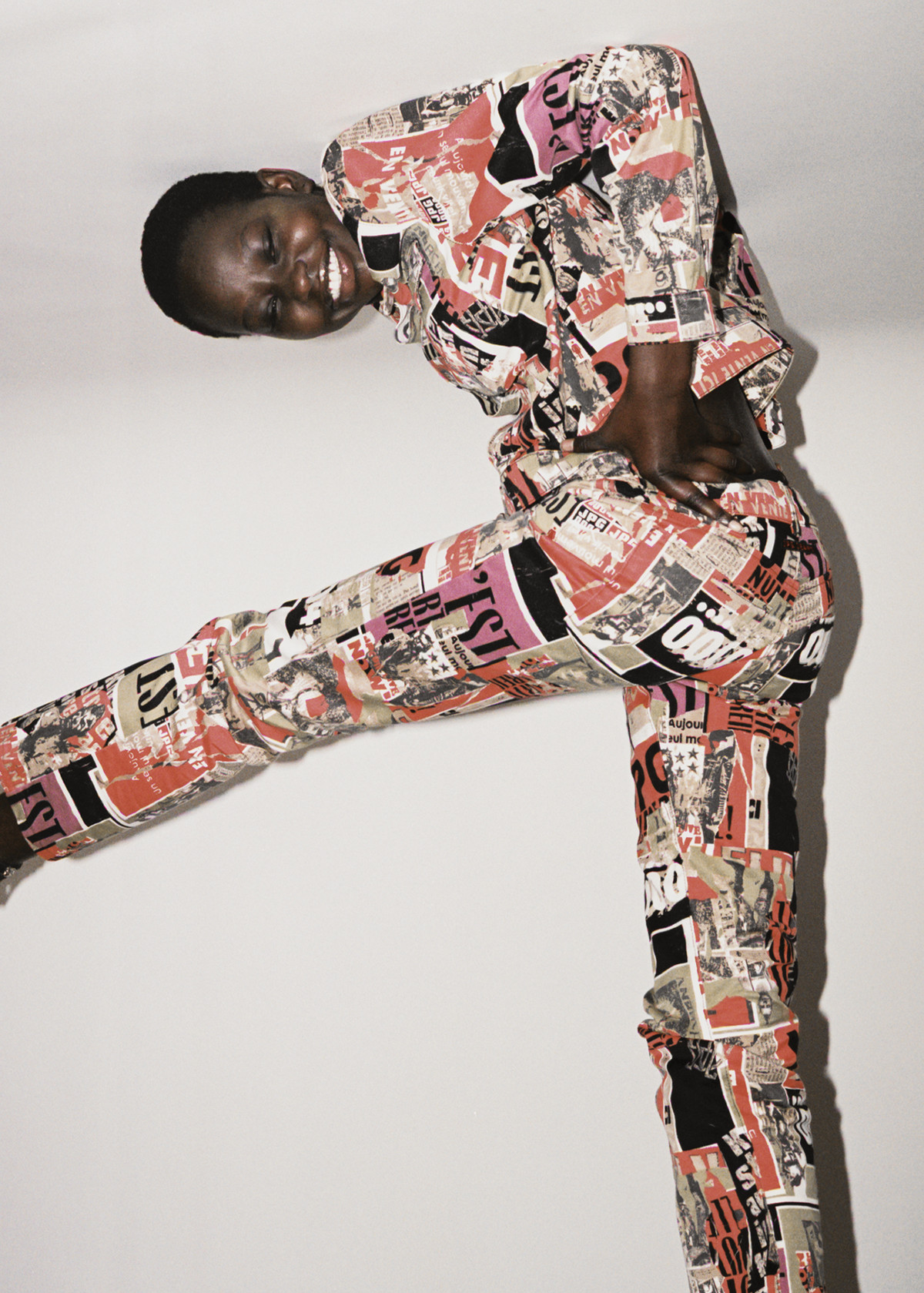
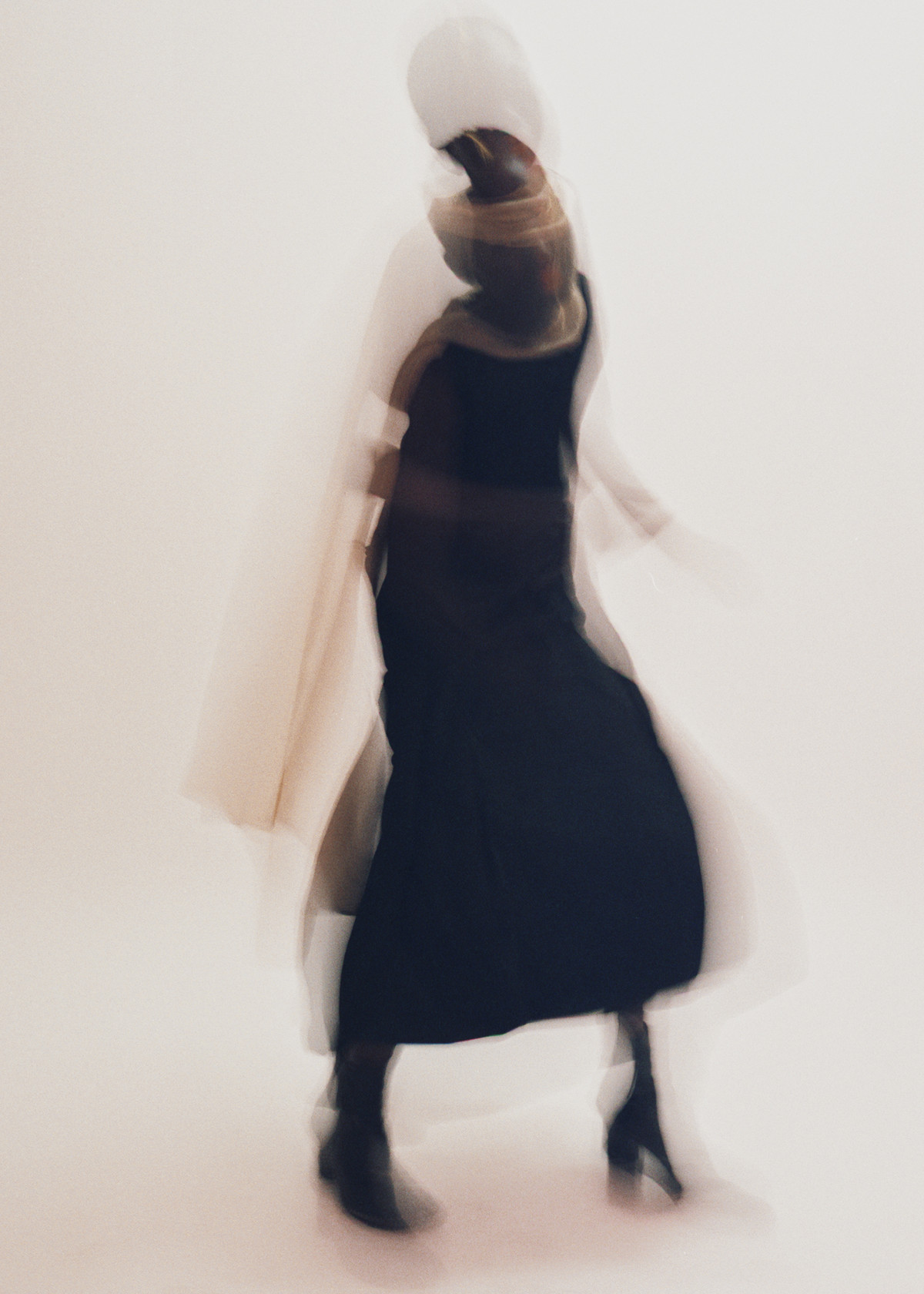
Do you have any siblings?
Yes, I’m one of twelve!
How’s that?
It’s great! My mom is 35, so she’s a young mom. She had me at fifteen, and had a child every year, or every odd year after that. Then, the twins were born last year. So, for the past five years, we were 10 kids and it was great, but now it’s like, ‘Lets just add these two to the mix!’ But s a kid, I used to get so annoyed because my mom was so young—she was giving birth all of her twenties, so now she’s like ‘I wanna live my life!’ So, I’ve always been like a second mom to my siblings, and it’s such a great thing because one would think that you wouldn’t remember all of the kids names, but you actually do, because you figure out each of the unique characteristics they carry. You sit down with one of them and you’re like, ‘Oh my god, I knew that was your favorite color!’ and it’s so sweet. You’re in a small space where you feel isolated because mom doesn’t know a lot about you, but you always have a best friend—you always know someone has your back.
Who’s your favorite?
Who’s my favorite one? Ha! My brother, the one after me, because we’re best friends. Literally, there are things that he has done for me I don’t think anyone else would do for me, and we cover for each other—he’s my ride or die. He’s so mature for his age—he literally just turned 18 yesterday and I turned 19 last year, and he’s just smarter than me in how he carries himself. I am very intelligent in the sense that I do get good grades, I have the social understanding and maturity, but I feel like he has a more in-depth version of those qualities. He’s my favorite because he’s the one right after me, and if he wasn’t after me, I don’t know what I would do, because everyone else after him is very much to themselves, but he’s very much like, ‘It’s you and me.’
That’s like my brother. I have an older brother and a younger sister, but my brother and I are the closest in age, and he’s my twin.
That’s exactly it. When we were kids, we used to do the most absurd things—we fought people together, we got expelled from school together, we’ve made a lot of great memories.
What’s one lesson you’ve learned the hard way during your time in the fashion industry?
I’ve only been in the industry for under a year, and I feel like one thing I learned is to not lose yourself. I think that models enter this industry with the thought of, ‘Oh, I want to be an icon, I want to be Naomi, I want to be Tyra, I want to be Alek.’ But I entered it just to enter it—I didn’t know what Burberry was, I didn’t know who fashion designers were, or what Vogue was. I was such an isolated kid—my mother, father, step-father and grandparents kind of kept me in a spiritual world, very understanding of the spiritual side of things. They didn’t care about the larger reality. So, when I entered a reality where everyone cares about connections, where everyone cares about materiality—I wasn’t used to it. After 18 years of just being very spiritual, I suddenly entered a world where everyone is so trapped by time. Time is not a concept in our household. But in this world, I have to be somewhere at 10AM, then a fitting at 5AM. Like, what? So, I learned that you have to tap into reality, and you have to understand that everyone around you is working on a schedule, too. You can’t just be like, ‘It’s all about me.’
When I first started, I was like, ‘I don’t want to do that,’ but there are certain rules that you have to follow. You have to do this, this, and that to get there. As a kid growing up, I knew who I was at such a young age that I never had to take steps to be, for example, a lawyer. All I had to do was write a resume and do this debate, and win the debate. But then I realized in this world, to be a lawyer, you have to do four years of school, you have to know someone who knows someone, you have to start as the person who brings coffee to them. That whole concept was surprising to me. And in fashion, you’re not just going to wake up one day and be a superstar—you’re going to wake up, cry about waking up, then go to the shoot at call time, and complain that you were late because something happened when you know damn well you were late because you overslept. It’s all taught me how to appreciate time and people. We’re all here, we’re all stuck, no one’s flying away. So, just do what you have to do.


What can’t you leave the house without?
My passport. I had a diary that I used to carry around everywhere, but then, one day, I left it at a casting and one of the models read it. I wasn’t writing anything crazy, it was all goals and business plans and things like that. So, I stopped carrying it around because I felt like it was a huge invasion of privacy. But my passport is so crucial because I can get called right now to the airport, so it’s something I always need to have. I’ve made the mistake thinking that I didn’t need it, and I got a call asking, ‘Where’s your passport?’ and I didn’t have it. It was a lost opportunity, so now I know better.
What song describes your life right now?
“At Last,” by Etta James. I’m at a time in both my career and education where I’m like, ‘Finally, at last!' Between me and my career, me and my family, me and my business—I feel like it’s all bubbling right now. She’s comin’ she’s comin’ she’s comin, and then BOOM, at last! My GPA went from a 4.0 to a 3.7 because I was in London, and then I found out a little afterwards that it went back up to a 4.0, so that was also an 'at last' moment. I was crying for days! Also, my orphanage has been given the permission to move from Uganda to South Sudan without me having to go through any legal battles. I felt like previously, everyone was holding things from me just to hold it. But now, in every sphere of my life, everything is coming to fruition. So Etta James, “At Last.”
What I say is, ‘When it rains, it pours baby!’
Yes! Also with the bad stuff. There is some bad stuff, but I feel like I’ve always been so concentrated on the bad stuff, in the sense that when one small thing happens, the day is cancelled. I’m so superstitious—like Friday the 13th, I’m not leaving the house. I refuse. I see a black cat, it’s a wrap. There are bad things, but I feel like the bad things I’m dealing with right now, in 20-something, I’m going to wish I had those problems. So, in hindsight, I’m good.
Exactly, and because without the bad things, you wouldn’t be able to recognize the good things when they come your way.
You gotta know what’s good to know what’s bad, and what’s bad to know what’s good.
What’s the best piece of advice you’ve ever been given? The worst?
My dad, he was a philosopher, and he was in the war his whole life, and he’s always told me that everything in life comes back full circle. It’s different from karma, where everything goes back around in different directions, it’s that everything goes in one circle. Your lifetime is your own circle, and in the next lifetime, you step in someone else’s shoes. So, remember that someone else has to wear your shoes—don’t fuck up. He always used to ask me, ‘If you die today, and your spirit is going into someone else's shoes, would you approve of that person to step into your shoes, living how you lived? How would you feel about that?’ I used to say back, ‘I think I’ve lived a pretty good life, I’m a great child of God!’ Then, I hit puberty, and I became a monster. Literally, I was the worst kid. So, yes, everything comes back in full circle, and he gave me this advice to teach me that I have to be humble, and to remember that one day, even a million years from now, your spirit will go into someone else's shoes, and another spirit will come back into yours. So, just make sure that whoever does enter your shoes is not going to suffer as much as they should because of your doing.
Worst advice I’ve ever received in my life is to give up. I’m horrible at math—I’m a science person. Even though I hate science, if you gave me the periodic table, I could memorize the whole thing. But I’m bad at math, and in primary school, one of my math teachers told me to just give up because I would never learn it. I was like, ‘You said what? You said who? You said where?!’ I ended up in the math league in our school competition because I wanted to prove him wrong. That’s the worst advice anyone can give you: to give up.
What about beauty advice?
It sounds easier in writing than it’ll ever be in practice, but my strongest beauty advice is: try to love your whole self. And when I say whole, I mean every flaw, every mistake, every tear—take it all in and allow it to just seethe away on its own. At least, then, beauty as an entire concept becomes less blurry. Another piece of advice: use coconut oil for everything—skin, hair, nails, food. You’ll thank me later.
What are the top three beauty products you can’t live without?
My Fenty Pro Filt’r shade 490.
Damn! That’s mad specific—that was like a commercial.
My girl, Ri, we gotta, you know? Also, my lip gloss—any type of lip gloss. The one I’m using right now, is a vegan friendly lip gloss that I got from a website called Thrive Market, which I love. And the beauty product I love is the 18-in-1 Dr. Bronner’s Castor Oil Soap. That’s what I use for my skin and my skin been glowin’. With everything else, I just kind of let it go.
So, you love lip gloss. What’s your go-to going out color?
Fenty Beauty ‘Stunna’ Lip Paint in Uncensored—perfect universal red.
Is there a beauty look you’ve never tried but want to?
Lately, I’ve been very into looking at makeup as an art form, and not just something to purify this diluted perspective that society has of what ‘outer beauty’ could, or needs to be. I’d love to explore the painting side of makeup. I’d love a makeup artist like Isamaya Ffrench—one of my favorites—to just be given small bottles of face paint, and for her to paint on my face whatever comes to mind.
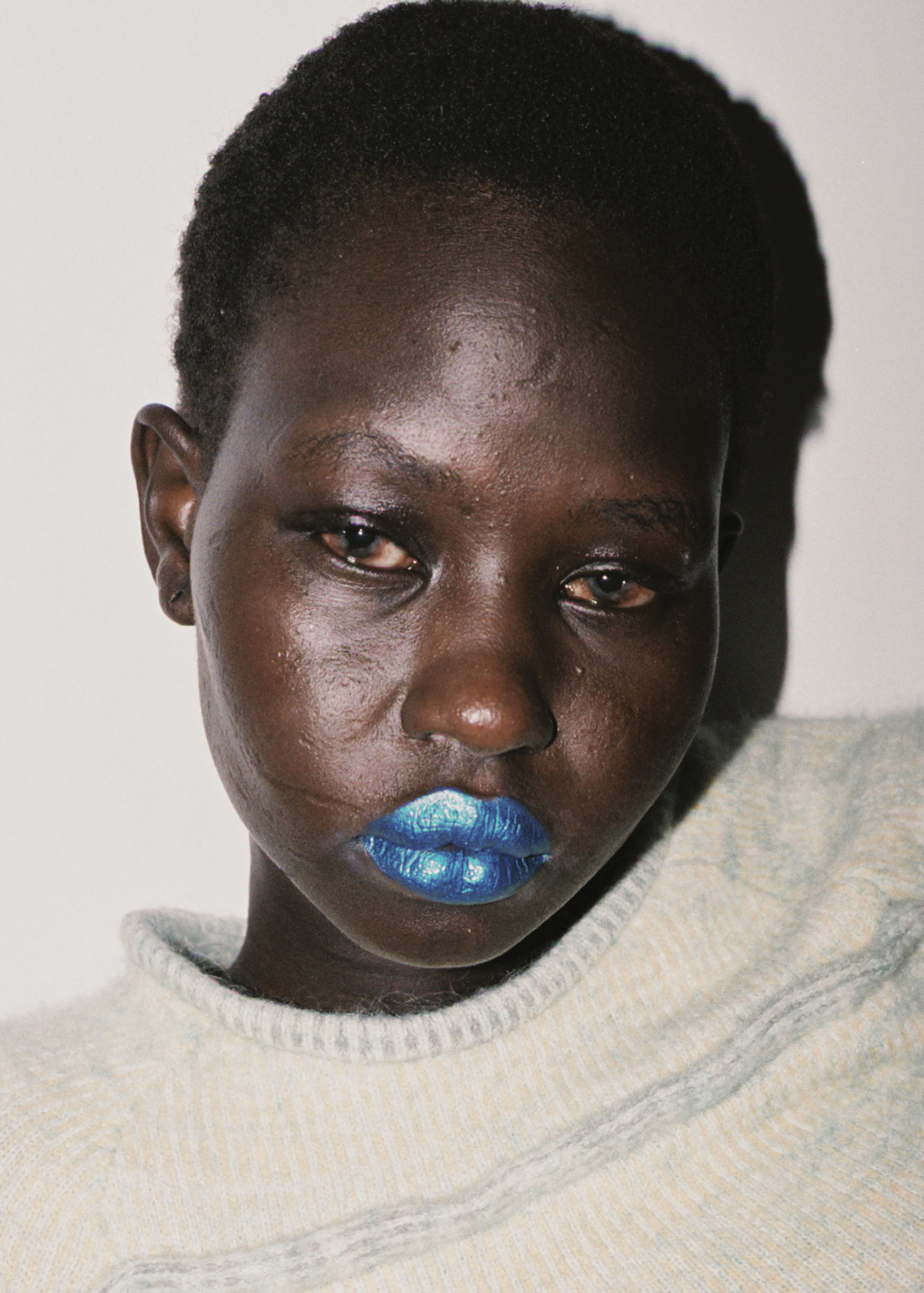
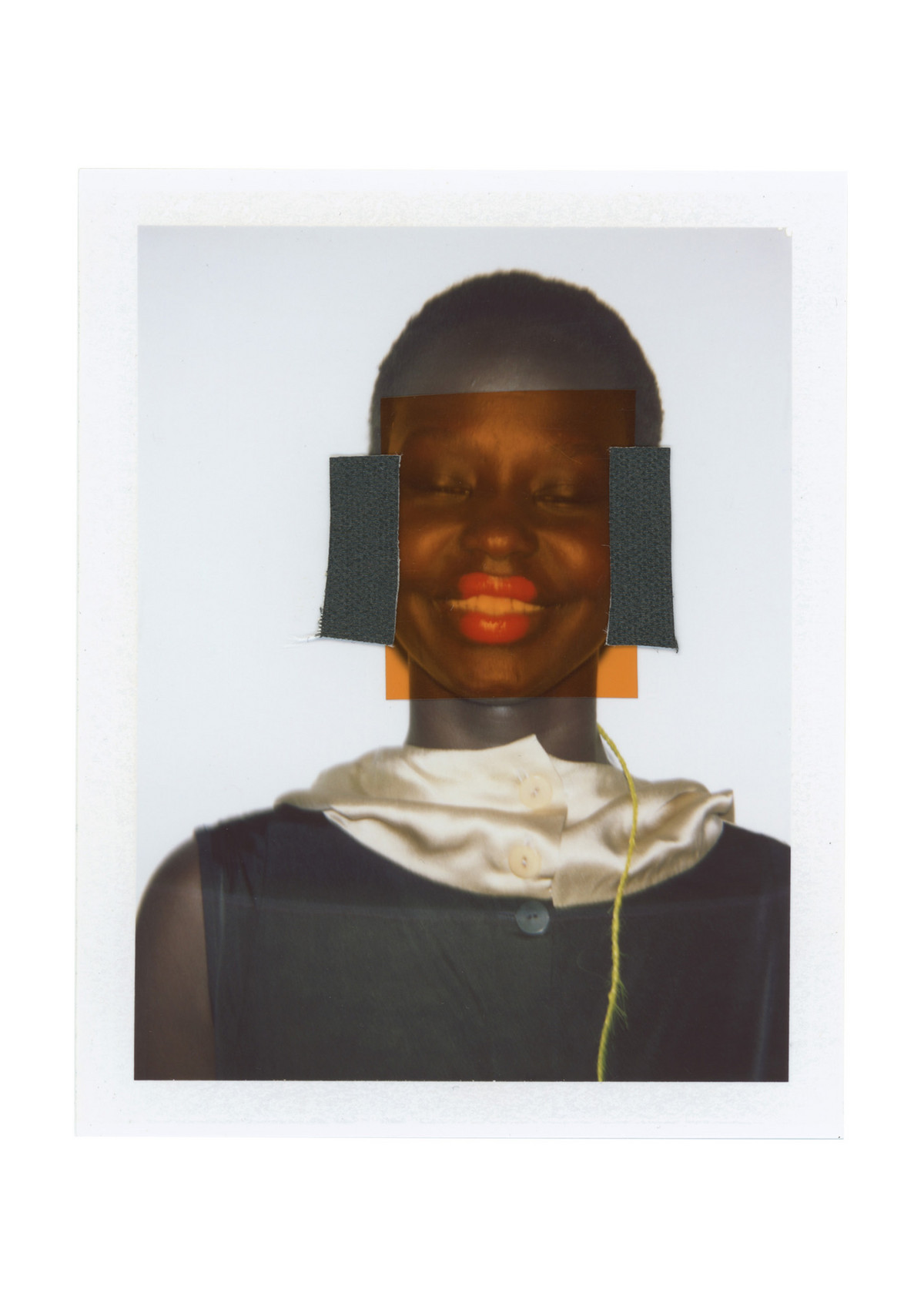
What’s one convention that exists in the fashion world that you’re just like, ‘Fuck no, I’m going to do my own thing?’
Photoshop! Oh my god. I recently had a huge fight with someone about Photoshop. They were editing my photos for something major—probably the biggest job I’ve ever done. They were editing, and they just kept on Photoshopping my scars. I was so confused—legally, or technically, I wasn’t even supposed to be in the room, but they were editing all of my so-called flaws. I was like, ‘I’m not Beyoncé. If I was Beyoncé, I wouldn’t be flawed.’ I mean, she has her own flaws and insecurities I’m sure, but I’ve worked my whole life to try and be comfortable in my own skin. I got scouted because of my scars, and it pushed my confidence to a whole new level. Then to do big, major jobs, like Gentle Monster and Vetements, Burberry, Vogue, and for someone to come and show you that after all these months of big brands loving your scars, and not doing anything to your face, telling you you’re perfect, to say, ‘I want to Photoshop the one thing that everyone in the industry is basically working for you to be here for?’ It was such a pity, because it kind of opened my eyes to how Photoshop is used in the industry. You can Photoshop a shirt, or pants, but I don’t think you should touch the face—I just don’t think that should be done as a society. That’s one of the things I feel like needs to end.
So, I sat him down and was like, ‘For real, for real, you’re not gonna Photoshop anything on my body. That’s not happening.’ I had to just be honest with him, because I feel like models feel trapped in this industry. They feel like they can’t speak up, because if you do, you’re not going to get this job, or that job—there’s always so much technical thinking before doing something like that. But I don’t care, what are you gonna do? Sure, I won’t get this job or that job, but as my dad always says, ‘That what’s written for you, ain’t nobody gonna take it from you.’
And I already have backup plans. I mean, I love modeling, it’s a great industry to be in, it’s a great thing to learn a lot about. But there are some major things, like certain uses of Photoshop, that need to be changed. I’m so happy that I didn’t grow up with magazines, or TV. I grew up with literally a house, a backyard, some bikes, and we’re good—that was it. But for my siblings—I have six sisters, and five brothers—they read magazines, and are always on PS4s or their laptops, or iPhones, or iPads. So, if the first thing they see is their sister on the cover of Vogue, or on the cover of whatever, edited, it’s like, ‘Aweng, that’s not you!’ They know me, they were born in front of me, so the first face they saw was either me or our mom. So, we need to understand that as soon as that happens, we’re making children believe that when you enter a certain industry, or a certain aspect of life, it’s okay when people try to change what makes you you. I always tell my siblings that when someone tries to change anything, anything, on you, you have to stand up for yourself. Always.
But do you think the industry is expanding its definition of beauty? If so, why now?
I feel like there is no exact definition of beauty—one cannot put a sentence, or a clear definition of it. I believe that we as a society, or culture, are following a wave that almost started out of nowhere. And when the wave started, with beauty as a history—it didn’t start out well, at all. But now, I believe that with this wave, the definition of beauty has become more inclusive, and very realistic. It definitely has a long way to go in the sense that in popular media, the inclusiveness is sometimes used to stray away from backlash. But in the near future, I have hope that the definition will grow—and that growth is endless.
What do you think will be the next big makeup fad?
The thing with makeup—and fashion as an entire box—is that everything comes back around. I bet that the next fad will be just a reminisce of the pencil-thin eyebrows from the 1930s . I know for sure that if it does come back around, there will definitely be a tweak to it, perhaps an arrow at the end—who knows?
Earlier you mentioned your orphanage. Can you tell me a little bit about it?
Yes. I started it when I was 17. So, my orphanage has been up for two years on September 16. The most amazing thing that I have is Shine Light Orphanage, and it’s based in Kampala, Uganda. I’m currently moving it to South Sudan because I wanted to originally start it there, but it was a whole thing with the government. Initially, they wouldn’t let me because I’m not technically a Sudanese citizen, because I was born in Kenya in a refugee camp. So, I had to apply for that government identification, and dual-citizenship. The orphanage has 37 children right now, and we go from age two to 12. It’s something I created not to be involved in media and all of that—I didn’t want everyone to think, ‘Oh, she’s a model, and she sympathizes with orphans.’ I never wanted to invite that dialogue, or for my orphanage to be equated with those kinds of thoughts—I didn’t create it for that. I created it because I’ve been in the system, I have first-hand knowledge of the system, and for someone to come along and say, ‘I want to give you a home, and give you a father and a mother’—it’s a relief. I want these kids to have a childhood, to enjoy their childhood.
Right now, I’m in school, and for me, all of this is nothing new. People always say, ‘You’re so young,’ but people tend to underestimate me because of my age. I grew up in a different environment. The way my parents raised me was the way Kings and Queens were raised. It was very much like, ‘We love you, but we can’t hold you, we can’t coddle you. We have to keep our distance, and give you tough love.’ It wasn’t even really tough love—it was dangerously tough love, and it was like, ‘You’re either going to turn out the best of the best, or you’re going to hate us for the rest of your life.’ Ha, I turned out both! But it proved to me that you’ve have to work your butt off. So, I started working when I was 14, and I’ve had four jobs since then, and I’ve never had a holiday in my life. I’ve been working, working, working, and when I finally had the opportunity to move the orphanage to Sudan, I said, ‘Here’s my card, here’s my ID, let’s go!’ What I initially wanted to do was build a farm, because that’s what my grandfather did and he got wealthy from that. But then I thought to myself, there’s enough money in this world, I want to do something else.
Casting by Ricky Michiels, Model: Aweng Chuol @ State NY