First of all, congratulations! How does it feel to be an LVMH finalist?
I don’t know! Good, I guess! But really, it means a very great deal to me to find out that my work being recognized, acknowledged and supported by others. I hope it will take me to nice places [laughing].
Can you tell me a bit about the inspiration behind the “Radical Call for Love” collection?
Yes, as always, inspirations impose themselves – but in this case quite brutally, to be sure. The starting point were the attacks in Brussels and Paris last year. Both happened directly next to my door, the one during my internship at Dior, the other when I started at La Cambre back in Brussels. In the beginning, I remember, it was difficult for me to imagine how I could simply continue to work in what seemed, at first glance at least, a trivial domain like fashion. My way of dealing with this was, if a good designer is to be an ultra-sensible sponge of her environment, and perhaps transformer of it for the better, to dive precisely in this apparent controversy between traditional and pre-modern Arab references and modern sportswear – and from there everything else developed.
“Radical Call for Love” has been truly embraced by critics around the world, but when many other designers take inspiration from other cultures, they’re often criticized. What do you think makes your collection different?
Well, yes. What you see a lot nowadays is people apparently feeling a loss of “identity,” and then, by way of an answer, dive into one or the other traditional cultural past. This includes many designers: the terrible shorthand among fashionistas for this is “ethno” nowadays. What you also see of course is the other way around: trying to be radically modern by disconnecting from everything related to the past. What makes “Radical Call for Love” different, I think, is that it does neither.
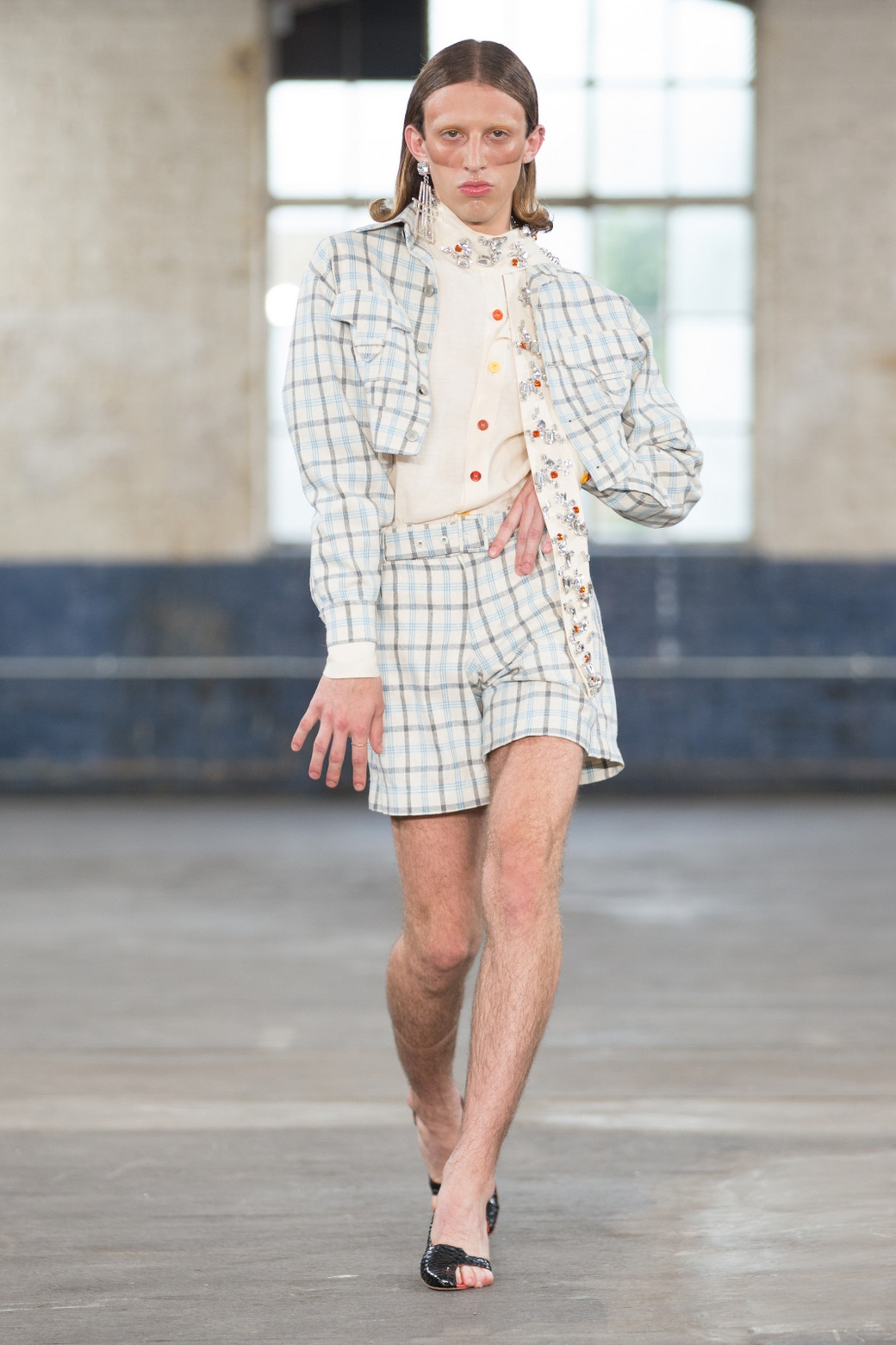
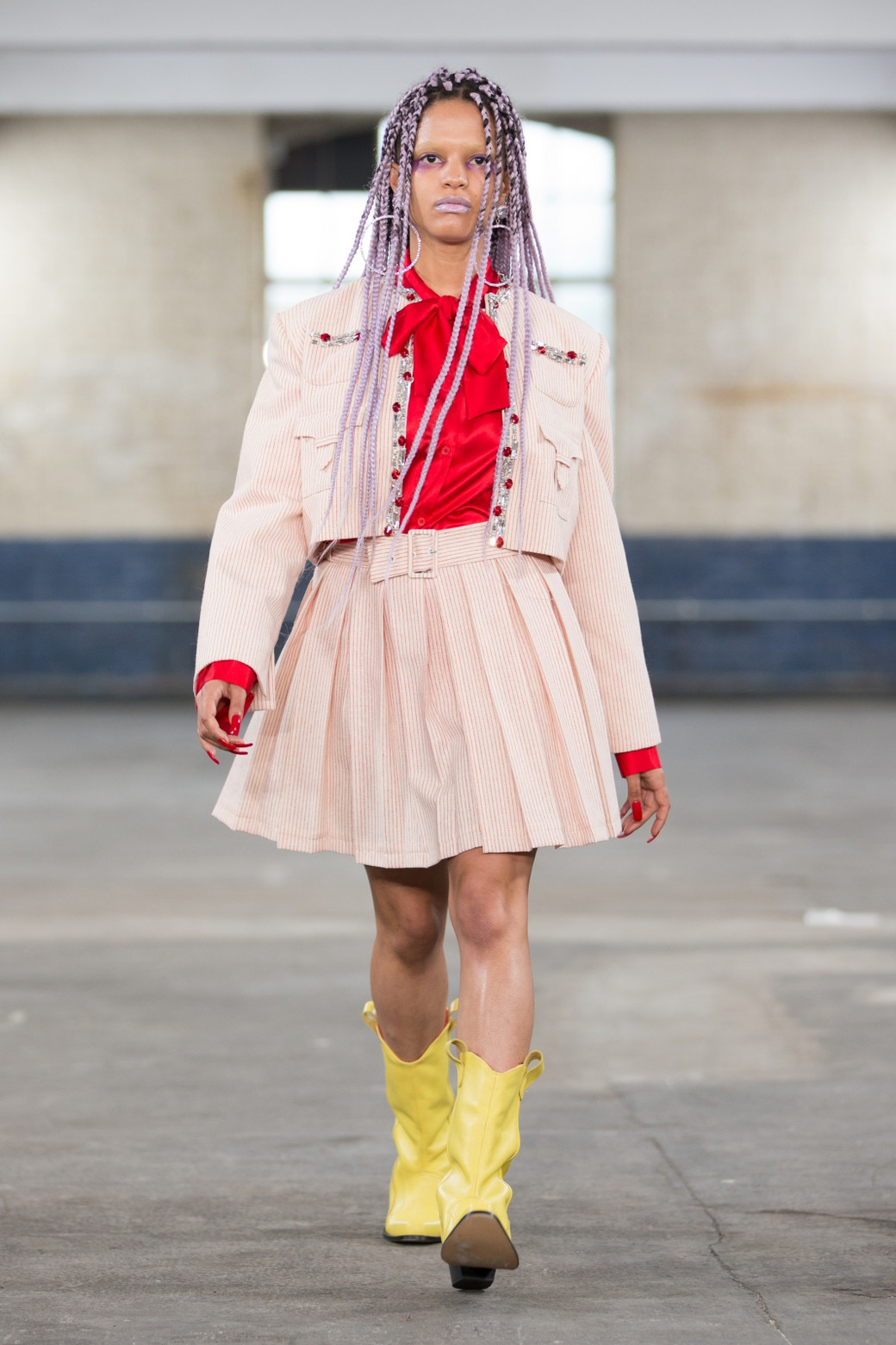
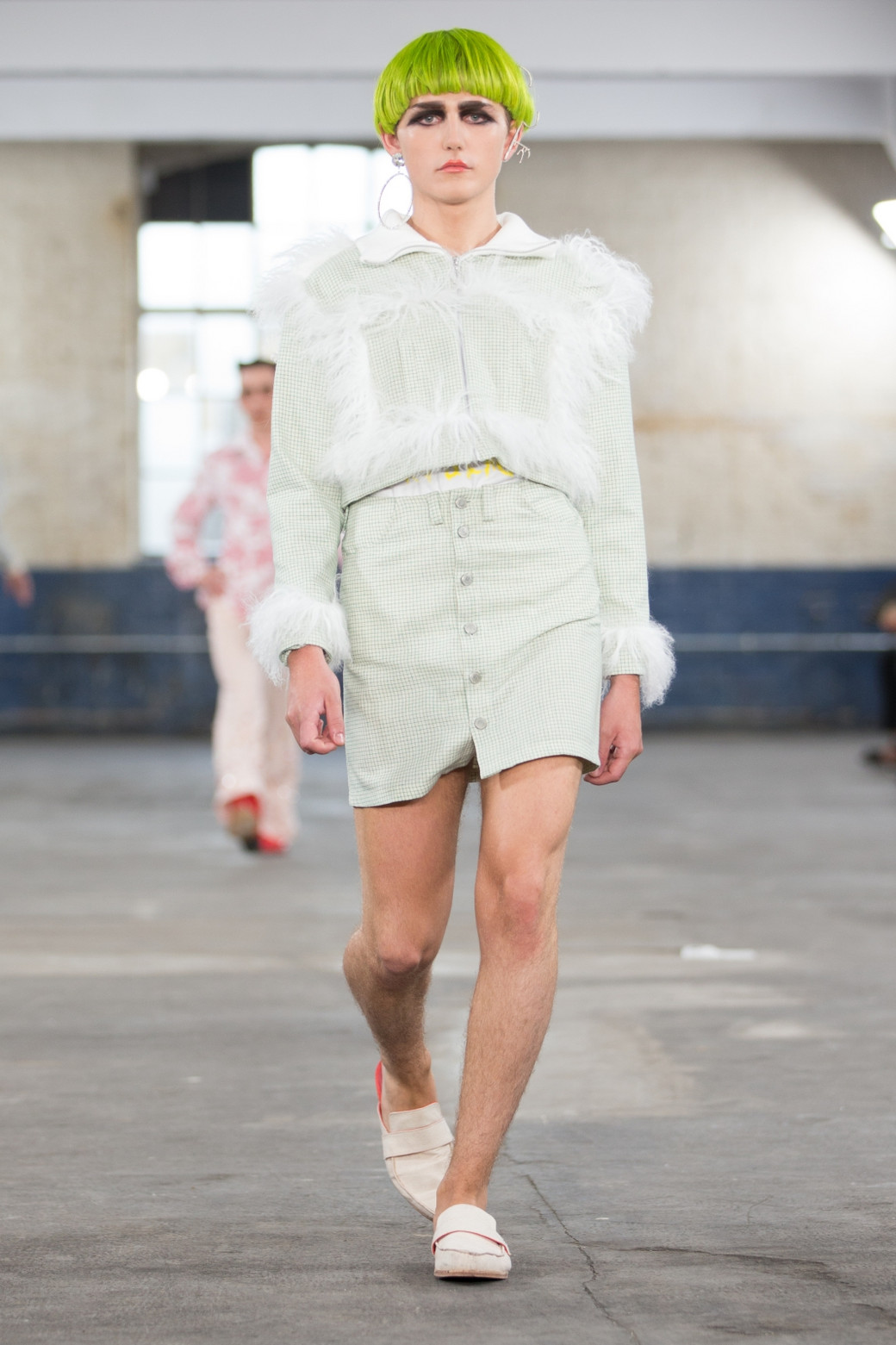
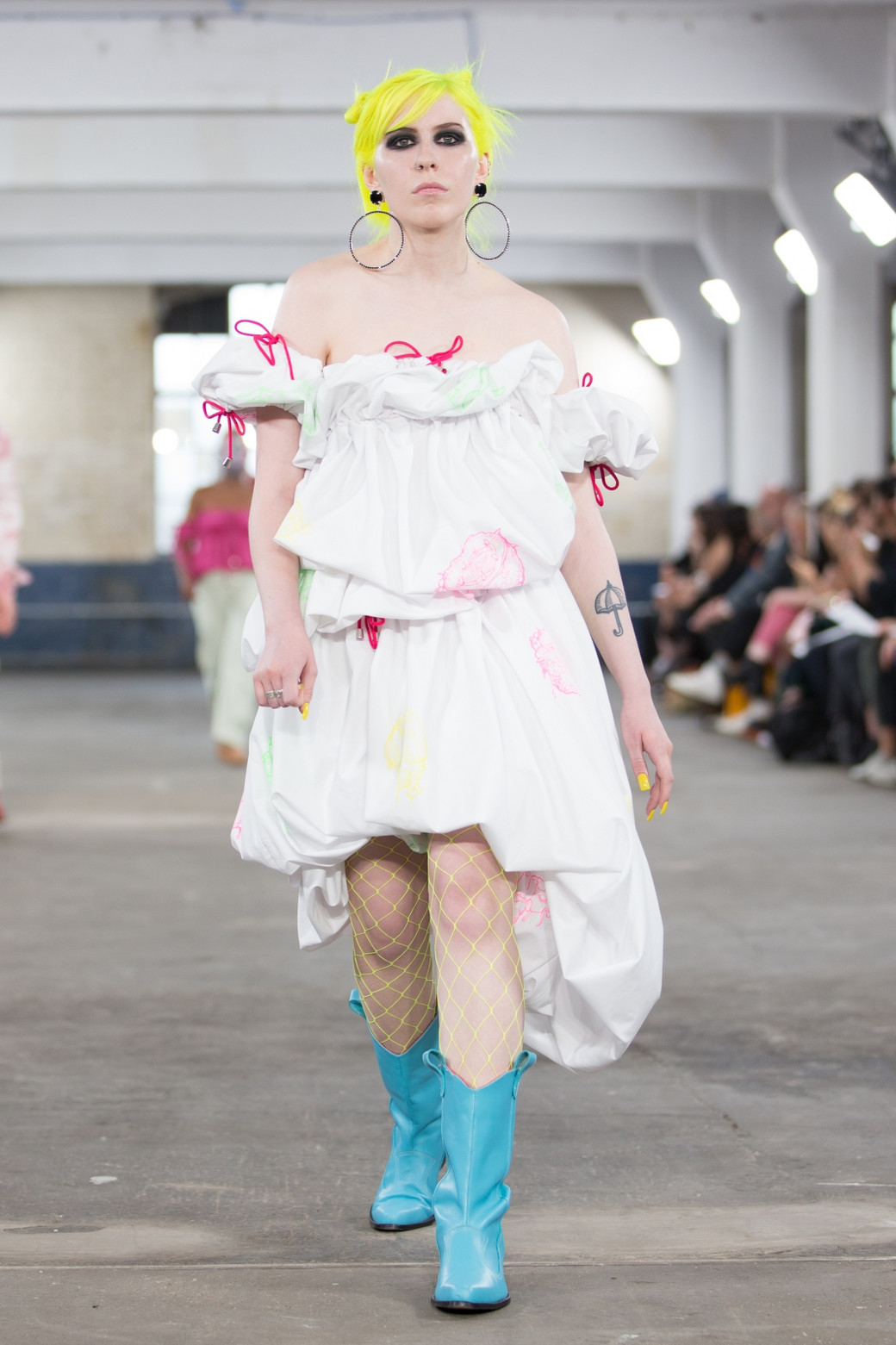
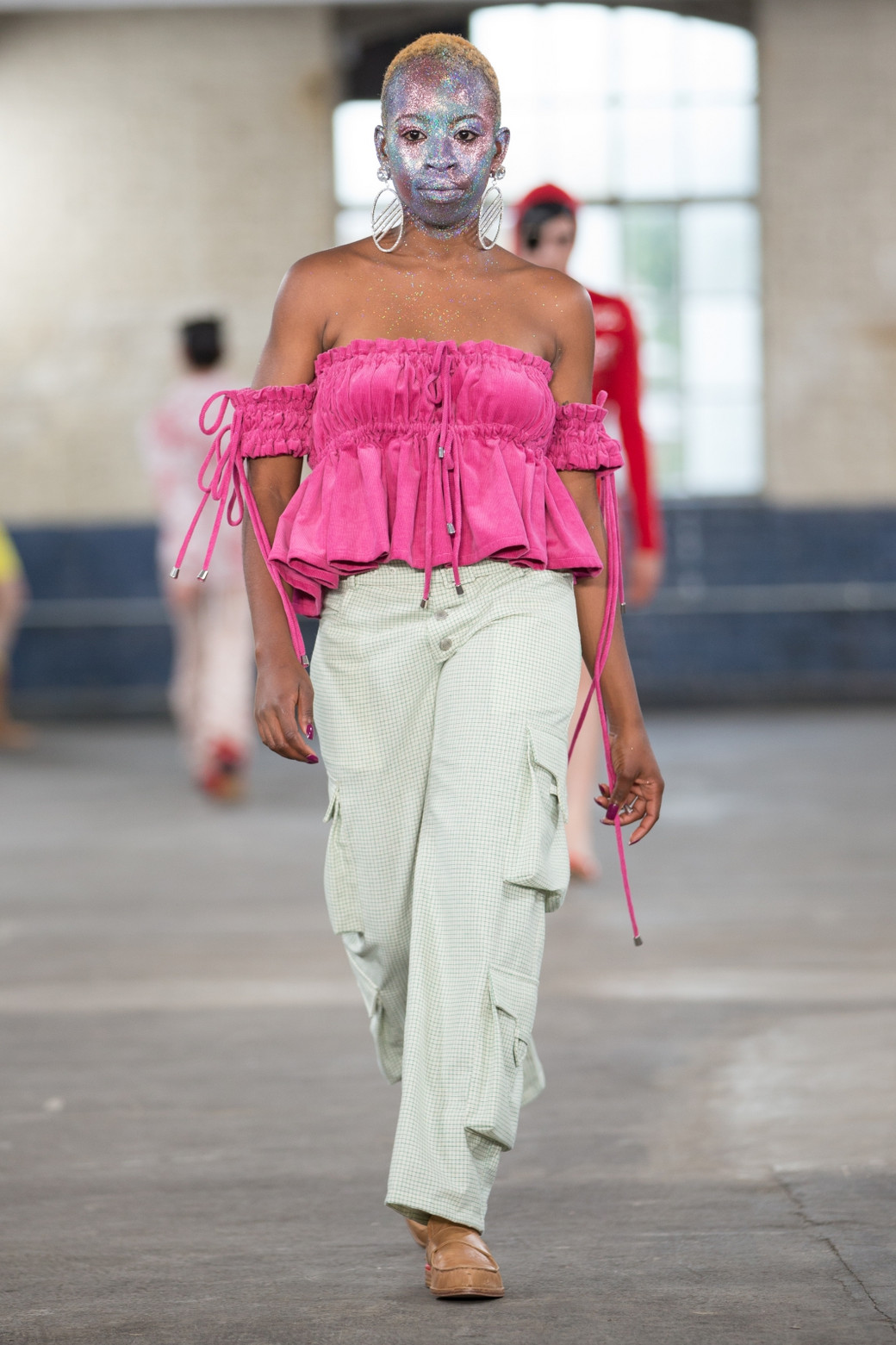
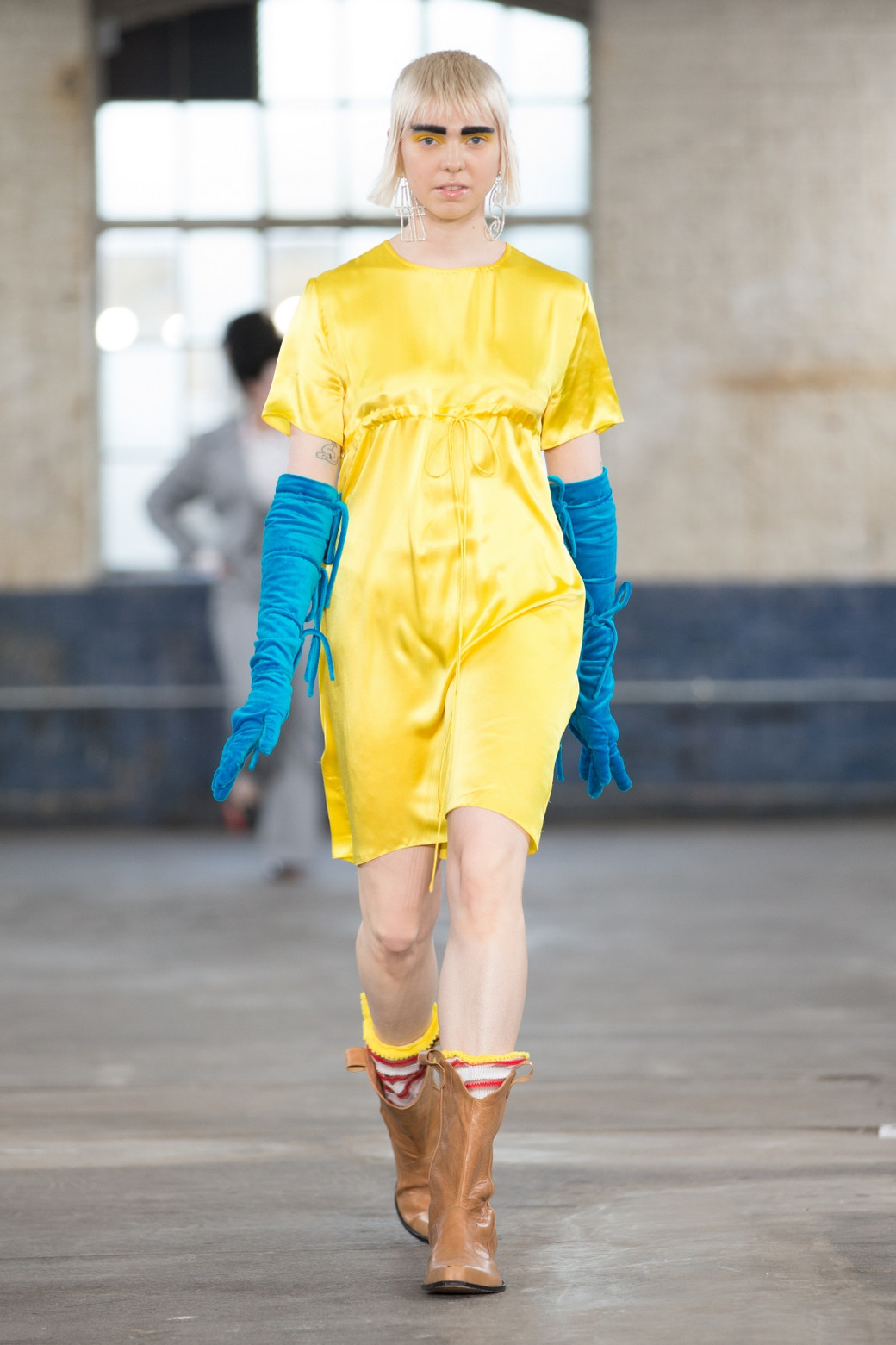
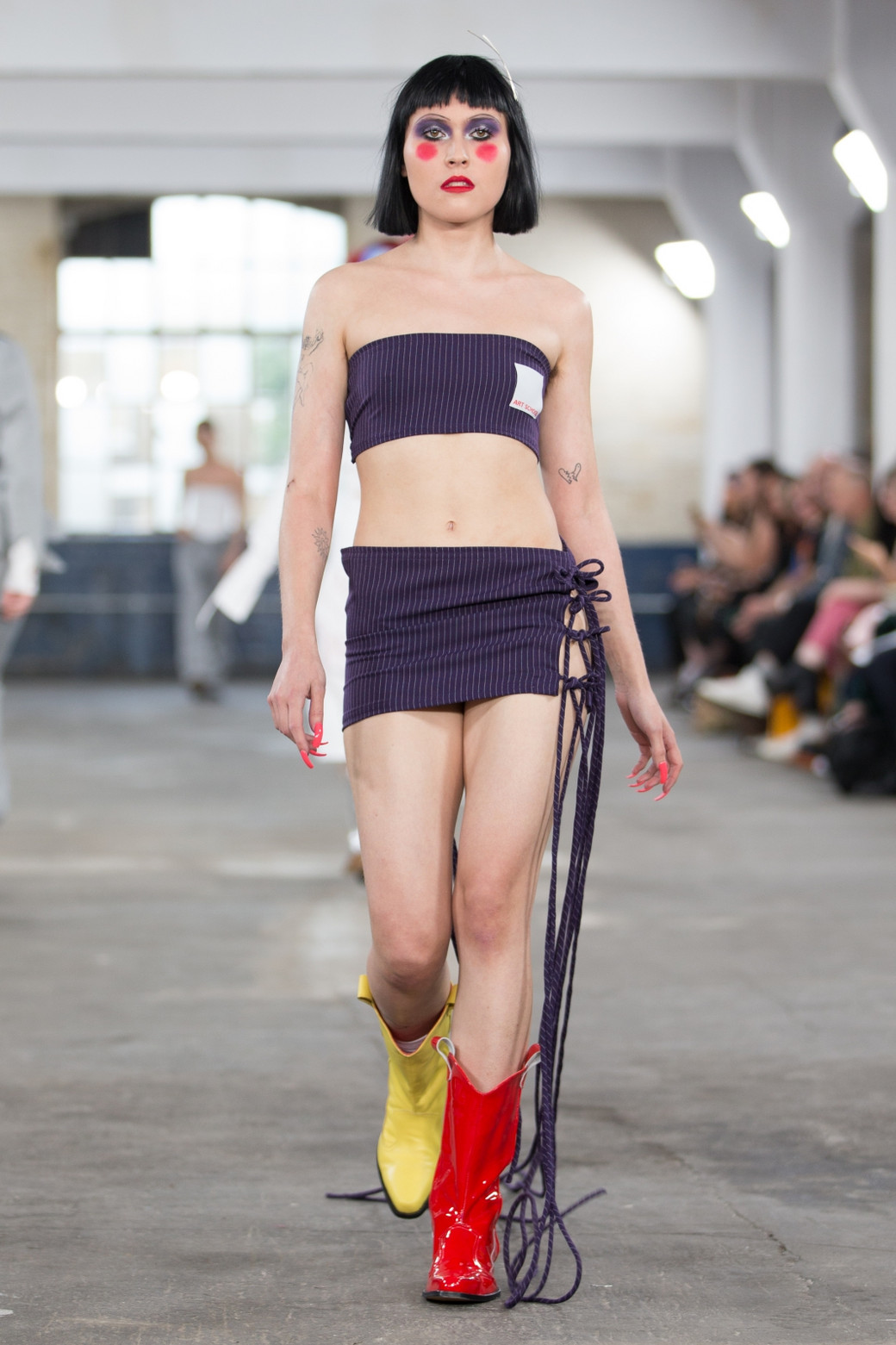
It is not that I’m so smart. Rather, I’m radically naïve. While working, I am not thinking of any distinction between “modern” and “traditional.” I simply like to connect really different elements from very different genres of garments with different references, try to have them communicate with each other somehow, composing them together into something new that works really well. For doing so, I do not depart from concepts or stories at all, but really from the garments: fabrics, techniques, tailoring, attitude, colors, and so on. The result should be a comfortable, [wearable] piece, not some concept. What appears, still often to my own excitement as well, are garments that do not fall into any current known category—such as dresses, aprons, t-shirts, trousers—but are really hybrid pieces, like “dress-t-shirt-apron-trousers,” that have something very open, new, even futurist. Only then do the stories appear from them, and so ultimately, I don’t think they celebrate some lost past culture at all, but rather a radically new one.